
Reviewed · ROME
Rome: Barberini Palace Guided Tour
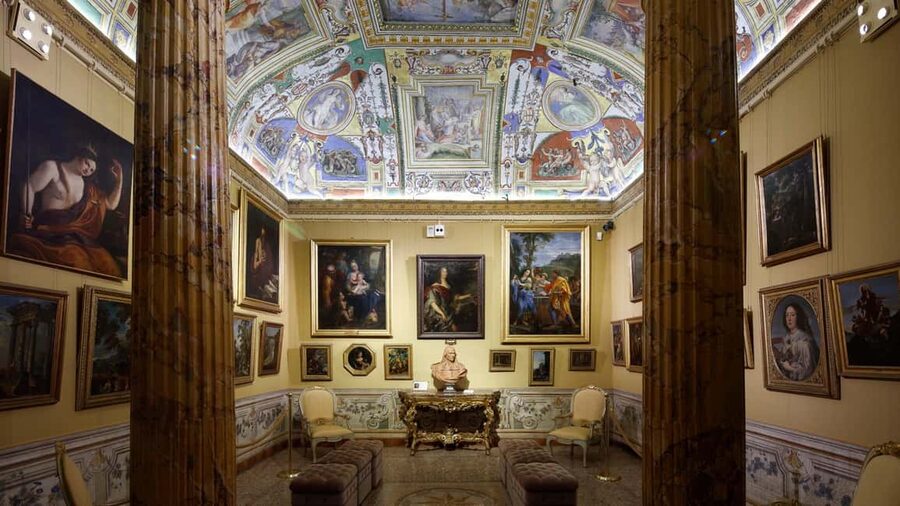
The great reason to visit Barberini Palace is that the building itself is part of the collection. You move from Raphael and Caravaggio to Bernini and Borromini, then look up at Pietro da Cortona’s sweeping Baroque ceiling. I like the way this tour joins art with the politics and faith of 17th-century Rome, rather than treating each painting as an isolated prize. I also like the compact two-hour format, which gives you a clear route through a major gallery without eating half your day.
A guide can make a real difference here. Zenda has been praised for linking art and architecture to its period, while Federica has led an engaging visit through the palace and its collection. The main drawback is timing: Caravaggio’s Judith Slaying Holofernes is away from September 4, 2025, through January 31, 2026, and some 18th-century rooms are closed from August 26 until October 21. Check the dates before booking if those sights are your main reason for coming.
Key points to know before you book
- Pietro da Cortona’s ceiling is the visual showstopper: Look up in the grand salon for the huge Divina Provvidenza fresco, a lively piece of Baroque theater in paint.
- Raphael’s La Fornarina is a major Renaissance stop: The small portrait rewards close attention to expression, pose, and the mystery surrounding its subject.
- Bernini and Borromini appear in the building itself: You are not only looking at paintings. The palace gives you a chance to compare two rival masters of Roman architecture.
- The tour lasts two hours: That is enough time for context and key works, but not every painting in the gallery.
- The meeting point is inside the garden: Find the fountain at Via delle Quattro Fontane 13 and look for the blue Doooing Experience flag.
- Some dates change the collection: The 18th-century rooms and Caravaggio’s Judith have temporary closures, so check availability for your visit date.
Why Barberini Palace belongs on your Rome art list
Rome has famous museums that can feel like endurance tests. Barberini Palace is more manageable. Its collection is substantial, but a two-hour guided route gives you a useful framework instead of leaving you to wander from one name to another.
The palace was tied to the Barberini family, one of Rome’s most influential papal families. Their reach extended into church affairs, politics, architecture, and the arts. That background matters because the collection is not random. It reflects how powerful families used art to express status, faith, learning, and political authority.
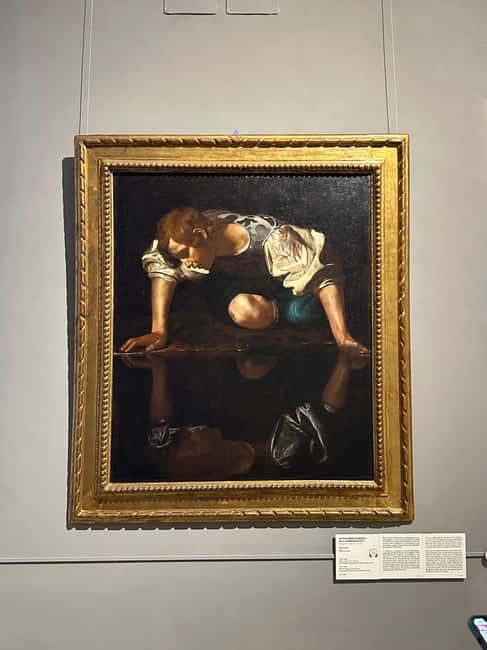
You will see paintings from different periods, but the palace is especially strong for the transition from Renaissance calm to Baroque drama. Raphael offers balance and polish. Caravaggio brings sharp contrast and emotional force. Bernini and Borromini show how architecture could become theatrical, personal, and competitive.
I like this setting because it puts art into a working historical environment. You are not simply seeing a Caravaggio on a white museum wall. You are considering why this family commissioned grand rooms, why a ceiling needed to overwhelm the viewer, and why artists were asked to make religious ideas feel immediate.
More guided tours in Rome:
- Vatican Museums, Sistine Chapel & St Peter’s Basilica Guided Tour
★ 4.5 · 39,149 reviews - Rome: Colosseum, Palatine Hill and Roman Forum Guided Tour
★ 4.8 · 32,814 reviews - Rome: Guided Tour of Colosseum, Roman Forum & Palatine Hill
★ 4.7 · 27,897 reviews
Meeting at the fountain in the palace garden
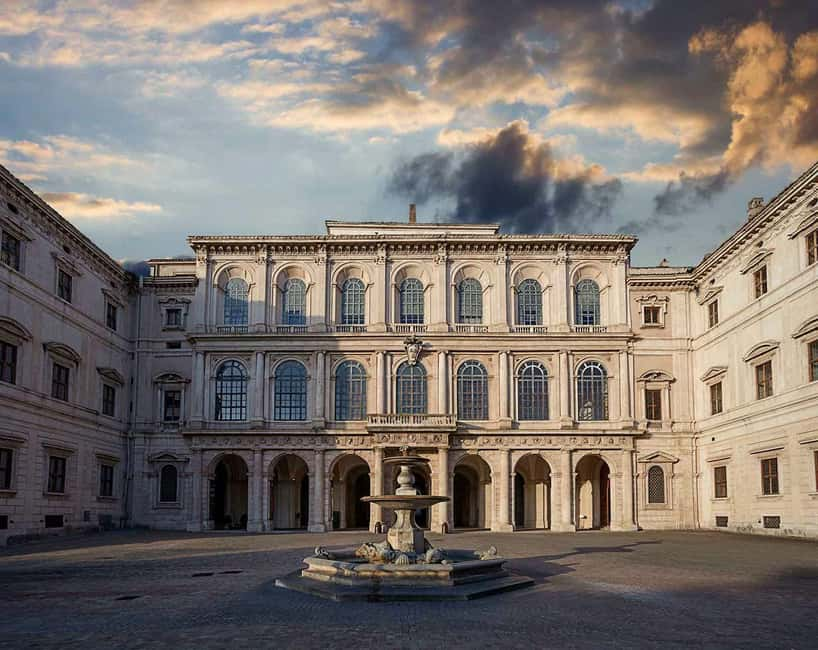
The meeting point is inside the garden of Palazzo Barberini, around the fountain at Via delle Quattro Fontane 13. Your guide or tour staff should be holding a blue flag marked Doooing Experience.
Allow enough time to find the entrance and get into the garden. The meeting point is specific, but large Roman palaces can be confusing when you are rushing from a nearby café or metro stop. Save the supplied map location in advance, especially if you are arriving with children or on a tight sightseeing schedule.
The tour includes skip-the-ticket-line entry, which is useful in Rome. It does not mean you should arrive at the last second. Meet early enough to locate the staff, settle in, and deal with security or entrance instructions.
Large bags and luggage are not allowed. This is important if you are coming straight from a hotel or train station. Carry only what you need for the visit.
The Barberini family and the palace setting
Your guide begins by placing the Barberini family in Rome’s social and cultural story. The family became especially powerful through Pope Urban VIII, a Barberini who supported major artistic projects and helped shape the look of Baroque Rome.
That context makes the building easier to read. The palace was not designed to be modest. Its size, decoration, and grand architectural gestures helped announce the family’s importance. Art here had a job beyond decoration. It showed learning, power, religious conviction, and access to the best artists of the day.
The guide’s role is particularly useful in this opening section. A painting can look beautiful without being easy to understand. Political changes, religious pressure, and shifting ideas about how art should affect the viewer all shaped the works in the collection.
If your guide is Zenda, you may get the kind of explanation that links the paintings directly to their period and to the architecture around them. Federica has also led this route, with an approach described as attentive, lively, and clear. Guides can vary, but the tour is designed to provide more than labels beside the pictures.
Raphael’s La Fornarina
Raphael’s La Fornarina is one of the essential stops. The painting shows a young woman with a direct, intimate presence. She wears a veil and jewelry, and the work has long attracted attention because of the possible connection between the sitter and Raphael.
You do not need to know every theory about the painting to enjoy it. Look at the sitter’s expression and the way Raphael balances softness with a surprisingly confident gaze. The work feels personal, which sets it apart from more formal portraits of the period.
This is where a guide adds value. Raphael is often reduced to a name from an art-history textbook, but the painting becomes more interesting when you consider the artist’s handling of skin, fabric, pose, and identity. Ask your guide about the ring and the inscription if those details are covered during your visit.
La Fornarina is not a giant altarpiece. Its impact comes from control and concentration. I like that the tour places it within a wider story of Renaissance portraiture, rather than presenting it only as a famous picture to photograph.
Same city, a completely different half-day:
- Vatican Museums & Sistine Chapel Tour with Optional Basilica
★ 4.3 · 67,413 reviews - Rome: Colosseum & Forum with Audio Guide App -Optional Arena
★ 4.2 · 24,770 reviews - Rome: Colosseum, Roman Forum and Palatine Hill Guided Tour
★ 4.5 · 23,903 reviews - Rome: City Sightseeing Hop-on Hop-off Bus with Audioguide
★ 4.0 · 16,045 reviews
Caravaggio’s Judith and the limits of the current display
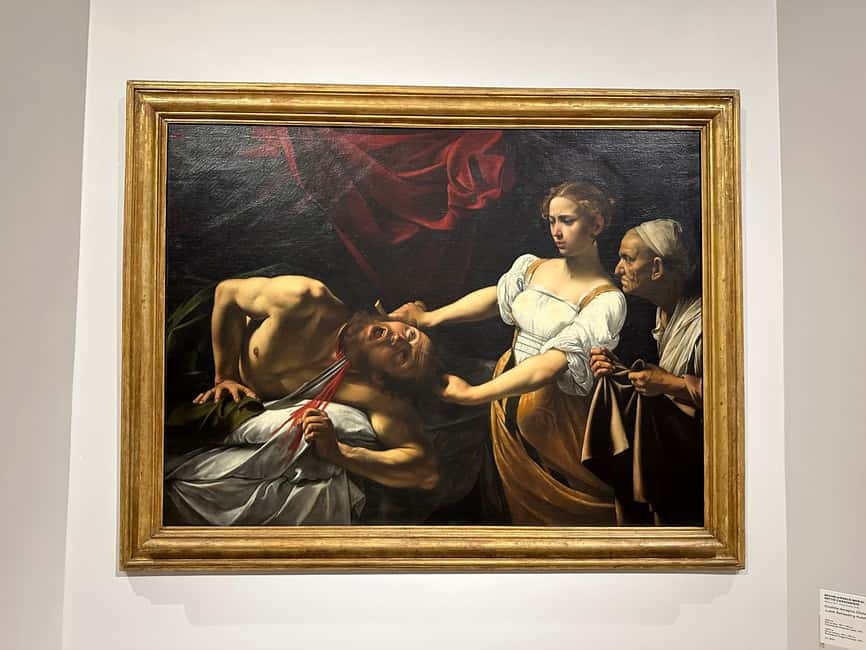
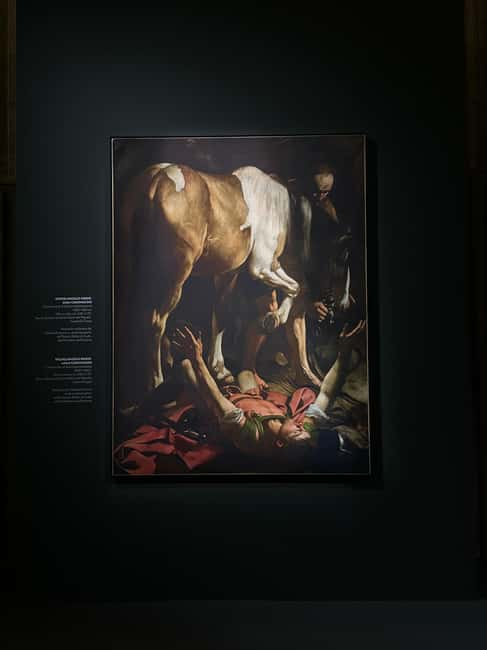
Caravaggio’s Judith Slaying Holofernes is one of the palace’s strongest draws when it is on display. The biblical scene shows Judith killing the Assyrian general Holofernes, and Caravaggio makes the moment feel brutally close.
The painting is famous for its dark background, hard light, and emotional tension. Judith is not shown as a distant symbol of virtue. She looks focused and determined, while the scene’s violence is impossible to ignore. Caravaggio’s figures seem to push toward the viewer, making the subject feel immediate rather than safely remote.
The work is scheduled to be on loan to the KAM Art Museum in Fort Worth, Texas, from September 4, 2025, until January 31, 2026. The tour information also warns that it will not be available from the end of August 2025 until January 2026, so the exact closure period should be confirmed for your date.
Do not book this visit solely for Judith without checking. The palace still offers Raphael, Pietro da Cortona, Holbein, Tintoretto, Bernini, Borromini, and other works, but Caravaggio is a major reason many art lovers put Barberini Palace on their list.
Looking up at Pietro da Cortona’s ceiling
The Divina Provvidenza ceiling fresco by Pietro da Cortona is the palace’s great upward-looking moment. It fills the ceiling with figures, movement, clouds, and allegorical action. This is Baroque art at full volume.
Take time to let your eyes adjust to the composition. The fresco was designed to be read from below, and its illusion of open space makes the ceiling seem to rise beyond the room. Your guide can explain the symbols and how the imagery supported the Barberini family’s public image.
This is one of the places where the palace setting matters most. The ceiling is not a framed work that you can isolate from its surroundings. It is part of an architectural performance. The room, the height, the painted figures, and the family’s ambitions all work together.
You may find this section more rewarding than a long list of minor paintings. It gives you a clear sense of why Baroque art can feel so different from the quieter Renaissance works elsewhere in the palace. The mood is grand, crowded, and persuasive.
Bernini and Borromini inside one powerful building
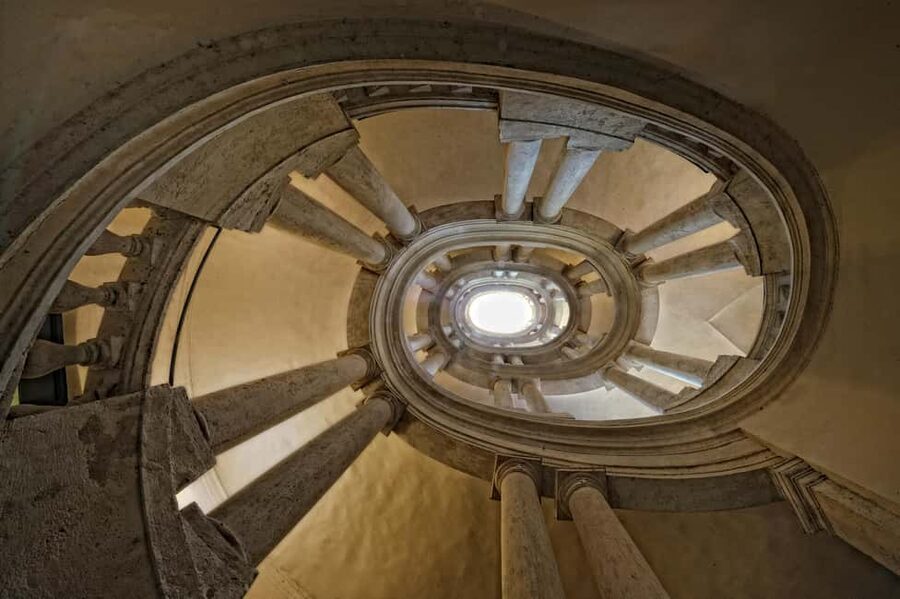
Barberini Palace is also a useful place to consider Bernini and Borromini side by side. Both shaped Rome, but their architectural personalities were different.
Bernini often favored movement, theatrical effect, and an inviting sense of space. Borromini could be more restless and inventive, with complicated forms that make architecture feel as if it is in motion. The palace lets you see how their approaches contributed to the building and its visual language.
A guide can help you notice things you might walk past alone. Look at the treatment of space, the curves, the way decorative details lead your eye, and the connection between architecture and ceremony. This is not a separate architecture lecture added onto a painting tour. The building is part of the route.
The two artists are also linked by rivalry and competition in Baroque Rome. That human element makes the architecture easier to remember. You are not just learning that two famous names worked in the city. You are seeing two ideas about power, movement, and beauty meet in one palace.
Holbein, Tintoretto, and the wider collection
The collection reaches beyond the headline names. Works by Holbein and Tintoretto add Northern European and Venetian perspectives, while other paintings fill in the story between Renaissance and Baroque art.
A two-hour tour cannot give every canvas equal attention. That is a strength if you want a focused introduction, but a limitation if you hope to study the entire collection. The guide will likely concentrate on the works with the clearest historical or artistic importance.
I recommend using the tour as a structured first visit. Pay close attention to the major paintings and the architectural rooms, then return to any area that caught your eye if time and access permit. A guide helps you avoid spending 20 minutes on a painting simply because it is near the entrance.
The palace can also pair well with other art stops in Rome, including the Borghese Gallery, Doria Pamphilj Gallery, or a visit focused on Caravaggio’s church paintings. Each offers a different experience. Barberini Palace is best when you want the family, building, and art to be considered together.
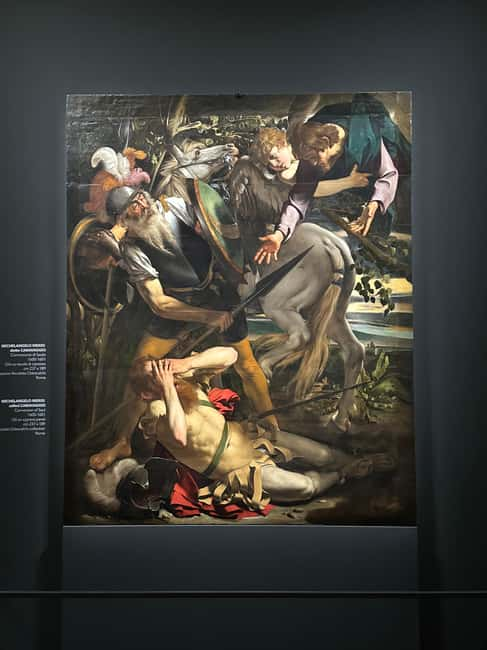
The temporary Conversion on the Way to Damascus display
Conversion on the Way to Damascus, also called Conversione di Saulo, is part of a private collection and is scheduled for exceptional display in the palace until September 30, 2025.
Because this is a temporary presentation, check the date carefully. If you are visiting before the end of September 2025, it may add an unusual element to the route. If you are visiting later, do not expect it to remain on view.
Temporary loans can change the balance of a museum visit. They are useful reasons to return, but they also make older booking descriptions less reliable. Confirm the current works before you pay, especially if this painting or Caravaggio’s Judith is your priority.
Timing, group size, and guide languages
The tour lasts two hours and runs in English, Italian, or Spanish. The maximum group size is 20 people. That is not a private visit, but it is small enough for a guide to speak to the group without turning the tour into a distant lecture.
Two hours is a sensible length for Barberini Palace. You get enough time for the main works, family background, architecture, and questions. You will not see every object with equal care, so think of this as a guided introduction rather than a full scholarly survey.
The best value comes when you want interpretation. If you already know the collection well and prefer to read labels at your own speed, a ticket with an audio guide or app may suit you better. If you want the paintings connected to Rome’s political and religious changes, the live tour earns its place.
The tour is offered by Doooing. Guide quality can vary from date to date, but the named guides Zenda and Federica have been especially well received for clear explanations and warm, attentive handling of the group.
Who should book this tour
I would recommend Barberini Palace to you if you enjoy art but want help organizing what you see. It suits first-time Rome visitors who want a manageable museum stop, as well as returning visitors looking for a quieter alternative to the Vatican Museums.
It is a particularly good match for:
- People interested in Renaissance and Baroque art
- Visitors who want to see Raphael and Caravaggio in one setting
- Anyone curious about Bernini and Borromini
- Art lovers who prefer a live guide to an app
- Visitors with two hours between other Rome plans
You should think twice if you need step-free access or use a wheelchair. The experience is not considered suitable for people with mobility impairments or wheelchair users. It is also not a good choice if you are carrying luggage, since large bags are not allowed.
The price is not provided here, so I cannot judge the exact cost. In value terms, compare the tour fee with a standard entry ticket and ask what you want from the visit. You are paying for admission, a skip-the-line arrangement, and two hours of explanation in a palace where the building and collection are closely linked. That is worthwhile if context matters to you.
My call: book it or choose another gallery
Book this tour if you want a focused art experience with a strong guide and a clear sense of how Rome’s powerful Barberini family used art and architecture. Raphael’s La Fornarina and Pietro da Cortona’s ceiling alone make the visit worthwhile, while Bernini and Borromini give the palace extra depth.
Before booking, check three things: the temporary closure of the 18th-century rooms, the absence of Caravaggio’s Judith during its loan period, and the mobility restrictions. If you are visiting during the affected dates, the tour remains appealing, but it is no longer the same version of the collection.
Choose an audio guide or independent entry instead if you want a slower pace, need full flexibility, or already know the main works. For most visitors who want art explained without giving up a whole day, the two-hour Barberini Palace tour is a sensible and rewarding Rome stop.
FAQ
How long does the Barberini Palace guided tour last?
The tour lasts two hours.
Which languages are available?
The tour is available in English, Italian, and Spanish.
Where is the meeting point?
Meet inside the garden of Palazzo Barberini, around the fountain at Via delle Quattro Fontane 13, Rome. Look for staff holding a blue flag marked Doooing Experience.
Is Caravaggio’s Judith Slaying Holofernes always on display?
No. It is scheduled to be away on loan to the KAM Art Museum in Fort Worth, Texas, from September 4, 2025, until January 31, 2026. The exact display status should be checked for your visit date.
Are large bags or luggage allowed?
No. Luggage and large bags are not allowed.
Is the tour suitable for wheelchair users?
No. The experience is listed as unsuitable for wheelchair users and people with mobility impairments.
Newest Rome tours we have reviewed
- Private TikTok Video Making in Rome★ 5.0 · 7 reviews
- Assisi, Orvieto and Civita di Bagnoregio Full Day Tour from Rome★ 4.5 · 45 reviews
- Assisi & Saint Francis Path Tour from Rome★ 5.0 · 45 reviews
- Assisi and Cascia Private Day Tour from Rome with Lunch★ 5.0 · 10 reviews
- Art Class in the center of Rome!★ 4.0 · 4 reviews
- Art & Craft: Beer Tour with Street Art in Rome★ 4.5 · 6 reviews
- Arrival in Rome: Airport Transfer & Exclusive City Introduction★ 5.0 · 3 reviews
- From Rome: Private Day-Tour of Tuscany★ 5.0 · 16 reviews