
Reviewed · ROME
Rome: Bone Crypts Express – Tour in ENGLISH with tickets
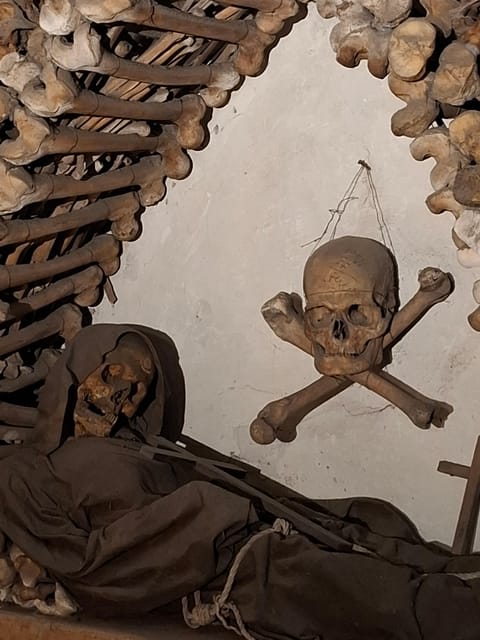
The Capuchin Crypts are one of Rome’s strangest sights: six chapels arranged with the bones of nearly 4,000 monks. The effect is not a cheap scare attraction. It is a solemn, carefully designed meditation on death, faith, and the shortness of life. The Crypt of Skulls and its hourglass make that message hard to miss.
I like the short format and the small group of no more than 10 people. Guides such as Mike, Heather, Alessandra, Angela, and Divan have been praised for clear storytelling, humor, and practical help. I also like the mix of religion, art, and Roman history, especially the connection to Caravaggio.
The main drawback is value. At $35 for about an hour, you are paying for a focused visit to one site, not a full tour of Rome. The subject is also not suitable for everyone, and the crypts are not really a dramatic underground catacomb in the way some people expect.
Key points at a glance
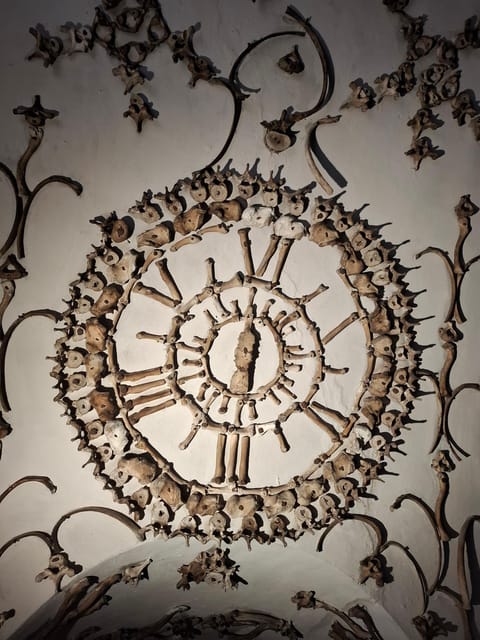
- Nearly 4,000 Capuchin bones: See skulls, pelvises, leg bones, and vertebrae arranged as decoration and religious symbols.
- Six distinct chapels: Each room has a different design, including the Three Skeletons, Leg Bones and Thigh Bones, Pelvises, and Skulls.
- Small English-speaking group: The tour is limited to 10 people, making it easier to follow the guide and ask questions.
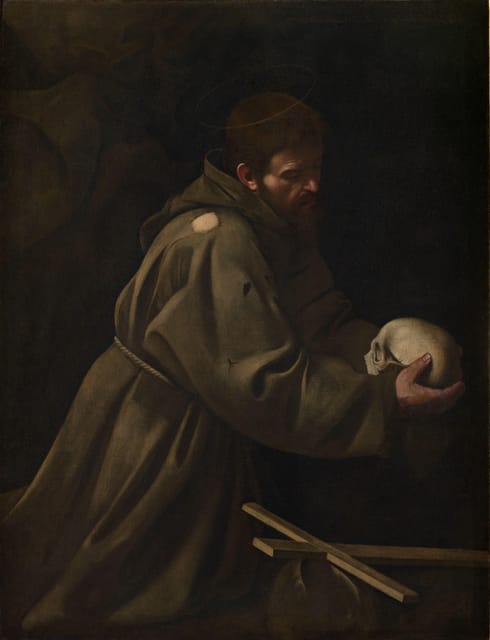
- Caravaggio connection: The Capuchin Museum introduces the artist and his place in Rome’s Baroque story.
- Central meeting point: Meet at the Triton Fountain in Piazza Barberini and return there after the visit.
- One-hour express visit: Skip-the-line access keeps the schedule tight, but leaves little time for lingering.
Why the Capuchin Crypts feel different from other Rome sights
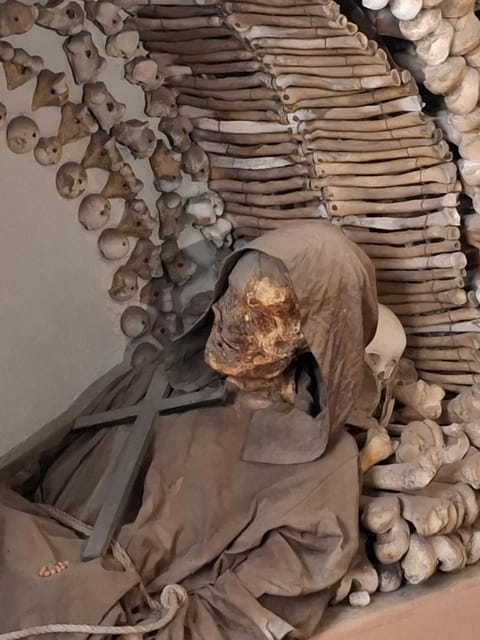
Rome gives you grand churches, ancient ruins, and polished palace interiors. The Capuchin Crypts offer something more personal. Here, human remains are the central visual material, arranged into patterns, arches, crosses, and symbolic designs.
The site belongs to the Capuchin branch of the Franciscan Order. The visit explains how the order developed, what its friars believed, and why the remains were moved from an older friary near the Trevi Fountain. Burial rules within the order helped shape the crypt as a place where the dead were both remembered and used to express religious ideas.
That context matters. Without it, you might see only a series of unsettling rooms. With a good guide, you can understand the crypt as a place built around humility, mortality, and the belief that worldly status eventually disappears.
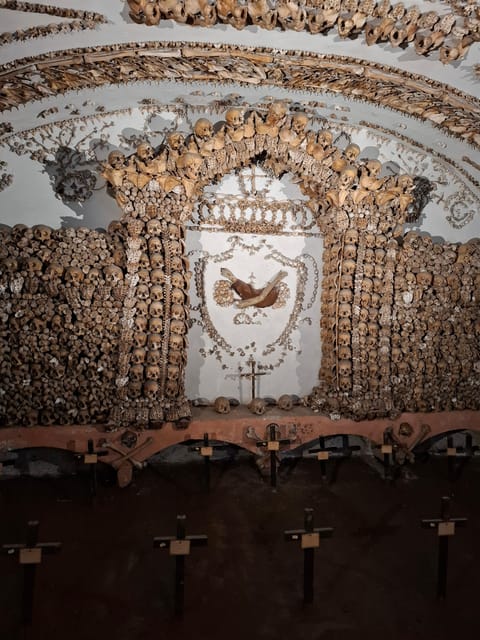
The message is direct rather than subtle. Crosses mark the resting places of seven monks. A symbolic hourglass points to the passage of time. Skeletons and bones are arranged in ways that can feel artistic, but the site remains a sacred burial ground. You should enter with respect, not with the attitude of visiting a novelty museum.
More tickets and entry passes in Rome:
- Rome:Hop-On Hop-Off Panoramic Open Bus Ticket 3 Circuits x 1
★ 4.0 · 15,405 reviews - Vatican Museums & Sistine Chapel Skip-the-Line Entry Ticket
★ 4.4 · 13,838 reviews - Vatican Museums & Sistine Chapel Skip-the-Ticket-Line Tour
★ 4.3 · 10,486 reviews
Meeting at Piazza Barberini and walking to the museum
Your guide meets you in front of the Triton Fountain in Piazza Barberini. This is a useful location in central Rome, and the fountain gives you a clear landmark. The tour begins here before walking to the Capuchin Museum and Crypts.
The walk is part of the orientation. Rather than appearing suddenly at the crypt entrance, you begin by hearing how the Franciscan and Capuchin Orders fit into Rome’s religious story. The guide also sets up the connection with Caravaggio, one of the city’s most important Baroque artists and one of its more rebellious characters.
The meeting point is easy to reach, but arrive with enough time to find the fountain and identify your guide. Alessandra has been praised for contacting participants directly to prevent confusion, while other guides, including Mike and Heather, have been praised for punctuality and clear organization.
The group limit of 10 is important here. A larger crowd would make a quiet religious site feel much less personal. With a small group, you can usually hear the explanation more easily and ask about details that catch your attention.
Inside the Capuchin Museum: order, art, and preparation
The museum gives the crypts a proper setting. You learn about the Franciscan and Capuchin traditions before seeing the bone chapels, which helps explain why the site exists and how it was shaped.
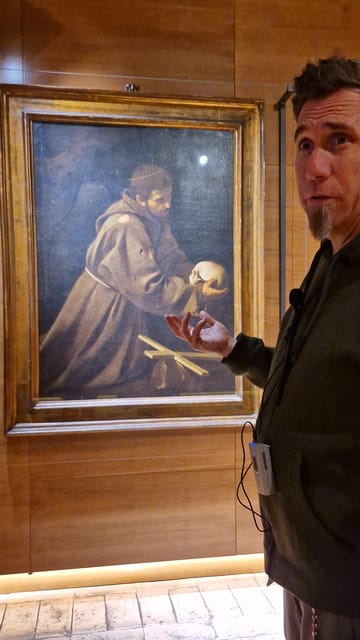
Caravaggio receives special attention. The tour includes insight into his art and his place in Rome’s Baroque period. This is not a full Caravaggio museum tour, so you should not book it if his paintings are your main reason for visiting. Instead, his story adds an artistic thread to a visit that might otherwise focus only on bones and burial customs.
The museum section also helps you adjust to the tone of the experience. This is not a loud, theatrical attraction. The guide’s job is to make the subject understandable while respecting the location. Mike has been praised for mixing facts with humor, and Heather for keeping the explanations informative while easing the discomfort of seeing bone arrangements above you.
Some sections of the visit use an audio guide because the crypt is a sacred burial ground. The booking information also says an audio guide is not included, so you should not expect a separate personal audio device as part of the package. Your live English-speaking guide remains the main source of explanation.
The six chapels and what you will see
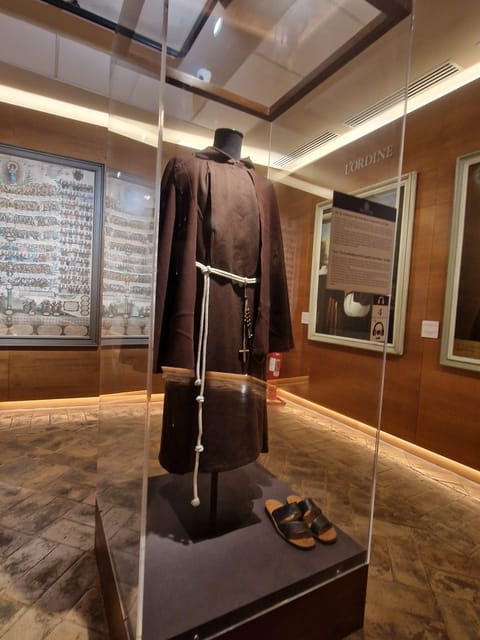
The crypts are made up of six chapels, each with its own arrangement and mood. You are not simply walking past shelves of remains. The bones have been placed to create patterns and religious symbols, giving each room a different visual character.
The Crypt of the Three Skeletons is one of the most immediately memorable spaces. It introduces the theme of mortality in a plain, physical way. The arrangement is striking, but the room also asks you to think about the people behind the remains.
The Crypt of the Leg Bones and Thigh Bones uses long bones in repeated patterns. This room makes the design aspect especially clear. The symmetry can catch your eye, although it is worth remembering that these are human remains from members of the religious order.
The Crypt of the Pelvises has friars arranged in peaceful arches. It is less about individual identity and more about order, repetition, and the passage from life to death. The guide’s explanation helps connect the visual designs with the beliefs of the Capuchin community.
The Crypt of the Skulls is perhaps the most recognizable room. Skulls form part of the decoration, and a symbolic hourglass reinforces the message that time runs out for everyone. It is an image you may remember long after leaving, but it can also feel intense if you are uncomfortable around death.
Crosses set into the floor mark the resting places of seven monks. These small details are easy to miss if you rush, which is one reason a guided visit can be useful. The guide points out the symbols and explains why they matter rather than leaving you to guess.
The remains are not as far underground as some people expect. One participant was surprised to find the skeletons arranged in rooms closer to ground level instead of in a deep subterranean maze. If you are imagining tunnels and dark passageways, adjust your expectations. The power of the site comes from the rooms and their arrangements, not from depth.
Same city, a completely different half-day:
- Vatican Museums & Sistine Chapel Tour with Optional Basilica
★ 4.3 · 67,413 reviews - Vatican Museums, Sistine Chapel & St Peter’s Basilica Guided Tour
★ 4.5 · 39,149 reviews - Rome: Colosseum, Palatine Hill and Roman Forum Guided Tour
★ 4.8 · 32,814 reviews - Rome: Guided Tour of Colosseum, Roman Forum & Palatine Hill
★ 4.7 · 27,897 reviews
Why a guide makes a difference here
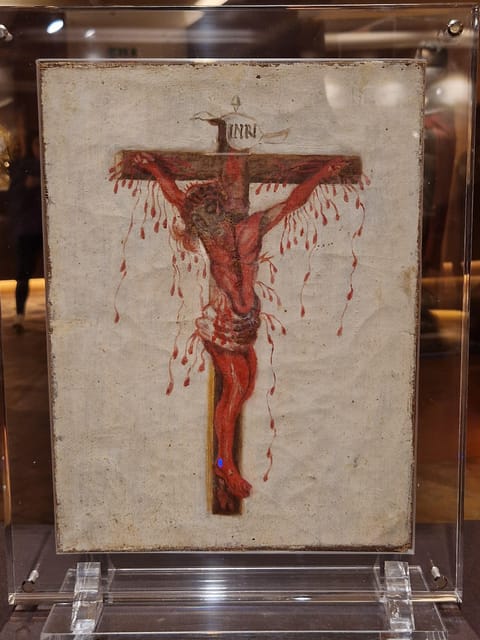
A self-guided visit could show you the rooms, but it would not necessarily explain the burial practices, the order’s beliefs, or the reason the remains were transferred from the friary near the Trevi Fountain.
The best part of the guided format is the storytelling. Mike has been praised for making the history memorable and answering questions about the rest of a visitor’s time in Rome. Alessandra is described as warm and engaging, while Angela made such a strong impression that one participant booked another experience with her. Heather has been praised for being both informative and relaxed, a useful combination in a place that can feel strange.
The humor needs to be handled carefully. A little levity can help you process the subject, but the crypt is still a holy place. The guides praised most highly appear to use humor to make the story approachable, not to turn the bones into a joke.
English ability matters. The tour is conducted in English, and strong English is recommended. The explanations include religious history, art, burial customs, and symbolic details. If you understand only basic English, you may miss much of what makes the visit worthwhile.
Is one hour enough for the Capuchin Crypts?
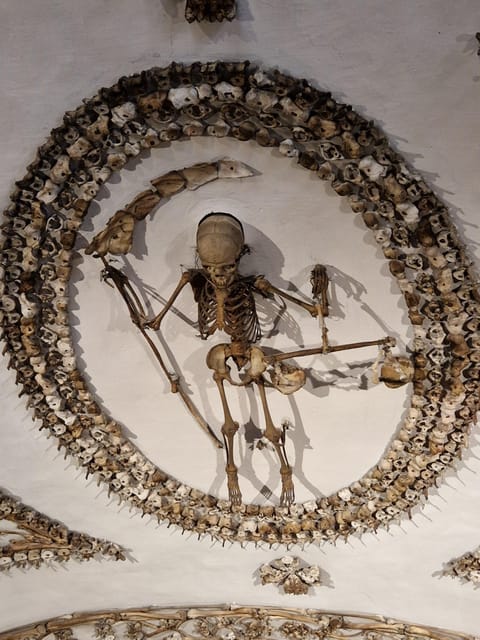
For the crypts alone, one hour gives you a focused introduction. The visit includes the walk from Piazza Barberini, the museum, the six chapels, and the return to the square. You will see the main rooms and hear the essential story, but this is not a slow, reflective visit with lots of spare time.
I see the short duration as both a strength and a weakness. It fits neatly between larger Rome sights, and you can add it to a busy day without losing half a morning. On the other hand, $35 is a significant price for a one-hour experience, especially if you are comparing it with longer guided visits around Rome.
The value depends on what you want. If you have a strong interest in unusual religious sites, Baroque Rome, or the history of the Capuchin Order, the guide’s context may justify the cost. If you only want to glimpse the bones and move on, the price may feel high.
The skip-the-line entry helps protect that one-hour schedule. You are paying partly for access and partly for a guide who keeps the visit moving. The group size also matters because a limited group is more comfortable in quiet, narrow museum and crypt spaces than a large tour party.
Clothing, age limits, and the tone of the visit
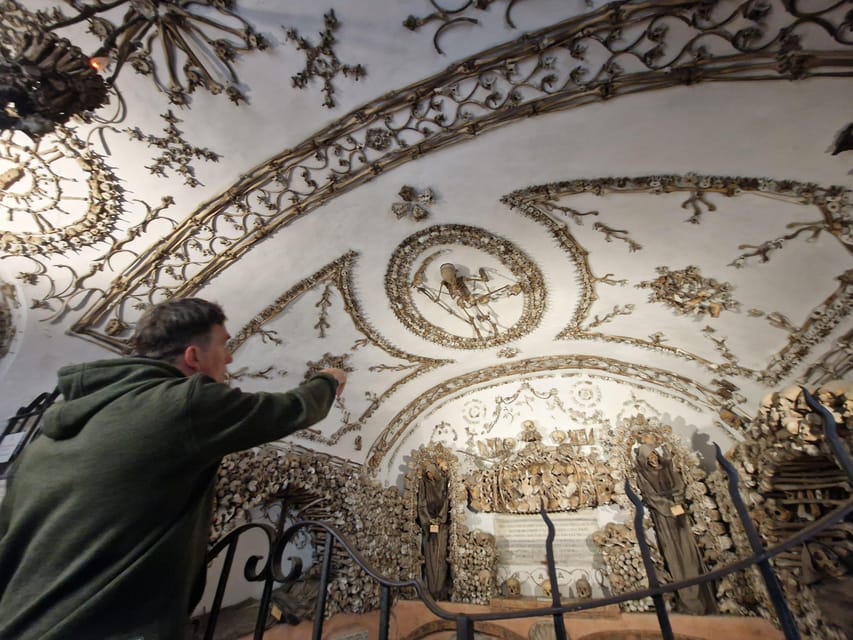
You must cover your shoulders and knees because this is a holy site. Shorts and skirts are listed as not allowed, although cargo shorts are acceptable. Comfortable clothing is the practical choice, especially since the experience includes walking between the meeting point and the museum.
The tour is not suitable for children under 10. That makes sense given the subject matter. Older children may technically be present, but I would think carefully before bringing a child. The realistic bone displays can be disturbing, and one parent-focused account specifically advised against taking children.
Pregnant women and wheelchair users are also listed as unsuitable for this experience. The information provided does not give further detail about the reason, so you should take those restrictions seriously when planning.
This is a place for quiet attention. You may find the crypt haunting, spiritual, fascinating, or simply uncomfortable. All of those reactions are reasonable. You do not need to be religious or especially interested in the macabre to understand the historical importance, but you should be prepared to see actual human remains.
Who should book this Rome experience?
I would choose this tour if you want something outside the standard Colosseum, Vatican, and Trevi Fountain circuit. It offers a different side of Rome, one shaped by monastic life, burial customs, religious symbolism, and Baroque art.
It suits adults and older teenagers who enjoy unusual history and can listen carefully in English. The small group is also a good fit if you dislike large guided groups and want the chance to ask questions.
I would skip it if you want a broad city tour, a long visit, or a conventional art experience. It is also a poor choice if you feel strongly uneasy around bones, dislike religious sites, or expect a deep underground catacomb system.
The guide makes the biggest difference. Mike, Heather, Alessandra, Angela, and Divan have each been praised for storytelling, warmth, humor, and organization. The exact guide may vary, so book for the site and format rather than expecting a particular person.
Final verdict: a memorable but specialized hour
I recommend the Capuchin Crypts Express for the right kind of Rome visitor. The six bone chapels are unlike the city’s grand churches and ancient monuments, and the visit gives you a clear explanation of the Capuchin Order, the Franciscan connection, Caravaggio’s Rome, and the symbolism of the remains.
The experience is not a bargain if you measure it by minutes alone. At $35, you are paying for skip-the-line access, a small English-speaking group, and a guide who makes a difficult subject easier to understand. For an unusual, tightly scheduled visit, that can be fair value.
Book it if you want Rome to surprise you and you can approach a sacred burial site with respect. Skip it if the bones are likely to overwhelm you or if you need more time for your money. For many adults, it will be one of the city’s most memorable hours, precisely because it is so different.
FAQ
Where does the Capuchin Crypts tour meet?
Meet your English-speaking guide in Piazza Barberini, in front of the Triton Fountain.
How long does the tour last?
The experience lasts about one hour. The itinerary begins and ends at Piazza Barberini.
What language is the tour in?
The live guided tour is conducted in English. A strong level of English is recommended.
How many people are in the group?
The tour is limited to 10 participants.
Does the tour include skip-the-line entry?
Yes. Skip-the-line access to the Capuchin Crypts is included.
How many crypts will I see?
You will visit six crypts decorated with the bones of Capuchin monks.
How many monks’ remains are in the crypts?
The crypts are decorated with the remains of nearly 4,000 Capuchin monks.
Is the audio guide included?
No. The audio guide is not included. Some sections of the sacred burial ground may use audio guidance as part of the visit.
What clothing is required?
Your shoulders and knees must be covered. Shorts and skirts are not allowed, although cargo shorts are acceptable.
Who should not book this tour?
The experience is not suitable for children under 10, pregnant women, or wheelchair users.
Newest Rome tours we have reviewed
- Private TikTok Video Making in Rome★ 5.0 · 7 reviews
- Assisi, Orvieto and Civita di Bagnoregio Full Day Tour from Rome★ 4.5 · 45 reviews
- Assisi & Saint Francis Path Tour from Rome★ 5.0 · 45 reviews
- Assisi and Cascia Private Day Tour from Rome with Lunch★ 5.0 · 10 reviews
- Art Class in the center of Rome!★ 4.0 · 4 reviews
- Art & Craft: Beer Tour with Street Art in Rome★ 4.5 · 6 reviews
- From Rome: Private Day-Tour of Tuscany★ 5.0 · 16 reviews
- Arrival in Rome: Airport Transfer & Exclusive City Introduction★ 5.0 · 3 reviews