
Reviewed · ROME FOOD TOURS
Rome: Eat Like a Roman Ghetto & Campo de’ Fiori Food Tour
Rome’s best introduction to local food may come in small portions: a crisp supplì, a slice of Roman pizza, porchetta in a panino, a Jewish-style fried artichoke, and gelato near the Pantheon. This 2.5-hour walking tour links those bites with Campo de’ Fiori, the Jewish Ghetto, Largo di Torre Argentina, and other central sights.
I especially like the mix of food and street-level history, and the fact that morning departures add Campo de’ Fiori’s produce market plus olive oil, truffle, and vinegar tastings. Guides such as Julia, Claudio, Fiammetta, and Daniele are praised for making the walk friendly, informative, and easygoing.
The main drawback is dietary: vegetarian choices are available, but the tour is not suitable for vegans or people with gluten intolerance. Drinks are not included, and the food adds up to a proper light meal, so arrive hungry.
Key points at a glance
- Start with Roman street food: Taste supplì, porchetta, Roman-style pizza, fried artichokes, and artisanal gelato.
- Choose a morning departure: You’ll see the Campo de’ Fiori market and sample oils, truffle products, and vinegars.
- Walk through Rome’s Jewish Ghetto: The food here carries a strong cultural link, especially the carciofo alla giudia.
- See major sights between bites: The route passes Largo di Torre Argentina, the Pantheon, Teatro Marcello, and the Portico d’Ottavia.
- Expect a guide-led experience: English-speaking local guides provide food explanations, historical stories, and restaurant suggestions.
- Plan around dietary limits: Vegetarian options are offered, but vegan and gluten-free diets are not supported.
A Roman meal that moves through the city
This food tour works because Rome is not divided neatly into food districts and sightseeing districts. You might hear about Julius Caesar at Largo di Torre Argentina, then stop for a fried snack a few minutes later. The meal and the city keep explaining each other.
You meet your guide at the fountain in the center of Piazza di San Simeone, close to Piazza Navona. From there, the route moves on foot through central Rome, with short walks between tasting stops. It is a useful way to get your bearings early in your visit, especially if you want practical food suggestions for the rest of your stay.
The tour includes five main food tastings. Portions are intended to be shared or sampled rather than served as a formal restaurant meal, but the combination of savory food and dessert should leave you well fed. I would still avoid booking a large lunch immediately afterward.
More food tours in Rome:
- Winner 2025 Rome Twilight Trastevere Food Tour by Eating Europe
★ 5.0 · 5,157 reviews - Rome: Trastevere or Jewish Quarter Street Food Tour
★ 4.8 · 3,839 reviews - Rome Food Tour: Unlimited Tastings with Fine Wine & Barolo
★ 5.0 · 3,365 reviews
Piazza di San Simeone to Campo de’ Fiori
The opening walk heads toward Campo de’ Fiori, passing by the Chiostro del Bramante. The cloister itself is a pass-by sight rather than a museum visit, so you should not expect time to go inside or study its art collection. Still, the early stretch gives the guide space to introduce Rome’s streets, food customs, and the difference between Italian food in general and Roman food in particular.
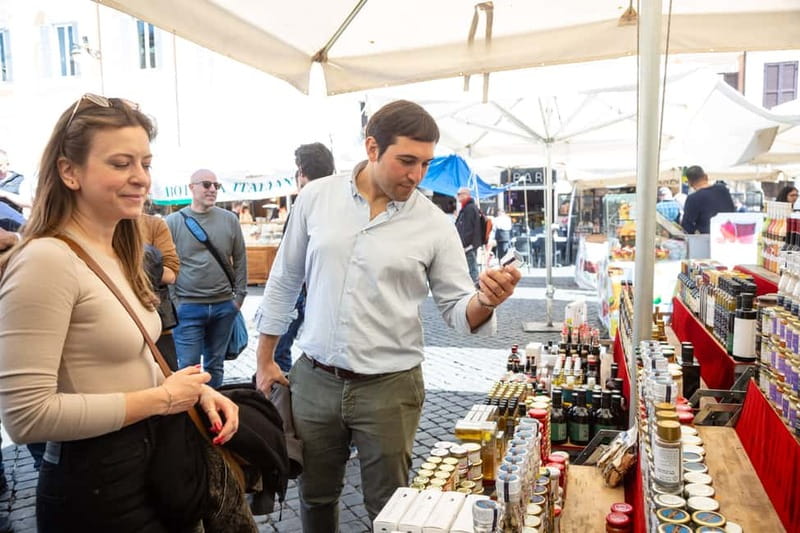
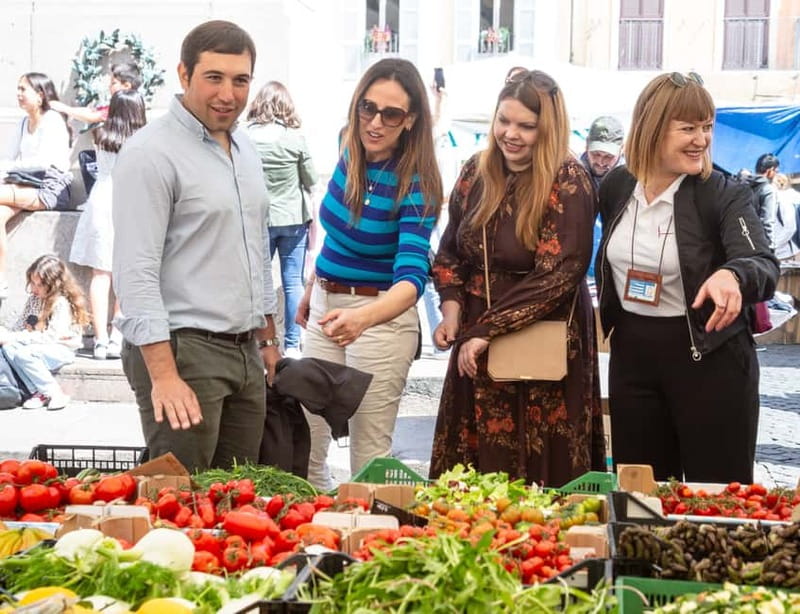
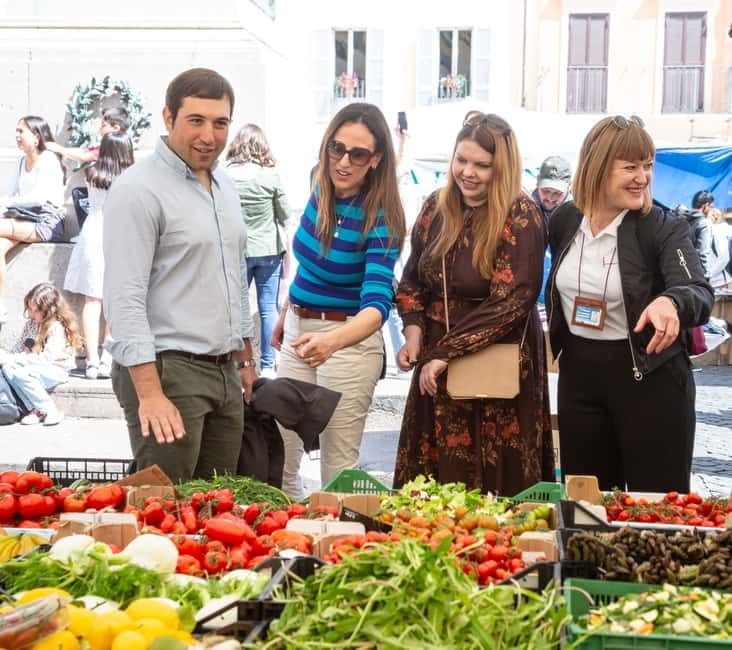
Morning tours add the local market at Campo de’ Fiori. This is the best time to book if you enjoy seeing ingredients before tasting the finished dishes. You may see fruit and other market produce, while the guide explains how Roman cooking uses simple products with strong flavors.
Morning departures also include a tasting of olive oil, truffle products, and vinegar. These samples make the tour more useful than a simple snack crawl because you can learn what to look for when buying Italian pantry goods. The market portion is not offered on every departure, so check the available start time carefully.
Campo de’ Fiori can feel crowded and noisy, especially during market hours. That energy is part of the appeal, but it is not a quiet food setting. Keep your belongings close and expect to pause around other pedestrians rather than walk at a steady pace.
Supplì and porchetta, two Roman staples
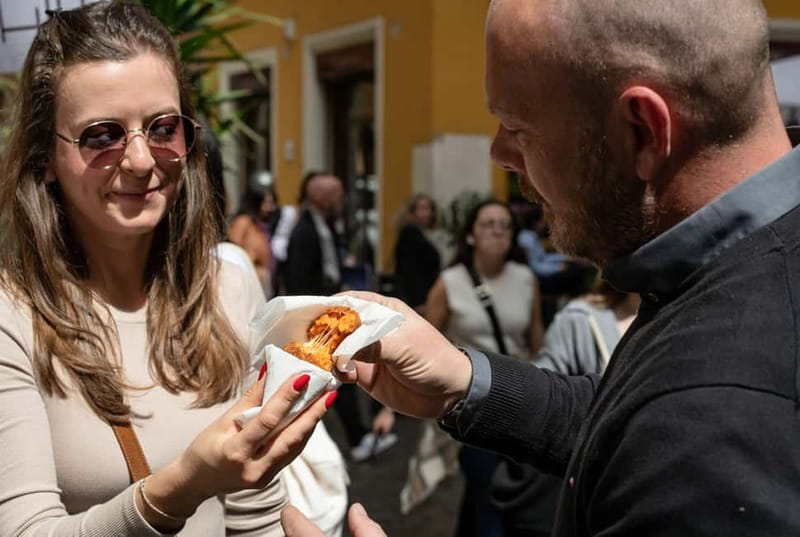
One early tasting introduces supplì, the Roman fried rice ball. Its crisp outer shell gives way to soft rice and a savory center. It is a classic quick bite, and a good guide will explain why it is different from other Italian fried rice dishes.
You also taste a panino filled with porchetta. The pork is seasoned and roasted, then served in a simple bread roll. This is hearty street food, not delicate dining, and it gives the tour a satisfying middle point after the first tasting.
The tour’s food stops are described as local restaurants, bakeries, and small food businesses rather than one long sit-down meal. That format lets you try several specialties without spending most of the afternoon at a table. It also means you should be ready to eat standing or in brief stops, depending on the venue.
Vegetarian alternatives are available, but you should tell the provider about allergies or dietary restrictions before the tour. The published limits are clear: this is not a vegan tour, and it is not suitable for people with gluten intolerance.
Roman pizza at a local bakery
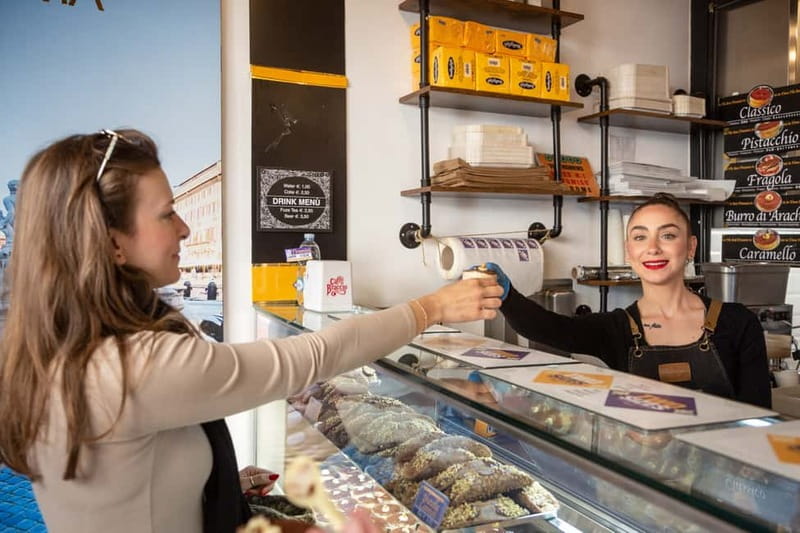
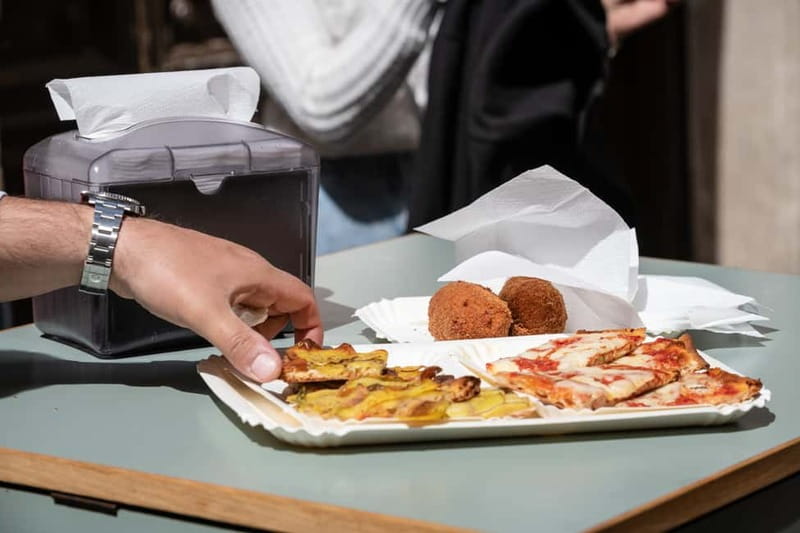
A bakery stop brings Roman-style pizza into the picture. Roman pizza is often served by the slice, making it an easy food to eat while walking. The point here is not a long restaurant meal, but a chance to compare this style with the round pizzas many visitors already know.
The bakery setting also helps you see how everyday food fits into Roman life. You are not only checking famous dishes off a list. You are tasting the quick, practical foods that locals might buy for lunch or a snack.
The exact toppings can vary, so do not book this tour expecting one fixed pizza recipe. The important detail is the Roman style and the chance to sample it alongside supplì and porchetta. Together, these foods show how much of Roman eating is based on bread, rice, pork, frying, and straightforward seasoning.
Same city, a completely different half-day:
- Vatican Museums & Sistine Chapel Tour with Optional Basilica
★ 4.3 · 67,413 reviews - Vatican Museums, Sistine Chapel & St Peter’s Basilica Guided Tour
★ 4.5 · 39,149 reviews - Rome: Colosseum, Palatine Hill and Roman Forum Guided Tour
★ 4.8 · 32,814 reviews - Rome: Guided Tour of Colosseum, Roman Forum & Palatine Hill
★ 4.7 · 27,897 reviews
The Jewish Ghetto and carciofo alla giudia
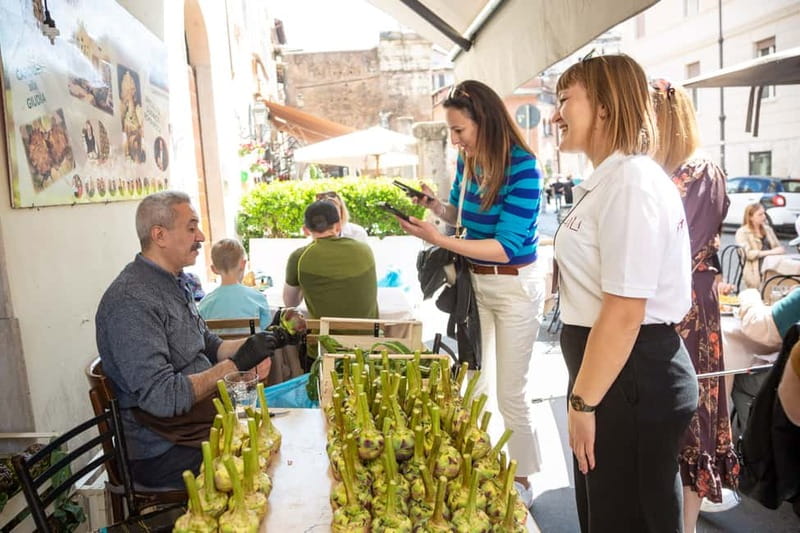
The Jewish Ghetto is the tour’s most meaningful food stop. Here, the guide connects the neighborhood’s Jewish heritage with its cooking traditions, including the famous carciofo alla giudia, or Jewish-style fried artichoke.
The artichoke is prepared so that the leaves open and crisp during frying. It is one of Rome’s signature dishes, but it is also a food with a clear cultural setting. Eating it near the Portico d’Ottavia gives the dish more context than ordering it anywhere in the city without knowing where the tradition comes from.
The neighborhood also gives the walk a change of mood. The route moves away from Campo de’ Fiori’s market activity and into an area known for its historic streets, restaurants, and landmarks. You pass the Portico d’Ottavia and may see the Turtle Fountain along the way, depending on the precise route and timing.
The Ghetto stop lasts longer than some of the earlier tastings, which makes sense. This is the place where food, place, and history are most closely joined. Guides such as Fiammetta and Julia are praised for explaining not just what is on the plate, but how Roman food relates to the city’s past.
Caesar, Teatro Marcello, and central Rome
Between food stops, the guide points out major sights rather than taking you inside them. At Largo di Torre Argentina, you learn about the assassination of Julius Caesar. The archaeological area is visible from the street, and the stop adds a memorable historical pause to the route.
You also pass Teatro Marcello, an ancient Roman theater, before continuing toward the Pantheon. These are useful orientation points because they place the food walk inside the central sightseeing area. If you have a busy Rome schedule, you can use the tour to connect several neighborhoods and then return later to explore the interiors on your own.
The Pantheon is a pass-by stop, not a guided visit. Do not expect timed entry or an extended explanation inside the building. The same applies to other landmarks along the route. The guide’s job is to bring the streets alive while keeping the food stops moving.
That balance suits people who want history without booking a full historical walking tour. You get stories about Roman food, local customs, and famous events, but the focus remains on eating.
Gelato near Piazza Sant’Eustachio
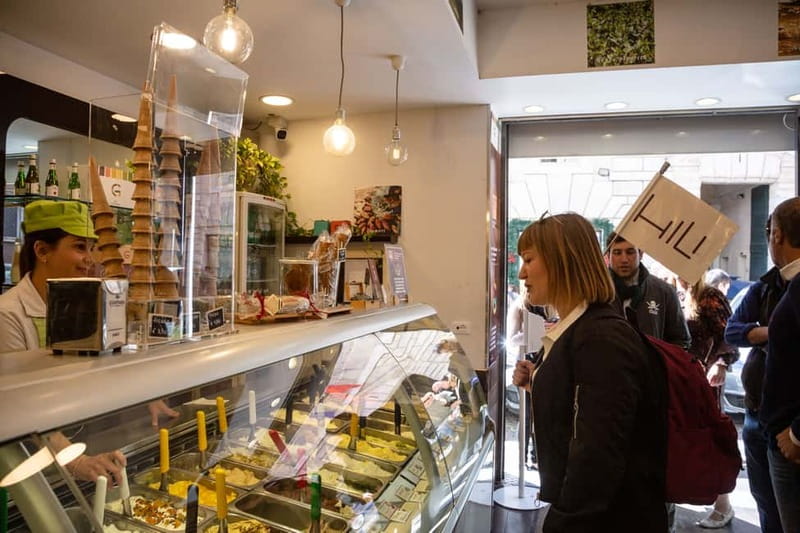
The final tasting is artisanal gelato at Gunther Gelateria, followed by the finish at Piazza di Sant’Eustachio. This is a smart ending: after fried food, pork, rice, and pizza, a cold dessert resets the palate.
The gelato stop is brief, around ten minutes, but it gives you a final chance to ask the guide for food recommendations. Several guides, including Claudio and Julia, are praised for offering suggestions for places to eat after the tour. That advice is most useful when you schedule the tour near the start of your Rome stay.
The route finishes near the Pantheon area, making it easy to continue sightseeing afterward. The stated meeting information says the activity ends back at the meeting point, while the route details place the finish at Piazza di Sant’Eustachio. Confirm the exact end point when booking if you need to meet a driver or make a timed reservation.
What the guide adds
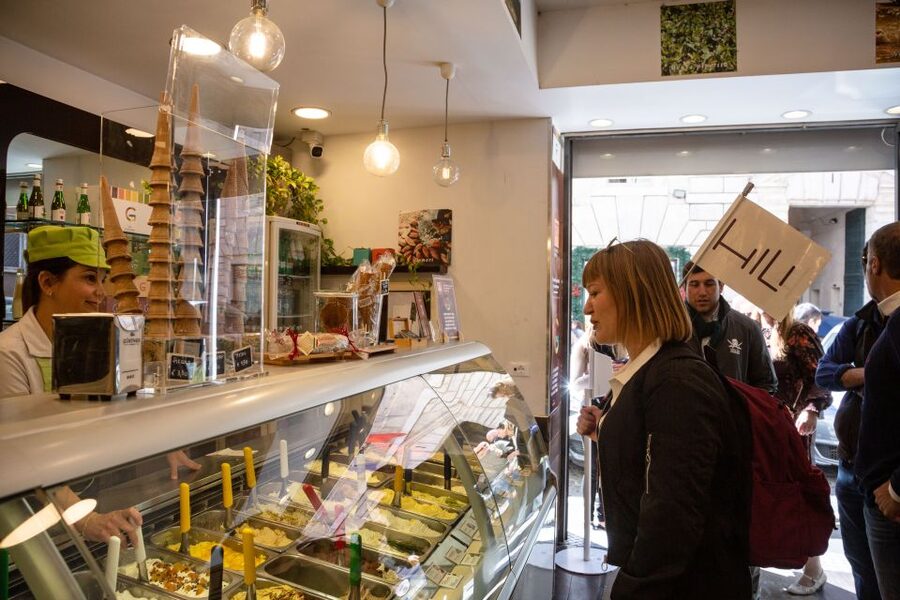
The food itself is available elsewhere in Rome. The guide is what turns separate snacks into a useful introduction to the city.
The strongest guide feedback centers on warmth, clear explanations, and a relaxed manner. Julia is repeatedly praised for being patient, friendly, and easy to understand. Claudio is noted for taking time to answer questions and tailoring recommendations. Fiammetta is praised for linking the food to Rome’s history, while Daniele is described as mixing good food with interesting stories.
Those details matter because a food tour can easily become a rushed list of tastings. Here, the guide is expected to explain how Roman food differs from broader Italian cooking and to point out details you might miss while walking alone. Some guides also make the experience comfortable for families and teenagers, who may appreciate the food more once the historical stories and informal atmosphere enter the picture.
The group size is not specified, so do not assume a private tour or a tiny group. The experience is guided in English, and you should be ready to walk through busy central streets at a steady but manageable pace.
Is $36 a fair price?
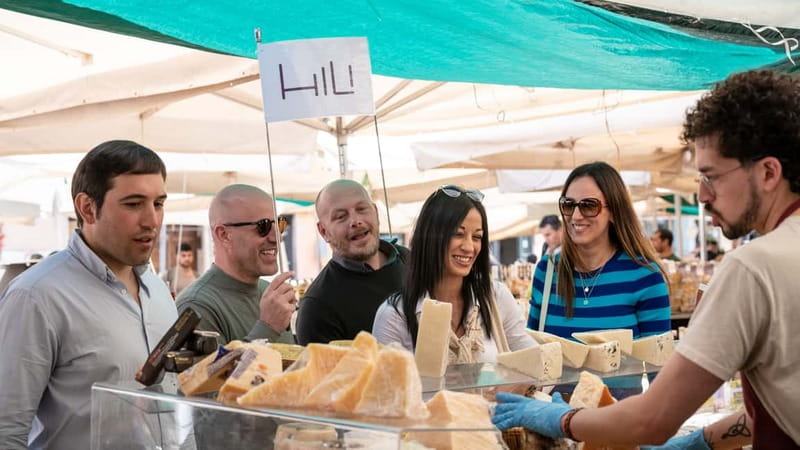
At $36 per person, the tour offers solid value if you plan to eat every tasting and use the guide’s advice afterward. You receive a 2.5-hour guided walk, five food tastings, a visit to Campo de’ Fiori and the Jewish Ghetto, and historical commentary in one of Rome’s most central areas.
The value is strongest on a morning departure. The market and the added olive oil, truffle, and vinegar tasting give you more than a simple sequence of prepared snacks. Evening or non-morning departures may still offer the core food tastings, but they do not include those market-based elements.
You should also factor in what is not included. Drinks cost extra, and the tour is not a full restaurant meal with multiple courses and table service. Still, the food is substantial enough to replace a light lunch for many people, which helps keep the total cost reasonable.
Free cancellation up to 24 hours before the activity and the option to reserve now and pay later add useful flexibility. These are practical advantages when your Rome plans may shift.
Who should book this food walk?
I would choose this tour for a first or second day in Rome. You get an early lesson in local specialties, see several central neighborhoods, and can ask for restaurant ideas before making more meals of your own.
It suits food-focused visitors who want more than pizza and pasta, especially anyone curious about supplì, porchetta, fried artichokes, and Roman-style pizza. It also works well for families, since the route mixes short walking stretches, small tastings, landmarks, and stories rather than requiring a long formal meal.
It is less suitable if you want a quiet, seated culinary experience, a private guide, or a strictly vegan or gluten-free menu. People who dislike fried foods or pork should also check the available vegetarian alternatives before booking.
The tour is listed as wheelchair accessible, but the route includes ordinary city walking and food stops in several different locations. If you use a wheelchair, confirm current route conditions and access details in advance.
My verdict: book it early in your Rome stay
Book this tour if you want Rome explained through its everyday food and central neighborhoods. The strongest reasons are the five varied tastings, the Jewish Ghetto stop, the morning market option, and guides who add useful history without turning the walk into a lecture.
I would pick a morning departure for the fullest version of the experience. Arrive hungry, report allergies before starting, bring money for drinks, and leave your evening free of a heavy restaurant booking. At $36, it is a sensible introduction to Roman food, especially when you treat the guide’s later restaurant suggestions as part of the value.
FAQ
How long does the Rome food tour last?
The tour lasts 2.5 hours. Starting times vary, so check availability when booking.
Where does the tour start?
Meet your English-speaking guide at the fountain in the center of Piazza di San Simeone.
What food is included?
The tastings include supplì, a panino with porchetta, Roman-style pizza, Jewish-style fried artichokes, and artisanal gelato. Morning tours also include olive oil, truffle, and vinegar tastings.
Does the tour visit the Campo de’ Fiori market?
Morning tours include a visit to the local market at Campo de’ Fiori. The market stop is not included on every departure.
Are vegetarian, vegan, or gluten-free options available?
Vegetarian options are available. The tour is not suitable for vegans or people with gluten intolerance, and you should report allergies or dietary restrictions in advance.
Are drinks included, and can I cancel?
Drinks are not included. You can cancel up to 24 hours before the tour for a full refund, and the booking option allows you to reserve now and pay later.
Newest Rome tours we have reviewed
- Private TikTok Video Making in Rome★ 5.0 · 7 reviews
- Assisi, Orvieto and Civita di Bagnoregio Full Day Tour from Rome★ 4.5 · 45 reviews
- Assisi & Saint Francis Path Tour from Rome★ 5.0 · 45 reviews
- Assisi and Cascia Private Day Tour from Rome with Lunch★ 5.0 · 10 reviews
- Art Class in the center of Rome!★ 4.0 · 4 reviews
- Art & Craft: Beer Tour with Street Art in Rome★ 4.5 · 6 reviews
- Arrival in Rome: Airport Transfer & Exclusive City Introduction★ 5.0 · 3 reviews
- From Rome: Private Day-Tour of Tuscany★ 5.0 · 16 reviews
Rome Food Tours, compared.
Winner 2025 Rome Twilight Trastevere Food Tour by Eating Europe
Read our review →
Trastevere or Jewish Quarter Street Food Tour
Read our review →
Rome Food Tour: Unlimited Tastings with Fine Wine & Barolo
Read our review →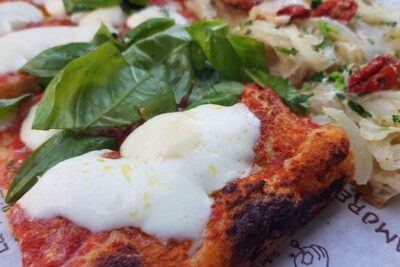
Trastevere Food tour with Free-Flowing Fine Wine
Read our review →
Award Winning Trastevere Group Food Tour with Wine
Read our review →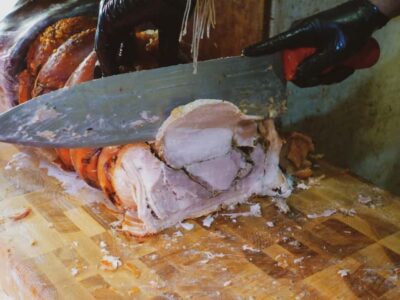
Food Tour with Unlimited Food and Barolo Wine
Read our review →Browse the lists this tour appears in