
Reviewed · ROME CATACOMBS TOURS
Rome: Catacombs of Domitilla Entry Ticket & Guided Tour
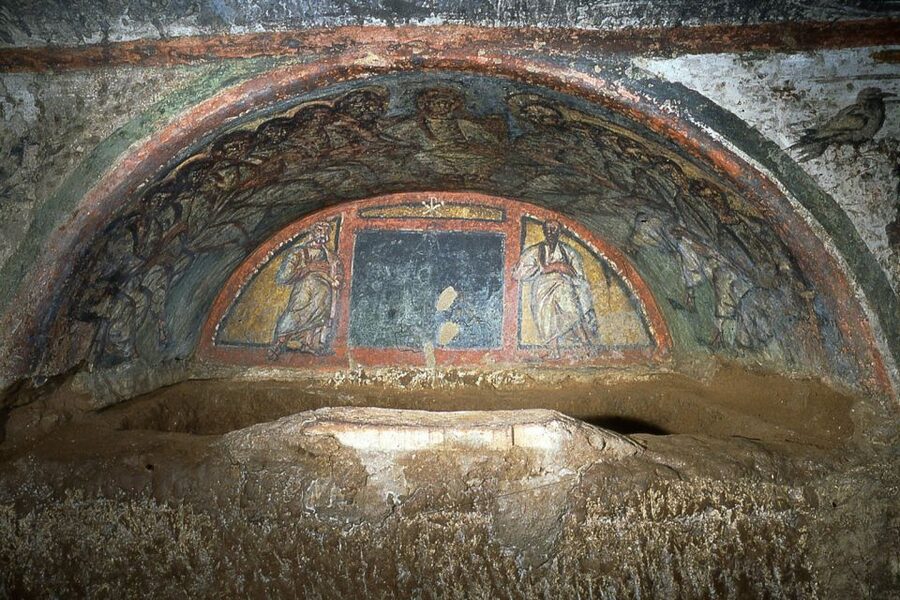
The Catacombs of Domitilla take you below Rome into a cool, quiet burial world cut through the soft stone. The site’s vast network extends for about 16 kilometers, though your 30-minute guided visit covers only a small section. Along the way, you see early Christian and pagan frescoes, burial chambers, and an underground basilica tied to the martyrs Nereus and Achilleus.
I like the mix of art and serious history here. You are not simply walking through dark tunnels: your guide explains how a former pagan burial area became Christian, how the chambers grew, and why the site mattered to Christian communities. I also like the small groups of up to 10 people, which make it easier to hear the guide and ask questions.
The main drawback is that the visit is short for such a large site, and only part of the catacombs is open. You also cannot take photographs inside, and reaching the meeting point by public transport may take more planning than expected.
Key points to know before you go
- The catacombs extend for roughly 16 kilometers: You will not walk that entire network, but the scale helps explain why Domitilla is one of Rome’s major underground cemeteries.
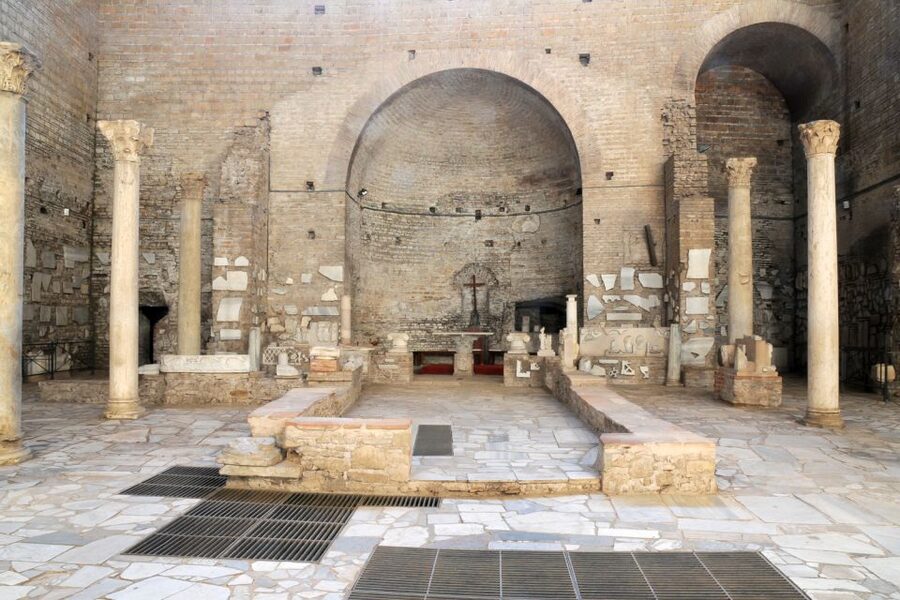
- A rare underground basilica is part of the story: The crypt linked with Nereus and Achilleus was enlarged into a basilica in the late fourth century.
- Pagan and Christian art appear side by side: This gives you a clearer view of how the burial ground changed over time.
- The tour lasts 30 minutes: It works well as a focused historical stop, not as a half-day outing.
- English and Italian tours are available: Guides have received strong praise for clear explanations and lively answers to questions.
- Photography is forbidden: Bring your attention rather than your camera, and expect to rely on memory afterward.
Why Domitilla feels different from Rome’s open-air ruins
Rome usually presents its ancient past in broad daylight, among traffic, piazzas, and crowds. At Domitilla, the setting changes as soon as you go underground. The stone walls close around you, the air is cool, and the burial spaces make the city above feel very far away.
That change in mood is the point. You are seeing a cemetery, not a palace or public monument. The chambers were made for the dead, and the Christian sections also reflect a community protecting the memory of its martyrs. The quiet atmosphere can feel solemn rather than entertaining, so I would not treat this as a casual sightseeing stop.
The catacombs are also useful for understanding how ancient Rome changed religiously. Domitilla began with burial grounds on land connected with Flavia Domitilla and her freedmen. The site later developed into a Christian cemetery, with new corridors and rooms added as the community grew.
Flavia Domitilla is linked to the imperial family through her relation to Flavius Clemens, consul in AD 95. As a Christian, she was exiled by Emperor Domitian to the island of Ponza, where she died. The story gives the site an early connection with Christianity and the Roman ruling world, though the underground chambers themselves are best understood as a large burial complex that changed over many years.
More catacombs tours in Rome:
- Rome: Crypts and Catacombs Underground Tour with Transfers
★ 4.6 · 5,341 reviews - The Original Roman Crypts and Catacombs Tour with Transfers
★ 4.5 · 4,896 reviews - Rome: Catacombs of St. Callixtus Entry Ticket & Guided Tour
★ 4.6 · 3,037 reviews
What you see in the first underground chambers
The catacomb has two main levels, and the tour introduces you to the way the complex was built and altered. Rather than one grand tunnel, think of a network of passageways, chambers, and burial spaces cut into the ground.
One important area is known as the Hypogeum of the Flavians. In the nineteenth century, archaeologist Giovanni Battista de Rossi believed he had identified the tombs of Christian members of Flavia Domitilla’s family there. The area itself began as a pagan hypogeum, probably dating from the late second or early third century, and was later taken over and expanded by Christians.
That change is one of the most useful parts of the visit. You can see how religious communities sometimes reused existing burial grounds instead of starting from scratch. The art and layout do not belong to one single moment, so the catacombs offer clues about several stages of Roman life.
Your guide helps connect the spaces to their purpose. Burial niches and chambers are not just architectural features. They show how families and religious communities organized remembrance, marked identity, and cared for the dead. Without explanation, some sections could look like repetitive stone corridors. With a guide, the pattern becomes easier to read.
The tour is conducted in English or Italian, with a small group of no more than 10 people. That matters underground, where sound can carry unevenly and a large crowd would make it harder to follow the explanation. A small group also gives you a better chance to ask about the frescoes, burial customs, or restoration work.
The frescoes: pagan images beside Christian symbols
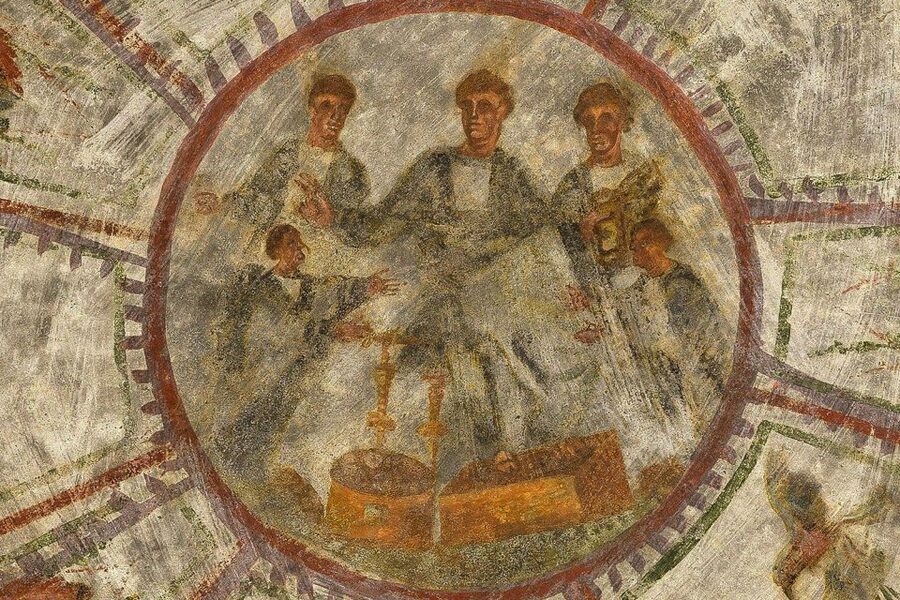
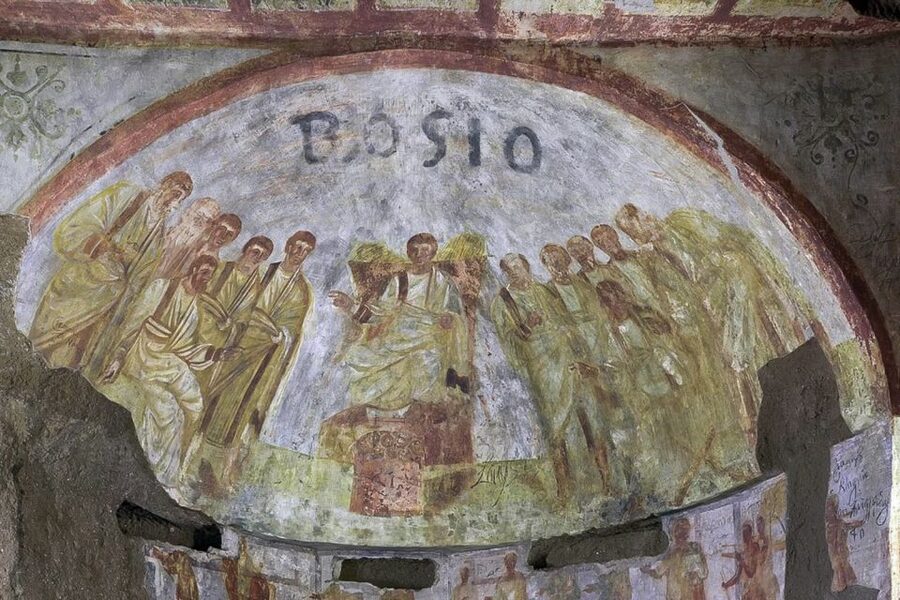
Domitilla is especially worthwhile for its combination of pagan and Christian frescoes. This is not a clean break between one faith and another. Instead, the walls show a burial site that developed over time and absorbed new religious meaning.
Some imagery belongs to the earlier pagan use of the hypogeum. Other paintings reflect Christian beliefs and the way early Christians remembered their dead. The mixture gives you a more accurate picture of late Roman society than a simple story of old religion disappearing and new religion taking over overnight.
The frescoes are also fragile. Underground humidity, age, and repeated exposure can damage painted surfaces, so restoration is part of the story. Your guide explains the delicate work needed to preserve them, which helps you understand why parts of the catacomb may feel restrained or protected.
Do not expect a large gallery of bright, intact paintings. The value lies in seeing surviving traces in their original setting. You are looking at art where it was used, among burial spaces, rather than in a modern museum display. Since photography is not allowed, take time to study what you can see while you are there.
The no-photo rule is a real consideration. Some people find it frustrating because the visit is memorable but hard to document afterward. I understand that complaint, yet the restriction also keeps phones from distracting you and helps protect the site. If recording the experience is important to you, this may not be the right Rome activity.
The crypt of Nereus and Achilleus
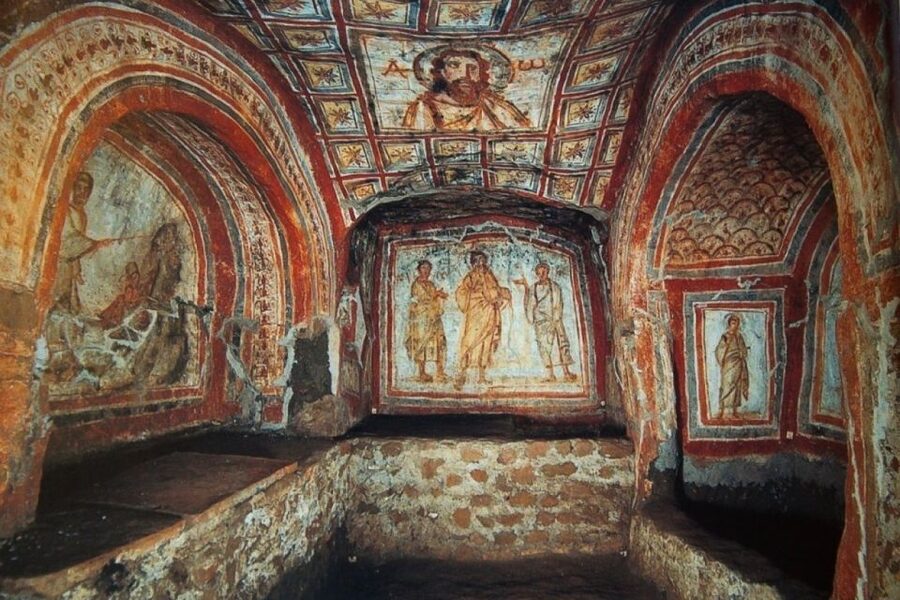
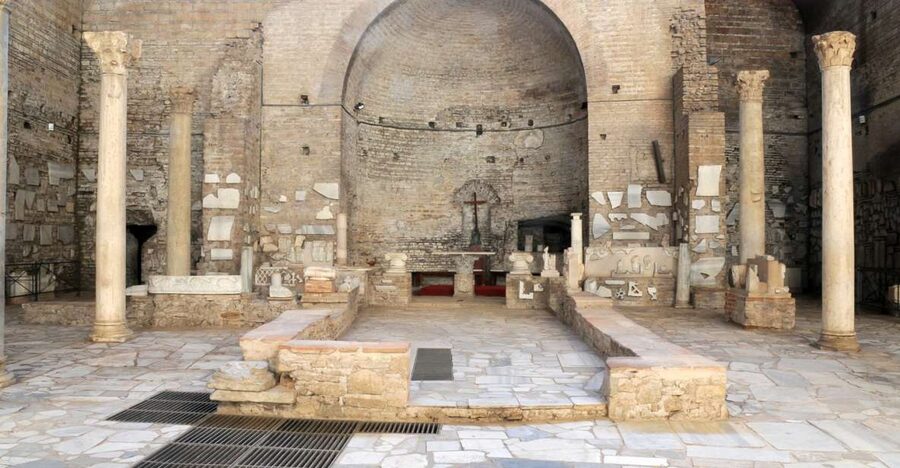
The most important Christian section is connected with the martyrs Nereus and Achilleus. Toward the end of the third century, their bodies were placed in a crypt on the second level. Pope Damasus later transformed the crypt into a small basilica between AD 366 and 384.
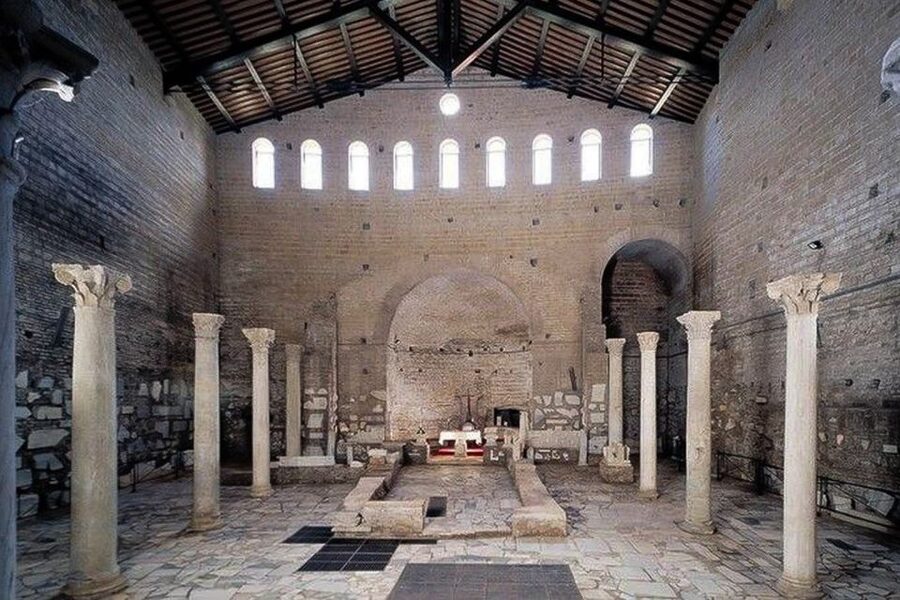
Pope Siricius enlarged the building between AD 390 and 395, bringing it closer to the size seen today. That makes the basilica a key reason to choose Domitilla. It is not simply another corridor in a large cemetery. You are seeing a place that was reshaped for Christian worship and remembrance.
The basilica also helps explain the importance of martyrs in early Christianity. A burial site connected with respected religious figures could become a place of devotion, not just a family cemetery. The tour uses this part of the catacomb to show how burial, worship, and memory became closely linked.
You should keep your expectations practical. The underground basilica is not a complete church with a high roof and open views. It is an enclosed, ancient structure below the modern city. Its appeal comes from the setting and history, especially when you realize that the space was altered for worship many centuries ago.
For me, this is the strongest part of the tour. The frescoes reward careful attention, but the basilica gives the visit a clear focus. If your time in Rome is limited, this is the detail to remember when deciding if Domitilla suits your interests.
More tickets and entry passes in Rome:
- Rome:Hop-On Hop-Off Panoramic Open Bus Ticket 3 Circuits x 1
★ 4.0 · 15,405 reviews - Vatican Museums & Sistine Chapel Skip-the-Line Entry Ticket
★ 4.4 · 13,838 reviews - Vatican Museums & Sistine Chapel Skip-the-Ticket-Line Tour
★ 4.3 · 10,486 reviews - Rome: St. Peter’s Basilica & Dome Entry Ticket & Audio Tour
★ 4.2 · 7,537 reviews
A short tour with a serious subject
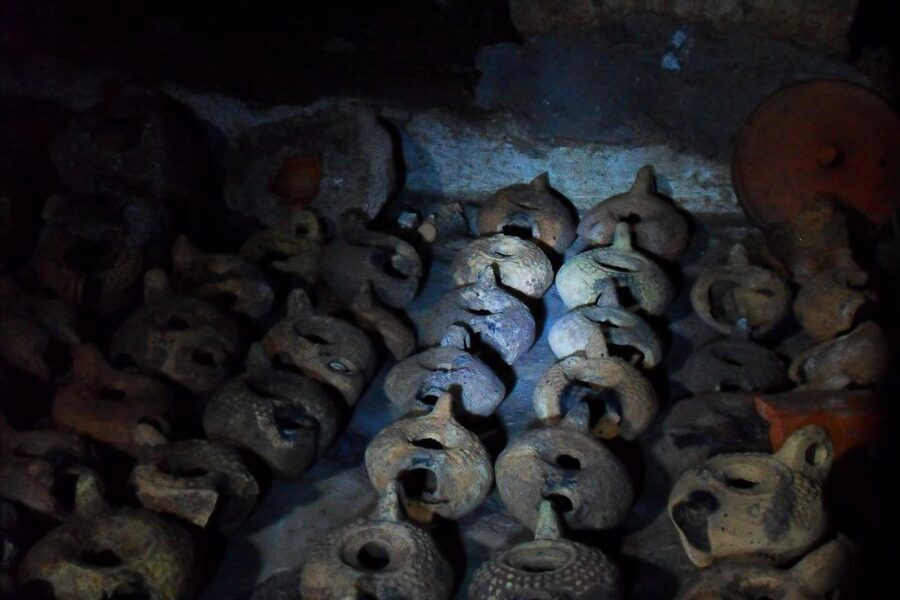
Thirty minutes is enough to introduce the main areas, but it is not enough to explore the catacombs at length. That short duration can be helpful if you are fitting Domitilla between other Rome plans. You get a concentrated visit without giving up a full morning or afternoon.
It can also feel rushed. The complex is one of the largest underground cemeteries in Rome, yet you see only a limited portion of it. One Polish-language visitor specifically noted that only part of the catacombs is open to the public, while still considering the site worth seeing. That is a fair description of the tradeoff.
You should arrive ready to listen. The tour is not designed for wandering at your own pace or stopping for long periods at every chamber. The guide sets the rhythm, points out the important sections, and explains the site as you move through it.
The small group makes the brief format work better. A guide can speak to 10 people without the visit becoming a crowd-management exercise. Andrea, one guide praised for a January visit, was described as friendly, professional, and passionate about history and art. A German-language guide was also singled out for calmly explaining the site and answering questions.
Those details matter because the quality of a catacomb tour depends heavily on the person leading it. The walls themselves cannot explain the chronology, the frescoes, or the role of the martyrs. A clear guide turns a short underground walk into a useful lesson.
Getting to Via delle Sette Chiese
The entrance is on Via delle Sette Chiese in Rome, and you should go directly to the catacomb ticket office. Show your reservation at least 10 minutes before the scheduled start.
Allow extra time for the journey. One visitor reported that reaching the site by bus and train at the appointed time was not possible, so I would not plan a tight connection from another attraction. The meeting point is not the sort of place where you want to arrive at the last second, especially when the tour has a fixed departure.
Wear comfortable clothes. That is the only clothing guidance provided, but it makes sense for an underground site with stone passages and a cool atmosphere. The tour is not suitable for wheelchair users or people with mobility impairments, so check this carefully before booking.
The location also affects how you plan the rest of the day. Domitilla is not presented as a quick stop beside the Colosseum or Trevi Fountain. Give yourself time to reach Via delle Sette Chiese, find the ticket office, and return to your next activity.
What the $16 price really buys
At about $16 per person, the cost is reasonable if you want a guided introduction to an important Roman burial site. The price includes entrance and a live guide, so you are not paying admission only and then trying to understand a complicated network on your own.
The value is strongest for visitors who care about archaeology, early Christianity, Roman art, or unusual places below the city. A guide makes the difference between seeing dark passageways and understanding why the site changed from a pagan hypogeum to a Christian cemetery and later included a basilica.
The value is weaker if you expect a long tour, broad access to the entire 16-kilometer network, or the freedom to take photographs. You are paying for a short, focused explanation of a restricted section.
Flexible booking also helps. You can reserve now and pay later, and cancellation is allowed up to 24 hours before the visit for a full refund. Those terms are useful when your Rome schedule is still changing, but they do not remove the need to plan the route carefully.
The overall rating is 4.5 from 135 reviews, which fits the experience as described: strong guide quality and a memorable setting, balanced by the short duration, restricted access, and no-photo rule. I would judge it as good value for the right audience rather than an essential choice for every first visit to Rome.
Who will appreciate Domitilla most
I would choose this tour if you want a quieter and more unusual history stop. It suits you especially well if you enjoy seeing places in their original setting and are willing to trade broad access for a focused introduction.
It is a good match for:
- People interested in early Christianity and Christian martyrs
- Visitors who enjoy ancient art and frescoes
- Anyone curious about how pagan burial grounds became Christian
- History-minded visitors who prefer small groups
- Families with older children who can manage a serious, underground visit
- Repeat visitors to Rome looking beyond the headline monuments
I would be more cautious if you dislike enclosed spaces, need step-free access, or want to take pictures at every stop. The visit may also disappoint you if you expect a long exploration, since the tour lasts only 30 minutes and public access covers just part of the site.
Language choice matters, too. Tours are available in English and Italian. The experience can be especially good when the guide matches your preferred language, since the history is detailed and the spaces are not always self-explanatory.
Should you book the Catacombs of Domitilla?
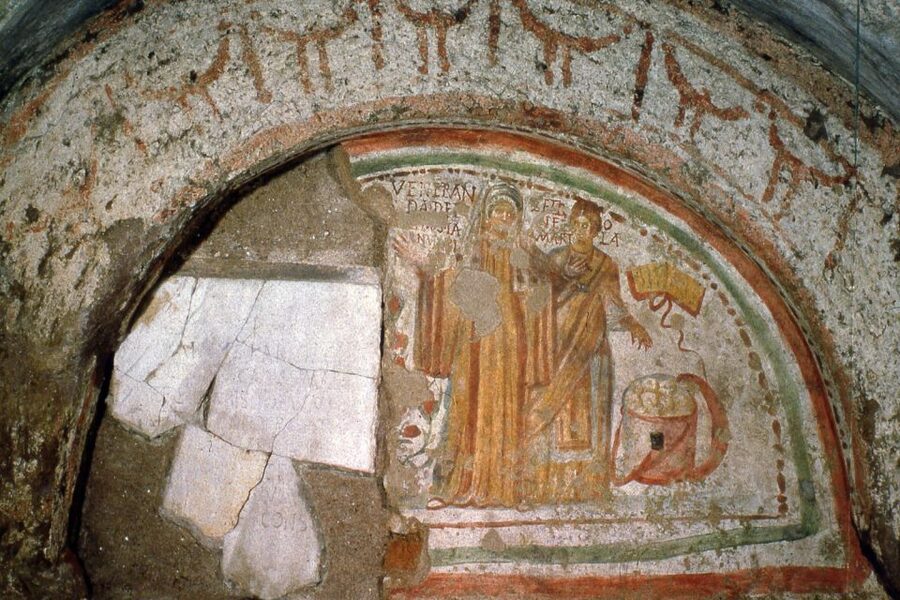
Book it if the idea of standing in an ancient cemetery below Rome interests you more than another surface-level monument. The combination of pagan and Christian frescoes, the story of Flavia Domitilla, and the basilica linked with Nereus and Achilleus gives the visit real substance.
Go in with clear expectations. You will see a limited part of a huge complex, spend about 30 minutes underground, and leave your camera put away. You should also allow extra time to reach Via delle Sette Chiese and arrive at the ticket office at least 10 minutes early.
For $16, this is a sensible addition to a Rome itinerary for history and art enthusiasts. It is not a full underground expedition, but it offers a rare look at how Romans buried, remembered, and worshipped below the city.
FAQ
Where are the Catacombs of Domitilla located?
The catacombs are on Via delle Sette Chiese in Rome, in the Lazio region of Italy.
How long does the guided tour last?
The tour lasts 30 minutes.
What is included in the ticket?
The ticket includes the entrance fee and a live tour guide.
Which languages are available?
Guided tours are available in English and Italian.
How large is the tour group?
The group is limited to 10 participants.
Can I take photographs inside?
No. Photography is not allowed inside the catacombs.
How early should I arrive?
Go directly to the catacomb ticket office and show your reservation at least 10 minutes before the scheduled tour.
Is the tour suitable for wheelchair users?
No. The experience is not suitable for wheelchair users or people with mobility impairments.
What should I wear?
Comfortable clothes are recommended.
Can I cancel the booking?
Yes. You can cancel up to 24 hours in advance for a full refund. You can also reserve now and pay later.
Newest Rome tours we have reviewed
- Private TikTok Video Making in Rome★ 5.0 · 7 reviews
- Assisi, Orvieto and Civita di Bagnoregio Full Day Tour from Rome★ 4.5 · 45 reviews
- Assisi & Saint Francis Path Tour from Rome★ 5.0 · 45 reviews
- Assisi and Cascia Private Day Tour from Rome with Lunch★ 5.0 · 10 reviews
- Art Class in the center of Rome!★ 4.0 · 4 reviews
- Art & Craft: Beer Tour with Street Art in Rome★ 4.5 · 6 reviews
- Arrival in Rome: Airport Transfer & Exclusive City Introduction★ 5.0 · 3 reviews
- From Rome: Private Day-Tour of Tuscany★ 5.0 · 16 reviews
Rome Catacombs Tours, compared.
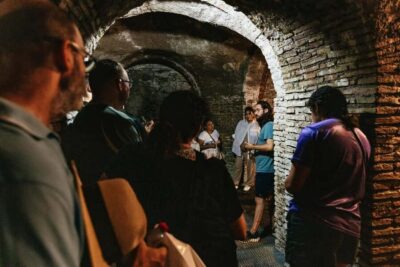
Crypts and Catacombs Underground Tour with Transfers
Read our review →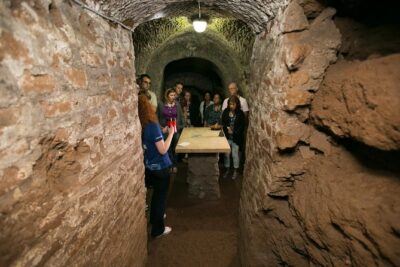
The Original Roman Crypts and Catacombs Tour with Transfers
Read our review →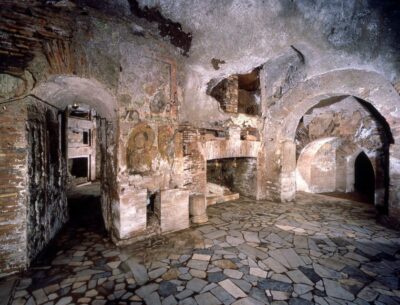
Catacombs of St. Callixtus Entry Ticket & Guided Tour
Read our review →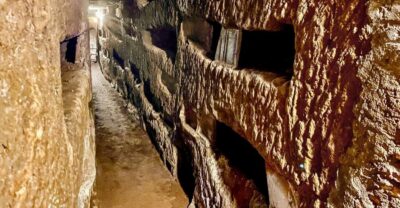
Rome EBike Tour: Appian Way, Catacombs & Roman Aqueducts
Read our review →
Catacombs and Capuchin Crypt Guided Tour with Transfer
Read our review →
Appian Way, Catacombs, & Roman Aqueducts E-bike Tour
Read our review →Browse the lists this tour appears in