
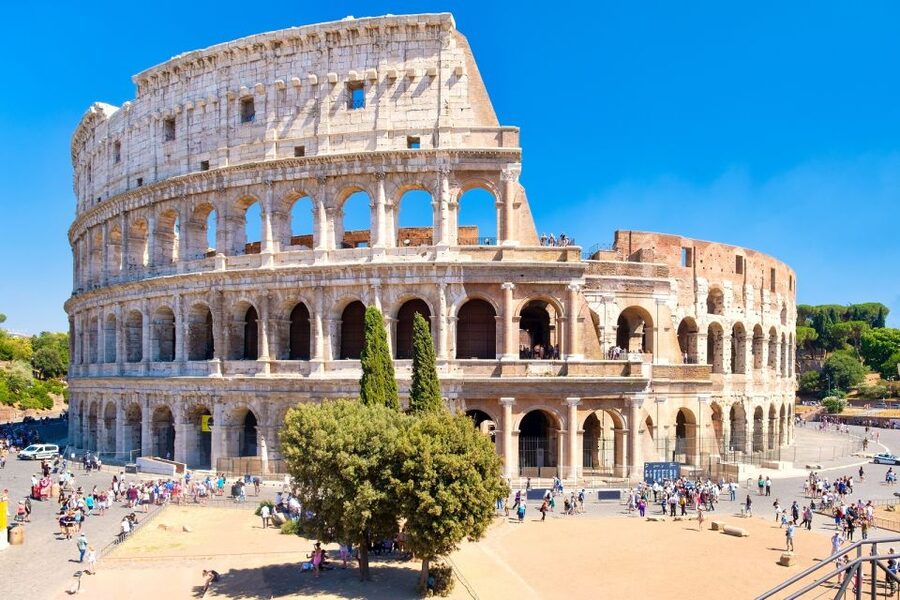
Reviewed · ROME COLOSSEUM TOURS
Rome: Colosseum and Ancient Rome Guided Walking Tour
The best part of this tour is the way it links three major Roman sites into one walk. You move from the Colosseum’s first floor to the ruins of imperial palaces on Palatine Hill, then down into the Roman Forum, where the scattered stones begin to make sense through stories and old photographs.
I like the live commentary, especially when the guide uses humor and before-and-after images to show how the ruins once looked. I also like the Palatine Hill Terrace, which gives you a broad view over Rome’s ancient center. The main drawback is physical: this is a hilly, step-heavy tour, and the advertised skip-the-ticket-line access does not remove the airport-style security queue at the Colosseum.
Key points at a glance
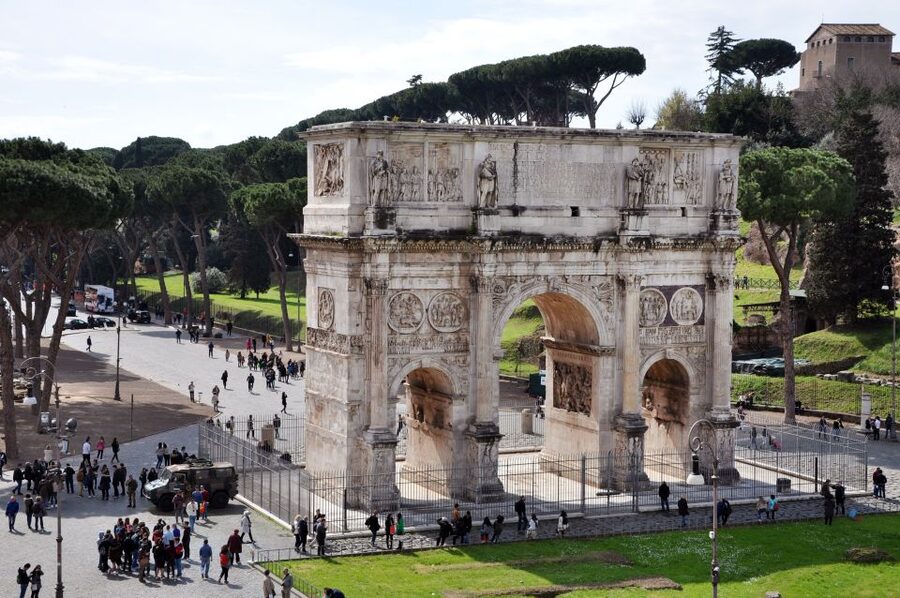
- Three essential sites in one visit: The Colosseum, Palatine Hill, and Roman Forum are covered on foot.
- Guides who make the ruins readable: David, Radu, Alessandra, Adrian, and others have been praised for clear explanations, wit, and patient answers.
- First-floor Colosseum access: You see the amphitheater from the level once used by Roman spectators.
- Panoramic Palatine Hill view: The terrace gives you a useful visual link between the ruins, the Forum, and modern Rome.
- Headsets included: You can hear the guide while moving through busy archaeological areas.
- Plan for real walking: Comfortable shoes are essential, and the tour is not suitable for wheelchair users or people with mobility impairments.
Why this three-site route works

Rome’s ancient center can feel like a giant pile of broken columns if you walk through it without context. This tour gives the ruins a clear sequence: public spectacle at the Colosseum, imperial power on Palatine Hill, and civic life in the Roman Forum.
That order also helps you understand how the pieces fit together. The Colosseum shows Rome’s appetite for grand public entertainment. Palatine Hill connects you with the emperors who lived above the city. The Forum brings you back to government, religion, law, and daily business.
The tour lasts about 2.5 hours. That is a useful length for a first look, especially if you have only a few days in Rome. You get a guided introduction without giving up an entire day. The detailed schedule supplied for the visit assigns about 75 minutes to the Colosseum and 45 minutes each to the Forum and Palatine Hill, with an additional guided period at the start. Since access conditions can change, the order may be reversed, and the timing of each stop may shift.
More ancient Rome tours:
- Colosseum: Underground and Ancient Rome Tour
★ 4.7 · 12,691 reviews - Colosseum & Ancient Rome with Arena Floor Option I Max 6 People
★ 5.0 · 3,306 reviews - Rome: Colosseum, Ancient Rome Tour or Self AudioGuided Tour
★ 4.4 · 2,866 reviews
Meeting near Largo Gaetana Agnesi
The listed meeting point is at Largo Gaetana Agnesi 5, but the exact place can vary with the option you book. Read the confirmation carefully and arrive early. The meeting time may also be adjusted slightly, with advance notice if that happens.
This is one place where a little care saves stress. The Colosseum area is busy, and a late arrival can be hard to solve once the group has entered. One practical account describes a guide helping a late-arriving participant find the group, but you should not count on that. Give yourself enough time to reach the meeting point, identify the staff, and collect any required audio equipment.
Bring your passport or ID card. You also need comfortable shoes. The tour takes place on uneven ancient surfaces and includes an uphill section, so this is not the morning for new sandals or thin dress shoes.
Entering the Colosseum and seeing the arena
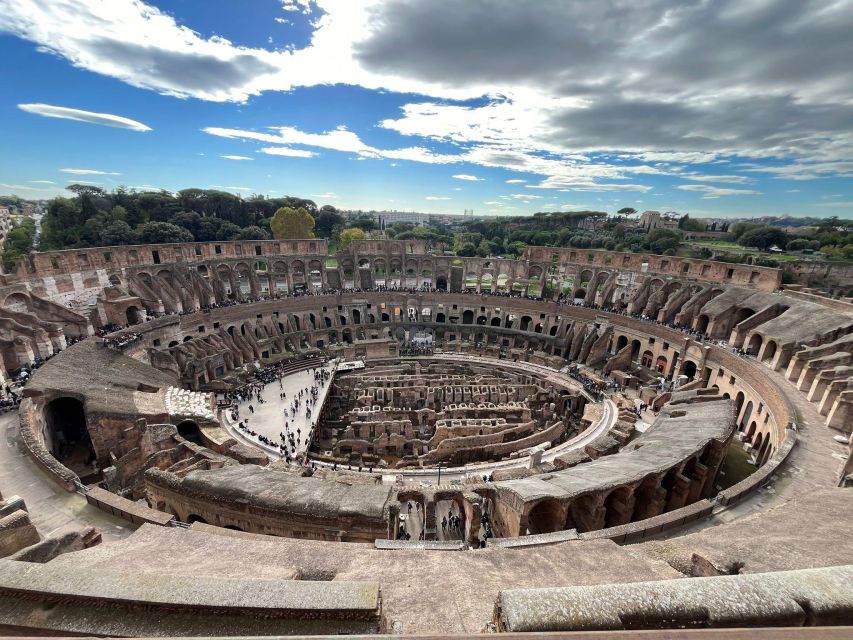
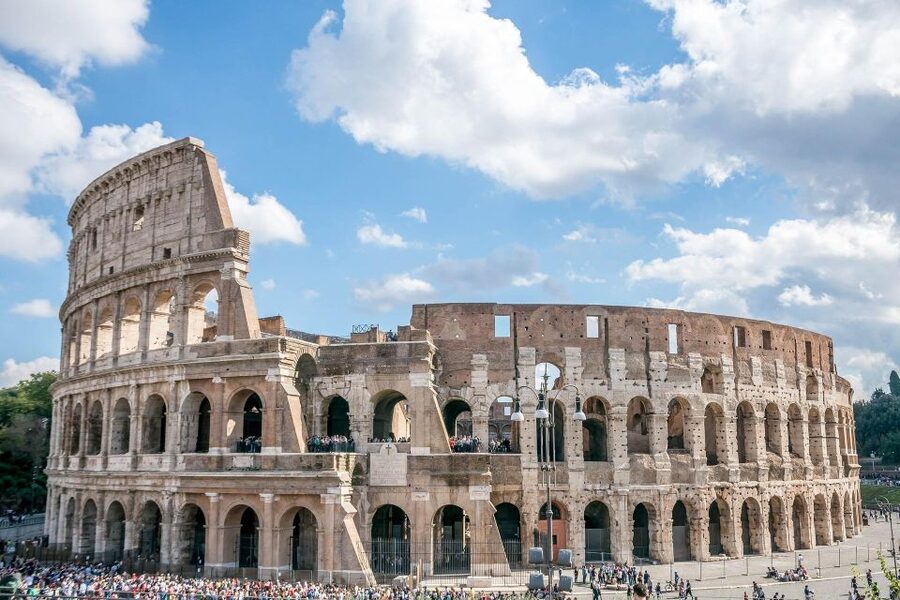
The Colosseum is the emotional high point for many people, and the first view inside does not need much help. The scale is startling. Yet a guide adds the details that keep the visit from becoming a quick circuit of photo stops.
You spend about 75 minutes here, with access to the first floor. From this level, you can look across the arena and picture the seating tiers filled with Roman spectators. The guide explains how the building worked and places the shows within Roman public life, helping you separate the real structure from the many modern myths attached to gladiators.
Several guides have been praised for making this section vivid without turning it into a dry lecture. David is often described as funny, direct, and easy to follow. Radu has been praised for his energy and for clearing up popular misconceptions about gladiatorial contests. Other guides, including Alessandra, Arian, Adnan, and Frederica, have been credited with answering questions and keeping the group involved.
Your guide will use a headset, which matters inside a crowded monument. Without one, you may catch only fragments of an explanation as people pass between you and the speaker. Headsets also let you look around while listening instead of standing shoulder to shoulder in a tight circle.
The important qualification is security. Skip-the-ticket-line entry means you do not wait in the standard ticket-purchase line, but everyone still passes through a metal detector. On busy days, this can create a queue. Build that possibility into your expectations, particularly during peak periods.
Walking the Palatine Hill in the emperors’ footsteps
After the Colosseum, the route climbs Palatine Hill. This section is more open and less immediately recognizable than the amphitheater, so the guide’s explanation becomes even more useful.
The hill is associated with Roman rulers and imperial residences. You walk among palace remains, courtyards, walls, and fragments that require some imagination. Before-and-after images can help here. One guide, Arian, was singled out for showing how the Palatine Hill and Colosseum changed over time, a simple visual aid that makes the ruins easier to read.
I like this part because it shifts the focus from the famous monument to the people who controlled the city. The Colosseum shows Rome performing for the masses. Palatine Hill shows the private and political world of those at the top.
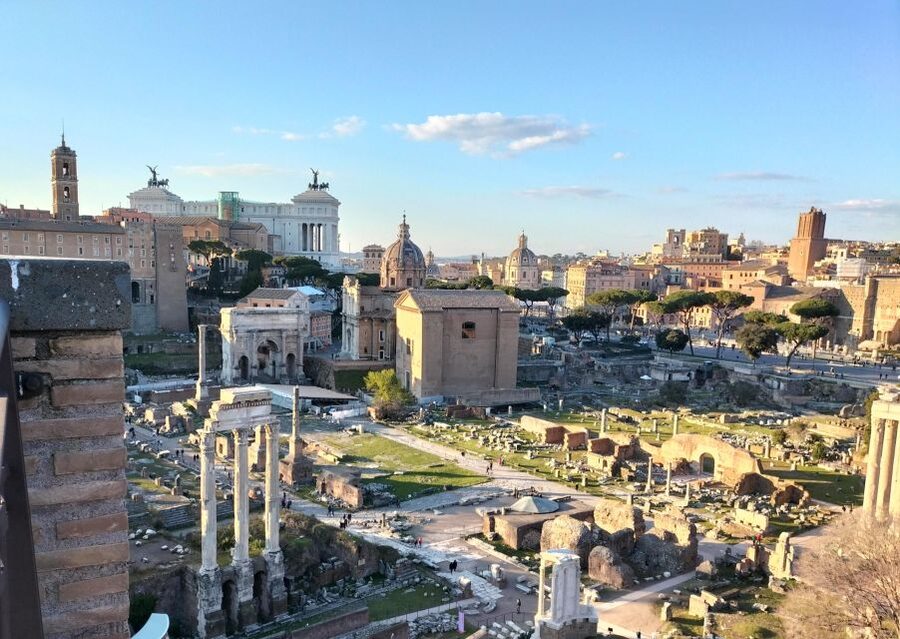
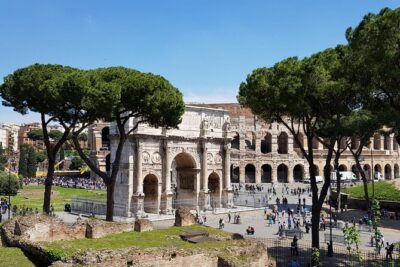
The terrace is the visual reward. From there, you get wide views over the ancient center and modern Rome. It is a good place to pause, take photographs, and understand the relationship between the hill, Forum, and amphitheater. Several guides are praised for allowing short breaks and time for pictures at key points, but this remains a walking tour, not a leisurely terrace visit.
The hill is also where the physical demands become clearer. You will be walking uphill and over uneven ground. If you have trouble with stairs, balance, or extended walking, this tour may be a poor fit. The experience is specifically not suitable for wheelchair users or people with mobility impairments.
More Colosseum tours in Rome:
- Rome: Colosseum, Palatine Hill and Roman Forum Guided Tour
★ 4.8 · 32,814 reviews - Rome: Guided Tour of Colosseum, Roman Forum & Palatine Hill
★ 4.7 · 27,897 reviews - Rome: Colosseum & Forum with Audio Guide App -Optional Arena
★ 4.2 · 24,770 reviews - Rome: Colosseum, Roman Forum and Palatine Hill Guided Tour
★ 4.5 · 23,903 reviews
Reading the Roman Forum with a guide
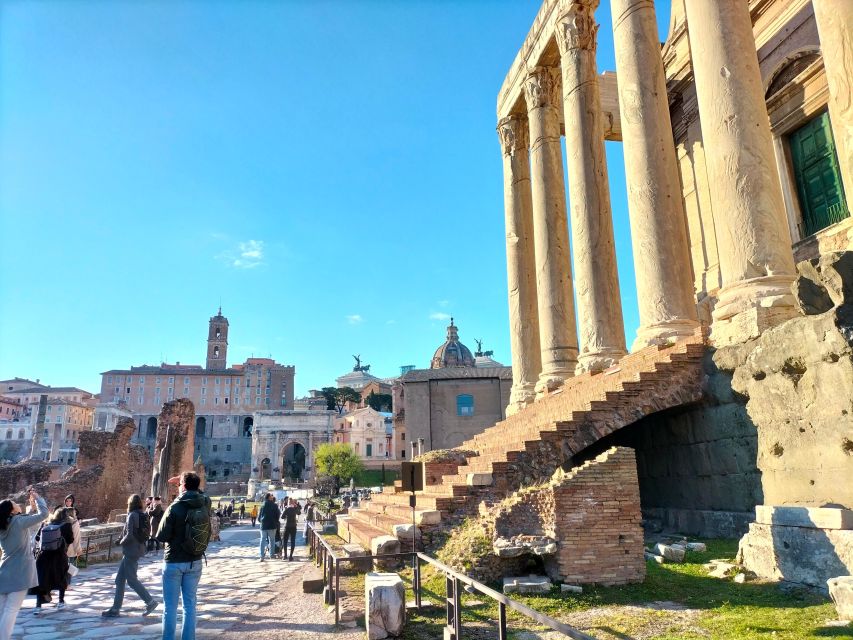
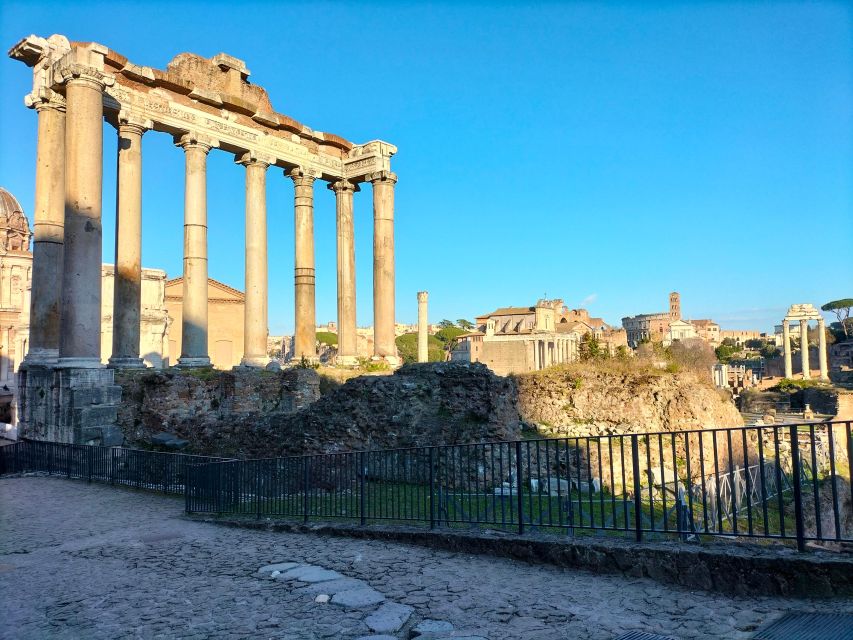
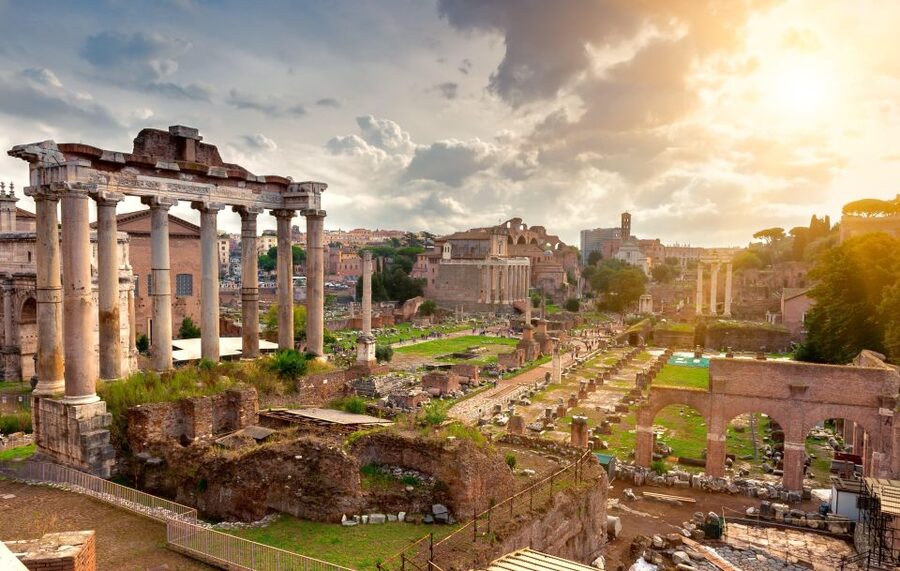
The route continues down into the Roman Forum, once the center of Roman public life. Today it is a spread of ruins, columns, roads, temples, and foundations. Without a guide, you can see the age of the place but miss its purpose.
The scheduled Forum portion is about 45 minutes. In that time, the guide gives you a framework for understanding what happened here and why the area mattered. The commentary focuses on stories, facts, and episodes that connect individual ruins with the workings of ancient Rome.
This is also the point where the tour’s speakers matter most. Maria, David, Radu, and other guides have been praised for mixing historical detail with humor. Frederica was noted for filling waiting periods with extra information rather than letting the group stand in silence. That can make a difference when access or crowd control creates a pause.
Do not expect every stone to receive a full explanation. Forty-five minutes is enough for a strong introduction, not a specialist study. If you already have a serious interest in Roman archaeology, you may want to return later with a book or an independent audio guide. For a first visit, the tour gives you the essential structure and leaves room for further exploring.
The listed drop-off point is at the Roman Forum on Via della Salara Vecchia 5. That means you finish near the ancient center rather than being returned to your hotel. You can continue sightseeing from there, but plan your next stop and water break before the tour ends.
The guide can make or break the morning
The strongest pattern in the feedback is the quality of the guides. Names repeatedly praised include David, Radu, Alessandra, Adrian, Arian, Frederica, and others. Their shared strengths are clear speech, strong command of the subject, humor, and a willingness to answer questions.
David is described as especially entertaining and precise, with a dry sense of humor. Radu is praised for his passion, energy, and ability to explain myths and daily life. Alessandra is noted for patience and careful explanations of art and monuments. These qualities matter because ancient Rome can quickly become a blur of dates and names.
You should still allow for variation. Guides have different accents and presentation styles, and one account found a guide slightly difficult to understand at times because of an Italian accent. The tour is offered in English, Spanish, German, and French, but your selected language and guide assignment should be checked when booking.
The headsets help, but they do not replace clear delivery. The best guides appear to keep people engaged with questions, jokes, visual comparisons, and pauses for photographs. You will get more from the tour if you listen actively and ask about details that catch your attention.
Is $58 a fair price?
At $58 per person, this is not the cheapest way to enter the ancient sites. You are paying for admission to the Colosseum, Roman Forum, and Palatine Hill, plus a live guide and headsets.
The value depends on how much explanation you want. If you are comfortable reading signs, using a guidebook, and working out the ruins alone, you could prefer a self-guided visit. But the Forum and Palatine Hill are far easier to understand when someone explains what you are looking at. The price also removes the need to organize three separate visits.
The ticket-line benefit has limits. You still face security screening, and a queue can form there on busy days. Even so, not having to sort out standard ticket entry is useful, especially for a first visit when you are still learning how Rome’s major sights operate.
The tour is strongest value for first-time visitors, families who want history presented in an accessible way, and anyone with only a short stay. It is less attractive if you want a slow photographic visit or have already studied these sites in detail.
What to bring and what to leave behind
Pack light. Large bags and luggage are not allowed, and the restrictions also include weapons, sharp objects, drones, selfie sticks, alcohol, drugs, sprays, aerosols, and glass objects.
A small day bag is the sensible choice, but the supplied rules specifically warn against large bags. Bring your identification, comfortable shoes, and anything you need for a few hours of outdoor walking. The Palatine Hill section can be tiring, so practical clothing is more useful than an outfit chosen only for photographs.
The group moves through major archaeological sites, so keep your phone ready for pictures but do not let photography replace the commentary. The terrace and Colosseum first floor are the places where you will most want a few minutes to look around.
Who should book this tour?
I would choose this tour if you want the ancient center explained by a person rather than assembled from labels. It suits you if you enjoy stories, questions, and a little humor along with your history.
Families can benefit from the lively delivery, particularly when the guide uses visual comparisons and dispels myths. It also works well for adults who want the main sights covered in one compact outing. The duration leaves the rest of your day open for lunch, museums, or another part of Rome.
I would think twice if you need step-free access, dislike group pacing, or want to linger at every ruin. The tour is not suitable for wheelchair users or people with mobility impairments, and the itinerary order may change. You should also be comfortable with security delays and a fair amount of walking.
Should you book it?
Book this tour if the Colosseum is a priority and you want the Roman Forum and Palatine Hill to mean more than a collection of old stones. The guide is the main reason to choose it, with repeated praise for clear explanations, humor, patience, and memorable details.
At $58, it offers solid value when you count the three site entries, headsets, and guided time. Just arrive early, bring identification, wear proper shoes, and expect security screening even with skip-the-ticket-line entry. If you want a focused introduction to ancient Rome and can manage the hills, this is a sensible way to begin.
FAQ
How long does the tour last?
The advertised duration is 2.5 hours. The timing of individual stops can change, and the order of the sites may be different from the planned sequence.
Which sites are included?
Entry to the Colosseum, Roman Forum, and Palatine Hill is included.
What languages are available?
The live guide is available in English, Spanish, German, and French.
Does skip-the-ticket-line entry mean there is no waiting?
No. You skip the standard ticket line, but you must still pass through a metal detector. On busy days, security may involve a queue.
Where does the tour meet?
The meeting point may vary according to the option booked. One listed meeting location is Largo Gaetana Agnesi 5. Check your booking details because the meeting time or location may change.
What should I bring?
Bring your passport or ID card and wear comfortable shoes.
Is the tour accessible for wheelchair users?
No. The tour is not suitable for wheelchair users or people with mobility impairments.
More walking tours in Rome
- Rome: Trastevere & Campo de Fiori Street Food Walking Tour
★ 4.9 · 2,768 reviews - Rome: Paranormal Night Walking Tour & Secret Backstreets
★ 4.9 · 1,921 reviews - Rome by Night Walking Tour – Legends & Criminal Stories
★ 4.5 · 1,003 reviews - Rome: Guided City Center Evening Sightseeing Walking Tour
★ 4.4 · 953 reviews
Newest Rome tours we have reviewed
- Private TikTok Video Making in Rome★ 5.0 · 7 reviews
- Assisi, Orvieto and Civita di Bagnoregio Full Day Tour from Rome★ 4.5 · 45 reviews
- Assisi & Saint Francis Path Tour from Rome★ 5.0 · 45 reviews
- Assisi and Cascia Private Day Tour from Rome with Lunch★ 5.0 · 10 reviews
- Art Class in the center of Rome!★ 4.0 · 4 reviews
- Art & Craft: Beer Tour with Street Art in Rome★ 4.5 · 6 reviews
- Arrival in Rome: Airport Transfer & Exclusive City Introduction★ 5.0 · 3 reviews
- From Rome: Private Day-Tour of Tuscany★ 5.0 · 16 reviews
Rome Colosseum Tours, compared.
Colosseum, Palatine Hill and Roman Forum Guided Tour
Read our review →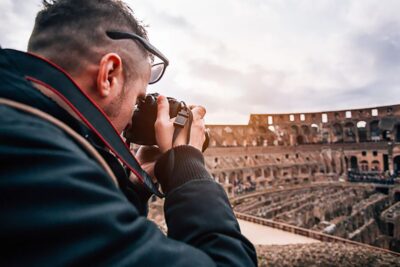
Guided Tour of Colosseum, Roman Forum & Palatine Hill
Read our review →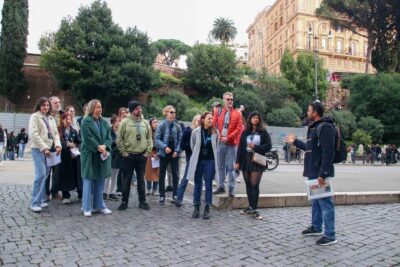
Colosseum & Forum with Audio Guide App -Optional Arena
Read our review →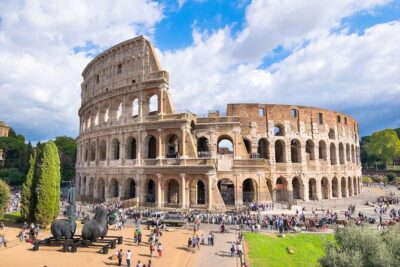
Colosseum, Roman Forum and Palatine Hill Guided Tour
Read our review →
Colosseum, Forum & Palatine Hill Tour & Optional Arena
Read our review →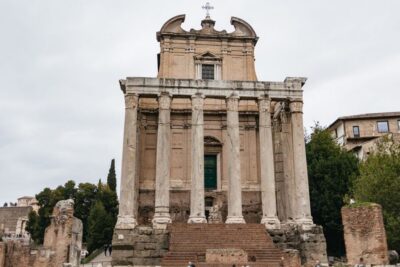
Colosseum, Palatine Hill & Roman Forum Guided Tour
Read our review →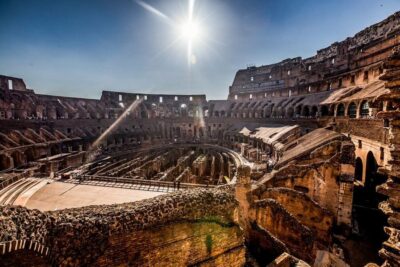
Colosseum: Underground and Ancient Rome Tour
Read our review →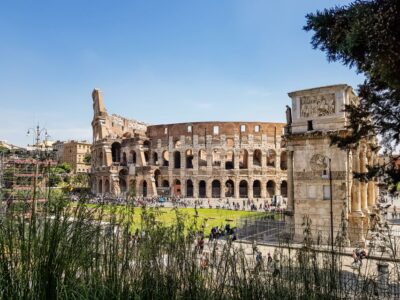
Colosseum Arena, Palatine Hill & Forum Guided Tour
Read our review →Browse the lists this tour appears in