
Reviewed · ROME COLOSSEUM TOURS
Rome: Colosseum, Palatine Hill and Roman Forum Guided Tour
The great strength of this tour is its three-part sweep through ancient Rome: the Colosseum, the imperial Palatine Hill, and the Roman Forum. You move from public spectacle to imperial power, then into the political and religious center of the old city.
I like the clear headsets and the guides’ energetic storytelling. Henry, Leo, Aphrodite, Alessandra, and several other guides have been praised for making the past easy to follow, even for children. I also like that your ticket covers all three major sites. The main drawback is the pace: 2.5 hours on uneven ground, steps, and slopes can be tiring, and the security queue cannot be skipped.
Key points to know before booking
- Colosseum entry with a live guide: Learn how the amphitheater worked instead of simply walking around its arches.
- Three major ancient sites in one tour: The Colosseum, Palatine Hill, and Roman Forum form a useful single story of Roman life.
- Headsets included: You can hear the guide while standing among crowds and open ruins.
- Guide quality matters here: Henry, Leo, Aphrodite, Alessandra, Alice, and others are praised for humor, clear explanations, and care for the group.
- Special access depends on the option: Arena or underground access is included only when stated in the tour title.
- Allow for walking and security: The route includes slopes, steps, exposed ruins, and checks for every visitor.
Why this Rome tour works as an introduction
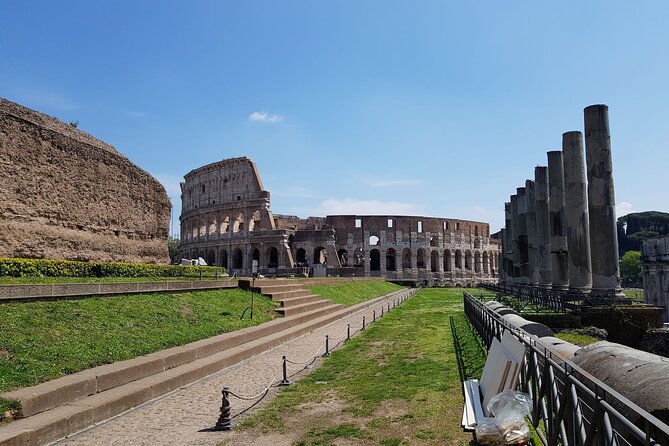
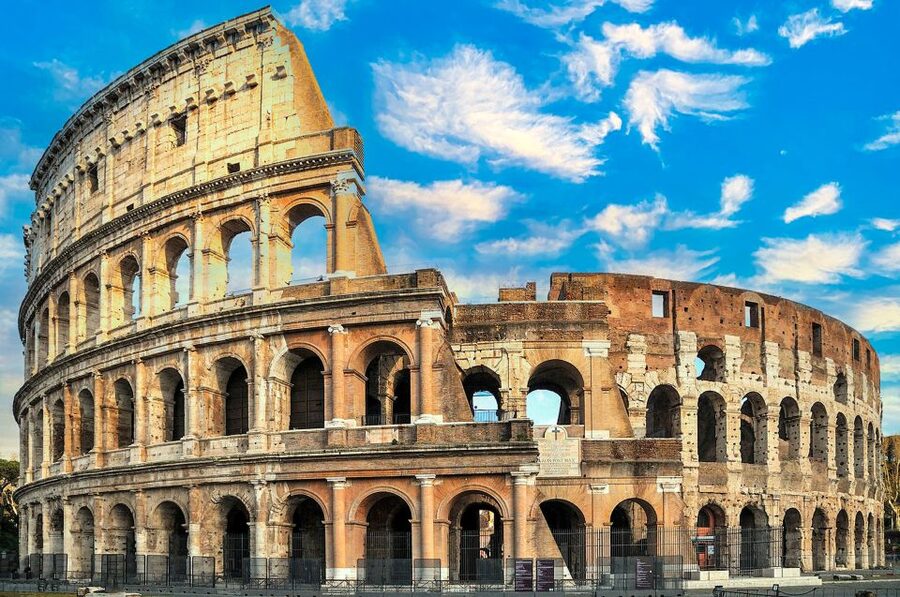
The Colosseum is easy to admire and easy to misunderstand. Its huge stone shell grabs your attention, but without context, you may miss how carefully the building controlled crowds, movement, seating, and spectacle.
A good guide gives the structure a human scale. You learn what happened inside, how the monument changed over the centuries, and why it mattered to Roman society. The experience is not just about gladiators. It connects entertainment with politics, engineering, religion, and the emperor’s role in public life.
The tour then moves beyond the famous amphitheater. Palatine Hill introduces the world of emperors and elite residences. The Roman Forum brings you into the public heart of the city, where law, religion, government, business, and ceremony all met.
That sequence gives you a useful framework for Rome. I prefer this kind of guided visit to seeing the ruins alone, especially if ancient history is not already your strength. Plaques can identify a building, but a guide can explain why it mattered and how it fitted into the city around it.
The tour lasts 2.5 hours. That is long enough to cover the main areas without turning into a full-day archaeological march. You should still expect plenty of standing and walking, so wear comfortable clothes and shoes.
More Roman Forum and Palatine Hill tours:
- Rome: Guided Tour of Colosseum, Roman Forum & Palatine Hill
★ 4.7 · 27,897 reviews - Rome: Colosseum, Roman Forum and Palatine Hill Guided Tour
★ 4.5 · 23,903 reviews - Rome: Colosseum, Forum & Palatine Hill Tour & Optional Arena
★ 4.4 · 13,839 reviews
Starting outside the Colosseum
The visit begins with an explanation of the Colosseum from outside, although the exact order can change. On some departures, you start at the amphitheater and finish at Palatine Hill and the Forum. On others, you begin in the archaeological area and end inside the Colosseum.
That variation is important. Check your meeting point and tour title carefully, since the meeting location depends on the option you choose. Arrive ready to identify your guide and allow extra time for the security process.
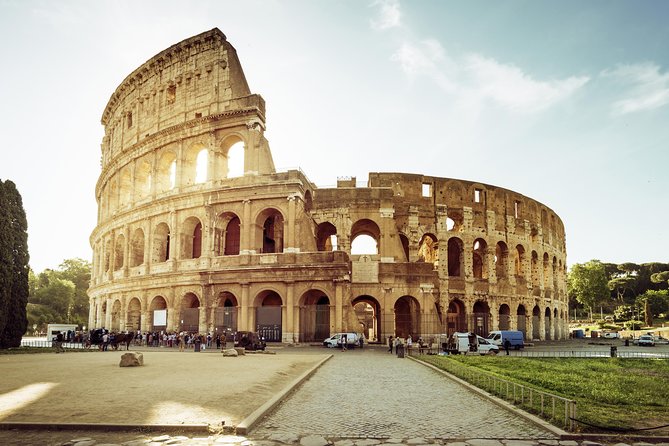
From the outside, the Colosseum looks almost too familiar. Its image appears on every Rome guidebook, but the guide’s opening talk helps turn a postcard view into a real place. You get the basic story of its construction, its role in Roman public life, and its changes over the centuries.
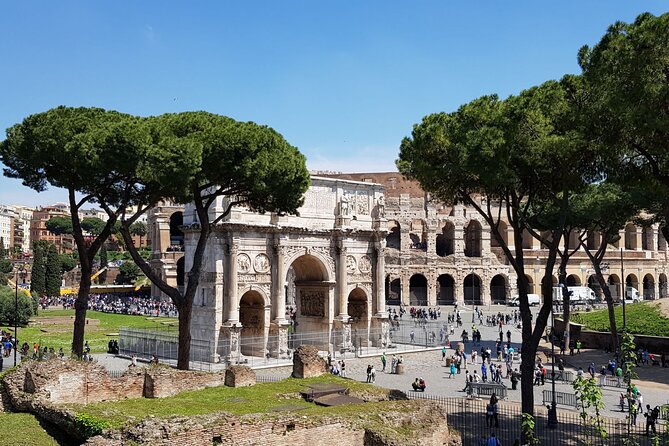
The Arch of Constantine is another useful early stop. It sits near the Colosseum and gives the guide a chance to explain Roman triumphal arches, imperial propaganda, and the way later rulers reused older artistic material.
This is a good point to listen rather than rush for photographs. The Colosseum itself will still be there when the tour enters, but the outside view helps you understand its position in the larger ancient city.
Inside the Colosseum and its arena
After the security check, you enter the amphitheater. The security line is unavoidable, even with skip-the-ticket-line entry, and it can slow the start on crowded days. The ticket shortcut saves you from the regular ticket line, but it is not a pass around airport-style screening.
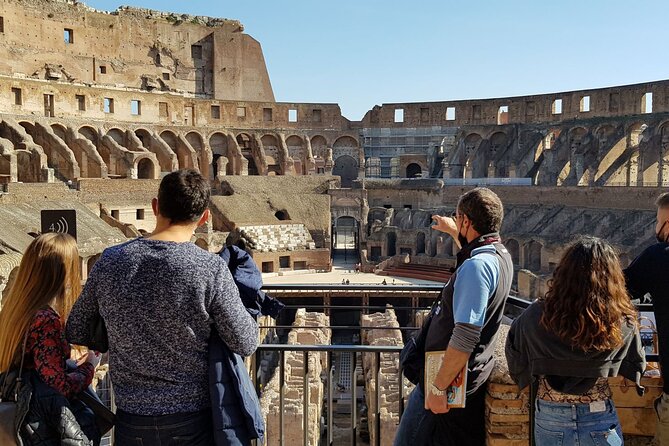
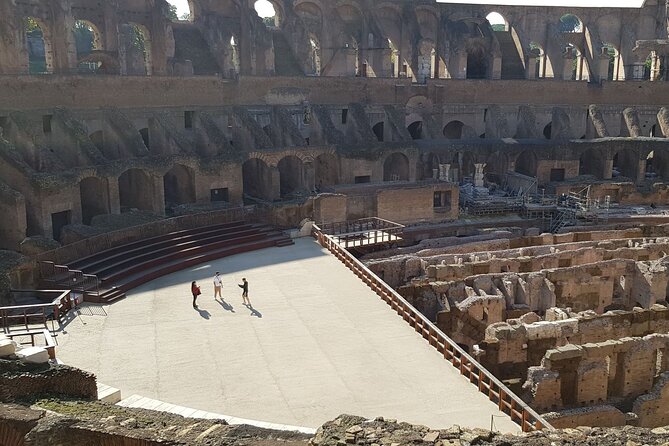
Inside, the guide explains the building’s design and the activities once held here. The first floor offers a close look at the interior, including the stacked levels, arches, and broad curves that made the building work as a huge public venue.
I find a guide especially useful here because the Colosseum can feel like a maze of stone and modern barriers. You need someone to point out the parts that controlled entrances, separated social classes, and directed spectators to their seats.
Some options include arena access or underground access. Read the exact title before booking. Arena and underground entry are not automatically included in every version, so do not assume that a standard ticket covers them.
The supplied details also refer to views of the arena and basement floor from a panoramic terrace. That gives you a useful look into the different levels, but the precise areas available depend on the option and current site rules.
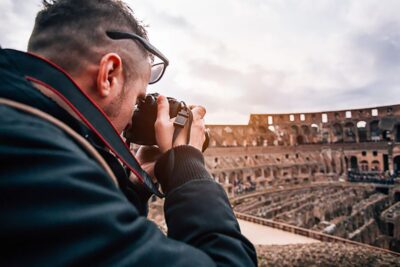
The Colosseum stop is visually powerful, yet it can also be the noisiest part of the visit. Groups gather, guides speak in several languages, and photographs compete with explanations. The included headsets help a lot. You can step slightly aside, keep the guide’s voice in your ear, and still follow the talk.
Several guides receive especially strong praise for their delivery. Henry is repeatedly described as lively and engaging. Leo is praised for passion and positive energy. Aphrodite is noted for clear explanations and attention to the whole group, while Alessandra is known for an animated, entertaining style.
Those details matter because the Colosseum is not a quiet museum. A flat lecture can disappear into the noise. A guide who uses stories, visual aids, humor, and questions makes the place much easier to remember.
Walking the Via Sacra to Palatine Hill
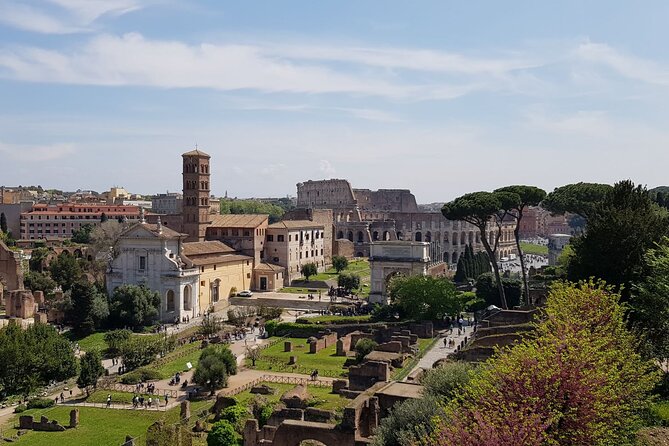
From the Colosseum area, the route follows the ancient Via Sacra toward the archaeological zone. This is where the tour begins to feel less like a visit to one monument and more like a walk through an old city.
You may stop near the Arch of Titus, one of the key monuments along the way. The guide explains its history and important features before the group continues toward Palatine Hill and the Forum.
Expect uneven paving, slopes, steps, and exposed ground. The route is not suitable for wheelchair users or people with mobility impairments, and anyone with altitude sickness should not book it. Even if you normally walk without trouble, Rome’s archaeological sites can be tiring under the sun or after several days of sightseeing.
Palatine Hill is traditionally linked with the oldest settlement of Rome. More importantly for your visit, it became the address of emperors and the setting for grand residences. The contrast is striking: the hill begins with Rome’s earliest origins, then rises into the world of imperial wealth and authority.
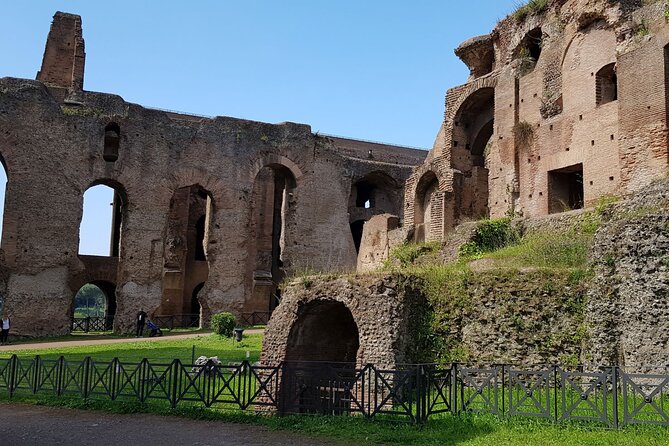
The guide takes you through major remains including the Palatine Stadium, Domus Augustana, and Domus Flavia. The names can blur together if you visit alone. With a guide, you can connect them to the daily life, ceremonies, and public image of the emperors who lived here.
The Palatine also gives you a needed change of rhythm. After the enclosed stone of the Colosseum, you walk through an open archaeological area with broader views and more space. The ruins are less instantly recognizable, but the hill helps explain how Rome was organized around power.
A short pause can be useful here. One recent family account praised a guide for checking on a visitor with vertigo, and another guide helped with a travel stroller. Do not expect a fully accessible route, but the better guides appear attentive to group needs and are willing to adjust the pace when possible.
More Colosseum tours in Rome:
- Rome: Colosseum & Forum with Audio Guide App -Optional Arena
★ 4.2 · 24,770 reviews - Rome: Colosseum, Palatine Hill & Roman Forum Guided Tour
★ 4.6 · 12,703 reviews - Colosseum: Underground and Ancient Rome Tour
★ 4.7 · 12,691 reviews - Rome: Colosseum Arena, Palatine Hill & Forum Guided Tour
★ 4.6 · 10,584 reviews
The imperial residences on Palatine Hill
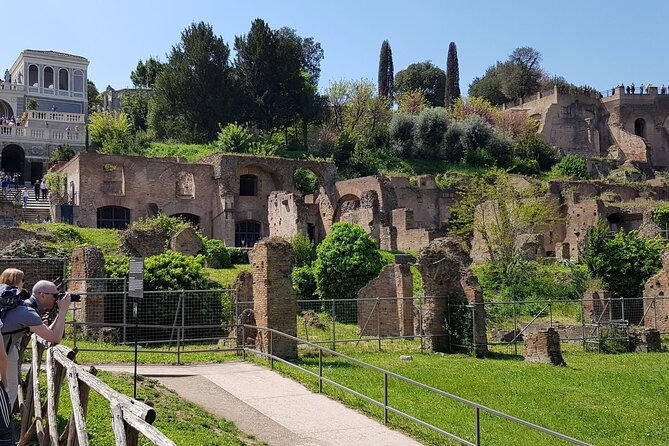
The Domus Augustana and Domus Flavia are not intact palaces in the modern sense. You will see remains, foundations, walls, courtyards, and fragments that require explanation.
That is exactly where the guide earns the fee. Without help, you may see attractive piles of brick. With a clear explanation, you can start to picture a residence built for display, ceremony, control, and private life.
The Palatine Stadium is another memorable part of this section. Its long shape helps you understand the scale of the imperial complex. The guide can point out how the hill was not simply a private home, but a carefully arranged center of power.
This portion also rewards patience. The Colosseum provides instant drama, while Palatine Hill asks you to look closer. If you enjoy ruins, architecture, and the ways rulers shaped public space, you may find this section more interesting than expected.
If you mainly want photographs of the Colosseum, this longer archaeological walk may feel like a detour. I would still keep it. The hill turns the Colosseum from an isolated attraction into part of a larger political world.
Descending into the Roman Forum
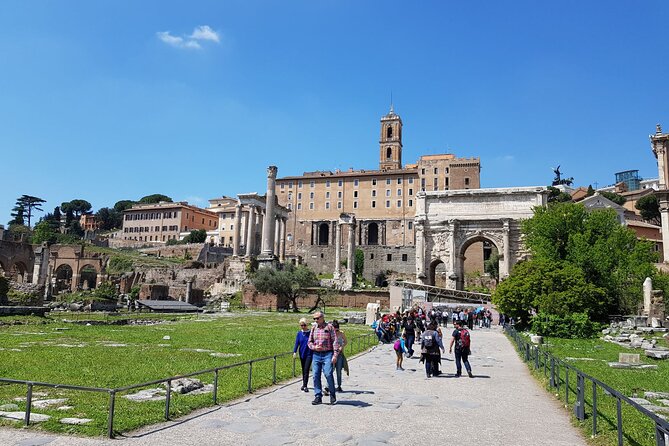
The route then descends into the valley of the Roman Forum. This is the ancient city’s central zone, and it is the point where the tour’s separate stories come together.
The Forum served political, religious, economic, legal, and social purposes. Roman life did not happen in one neat building. It unfolded across temples, meeting spaces, basilicas, roads, arches, and public squares.
Walking along the Via Sacra, you encounter the Basilica of Maxentius, the Temple of Romulus, the Temple of Antoninus and Faustina, and the House of the Vestals. Each stop adds a different piece to the city.
The Basilica of Maxentius shows the scale of Roman public construction. The Temple of Romulus has a distinctive bronze door, while the Temple of Antoninus and Faustina is noted for its unusual suspended door. The House of the Vestals opens a window onto religious life and the special position of the Vestal Virgins.
These details are easy to miss if you walk through the Forum alone. The ruins are spread out, and several buildings have changed function over time. Your guide helps separate a temple from a basilica, a political space from a religious one, and an ancient feature from a later addition.
The Forum can also be the most physically demanding section. Paths are uneven and the area is exposed to weather. The tour operates in rain or sunshine, but bad weather can limit access to parts of Palatine Hill and the Forum.
Reaching the political heart of ancient Rome
The final section reaches the central Forum, the place where Rome’s public life took shape. Here you see the Curia, the Arch of Septimius Severus, the Tabularium, the Temple of Saturn, and other major remains.
The Curia is particularly useful for understanding Roman government. The Arch of Septimius Severus shows how emperors used monuments to celebrate military victories. The Tabularium and Temple of Saturn add layers of administration, religion, and state finance.
This is where a strong guide can prevent the Forum from becoming a blur of names. Guides such as Alice, Barbara, Vincenzo, Marielle, and Ledion have been praised for clear explanations, humor, and a willingness to answer questions. Several accounts also describe guides using pictures or other visual aids to make missing structures easier to imagine.
The group format has one advantage here: you can ask a question while the site is in front of you. A private guide offers more flexibility, but the standard group tour may already be enough if your main goal is a clear introduction rather than a specialist archaeological study.
By the end, you should have a working picture of Rome’s development: early settlement on the hill, imperial power on Palatine, public spectacle at the Colosseum, and civic life in the Forum.
Price, pace, and what you receive for $52
At $52 per person, this tour sits in the reasonable middle range for a guided visit to Rome’s three headline ancient sites. You receive entry to the Colosseum, Palatine Hill, and Roman Forum, plus a live guide and headsets.
The value depends on how much help you want. If you are comfortable researching Roman history and interpreting ruins on your own, a guided tour may feel unnecessary. If you want the sites to make sense without spending hours preparing, the price is easier to justify.
The biggest value is not simply getting inside. It is the structure. In 2.5 hours, you move through the city’s most important ancient areas with a guide who can keep the story connected.
The tour is also available in English, German, Spanish, Portuguese, Italian, and French. A private group option is available for people who want more control over the experience.
Cancellation is free up to seven days in advance for a full refund. Bring a passport or ID card, and make sure the name on the ticket matches your identification. Large bags, luggage, drones, glass objects, sprays, sharp objects, alcohol, drugs, and pets are not allowed.
Who should book this experience
I would recommend it to a first-time Rome visitor who wants the essential ancient sites explained in one outing. Families can also do well, especially with a guide who uses questions, humor, and visual aids. One guide was specifically praised for keeping children aged 6 and 10 involved.
It suits people who prefer a clear route and a lively explanation. It is less suitable if you want to wander alone, stop for long periods at one ruin, or take photographs without listening to a group schedule.
You should also think carefully about physical comfort. The route includes archaeological paths, slopes, and steps. It is not suitable for wheelchair users or people with mobility impairments, and bad weather can make the open areas harder to manage.
Should you book the Colosseum, Palatine Hill, and Forum tour?
Book it if you want the ancient center of Rome to tell one connected story rather than three separate sightseeing stops. The strongest part is the guide-led interpretation, backed by headsets and entry to all three sites.
Before paying, check three things: the starting point, the direction of the route, and whether your chosen option includes arena or underground access. Arrive prepared for security, walking, and weather.
For $52, this is a good choice for families, first-time visitors, and anyone who wants history explained without spending weeks studying beforehand. Skip it if you strongly dislike group tours or need a fully accessible route. For most able walkers, it offers a practical and well-paced introduction to ancient Rome.
FAQ
How long does the tour last?
The tour lasts 2.5 hours.
Which sites are included?
The ticket includes entry to the Colosseum, Roman Forum, and Palatine Hill.
Is arena access included?
Arena access is included only when it is stated in the title of the option you book.
Is underground access included?
Underground access is included only when it is stated in the title of the option you book.
Are skip-the-ticket-line tickets provided?
Yes, the activity includes skip-the-ticket-line entry. Every visitor must still pass through a security check, and that queue can delay the start.
Which languages are available?
Live guides are available in German, English, Spanish, Portuguese, Italian, and French.
Can I book a private group?
Yes, a private group option is available.
What should I bring?
Bring a passport or ID card and wear comfortable clothes. The name on your ticket must match your identification.
Is the tour suitable for wheelchair users?
No. The tour is not suitable for wheelchair users or people with mobility impairments. It is also not suitable for people with altitude sickness.
Newest Rome tours we have reviewed
- Private TikTok Video Making in Rome★ 5.0 · 7 reviews
- Assisi, Orvieto and Civita di Bagnoregio Full Day Tour from Rome★ 4.5 · 45 reviews
- Assisi & Saint Francis Path Tour from Rome★ 5.0 · 45 reviews
- Assisi and Cascia Private Day Tour from Rome with Lunch★ 5.0 · 10 reviews
- Art Class in the center of Rome!★ 4.0 · 4 reviews
- Art & Craft: Beer Tour with Street Art in Rome★ 4.5 · 6 reviews
- Arrival in Rome: Airport Transfer & Exclusive City Introduction★ 5.0 · 3 reviews
- From Rome: Private Day-Tour of Tuscany★ 5.0 · 16 reviews
Rome Colosseum Tours, compared.
Guided Tour of Colosseum, Roman Forum & Palatine Hill
Read our review →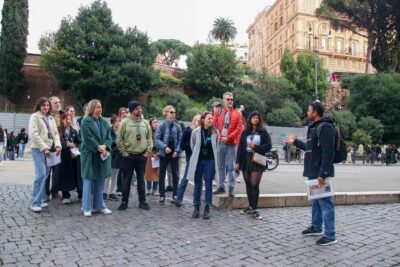
Colosseum & Forum with Audio Guide App -Optional Arena
Read our review →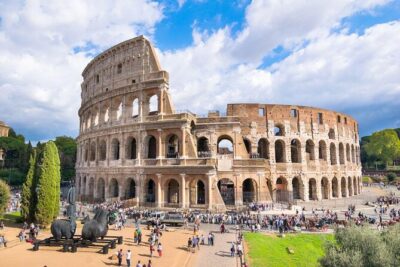
Colosseum, Roman Forum and Palatine Hill Guided Tour
Read our review →
Colosseum, Forum & Palatine Hill Tour & Optional Arena
Read our review →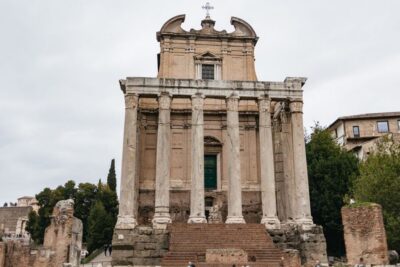
Colosseum, Palatine Hill & Roman Forum Guided Tour
Read our review →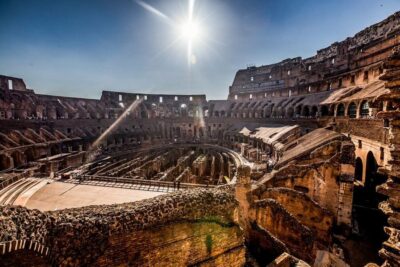
Colosseum: Underground and Ancient Rome Tour
Read our review →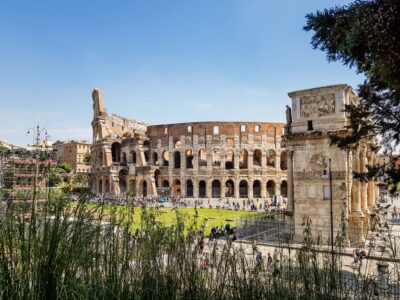
Colosseum Arena, Palatine Hill & Forum Guided Tour
Read our review →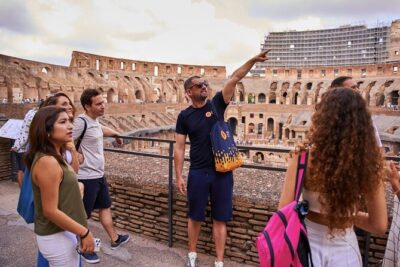
Colosseum, Roman Forum & Palatine Hill Guided Tour
Read our review →Browse the lists this tour appears in