
Reviewed · ROME CATACOMBS TOURS
Rome: Crypts, Catacombs and Skeletons Underground Tour
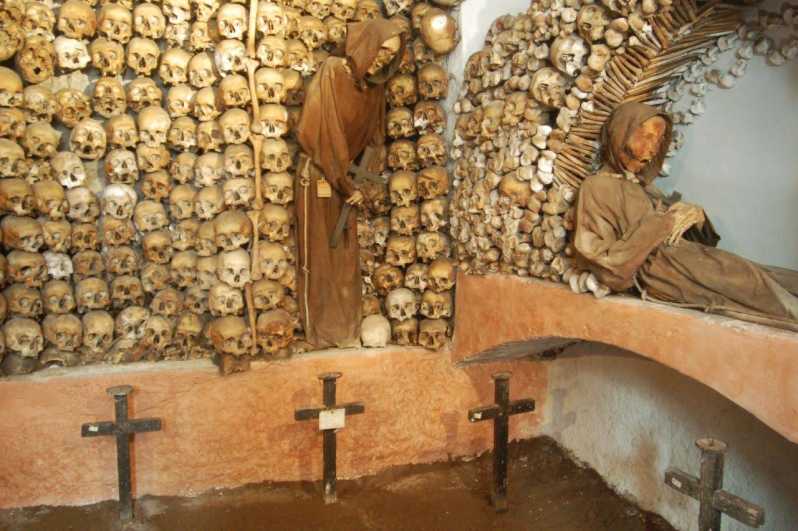
The most startling stop is the Crypt of the Capuchin Friars, where about 4,000 friars’ bones form the decoration of an underground cemetery. The tour then moves through ancient waterworks and a church whose lower levels reach back to the 3rd century B.C. I like the strong variety, and I like that the guide connects the sites into one long story instead of treating them as separate curiosities.
The main drawback is the price: $147.27 per person is a serious outlay for three hours. The route also includes tight underground spaces, stairs, and sites where photography is forbidden, so it is not suitable for wheelchair users, people with mobility impairments, pregnant women, or anyone uncomfortable in enclosed places.
Key points
- About 4,000 skeletons fill the Capuchin crypt, making it one of Rome’s most unusual historic stops.
- The Acqua Vergine aqueduct still feeds the Trevi Fountain, giving the ancient water system a useful modern connection.
- A 10th-century church sits above three Roman temples, linking several layers of the city in one location.
- The lower church crypt was used for exorcisms and contains ancient fragments of human bone.
- Legendary prisons connected with Saint Nicola provide the final stop and add a note of mystery.
- The three-hour English tour includes admission fees, a local guide, and an audio guide, but not food, drinks, or hotel transfers.
Why Rome’s underground tells a better story
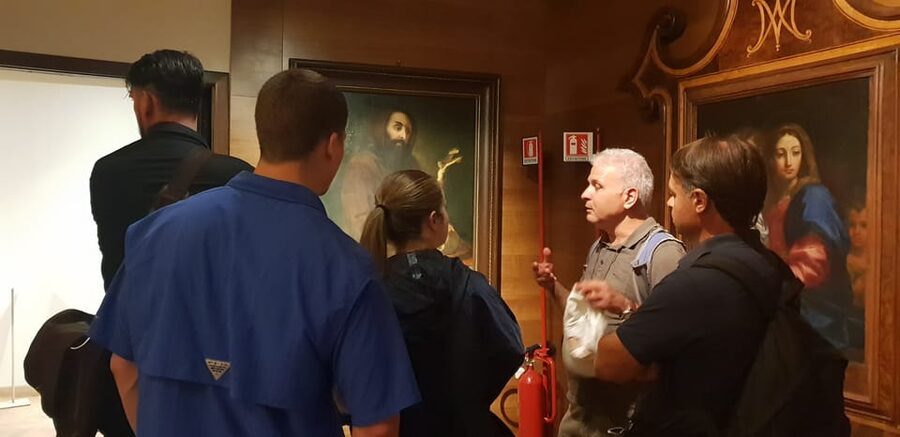
Rome’s grand monuments usually ask you to look up. This tour asks you to look down, behind walls, and below modern streets. In three hours, you move from a Capuchin cemetery made from human bones to an aqueduct still carrying water, then to a church built over much older Roman remains.
That range is the tour’s greatest strength. You are not seeing three versions of the same underground attraction. The first stop focuses on death and religious tradition. The second deals with engineering and the daily needs of an ancient city. The third mixes archaeology, church history, exorcism, and legend.
I find that combination more useful than a tour built only around spooky stories. Rome’s underground is not one single world. It is a stack of different cities, each built over the one before it. This experience gives you a short, guided introduction to that layered city.
The tone is best suited to adults and older children who enjoy unusual history. The bones can be unsettling, and the exorcism material may not suit everyone. Still, the guide provides context, so the experience is more than a parade of eerie sights.
More catacombs tours in Rome:
- Rome: Crypts and Catacombs Underground Tour with Transfers
★ 4.6 · 5,341 reviews - The Original Roman Crypts and Catacombs Tour with Transfers
★ 4.5 · 4,896 reviews - Rome: Catacombs of St. Callixtus Entry Ticket & Guided Tour
★ 4.6 · 3,037 reviews
Meeting the group at the Tritone Fountain
The tour begins in front of the Fontana del Tritone, where staff wear a red and white hat. That is the visual clue to use when you arrive. The tour ends back at the same meeting point, which makes planning the rest of your day easier.
Give yourself enough time to find the fountain and locate the staff. Rome’s center can be busy and confusing, and a clear meeting point matters when you are trying to join a timed group. The listed experience lasts three hours, but starting times vary, so check the available departure when booking.
The tour includes admission fees and guided access to the aqueducts, crypt, and church catacombs. Hotel pickup and drop-off are not included, and neither are food or drinks. Plan to eat before or after, rather than expecting a break built into the program.
An English-speaking live guide leads the experience, with an English audio guide included as well. That combination should help if a room is echoing or if several people are gathered around one small feature. No guide names are provided, so you should not book this expecting a particular guide.
Stop one: 4,000 bones at the Capuchin Friars’ crypt
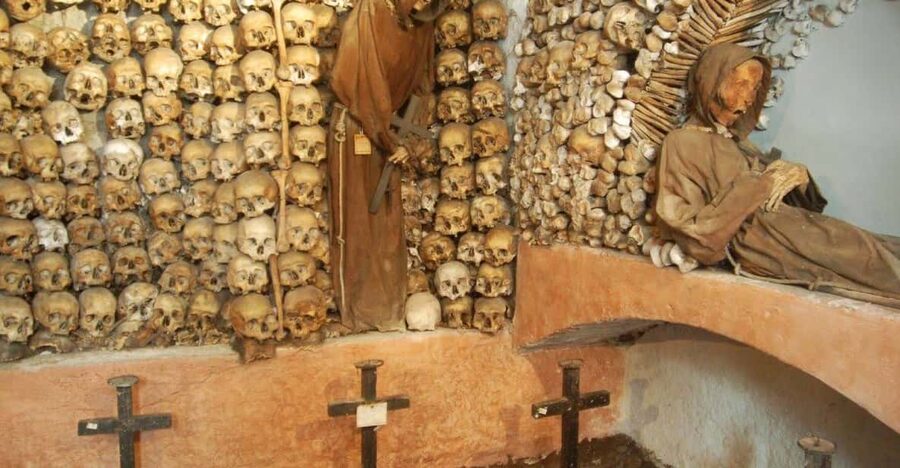
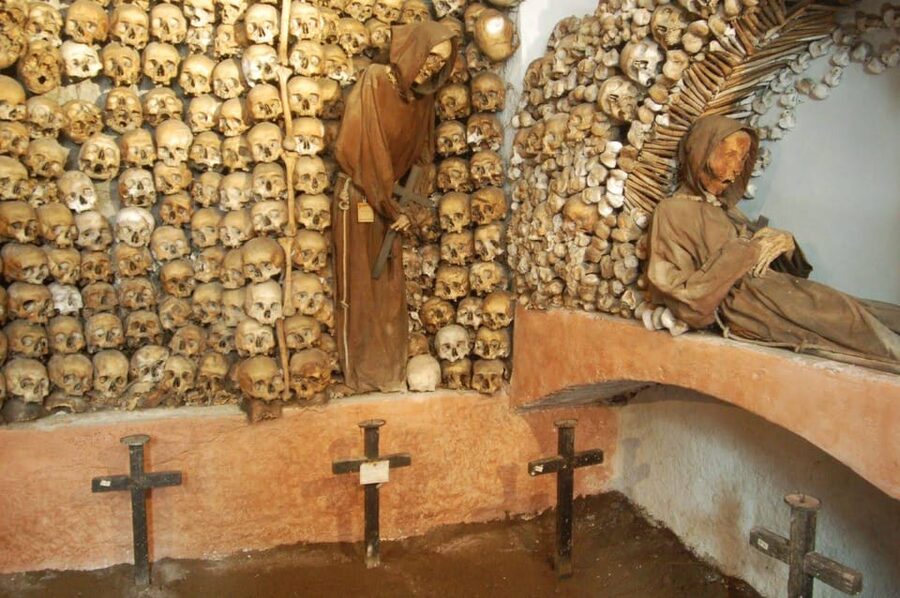
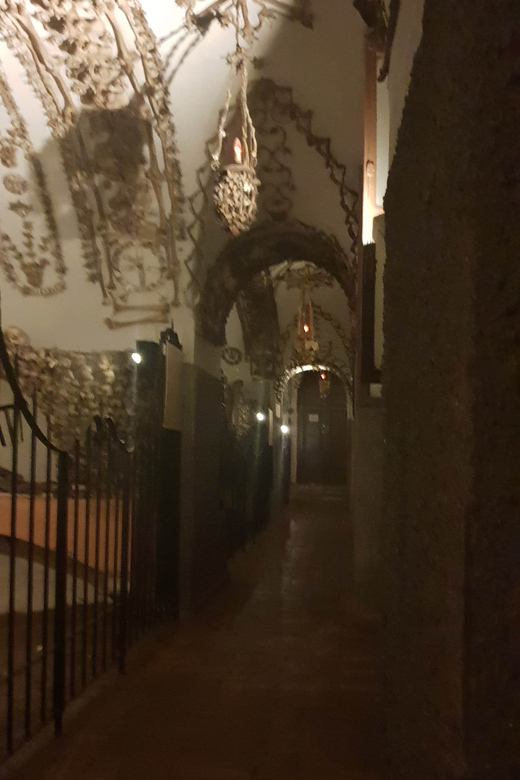
The Capuchin Friars’ crypt is the tour’s most famous and visually powerful stop. It is a cemetery decorated with the remains of approximately 4,000 friars. Bones are not simply stored out of sight here. They form part of the crypt’s unusual design.
That makes the visit different from a standard church tour. You are looking at human remains, but also at a particular religious approach to death and remembrance. The setting raises questions about mortality, burial, and the way religious communities have used underground spaces over time.
The guide explains the construction and the remains while you move through the crypt. That explanation matters. Without context, the room could feel like a shock attraction. With context, it becomes a place to consider how the friars viewed the body, death, and the shortness of human life.
The stop is also described as intriguing for children, though parents should make that call for themselves. Some children will find the bone designs fascinating. Others may find the subject frightening. There is no need to force the issue, especially since the tour includes two more substantial stops.
Photography is not allowed at every site, and you will be told when pictures are permitted. Do not assume you can photograph the crypt. Respecting the rule is part of visiting a religious and funerary site, and it also keeps the group moving.
Stop two: the Acqua Vergine beneath modern Rome
The second stop changes the mood. Instead of a cemetery, you explore an ancient aqueduct system connected to the water supply of Rome. The aqueduct is the Acqua Vergine, and it still feeds the famous Trevi Fountain.
The setting is particularly striking because you reach the aqueduct beneath a commercial center. Modern shops sit above ancient infrastructure. That contrast gives you a useful picture of Rome as it really is: not a city where old and new occupy separate zones, but a place where centuries of construction sit on top of one another.
Aqueducts were not decorative monuments. They carried water needed for drinking, cleaning, fountains, and public life. This stop helps explain how Rome supported a large population and why control of water was so important to the city’s growth.
The link with Trevi Fountain gives the visit a practical hook. If you have already seen the fountain, you can connect its theatrical Baroque face with the much older system beneath it. If you have not yet visited Trevi, the aqueduct offers a different way to understand the fountain before you arrive.
The attraction here is less about dramatic decoration and more about the engineering. You may find the space quieter and more restrained than the Capuchin crypt. That variety is welcome, though anyone hoping for another spooky chamber might find the aqueduct stop more technical.
More underground Rome tours:
- Colosseum: Underground and Ancient Rome Tour
★ 4.7 · 12,691 reviews - Expert Guided Tour of Colosseum Arena OR Underground, and Forum
★ 4.5 · 5,041 reviews - Rome: Colosseum Underground Small Group Guided Tour
★ 4.7 · 4,844 reviews - Rome: St. Peter’s Basilica, Dome Climb, and Underground Tour
★ 4.8 · 3,404 reviews
Stop three: temples, exorcism, and legendary prisons
The final section takes you to a lovely church built in the 10th century. The church stands above the remains of three temples from the 1st century B.C., in an area that had been the center of a Roman fruit and vegetable market dating to the 4th century B.C.
That one location packs several periods together. You begin with a church from the medieval era, then go below it to earlier Roman structures, then further back toward the 3rd century B.C. The site gives you a clear sense of Rome’s habit of reusing older foundations rather than clearing the ground and starting fresh.
Below the church, the route includes a crypt used for exorcisms during the 12th century A.D. Ancient fragments of human bone are scattered through the area. The subject is darker than a normal church visit, but it fits the tour’s focus on hidden and unsettling parts of Roman history.
The exorcism connection will appeal to anyone interested in medieval religious practice and local legends. It may feel less comfortable if you prefer archaeology without supernatural associations. The guide’s role is important here because the rooms can otherwise blur together into a collection of dark corridors and fragments.
The tour finishes with ancient prisons where, according to legend, Saint Nicola was imprisoned. The wording matters: this is presented as a legend, not an established fact. That makes the ending a good reminder that underground Rome contains both physical evidence and stories passed down through generations.
What the three stops reveal about Rome
Taken together, the itinerary covers approximately 3,000 years. The exact sites are not all from the same period, and that is the point. You move through ancient Roman water supply, early religious buildings, medieval practices, Capuchin burial customs, and Christian legend.
I like this structure because it gives you a broader view of the city than a single underground attraction can provide. You see how Romans handled water, worship, burial, illness, punishment, and memory. These are ordinary human concerns, even when the settings are extraordinary.
The route also shows why Rome rewards repeat visits. You might pass over these places on a normal day without realizing what lies below. A shopping center hides an aqueduct. A church covers temples. A fountain still depends on an ancient water route. The tour turns familiar parts of the city into clues.
Do not expect a full archaeological excavation or a long, leisurely visit at each site. Three hours must cover travel between stops, explanations, and admissions. The benefit is variety. The tradeoff is that each location receives less time than it would on a single-site visit.
Price, pace, and practical value
At $147.27 per person, this is not a budget activity. The cost includes the local guide, admission fees, guided access to all three underground locations, and an English audio guide. Those inclusions make the price easier to understand, but they do not make it inexpensive.
I would judge the value by your interest in unusual sites. If you were already planning to pay separate admission for the Capuchin crypt, the aqueduct, and the church catacombs, one organized route could save you planning time and reduce the risk of missing a lesser-known location. The guide also provides the historical links that make the three stops feel connected.
If you mainly want a quick look at Rome’s famous monuments, spend your money elsewhere. This tour does not cover the Colosseum, Vatican Museums, Pantheon, or other headline sights. It is a specialist experience for people who have room in their schedule for the city’s less visible stories.
The three-hour length is useful. It is long enough to make the underground theme worthwhile, but short enough to fit around another major visit. Avoid booking it immediately before an important timed admission unless you have a generous gap. The tour includes several stops and movement between them, so exact timing may matter for the rest of your day.
Wear comfortable shoes and comfortable clothes. The spaces below ground may be uneven or confined, and practical clothing will make the experience easier. The tour is not suitable for pregnant women, people with mobility impairments, wheelchair users, or people with claustrophobia.
Who should book this underground tour
I would choose this tour if you have already seen some of Rome’s main sights and want something stranger and more layered. It also suits you if you enjoy religious history, engineering, archaeology, burial customs, and local legends in equal measure.
Families with older children may appreciate the visual impact of the bone crypt and the sense of entering hidden rooms. Parents should decide how their children will respond to skeletons and exorcism stories. The subject matter is not light, even when the guide presents it as part of history.
This is also a good choice for first-time visitors who want a different introduction to Rome. You will not get the classic postcard view of the city, but you will gain a sharper sense of how old Rome sits beneath modern life.
I would skip it if enclosed spaces make you anxious, if stairs and underground passages are difficult, or if photography is essential to your sightseeing. The photo restrictions are part of the experience, not a minor detail.
Should you book it?
Book this tour if you want unusual Roman history in a compact three-hour route and the Capuchin bones, ancient aqueduct, and church catacombs all appeal to you. The three stops work well together, and the Acqua Vergine connection to the Trevi Fountain is a particularly useful detail.
Think carefully about the price before booking. At $147.27, the tour needs to be a priority rather than an impulse purchase. For the right visitor, the guide, admissions, and carefully linked underground sites offer solid value. For a visitor focused on Rome’s major monuments, it is an expensive detour.
FAQ
How long does the tour last?
The tour lasts three hours. Starting times vary, so check availability for the date you want.
Where does the tour begin?
It begins in front of the Fontana del Tritone. Staff wear a red and white hat to make them easier to identify.
Where does the tour end?
The activity ends back at the meeting point near the Fontana del Tritone.
What sites are included?
The tour includes the Crypt of the Capuchin Friars, ancient aqueducts including the Acqua Vergine, and a church with underground catacombs, ancient remains, exorcism-related spaces, and legendary prisons.
Is the tour conducted in English?
Yes. A live English-speaking guide leads the tour, and an English audio guide is included.
Are admission fees included?
Yes. Admission fees and guided access to the aqueducts, crypt, and church catacombs are included.
Can I take photographs?
Photography is not allowed at every site. You will be told when pictures are permitted and when they are not.
Is the tour suitable for wheelchair users or people with claustrophobia?
No. The activity is not suitable for wheelchair users, people with mobility impairments, pregnant women, or people with claustrophobia.
Newest Rome tours we have reviewed
- Private TikTok Video Making in Rome★ 5.0 · 7 reviews
- Assisi, Orvieto and Civita di Bagnoregio Full Day Tour from Rome★ 4.5 · 45 reviews
- Assisi & Saint Francis Path Tour from Rome★ 5.0 · 45 reviews
- Assisi and Cascia Private Day Tour from Rome with Lunch★ 5.0 · 10 reviews
- Art Class in the center of Rome!★ 4.0 · 4 reviews
- Art & Craft: Beer Tour with Street Art in Rome★ 4.5 · 6 reviews
- Arrival in Rome: Airport Transfer & Exclusive City Introduction★ 5.0 · 3 reviews
- From Rome: Private Day-Tour of Tuscany★ 5.0 · 16 reviews
Rome Catacombs Tours, compared.
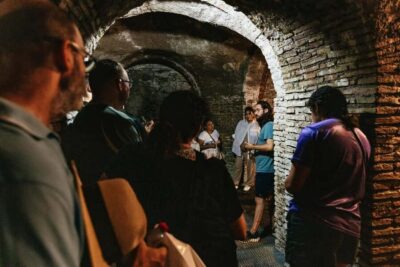
Crypts and Catacombs Underground Tour with Transfers
Read our review →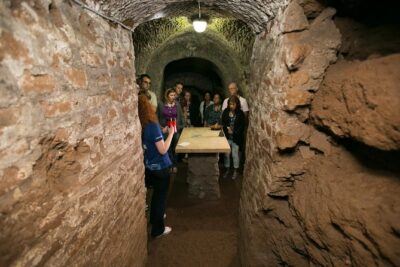
The Original Roman Crypts and Catacombs Tour with Transfers
Read our review →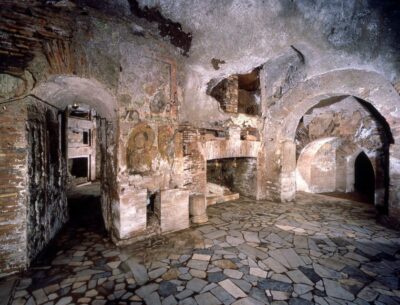
Catacombs of St. Callixtus Entry Ticket & Guided Tour
Read our review →
Rome EBike Tour: Appian Way, Catacombs & Roman Aqueducts
Read our review →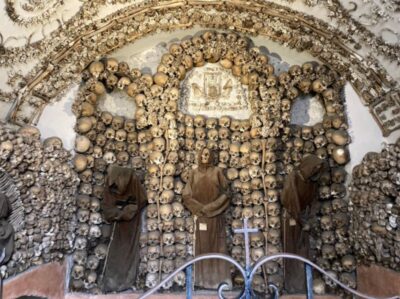
Catacombs and Capuchin Crypt Guided Tour with Transfer
Read our review →
Appian Way, Catacombs, & Roman Aqueducts E-bike Tour
Read our review →Browse the lists this tour appears in