
Reviewed · TRASTEVERE TOURS
Rome: Jewish Ghetto and Trastevere Small Group Tour
Rome’s former Jewish Ghetto and Trastevere sit close together, but they tell very different stories. In two hours, this small-group walk links local Roman gathering places, early Christian churches, ancient ruins, and the center of Jewish life in Rome. Tiber Island and the Portico d’Ottavia give the tour its strongest historical setting.
I like the group size, limited to six people, because it gives you a better chance to ask questions and hear the guide clearly. I also like the simple finish: coffee or gelato gives the walk a pleasant pause instead of ending at the last monument.
The main drawback is time. Two hours moves quickly, and the Great Synagogue is viewed from outside rather than visited inside. If you want detailed museum time or a long look at every site, you may find this tour brisk.
Key points at a glance
- A six-person maximum keeps this more personal than a large city walk.
- Piazza Trilussa and Ponte Sisto introduce Trastevere through places used by Romans today.
- Santa Maria in Trastevere adds an important church visit before the route crosses the Tiber.
- The Great Synagogue is an exterior stop, so do not expect an indoor synagogue visit.
- Portico d’Ottavia and Theatre of Marcellus bring ancient Roman history into the walk.
- Coffee or gelato is included, with the tour ending around lunchtime near restaurants serving Roman-Jewish kosher food.
Why this walk works in Rome
Rome can feel like a pile of separate sights: one church here, one ruin there, another piazza around the corner. This route helps connect them. You begin in Trastevere, cross toward the Tiber, pass through the former Jewish Ghetto, and finish among some of the city’s oldest surviving Roman structures.
That sequence matters. You are not simply checking off monuments. You see how neighborhoods, religious communities, river crossings, and ancient public buildings sit almost on top of one another. The walk also gives you a look at two sides of Rome: the social life of modern streets and the long record written into the stone.
The six-person limit is one of the tour’s best practical features. With a maximum of six participants, you can usually stay close to the guide without fighting a crowd for every explanation. The English-language guide can also adjust the pace and answer questions more easily than on a large coach-style outing.
Guides named Andy and Mike have been especially well received for their friendly manner, humor, and command of the area. That matters here because the tour depends less on grand interiors and more on a guide who can explain why an ordinary-looking street corner or half-ruined structure matters.
More Jewish Ghetto tours:
- Rome: Trastevere or Jewish Quarter Street Food Tour
★ 4.8 · 3,839 reviews - Jewish Ghetto and Trastevere Tour Rome
★ 4.5 · 1,729 reviews - Jewish Ghetto and Synagogues with Jewish Roman Guide 3 Hours
★ 5.0 · 907 reviews
Starting in Trastevere at Piazza Trilussa
The tour starts at Piazza Trilussa, in front of the stairs. Your guide will hold a LivTours sign, so look for that rather than wandering through the square trying to guess where the group has gathered.
Piazza Trilussa is a useful starting point because it is not just a monument stop. It is also a place where young Romans gather today. That gives you an immediate contrast between present-day street life and the older neighborhoods you are about to explore.
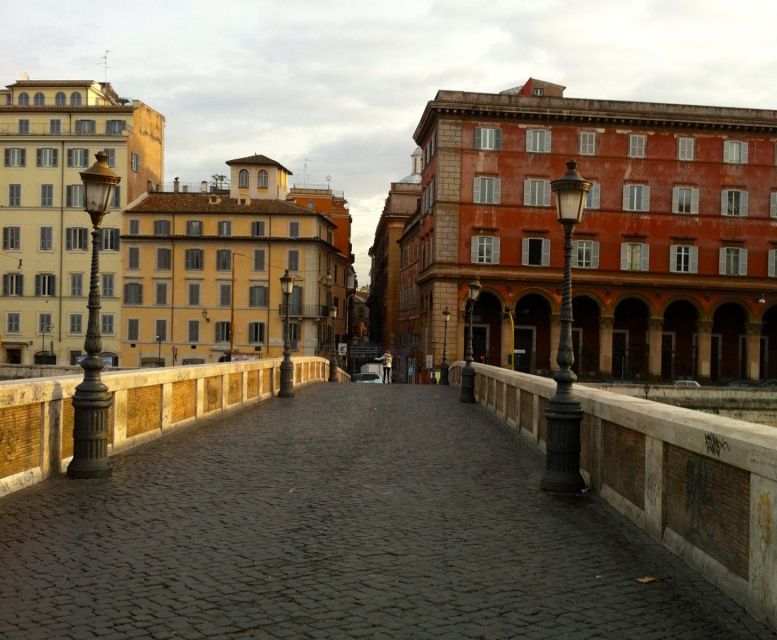
From here, the walk moves toward Ponte Sisto. The bridge connects the Trastevere side of the river with the historic center and helps set up the tour’s main theme: Rome’s neighborhoods have always been tied together by the Tiber. You get a sense of the city’s shape before the guide begins focusing on the Jewish community and ancient remains.
You should wear comfortable shoes. The walk is only two hours, but it includes several neighborhood streets and outdoor stops. The tour is best approached as a walking lesson, not as a seated sightseeing trip.
Santa Maria in Trastevere and the neighborhood streets
The Basilica of Santa Maria in Trastevere is one of the tour’s central stops. The church gives the route a change of pace after the streets and bridge, with an opportunity for a guided visit inside the basilica.
Its presence also shows how much religious history is concentrated in this part of Rome. The tour is not limited to one community or one period. You move from the Jewish story to a major Christian church, then onward to Roman remains and the Great Synagogue.
The supplied details do not promise a long interior study or a special access arrangement, so plan to see the basilica as one part of a broader walk. If church art and architecture are your main reason for booking, you may want separate time later to return on your own. Here, the value comes from how Santa Maria fits into the route.
Trastevere is also a good place for the guide to point out how modern Roman life continues around old buildings. You get streets to observe, not just monuments to photograph. That makes the opening part of the tour feel grounded in the city rather than staged around a single famous sight.
Crossing the Tiber and reaching Tiber Island
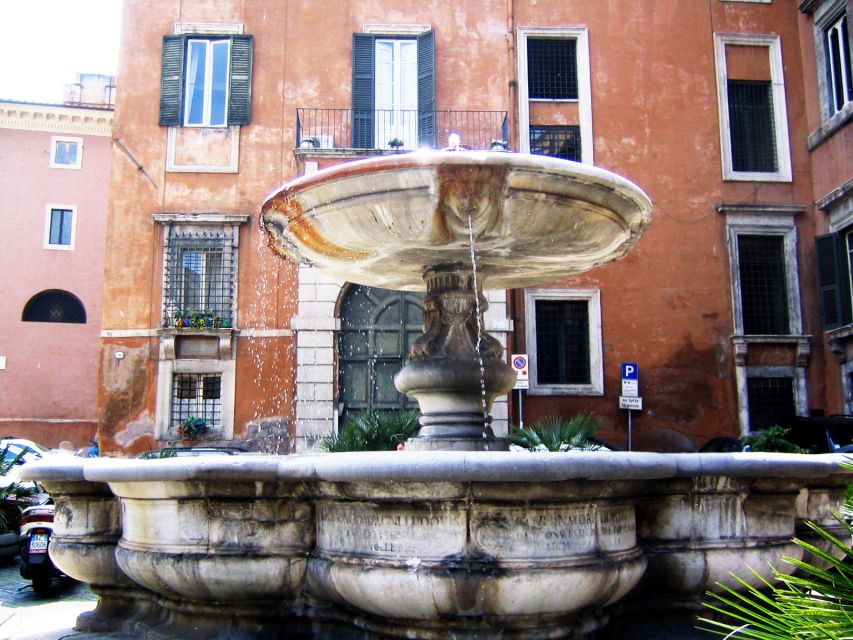
The route continues to Tiber Island, located in the middle of the River Tiber. This is one of the most meaningful transitions on the walk because the river is not just scenery. It marks the movement from Trastevere toward the former Jewish Ghetto and the historic center.
The guide explains the island’s connection with the Jewish Ghetto in ancient Rome. That point can be easy to miss when exploring alone. You may cross the river, take a photo, and continue without understanding how the island relates to the neighborhoods around it. Here, the stop gives the geography a human and historical purpose.
Tiber Island is also a natural place to reset during the walk. It breaks up the church and street sections before the tour turns toward the synagogue and ancient Roman monuments.
Do not expect a long rest stop here. The activity lasts about two hours, so the guide is balancing several locations. The island is valuable as a setting and explanation point rather than as a lengthy independent visit.
More Trastevere tours:
- Winner 2025 Rome Twilight Trastevere Food Tour by Eating Europe
★ 5.0 · 5,157 reviews - Rome: Trastevere Food tour with Free-Flowing Fine Wine
★ 5.0 · 2,853 reviews - Rome: Trastevere & Campo de Fiori Street Food Walking Tour
★ 4.9 · 2,768 reviews - Rome: Award Winning Trastevere Group Food Tour with Wine
★ 5.0 · 2,273 reviews
The Great Synagogue from the outside
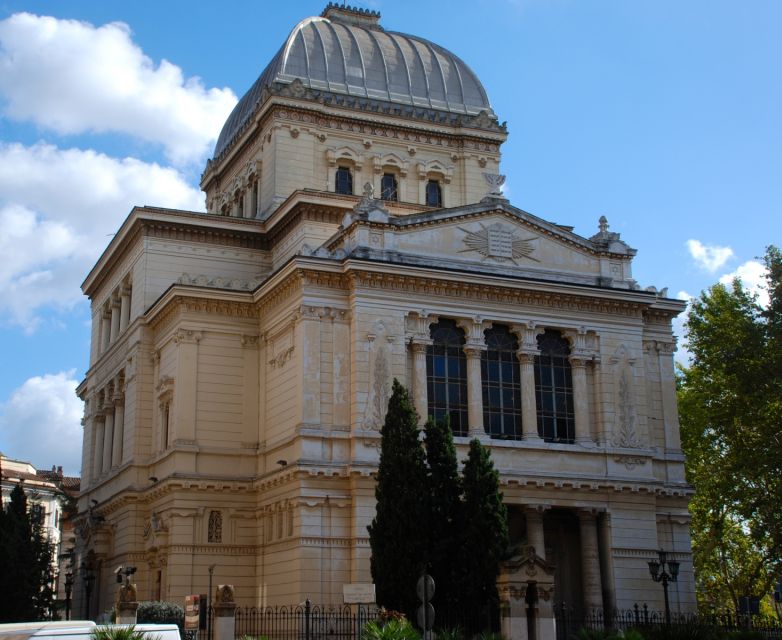
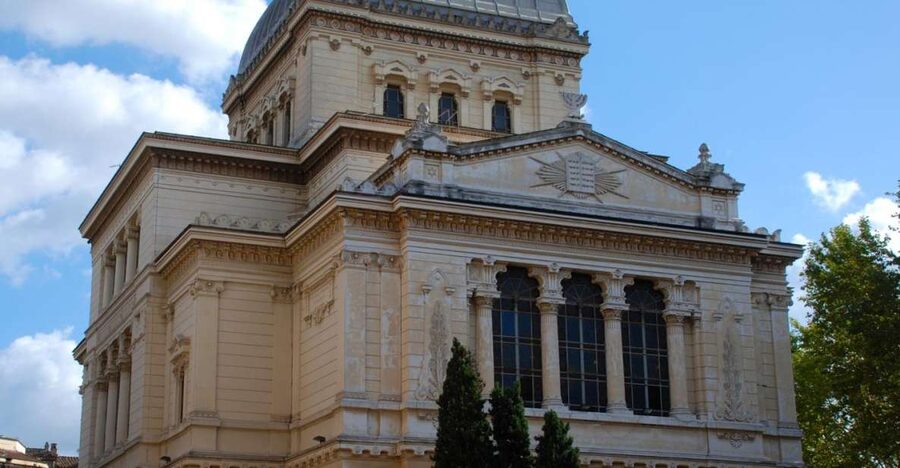
The Great Synagogue of Rome is still at the heart of Jewish life in the city, and it is one of the tour’s most important landmarks. The stop helps explain the continuing presence of Rome’s Jewish community, not just its past.
The synagogue visit is exterior sightseeing only. That is an important detail when deciding if this tour fits your plans. You can admire the building from outside and hear the guide discuss its role, but the tour does not include entry into the synagogue.
This approach works well for a short neighborhood walk because it places the building within the wider story of the former Ghetto. You are not treating the synagogue as an isolated attraction. You are seeing it in relation to the river, the ancient Roman remains, and the streets where Jewish life has continued.
If your main goal is to visit the interior of the Great Synagogue, you will need a separate plan. If you want a concise introduction to Rome’s Jewish community and the location of its major synagogue, this stop fits the tour well.
Portico d’Ottavia and the former Ghetto
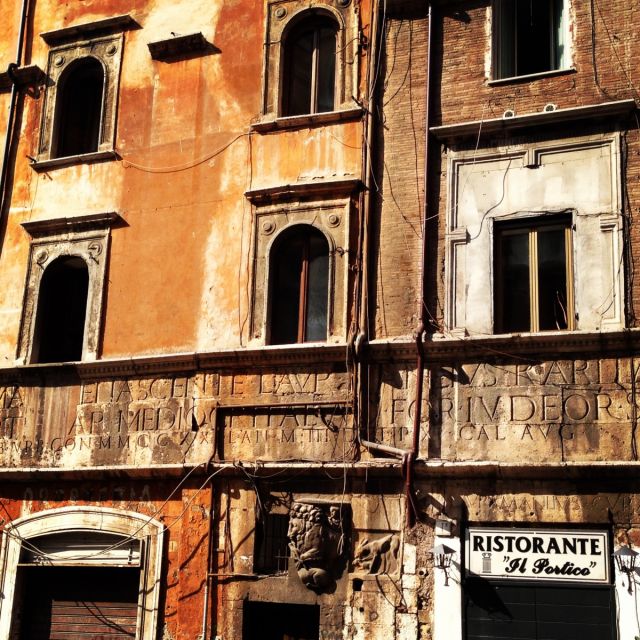
The Portico d’Ottavia is where the tour’s ancient and Jewish stories meet. The remains once enclosed temples dedicated to Jupiter Stator and Juno Regina. Your guide uses the site to explain how the area changed over time and how the former Jewish Ghetto developed around older Roman structures.
This is one of the places where a guide adds real value. Ruins can look like disconnected walls when you see them without context. A clear explanation helps you picture the original scale and purpose, then understand how later residents lived among the remains.
The former Ghetto is described as the oldest Jewish neighborhood in the western world. That does not mean every visible building dates from the earliest period, but it does give the area unusual weight. The walk is asking you to look beyond Rome’s standard imperial landmarks and consider the city through the experience of a long-established Jewish community.
You should expect outdoor interpretation rather than a museum visit. The emphasis is on streets, buildings, remains, and the guide’s explanation. That makes the tour accessible for someone who wants historical context without spending half a day inside galleries.
Theatre of Marcellus and the finish near lunchtime
The final major sight is the open-air Theatre of Marcellus, built toward the end of the Roman Republic. It is a strong ending because it returns the focus to ancient Rome while leaving you close to the former Ghetto’s food and restaurant area.
The theatre is not the Colosseum, and this tour does not pretend otherwise. Its appeal is its place within the neighborhood and its connection to the older Roman city. You see how an ancient entertainment structure can sit beside later streets and buildings, all within a compact walk.
The listed route finishes at Teatro Marcello, while the meeting-point information says the activity ends back at the meeting point. Since those details do not match perfectly, confirm the exact ending point when you book. In either case, the walk remains in the same general historic area.
The tour ends around lunchtime, which is useful planning. You can ask the guide for recommendations nearby, including restaurants serving ancient Roman-Jewish kosher food. That makes the included coffee or gelato more than a random treat. It gives you a chance to pause, ask final questions, and decide where to eat next.
Coffee or gelato as part of the experience
The included coffee or gelato is a small but welcome touch. A two-hour history walk can become a stream of names and dates, and a brief café stop gives you time to enjoy the setting instead of rushing straight to the final monument.
The exact café and drink choice are not specified, so keep your expectations simple. This is not a meal or a formal tasting. It is a modest refreshment built into the tour.
I like this feature because it matches the character of Rome. The city is best understood on foot, with time for a quick coffee and a conversation rather than nonstop movement from one ticketed sight to another. It also gives you a natural moment to ask the guide about restaurants in the area.
Price, group size, and overall value
At $134.81 per person, this is not a cheap two-hour stroll. The price makes the most sense if you place a high value on a small group, a live English-speaking guide, and a focused introduction to an area you might not fully understand on your own.
The six-person maximum is the key value point. A large group tour can cover the same streets, but you may hear less, ask fewer questions, and spend more time trying to stay with the guide. Here, the smaller format should feel more personal.
The price also includes Santa Maria Basilica, Tiber Island, Trastevere, the former Jewish Ghetto, an exterior view of the synagogue, and coffee or gelato. It does not include an interior visit to the Great Synagogue, so do not compare the cost with a tour that includes synagogue admission unless you confirm what that other tour provides.
Free cancellation up to 24 hours before the start and the option to reserve now and pay later add useful flexibility. The activity is conducted in English, and the tour operates with no more than six participants.
Who should book this tour
I would choose this walk if you have already seen some of Rome’s headline monuments and want a more focused look at the city’s Jewish community, Trastevere, and the riverfront. It is also a good first introduction for anyone who wants historical context without committing to a long museum tour.
The tour suits you especially well if you:
- Prefer small groups over large sightseeing crowds
- Enjoy walking through living neighborhoods
- Want a guide to connect ancient Rome with later religious and community history
- Appreciate a short itinerary with several distinct types of sights
- Plan to eat lunch near the former Ghetto afterward
You may want something else if you need interior access to the Great Synagogue, extensive time inside Santa Maria Basilica, or a slower tour centered on one monument. Two hours is enough for an overview, not a full study of every site.
Final verdict: a thoughtful short walk with one clear limit
This is a well-shaped introduction to Trastevere and Rome’s former Jewish Ghetto. The strongest parts are the small group, the route from Piazza Trilussa to the Portico d’Ottavia, and the way the guide links the Jewish community with Tiber Island and ancient Roman sites.
I would book it if you want a personal, history-focused walk and understand that the synagogue is viewed from outside. I would skip it only if your priority is interior access or a slow, highly detailed visit to each monument. For most visitors with a free morning, the route offers useful context, a friendly guide-led pace, and a good place to continue with lunch.
FAQ
How long does the Rome Jewish Ghetto and Trastevere tour last?
The tour lasts two hours.
What language is the tour conducted in?
The live tour guide speaks English.
How many people can join the tour?
The tour has a maximum of six participants.
Where does the tour start?
It starts at Piazza Trilussa, 00153 Roma RM, in front of the stairs. The guide will be holding a LivTours sign.
Which Trastevere sights are included?
The route includes Trastevere, Ponte Sisto, and the Basilica of Santa Maria in Trastevere.
Does the tour enter the Great Synagogue of Rome?
No. The Great Synagogue is included as an exterior sightseeing stop.
What ancient Roman sites are included?
The tour visits the Portico d’Ottavia and the Theatre of Marcellus. It also includes Tiber Island.
Is coffee or gelato included?
Yes. Coffee or gelato is included during a break at a local café.
Can I ask the guide for restaurant suggestions?
Yes. The tour ends around lunchtime, and you can ask the guide for recommendations in the area, including restaurants featuring ancient Roman-Jewish kosher food.
Can I cancel for a full refund?
Yes. You can cancel up to 24 hours in advance for a full refund. You can also reserve now and pay later.
Newest Rome tours we have reviewed
- Private TikTok Video Making in Rome★ 5.0 · 7 reviews
- Assisi, Orvieto and Civita di Bagnoregio Full Day Tour from Rome★ 4.5 · 45 reviews
- Assisi & Saint Francis Path Tour from Rome★ 5.0 · 45 reviews
- Assisi and Cascia Private Day Tour from Rome with Lunch★ 5.0 · 10 reviews
- Art Class in the center of Rome!★ 4.0 · 4 reviews
- Art & Craft: Beer Tour with Street Art in Rome★ 4.5 · 6 reviews
- Arrival in Rome: Airport Transfer & Exclusive City Introduction★ 5.0 · 3 reviews
- From Rome: Private Day-Tour of Tuscany★ 5.0 · 16 reviews
Trastevere Tours, compared.

Winner 2025 Rome Twilight Trastevere Food Tour by Eating Europe
Read our review →
Trastevere or Jewish Quarter Street Food Tour
Read our review →
Trastevere Food tour with Free-Flowing Fine Wine
Read our review →
Trastevere & Campo de Fiori Street Food Walking Tour
Read our review →
Award Winning Trastevere Group Food Tour with Wine
Read our review →

Rome Food Tour: Hidden Gems of Trastevere with Dinner & Wine
Read our review →Browse the lists this tour appears in