
Reviewed · ANCIENT ROME TOURS
Rome: Lesser Known Ancient Rome Walking Tour
Rome’s ancient past is not limited to the Colosseum and Roman Forum. This 2 to 2.5-hour walk links lesser-seen ruins, temples, theaters, apartment remains, and old engineering works, giving you a more personal sense of how Rome functioned.
I like the focus on ordinary Roman life, especially the surviving apartment at Insula dell’Ara Coeli. I also like the route’s variety: you move from the site of Julius Caesar’s assassination to the Capitoline Hill, the Mouth of Truth, and the huge open space of Circus Maximus.
The main drawback is the pace. Ten-minute guided stops can provide useful context, but they will not allow long visits at every site. You will also spend much of the tour outdoors, so summer heat, rain, and uneven historic surroundings are worth planning for.
Key points to know before booking
- See Rome’s ancient layers outside the usual circuit, including Largo di Torre Argentina and the Forum Boarium.
- Study daily life as well as grand monuments at one of the few surviving Roman apartment buildings.
- Hear clear historical storytelling from an English-speaking historian guide. Ben is specifically praised for placing ruins into context without losing the drama.
- Walk in a small group of up to 15 people, with a private option available for groups of up to 25.
- Finish near Circus Maximus, after seeing the Mouth of Truth, ancient temples, Palatine Hill, and old sewer remains.
- Pay $28 per person, a fair price for a guided overview of several outdoor ancient sites, though major indoor admissions are not listed as included.
Why this route gives you a different Rome
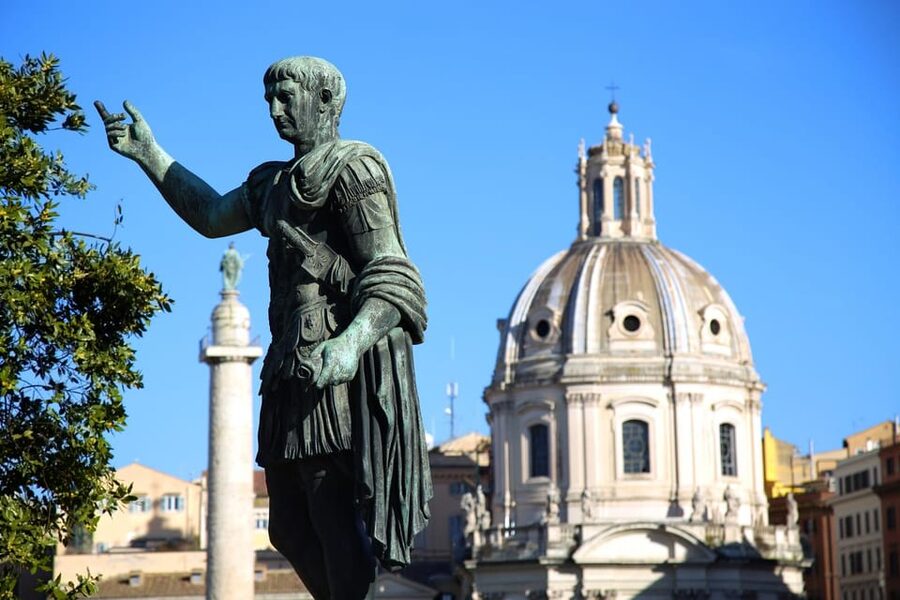
The usual first-day Roman itinerary points you toward the Colosseum, Forum, and Pantheon. Those places deserve their fame, but they can also make ancient Rome feel like a set of grand monuments viewed from behind barriers.
This walk takes a quieter approach. You see the places where religion, government, housing, entertainment, water management, and public life once met. I like that balance. Rome becomes less about emperors and marble alone, and more about how a huge city actually worked.
The tour begins at Largo di Torre Argentina, with two possible starting arrangements listed: Largo di Torre Argentina or Piazza Venezia. Check your booking details carefully, since the meeting point can vary. The route then moves toward Circus Maximus, with the advertised finish there.
At $28, the tour offers good value if you want a guide to connect several outdoor sites in one walk. You are paying for interpretation and route planning rather than admission to a single major monument. Food, drinks, and hotel transfers are not included, and no entrance tickets are listed as part of the price.
More ancient Rome tours:
- Colosseum: Underground and Ancient Rome Tour
★ 4.7 · 12,691 reviews - Colosseum & Ancient Rome with Arena Floor Option I Max 6 People
★ 5.0 · 3,306 reviews - Rome: Colosseum, Ancient Rome Tour or Self AudioGuided Tour
★ 4.4 · 2,866 reviews
Largo di Torre Argentina and the place where Caesar died
Largo di Torre Argentina is one of the strongest opening points in Rome. Four ancient temples sit below modern street level, surrounded by the present-day city. The contrast is immediate: buses, traffic, and ordinary Roman life pass close to remains more than 2,000 years old.
Your guide spends about ten minutes here, explaining the religious purpose of the area and its connection to Julius Caesar’s assassination. That short stop works best as a scene-setting lesson. You learn how much of Rome’s past survives in plain sight, often at places you could pass without realizing what lies below.
Do not expect a long archaeological visit here. The value comes from seeing the remains and hearing their place in the story of the city. If you enjoy Rome’s unusual historical connections, this is a memorable start.
Via delle Botteghe Oscure and Rome below the modern street
The route continues along Via delle Botteghe Oscure, where part of a large ancient Roman structure remains beneath the modern city. The exact stop is described as another short guided visit, so your time here is mainly for explanation rather than extended exploration.
This section helps you notice Rome’s layered construction. Ancient buildings were not always cleared away and replaced. Many were buried, built over, or absorbed into later streets and structures. I find that idea useful for the rest of your visit because it changes how you look at ordinary corners of central Rome.
The stop may appeal most to visitors who like archaeology and city planning. If you want one famous monument after another, this quieter section may feel less dramatic. Its reward comes from understanding how the old city remains part of the modern one.
Capitoline Hill and the center of Roman power
Capitoline Hill was the most revered of Rome’s seven hills and an important religious and symbolic center. The guide uses roughly ten minutes here to explain the hill’s place in ancient Rome.
This is not presented as a full museum visit or a long examination of every building. Instead, you get a compact lesson in why this hill mattered. After seeing temples and buried structures, the Capitoline gives the route a sense of political and religious authority.
I like the change in scale. Largo di Torre Argentina shows ancient Rome through excavation remains. Capitoline Hill helps you picture the city’s power and identity. Bring your camera, but pay attention to the explanation as well. The historical meaning is the main reason for this stop.
More walking tours in Rome:
- Rome: Trastevere & Campo de Fiori Street Food Walking Tour
★ 4.9 · 2,768 reviews - Rome: Paranormal Night Walking Tour & Secret Backstreets
★ 4.9 · 1,921 reviews - Rome by Night Walking Tour – Legends & Criminal Stories
★ 4.5 · 1,003 reviews - Rome: Guided City Center Evening Sightseeing Walking Tour
★ 4.4 · 953 reviews
Insula dell’Ara Coeli and the lives of ordinary Romans
One of the most useful stops is Insula dell’Ara Coeli, a surviving example of an ancient Roman apartment building. Roman history is often told through generals, emperors, temples, and military victories. This site points you toward the people who lived in the city’s crowded residential buildings.
You can expect about ten minutes of guided context. That is enough to introduce the idea of apartment life, though not enough for a detailed social-history lecture. Still, the stop adds a human scale to the tour.
I especially like this part because it answers a practical question: where did ordinary Romans live? The ruins make the past feel less distant. You are no longer thinking only about public ceremonies and imperial power. You are thinking about homes, neighbors, and daily routines.
Theatre of Marcellus and Roman entertainment
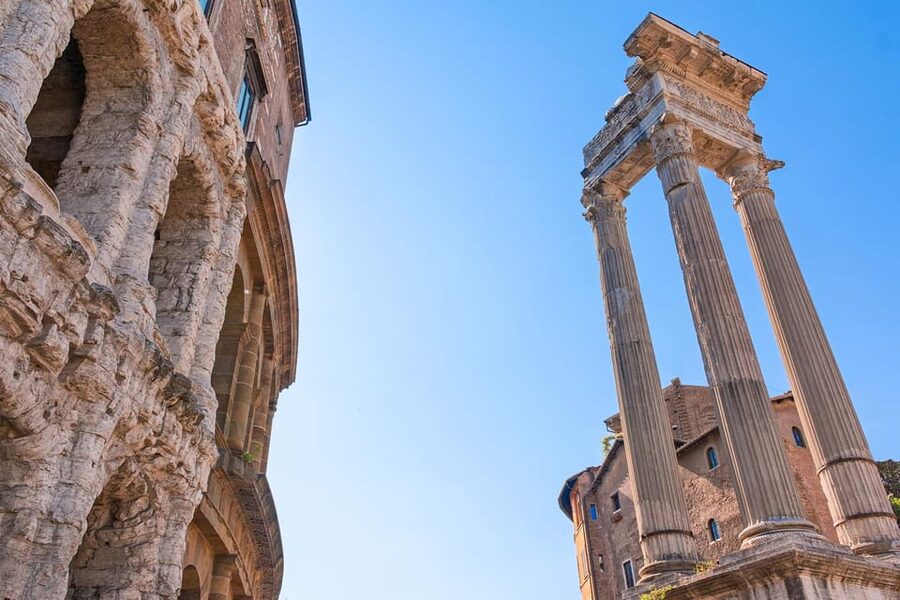
The Theatre of Marcellus is one of the route’s major ancient monuments. The tour pauses here for another short explanation of the theater and its role in Roman public life.
Theater was part of how Romans gathered and were entertained, and this stop broadens the tour beyond temples and government sites. You get a sense of the city as a place where large crowds watched performances and shared public experiences.
Because the stop lasts about ten minutes, I would treat it as an introduction rather than a full architectural study. If the theater is a particular interest, you may want to return later with more time. During this tour, its value is how it fits into the larger picture of Roman society.
Forum Boarium and the best-preserved temples
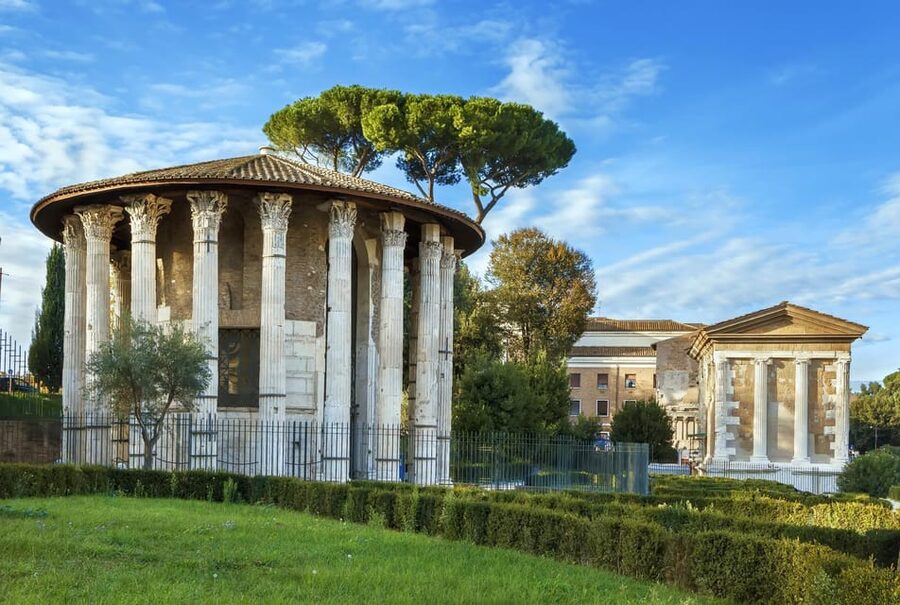
Forum Boarium brings you to an area associated with commerce and public activity near the ancient city’s riverfront. The tour also includes some of Rome’s best-preserved ancient temples, giving you a chance to see Roman architecture in a more open setting.
This is a good point in the route for comparing different types of ancient places. The apartment showed private life. The theater showed entertainment. Here, temples and commercial activity help explain how religion and trade were woven into the city.
The guide’s job matters a great deal at this stop. Without context, old columns and temple walls can blur together. With a strong explanation, you can understand why these structures survived and what kinds of activity once surrounded them.
The Mouth of Truth and Rome’s old stories
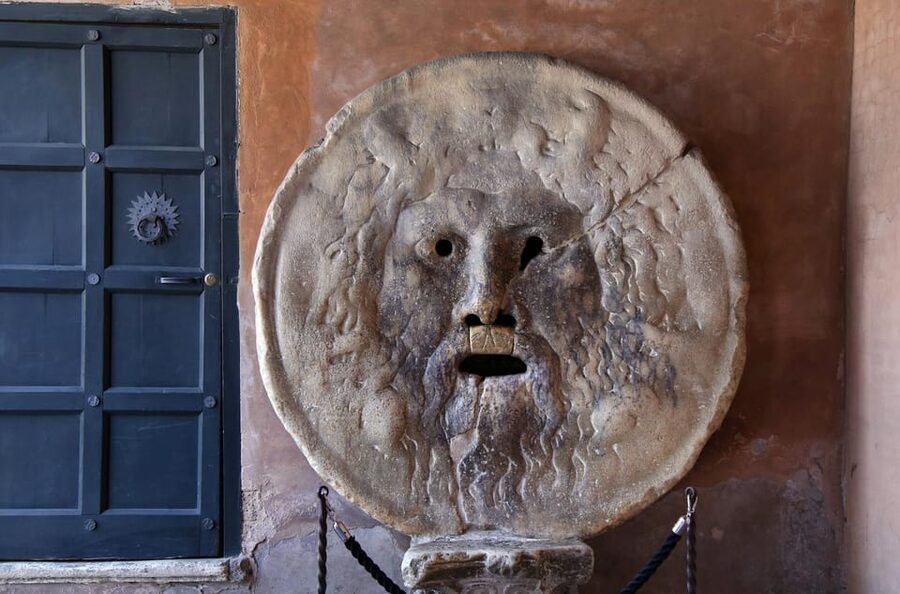
The Bocca della Verità, or Mouth of Truth, is one of Rome’s most recognizable curiosities. The stone mask is linked to the old story that it bites the hands of liars.
The tour includes a guided stop here, but the supplied schedule does not promise a separate long line or extended photo session. You should think of this as a short cultural stop within the larger walk, not the main purpose of the outing.
I like that the route includes both serious archaeology and popular legend. Ancient Rome is not only dates and building techniques. It is also stories passed through generations. The Mouth of Truth gives the tour a lighter moment before it returns to engineering, origins, and public spectacle.
The ancient arch and Rome’s sewer system
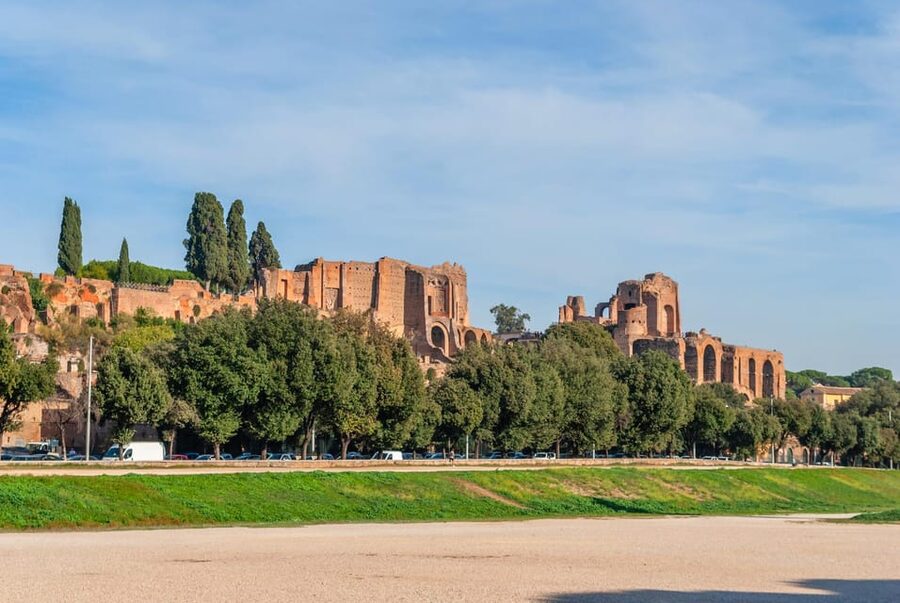
The tour also points out a distinctive archway and outdoor remains connected with the world’s oldest sewers. These sights may be less instantly famous than the Colosseum, but they help explain how Rome grew into a major city.
The sewer remains are especially useful because they shift your attention from monuments to infrastructure. Roads, drainage, and water management helped make urban life possible. You may not spend long at this part of the route, but it is one of the stops that gives the city practical depth.
This is also where good storytelling can make a difference. A few stones can seem ordinary until you understand the engineering problem they solved. The guide’s explanation turns a quick roadside look into part of the city’s larger development.
Palatine Hill and the origins of Rome
The route reaches Palatine Hill near the end. This is one of Rome’s oldest and most meaningful sites, linked to the city’s earliest beginnings and later imperial power.
The schedule allows around ten minutes here. That will not cover the hill in the detail of a dedicated Palatine visit, and you should keep that limitation in mind. If you want to explore the archaeological area fully, plan a separate visit with more time.
As part of this walk, the hill works as a powerful closing chapter. You have already seen religious sites, homes, entertainment spaces, temples, and sewers. Palatine Hill brings the story back to Rome’s origins and its rise to power.
Circus Maximus and the final view of ancient Rome
The tour finishes at Circus Maximus, once the largest stadium ever built. This wide open site is easy to picture as a place of chariot races and huge public gatherings, even though the remaining ruins are far less complete than the Colosseum.
The ending gives the route room to breathe. After a series of compact stops, you reach a place associated with enormous crowds and public excitement. Your guide can help you imagine the scale of the stadium and the energy of its events.
The stated finish is Circus Maximus, though the meeting information also says the activity ends back at the meeting point. Since the starting option can vary, confirm the exact end arrangement when you book. In practical terms, plan for the advertised route to conclude at Circus Maximus.
Guide quality, group size, and pace
The tour is conducted in English by a live historian guide. Ben is specifically praised for combining strong command of the ancient past with storytelling that keeps the ruins connected to a larger story.
That matters here because several stops are short and some remains are easy to overlook. A guide who can explain context clearly will make a much bigger difference than a guide who simply lists dates and names.
The standard group is limited to 15 people. That is small enough for a more personal walk and easier listening than a large city group. A private option is available for up to 25 people, useful if you want a route organized for your own party.
The tour runs in rain or shine. Bring water, sunscreen, and comfortable shoes, and carry suitable rain protection if the forecast is poor. Summer can be hot, although fountains are available for refills. There is an optional break stop, but food and drinks are not included.
Who should book this walk
I would choose this tour if you have already seen Rome’s most famous sights or if you want your first ancient-Rome walk to include more than imperial monuments. It suits curious adults, history-minded families, and anyone who prefers a guided overview of several sites rather than a single long museum visit.
It is also a good choice if you want a short activity. The two to 2.5-hour duration leaves room for lunch, a museum, or an evening reservation.
I would be more cautious if you need extended time for photography, detailed archaeology, or independent exploration. Ten minutes at each listed stop is enough for orientation, not a deep study. The route also involves outdoor walking in changing weather, so good preparation is important.
The tour is listed as wheelchair accessible, but because the route includes ancient sites and historic outdoor areas, confirm the exact access arrangements for your selected date and meeting point if this is important for your plans.
Should you book the Lesser Known Ancient Rome Walking Tour?
Book it if you want Rome’s ancient past explained through varied, less familiar places rather than only the Colosseum and Forum. The surviving apartment, ancient temples, sewer remains, Mouth of Truth, and Circus Maximus create a useful mix of everyday life, religion, legend, engineering, and public entertainment.
At $28, I consider it a sensible buy for a guided introduction, especially with a group capped at 15 and an English-speaking historian. Just keep your expectations realistic: this is a brisk overview, not a full archaeological tour of every site.
FAQ
How long does the tour last?
The tour lasts about 2 to 2.5 hours. Starting times vary, so check availability for your preferred date.
What language is the tour conducted in?
The live tour guide speaks English.
Where does the tour start?
The starting point may be Largo di Torre Argentina or Piazza Venezia, depending on the option booked. Check your booking details before setting out.
Where does the tour finish?
The listed route finishes at Circus Maximus. Meeting information can vary, so confirm the exact end arrangements when booking.
What sites are included?
The route includes Largo di Torre Argentina, Capitoline Hill, Insula dell’Ara Coeli, Theatre of Marcellus, Forum Boarium, the Mouth of Truth, Palatine Hill, Circus Maximus, and additional ancient remains along the way.
Is the tour available as a private experience?
Yes. A private group option is available, with private groups of up to 25 people. The standard group has a maximum of 15 people.
Is the tour wheelchair accessible?
Yes, the activity is listed as wheelchair accessible.
What should I bring?
Bring comfortable shoes, water, sunscreen, and a camera. The tour runs in rain or shine, so bring suitable weather protection. In summer, water is especially important, and fountains are available for refills.
Newest Rome tours we have reviewed
- Private TikTok Video Making in Rome★ 5.0 · 7 reviews
- Assisi, Orvieto and Civita di Bagnoregio Full Day Tour from Rome★ 4.5 · 45 reviews
- Assisi & Saint Francis Path Tour from Rome★ 5.0 · 45 reviews
- Art & Craft: Beer Tour with Street Art in Rome★ 4.5 · 6 reviews
- Assisi and Cascia Private Day Tour from Rome with Lunch★ 5.0 · 10 reviews
- Art Class in the center of Rome!★ 4.0 · 4 reviews
- Arrival in Rome: Airport Transfer & Exclusive City Introduction★ 5.0 · 3 reviews
- From Rome: Private Day-Tour of Tuscany★ 5.0 · 16 reviews
Ancient Rome Tours, compared.
Colosseum: Underground and Ancient Rome Tour
Read our review →
Colosseum & Ancient Rome with Arena Floor Option I Max 6 People
Read our review →
Colosseum, Ancient Rome Tour or Self AudioGuided Tour
Read our review →
Colosseum Underground & Ancient Rome Guided Tour
Read our review →
Ancient Rome: Colosseum Underground Group Tour
Read our review →
Colosseum Express Guided Tour and Ancient Rome Admission Included
Read our review →
Colosseum Arena Access and Ancient Rome Guided Tour
Read our review →
Ancient Rome Discovery: Colosseum, Forum, Palatine Guided Tour
Read our review →Browse the lists this tour appears in