
Reviewed · ROME
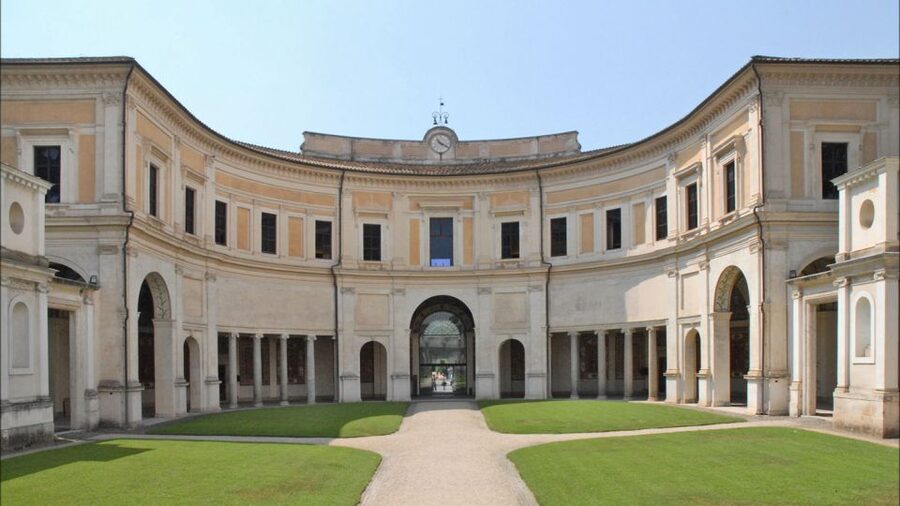
Rome: National Etruscan Museum Private Tour
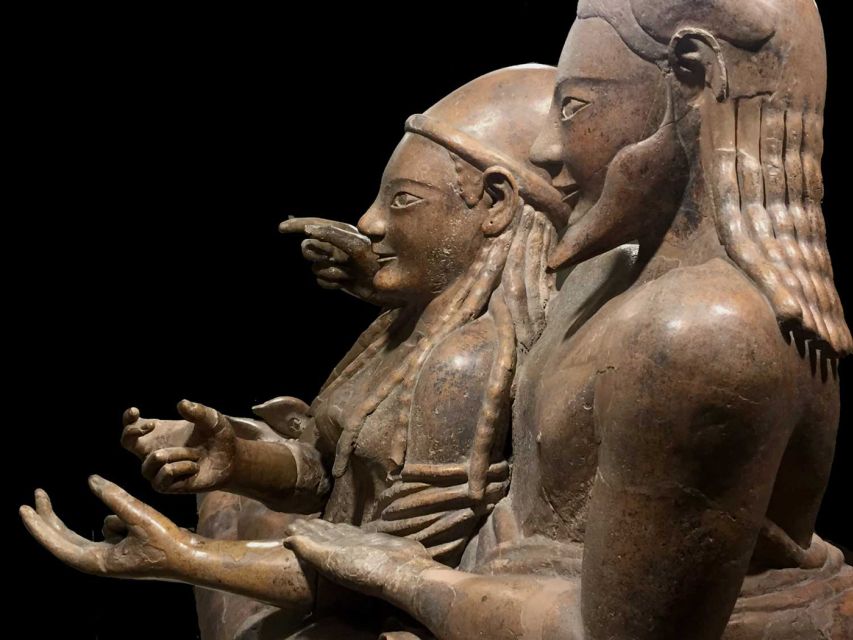
The most memorable object here is the Sarcophagus of the Spouses, a 520 BC work from Cerveteri showing a reclining couple. This private visit puts that famous piece in context, alongside Etruscan tomb objects, weapons, jewelry, statues, and inscriptions.
I like the private format, since you can ask questions and keep the focus on the parts that interest you. I also like the clear two-hour length, which fits neatly into a busy day in Rome without turning the museum into an all-day assignment.
The main drawback is the narrow focus. If you mainly want ancient Rome, the Colosseum, or monumental Roman ruins, this museum may feel specialized. The tour also requires some walking and is not recommended for wheelchair users or people with limited mobility.
Key points to know before you book
- The Sarcophagus of the Spouses is the star: See the famous Cerveteri sculpture, dated to about 520 BC.
- This is a private two-hour visit: You get a guide for your group rather than joining a large shared tour.
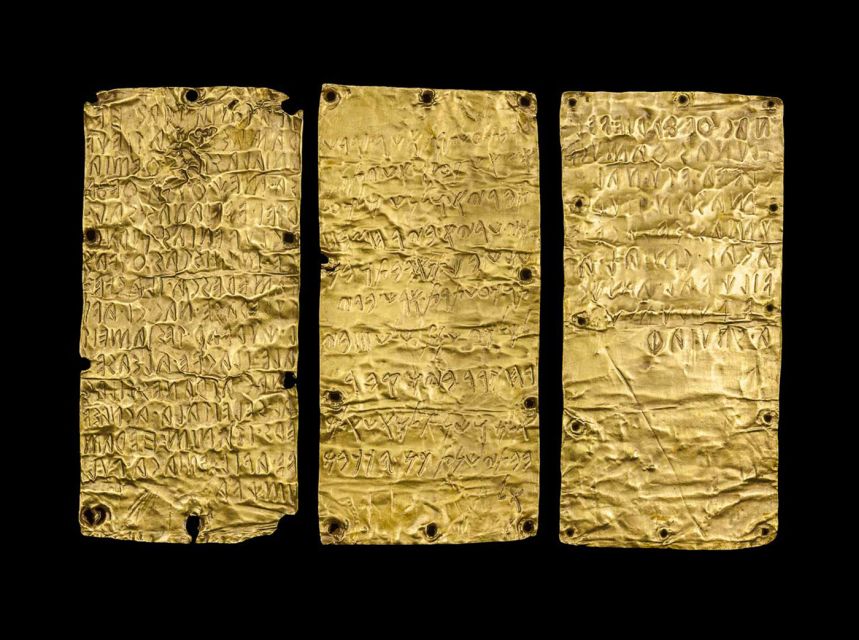
- Etruscan writing gets real attention: The museum has sections devoted to Etruscan epigraphy, or the study of inscriptions.
- The subject comes before Rome: You’ll learn about a civilization that existed before the Roman Empire and influenced the early history of the region.
- The meeting point is simple: Arrive 15 minutes early at the museum entrance, where the guide waits with a tour sign.
- Plan light: Large bags and luggage are not allowed, and the tour is not suitable for wheelchair users.
Why the Etruscans matter in a city built around Rome
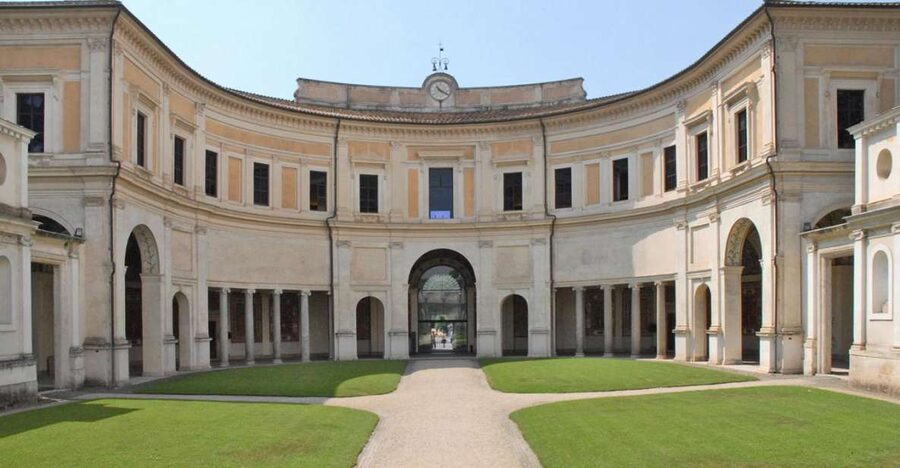
Rome can make it easy to forget that its story began before the Roman Empire. The National Etruscan Museum at Villa Giulia corrects that narrow view by focusing on the Etruscans, an ancient civilization that preceded Rome and occupied areas of central Italy, including Lazio.
I like this as a change of pace from the usual Roman sights. Instead of moving through a familiar sequence of emperors, legions, and imperial monuments, you look at the people who lived in the region before Rome became the power that shaped the Mediterranean.
The museum’s collection includes pre-Roman antiquities found in Lazio. That regional focus matters. You are not simply looking at isolated objects behind glass. You are seeing material connected to the area around Rome, which gives the visit a useful local frame.
Your guide can help explain what you are seeing and why it matters. Since the group is private, you can ask for more detail when a particular object catches your attention, or move on when a section is less appealing. That flexibility is one of the strongest reasons to choose this tour instead of visiting on your own.
More museums and galleries in Rome:
- Vatican Museums & Sistine Chapel Tour with Optional Basilica
★ 4.3 · 67,413 reviews - Vatican Museums, Sistine Chapel & St Peter’s Basilica Guided Tour
★ 4.5 · 39,149 reviews - Rome: Vatican Museums, Sistine Chapel & Basilica Tour
★ 4.3 · 13,872 reviews
Beginning at Villa Giulia
The tour starts at the entrance of the National Etruscan Museum in Villa Giulia. You should arrive 15 minutes before the scheduled start time. The guide waits outside with a sign showing the name of the tour, so the meeting arrangement is straightforward.
Hotel pickup and drop-off are not included. You need to make your own way to the museum, then return to the same meeting point when the two-hour activity ends. That makes this easiest to pair with other plans in central Rome if you already know how you will reach Villa Giulia.
The meeting setup is worth taking seriously. Rome has many museums and busy streets, and arriving late can eat into a short tour. Give yourself enough time to find the entrance without rushing.
The activity is available with a live guide in English or Italian. No individual guide name is provided, so you should select your preferred language when checking available times. The small private-group setup means you are not sharing the guide’s attention with an unknown crowd.
Reading the Etruscan collection through objects
The collection includes statues, weapons, sarcophagi, and jewelry. Each type of object gives you a different way into Etruscan life.
The weapons point toward conflict and status. Jewelry brings attention to personal display and craftsmanship. Statues give you a sense of how people represented the human form, while sarcophagi connect art with burial customs and ideas about the afterlife.
I find this mix more useful than a museum visit built around one kind of object. You are not only looking at grand sculpture. Small items can be just as revealing, especially when a guide explains how they relate to burial, identity, or daily life.
The collection also helps you compare Etruscan culture with the Roman world that followed. You may notice familiar Mediterranean themes, but the style, objects, and inscriptions belong to a different cultural setting. Those distinctions are easier to grasp when someone points them out as you move through the displays.
Do not expect every object to make immediate sense. Ancient artifacts can look quiet and even plain without explanation. The value of a private guide is that the objects become part of a connected story rather than a string of labels.
Meeting the Sarcophagus of the Spouses from Cerveteri
The Sarcophagus of the Spouses is the clear centerpiece of the visit. Created around 520 BC and found at Cerveteri, it shows a reclining couple on the upper part of a sarcophagus.
Its importance goes beyond size or fame. The paired figures make the object feel personal. Instead of seeing a burial container as a closed, distant artifact, you are confronted with an image of two people presented together.
The work also gives you a strong entry into Etruscan funerary art. A guide can help you look at the pose, the faces, the clothing, and the way the couple is presented. You do not need a specialist background to appreciate it, but the context makes the encounter more rewarding.
This is the object most likely to stay with you after the tour. It is also the reason to avoid racing through the museum. A private visit gives you a better chance to spend time with the sarcophagus and ask questions instead of simply taking a quick look before moving on.
The date, about 520 BC, is another useful anchor. It places the work firmly in the pre-Roman period, long before the Roman Empire reached its height. That timeline helps you see Rome as part of a longer regional story, not as the beginning of everything.
More private tours in Rome:
- Rome by Golf Cart Private Tour: Beyond the Landmarks
★ 5.0 · 4,361 reviews - Early Morning Vatican, Sistine, St. Peter’s Semi or Private Tour
★ 5.0 · 3,779 reviews - Rome on a Golf Cart Semi-Private Tour Max 6 with Private Option
★ 5.0 · 2,502 reviews - Rome Private Arrival Transfer: Fiumicino Airport to Hotel in Rome
★ 4.5 · 2,492 reviews
The Etruscan epigraphy sections
One of the more specific parts of the tour is the museum’s attention to Etruscan epigraphy. In simple terms, this means the study and display of inscriptions.
Written evidence can be harder to appreciate than a statue or piece of jewelry. You may not be able to read the script, and an inscription can seem like a small detail. Yet these sections show how much information can be carried by marks carved or written on ancient objects.
This is a good place to use the guide actively. Ask for help understanding what the inscriptions are, where they appear, and why they matter. The tour description specifically highlights these museum sections, so they are not an afterthought.
For you, the value is not necessarily learning to translate Etruscan. It is seeing that the civilization left written traces as well as physical objects. The inscriptions add another layer to the collection, moving the visit beyond visual appreciation.
If your main interest is art, you may prefer to spend more time with the sarcophagi and statues. If you enjoy language, archaeology, or the challenge of ancient scripts, the epigraphy displays may become one of the most engaging parts of the tour.
Why a private guide changes the two-hour visit
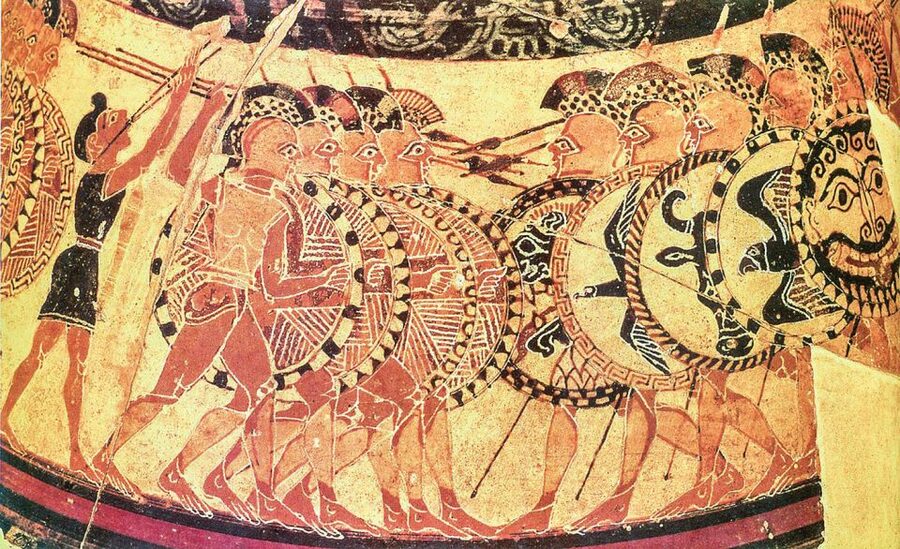
Two hours is enough for a focused introduction, but it is not enough to inspect every object in a large museum. That limitation makes the private format useful.
A guide can select the most important pieces and explain the links between them. You are less likely to lose time wondering which room or display deserves your attention. You can also ask for a slower explanation when a subject is new to you.
I would not expect a private tour to cover every corner of the museum. The experience works best when you accept that it is an edited visit. You are getting a clear introduction to Etruscan civilization, not a complete academic survey.
The group size is private, but the exact number of people in your booking is not specified. You should think of this as a visit built around your own party rather than a large public group. That usually makes it easier to hear the guide and keep the pace comfortable, although the museum’s accessibility limits still apply.
A private guide is especially helpful if your group includes people with different interests. One person can ask about inscriptions, another about burial objects, and another about the relationship between the Etruscans and Rome. The guide can adjust the emphasis without needing to satisfy a busload of strangers.
Price and practical value at $124.61 per person
At $124.61 per person, this is not a budget museum visit. You are paying for the museum entry and the attention of a private local guide, not just admission.
The price makes more sense if you value interpretation. The objects themselves are the reason to visit, but the guide helps you connect the Sarcophagus of the Spouses, Etruscan epigraphy, weapons, jewelry, and other finds into one understandable picture.
For a solo visitor, the cost may feel high compared with simply entering a museum. For a couple, family, or small private party, the calculation can be more favorable, especially if you would otherwise need to buy a separate guidebook or arrange another paid tour.
The two-hour duration also keeps the commitment manageable. You are not paying for a long day when you only want an introduction. Still, you should choose this experience because you care about the subject, not just because you want another Rome attraction checked off your list.
The strongest value comes from the combination of three things: a private guide, access to a specialized collection, and a clear focus on major Etruscan objects. If those match your interests, the price can be fair. If you want a broad ancient Rome overview, your money may be better spent elsewhere.
Timing, bags, and mobility concerns
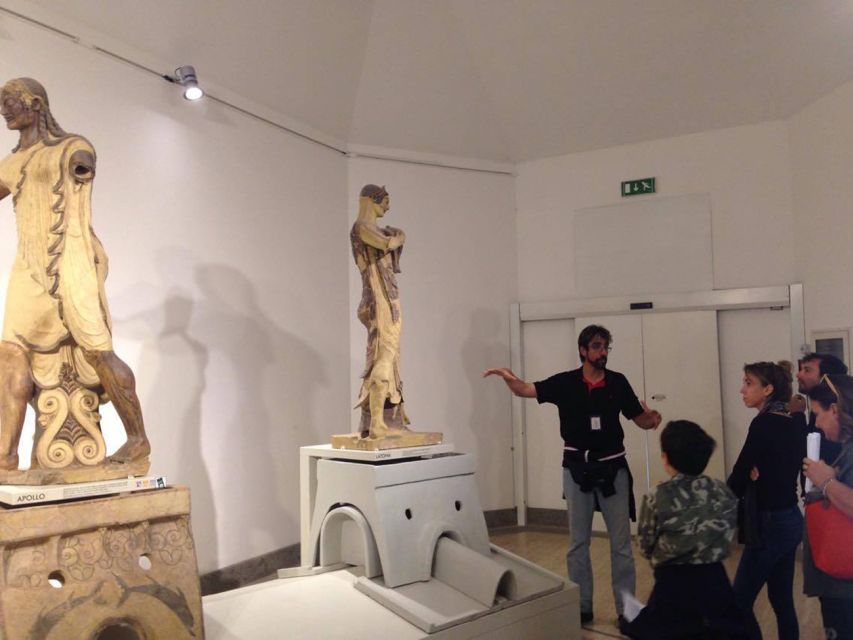
The tour runs for two hours, with starting times based on availability. Check the schedule carefully before building the rest of your day around it.
Bring identification for children, since a passport or ID card is listed as something to have with you. Large bags and luggage are not allowed, so do not arrive with a full suitcase or an oversized day bag.
The activity is not recommended for people with limited mobility and is not suitable for wheelchair users. The exact route and seating arrangements are not specified, so anyone concerned about walking or standing should ask for clarification before booking.
There is no hotel transfer. You are responsible for getting to the museum entrance and leaving from there after the tour. That is a small detail, but it matters when you are planning a tight Rome schedule.
Free cancellation is available up to 24 hours before the activity for a full refund. You can also reserve now and pay later, which gives you some flexibility while your plans are still changing.
Who will enjoy this museum visit most
I would recommend this tour to you if you enjoy archaeology, ancient art, or the history of Italy before Rome became dominant. It is also a smart choice if you have already seen the major Roman sights and want a more specialized museum visit.
The tour suits first-time visitors who want to understand the setting around Rome, not just its imperial monuments. It can also work well for repeat visitors who have run out of patience for another crowded ancient ruin but still want serious cultural content.
Families with older children may find the sarcophagus, weapons, and jewelry easier to discuss than a room full of small inscriptions. Bring the children’s ID if they are attending, and remember that large bags are not allowed.
I would be more cautious if you want a fast, casual stop or if your main goal is to see famous Roman monuments. The Etruscan subject requires attention, and the museum may feel too specialized if you are not interested in pre-Roman Italy.
The mobility warning is also important. If anyone in your party uses a wheelchair or has limited mobility, this is not the right choice based on the stated restrictions.
Should you book the National Etruscan Museum tour?
Book it if you want to see a major Etruscan artwork and understand the civilization that came before Rome. The private format, two-hour length, and focus on the Sarcophagus of the Spouses make this a neat fit for a carefully planned Rome day.
I would especially choose it for the chance to examine the Cerveteri sarcophagus with a guide rather than treating it as a quick photo stop. The Etruscan epigraphy sections add a more unusual angle, while the statues, weapons, jewelry, and other pre-Roman objects give the visit enough range.
Skip it if you need a wheelchair-accessible activity, plan to carry luggage, or want a general tour of ancient Rome. At $124.61 per person, it earns its price through focused private interpretation, so your interest in Etruscan culture should be genuine.
FAQ
How long does the National Etruscan Museum private tour last?
The tour lasts two hours. Starting times depend on availability when you book.
Where does the tour meet?
Meet your guide in front of the entrance to the National Etruscan Museum at Villa Giulia. Arrive 15 minutes before the activity begins. The guide waits with a sign showing the tour name.
Is the museum entry included?
Yes. Entry tickets and a private local guide are included.
What languages are available?
The live tour guide is available in English or Italian.
Is hotel pickup included?
No. Hotel pickup and drop-off are not included. The activity begins and ends at the museum meeting point.
Can wheelchair users join the tour?
No. The activity is not suitable for wheelchair users or people with mobility impairments. Large bags and luggage are also not allowed.
Newest Rome tours we have reviewed
- Private TikTok Video Making in Rome★ 5.0 · 7 reviews
- Assisi, Orvieto and Civita di Bagnoregio Full Day Tour from Rome★ 4.5 · 45 reviews
- Assisi & Saint Francis Path Tour from Rome★ 5.0 · 45 reviews
- Art Class in the center of Rome!★ 4.0 · 4 reviews
- Art & Craft: Beer Tour with Street Art in Rome★ 4.5 · 6 reviews
- Assisi and Cascia Private Day Tour from Rome with Lunch★ 5.0 · 10 reviews
- Arrival in Rome: Airport Transfer & Exclusive City Introduction★ 5.0 · 3 reviews
- From Rome: Private Day-Tour of Tuscany★ 5.0 · 16 reviews