
Reviewed · PANTHEON TOURS
Rome: Pantheon Timeless Marvel Guided Tour with Entry Ticket
The Pantheon’s great surprise is overhead: its enormous concrete dome opens to the sky through a round oculus. This ancient engineering feat becomes much easier to appreciate when a guide explains how the structure works, rather than leaving you to admire the ceiling and move on.
I like two things here. First, the ticket and guided entry save you from sorting out the monument on your own. Second, the short tour makes good use of your time, bringing out details such as the original doors, Raphael’s tomb, the marble decoration, and the building’s change from temple to church. The main consideration is that 45 minutes to an hour goes quickly, especially if you want quiet time for photographs.
Key points to know before you book
- Look up at the oculus: The open center of the dome is the Pantheon’s defining feature, and rain can fall straight inside.
- Meet by the elephant statue: The usual meeting area is Piazza della Minerva, beside Bernini’s famous elephant sculpture.
- Expect a compact visit: The tour lasts 45 minutes to one hour, so it gives you clear context without taking half a day.
- Choose your language: Guided visits are offered in English, French, and Spanish.
- Guides make the difference: Guides including Rea or Realda, Alessandra, Jan, Leo, and Laura have been praised for clear storytelling and a lively approach.
- Dress for a church: Shorts, short skirts, sleeveless shirts, weapons, and pets are not allowed.
Why the Pantheon is worth a guided visit
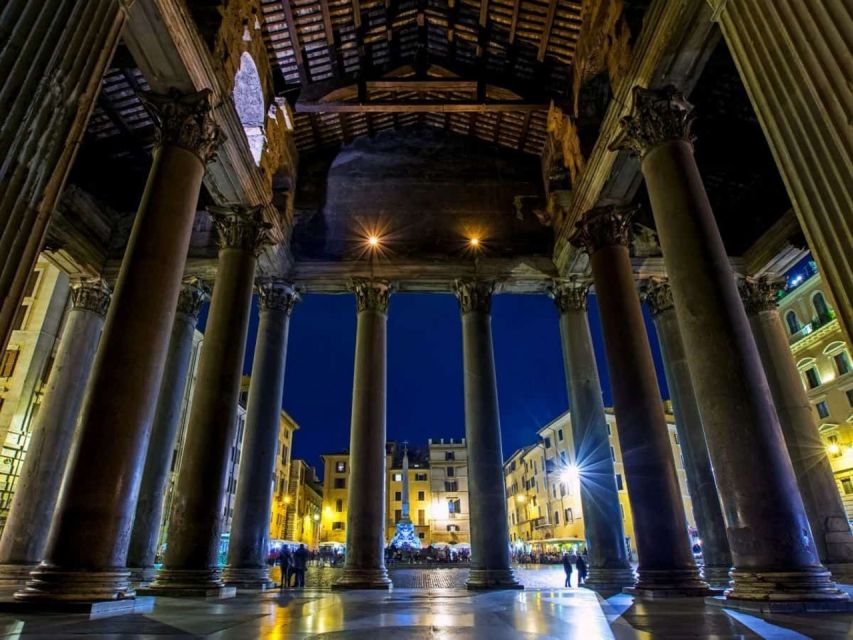
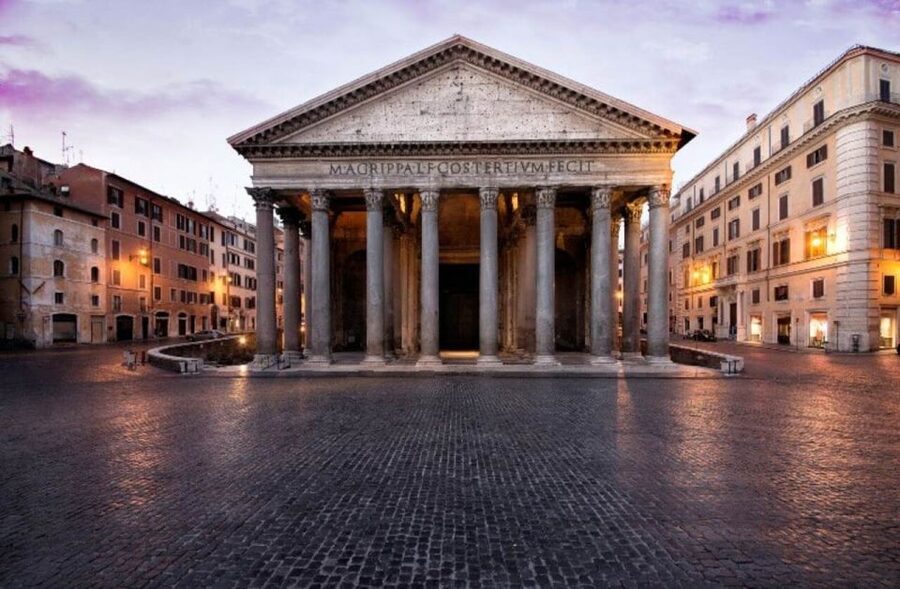
Rome has no shortage of grand monuments, but the Pantheon rewards close attention. From the outside, it can look like a conventional temple front. The massive Corinthian columns are impressive, but the real drama waits inside, where the dome creates a huge, almost weightless room.
A guide helps you connect the pieces. You’ll hear about the building’s Roman beginnings, its later use as a church, and the people buried inside. You’ll also get an explanation of the materials, construction methods, decoration, and changes made over the centuries.
That context matters because the Pantheon is not simply an old building with attractive marble. It is a place where Roman engineering, Christian worship, Renaissance memory, and modern visitor life all occupy the same room. A self-guided visit can show you the objects. A good guide explains why they belong together.
The tour is especially useful if this is your first time inside. From the street, you can see the columns and pediment. Inside, you need a few minutes to understand the scale. The oculus draws your eye upward, while the floor and wall decoration pull your attention back down. A guide gives you a sensible order for taking it all in.
More Pantheon tours and tickets:
- Rome: Pantheon Priority Entry Ticket & Audio Guide App
★ 4.1 · 3,234 reviews - Pantheon Elite Guided Tour – Rome’s Iconic Ancient Temple
★ 5.0 · 1,447 reviews - Rome’s Iconic Temple: Pantheon Audio Guided Tour with Fast Access
★ 4.0 · 1,188 reviews
Meeting at Piazza della Minerva
The tour begins at Piazza della Minerva, beside the elephant statue. This small square is close to the Pantheon and provides a clear place to gather before walking over to the entrance.
Allow time to find the statue and your guide. The meeting point may vary with the option you book, so check the details on your confirmation rather than relying only on the general location. Tour staff have also helped people who arrived late or needed help finding the group, but it is still best to arrive early.
Before entering, your guide gives you a short introduction to the Pantheon. This opening talk is useful because it sets up the main questions you’ll have once you step inside: What was the original building for? How did it survive? Why is it still in use as a church?
The walk from the square to the Pantheon is brief. That means the tour spends its time where you want it, inside the monument, rather than using a large part of the booking for transportation or a long approach.
Seeing the Pantheon from the outside
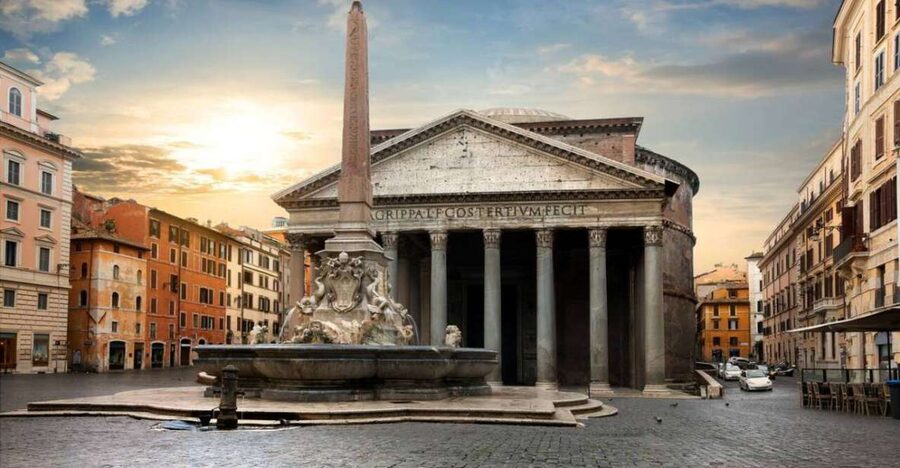
Take a moment outside before following the guide through the entrance. The front porch is defined by its tall Corinthian columns, which support the triangular pediment. Their size gives you an idea of the building’s power, but the porch hides much of the dome behind it.
This is a good point to hear about the blend of Greek and Roman design. The columned front suggests a classical Greek temple, while the vast circular interior belongs to Roman architectural thinking. That combination is one of the Pantheon’s most interesting features.
The original bronze doors are another detail worth noticing. They are easy to overlook because the entrance is busy, but a guide can direct your attention to them and explain why surviving elements matter. One of the strongest accounts of this tour specifically praised the chance to learn about those doors and the recipe for the Roman cement.
The exterior stop is short, but do not treat it as wasted time. The Pantheon’s front can make the interior feel even more surprising. You enter through a familiar temple facade and suddenly find yourself under a circular dome open to the heavens.
Inside under the unreinforced concrete dome

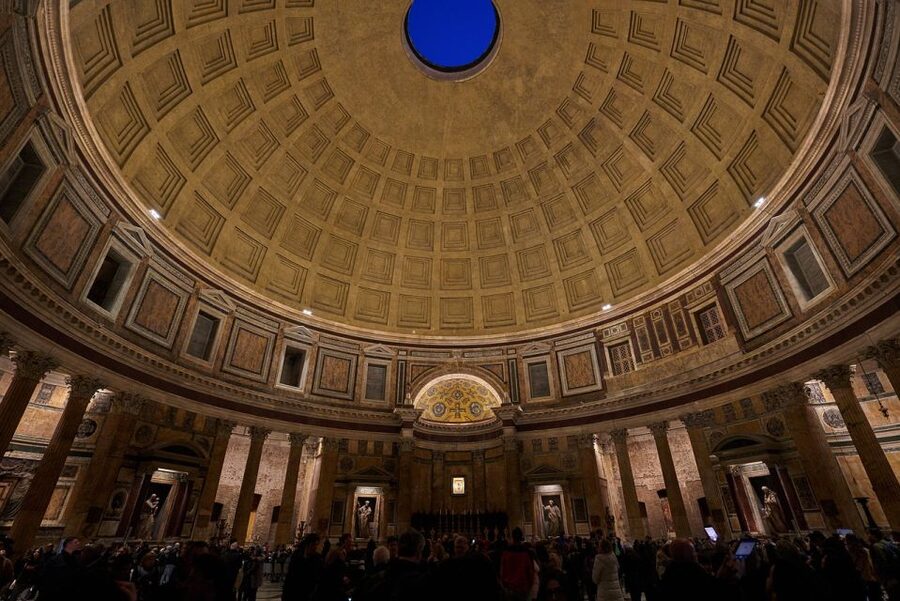
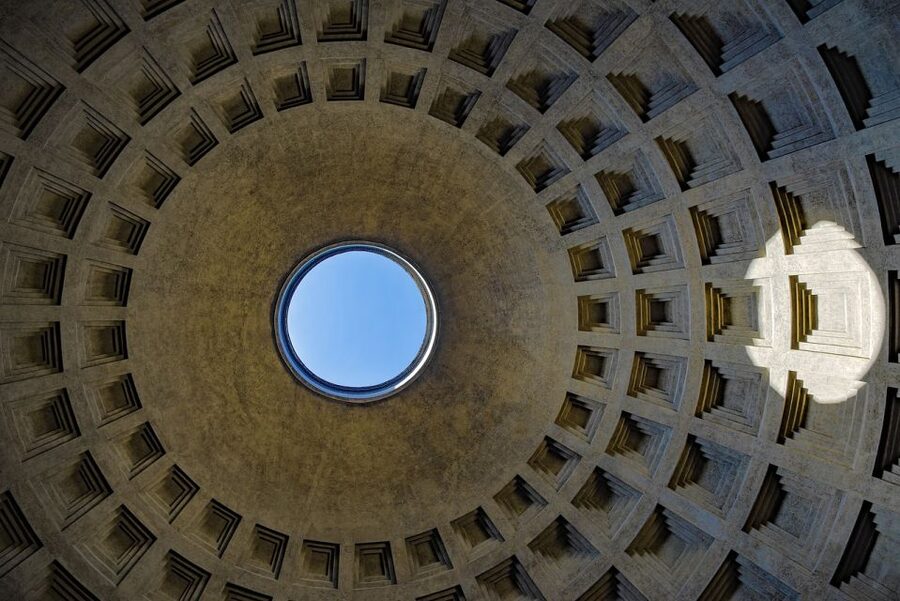
The main event is the interior. The Pantheon contains the world’s largest unreinforced concrete dome, and the oculus at its center is still open. It provides the room’s light and creates a direct link between the building and the sky.
Look at the dome in sections rather than trying to absorb it all at once. The recessed panels reduce its weight and create a repeating pattern that draws your eye toward the oculus. The dome appears to float above the circular room, though the surrounding walls do the serious structural work.
Rain may come through the opening. It drains through the floor, and seeing weather enter the building can make the design feel more practical and immediate. One person had the good fortune to visit during rainfall and see the water fall through the oculus. You cannot plan that exact moment, but if it happens, it is part of the Pantheon’s character.
The guide’s explanation is valuable here because the room can overwhelm you. Rea and Realda have been praised for making the engineering easier to understand. Jan, who has a background in urban planning, was also singled out for explaining the building as both an extraordinary Roman structure and a working place with a long later life.
You may hear about the cement used in the dome and the way the builders handled the weight. The supplied information does not give a full technical lecture, so expect an accessible introduction rather than an architecture course. For most people, that is the right balance.
More tickets and entry passes in Rome:
- Rome:Hop-On Hop-Off Panoramic Open Bus Ticket 3 Circuits x 1
★ 4.0 · 15,405 reviews - Vatican Museums & Sistine Chapel Skip-the-Line Entry Ticket
★ 4.4 · 13,838 reviews - Vatican Museums & Sistine Chapel Skip-the-Ticket-Line Tour
★ 4.3 · 10,486 reviews - Rome: St. Peter’s Basilica & Dome Entry Ticket & Audio Tour
★ 4.2 · 7,537 reviews
Mosaics, marble, paintings, and the church interior
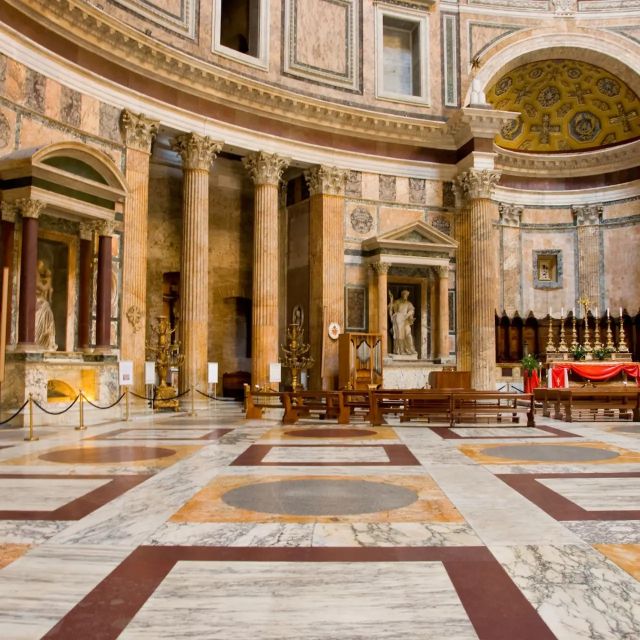
The Pantheon is more than a shell of Roman concrete. Inside, you’ll see colored marble, mosaics, sculptures, and paintings. These details show how the building has been adapted and cared for across different periods.
The floor provides a useful counterpoint to the dome. Look down as well as up. Geometric patterns and changes in material help organize the round interior, while the walls hold chapels, artwork, and memorials.
The building is now a church, so the visit has a spiritual side as well as an archaeological one. That means the atmosphere may shift during worship or other church activity. You are expected to behave respectfully, and modest clothing is required.
The guide can point out things you might miss alone, including the relationship between the Roman structure and the church decoration. Laura, Alessandra, Annalisa, and other guides have been praised for explaining the building’s construction and later use in a way that keeps the visit focused.
Do not expect a museum-style route with a large collection of labels. The Pantheon’s power comes from the room itself, its proportions, light, surfaces, and continued use. The guide supplies the missing captions through spoken explanation.
Raphael, Italian kings, and the people inside
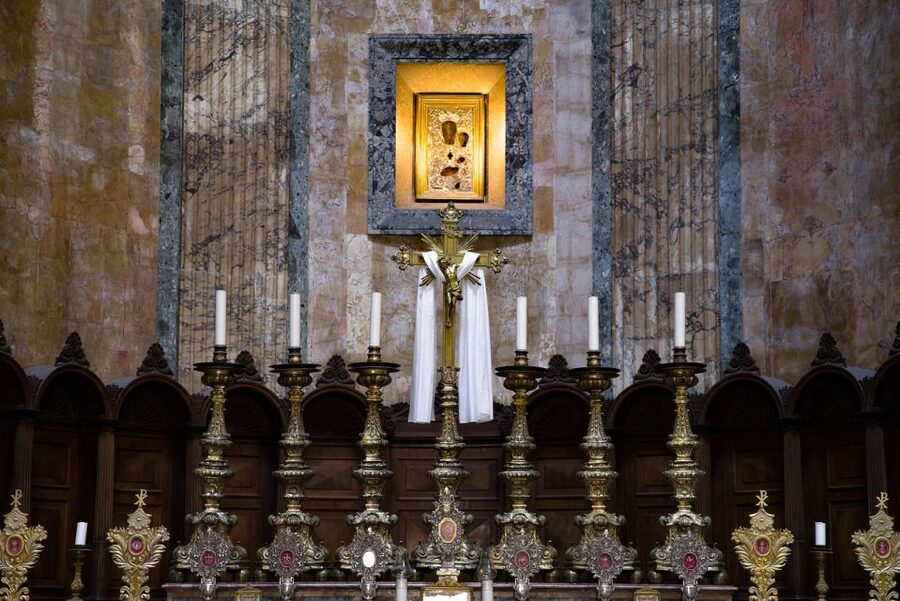
The Pantheon is also a place of burial. Raphael, one of the best-known artists of the Renaissance, is buried here, along with Italian kings, artists, and other notable figures.
Raphael’s tomb is particularly meaningful because his connection to the Pantheon links the ancient building with the Renaissance period. A guide may also point out the inscription and explain why it matters. One detailed account of the tour praised learning about the moving words on Raphael’s tomb, a detail easy to pass without help.
The royal tombs add another layer. The Pantheon was not frozen in its Roman past. It became part of Italy’s later national story, and the monuments inside reflect that change.
This is where the tour’s human side comes through. A list of names is not enough. A skilled guide gives you a reason to pause, explains who the person was, and shows how the burial fits into the building’s wider story. Several guides, including Rea, Realda, and Leo, have been praised for answering questions and telling stories without rushing the group.
What the guides add
The biggest reason to book the guided version is the quality of the explanation. The Pantheon is free of clutter compared with a large museum, but that also means many details have no obvious label. You can see the dome, columns, tombs, and artwork without understanding their place in the story.
The strongest guide feedback centers on enthusiasm, clarity, and storytelling. Rea and Realda are repeatedly praised for their energy, patience, and command of Roman history. Alessandra is described as calm and informative, while Leo is remembered for a talkative, story-led approach and even for drawing during the explanation.
Jan’s urban-planning background adds a different angle. He can help you think about the Pantheon as a designed structure, not just a historic object. Laura has also been praised for explaining the building’s construction and use while making time for questions.
Guide quality can vary from one departure to another, and you cannot guarantee a particular person. Still, the activity is built around a live guide, and the consistently strong response to the guiding is a good reason to choose this format. Audio equipment was also praised in one account, which matters if the interior is crowded or your group is spread out.
Small-group and private options are available. A smaller group usually makes it easier to hear, ask questions, and stay close to the guide. A private visit gives you more control, but the standard group format is likely enough for most people who want clear background without paying for a fully private experience.
Is $21 a fair price?
At about $21 per person, this is a sensible price for a short guided visit that includes the Pantheon entry ticket. You are paying for two things: access and interpretation.
The ticket alone gets you through the door, but it does not explain the unusual combination of Greek-style columns, Roman concrete, Christian decoration, and later burials. The guide also saves you from spending your limited Rome time figuring out what deserves attention.
The value depends on your travel style. If you already know Roman architecture well and enjoy reading on your own, you may prefer a self-guided visit. If this is your first Pantheon visit, $21 is modest compared with the cost of a full-day tour, and the 45-to-60-minute format leaves room for other sights.
The short length is both a benefit and a limit. It works nicely between other stops in central Rome. It does not give you a long period for quiet contemplation, detailed photography, or extended questions. If you want all three, stay a little after the formal tour ends if conditions allow, but do not assume the guide will have time to linger.
Who should book this Pantheon tour?

I would recommend it to first-time visitors, history fans, architecture students, and anyone who looked at the Pantheon from outside on a previous trip but never went in. It is also a good choice for people who want a focused activity rather than a sprawling city tour.
Families can benefit from the storytelling, but children must have the required passport or identification information for entry. The building’s scale and the open oculus offer plenty to see, though the formal content may suit older children better than very young ones.
This tour also fits visitors who do not want to spend hours in a museum. You get a clear introduction to one of Rome’s most important buildings, then can continue exploring the surrounding area.
It is less suitable if you need a completely flexible schedule. Delays can occur during high season, and the meeting point needs attention. It is also not the right pick for anyone who wants a silent visit, a long photography session, or a detailed specialist lecture.
Bring your passport or ID card, including the required identification for children. Dress modestly because the Pantheon is a church. Avoid shorts, short skirts, and sleeveless shirts, and do not bring pets, weapons, or sharp objects.
Booking, timing, and practical tips
The tour runs for 45 minutes to one hour, with starting times subject to availability. English, French, and Spanish departures are offered. You can reserve now and pay later, and cancellation is allowed up to 24 hours in advance for a full refund.
Your official full name must be entered during booking. This is not a minor formality: incorrect or missing names can result in denied entry.
The meeting point is generally in Piazza della Minerva beside the elephant statue, but check the exact option you book. Arrive with enough time to locate the guide, especially if you are unfamiliar with the small streets around the Pantheon.
High-season entry may take longer. The skip-the-ticket-line benefit helps, but it does not mean every delay disappears. Keep a little space after the tour if you have a firm restaurant booking or another timed attraction.
Should you book it?
Book this Pantheon tour if you want the building to make sense, not just look impressive. For $21, you get a short visit, entry, and a live explanation of the dome, oculus, original doors, art, church use, and tombs.
The best reason to choose it is the guide. Rea, Realda, Alessandra, Jan, Leo, Laura, and others have been praised for making the details memorable without turning the visit into a lecture. You should skip it only if you strongly prefer exploring alone or need unlimited time inside.
For most first-time visitors, this is a well-priced way to turn a quick stop into a real lesson in Roman building, Renaissance memory, and living church life.
FAQ
How long does the Pantheon guided tour last?
The tour lasts between 45 minutes and one hour, depending on the departure and the flow of the visit.
What is included in the price?
The activity includes a live guide, the guided tour, and the Pantheon entry ticket.
Where do I meet the guide?
The meeting point is generally Piazza della Minerva, beside the elephant statue. The exact point can vary depending on the option booked, so check your booking details.
Which languages are available?
The guided tour is available in English, French, and Spanish.
Can I book a private or small-group tour?
Yes. Private and small-group options are available.
Do I need to bring identification?
Yes. Bring a passport or ID card. Children also need the required passport or ID information, and every participant must provide their official full name during booking.
What should I wear to enter the Pantheon?
The Pantheon is a church, so modest clothing is required. Shorts, short skirts, and sleeveless shirts are not allowed.
Can I cancel the tour?
You can cancel up to 24 hours in advance for a full refund. Reserve-now, pay-later booking is also available.
Newest Rome tours we have reviewed
- Private TikTok Video Making in Rome★ 5.0 · 7 reviews
- Assisi, Orvieto and Civita di Bagnoregio Full Day Tour from Rome★ 4.5 · 45 reviews
- Assisi & Saint Francis Path Tour from Rome★ 5.0 · 45 reviews
- Assisi and Cascia Private Day Tour from Rome with Lunch★ 5.0 · 10 reviews
- Art Class in the center of Rome!★ 4.0 · 4 reviews
- Art & Craft: Beer Tour with Street Art in Rome★ 4.5 · 6 reviews
- Arrival in Rome: Airport Transfer & Exclusive City Introduction★ 5.0 · 3 reviews
- From Rome: Private Day-Tour of Tuscany★ 5.0 · 16 reviews
Pantheon Tours, compared.
Pantheon Priority Entry Ticket & Audio Guide App
Read our review →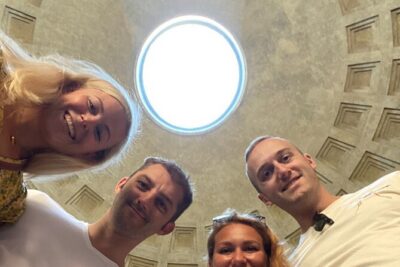
Pantheon Elite Guided Tour – Rome’s Iconic Ancient Temple
Read our review →
Rome’s Iconic Temple: Pantheon Audio Guided Tour with Fast Access
Read our review →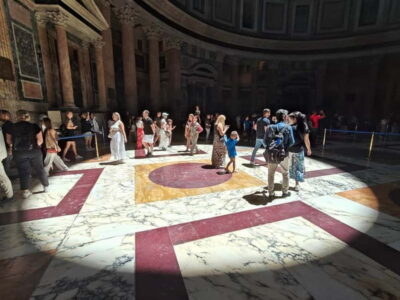
Pantheon Small-Group Guided Tour with Entry Ticket
Read our review →
Pantheon Small Group Tour and Skip-the-Line Ticket
Read our review →
Rome Walking Tour with Piazza Navona, Trevi Fountain and Pantheon
Read our review →
Browse the lists this tour appears in