
Reviewed · SPANISH STEPS TOURS
Rome: Piazza del Popolo and City Sights Free Walking Tour
Rome’s grand story begins in a very public place on this tour: Piazza del Popolo, where an ancient Egyptian obelisk meets Roman gates, churches, and broad city views. From there, your guide leads you toward Castel Sant’Angelo, adding stories about empire, Christianity, architecture, and daily life along the way.
I like the way this tour gives you useful orientation for the rest of your stay, not just a string of famous names. I also like the practical food and nightlife advice, plus the chance to hear from engaging guides such as Lucio, Nick, and Alessandro. The main consideration is that it is tip-based, so the advertised low price is not the full amount you should budget.
Key points to know before you go
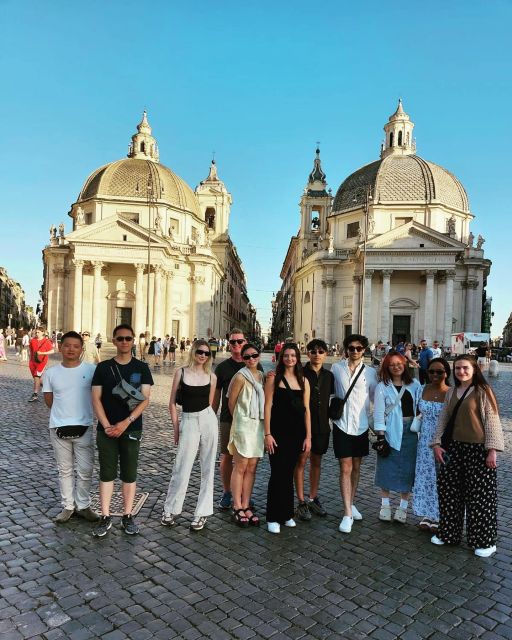
- Piazza del Popolo is the starting classroom: You begin among an Egyptian obelisk, marble statues, columns, and one of Rome’s major city gates.
- The walk links ancient Rome with later Rome: The route reaches Castel Sant’Angelo, first built as Emperor Hadrian’s mausoleum and later changed into a fortress.
- Guides add more than dates: Lucio, Nick, Joan, Alessandro, and others have been praised for clear explanations, humor, and lively storytelling.
- You get practical Rome advice: The tour includes restaurant suggestions, nightlife tips, and ideas for places to revisit on your own.
- The 2.5-hour length is useful for first-time visitors: It gives you a broad introduction without taking up an entire day.
- The price needs a closer look: It is advertised at $3.54 per person, but this is a tip-based tour, so plan to pay the guide according to the experience you receive.
Starting at Piazza del Popolo and the Ramesses II obelisk
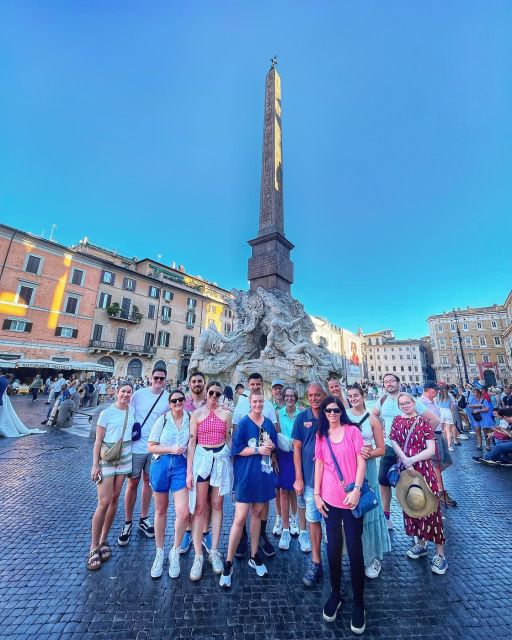
Piazza del Popolo is a smart place to begin a first look at Rome. It is large, open, and packed with visual clues about the city’s long past. The towering obelisk of Ramesses II gives the square an immediate sense of age, even though it came from ancient Egypt rather than from Rome itself.
Your guide uses the square to explain the city’s ancient background and the roots of Christianity. That opening matters because Rome can otherwise feel like a collection of unrelated monuments. A good explanation helps you see how imperial power, religious change, public art, and urban design fit together.
The square also gives you time to get comfortable with the walking format. You are not entering a museum or following a fixed indoor route. You are moving through public spaces, stopping for stories, and looking up at details that are easy to miss when you hurry from one major sight to the next.
I especially like this kind of beginning for visitors arriving in Rome without much background. The guide can establish the main themes first, then point them out again as the walk continues. If you have already spent time studying Roman history, you may find the introduction familiar, but the guide’s local observations can still add value.
More Spanish Steps walks:
- Rome: Pasta & Tiramisu Cooking Class near the Spanish Steps
★ 4.8 · 1,395 reviews - Rome: Spanish Steps, Trevi, Navona and Pantheon Sunset Tour
★ 4.9 · 522 reviews - Rome: Trevi Fountain, Spanish Steps & Pantheon Walking Tour
★ 4.6 · 336 reviews
Seeing Porta del Popolo and the Aurelian Walls
From the piazza, the tour goes to Porta del Popolo, the city gate built into the Aurelian Walls. It forms the boundary between Piazza del Popolo and Piazzale Flaminio, so this is more than a decorative arch. It shows how Rome once controlled movement through and around the city.
The marble columns and statues give the gate a formal, theatrical look. Take a moment here rather than treating it as a simple passageway. The contrast between the open piazza and the solid gate helps you understand how Rome’s public spaces were shaped by defense, ceremony, and traffic.
This is one of the tour’s useful features: it gives attention to structures you could easily pass without a guide. The big sights in Rome receive most of the attention, but a city gate can tell you plenty about how the city worked. You get a clearer picture of Rome as a living urban center, not just an outdoor museum.
The route is wheelchair accessible, which is important on a walking tour built around public streets and squares. Still, you should remember that this is a 2.5-hour outing on foot. The accessibility information is encouraging, but your own comfort with the distance and pace remains worth considering.
From imperial tomb to Castel Sant’Angelo
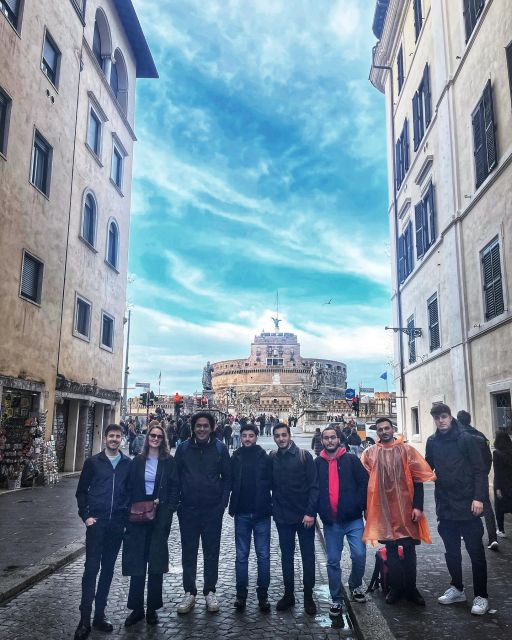
The walk continues toward Castel Sant’Angelo, one of Rome’s most recognizable landmarks. Emperor Hadrian built it as a mausoleum, and it later became a castle around the 14th century. That change of purpose captures Rome in a nutshell: buildings are rarely used for only one thing across the city’s long life.
A guide can make this transformation easier to understand than a plaque alone. You hear how a monument connected with imperial burial later became a fortified structure. The building is not only impressive to look at. It also helps explain how Rome adapted older monuments for new political and military needs.
This tour takes you to Castel Sant’Angelo as part of the walking route. The supplied information does not say that an interior visit is included, so you should not book this expecting a full castle tour or entrance ticket. The value here is the approach, the setting, and the historical explanation around the landmark.
The route between the starting point and Castel Sant’Angelo also gives your guide room to connect separate periods of Roman history. You move from ancient Egyptian symbolism and Roman walls to imperial architecture and later fortification. That broad sweep is one reason this works well early in a Rome visit.
History that is easier to follow than a guidebook list
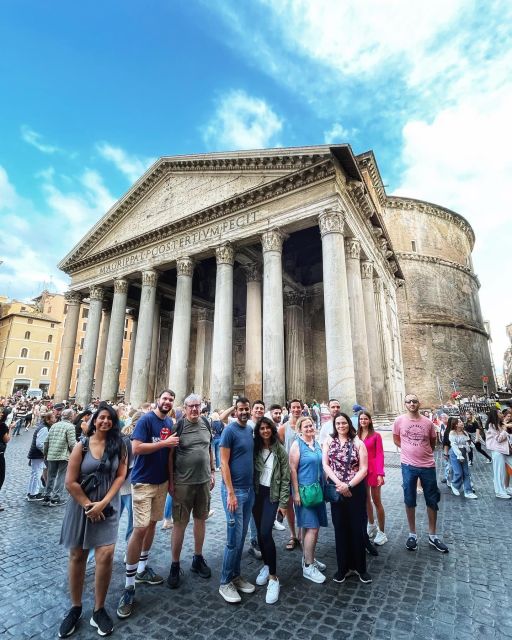
The strongest part of this experience is the guide’s storytelling. Several guides are named in the feedback, including Lucio, Nick, Joan, Alessandro, and others. The praise is consistent around clear explanations, enthusiasm, humor, and the ability to answer questions.
Nick is described as especially good at bringing lesser-known sights into the story. Lucio is repeatedly praised for his explanations of Roman history and architecture. Joan is noted for pointing out historical women, a useful reminder that Rome’s story is not only about emperors, popes, and generals.
That variety matters. A walking tour depends heavily on the person leading it, and the guide assigned to your date may not be the same person named in the feedback. You should expect a live English-speaking guide, but not a guaranteed individual guide or identical presentation every time.
The best guides on this route appear to keep the talk moving without turning it into a lecture. One guest who normally loses interest after an hour found the full walk easy to follow. That is a meaningful strength for Rome, where long explanations and crowded streets can quickly wear you down.
You also have room to ask questions. That makes the experience more useful than listening passively to a prepared speech. Ask about a building you plan to revisit, the meaning of a statue, or how a place fits into the city’s religious and political story.
More walking tours in Rome:
- Rome: Trastevere & Campo de Fiori Street Food Walking Tour
★ 4.9 · 2,768 reviews - Rome: Paranormal Night Walking Tour & Secret Backstreets
★ 4.9 · 1,921 reviews - Rome by Night Walking Tour – Legends & Criminal Stories
★ 4.5 · 1,003 reviews - Rome: Guided City Center Evening Sightseeing Walking Tour
★ 4.4 · 953 reviews
Lesser-known stops and time for questions
This is not designed as a greatest-hits sprint through the Colosseum, Vatican, and Trevi Fountain. The focus is the area around Piazza del Popolo, Porta del Popolo, and Castel Sant’Angelo, with other landmarks and less familiar details along the way.
That approach suits me because Rome’s most memorable moments often come between the headline sights. A smaller architectural detail or an amusing local story can help you notice more during your independent walks later. The tour also gives you a better sense of which areas deserve a second look.
One review describes a break for gelato, coffee, and the toilet. Treat that as a useful possibility rather than a guaranteed stop on every departure, since the exact break can depend on the guide and the day. It is still worth knowing that the walk may include a pause rather than one continuous stretch.
You should also leave room for photographs. The route includes broad piazza views, ornate marble work, a major city gate, and Castel Sant’Angelo. A guide who allows time to look and take pictures will make the experience more enjoyable than one who rushes from point to point.
Restaurant and nightlife advice you can use afterward
The guide also offers tips about restaurants and nightlife. This is practical advice at the right moment, since you can ask questions while you still have time to adjust your plans.
Do not expect a formal food tour. No meals, tastings, or drinks are included in the listed activity. Instead, think of the recommendations as a chance to ask where to eat and what parts of Rome might suit your evening plans.
This extra layer is especially helpful on a first visit. You can ask for ideas after the walk, when you have a better feel for the city’s central areas. You might also ask the guide which places are worth returning to on your own, a point several guides have made useful during the tour.
I like that the advice is part of a wider orientation rather than an isolated restaurant list. The history gives you context, and the local suggestions help turn that context into a workable Rome itinerary.
What the $3.54 price really means
At $3.54 per person, the listed price looks almost too low for a 2.5-hour guided walk in central Rome. The explanation is simple: this is a tip-based tour. You reserve a place, take the walk, and decide what to give the guide based on the experience.
That structure can offer excellent value, especially if you want an affordable introduction before paying for larger museum or monument tours. The low upfront cost also makes it easier to fit into a first day in Rome.
Still, do not treat $3.54 as the complete cost. Bring enough money to tip fairly. The final amount depends on your judgment, but the guide’s time, preparation, and walking commentary are the real product.
One useful point is that the flexible model can work if you leave early. A guest did so after realizing some sights were already familiar and adjusted the amount paid accordingly. That does not mean you should plan to leave early, but it shows how the tip-based format can feel less rigid than a prepaid private tour.
Who will get the most from this Rome walk
I would choose this tour for a first or second day in Rome. It helps you get your bearings, introduces several major themes, and gives you ideas for places to revisit. You can then approach later visits to museums and monuments with a better sense of the city’s story.
It also suits anyone who prefers a personal explanation to a large group being moved from one famous stop to another. The feedback includes references to small groups, though group size is not fixed in the activity details, so you should not assume every departure will be intimate.
The tour is a good fit for:
- First-time Rome visitors who want a broad introduction
- History fans who enjoy Roman architecture and changing uses of old buildings
- People who want restaurant and nightlife suggestions from an English-speaking guide
- Budget-minded visitors who understand the tip-based format
- Visitors who prefer outdoor sights and walking over a long indoor tour
- Anyone looking for lesser-known details around well-known landmarks
It may be less suitable if you want entry inside Castel Sant’Angelo, a food tasting, or a tour focused on the Colosseum and Vatican. None of those are part of the stated experience.
Practical details for a smoother walk
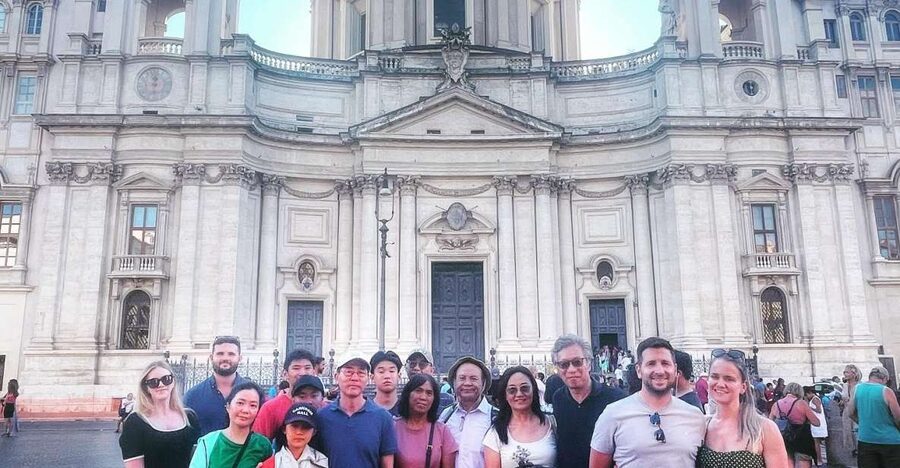
Meet your guide outside the arches and entry gates into Piazza del Popolo. Pay close attention to the meeting point because a large square can make a vague meeting arrangement harder than it sounds.
The tour lasts about 2.5 hours, and starting times vary, so check availability for your chosen date. English is the listed tour language. The activity is wheelchair accessible.
Wear comfortable shoes and allow time for photographs. You will be walking between public landmarks, listening while standing, and moving through city streets. Rome’s weather can also affect how pleasant an outdoor tour feels, so consider the season and choose clothing that works for a long period outside.
Free cancellation is available up to 24 hours before the tour for a full refund, and you can reserve now and pay later. Those policies are useful if your Rome plans are still shifting.
Should you book this Piazza del Popolo tour?
Book it if you want an affordable, history-focused introduction to central Rome with a real person explaining what you are seeing. The route gives you Piazza del Popolo, the Ramesses II obelisk, Porta del Popolo, the Aurelian Walls, and Castel Sant’Angelo, while the guide adds food, nightlife, and follow-up sightseeing advice.
I would be especially comfortable recommending it for your first or second day, when orientation is worth more than checking off another ticketed attraction. Just remember that the $3.54 price is only the booking price, not the full expectation for a tip-based walk.
Skip it if you need guaranteed access inside monuments, a private guide, or a tightly fixed list of Rome’s biggest attractions. For everyone else, this is a sensible way to start understanding Rome before setting off on your own.
FAQ
Where does the tour meet?
Meet the guide outside the arches and entry gates into Piazza del Popolo.
How long does the walking tour last?
The tour lasts 2.5 hours.
What language is the tour in?
The live tour guide speaks English.
Is this really a free walking tour?
It is a tip-based tour. The listed booking price is $3.54 per person, but you should also plan to tip the guide.
Does the tour enter Castel Sant’Angelo?
The route walks to Castel Sant’Angelo and explains its history. The provided details do not include entry into the fortress.
Is the tour wheelchair accessible?
Yes, the activity is listed as wheelchair accessible.
Can I cancel the booking?
Yes. You can cancel up to 24 hours in advance for a full refund.
Can I reserve now and pay later?
Yes. You can reserve your place and pay nothing at the time of booking.
Newest Rome tours we have reviewed
- Private TikTok Video Making in Rome★ 5.0 · 7 reviews
- Assisi, Orvieto and Civita di Bagnoregio Full Day Tour from Rome★ 4.5 · 45 reviews
- Assisi & Saint Francis Path Tour from Rome★ 5.0 · 45 reviews
- Assisi and Cascia Private Day Tour from Rome with Lunch★ 5.0 · 10 reviews
- Art Class in the center of Rome!★ 4.0 · 4 reviews
- Art & Craft: Beer Tour with Street Art in Rome★ 4.5 · 6 reviews
- Arrival in Rome: Airport Transfer & Exclusive City Introduction★ 5.0 · 3 reviews
- From Rome: Private Day-Tour of Tuscany★ 5.0 · 16 reviews
Spanish Steps Tours, compared.
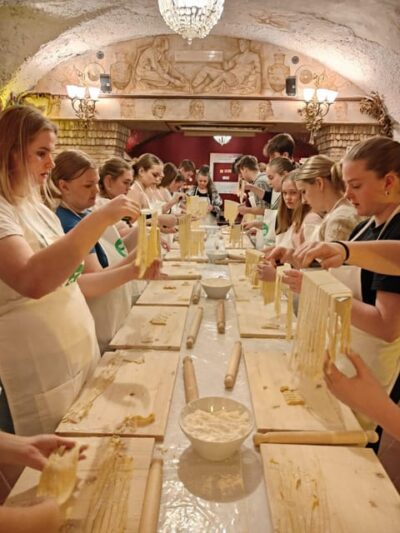
Pasta & Tiramisu Cooking Class near the Spanish Steps
Read our review →
Spanish Steps, Trevi, Navona and Pantheon Sunset Tour
Read our review →
Trevi Fountain, Spanish Steps & Pantheon Walking Tour
Read our review →
Cooking Class 2 Hour Spanish Steps – Fettucine and Tiramisù
Read our review →
Pasta & Tiramisù Cooking Class near Spanish Steps
Read our review →
Pantheon, Trevi, Navona and Spanish Steps Private Tour
Read our review →
All In One Tour : Roman Highlights – Trevi Fountain Spanish Steps & Pantheon
Read our review →Browse the lists this tour appears in