
Reviewed · ROME COLOSSEUM TOURS
Rome: Colosseum, Forum, and Palatine Hill Guided Tour
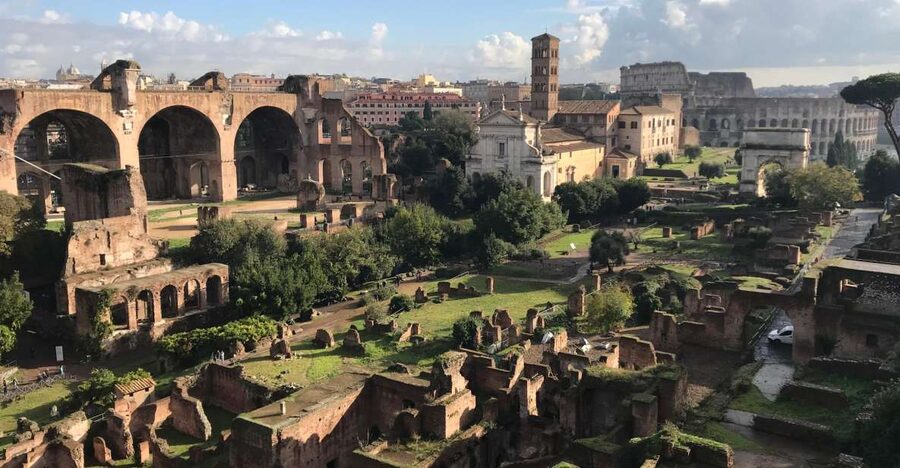
The best part of this tour is its tight focus on ancient Rome’s three essential sights. You move from the Colosseum’s brutal public spectacles to the Forum’s political and religious center, then climb Palatine Hill for views over the Circus Maximus. It is a clear story, told on foot, without wasting time on lesser stops.
I like the small group of no more than eight and the three-hour length. You can ask questions without shouting across a crowd, and a good guide can adjust the pace. The main drawback is the walking: uneven ground, stairs, heat, and no shelter in some areas make this a poor fit for anyone with mobility limits. The non-refundable booking also calls for firm plans.
Key points to know before booking
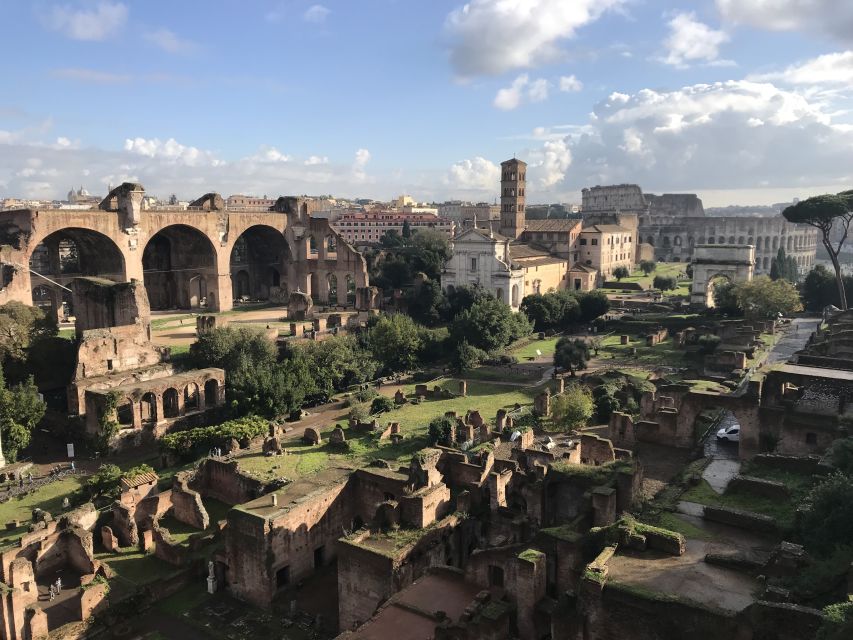
- Three major ancient sites in three hours: The Colosseum, Roman Forum, and Palatine Hill are covered in one continuous visit.
- Small group with up to eight people: You get more room to ask questions and hear the guide than on a large group tour.
- English-speaking local guide: Simona is praised for her energy and warmth, while Giordano is noted for checking on shade and hydration during hot weather.
- Skip the ticket line, but not security: Everyone still passes through airport-style screening.
- Strong historical sequence: Gladiators and emperors lead into Roman government, religion, imperial palaces, and the founding story of Rome.
- Plan for a serious walk: Comfortable shoes are essential, and large bags or luggage are not allowed.
Why this three-hour route works
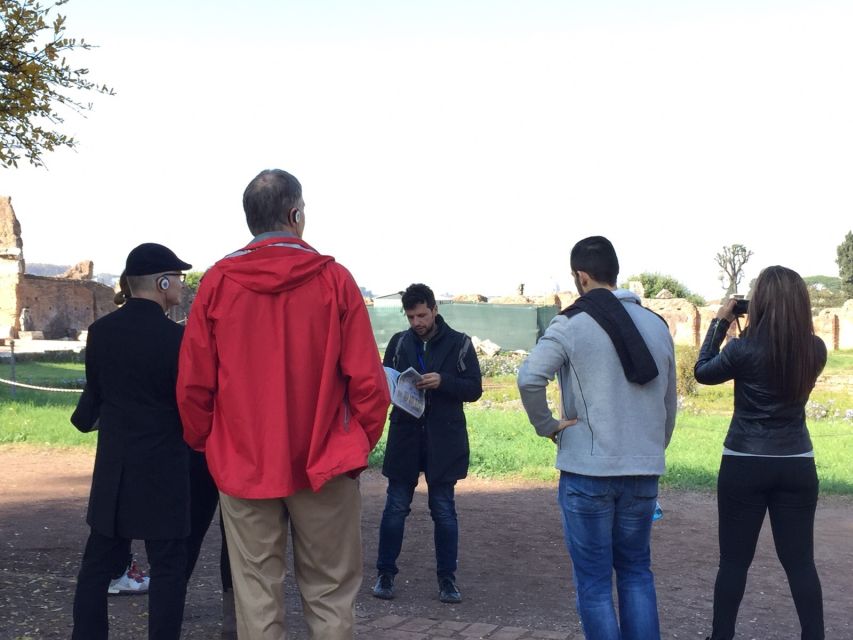
Rome can overwhelm you with ruins. A column here, a broken wall there, and suddenly you are trying to remember which emperor did what. This route gives the remains a sensible order and a human story.
You begin at the Colosseum, where imperial power was put on public display. Then you walk through the Roman Forum, the center of public, religious, and political life. Finally, you reach Palatine Hill, where Rome’s foundation legend meets the remains of imperial palaces.
The timing is well judged for a first look. The Colosseum receives about 90 minutes, while the Forum and Palatine Hill each receive about 45 minutes. That is enough for a useful introduction, but not enough to inspect every arch, temple, and wall at leisure.
That tradeoff matters. I would choose this tour if you want a strong overview and clear explanations. If you already know Roman archaeology well or want long stretches to explore alone, three hours may feel brisk.
More Roman Forum and Palatine Hill tours:
- Rome: Colosseum, Palatine Hill and Roman Forum Guided Tour
★ 4.8 · 32,814 reviews - Rome: Guided Tour of Colosseum, Roman Forum & Palatine Hill
★ 4.7 · 27,897 reviews - Rome: Colosseum, Roman Forum and Palatine Hill Guided Tour
★ 4.5 · 23,903 reviews
Meeting at the Colosseum Metro Station
The meeting point is outside the Colosseum Metro Station, at the downstairs entrance. Look for a guide holding a board with the You Local, Rome logo. The activity ends back at the same meeting point.
This is a practical start because the Colosseum is easy to locate, but give yourself enough time to find the correct station entrance. The instructions specify the downstairs entrance, so do not simply wait beside the monument and assume the guide will find you.
Transportation is not included. You make your own way to the meeting point, and the tour remains on foot from there. Food and drinks are also not included, so bring water, especially in warm weather. Giordano is noted for making shade and hydration a priority during a hot visit, but you should still arrive prepared.
Your passport or ID card is required. Large bags, luggage, weapons, and sharp objects are not allowed. Every visitor must pass through airport-style security, even though the tour includes skip-the-ticket-line entry. In plain English, you may avoid the regular ticket queue, but you will not skip the safety check.
Entering the Colosseum for 90 minutes
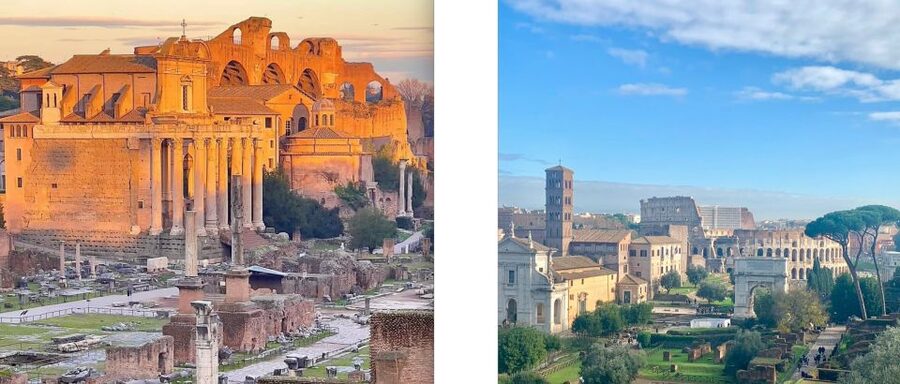
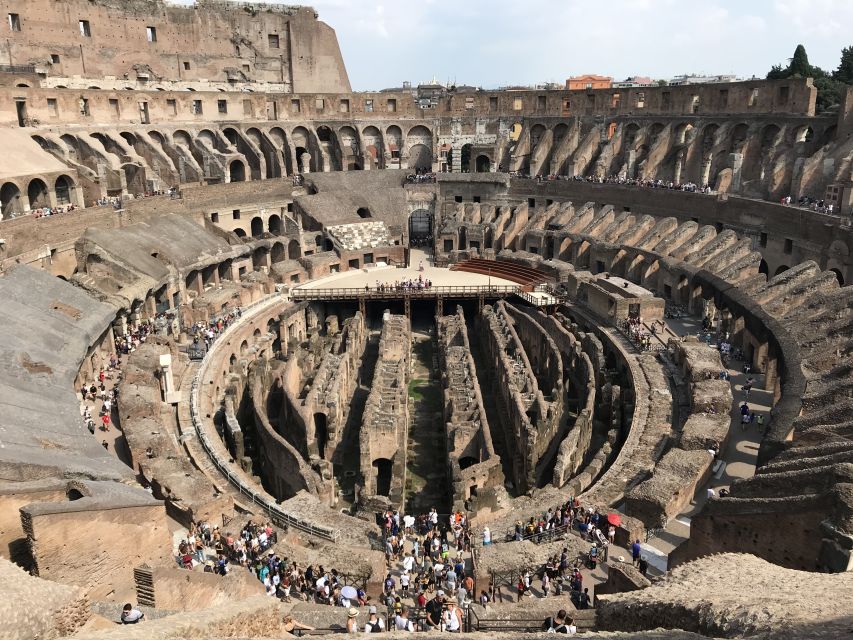
The Colosseum is the tour’s main event, and the 90-minute guided visit gives you time to understand more than its familiar facade. Your guide explains how gladiators, wild animals, and huge public shows served the emperors’ political goals.
That context is important. The arena was not simply a place for combat. These shows entertained the population and helped emperors win public approval. The building itself was a powerful message: Rome could gather enormous crowds, control nature and violence, and stage spectacles on a scale few people in the ancient world had seen.
A guide can also help you picture the building as an active venue rather than a shell of stone. You hear about gladiators and wild beasts, along with the cruel contests and massive productions that drew the Roman public. The value lies in connecting the remains to the people who watched, fought, organized, and paid for these events.
The small group makes a real difference here. With no more than eight participants, you can ask why a particular feature mattered or request clarification when the site becomes confusing. Simona is singled out for her energy, friendliness, and clear command of the subject, making her the kind of guide who can keep a family group engaged.
English is the only language specified for this tour. One caution comes from the experience itself: Giordano made a point of checking on the group and seeking shade in hot weather, but some explanations were occasionally missed because of his English and the direction he was facing. That is a useful reminder to stay close, watch where the guide is standing, and ask for a repeat if you lose a sentence.
Reading the Roman Forum in 45 minutes
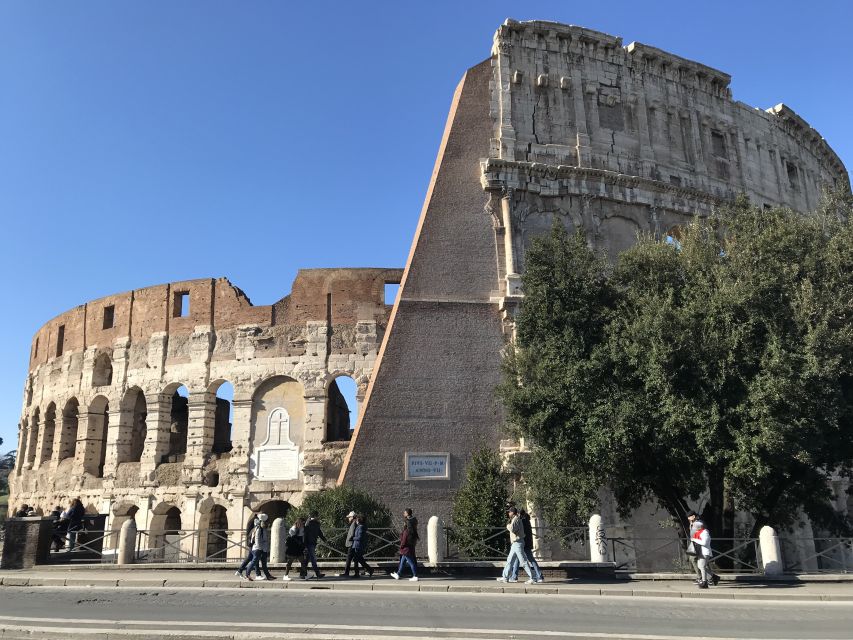
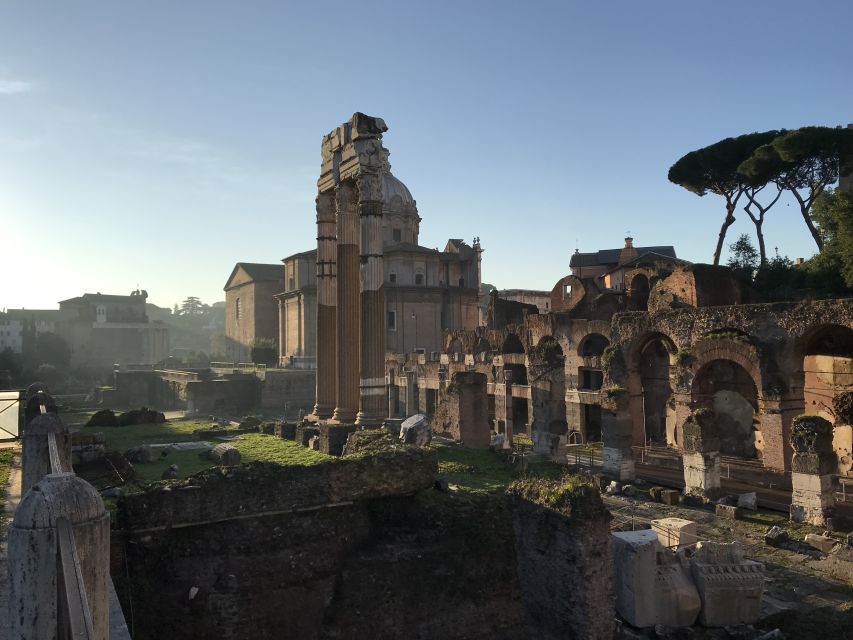
After the Colosseum, the route shifts from entertainment to public life. The Roman Forum was the center of Rome’s political and religious activity, and its scattered remains make much more sense when someone explains how the pieces fit together.
You visit the Temple of Julius Caesar, the Triumphal Arch of Titus, and the House of the Vestals. Each points to a different part of Roman society. The temple connects the Forum to the changing status of Julius Caesar. The arch celebrates military victory. The Vestals link the site to ritual and the sacred duties that protected Rome’s religious order.
Forty-five minutes is enough to establish the main ideas, but the Forum is the portion most likely to feel rushed. The ground is uneven, the ruins are spread out, and there is plenty to look at between the named landmarks. A guide saves you from wandering without a plan, but you will not have long to pause at every stone.
I like this part of the route because it corrects the common idea that ancient Rome was only about emperors and gladiators. The Forum shows how law, religion, politics, ceremony, and power were tied together. Listen for the connections between the buildings rather than trying to memorize every name.
Wear shoes with good support. The tour involves a moderate amount of walking over uneven surfaces, and the Forum is not a smooth museum floor. The activity runs rain or shine, so a wet day can make the footing less pleasant.
More Colosseum tours in Rome:
- Rome: Colosseum & Forum with Audio Guide App -Optional Arena
★ 4.2 · 24,770 reviews - Rome: Colosseum, Forum & Palatine Hill Tour & Optional Arena
★ 4.4 · 13,839 reviews - Rome: Colosseum, Palatine Hill & Roman Forum Guided Tour
★ 4.6 · 12,703 reviews - Colosseum: Underground and Ancient Rome Tour
★ 4.7 · 12,691 reviews
Climbing Palatine Hill and looking over Circus Maximus
The final 45 minutes take you to Palatine Hill, described in Roman tradition as the place where Romulus founded Rome in 753 BC. Whether you approach the story as legend or tradition, it helps explain why this hill carried such importance.
Here you see remains linked to Augustus’ Imperial Palace and the Domitian Stadium. The setting changes from public squares and temples to imperial residence and private power. Rome’s rulers wanted to live above the city, close to its symbolic center and physically removed from ordinary streets.
The hill also provides one of the clearest payoffs of the visit: a view over Circus Maximus. This was the setting for famous horse and chariot races, and from above you can better grasp the size of the space than you can from ground level.
The climb is manageable for many people, but the tour is explicitly not suitable for wheelchair users or people with mobility impairments. That is not a minor footnote. You need to handle uneven surfaces and a moderate amount of walking, and the route does not offer an accessible alternative.
Palatine Hill is also where the full sequence comes together. You see the arena where emperors entertained the public, the Forum where Rome conducted public business, and the hill where its rulers lived and where its founding story begins.
The value of a group limited to eight
The price is $141.61 per person, which places this well above a basic admission ticket. You are paying for access to all three sites, an English-speaking live guide, and a smaller setting rather than just entry.
That price can make sense if you want structure. The Colosseum, Forum, and Palatine Hill are large, busy places with plenty of historical detail and few easy signs explaining the whole story. A guide gives you a route, selects the important features, and keeps the three sites connected.
The group limit is the strongest part of the value. A group of four or five gives you space to ask questions and makes it easier to hear. You also have a better chance of getting personal attention than in a large tour where the guide must repeat everything to a crowd.
Still, do not book it expecting a private tour. Up to eight people can join, and the pace must work for the whole group. The small size improves communication, but it does not turn the visit into a completely flexible private outing.
The tour has a top rating based on 21 reviews, with Simona receiving especially strong praise for being engaging, energetic, friendly, and professional. Those qualities matter more than a memorized list of dates. The best guide makes the stones easier to understand and notices when the group needs shade, water, or a clearer explanation.
Heat, weather, and what to bring
This is an outdoor archaeological visit, not an air-conditioned museum. Bring comfortable shoes and water, and dress for the forecast. The tour runs rain or shine, and the itinerary includes open areas where shade may be limited.
The security rules are strict enough to affect your packing. Leave large bags and luggage behind, and do not bring weapons or sharp objects. Bring your passport or ID card for entry checks.
The three-hour length helps with stamina, but you should not underestimate the ground covered. The tour moves through the Colosseum, Forum, and Palatine Hill, with a climb and uneven surfaces along the way. Families can appreciate the short, focused format, especially when children benefit from stories about gladiators, emperors, and chariot races. Very young children or anyone who tires quickly may find the route demanding.
The activity is not suitable for wheelchair users or people with mobility impairments. If you need a fully accessible route, this is not the right choice.
Who will get the most from this tour
I would recommend this experience to a first-time Rome visitor who wants the ancient center explained in a logical order. It also suits families and small groups who prefer questions and conversation over a large crowd.
It works especially well if you have only a short amount of time in Rome. Three hours covers the essential sites, leaving the rest of your day for other parts of the city. You will finish at the same meeting point, which makes it easier to continue sightseeing nearby or arrange your next activity.
It is less suitable if you want to explore slowly, take long photographs, or read every sign. The Forum and Palatine Hill contain more than can fit into 45-minute visits. It is also not ideal for anyone who dislikes walking outdoors in uncertain weather.
Keep your expectations focused. This is a guided introduction, not an archaeological course and not a private, all-day examination of every ruin. Its strength is clear storytelling, a manageable route, and access to the three central ancient sites in one visit.
Should you book the Colosseum, Forum, and Palatine Hill tour?
Book it if you want the major ancient Roman sights tied together by an English-speaking guide, and if a group of up to eight feels small enough for questions. The three-hour route is efficient, the historical order makes sense, and the Colosseum, Forum, and Palatine Hill each add something different.
The best reasons to choose it are the small group and the quality of guide interaction, especially if Simona is leading your departure. The main reasons to pass are the price, the non-refundable booking, the moderate walking, and the limited time at each site.
For a first visit, I think the structure earns its cost. Arrive with comfortable shoes, your ID, water, and realistic expectations about uneven ground. If you do that, you get a useful, lively introduction to the part of Rome where spectacle, government, religion, empire, and legend all meet.
FAQ
How long does the tour last?
The tour lasts three hours. The scheduled visits include 90 minutes at the Colosseum, 45 minutes at the Roman Forum, and 45 minutes at Palatine Hill.
Which sites are included?
Entry to the Colosseum, Roman Forum, and Palatine Hill is included.
Is a tour guide included?
Yes. A live English-speaking guide leads the tour.
How large is the group?
The group is limited to a maximum of eight participants.
Where does the tour start?
The guide waits outside the Colosseum Metro Station at the downstairs entrance. Look for a board with the You Local, Rome logo.
Where does the tour end?
The activity ends back at the meeting point.
Does the tour include transportation?
No. Transportation to and from the meeting point is not included.
Can I bring luggage or a large bag?
No. Luggage and large bags are not allowed. Weapons and sharp objects are also prohibited.
Do I need identification?
Yes. You should bring a passport or ID card.
Is the tour suitable for wheelchair users?
No. The tour is not suitable for wheelchair users or people with mobility impairments because it includes a moderate amount of walking over uneven surfaces.
Newest Rome tours we have reviewed
- Private TikTok Video Making in Rome★ 5.0 · 7 reviews
- Assisi, Orvieto and Civita di Bagnoregio Full Day Tour from Rome★ 4.5 · 45 reviews
- Assisi & Saint Francis Path Tour from Rome★ 5.0 · 45 reviews
- Assisi and Cascia Private Day Tour from Rome with Lunch★ 5.0 · 10 reviews
- Art Class in the center of Rome!★ 4.0 · 4 reviews
- Art & Craft: Beer Tour with Street Art in Rome★ 4.5 · 6 reviews
- Arrival in Rome: Airport Transfer & Exclusive City Introduction★ 5.0 · 3 reviews
- From Rome: Private Day-Tour of Tuscany★ 5.0 · 16 reviews
Rome Colosseum Tours, compared.
Colosseum, Palatine Hill and Roman Forum Guided Tour
Read our review →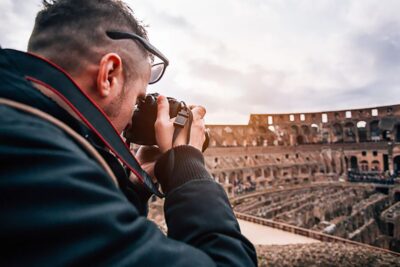
Guided Tour of Colosseum, Roman Forum & Palatine Hill
Read our review →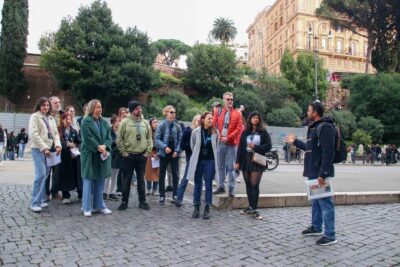
Colosseum & Forum with Audio Guide App -Optional Arena
Read our review →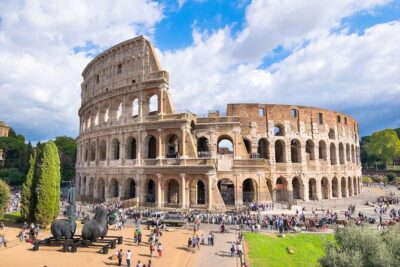
Colosseum, Roman Forum and Palatine Hill Guided Tour
Read our review →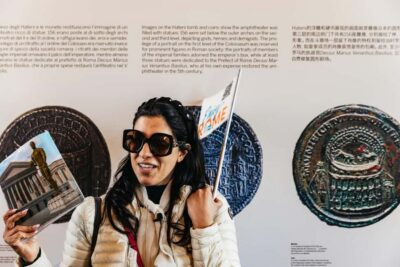
Colosseum, Forum & Palatine Hill Tour & Optional Arena
Read our review →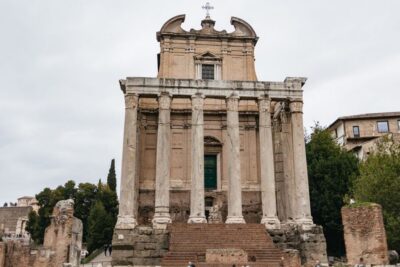
Colosseum, Palatine Hill & Roman Forum Guided Tour
Read our review →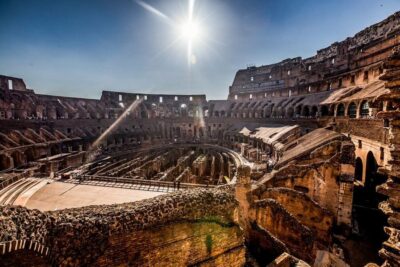
Colosseum: Underground and Ancient Rome Tour
Read our review →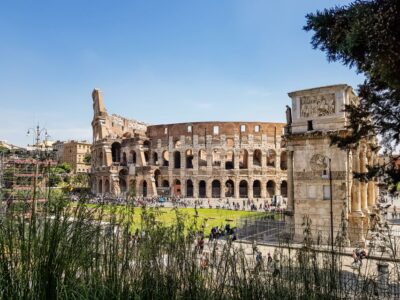
Colosseum Arena, Palatine Hill & Forum Guided Tour
Read our review →Browse the lists this tour appears in