
Reviewed · ROME
Rome: Roman Army Experience
Roman military history becomes much easier to grasp when you can hold the shield, handle the gladius, and throw the pilum instead of simply looking at weapons behind glass. This one-hour visit combines a museum route with hands-on training in the courtyard, including the famous testudo formation.
I like the clear contrast between gladiators and legionaries, and I like the small group size, which is capped at six people. The main caution is that the outdoor practice has a physical side, so comfortable clothing, sturdy shoes, water, a hat, and sunscreen matter.
Key points at a glance
- Try the equipment: Handle historical reproductions of Roman armor, helmets, swords, shields, and weapons based on archaeological finds.
- Practice Roman tactics: Learn shield and gladius movements, form a testudo, and see how close combat worked.
- Throw a pilum: The Roman javelin exercise is one of the most memorable parts of the hour.
- Small-group setting: With no more than six participants, the instructor can keep the session active and personal.
- Useful family activity: The format suits history fans and families, including families with older children and teenagers.
- Know your limits: The experience is not suitable for people with back problems or people over 95 years old.
A Roman museum visit with a practical twist
The Res Militares Museum gives you a compact introduction to the Roman army through objects you can examine and handle. Instead of focusing only on famous emperors or battlefield dates, the session looks at the equipment that shaped a soldier’s daily life and fighting method.
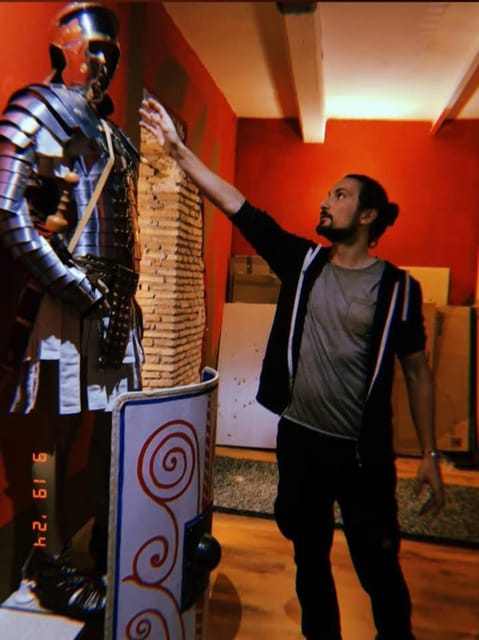
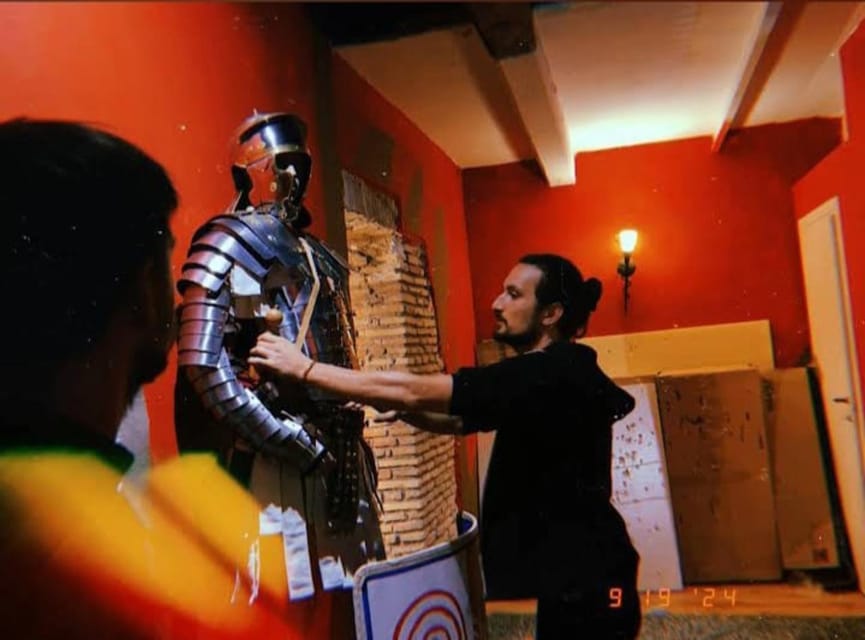
You see different types of armor, helmets, swords, and shields connected to different historical periods. The pieces are faithful reproductions made by artisans, following archaeological finds from major excavation sites. That makes the display useful even if you already know Rome’s basic military story, since the equipment shows how Roman warfare changed over time.
I appreciate this approach because armor is not just decoration. The weight, shape, and protection of each piece affected how a soldier moved and fought. A shield offered more than cover for the body. It worked with the sword, the formation, and the person standing next to you.
The historical introduction lasts about half an hour. You learn about soldier life, military organization, and the main weapons used by Rome’s armies. The instructor also explains practical facts and curiosities about the men who guarded the borders of the Roman world.
Other Rome tours people pair with this one:
- Vatican Museums & Sistine Chapel Tour with Optional Basilica
★ 4.3 · 67,413 reviews - Vatican Museums, Sistine Chapel & St Peter’s Basilica Guided Tour
★ 4.5 · 39,149 reviews - Rome: Colosseum, Palatine Hill and Roman Forum Guided Tour
★ 4.8 · 32,814 reviews
Armor, helmets, and the life of a legionary
A strong part of the visit is the chance to compare equipment rather than seeing one generic Roman soldier costume. The museum brings together several kinds of armor and weapons, allowing you to notice how design changed across periods.
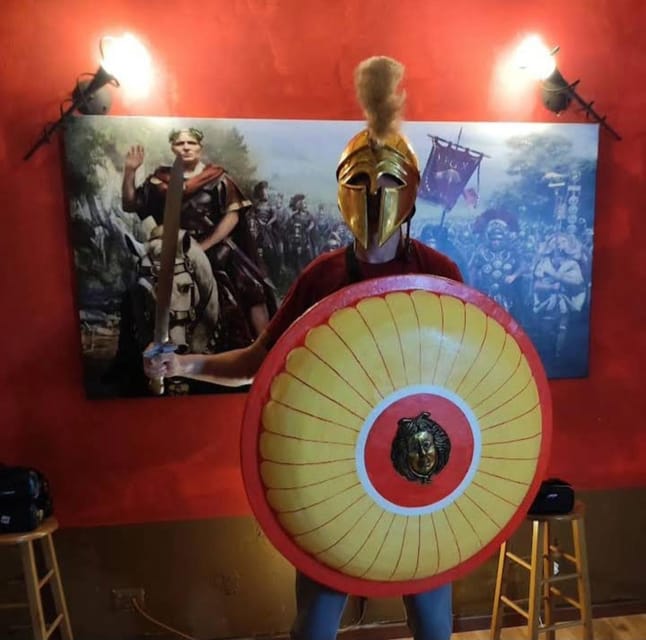
You can try on or handle reproductions of armor, helmets, swords, and shields. The activity is not a costume photo stop dressed up as history. The purpose is to show how the equipment was used and why each item mattered.
The distinction between gladiators and legionaries receives special attention. Gladiators were entertainers, often enslaved men fighting for glory and freedom in the arena. Legionaries were soldiers of Rome, generally Roman citizens serving their homeland and protecting its frontiers. The two groups may appear together in modern popular culture, but their lives, duties, and status were very different.
That distinction is especially helpful for families. Children often recognize gladiators from films and games, but may not understand that an arena fighter and a border soldier had entirely different roles. Here, the difference is explained in direct, memorable terms.
From the museum to the courtyard
About halfway through the route, you leave the indoor display and move into the internal courtyard. This change gives the experience its energy. You are no longer only hearing about close combat. You begin to practice some of the movements and formations yourself.
The courtyard section is practical rather than theatrical. The instructor explains how the shield and gladius worked together, then shows the basic tactics used when two lines of soldiers came into close contact.
You should expect to move your arms, shift your stance, and pay attention to the people around you. This is not a full combat class, but it is more active than a standard museum tour. Comfortable clothes and shoes are important, especially during warm weather.
The courtyard also means part of the experience takes place outdoors. Bring water, sunscreen, and a hat. Smoking is not allowed.
Learning the shield and gladius
The gladius was a short sword designed for close fighting. The session explains how it was used with the shield rather than as a separate weapon. That pairing is one of the most useful ideas in the whole activity.
A Roman soldier did not simply wave a sword and charge. The shield protected the body and helped maintain order in a tight line, while the short sword suited the limited space between opposing soldiers. The instructor shows how this system worked in practice.
You get the chance to handle reproduction equipment and try the movements. The props are designed to look and feel realistic, but the activity is presented as a controlled historical demonstration, not a dangerous fight.
This is where the small group helps. With a maximum of six participants, you have a better chance to follow the instructions closely and take part without waiting behind a large crowd. The testudo formation is limited to four people, so a larger group may need to take turns.
Same city, a completely different half-day:
- Rome: Guided Tour of Colosseum, Roman Forum & Palatine Hill
★ 4.7 · 27,897 reviews - Rome: Colosseum & Forum with Audio Guide App -Optional Arena
★ 4.2 · 24,770 reviews - Rome: Colosseum, Roman Forum and Palatine Hill Guided Tour
★ 4.5 · 23,903 reviews - Rome: City Sightseeing Hop-on Hop-off Bus with Audioguide
★ 4.0 · 16,045 reviews
The testudo formation
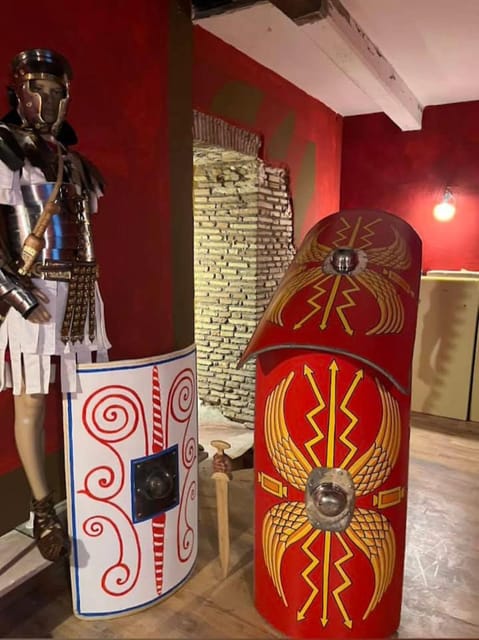
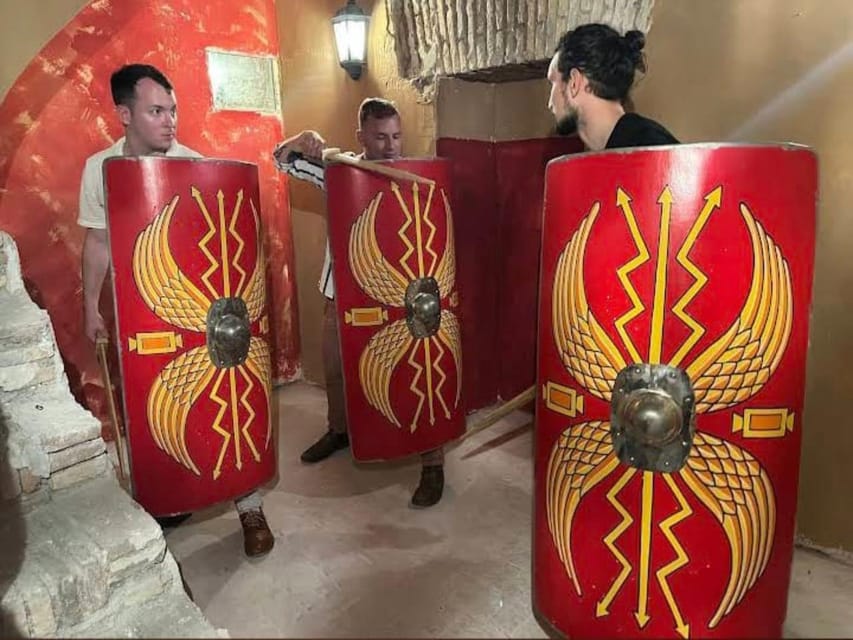
The testudo, or tortoise formation, is the session’s best group exercise. Soldiers used their shields to create a protective structure around themselves, including cover above the formation.
You gather with other participants and try to build the formation under the instructor’s direction. The group can contain no more than four people. The instructor then tests your arrangement, making it clear why spacing, timing, and cooperation mattered.
This exercise gives you a quick lesson in Roman discipline. A shield is useful on its own, but the formation depends on several people moving as one unit. If one person lifts a shield too soon or leaves a gap, the protection becomes weaker.
For families, the testudo is a natural highlight because it turns an abstract military tactic into something you can see and feel. It also gives children and teenagers a shared task rather than another lecture. People with back problems should avoid the activity, and anyone with limited mobility should consider the physical nature of the courtyard practice before booking.
Throwing the Roman pilum
The pilum was the Roman javelin thrown before the armies closed for hand-to-hand fighting. You get to try a pilum throw during the practical portion of the experience.
This is one of the clearest examples of how Roman weapons worked as part of a sequence. The javelin was used before the lines met, while the shield and gladius took over during close combat. You are not simply trying an unrelated ancient weapon. You are following the order of a Roman battle.
The javelin throw has also become a favorite part of the activity for good reason. It breaks up the museum explanation with a simple physical challenge and gives you a better feel for distance, balance, and timing.
The instructor explains the weapon’s purpose and effectiveness as you use it. Expect guidance rather than a competitive contest. The value is in understanding how the weapon fitted into Roman tactics.
The instructor and the tone of the visit
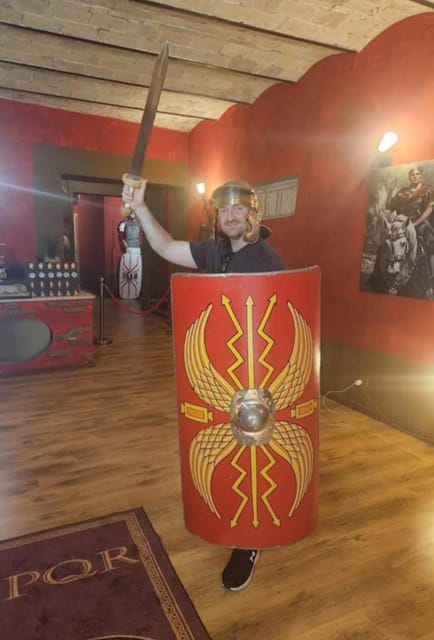
The activity is offered in English and Italian. Davide has led sessions in Roman reenactment clothing, which adds a visual touch to the explanation without turning the visit into a stage show. He is described as engaging, funny, and clear, with enough energy to keep the history moving.
The instructor’s role matters here because the experience covers both facts and physical demonstrations in a short hour. A dry lecture would leave little time for practice. The best parts of the session depend on someone who can explain the equipment simply, keep the group organized, and make the exercises feel approachable.
English explanations are available, though you may encounter occasional language differences depending on the instructor and group. The material remains practical, with the weapons and formations helping you understand even when a historical term needs extra explanation.
Is $41 a fair price for one hour?
At $41 per person, this is not the cheapest way to spend an hour in Rome. You are paying for a small-group activity, an instructor, access to a specialized museum collection, and the use of reproduction armor and weapons.
The value improves if you want participation rather than a standard sightseeing stop. A museum ticket gives you objects and information. This experience adds a guided history lesson, equipment handling, group tactics, and the pilum throw. For families, the price may also be easier to justify because it gives children and teenagers something active to do between Rome’s major archaeological sites.
The one-hour length cuts both ways. It is convenient on a busy Rome schedule and easy to fit around other plans. At the same time, you should not expect a long museum visit or a full training session. The experience offers a focused introduction, not an all-day Roman military course.
The shop is described as reasonably priced and more authentic in feel than many souvenir outlets in Rome. You do not need to buy anything to take part, and food, drinks, and transport are not included.
Who will enjoy this most?
I would choose this for families with children and teenagers, especially those already interested in Roman soldiers, gladiators, or ancient battles. An 11-year-old and a 14-year-old can follow the history while also taking part in the practical exercises, though every child’s comfort with physical activity is different.
It also suits adults who want more than photographs of the Colosseum. If you like military history, historical reconstruction, or the mechanics of ancient warfare, the session gives you useful context in a short format.
It may be less appealing if you want a quiet, object-focused museum visit. The courtyard work is part of the point, and you will be expected to participate. People with back problems should not book, and the activity is not suitable for anyone over 95.
Practical advice before you go
Plan to arrive ready for both indoor viewing and outdoor movement. Wear comfortable shoes and clothes that allow you to lift your arms and move your feet easily.
Bring:
- Water
- Sunscreen
- A hat
- Comfortable shoes
- Clothing suitable for light physical activity
The group limit of six is a real advantage. You will not be lost in a large tour, and the instructor can give clearer directions during the sword, shield, and pilum exercises. The testudo itself is limited to four people, so groups larger than four may need to rotate through that activity.
There is no transportation to or from the location, so you need to make your own way there. Food and drinks are also not included. The experience is available in English and Italian, and you can cancel up to 24 hours before the start for a full refund. A reserve-now, pay-later option is available if you want to keep your Rome schedule flexible.
Should you book the Roman Army Experience?
Book it if you want Roman history to feel physical and immediate. The combination of artisan-made reproductions, a short museum lesson, shield and gladius practice, the testudo formation, and a pilum throw gives you more to do than a typical display visit.
I would especially recommend it for families and history fans who have already seen Rome’s major monuments and want a different kind of activity. The main limits are the one-hour duration, the outdoor physical work, and the lack of included transport or refreshments.
At $41, it makes sense when you value a small group and active instruction. If you only want to admire ancient objects, choose a conventional museum instead. If you want to understand how Roman soldiers actually fought, and you are willing to pick up a shield and take part, this is a strong choice.
FAQ
How long does the Roman Army Experience last?
The activity lasts one hour. The historical overview takes about 30 minutes, followed by practical demonstrations and participation in Roman military tactics.
What languages are available?
The experience is offered in English and Italian.
How large is the group?
The group is limited to six participants.
How many people can join the testudo formation?
A maximum of four people can take part in one testudo formation.
Can I try Roman weapons and armor?
Yes. You can see and use historical reproduction armor and weapons, including helmets, shields, swords, and the Roman javelin, called a pilum.
Do I get to throw a pilum?
Yes. The practical session includes instruction and an opportunity to throw the Roman javelin.
What should I bring?
Bring comfortable shoes, suitable clothing, water, sunscreen, and a hat. Some of the activity takes place outdoors in the courtyard.
Is the activity suitable for people with back problems?
No. The activity is not suitable for people with back problems. It is also not suitable for people over 95 years old.
Newest Rome tours we have reviewed
- Private TikTok Video Making in Rome★ 5.0 · 7 reviews
- Assisi, Orvieto and Civita di Bagnoregio Full Day Tour from Rome★ 4.5 · 45 reviews
- Assisi & Saint Francis Path Tour from Rome★ 5.0 · 45 reviews
- Assisi and Cascia Private Day Tour from Rome with Lunch★ 5.0 · 10 reviews
- Art Class in the center of Rome!★ 4.0 · 4 reviews
- Art & Craft: Beer Tour with Street Art in Rome★ 4.5 · 6 reviews
- Arrival in Rome: Airport Transfer & Exclusive City Introduction★ 5.0 · 3 reviews
- From Rome: Private Day-Tour of Tuscany★ 5.0 · 16 reviews