
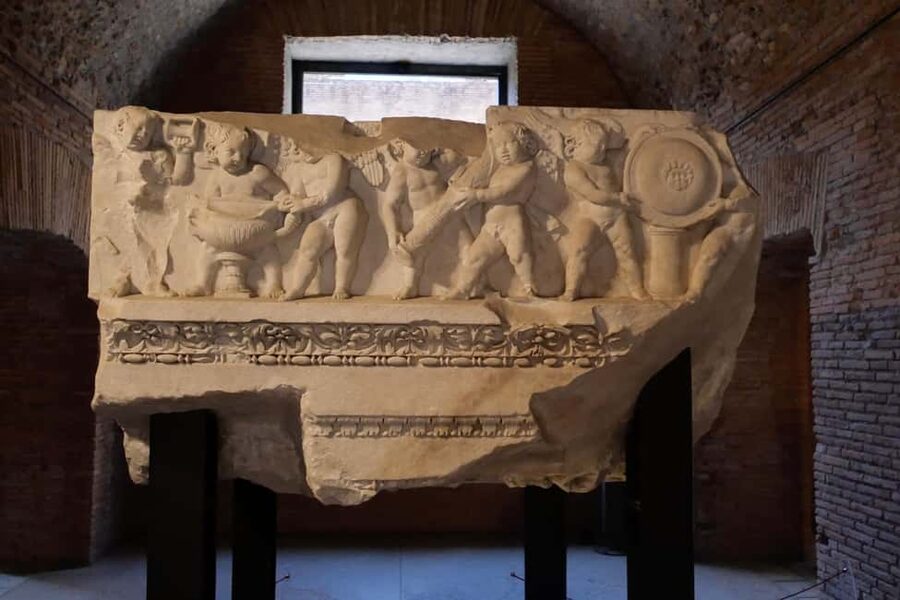
Reviewed · ROME
Rome: Trajan’s Markets & Museum of The Imperial Fora Tour
Trajan’s Markets gives you a side of ancient Rome that the Colosseum cannot: daily life and commerce. You walk through a multi-level complex of old shops, arches, corridors, and stairs, then continue into a museum filled with pieces from the Imperial Fora.
I like the compact 1.5-hour format, which fits neatly into a busy day, and I like the sweeping views toward the Roman Forum from the upper levels. Guide Francesca Massaccesi earned especially warm praise for bringing the site and Roman history to life.
The main drawback is the footing. Uneven surfaces and several stairs make this less comfortable for anyone with limited mobility, and one review found the explanations a little slow for a companion who preferred a faster pace.
Key points at a glance
- Trajan’s Markets: Explore a two-thousand-year-old commercial complex often called the world’s first shopping mall.
- Museum of the Imperial Fora: See sculptures, inscriptions, and artifacts connected with Rome’s imperial building projects.
- A more unusual Rome stop: This offers an alternative to the city’s best-known ancient sites and focuses on architecture, administration, and everyday activity.
- Forum views: The upper parts of the complex provide broad views across the nearby Imperial Fora and ruins.
- Small or private format: Choose a group of up to 10 people or arrange a private visit.
- Practical limits: Food, drinks, luggage, and large bags are not allowed, and the separate Imperial Forums tour is not included.
Why Trajan’s Markets are worth your time
Rome has no shortage of grand monuments. Trajan’s Markets is different because it helps you picture the city working. Instead of focusing only on emperors, battles, and temples, the site points toward buying, selling, storage, movement, and the practical business of running a huge ancient capital.
The name can mislead you a little. This was not a shopping center in the modern sense, with bright signs and rows of identical stores. It was a large, carefully planned complex built into the slope of the Quirinal Hill, with rooms and passageways arranged across several levels.
You can still see the shape of old shopfronts and the strong curves of the brick arches. Those details matter because they show how Roman builders used space on difficult ground. The complex did not need a broad, flat building site. It adapted to the hill and helped stabilize it while adding useful rooms.
That combination of practical engineering and urban activity is the heart of the visit. Your guide explains how the structures may have served commerce and administration, helping you read the site as more than a series of attractive ruins.
More museums and galleries in Rome:
- Vatican Museums & Sistine Chapel Tour with Optional Basilica
★ 4.3 · 67,413 reviews - Vatican Museums, Sistine Chapel & St Peter’s Basilica Guided Tour
★ 4.5 · 39,149 reviews - Rome: Vatican Museums, Sistine Chapel & Basilica Tour
★ 4.3 · 13,872 reviews
Meeting Trajan at the column
The tour begins at Trajan’s Column, in front of the iron gates opposite Santa Maria di Loreto on Via dei Fori Imperiali. Look for a staff member holding a yellow Touriks sign. This is an important detail in a busy part of Rome, where several ancient monuments and tour groups sit close together.
Trajan’s Column is an appropriate starting point. It was raised to honor Emperor Trajan’s victories, and its carved spiral tells a long military story around the shaft. The tour then shifts from the emperor’s public monument to the complex built nearby, giving you a useful link between imperial power and the city infrastructure that supported it.
You should arrive with your full name matching the identification document used at booking. Each person must present a valid passport or ID document with the same name for entry. That may feel like a small administrative point, but it can make the difference between a smooth start and a frustrating delay.
There is no hotel pickup or drop-off. Plan to reach the meeting point on your own, and remember that the 1.5-hour visit finishes at the Mercati di Traiano Museo dei Fori Imperiali rather than returning you to the column.
Walking through the ancient market complex
Once inside, you move through a sequence of rooms, arches, and levels rather than following a single open courtyard. The built-up form is the attraction. You see how Roman construction created a stable, useful structure while working around the hill.
The old shopfronts are among the most helpful features for your imagination. They give the ruins a human scale. A temple can feel remote, but a row of commercial rooms suggests people arriving, handling goods, talking business, and going about ordinary tasks.
Your guide fills in the missing pieces. The masonry alone cannot tell you exactly how every space was used, so the explanations help connect the surviving walls with Roman urban life. This is where a live tour earns its fee, especially if you are new to Roman archaeology.
The complex also gives you a close look at Roman engineering. The surviving arches and multi-level construction are roughly two thousand years old, yet the basic forms remain clear. You do not need to be an architecture specialist to appreciate the achievement. The site makes it easy to see how weight was carried, how slopes were handled, and how brickwork could be both sturdy and visually pleasing.
Expect steps and uneven ground. The route requires a moderate level of fitness, and comfortable shoes are a sensible choice. The information provided does not specify the number of stairs, so you should not assume the walk is flat or effortless.
The Museum of the Imperial Fora, room by room
The second part of the visit takes you into the Museum of the Imperial Fora. Here, the focus shifts from the surviving building to objects that help explain the larger network of monumental squares built by Rome’s emperors.
The collection includes sculptures, inscriptions, and other artifacts. These are useful because ruins often leave you with a partial picture. A broken wall shows shape and scale, while an inscription or carved figure can provide names, political messages, and clues about how Roman leaders wanted their projects understood.
Your guide places the objects within the story of the Imperial Fora. These public complexes were central to Roman civic life, and each emperor used monumental building to make a statement about power, order, military success, and his place in the city’s story.
The museum visit also gives you a break from reading exposed ruins in the open air. You can look closely at the pieces while the guide explains their connection to the wider area. For many people, this makes the surrounding archaeological zone easier to understand later in the day.
Do not confuse this visit with a guided tour of the Imperial Forums themselves. The entrance and guided tour of that separate area are not included. This experience concentrates on Trajan’s Markets and the Museum of the Imperial Fora, with views toward the nearby forums.
Same city, a completely different half-day:
- Rome: Colosseum, Palatine Hill and Roman Forum Guided Tour
★ 4.8 · 32,814 reviews - Rome: Guided Tour of Colosseum, Roman Forum & Palatine Hill
★ 4.7 · 27,897 reviews - Rome: Colosseum & Forum with Audio Guide App -Optional Arena
★ 4.2 · 24,770 reviews - Rome: Colosseum, Roman Forum and Palatine Hill Guided Tour
★ 4.5 · 23,903 reviews
The best views come from above
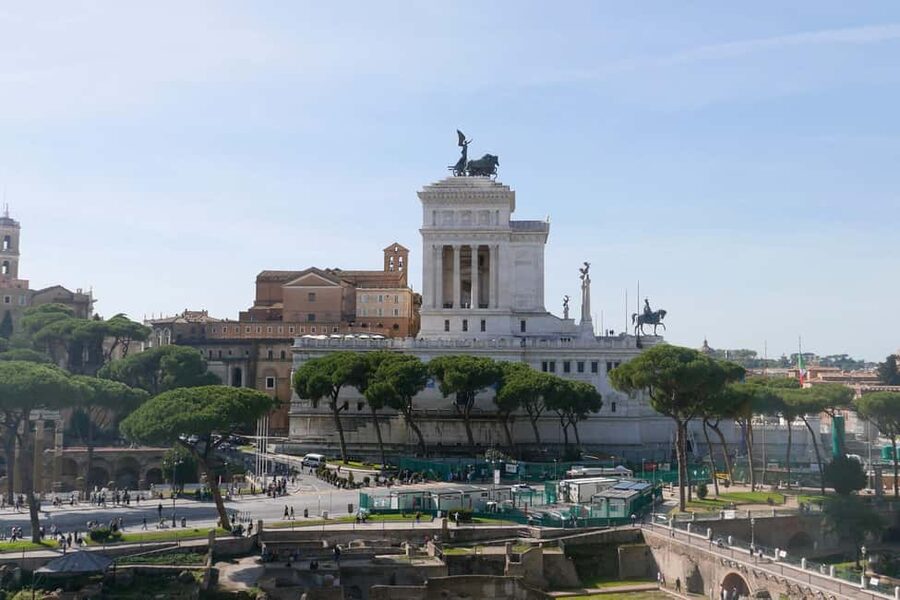
Trajan’s Markets is valuable not only for what you see at eye level. Its upper areas open views toward the Imperial Fora and the ruins around Via dei Fori Imperiali. These outlooks help you understand how closely Rome’s major monuments were packed together.
From the higher levels, the site makes more sense as part of a large imperial district rather than an isolated building. You can look across ancient remains while standing inside another imperial project, which gives the tour a strong sense of place.
Bring a camera if you enjoy architectural views, but do not let photographs replace the explanation. The guide can point out connections between the buildings and tell you why the area mattered. The views are a bonus, while the structure and interpretation remain the main reasons to book.
How the guide affects the experience
This tour depends heavily on the guide. The ruins are impressive, but many of the details are not self-explanatory. A good explanation turns a brick arch into evidence of engineering and an empty room into a clue about Roman commerce.
The strongest named feedback was for Francesca Massaccesi. She was praised for her clear command of Rome’s sites and for making the history feel alive. If you are able to request a guide when making your reservation, asking for Francesca may be worthwhile, though guide availability is not guaranteed.
The tour is offered in English, French, German, Italian, Spanish, and Portuguese. Confirm your preferred language when booking, since the quality of a site visit depends on how easily you can follow the explanations.
The group option holds up to 10 people, which is small enough for questions without the high cost of a fully private guide. A private option is available if you want more control over the pace or prefer a visit built around your own interests.
There is one useful caution. One person found the explanations too slow for a companion who wanted a quicker visit. If you prefer a brisk march through monuments, a private tour may give you a better chance to request a faster pace. If you like time for context and questions, the slower rhythm may suit you.
Is $77 a fair price?
At $77 per person, this is not a bargain-basement sightseeing stop. The price includes admission to Trajan’s Markets and the museum, a live guide, and headsets so you can hear clearly. For a small group of no more than 10, that can be fair value in central Rome, particularly if you want interpretation rather than a quick walk through the ruins.
The visit lasts 1.5 hours. That keeps the commitment manageable, but it also means the guide must make choices. You will receive an organized introduction to the markets, the museum, and the Imperial Fora, not an exhaustive study of every emperor or building in the district.
I would compare the cost with what you want from ancient Rome. If you mainly want famous monuments and a long day of sightseeing, you may prefer to spend your budget elsewhere. If you have already seen the Colosseum or Roman Forum, or if you want a quieter look at how Rome functioned, this tour fills a useful gap.
The headsets also matter. In a noisy archaeological area, hearing the guide can be more valuable than saving a little money on a self-guided visit. You are paying for access, structure, and explanation, not just entry.
Mobility, bags, and a little planning
The museum is wheelchair accessible in part. It provides a wheelchair for people with reduced mobility, and three museum floors can be reached by wheelchair. The lower two floors cannot be visited by wheelchair, while the markets themselves have uneven surfaces and stairs.
If you use a wheelchair or have difficulty with steps, contact the provider before booking so you understand which parts you can visit. Do not assume that general wheelchair accessibility means every section of the archaeological complex is accessible.
Large bags and luggage are not allowed. Food and drinks are also prohibited, along with pets, drones, weapons or sharp objects, alcohol, and drugs. Leave bulky belongings elsewhere before arriving, since this is not the kind of stop where you want to discover a bag restriction at the gate.
The tour does not include food or drinks, so plan those around the visit. Since the experience is short, you can easily place it between other Rome activities, but allow enough time to reach the meeting point at Trajan’s Column.
Who will enjoy this Rome tour most?
I would recommend it to you if you have a special interest in Roman construction, urban life, or the imperial building program. It is also a smart choice if you want something beyond Rome’s standard circuit of famous monuments.
Families with older children may find the shopping and engineering angle easier to grasp than a long list of emperors. The multi-level route and surviving arches provide plenty to look at, while the guide supplies the story.
History lovers should consider the private option if they want to ask detailed questions. The small group format is already more personal than a large coach tour, but private touring gives you the best chance to control the pace.
I would be more cautious if stairs are difficult for you, if you dislike guided explanations, or if you want a very fast visit. The site is not a flat stroll, and the tour’s value depends on listening as much as looking.
Should you book Trajan’s Markets?
Book this tour if you want to see an ancient Roman complex where ordinary commercial activity meets imperial ambition. The combination of old shopfronts, durable arches, museum artifacts, and Forum views gives you a fuller picture of Rome than another monument focused only on emperors and battles.
At $77, it makes the most sense for you when the guide matters. Francesca Massaccesi received particularly strong praise, and the included headsets, entry fees, and small group size add practical value.
Skip it if you need a flat route, have little interest in guided history, or already have a tightly packed schedule. For everyone else, this is a focused and worthwhile 1.5-hour addition to a Rome itinerary, especially after you have seen the city’s more famous ancient sights.
FAQ
Where does the tour meet?
Meet in front of the iron gates of Trajan’s Column, opposite the church of Santa Maria di Loreto on Via dei Fori Imperiali, 00187 Rome. Look for a staff member holding a yellow Touriks sign.
Where does the tour finish?
The experience finishes at Mercati di Traiano Museo dei Fori Imperiali.
How long does the tour last?
The guided tour lasts 1.5 hours.
What does the price include?
The price includes an expert live guide, entrance fees to Trajan’s Markets and the Museum of the Imperial Fora, and headsets to hear the guide clearly.
Is a tour of the Imperial Forums included?
No. Entry fees to and a guided tour of the Imperial Forums are not included. The experience focuses on Trajan’s Markets and the Museum of the Imperial Fora.
What languages are available?
The tour is offered in English, French, German, Italian, Spanish, and Portuguese.
Is the tour wheelchair accessible?
The museum provides a wheelchair, and three museum floors are accessible by wheelchair. The lower two floors cannot be visited with a wheelchair. Trajan’s Markets also has uneven surfaces, steps, and stairs.
Can I choose a private tour?
Yes. You can choose either a private option or a small group option with a maximum of 10 people.
Are food and drinks allowed?
No. Food and drinks are not allowed inside the experience. Luggage and large bags are also prohibited.
What identification do I need?
Each person must bring a valid passport or ID document matching the full name provided at booking. Full names of all participants are required when you reserve.
Newest Rome tours we have reviewed
- Private TikTok Video Making in Rome★ 5.0 · 7 reviews
- Assisi, Orvieto and Civita di Bagnoregio Full Day Tour from Rome★ 4.5 · 45 reviews
- Assisi & Saint Francis Path Tour from Rome★ 5.0 · 45 reviews
- Assisi and Cascia Private Day Tour from Rome with Lunch★ 5.0 · 10 reviews
- Art Class in the center of Rome!★ 4.0 · 4 reviews
- Art & Craft: Beer Tour with Street Art in Rome★ 4.5 · 6 reviews
- Arrival in Rome: Airport Transfer & Exclusive City Introduction★ 5.0 · 3 reviews
- From Rome: Private Day-Tour of Tuscany★ 5.0 · 16 reviews