

Reviewed · TRASTEVERE TOURS
Rome: Trastevere and Jewish Ghetto Walking Tour
Rome’s past comes at you in layers on this walk: medieval Trastevere, the ancient river crossing at Tiber Island, and the Jewish Quarter’s Roman ruins all fit into one compact outing. You may also see the Pantheon, Piazza Navona, the Column of Marcus Aurelius, the Church of Saint Ignatius, and Trevi Fountain, depending on the route used that day.
I like the mix of famous sights and neighborhood streets, and I like that the tour gives the Jewish Quarter real attention rather than treating it as a quick photo stop. One consideration is the pace: two hours is short for such a full route, so you should expect an overview, not extended time inside monuments.
Key points to know before you book
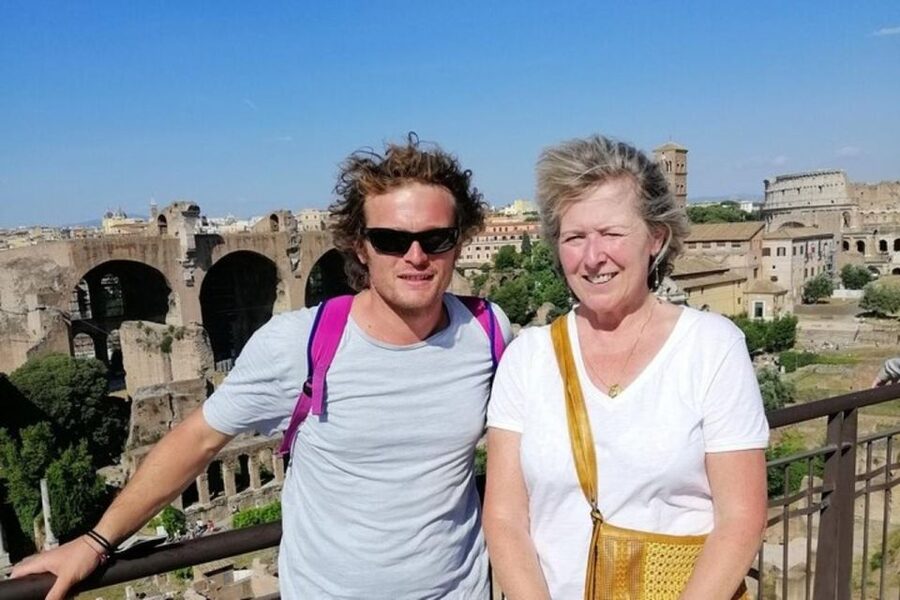
- Trastevere begins with Santa Maria in Trastevere, one of Rome’s oldest and most atmospheric neighborhood churches.
- The Jewish Quarter includes Portico d’Ottavia, Tiber Island, and the Fontana delle Tartarughe.
- The route may include major central sights, including Piazza Navona, the Pantheon, Trevi Fountain, and the Church of Saint Ignatius.
- A guide can lead the walk in English, French, Spanish, or Italian, with private-group availability.
- The two-hour schedule is tightly packed, making this a good orientation walk but a poor choice if you want long museum or church visits.
- The price is $47 per person, reasonable if your guide gives useful context and keeps the route moving.
From Trastevere lanes to the Jewish Quarter

This tour covers two Rome neighborhoods that feel quite different. Trastevere sits across the Tiber and is known for its medieval street plan, cobbled lanes, and working-class roots. The Jewish Quarter, on the river’s eastern side, brings together Roman ruins, later religious buildings, and the memory of Rome’s Jewish community.
The meeting point is given as Lungotevere della Farnesina, 2, near Piazza Trilussa, 2. That is important because the address wording can look slightly different on a map. I would check the exact pin and guide instructions before setting out, especially if you are coming from another part of Rome.
The route details include a broad set of central Rome sights as well as the neighborhood stops. The walk may begin around the Colonna dell’Immacolata Concezione and Trinità dei Monti, then continue through central Rome before reaching the river districts. The listed stops also include Rione Monti, so the exact order deserves a quick check when you book.
That variety is the main appeal. You are not signing up for a single-monument lecture. You are getting a fast-moving look at how Rome’s ancient, religious, artistic, and neighborhood life overlap.
More Jewish Ghetto tours:
- Rome: Trastevere or Jewish Quarter Street Food Tour
★ 4.8 · 3,839 reviews - Jewish Ghetto and Trastevere Tour Rome
★ 4.5 · 1,729 reviews - Jewish Ghetto and Synagogues with Jewish Roman Guide 3 Hours
★ 5.0 · 907 reviews
Santa Maria in Trastevere and the feel of old Rome
Santa Maria in Trastevere is the first major Trastevere stop. The church gives the neighborhood its visual anchor, while the surrounding streets offer the kind of setting that makes Trastevere popular in the first place.
Your guide is scheduled to spend about 15 minutes here for a photo stop, visit, explanation, and short walk. That is enough time to get the basic story and see the setting, but not enough for a slow inspection of every detail.
I like this opening because it sets the tone without starting with a huge museum or a long line. You get a sense of place first. The neighborhood’s narrow streets and old buildings make the walk feel more local than a route that sticks only to Rome’s grand avenues.
The trade-off is simple: Trastevere is best enjoyed slowly. Two hours does not leave much room for wandering into side streets, stopping for a drink, or studying church art at length. Keep your camera ready, but do not expect a leisurely neighborhood ramble.
Tiber Island and the Fontana delle Tartarughe
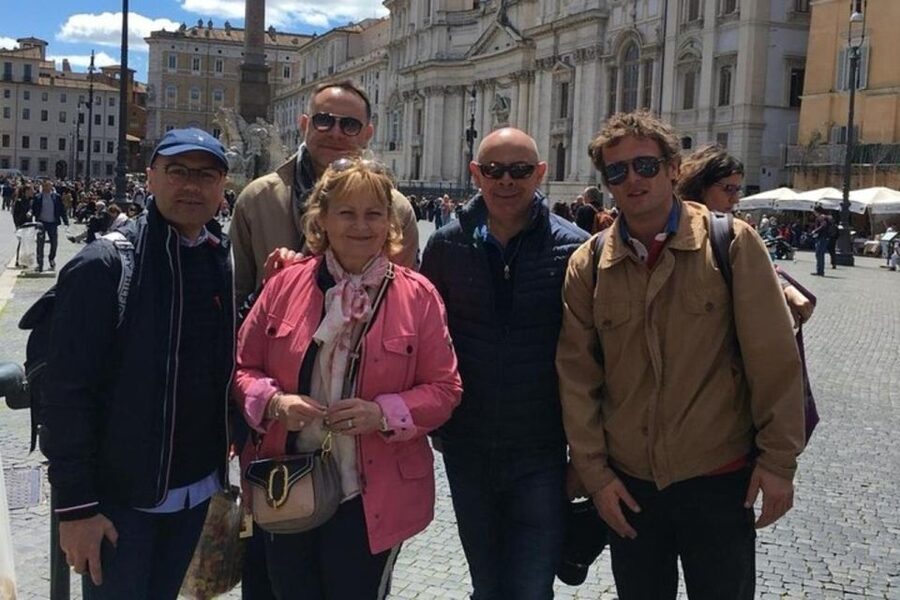
The walk continues toward the Tiber and Tiber Island. This small island is a useful geographic link between Trastevere and the Jewish Quarter, and it helps you understand how closely the two districts sit beside one another.
A stop at the Fontana delle Tartarughe adds a smaller Baroque detail to the route. It is the sort of feature you could easily miss while rushing between larger monuments. A local guide can point out why it matters and help you see Rome beyond the headline sights.
Both Tiber Island and the fountain are listed as 15-minute stops. You should expect sightseeing and explanation rather than a formal interior visit. That makes them good stops for orientation and photographs.
The itinerary also includes Santa Cecilia in Trastevere. The church adds another religious and neighborhood layer to the walk. Since the schedule is tight, ask whether the group will go inside or view it from outside. The supplied details promise a guided visit and sightseeing, but they do not specify how much interior time is available.
The Jewish Ghetto and Portico d’Ottavia

The Jewish Quarter is the most distinctive part of the experience for anyone who wants more than a standard Rome highlight tour. The route includes the Jewish Ghetto and Portico d’Ottavia, where Roman remains share space with the later story of Rome’s Jewish community.
Portico d’Ottavia is particularly useful for understanding the area’s character. Ancient stonework, later buildings, and narrow streets appear close together. A guide can connect those pieces in a way that is hard to get from a quick walk alone.
I would give this section your full attention. The official stop time is about 15 minutes, but the neighborhood deserves careful listening because the meaning of the place is not obvious from its facades. You may see the main points, hear the local context, and continue, rather than receive a long specialist tour of Jewish Rome.
The tour description also promises less obvious corners of the Jewish Quarter. That is a worthwhile promise, but keep your expectations measured. With a two-hour duration and many stops, the route can introduce the area without covering every important site or period.
More Trastevere tours:
- Winner 2025 Rome Twilight Trastevere Food Tour by Eating Europe
★ 5.0 · 5,157 reviews - Rome: Trastevere Food tour with Free-Flowing Fine Wine
★ 5.0 · 2,853 reviews - Rome: Trastevere & Campo de Fiori Street Food Walking Tour
★ 4.9 · 2,768 reviews - Rome: Award Winning Trastevere Group Food Tour with Wine
★ 5.0 · 2,273 reviews
Marcello Theater and Roman layers
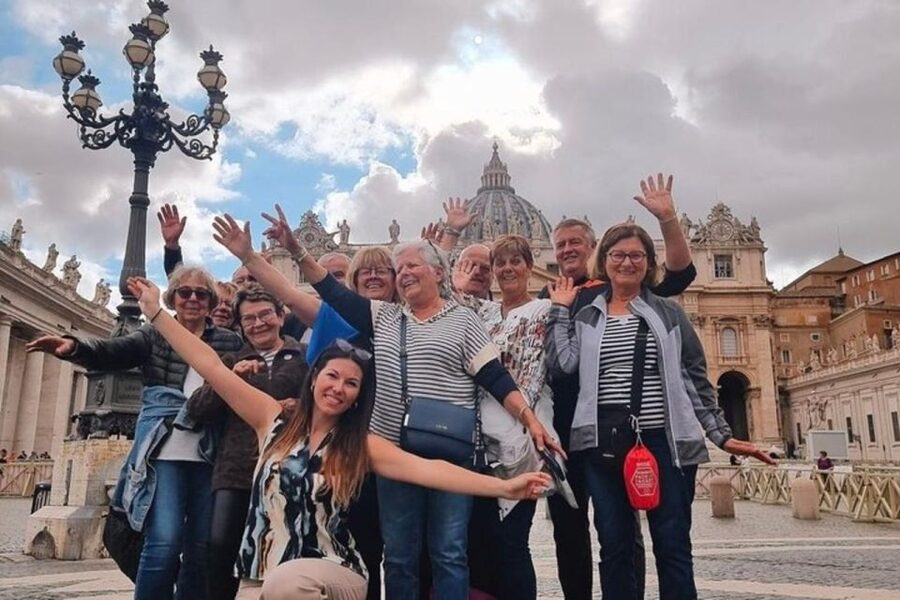
The Marcello Theater is another strong stop in the Jewish Quarter area. It shows how ancient Roman structures continue to shape the modern city. The theater is not presented as a separate ticketed visit, so plan on seeing it from the outside and hearing the guide’s explanation.
This is where a good guide makes a clear difference. Ancient Rome can become a blur of columns, arches, and dates. A short explanation of what you are looking at can help you connect the ruins to the streets around them.
The route also lists Rione Monti, another historic district in central Rome. Since the walk includes Trastevere, the Jewish Quarter, and central landmarks, Rione Monti adds to the sense that this is a city overview rather than a single-neighborhood tour.
That is also the main limitation. A route with this many districts can feel rushed. If you want a slow, detailed study of Roman archaeology, this is not the right format. If you want to see how several parts of Rome fit together, the variety works in your favor.
Piazza Navona and the Stadium of Domitian
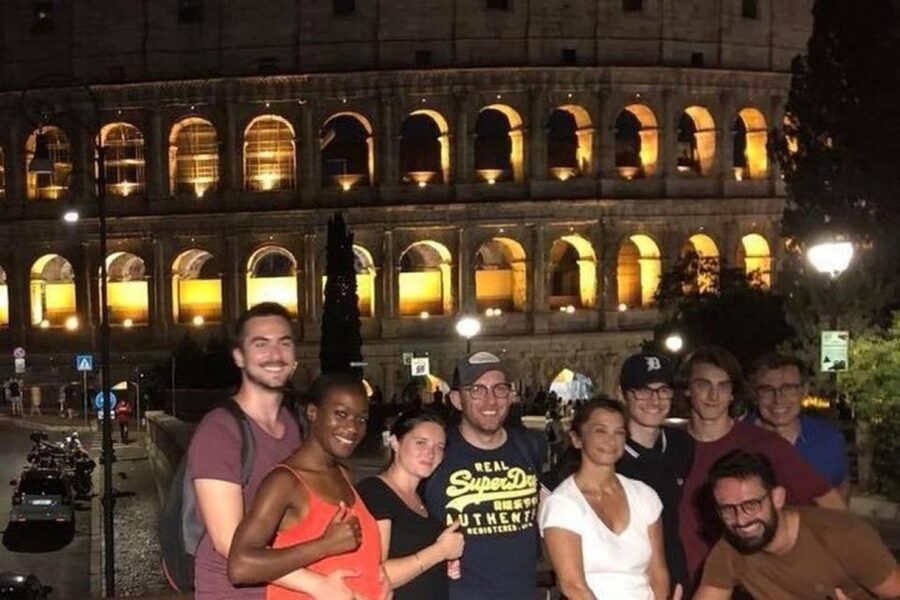
The broader route description includes Piazza Navona, one of Rome’s great public spaces. Its long oval shape follows the footprint of the ancient Stadium of Domitian. Today, Baroque fountains and church architecture replace the ancient spectacle, but the shape of the piazza still gives the Roman past a clear outline.
The tour highlights fountains associated with Gian Lorenzo Bernini and Francesco Borromini. You may hear about the artistic rivalry and the way Baroque Rome used water, sculpture, and grand public spaces to display power.
Piazza Navona is a good place to understand why Rome rewards a walking tour. You can see ancient planning, later religious influence, and Baroque design in one view. A guide can point out details that disappear when you simply cross the square on the way to somewhere else.
The schedule means you will probably pause, listen, take photographs, and move on. You should not plan on sitting at a café here during the tour. Save that for afterward.
The Pantheon and the Column of Marcus Aurelius

The Pantheon is another major sight named in the tour description. Its preserved Roman structure makes it one of the clearest places in central Rome to appreciate ancient engineering. The building is presented as a stop on the walking route, not as a timed interior tour with a guaranteed long visit.
That distinction matters. You can admire the exterior and receive an explanation, but the supplied details do not promise admission or extended time inside. If seeing the interior is a priority, plan a separate visit and check current entry rules.
The Column of Marcus Aurelius gives you a different view of ancient Rome. Its carved spiral tells a military story through reliefs, and the tour connects the scenes to the kind of imagery familiar from the film Gladiator. The comparison may help you look closely at the column, though the monument belongs to Roman history rather than a movie set.
I like the pairing of the Pantheon and the column because they show two different kinds of Roman achievement: architectural skill and public storytelling. In a short walk, you get both.
Church of Saint Ignatius and the Baroque illusion
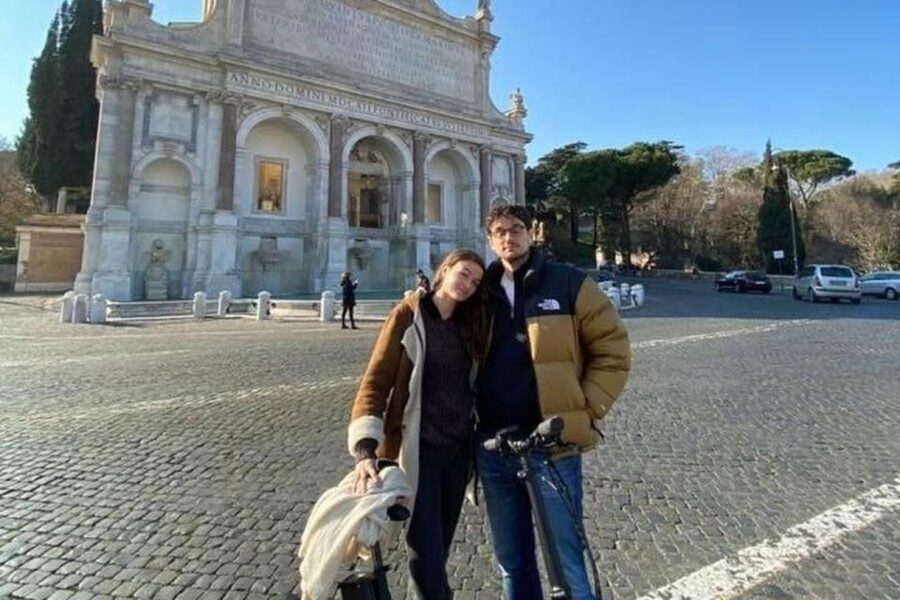
The Church of Saint Ignatius is included for its trompe l’oeil ceiling. This is one of the more memorable artistic stops because the ceiling creates an illusion of depth and architectural space.
You do not need a long art lecture to appreciate the effect. Look up and let your eyes adjust. The painted architecture is designed to make a flat surface seem to open above you.
The church also breaks up the outdoor walking. That can be welcome after several streets and crowded public squares. Still, the tour data does not specify how long the group remains inside, so the visit may be brief.
For me, this is the sort of stop that justifies having a guide. Without direction, you might enter, look around, and leave without noticing the trick above you. With a clear explanation, a short church visit can become one of the walk’s best moments.
Ending at Trevi Fountain
The tour ends at the Trevi Fountain, where you can take part in the familiar tradition of tossing in a coin to symbolize a future return to Rome. It is a light, fun finish after the heavier history of the Jewish Quarter and Roman ruins.
Trevi is usually a place where you need to stay alert to your belongings and to the people around you. The supplied information does not provide crowd conditions or a specific time of day, so I would not assume the fountain will be quiet.
The coin toss is optional, of course. You can enjoy the fountain without taking part, but the tradition gives the ending a simple sense of occasion. If you want photographs, ask your guide where to stand and allow yourself a few minutes after the formal tour ends.
One practical point: because the route description names Trevi, Trinità dei Monti, Piazza Navona, the Pantheon, and other central sights, while the stop-by-stop route focuses on Trastevere and the Jewish Quarter, confirm the day’s exact sequence. The walk may vary by option or guide. Knowing the finish helps you plan your next stop.
How the $47 price measures up
At $47 per person, this tour sits in the reasonable middle range for a guided Rome walk. The value depends heavily on the guide’s skill and on how much of the advertised route is covered in two hours.
You are paying for a live guide, not food, drinks, or entry tickets. That makes the price easier to judge: it is worthwhile if you want context, navigation, and a planned route through several districts. It is less attractive if you only want photographs, since many of these sights can be viewed independently.
A shared tour should offer the lowest-cost way to get a guide’s explanation. A private option is available, though the supplied details do not give its price. If you choose private, ask how much flexibility you get with the route and timing.
The experience has an overall rating of 4 out of 5 from three reviews. One verified French-language review gives especially strong praise to an Italian guide who spoke French very well and made the Trastevere and Jewish Quarter visit interesting. The guide’s name is not provided, so you should not book expecting a particular person.
Languages, pace, and access
Guiding is available in English, Spanish, Italian, and French. That is useful for a mixed-language group or for anyone who understands a different language more easily when discussing history and architecture.
The tour is listed as wheelchair accessible. Rome’s old streets can still make movement slower, and the information does not describe the exact street surfaces or any route adjustments. If access needs are important to you, contact the provider before booking and ask how the route handles cobblestones, steps, and church entrances.
You can cancel up to 24 hours in advance for a full refund, and the reserve-now-pay-later option keeps your plans flexible. Those policies are helpful in Rome, where weather, transport, and changing sightseeing plans can affect a short walking tour.
Who should book this Rome walk?
I would choose this tour if you have limited time in Rome and want a guided introduction to several districts. It also suits you if the Jewish Quarter matters to your trip and you want more than a standard route focused only on the Colosseum and Trevi Fountain.
It works well early in a Rome visit because the walk can help you get your bearings. Afterward, you can return to the Pantheon, Trastevere, or the Jewish Quarter for longer visits.
I would skip it if you want deep time at each monument, a food-focused tour, or a specialist study of Jewish Roman history. The route is ambitious for two hours, and food and drinks are not included.
Should you book it?
Book this walk if you value variety, local explanation, and a compact introduction to Trastevere and the Jewish Quarter. The strongest reason to go is the combination of neighborhood streets, Roman remains, and the Jewish Quarter’s distinctive story.
Before paying, confirm the meeting pin and ask which sights will be covered in your two-hour slot. If you are happy with a brisk overview rather than long interior visits, $47 is a fair price for a well-led outing. If you want depth, use this as a starting point, then return on your own for the places that catch your interest.
FAQ
Where does the walking tour meet?
Meet your guide at Lungotevere della Farnesina, near Piazza Trilussa, 2. The stated starting address is Lungotevere Farnesina, 2, so check the exact meeting instructions before arriving.
How long does the tour last?
The walking tour lasts two hours. Starting times vary, so check availability when booking.
Which languages are available?
The live guide service is available in English, Spanish, Italian, and French.
Is the tour wheelchair accessible?
Yes, the activity is listed as wheelchair accessible.
Does the price include food or drinks?
No. Food and drinks are not included in the $47 price.
Can I book a private tour?
Yes. A private group option is available, in addition to the shared walking tour option.
More walking tours in Rome
- Rome: Paranormal Night Walking Tour & Secret Backstreets
★ 4.9 · 1,921 reviews - Rome by Night Walking Tour – Legends & Criminal Stories
★ 4.5 · 1,003 reviews - Rome: Guided City Center Evening Sightseeing Walking Tour
★ 4.4 · 953 reviews - Best of Rome Walking Tour including Trevi Fountain
★ 4.5 · 923 reviews
Newest Rome tours we have reviewed
- Private TikTok Video Making in Rome★ 5.0 · 7 reviews
- Assisi, Orvieto and Civita di Bagnoregio Full Day Tour from Rome★ 4.5 · 45 reviews
- Assisi & Saint Francis Path Tour from Rome★ 5.0 · 45 reviews
- Assisi and Cascia Private Day Tour from Rome with Lunch★ 5.0 · 10 reviews
- Art Class in the center of Rome!★ 4.0 · 4 reviews
- Art & Craft: Beer Tour with Street Art in Rome★ 4.5 · 6 reviews
- Arrival in Rome: Airport Transfer & Exclusive City Introduction★ 5.0 · 3 reviews
- From Rome: Private Day-Tour of Tuscany★ 5.0 · 16 reviews
Trastevere Tours, compared.

Winner 2025 Rome Twilight Trastevere Food Tour by Eating Europe
Read our review →
Trastevere or Jewish Quarter Street Food Tour
Read our review →
Trastevere Food tour with Free-Flowing Fine Wine
Read our review →
Trastevere & Campo de Fiori Street Food Walking Tour
Read our review →
Award Winning Trastevere Group Food Tour with Wine
Read our review →

Rome Food Tour: Hidden Gems of Trastevere with Dinner & Wine
Read our review →Browse the lists this tour appears in