
Reviewed · ROME
Running Tours Rome 9km [shared or private]
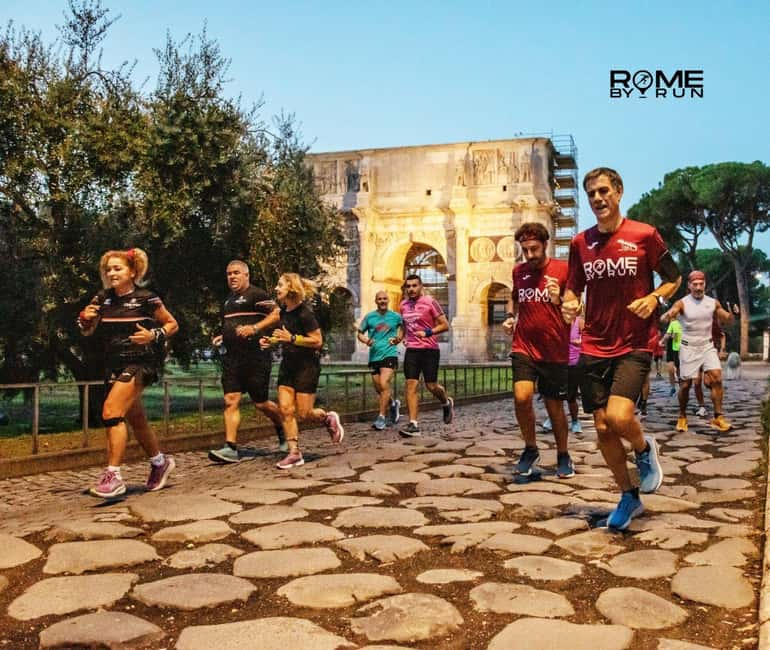
Rome is at its best before the crowds arrive, and this running tour gets you into the streets while the ancient center is still quiet. You cover about 9 to 10km with a local runner, pausing at the Trevi Fountain, Pantheon, Roman Forum, and Colosseum. I like the self-set pace and the practical local advice, plus the photos and videos included along the way.
The catch is simple: this is a real run, not a sightseeing walk with a little jogging. You need to manage at least an hour of running, and Rome’s stones, steps, traffic, and uneven roads demand care.
Key points to know before you book
- Dawn gives you a quieter Rome: Early starts bring cooler air, softer light, and fewer people around the major monuments.
- You set the speed: The guide adjusts the route and rhythm to your ability, from gentle jogger to race trainee.
- Four famous sights fit into one run: The route normally reaches the Trevi Fountain, Pantheon, Roman Forum, and Colosseum.
- Local guides add more than mileage: Guides such as Claudia, Fabrizio, Claudio, and Dario have led runs with history, food tips, and city advice.
- The streets are part of the challenge: Expect asphalt, cobbles, stone surfaces, dirt paths, stairs, and roads open to traffic.
- You finish where you began: Meet outside Bar La Licata in Monti, close to Cavour Metro, and return there after about 90 minutes.
Why a morning run works so well in Rome
A conventional Rome sightseeing day can feel like a march between packed plazas. This tour changes the rhythm. You move through the city before breakfast, see the main monuments in one sweep, and get a useful orientation from someone who knows how the streets connect.
The early hour matters. Rome’s center is easier to cross when traffic and foot crowds are lighter. The light can also be lovely around the old ruins and domes. One morning runner described the city as almost empty, with beautiful light, while another called the sunrise setting magical. That is the real appeal here: you see famous places before the day has fully started.
I also like the way the run doubles as a first-day briefing. The guide can suggest places to eat and explain how to spend the rest of your visit. After the run, you can return to the monuments with your family and already know where you are going. In a city with a famously confusing historic center, that saves time.
The format is flexible. You may join a shared small group, or arrange a private outing. The stated price is $80 per person, which is fair if you value a personal guide, a route built around your pace, digital photos and videos, and a compact introduction to central Rome. It is less attractive if you only want exercise or if you would rather stop at every monument for a long formal explanation.
More private tours in Rome:
- Rome by Golf Cart Private Tour: Beyond the Landmarks
★ 5.0 · 4,361 reviews - Early Morning Vatican, Sistine, St. Peter’s Semi or Private Tour
★ 5.0 · 3,779 reviews - Rome on a Golf Cart Semi-Private Tour Max 6 with Private Option
★ 5.0 · 2,502 reviews
Meeting at Bar La Licata in Rione Monti
The meeting point is outside Bar La Licata, at Via dei Serpenti 165 in the Rione Monti district. It is close to Cavour Metro on Line B, with the Colosseo stop also listed as a nearby option.
Arrive ready to run. You need comfortable running shoes and suitable clothing, and nothing else is required. There is no mention of a locker or changing facility, so I would avoid bringing more than you can comfortably carry.
The guide waits for up to 15 minutes if you are late. After that, the delay may count against the normal tour time. That is worth taking seriously in Rome, where finding the correct metro exit or crossing the old streets can take longer than expected.
The guides have different personalities and backgrounds. Claudia has led relaxed runs with interesting facts and time for photographs. Fabrizio has been praised for clear English, strong knowledge of the monuments, and good photos during the run. Claudio and Claudia have also led a 9km outing together, while Dario de Gese has been noted for a polite and attentive manner. Your guide depends on the date and availability, but the format favors conversation rather than a scripted lecture.
Trevi Fountain comes early in the route
The Trevi Fountain is one of the route’s first major stops. Seeing it during a morning run has a practical advantage: you can take in the fountain without giving up a large part of your day to reach it.
The listed stop is brief, around five minutes for the visit and guided explanation. That means you should expect a quick look, photographs, and a few useful facts rather than a full art-history talk. The short pause also keeps the tour moving toward the other monuments.
Trevi is a good test of what this tour does best. You see an important sight, hear some context, and keep your body moving. If the fountain is a top priority for you, you can return later for a longer visit, perhaps when you are already in the area for dinner or another appointment.
The Pantheon adds a change of pace
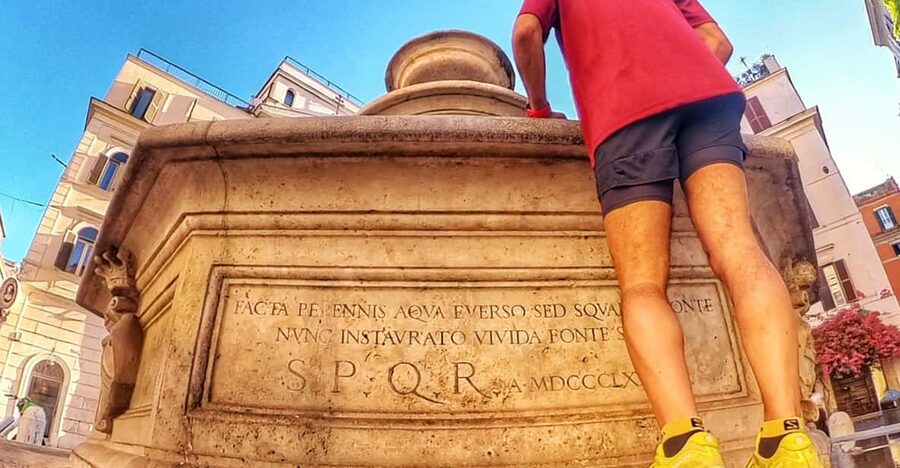
From Trevi, the route continues toward the Pantheon. Here, the run takes you through the dense old center, where the streets can feel more intimate and less straightforward than the broad avenues around the Colosseum.
The Pantheon is another short stop, listed at about five minutes. You should think of this as an outdoor orientation and photo pause, not a timed interior visit. The tour information does not promise entry inside, so plan a separate visit if you want to see the interior.
That distinction matters. A running tour can show you how Rome’s monuments fit together, but it cannot give every site the attention you would receive on a dedicated walking tour. I see this as a strength if you want a broad first look, and a limitation if your main purpose is detailed archaeology or art.
Same city, a completely different half-day:
- Vatican Museums & Sistine Chapel Tour with Optional Basilica
★ 4.3 · 67,413 reviews - Vatican Museums, Sistine Chapel & St Peter’s Basilica Guided Tour
★ 4.5 · 39,149 reviews - Rome: Colosseum, Palatine Hill and Roman Forum Guided Tour
★ 4.8 · 32,814 reviews - Rome: Guided Tour of Colosseum, Roman Forum & Palatine Hill
★ 4.7 · 27,897 reviews
The Roman Forum gives the run its ancient setting
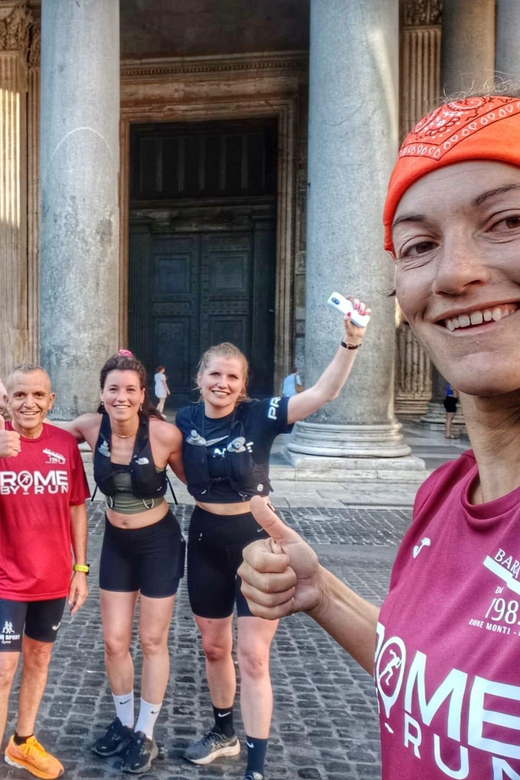
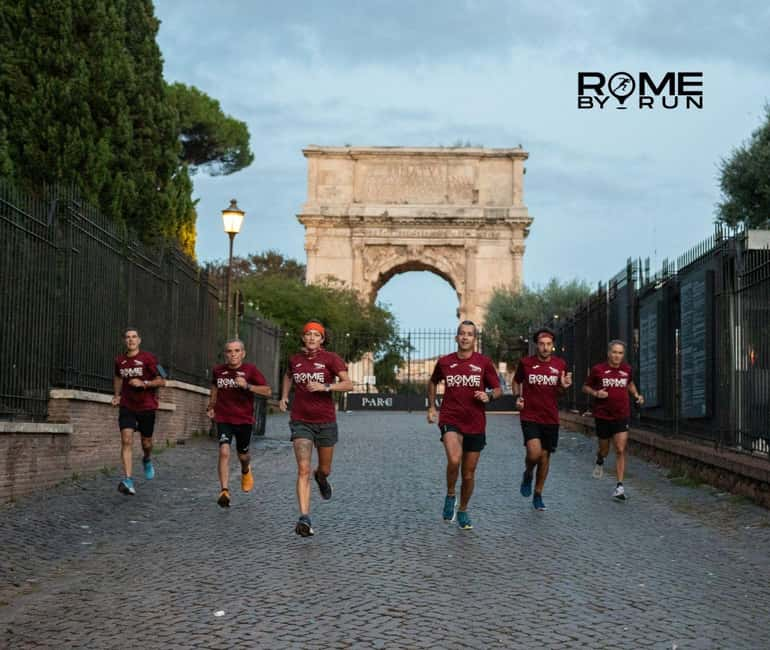
The route then reaches the Roman Forum, with about ten minutes set aside for sightseeing, a guided explanation, and photographs. This is likely the most useful place to slow down and listen, because the scattered ruins can be difficult to understand without someone pointing out what you are seeing.
The Forum is not a single intact building. It is a broad field of columns, foundations, arches, and fragments. A local runner can help you connect those remains to the Imperial city you have been running through. The guide’s local perspective also helps the ruins feel less like isolated objects and more like part of Rome’s working center.
Again, the tour does not include an archaeological-site admission or a long interior visit. You will see the Forum from the route and stop to discuss it. If you want to walk through the full archaeological area, set aside separate time and check entry arrangements for your chosen day.
Reaching the Colosseum on foot
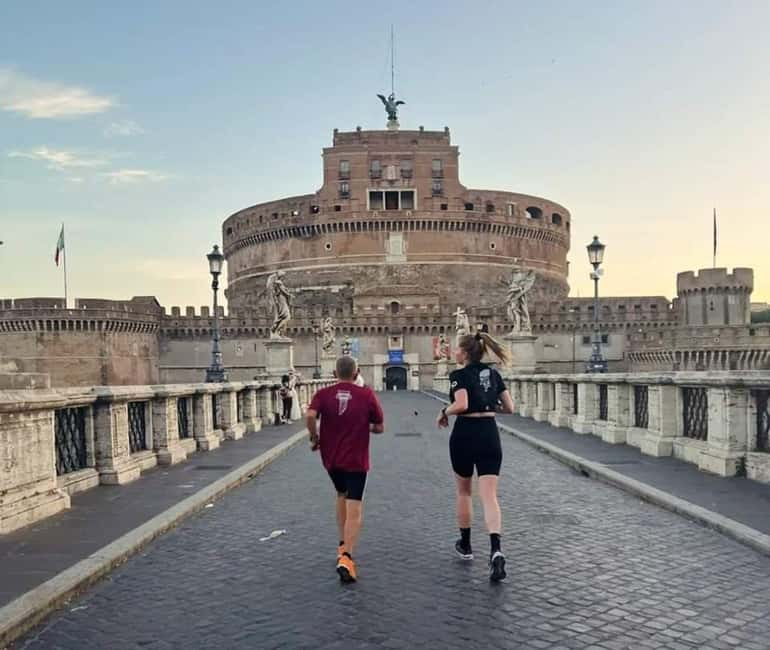
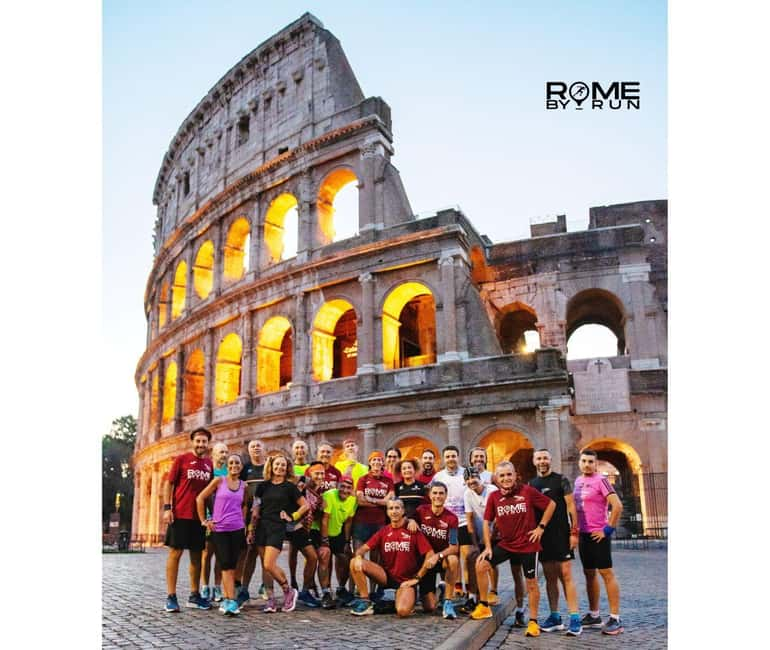
The Colosseum is the route’s biggest visual finish before the return. The stop is listed at about five minutes, enough for views, photographs, and a short explanation.
Arriving by foot gives you a different sense of scale than arriving by taxi or metro. You have crossed the old center under your own power, moving from fountain to domed temple to imperial ruins. The Colosseum then feels like part of a connected city rather than a single isolated attraction.
The area can be difficult for runners. Roads remain open to vehicles, and the ground may change from smooth pavement to stones or uneven surfaces. You must follow Italian road rules and stay alert. The guide leads, but you are still responsible for your footing and traffic awareness.
The Colosseum stop is also a good point to manage expectations. You are not entering the amphitheater as part of this running tour. You are seeing it from the route, learning about it, and taking pictures. Book a separate timed visit if you want the inside experience.
The return to Monti and the café finish
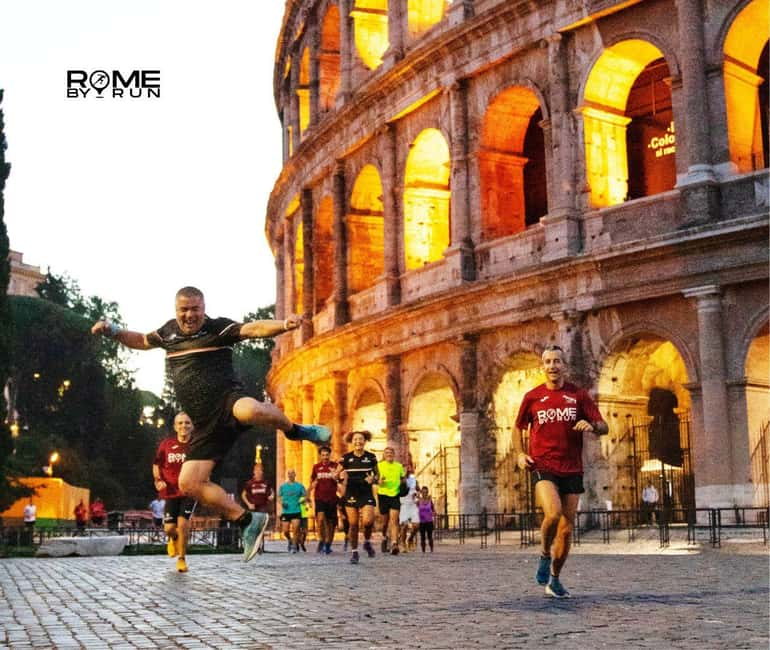
After the Colosseum, the route returns to Bar La Licata. A 10-minute break is listed near the end, and one run finished with a café stop at Luigi. The exact finish may depend on the day and guide, but the return to the meeting point is part of the plan.
This is a pleasant way to finish a morning workout. You can cool down, gather your photos and videos, and decide what to do next. The included digital images are a useful extra because taking clear pictures while running is not easy. You also receive a gadget, though the details are not specified.
The full activity lasts about 1.5 hours. That includes running, monument stops, photographs, explanations, and the break. The distance is described in different places as roughly 9km or 10km, so treat it as an approximate route rather than a precise race measurement.
How demanding is the route?
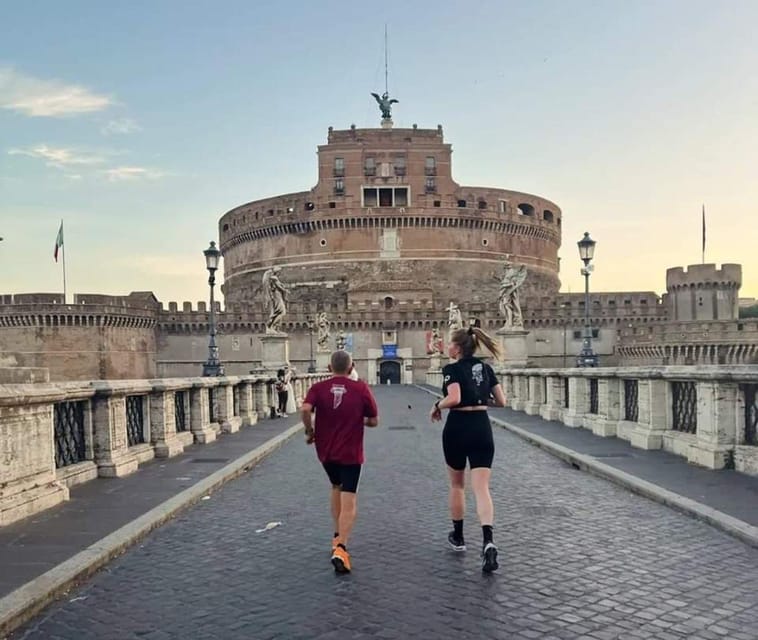
You need physical resistance for at least one hour of running. This is not designed for someone who only wants to stroll between sights. The pace is set by you, and the guides can adapt the route to your ability, but you still need to be comfortable jogging for most of the outing.
The route may include:
- Asphalt
- Cobblestones and other stone surfaces
- Dirt paths
- Stairs
- Uneven ground
- Roads shared with vehicles
That mix is important. A fit runner may find the pace moderate and manageable. A casual jogger can take it gently, but should not assume the old center feels like a smooth park loop. Rome’s streets require short steps, careful turns, and attention around traffic.
The experience is not suitable for everyone. Each participant must be in healthy condition for the type of training they plan to do. The provider accepts no responsibility for a runner’s fitness or health, so you should judge your own condition honestly.
Participants under 18 must run with an adult who acts as their supervisor. The tour is offered in English, and the guide can adjust the run around your interests and abilities.
What makes the guides useful
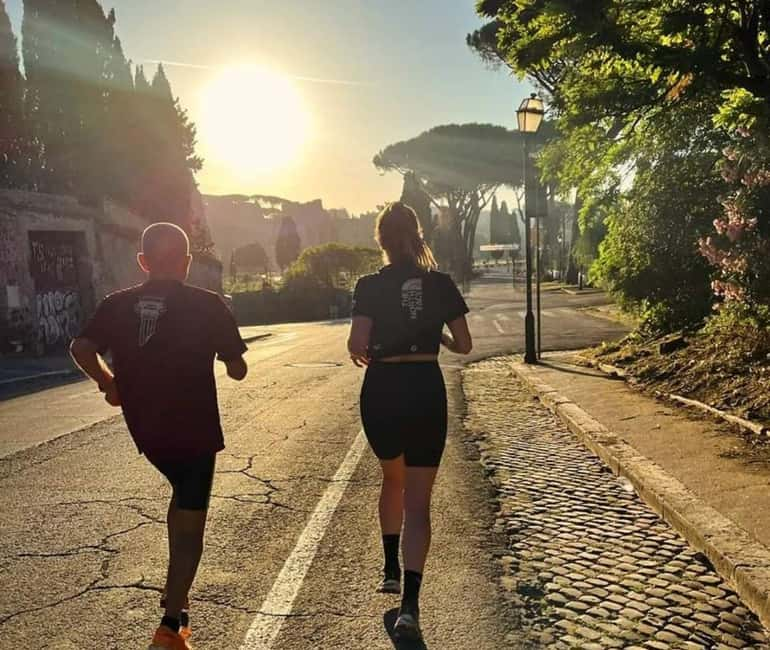
The guide is the main reason to choose this over running alone. You get a route through the historic center without having to stop every few minutes to check a map. You also have someone who can explain what you are seeing while keeping the pace comfortable.
The best reports describe guides who combine running with conversation. Claudia has been praised for a moderate pace, interesting facts, and careful stops at each monument. Fabrizio has been valued for excellent English, strong explanations, and the ability to take memorable photos. A local Roman guide can also add details away from the standard route, such as food suggestions and advice about the rest of your stay.
That does not mean every minute becomes a history class. The activity is built around motion. If you want long discussions about imperial politics, architecture, or Baroque sculpture, choose a dedicated walking tour. If you want enough background to make the sights meaningful while staying active, this format makes more sense.
The private option should appeal to couples, families with a similar fitness level, and runners training for an event. A shared group costs less in social terms and may be more fun, but private running gives you more control over stops and pace.
Is $80 a good value?
At $80 per person, the price sits above the cost of exploring Rome on your own, but you are paying for more than a marked route. The fee includes the running tour, a buddy runner, digital photos and videos, and a small gadget. You also get local orientation and advice that can help shape the rest of your visit.
I think the price works best for three types of people. First, it suits runners who would train anyway and want that workout to count as sightseeing. Second, it suits first-time visitors who want to understand the layout of central Rome quickly. Third, it suits repeat visitors who have seen the headline monuments but want to move through the city with a local.
The value is weaker if you will not run for an hour, if you want site admissions included, or if you prefer a slow guided walk. The tour does not include entry to the Colosseum, Roman Forum, Pantheon, or Trevi Fountain. It gives you access to the streets and viewpoints, not a full ticketed tour inside each attraction.
Cancellation is free up to 24 hours before the start, and you can reserve now and pay later. Those terms help if your Rome schedule is still shifting.
Who should book this Rome running tour?
Book it if you enjoy running, want a lively introduction to the old center, and like the idea of seeing major sights before the crowds. It is particularly useful on your first morning in Rome, when a local guide can help you understand the city’s layout and offer suggestions for the days ahead.
It also makes sense for runners preparing for a race. You can ask for a training buddy and adjust the route around your needs, although the streets may not be ideal for exact pace work or uninterrupted intervals.
I would skip it if you are recovering from an injury, dislike uneven ground, or want a slow, detailed tour inside the monuments. In that case, take a walking tour and visit the sites separately.
For the right runner, this is a smart use of 90 minutes. You get exercise, orientation, local company, and a string of Rome’s biggest sights before breakfast. The main decision is not the price. It is whether you genuinely want to run.
FAQ
Where does the running tour begin?
It begins outside Bar La Licata at Via dei Serpenti 165 in Rome’s Rione Monti district. The meeting point is close to Cavour Metro on Line B, with Colosseo also listed as a nearby metro option.
How far do you run?
The route usually covers around 10km, or about 6 miles. It is also described as a 9km tour, so the exact distance can vary with the weather, your ability, and your interests.
How long does the activity last?
The running tour lasts about 1.5 hours, including running, sightseeing stops, photographs, explanations, and the listed break near the end.
Which sights are included?
The route normally reaches the Trevi Fountain, Pantheon, Roman Forum, and Colosseum before returning to Bar La Licata.
Can I choose the pace?
Yes. The pace is set by you, and the route is adjusted around your abilities and interests. You still need enough physical resistance to run for at least one hour.
Is the tour private or shared?
Both options are available. You can book a private run or join a small group, depending on availability.
Newest Rome tours we have reviewed
- Private TikTok Video Making in Rome★ 5.0 · 7 reviews
- Assisi, Orvieto and Civita di Bagnoregio Full Day Tour from Rome★ 4.5 · 45 reviews
- Assisi & Saint Francis Path Tour from Rome★ 5.0 · 45 reviews
- Assisi and Cascia Private Day Tour from Rome with Lunch★ 5.0 · 10 reviews
- Art Class in the center of Rome!★ 4.0 · 4 reviews
- Art & Craft: Beer Tour with Street Art in Rome★ 4.5 · 6 reviews
- Arrival in Rome: Airport Transfer & Exclusive City Introduction★ 5.0 · 3 reviews
- From Rome: Private Day-Tour of Tuscany★ 5.0 · 16 reviews