
Reviewed · ROME
Secrets of Rome: Historical True Crime Small Group Tour
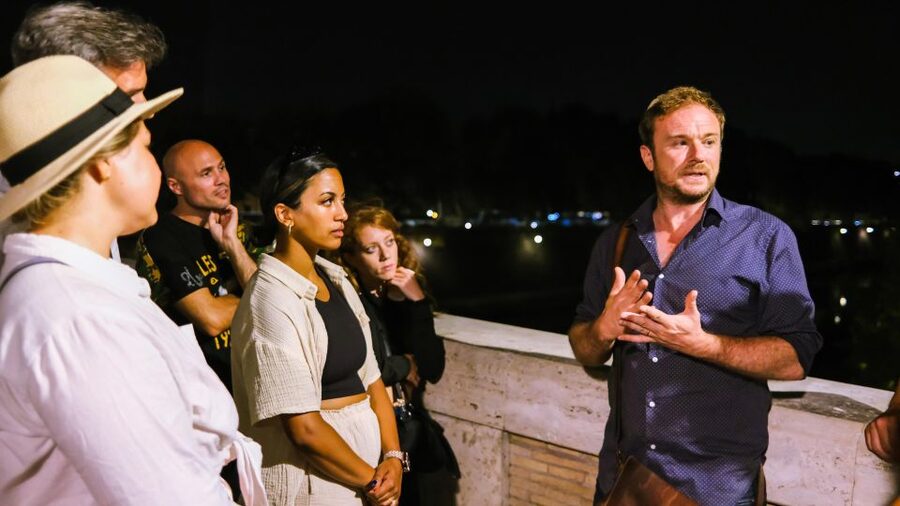
Rome’s darker stories are often tucked behind its grand churches and famous ruins. This two-hour walk follows scandals, executions, poisonings, political schemes, and tragic lives from Campo de’ Fiori through the old city to Castel Sant’Angelo.
I especially like the small group limit of 15 people, which makes it easier to hear a guide in narrow streets. I also like the mix of famous names, such as the Borgias, with lesser-known figures including Giulia Tofana and Donna Olimpia Maidalchini. The main drawback is clear: this is an outdoor walk in all weather, and the focus is historical crime rather than a modern true-crime investigation or a full ghost tour.
The guides give this experience much of its character. Ben, Ivana, Ivanka, and Ariel have all led tours, and the strongest praise centers on their humor, passion, and storytelling skill. If you like history with a grisly edge, this offers an entertaining way to see central Rome after the usual sightseeing.
Key points to know before booking
- A 15-person maximum keeps the storytelling personal, especially in Rome’s tight backstreets.
- The route links Campo de’ Fiori with Castel Sant’Angelo, passing Piazza Farnese, Ponte Sisto, and Via Giulia.
- The stories include Giordano Bruno, the Borgias, Beatrice Cenci, Giulia Tofana, and Cagliostro.
- A 10-minute bar stop gives you time for a drink or restroom break, though food and drinks cost extra.
- The tour costs $29 per person for two hours, a fair price for a guided evening introduction to central Rome.
- The tone mixes grim events with humor, so it is not presented as a nonstop horror experience.
Why Rome’s darker side works so well on foot
Rome can feel like a history book with the pages scattered across the streets. A palace may recall a powerful family, a square may mark a public execution, and an ordinary alley may connect to a story of betrayal. This tour uses that setting well.
You are not simply standing in front of a monument while someone lists dates. The guide links people and places, helping you picture how power worked in papal Rome and how quickly public reputation could turn into scandal. The emphasis is on personalities and events, so the walk has a clear narrative rather than a general survey of Rome.
That makes it a good choice for your first evening in the city. You get a broad sense of the center while hearing stories you are unlikely to meet on a standard Colosseum or Vatican visit. Several past participants also used the guide’s Rome recommendations after the walk, which can make this a useful early-trip activity.
Still, you should set your expectations correctly. The title may suggest recent police cases, ghost hunting, or a theatrical horror show. The actual subject is mainly historical crime, religious conflict, political intrigue, and famous scandals. There are references to hauntings and horror, but the tour is built around documented figures and old Rome.
More history tours in Rome:
- Rome in a Day Tour with Vatican, Colosseum and Historic Center
★ 4.5 · 1,042 reviews - Rome Food Tour in the Historic Centre with 8+ Food Tastings
★ 5.0 · 1,000 reviews - Rome: Forbidden History Walking Tour & Pub Crawl with Drinks
★ 4.9 · 688 reviews
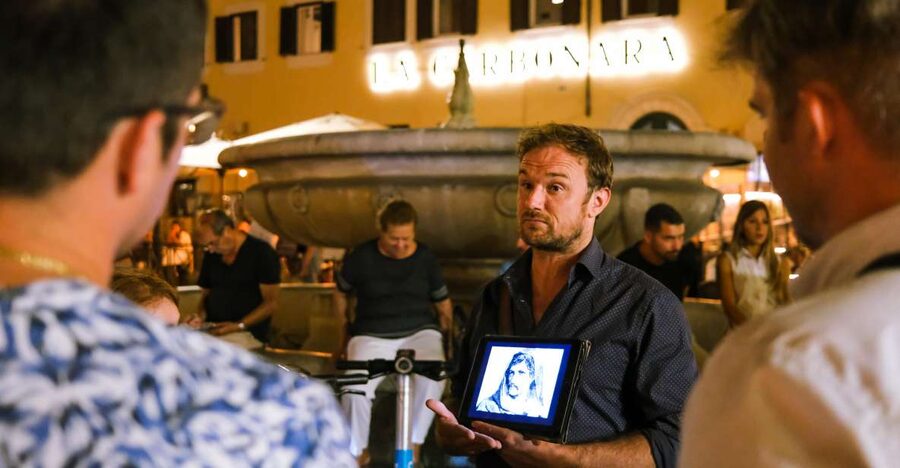
Campo de’ Fiori and the story of Giordano Bruno
The meeting point is the statue in the middle of Campo de’ Fiori. Your guide holds a sign marked Rome’s Dark Side, so finding the group should be simple. This is a practical place to begin because the square is easy to reach and already carries one of the tour’s most important stories.
Here you hear about Giordano Bruno, the heretic philosopher who was burned in the square. His fate gives the tour an immediate sense of place. Campo de’ Fiori is not treated only as a market square or a pleasant stop for a photograph. It becomes a setting for religious authority, forbidden ideas, and public punishment.
The opening story also shows the tour’s method. The guide uses a real location to frame a human conflict, then adds the social and political details that make the event easier to understand. If you prefer stories with a strong sense of place, this is more rewarding than hearing a list of crimes without seeing where they happened.
The square can be busy, so listen for the guide’s voice and arrive a little early. The group cap helps, but Campo de’ Fiori is still an active public space.
Piazza Farnese and the power behind the palaces
From Campo de’ Fiori, the walk continues to Piazza Farnese. This elegant square gives the guide a setting for the powerful families and officials who shaped Rome’s past.
One key figure here is Donna Olimpia Maidalchini, a forceful 17th-century political player. Her story brings a different kind of crime and scandal into the tour. Not every dark tale is about a murder in an alley. Some involve influence, access, money, and the ability to move close to the center of power.
This part should appeal to you if you enjoy the machinery behind famous names. The guide explains how Rome’s grand spaces could also be stages for private deals and public reputation. You see how a polished palace setting can carry stories that are anything but polished.
The historical focus also keeps the tour from becoming a simple list of villains. Figures such as Maidalchini are presented through ambition and power, not just through sensational details. The best guides, including Ben and Ivana, are praised for adding humor and context without losing the darker mood.
Ponte Sisto and Rome’s backstreet atmosphere
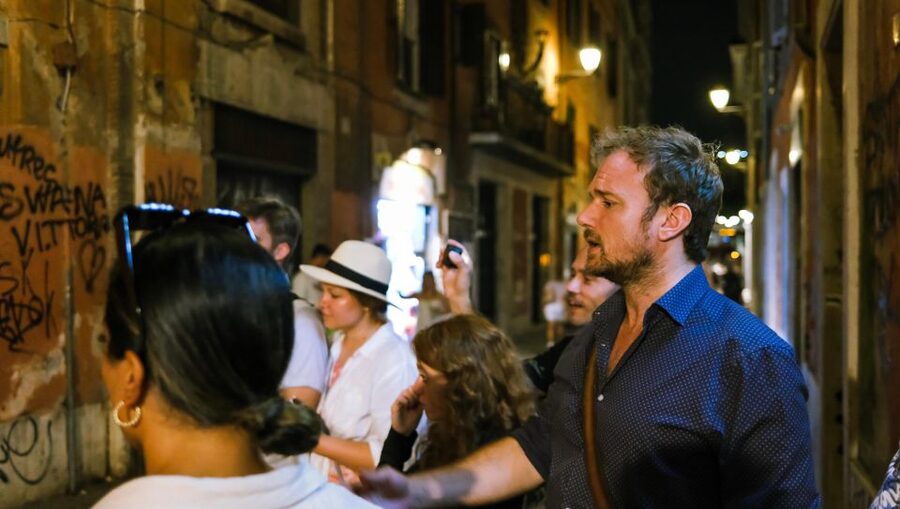
The walk then reaches Ponte Sisto, one of the route’s more atmospheric points. Crossing the bridge changes the pace. You move away from the formal squares and into a route shaped by lanes, crossings, and old connections between parts of the city.
This is where the tour’s walking format earns its price. You are not boxed into a museum room. You are moving through the same central areas where the stories unfolded, with the guide pointing out how streets and buildings fit together.
The route can feel especially atmospheric in the evening, according to the experience of people who took the tour at night. Evening also helps the stories land with more force, though the tour is not described as a candlelit or specially staged production. The mood comes from Rome itself, the subject matter, and the guide’s delivery.
Wear shoes that are comfortable for two hours on cobblestones. The distance is not described in exact terms, but the schedule includes several walking stops before Castel Sant’Angelo.
Same city, a completely different half-day:
- Vatican Museums & Sistine Chapel Tour with Optional Basilica
★ 4.3 · 67,413 reviews - Vatican Museums, Sistine Chapel & St Peter’s Basilica Guided Tour
★ 4.5 · 39,149 reviews - Rome: Colosseum, Palatine Hill and Roman Forum Guided Tour
★ 4.8 · 32,814 reviews - Rome: Guided Tour of Colosseum, Roman Forum & Palatine Hill
★ 4.7 · 27,897 reviews
Via Giulia and the scandals of old Rome
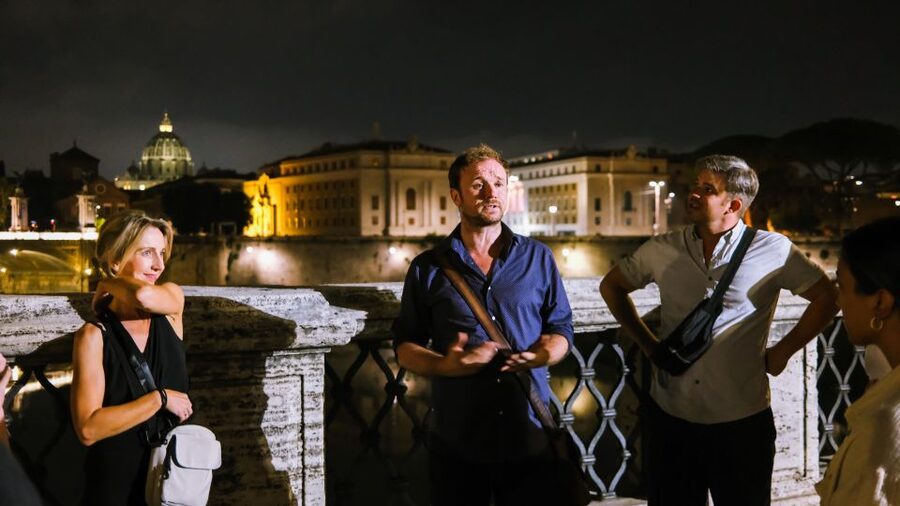
Via Giulia brings the group through one of central Rome’s notable historic streets. Here, the guide continues the stories of political schemes, forbidden relationships, and notorious residents.
The Borgias receive attention, as you would expect from a Rome crime tour. Their name is tied to treachery, affairs, and calculated power plays. The value of hearing about them here is not simply the familiar scandal. A good guide can show how the family fits into a broader story about ambition and the way historical reputations are formed.
You also hear about Beatrice Cenci, whose life is linked to betrayal and tragedy. Her story gives the tour a more human and sorrowful tone. It is not just a parade of clever criminals. Some of the people discussed were trapped by family, politics, or social rules that left them few safe choices.
The guide may also move between major stories and smaller facts about the places you pass. Ben has been praised for adding useful details about Rome beyond the central subject, while Ariel has been noted for combining clear information with a warm, engaging manner. That flexibility is helpful because it keeps the walk connected to the streets around you.
The 10-minute break at a local bar
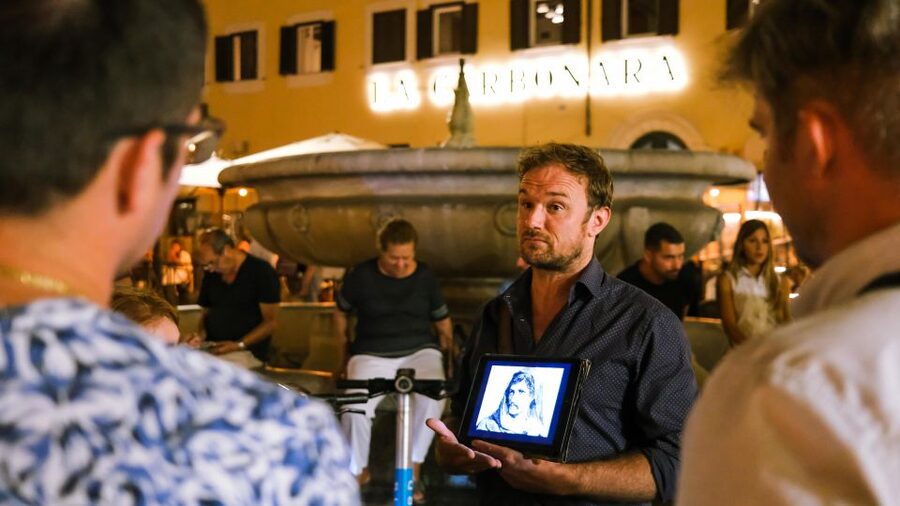
A short stop at a local bar gives you about 10 minutes for the restroom or a drink. Food and drinks are not included, so budget a little extra if you want something.
This pause is more useful than it may sound. Two hours of outdoor walking and concentrated storytelling can be tiring, especially in warm weather or after a full day of sightseeing. It also gives you a chance to ask the guide a question or simply reset before the final part of the route.
One past participant wished the experience included more time sitting in a bar while learning. That is a fair point if you were hoping for a pub-style history talk. The stop is brief, and the main format remains a walking tour. If you want a long drink and an extended conversation, this will feel too short.
The poisoner Giulia Tofana and Cagliostro
After the break, the walk returns to the city’s lesser-known stories. Giulia Tofana is one of the most striking figures on the route, a notorious poisoner whose activities caused fear and shock in Rome.
Her story suits the true-crime theme, but it also raises questions about secrecy, gender, and the limited choices available to people living under strict social rules. The guide’s role matters here. Presented badly, the story could become a sensational anecdote. Presented with context, it helps you see how crime stories reflect the society that produced them.
The tour also covers Cagliostro, an enigmatic figure linked to clandestine activity. His inclusion widens the subject beyond straightforward murder cases. You get a blend of crime, mystery, reputation, and manipulation.
At this point, the tour’s tone is likely to appeal most to people who enjoy storytelling rather than forensic detail. You will hear about notorious characters and their actions, but you should not expect police files, modern investigative methods, or a case-by-case analysis.
Castel Sant’Angelo and the final stories
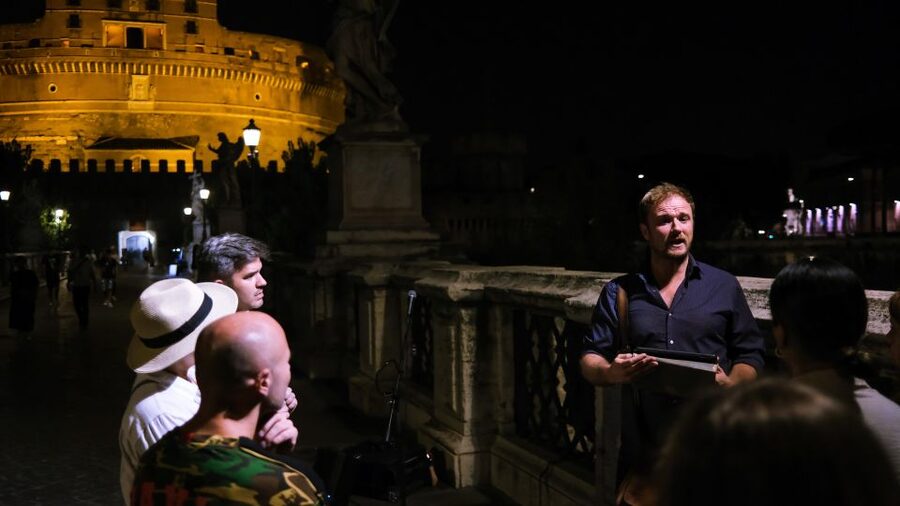
The route finishes at Castel Sant’Angelo. This is a strong ending because the fortress has an obvious connection to imprisonment, power, and the darker side of Rome’s past.
The tour does not include entry into the castle. You finish outside after the guided walk, so plan another visit if you want to explore the interior. Even without going inside, the building gives the last part of the tour a dramatic setting.
Beatrice Cenci’s story fits naturally with this closing stretch, along with the wider tales of Rome’s notorious families and political figures. The guide brings the group to the end at a major landmark, giving you an easy reference point for the rest of your evening.
This endpoint also helps with onward plans. Since the tour begins at Campo de’ Fiori and ends at Castel Sant’Angelo, you see a useful section of central Rome rather than returning to the starting point. The route works well as a lead-in to dinner or an evening walk, though the exact starting time can vary.
Guide style and group size
The guide is the heart of this experience. Ben is often described as funny, charismatic, and relaxed, with a gift for holding attention from beginning to end. Ivana and Ivanka are praised for their passion, humor, and command of the subject, while Ariel is noted for her clear delivery and friendly manner.
Those details matter because a story-based tour can succeed or fail on presentation. The material includes executions, poisonings, betrayal, and tragedy, but a flat delivery would make two hours feel long. These guides use humor to keep the mood from becoming heavy, while still treating the historical events seriously.
The maximum group size is 15. That is small enough for you to hear the guide more easily than on a large city tour, and it gives the group a better chance to stay together in narrow streets. It does not mean a private tour, but it is a sensible middle ground for the $29 price.
The tour is offered in English with a live guide. It is listed as wheelchair accessible, though the route includes outdoor streets and cobblestone areas, so you may want to confirm route conditions for your specific date if access is a major concern.
Is $29 good value for two hours?
At $29 per person, this is a reasonable buy for a two-hour guided walk in central Rome. You are paying for a live storyteller, a small group, and a route that combines several important parts of the city with stories not normally covered on a standard sightseeing circuit.
The value is strongest if you enjoy guided interpretation. You could walk from Campo de’ Fiori to Castel Sant’Angelo on your own, but you would miss the links between the places and the people. The tour gives you a theme, a route, and a guide who can answer questions about Rome beyond the prepared material.
It is less valuable if you want entry to monuments, a meal, or a longer stop at a bar. No food or drinks are included, and Castel Sant’Angelo is viewed from outside. The price covers storytelling and the walk, not attraction tickets.
Free cancellation up to 24 hours before the start and the option to reserve now and pay later make the booking less risky. The walk runs in rain or shine, so check the forecast and bring an umbrella or raincoat when needed.
Who should book this Rome walk?
I would choose this tour if you like:
- Historical crime and political scandal
- Stories about famous families and overlooked figures
- Evening walks through central Rome
- A guide who uses humor and theatrical storytelling
- A small group rather than a large bus-style tour
- A different first look at Rome beyond the major monuments
I would think twice if you want recent true crime, detailed ghost stories, or a formal history lecture. The material is mainly set in Rome’s past, and the tone is entertaining rather than academic.
It also suits repeat visitors who have already seen the Colosseum and Vatican Museums. You get a fresh reason to walk through familiar areas, and the guide may add facts that change how you view a square or street you had previously passed without noticing.
Should you book Secrets of Rome?
Yes, if the idea of Rome’s darker past appeals to you and you are happy with a walking tour rather than a ghost show. The $29 price is fair, the 15-person limit keeps the group manageable, and the route ends at Castel Sant’Angelo after covering a useful stretch of the historic center.
Book it early in your stay if you want restaurant and sightseeing tips from the guide. Choose it later in the day if you like the extra atmosphere of evening streets. Bring good walking shoes, prepare for outdoor conditions, and remember that the real attraction is the storytelling, not entry into a monument.
FAQ
Where does the Secrets of Rome tour start?
The tour starts in Campo de’ Fiori, in front of the statue in the middle of the square. The guide holds a sign saying Rome’s Dark Side.
Where does the tour finish?
The tour finishes at Castel Sant’Angelo. Entry to the castle is not listed as part of the experience.
How long does the tour last?
The walking tour lasts two hours.
How much does the tour cost?
The price is $29 per person.
What language is the tour offered in?
The live guided tour is offered in English.
How large is the group?
The group has a maximum of 15 people.
Is the tour wheelchair accessible?
The activity is listed as wheelchair accessible.
Does the tour run if it rains?
Yes. The tour takes place rain or shine and is outdoors, so bring an umbrella or raincoat if needed.
Are food and drinks included?
No. Food and drinks are not included, but the tour includes a 10-minute stop at a local bar for restroom use and optional drinks.
Newest Rome tours we have reviewed
- Private TikTok Video Making in Rome★ 5.0 · 7 reviews
- Assisi, Orvieto and Civita di Bagnoregio Full Day Tour from Rome★ 4.5 · 45 reviews
- Assisi & Saint Francis Path Tour from Rome★ 5.0 · 45 reviews
- Art Class in the center of Rome!★ 4.0 · 4 reviews
- Art & Craft: Beer Tour with Street Art in Rome★ 4.5 · 6 reviews
- Assisi and Cascia Private Day Tour from Rome with Lunch★ 5.0 · 10 reviews
- Arrival in Rome: Airport Transfer & Exclusive City Introduction★ 5.0 · 3 reviews
- From Rome: Private Day-Tour of Tuscany★ 5.0 · 16 reviews