
Reviewed · ROME COLOSSEUM TOURS
Rome: Colosseum and Ancient Rome Guided Walking Tour
The best part of this tour is the way it links Rome’s three great ancient sites into one walk. You enter the Colosseum, then move through the Roman Forum and climb the Palatine Hill, following the same broad center of power used by emperors, citizens, merchants, and soldiers.
I like the included entry fees and headsets, since you can focus on the ruins instead of ticket details or straining to hear. I also like the 2.5-hour length: long enough for real context, but short enough to fit beside other Rome plans. The main drawback is the brisk pace and uneven ground, so this is not a good choice for wheelchair users or anyone with major mobility limits.
Key points at a glance
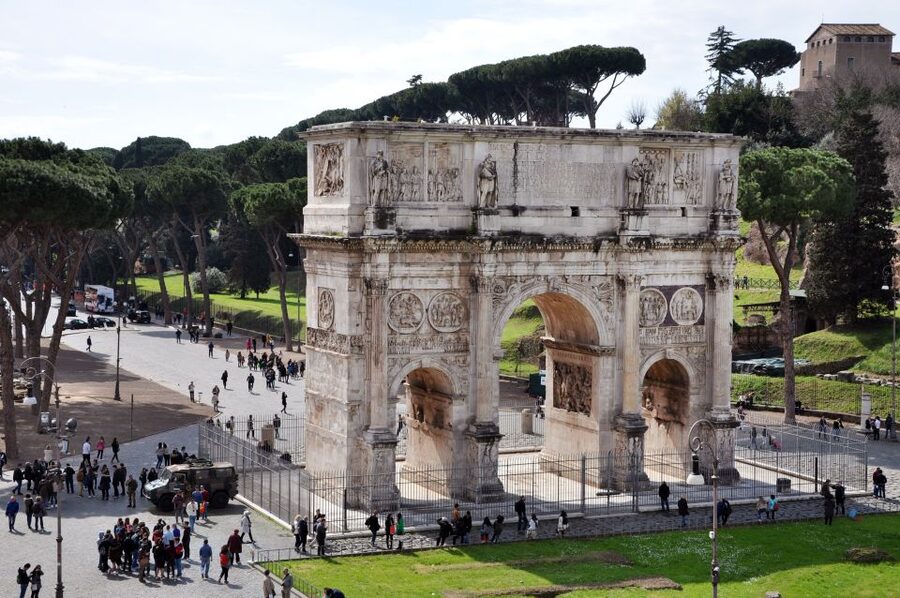
- Three essential ancient sites: Visit the Colosseum, Roman Forum, and Palatine Hill in one guided walk.
- A history-focused route: Hear about gladiatorial contests, emperors, ancient myths, temples, markets, and daily Roman life.
- Good use of your time: The 2.5-hour format gives you structure without taking up a full day.
- Headsets are included: You should be able to follow the guide even when the area is crowded.
- Strong guide reports: Guides including Maria, Joseph, and Stefanie De Majo have been praised for clear explanations, humor, and keeping children engaged.
- Plan for security and weather: Queues can form at the Colosseum, and the tour operates in rain or heat.
Why this route works for a first look at Ancient Rome
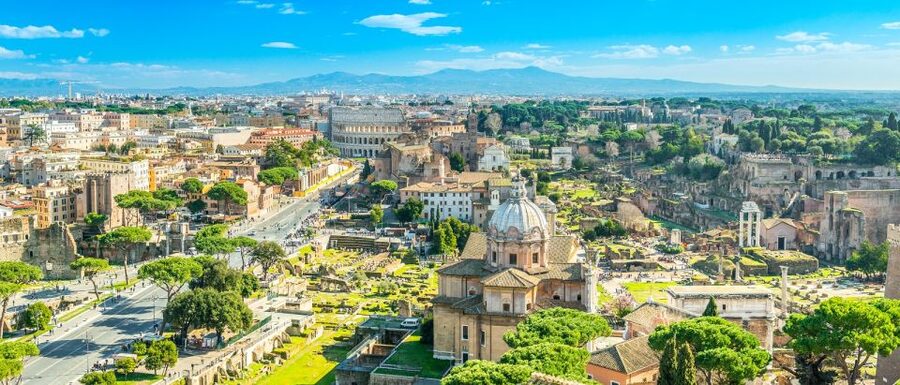
Rome’s ancient center can feel confusing at first. Columns, arches, broken walls, and grassy slopes spread across a large area, and without a guide it is easy to see the stones but miss the story. This tour gives you a clear sequence: spectacle at the Colosseum, public and political life in the Forum, then imperial power and high views on the Palatine.
That order also makes sense historically. The Colosseum shows Rome as a city of mass entertainment. The Forum shows where public business, religion, law, and trade took place. The Palatine Hill connects the two with the homes and symbols of the ruling class.
At $41 per person, the value depends largely on how much explanation you want. The price includes entry fees, a live guide, and headsets. You are not paying for transportation, but you do not need a vehicle for this route. The meeting point is near the Colosseum, and the main sites are visited on foot.
I see this as a useful middle ground between wandering alone and booking an expensive private guide. You get a planned route and historical commentary, while still having time to look around and take photographs.
More ancient Rome tours:
- Colosseum: Underground and Ancient Rome Tour
★ 4.7 · 12,691 reviews - Colosseum & Ancient Rome with Arena Floor Option I Max 6 People
★ 5.0 · 3,306 reviews - Rome: Colosseum, Ancient Rome Tour or Self AudioGuided Tour
★ 4.4 · 2,866 reviews
Meeting near the Colosseum
The meeting point is Via delle Terme di Tito 93. If you come by Metro, use the Colosseo station and reach the terrace above the station. Walk about 100 meters along Via Nicola Salvi, then turn left.
Give yourself extra time to find the start. One past group had trouble because different directions pointed toward a newspaper stand and Constantine’s Arch. The operator has since noted that the meeting details may be clarified by a phone call or text, but I would still check your messages carefully on the day and avoid cutting it close.
Rome’s ancient center is not a place where late arrival is easy to fix. Security lines, traffic, crowds, and the size of the archaeological area all work against you. No refund is issued for late arrivals, so arrive early enough to find the terrace, confirm the guide, and settle in.
You must provide the complete names of everyone in the booking. Bring a passport or identity card for each person, including children. Entry cannot be guaranteed when the reservation information is incomplete.
Entering the Colosseum and picturing the arena
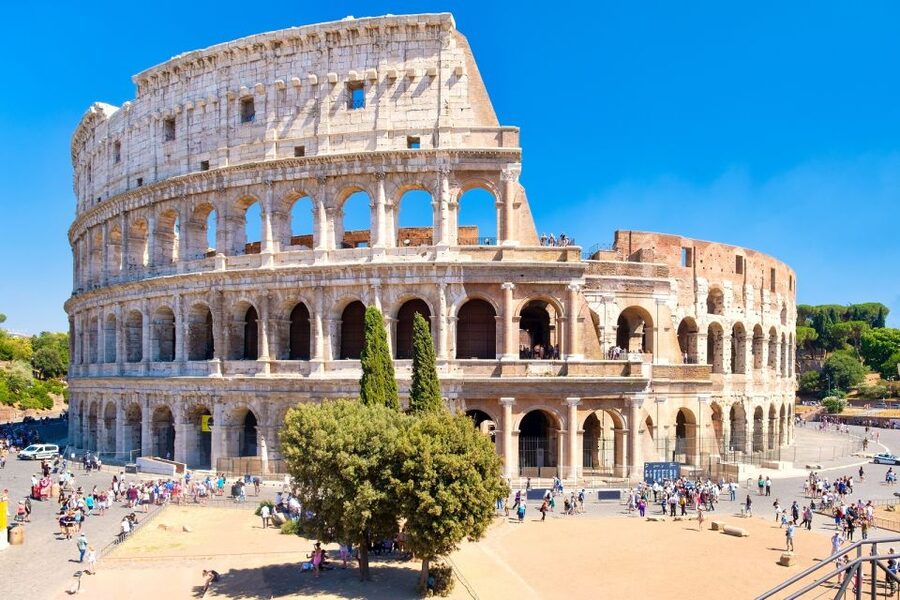
The Colosseum is the emotional high point of the walk. Even before the guide starts talking, the scale of the arena gives you a sense of how much effort ancient Rome put into public spectacle. This was not simply a building for sport. It was a carefully managed showpiece for power, crowd control, and imperial generosity.
Inside, your guide explains the arena’s role in gladiatorial contests and the violent meetings between people and animals. The tour information also points to the ancient myths and historical facts tied to the structure, helping you separate popular stories from the larger Roman setting.
The arena is most useful when you look beyond the familiar image of gladiators. Your guide can help you notice how the seating and public areas reflected Roman social order. The building brought huge crowds together, but people did not experience it in the same way. Status shaped where you sat and how close you were to the action.
Headsets matter here. The Colosseum is often crowded and noisy, and a guide speaking to a group can be hard to hear without them. You can listen while looking at the stonework rather than standing shoulder to shoulder around the guide.
Do not expect a slow, private visit. This is a shared walking tour, and the route must work around ticket availability and security checks. The operator warns that itinerary segments can change when Colosseum tickets are assigned differently. You should treat the listed order as a guide rather than a promise that every stop will happen at precisely the same minute.
Following the Via Sacra through the Roman Forum
After the Colosseum, the tour continues into the Roman Forum. This is where the guide’s explanation becomes especially valuable. The Forum is not one single monument, but a large field of remains from temples, public buildings, roads, markets, and political spaces.
The Via Sacra, or Sacred Way, runs through the heart of the area. In ancient times, it connected important religious and civic places. Your guide uses the surviving ruins to explain how the Forum served as a center of political and social life during the Roman Empire.
I find the Forum harder to understand alone than the Colosseum. The Colosseum still has a strong shape. The Forum is more fragmentary, and your eye may jump from a column to a wall without knowing what belongs together. A good explanation gives each ruin a role and helps you imagine the area as a working part of the city rather than a collection of leftovers.
This is also the section where the pace may feel quickest. One past participant felt that too much time was spent on Rome generally and not enough on the Forum, while another felt the group sometimes had to hurry to keep up. Those comments point to a real tradeoff: the guide is trying to cover three large sites in 2.5 hours.
If the Forum is your main reason for booking, pay close attention to the exact schedule and ask your guide questions when there is a pause. The route may not allow long periods at every ruin. Still, you should get more meaning from the Forum with a guide than by walking through it without context.
More Colosseum tours in Rome:
- Rome: Colosseum, Palatine Hill and Roman Forum Guided Tour
★ 4.8 · 32,814 reviews - Rome: Guided Tour of Colosseum, Roman Forum & Palatine Hill
★ 4.7 · 27,897 reviews - Rome: Colosseum & Forum with Audio Guide App -Optional Arena
★ 4.2 · 24,770 reviews - Rome: Colosseum, Roman Forum and Palatine Hill Guided Tour
★ 4.5 · 23,903 reviews
Climbing Palatine Hill for Rome’s wide views
The final major section takes you up the Palatine Hill. This climb changes the feel of the tour. After the close quarters of the Colosseum and the dense remains of the Forum, the hill opens up to broad views over Rome.
The Palatine is tied to Rome’s imperial story and to the traditional origins of the city. From the higher ground, you can see why the location mattered. It offered a commanding position above the Forum and became associated with elite residences and imperial authority.
The view is one of the tour’s best rewards, but reaching it requires walking uphill over archaeological paths. You may find uneven surfaces, exposed areas, and little shelter at some points. One praised guide, Stefanie De Majo, was especially careful to stop in shaded places and allow time for photographs. You should not assume every group will follow exactly the same rhythm, but shade and water breaks are worth asking about in hot weather.
The Palatine is also a good place to let the larger story settle. You have seen the arena where crowds watched spectacle, the Forum where public life unfolded, and now the elevated space linked with rulers. The three stops work best together because each shows a different part of Roman society.
Guides, languages, and the pace of the walk
The tour is offered with a live guide in English, Italian, Spanish, French, or German. The quality of your experience will naturally depend on the guide assigned that day, but the guide names associated with strong visits include Maria, Joseph, and Stefanie De Majo.
Joseph was praised for being pleasant, funny, and able to keep teenagers interested. That is useful information if you are bringing older children, since ancient Roman politics and ruins can lose a young audience quickly. Stefanie De Majo was described as an archaeologist with a strong command of the sites, clear English, and a thoughtful approach to shade and photo stops. Maria was also singled out for making the tour feel memorable.
The most consistent strength is the amount of explanation packed into the walk. You should expect facts, myths, and stories rather than a silent escort from gate to gate. The tradeoff is that there are limited long breaks. One past visitor liked this because the group kept seeing and learning, while another found the pace hurried at times.
I would choose this tour if you prefer steady movement and a full presentation. If you want to linger at one arch, sketch a column, or take many quiet photographs, a self-guided visit may suit you better. You can still take pictures here, but the group will keep moving.
Heat, rain, security, and what to carry
The tour operates in all weather conditions. Rome can be hot and bright, but afternoon storms are also possible. Wear shoes that can handle uneven ground and bring water. A hat and sun protection are sensible because the archaeological area includes open sections with limited shade.
Security checks at the Colosseum can create a queue even when your tour has a fixed start time. That is one reason arriving early matters. Do not bring large bags, luggage, glass objects, weapons, or sharp items. Pets are not allowed, and alcohol and drugs are prohibited.
The required identification is more important than usual for a major attraction with named reservations. Bring a passport or identity card for every person on the booking, including children, and make sure the names in your reservation are complete.
The tour does not include transportation. That is not a major weakness because the meeting point is beside the ancient center and the route itself is a walking experience. It does mean you need to plan your route to Via delle Terme di Tito 93 before the start time.
Who will get the most from this tour
This tour suits a first visit to Rome, especially if you want the main ancient monuments explained in one sitting. It is also a good choice for families with older children or teenagers. The combination of arena stories, emperors, myths, and city views gives a guide several ways to hold their attention.
You should also consider it if you are short on time. A 2.5-hour walk covers the Colosseum, Forum, and Palatine without taking an entire day. The language choices make it practical for international visitors, and the included entry fees and headsets keep the basic cost clear.
I would be cautious if you have limited mobility. The experience includes walking through a large archaeological site and ascending the Palatine Hill, and it is specifically not suitable for wheelchair users or people with mobility impairments.
You may also want another option if your priority is a slow, detailed study of the Roman Forum. The route covers all three sites, so the time at each one has to be shared. The same limitation applies if you dislike fixed group pacing.
Is the $41 price good value?
For $41, you receive admission, a guide, and headsets across three major ancient sites. That is fair value if you would otherwise spend much of your visit trying to work out what you are seeing.
The strongest value comes from the Forum and Palatine, where the remains can be difficult to read without help. The Colosseum is easier to recognize, but the guide adds context about its construction, spectacles, social order, and place in imperial Rome.
The price does not include transportation, meals, or special access beyond the stated entry. You should also allow for possible security queues and changes in the order of the sites. I would not book this expecting a private, leisurely archaeological seminar. I would book it as a focused introduction with a real guide and a sensible time commitment.
Free cancellation is available up to three days in advance for a full refund. The meeting time can change, and you should watch for a call or text from the operator.
Should you book this Colosseum tour?
Book it if you want the essential ancient Rome route explained clearly, prefer a guide to wandering alone, and can manage a brisk 2.5-hour walk. The included admission, headsets, multilingual guides, and strong record of engaging explanations make it a practical pick for first-time visitors and families.
Think twice if you need wheelchair access, dislike group pacing, or want most of your time devoted to the Roman Forum. For everyone else, $41 buys a useful framework for understanding the Colosseum, Forum, and Palatine Hill, with the hilltop views providing a fine finish.
FAQ
How long does the tour last?
The tour lasts 2.5 hours.
What sites are included?
The tour includes the Colosseum, Roman Forum, and Palatine Hill.
Is transportation included?
No. Transportation is not included. You meet near the Colosseum and visit the sites on foot.
Where is the meeting point?
The meeting point is Via delle Terme di Tito 93. From Colosseo Metro station, reach the terrace above the station, walk about 100 meters along Via Nicola Salvi, and turn left.
Which languages are available?
Live guides are available in German, Spanish, English, Italian, and French.
Are entry fees included?
Yes. Entry fees are included in the tour price.
Are headsets provided?
Yes. Headsets are included.
Do I need identification?
Yes. Bring a passport or identity card for every person in the reservation, including children.
Can I bring a large bag or luggage?
No. Luggage and large bags are not allowed. Pets, weapons, sharp objects, alcohol, drugs, and glass objects are also prohibited.
Is the tour suitable for wheelchair users?
No. The tour is not suitable for wheelchair users or people with mobility impairments.
More walking tours in Rome
- Rome: Trastevere & Campo de Fiori Street Food Walking Tour
★ 4.9 · 2,768 reviews - Rome: Paranormal Night Walking Tour & Secret Backstreets
★ 4.9 · 1,921 reviews - Rome by Night Walking Tour – Legends & Criminal Stories
★ 4.5 · 1,003 reviews - Rome: Guided City Center Evening Sightseeing Walking Tour
★ 4.4 · 953 reviews
Newest Rome tours we have reviewed
- Private TikTok Video Making in Rome★ 5.0 · 7 reviews
- Assisi, Orvieto and Civita di Bagnoregio Full Day Tour from Rome★ 4.5 · 45 reviews
- Assisi & Saint Francis Path Tour from Rome★ 5.0 · 45 reviews
- Assisi and Cascia Private Day Tour from Rome with Lunch★ 5.0 · 10 reviews
- Art Class in the center of Rome!★ 4.0 · 4 reviews
- Art & Craft: Beer Tour with Street Art in Rome★ 4.5 · 6 reviews
- Arrival in Rome: Airport Transfer & Exclusive City Introduction★ 5.0 · 3 reviews
- From Rome: Private Day-Tour of Tuscany★ 5.0 · 16 reviews
Rome Colosseum Tours, compared.
Colosseum, Palatine Hill and Roman Forum Guided Tour
Read our review →
Guided Tour of Colosseum, Roman Forum & Palatine Hill
Read our review →
Colosseum & Forum with Audio Guide App -Optional Arena
Read our review →
Colosseum, Roman Forum and Palatine Hill Guided Tour
Read our review →
Colosseum, Forum & Palatine Hill Tour & Optional Arena
Read our review →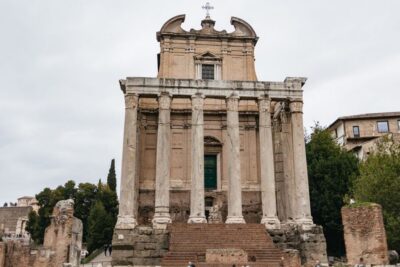
Colosseum, Palatine Hill & Roman Forum Guided Tour
Read our review →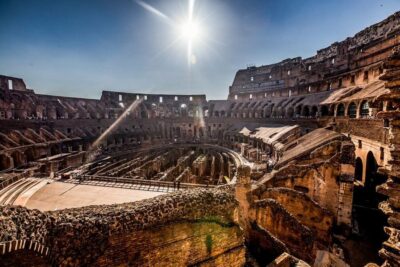
Colosseum: Underground and Ancient Rome Tour
Read our review →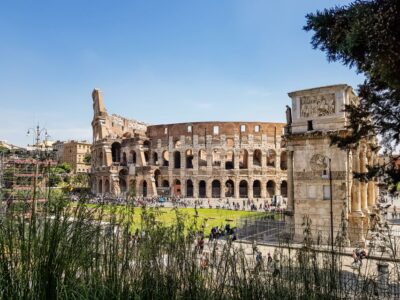
Colosseum Arena, Palatine Hill & Forum Guided Tour
Read our review →Browse the lists this tour appears in