
Reviewed · ROME CATACOMBS TOURS
Rome: Catacombs of St. Callixtus Entry Ticket & Guided Tour
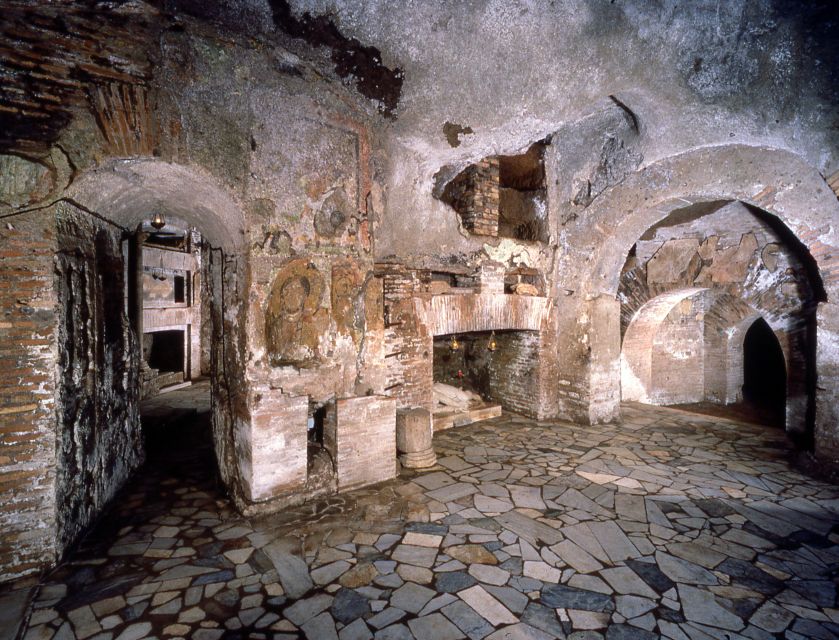
The most moving part of this short tour is the Crypt of the Popes, where nine popes and three bishops were buried in the early Christian era. You also see the Crypt of St. Cecilia, old wall paintings, and the narrow burial passages beneath Rome’s Appian Way.
I like the way the guide turns a dark underground site into a clear lesson about Rome’s first Christian communities. I also like the modest $16 price and the cool, quiet setting, a welcome break from summer heat. The main drawback is the short 30-minute visit and the out-of-the-way meeting point, which takes planning by bus or taxi.
Key points to know before you go
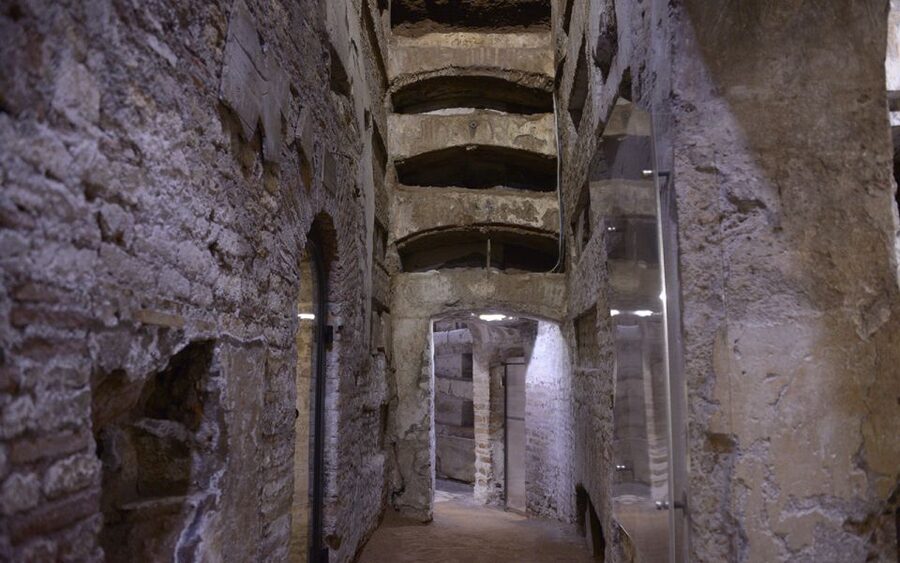
- See the Crypt of the Popes: Nine popes and three bishops were laid to rest here.
- Expect a history-focused visit: You see burial chambers, frescoes, and tomb spaces rather than exposed bones.
- Allow extra travel time: The catacombs are outside central Rome, near the Appian Way.
- Bring a light sweater: The underground rooms stay cool, around 15 degrees Celsius according to visitor reports.
- Stay with your guide: The visit is fully guided, with no independent wandering through the tunnels.
- Leave your camera away: Photography is not allowed inside the catacombs.
What the Catacombs of St. Callixtus reveal about Rome
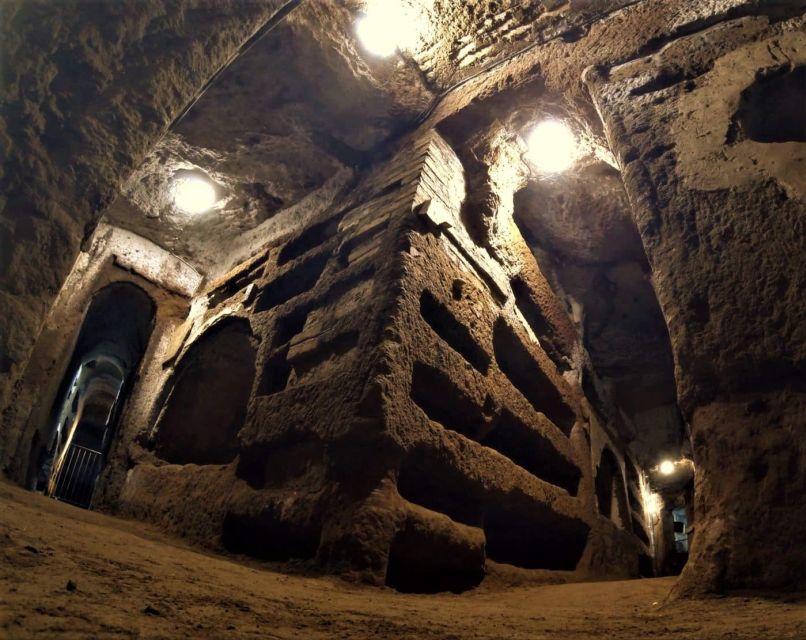
Rome has grand churches, crowded piazzas, and monumental ruins above ground. The Catacombs of St. Callixtus show another side of the city: the hidden burial world created by early Christian communities.
This is one of Rome’s largest Christian burial complexes. An estimated half a million Christians were buried here over time, although only a small section is open during this visit. The number helps you understand the scale, but the experience itself is more personal than dramatic. You move through burial spaces cut into the earth, listening to the story of people who lived, worshipped, and died in a city where Christianity was still developing.
The complex takes its name from Callixtus, a church leader associated with its organization. Your guide explains how the cemetery grew and how it served Rome’s early Christian population. The focus is not on sensational stories. It is on burial customs, religious belief, and the people who cared for the dead.
That makes this a good choice if you want historical context rather than a theatrical underground attraction. You will not get a spooky show or a display of bones. You will get a compact lesson in early Christian Rome, delivered in the place where that history happened.
More catacombs tours in Rome:
- Rome: Crypts and Catacombs Underground Tour with Transfers
★ 4.6 · 5,341 reviews - The Original Roman Crypts and Catacombs Tour with Transfers
★ 4.5 · 4,896 reviews - Rome: Guided Roman Catacombs Tour with Transfers
★ 4.6 · 1,830 reviews
The 30-minute route underground
The visit begins at the catacomb entrance, where you exchange your voucher for the entry ticket at the ticket office. Go there at least 10 minutes before your scheduled time. The meeting instructions can be confusing, since the correct point is the ticket office rather than a nearby parking area, and some visitors have found the actual meeting location roughly 100 meters from the point shown on a map.
Once the group is assembled, the guide leads you underground. The tour is fully guided, so you cannot split off to explore on your own. That arrangement makes sense in a maze-like burial complex, but it also means you should arrive ready to keep pace with the group.
The route is short, yet it packs in several important stops. You learn how the catacombs were used, who was buried there, and how Christian burial practices differed from the customs of the wider Roman world. The guide also points out the construction of the passages and the way burial chambers were arranged.
Some guides have been praised for making the material easy to follow and lively without treating the place casually. Names associated with this experience include Francesca, an archaeologist, along with Sam, Comfort, Arishba, Don Sam, and Fr Peter. The exact guide depends on the date and language you book.
The tour may run a little longer than 30 minutes, but you should plan your day around the advertised duration. If you have a tight schedule, avoid placing another major sight immediately afterward. The journey to and from the site takes much longer than the underground visit itself.
The Crypt of the Popes and the Crypt of St. Cecilia
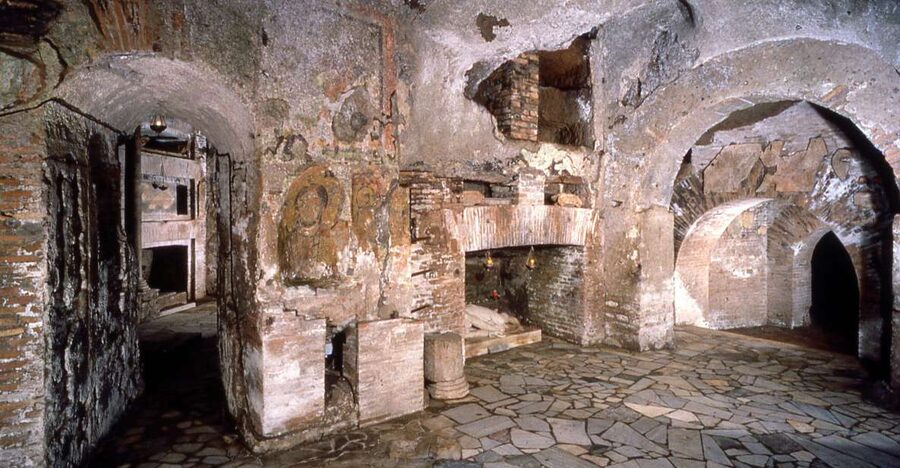
The Crypt of the Popes is the central stop. Nine popes and three bishops were buried in this room, making it one of the clearest places to connect the catacombs with the leadership of early Roman Christianity.
The space is not a grand chapel. Its value comes from its simplicity and age. Your guide helps you read the room as a burial site and explains why it mattered to the Christian community. The setting gives the story a weight that would be harder to feel inside a modern museum.
Next comes the Crypt of St. Cecilia. Cecilia was a Roman matron remembered for helping ensure that martyrs received proper burials. Her story adds a human side to the tour, shifting attention from church leaders to the people who protected and cared for members of the early Christian community.
You may find the names and stories more memorable than the physical remains. There are no skeletons on this route, and the graves are not presented as a macabre display. If you are specifically hoping to see bones, this is the wrong catacomb visit for you. If you want to understand how early Christians honored the dead, the absence of exposed remains is not a problem.
Frescoes and the Cubicles of the Sacraments
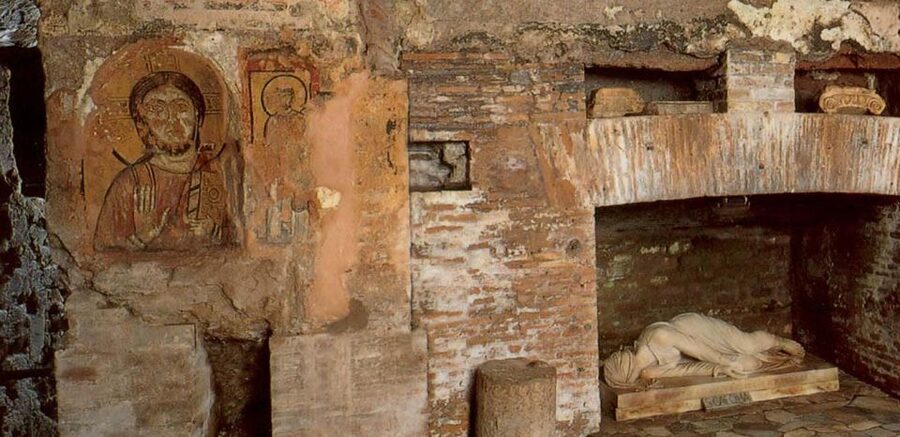
The tour also includes some of the oldest frescoes found in Rome’s catacombs. Their survival is remarkable, although you should keep your expectations sensible. This is an underground burial site, not a brightly lit art gallery.
Your guide points out painted decorations and explains what they show about early Christian belief. The frescoes are valuable because they offer evidence of how people expressed faith in a period when Christian communities were still taking shape.
Area I includes the cubicles of the sacraments. These burial rooms add another layer to the visit, showing how family or community spaces were organized within the larger network of tunnels.
Lighting is limited in places, which helps preserve the atmosphere but can make steps and corners harder to see. One visitor specifically wished for brighter illumination for older people. I would wear practical shoes and move carefully, especially if you are traveling with someone who has balance or mobility concerns.
More tickets and entry passes in Rome:
- Rome:Hop-On Hop-Off Panoramic Open Bus Ticket 3 Circuits x 1
★ 4.0 · 15,405 reviews - Vatican Museums & Sistine Chapel Skip-the-Line Entry Ticket
★ 4.4 · 13,838 reviews - Vatican Museums & Sistine Chapel Skip-the-Ticket-Line Tour
★ 4.3 · 10,486 reviews - Rome: St. Peter’s Basilica & Dome Entry Ticket & Audio Tour
★ 4.2 · 7,537 reviews
Getting there from central Rome
The catacombs are not a quick walk from the Trevi Fountain, Pantheon, or Termini Station. They sit outside the center near the Appian Way, so transportation is part of the planning.
From Termini Station, take Metro A toward Anagnina to San Giovanni. From there, take bus 218 toward Ardeatina and get off at Fosse Ardeatine. The catacomb entrance is in front of you from that stop.
Another route uses Metro B toward Laurentina. Get off at Colosseo or Circo Massimo, then walk to the Terme Caracalla or Porta Capena bus stop and take bus 118 toward Appia or Villa Dei Quintili. Get off at Catacombe di San Callisto.
The public bus route can work well, but give yourself plenty of time. Buses may not arrive immediately, and the final location is less obvious than a central Rome attraction. A taxi or rideshare is simpler if you are traveling alone, carrying luggage, or trying to reach a fixed tour time.
The return journey deserves thought too. Getting a taxi back can be less straightforward than arriving by bus, so check your onward plans before setting off. I would avoid booking this tour during a rushed gap between major appointments.
Is 30 minutes enough?
Thirty minutes sounds brief, and it is. You will not see the full catacomb complex, and you will not get an unhurried archaeological study.
Still, the compact format works because the guide keeps the visit focused. You see the most important areas, hear the core story, and leave with a clearer picture of early Christian burial in Rome. Several visitors have found that the information is dense enough to make the short visit feel worthwhile.
The trade-off is that you have little time to linger. If you want long pauses for photos, sketches, or private reflection, this tour may feel too controlled. Photography is not allowed inside, and the group must stay together.
I see the duration as a useful introduction rather than a full study of the catacombs. It fits well into a day built around the Appian Way, the Baths of Caracalla, or the nearby Ardeatine area. It is less suitable if the catacombs are the main reason for your visit to Rome.
What to wear and what the setting feels like
Underground temperatures are cool, with one visitor describing the chambers as around 15 degrees Celsius. Bring a light jacket or sweater, even if Rome is hot above ground.
Wear comfortable shoes. The route includes underground passages, steps, and uneven surfaces, and the lighting may not be bright in every corner. The experience is not suitable for people with mobility impairments or claustrophobia.
Baby carriages are not allowed. Photography inside is also prohibited. That rule may disappoint you, especially because the frescoes and passages are visually unusual, but it protects a fragile site and keeps the group moving.
The tone is respectful rather than sensational. Some guides use humor to keep the history approachable, while others take a more solemn approach. The strongest guides, including Francesca and Sam when they are scheduled, combine clear explanations with room for questions.
How much value do you get for $16?
At $16 per person, this is one of the lower-cost guided history experiences in Rome. The price includes entry to the Catacombs of St. Callixtus and the guide, but not transport, food, or drinks.
The value depends on how you judge time. If you count only the 30 minutes underground, the visit is short. If you include the access to a burial complex that is not available as a casual walk-in attraction, the price looks stronger.
The guide is important here. Without explanation, the tunnels and burial spaces could blur together. With a good guide, the Crypt of the Popes, St. Cecilia’s story, and the frescoes connect into a clear account of early Christian life.
The low price also makes this a sensible add-on for history fans and families with older children. It is not a full-day excursion, and you should budget separately for the bus or taxi ride. Still, it offers a distinct experience for less than many of Rome’s major ticketed sights.
Who will enjoy this catacomb tour most?
I would recommend it to anyone interested in Roman history, early Christianity, archaeology, or burial customs. It also works well for families with older children and teenagers, especially if the guide is engaging and the group is open to a short, unusual lesson.
The tour can surprise people who expect ancient history to feel dry. The setting gives the subject immediacy, and the guide-led format keeps the facts connected to real places. Even teenagers who are not keen on ancient sites may find the underground setting more memorable than another museum room.
It is less suitable for anyone who wants to see skeletons, take photographs, or wander independently. People with claustrophobia should skip it, and anyone with mobility concerns should think carefully about the underground route and lighting.
The location also makes this a poor choice for a spontaneous stop between central Rome sights. Plan the bus journey, allow extra time, and make sure you know where the ticket office is before you arrive.
Should you book the Catacombs of St. Callixtus?
Book this tour if you want a short, affordable introduction to Rome’s early Christian burial world and you are willing to travel beyond the city center. The best reasons to go are the Crypt of the Popes, the story of St. Cecilia, the old frescoes, and the chance to see a side of Rome that most visitors miss.
Skip it if you need a long visit, want exposed remains, or dislike enclosed spaces. For everyone else, $16 buys a focused and respectful history lesson, provided you treat the transport and 30-minute limit as part of the plan rather than an afterthought.
FAQ
How long does the Catacombs of St. Callixtus tour last?
The scheduled duration is 30 minutes. Some visits may last a little longer, but you should plan around the stated half-hour duration.
What is included in the ticket?
The price includes entry to the Catacombs of St. Callixtus and a guided tour. Hotel pickup, drop-off, food, and drinks are not included.
Can I see bones or skeletons inside?
No exposed skeletons are included on this route. You see burial places, chambers, frescoes, and the history connected with the people buried there.
Is photography allowed inside the catacombs?
No. Photography is not allowed inside the catacombs.
How do I reach the catacombs from Termini Station?
Take Metro A toward Anagnina to San Giovanni, then bus 218 toward Ardeatina. Get off at Fosse Ardeatine, where the entrance is in front of you.
Is the tour suitable for people with mobility impairments or claustrophobia?
The experience is not suitable for people with mobility impairments or claustrophobia. Comfortable shoes and comfortable clothing are recommended, and baby carriages are not allowed.
Newest Rome tours we have reviewed
- Private TikTok Video Making in Rome★ 5.0 · 7 reviews
- Assisi, Orvieto and Civita di Bagnoregio Full Day Tour from Rome★ 4.5 · 45 reviews
- Assisi & Saint Francis Path Tour from Rome★ 5.0 · 45 reviews
- Assisi and Cascia Private Day Tour from Rome with Lunch★ 5.0 · 10 reviews
- Art Class in the center of Rome!★ 4.0 · 4 reviews
- Art & Craft: Beer Tour with Street Art in Rome★ 4.5 · 6 reviews
- Arrival in Rome: Airport Transfer & Exclusive City Introduction★ 5.0 · 3 reviews
- From Rome: Private Day-Tour of Tuscany★ 5.0 · 16 reviews
Rome Catacombs Tours, compared.
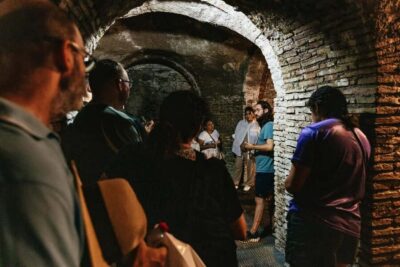
Crypts and Catacombs Underground Tour with Transfers
Read our review →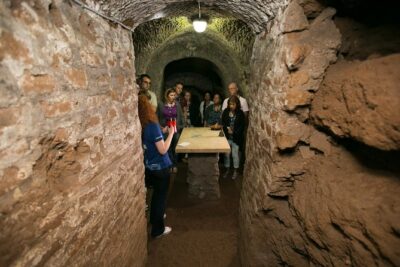
The Original Roman Crypts and Catacombs Tour with Transfers
Read our review →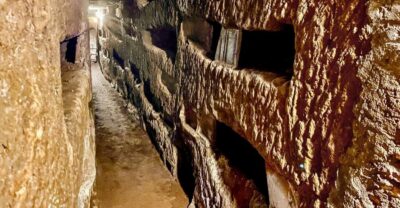
Rome EBike Tour: Appian Way, Catacombs & Roman Aqueducts
Read our review →
Catacombs and Capuchin Crypt Guided Tour with Transfer
Read our review →
Appian Way, Catacombs, & Roman Aqueducts E-bike Tour
Read our review →
Appian Way E-bike Tour with Catacombs, Aqueducts & Food
Read our review →Browse the lists this tour appears in