
Reviewed · ROMAN FORUM AND PALATINE HILL TOURS
Domus Tiberiana, Palatine Hill and Roman Forum Guided Tour
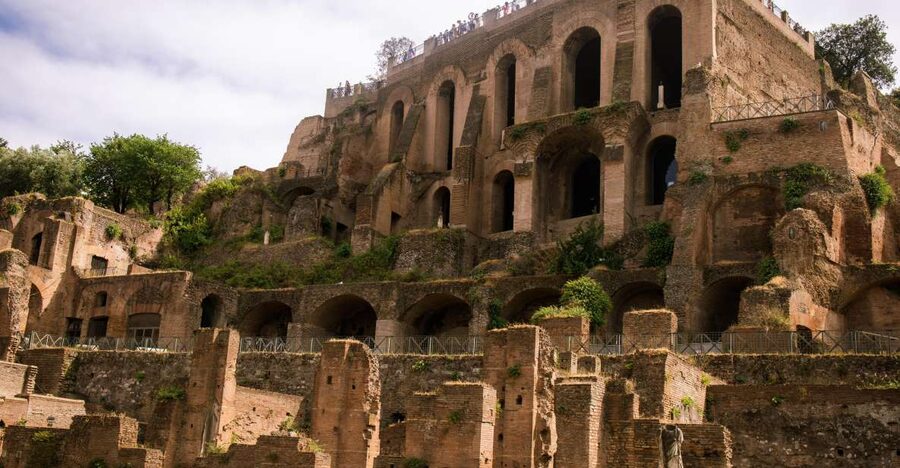
Domus Tiberiana is the star here. This imperial palace on Palatine Hill has reopened to the public after nearly 50 years, giving you a chance to see a part of ancient Rome that was off the usual sightseeing list. With a guide like Dino or Elaine, the broken walls and buried rooms become easier to picture as a working palace, not just a field of stones.
I like the tour’s clear route from Palatine Hill to the Roman Forum, and I like that your ticket and guide are handled together, with no need to puzzle out the site alone. The tour also uses an eco-friendly golf-cart experience, though the core visit is still a walking tour over uneven ancient ground.
The main drawback is accessibility: this activity is not suitable for wheelchair users, and large bags, luggage, pets, glass objects, and plastic bottles are not allowed. At $111.02 per person, it makes the most sense if you want context and a guided visit rather than a quick self-guided look.
Key points at a glance
- Domus Tiberiana reopened after nearly 50 years, making it the tour’s most unusual stop.
- Palatine Hill comes first, linking the legendary birthplace of Rome with the imperial palace district.
- The Roman Forum follows, where your guide explains the center of ancient public life.
- Dino and Elaine are named guide options, with a style that suits both serious history fans and families.
- The tour lasts 2 to 2.5 hours, a manageable block for a busy Rome sightseeing day.
- Skip-the-ticket-line entry is included, but you must exchange your voucher at the tour office first.
Why Domus Tiberiana changes the Palatine Hill visit
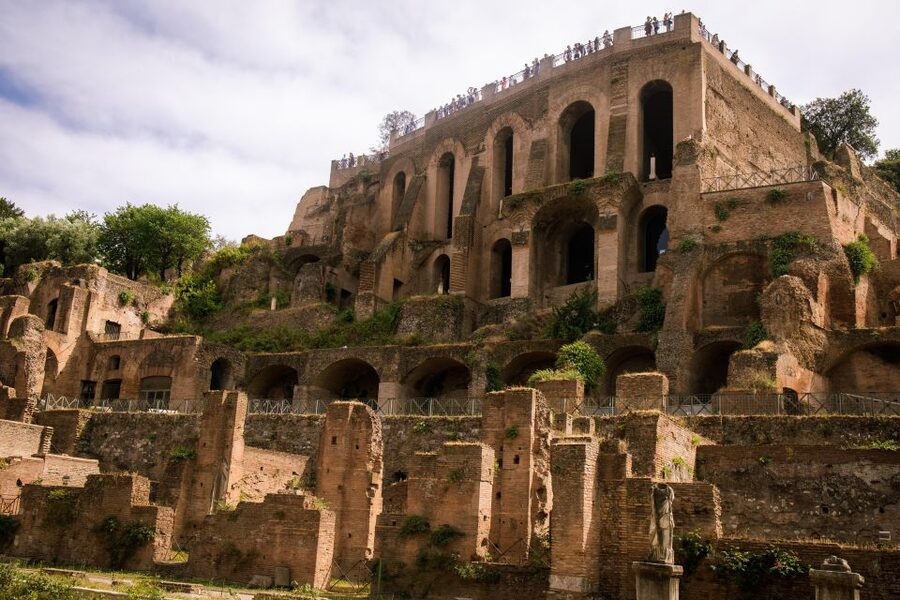
Many people approach Palatine Hill expecting scattered ruins and broad views over ancient Rome. That is part of the appeal, but Domus Tiberiana gives the visit a stronger focus. This was an imperial residence built by Emperor Tiberius and used as the first imperial home for the Julio-Claudian dynasty.
The palace matters because it shows how Rome’s emperors lived above the public world below. From Palatine Hill, you are not only looking at old foundations. You are tracing the private and political heart of the early empire, where imperial power took physical form in corridors, rooms, terraces, and grand residential spaces.
The palace has been closed to the public for almost 50 years. Its reopening makes this feel less like a standard Forum tour and more like a chance to see a newly available chapter of the archaeological area. You should still expect ruins rather than a restored palace with furnished rooms. The value comes from seeing the surviving structure and having someone explain what you are looking at.
A guide is especially useful here. Without one, it can be hard to tell an imperial residence from a later wall or a foundation belonging to another period. Dino, in particular, is praised for connecting the architecture to the people who used it and for explaining how the site changed over time.
More Roman Forum and Palatine Hill tours:
- Rome: Colosseum, Palatine Hill and Roman Forum Guided Tour
★ 4.8 · 32,814 reviews - Rome: Guided Tour of Colosseum, Roman Forum & Palatine Hill
★ 4.7 · 27,897 reviews - Rome: Colosseum, Roman Forum and Palatine Hill Guided Tour
★ 4.5 · 23,903 reviews
Starting on Palatine Hill, the legendary birthplace of Rome
The tour begins at Palatine Hill, a fitting place to start a walk through ancient Rome. It is known as the legendary birthplace of the city, so the opening stop combines Roman myth with the physical remains of the hill’s imperial buildings.
Your guide leads you through the ruins rather than leaving you to wander without a plan. That matters because Palatine Hill covers a large area, and the remains can be difficult to read. One broken line of masonry may be part of a palace complex, while another may belong to a later phase of construction. The guide’s job is to give those fragments a sequence.
This is also where you should expect walking on uneven surfaces. The site is not suitable for wheelchair users, and anyone who has trouble with steps or rough ground should think carefully before booking. Wear practical shoes and keep your belongings light. Large bags and luggage are not allowed.
The hill is a good place to let the tour move at a measured pace. You are not simply ticking off a famous sight. You are learning how the private world of Rome’s ruling family sat beside the public spaces where ordinary citizens, politicians, priests, merchants, and soldiers carried out daily life.
Inside Domus Tiberiana with a licensed guide
Domus Tiberiana is the most distinctive reason to choose this particular experience. The palace was built by Tiberius, the second Roman emperor, and served as an early imperial residence for the Julio-Claudian dynasty. That family line includes Augustus, Tiberius, Caligula, Claudius, and Nero, so the site connects you to the first generations of Roman emperors.
The tour does not simply point out the building and move on. The guide explains the palace’s role and helps you picture its occupants. That human detail is important. Ruins can feel remote until you understand who lived there, what the spaces were for, and how the imperial household related to the public life of the city below.
Dino’s style, based on the experience described by participants, leans toward stories, small details, and the lives of ancient Romans. Elaine is also praised for making the material accessible to families and teenagers. If you are traveling with younger people who might lose interest in a long lecture, that ability to explain the past in plain terms can make a real difference.
You should not expect every room to be intact. The appeal is archaeological, not theatrical. Some sections may require you to use your imagination, but the guide supplies the missing links. This is the point where the $111.02 price begins to make more sense for visitors who want a deeper understanding of what they see.
Following the route into the Roman Forum
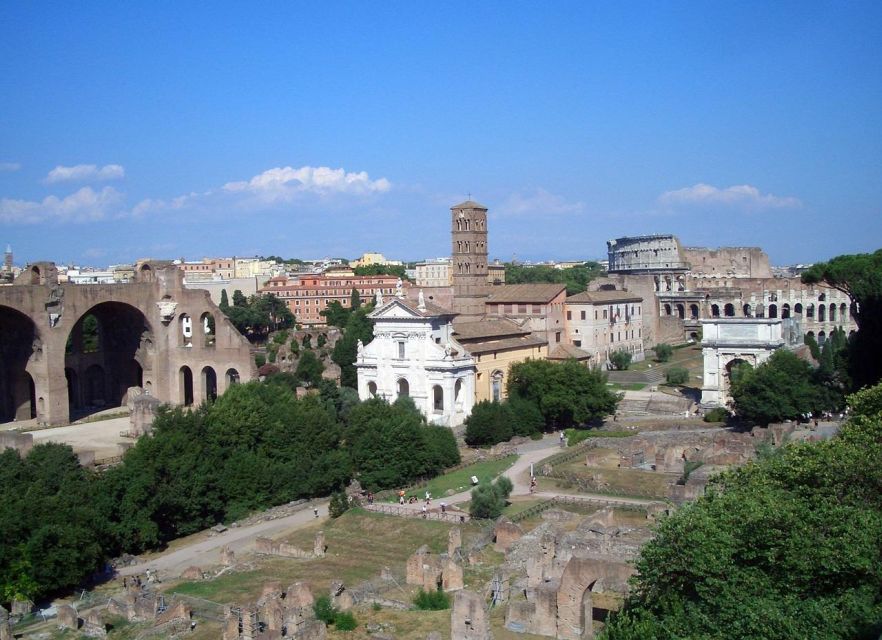
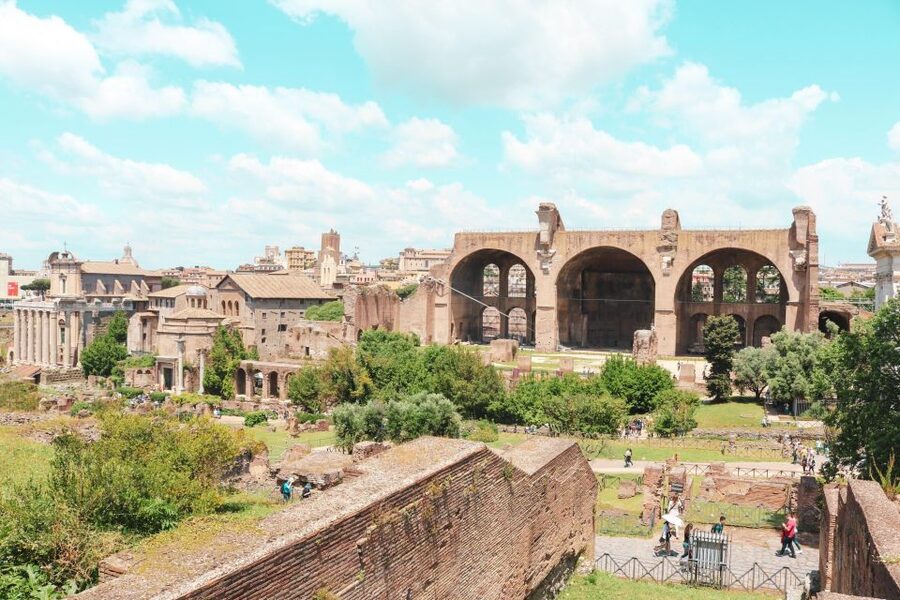
After Palatine Hill and Domus Tiberiana, the route continues to the Roman Forum. In ancient times, this was the center of public life. Political business, religious ceremonies, legal matters, speeches, commerce, and social meetings all took place in and around this crowded district.
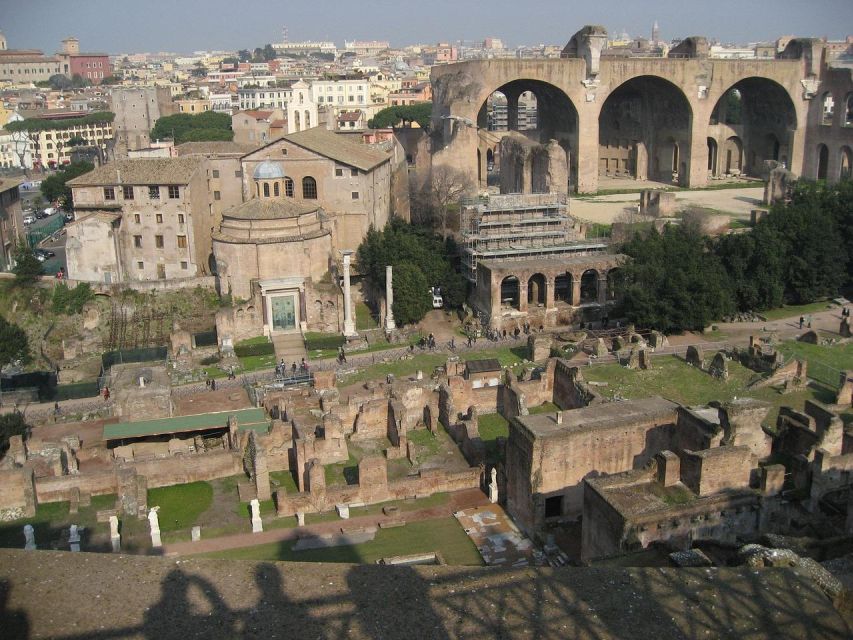
Today, the Forum is a wide archaeological area filled with columns, arches, temples, basilicas, and foundations. It is also easy to find confusing. Names and dates can blur together, especially if you are visiting several ancient sites in the same day.
A live guide gives the Forum a useful order. You can follow the remains while hearing the stories connected to them, rather than trying to read every sign or guess which structure mattered most. The guide also helps connect the Forum to Palatine Hill. One area represented imperial power and residence, while the other was the public stage where Rome conducted its civic life.
The experience described by the tour is strongest when it explains people and routines, not only dates. You may hear about the lifestyle of ancient residents, the way the Forum functioned, and the layers of history that built up across the site. That approach helps you imagine the Forum as a working center rather than a quiet ruin.
The tradeoff is time. The complete experience lasts only 2 to 2.5 hours, so you will receive an organized introduction rather than an exhaustive study of every monument. If you want to inspect every temple at length, you may prefer more independent time afterward.
More guided tours in Rome:
- Vatican Museums, Sistine Chapel & St Peter’s Basilica Guided Tour
★ 4.5 · 39,149 reviews - Rome: Colosseum & Forum with Audio Guide App -Optional Arena
★ 4.2 · 24,770 reviews - Rome: Colosseum, Palatine Hill & Roman Forum Guided Tour
★ 4.6 · 12,703 reviews - Rome: Vatican Museums & Sistine Chapel Guided Tour
★ 4.3 · 12,117 reviews
What the golf-cart element adds
The experience also includes an eco-friendly golf-cart component. The supplied details do not specify the exact length or position of the ride, so you should treat it as a useful addition rather than the main attraction.
That matters because the headline sights are Palatine Hill, Domus Tiberiana, and the Roman Forum. The archaeological visit itself depends on walking and listening. The golf cart can make the broader city experience easier and add a change of pace, but it does not turn the tour into a ride-only sightseeing trip.
For many people, this combination is practical. Ancient Rome covers a lot of ground, and a short tour that mixes guided ruins with an eco-friendly vehicle can feel less tiring than a fully walking itinerary. Still, you should plan for substantial time on foot and bring only what you need.
Guide quality and the value of personal explanation
The strongest praise centers on the guides. Dino is described as passionate and able to explain the layers of history across the Forum, Palatine Hill, and surrounding sites. His approach includes people, customs, and daily life, not just architectural labels.
Elaine is praised for making difficult material clear to a mixed-age group, including two teenagers. That is useful information if you are traveling as a family. Ancient Rome can be demanding for younger visitors, but a guide who tells stories and explains ideas in an accessible way can help everyone stay involved.
The tour is advertised with English and Italian live guides. The exact guide you receive depends on availability, so you should not book assuming that Dino or Elaine will lead every departure. Still, their reported strengths show what to look for: clear explanations, historical context, and stories that connect buildings to real people.
A guide is not essential for everyone. If you already know Roman history and prefer to move at your own speed, an independent ticket may suit you better. But the Forum and Palatine Hill are difficult sites to interpret from ruins alone. For a first visit, the guided format offers useful structure.
Price, timing, and what you receive
The listed price is $111.02 per person. That is not a budget entry ticket, so you should consider what is included. The cost covers the professional licensed guide, the guided tour, entrance tickets, and all fees and taxes. Skip-the-ticket-line access is also included.
You are paying for interpretation as much as admission. If you would only spend a short time at the Forum and leave, the price may feel high. If you want a planned route, a live English or Italian guide, access to Domus Tiberiana, and a clearer understanding of the ruins, the package has stronger value.
The 2 to 2.5 hour duration fits well into a day that also includes other Rome sights. It is long enough to cover the main areas without consuming an entire morning or afternoon. Check the available starting times before booking, since the schedule varies.
Food and drinks are not included, and hotel pickup and drop-off are not included. You need to reach the meeting point yourself. Before the tour begins, exchange your voucher at the ticket counter in the tour office. Build in extra time for that step so you are not rushing to the start.
Practical rules that can affect your visit
You must provide the names of all participants when booking and bring a passport or identity card. The identification requirement is worth taking seriously because entry is tied to the booking details.
Pets, large bags, luggage, mobility scooters, alcohol, drugs, plastic bottles, and glass objects are not allowed. Unaccompanied minors also cannot take part. These restrictions mean you should plan to arrive with a small, simple bag and the required identification.
The activity ends back at the meeting point. Since hotel transportation is not provided, you will need to arrange your own way to and from the office. The tour provider is Italy in Love Tours and Ontario Srls.
Cancellation is flexible: you can cancel up to 24 hours in advance for a full refund. You can also reserve now and pay later, which helps if you are still arranging a Rome itinerary.
Who will get the most from this tour
I would recommend this experience to a first-time Rome visitor who wants the Forum and Palatine Hill to make sense. It is also a good fit for families with teenagers, especially if your group benefits from a guide who explains ancient life in direct, story-driven language.
History fans will appreciate Domus Tiberiana because the palace’s reopening adds something less familiar than the standard Roman landmarks. The tour also works for anyone who prefers a fixed route and an included entry ticket instead of handling the archaeological area alone.
It is less suitable for visitors who need step-free access, want a completely private itinerary, or prefer spending a full day examining every ruin at leisure. The tour is guided and time-limited, so you will follow its pace.
Should you book Domus Tiberiana, Palatine Hill and the Roman Forum?
Book it if Domus Tiberiana interests you and you want help making sense of Palatine Hill and the Forum. The newly reopened palace is the special feature, while the guides provide the human stories that keep the ruins from becoming a blur of stones and names.
At $111.02, this is a value choice for context, convenience, and included entry rather than for the cheapest possible access. Bring your passport or ID, keep your bag small, allow time to exchange your voucher at the office, and wear shoes suited to uneven ground.
Skip it if you want a slow, independent archaeological study or cannot manage substantial walking. For most first-time visitors who want ancient Rome explained clearly in a compact tour, it is a well-focused way to spend two to 2.5 hours.
FAQ
How long does the tour last?
The tour lasts approximately 2 to 2.5 hours. Starting times vary, so check availability when booking.
What places does the tour visit?
The tour visits Palatine Hill, Domus Tiberiana, and the Roman Forum. It also includes an eco-friendly golf-cart element.
Is Domus Tiberiana open to the public?
Yes. The tour includes a visit to Domus Tiberiana, which reopened to the public after nearly 50 years.
Which languages are available?
Live guides are available in English and Italian.
Is a guide included?
Yes. The price includes a professional licensed guide and a guided tour.
Are entrance tickets included?
Yes. Entrance tickets, all fees, and taxes are included. Skip-the-ticket-line access is also provided.
Do I need identification?
Yes. You must bring a passport or identity card, and participant names are required at the time of booking.
Is the tour suitable for wheelchair users?
No. The activity is not suitable for wheelchair users. Mobility scooters are also not allowed.
Newest Rome tours we have reviewed
- Private TikTok Video Making in Rome★ 5.0 · 7 reviews
- Assisi, Orvieto and Civita di Bagnoregio Full Day Tour from Rome★ 4.5 · 45 reviews
- Assisi & Saint Francis Path Tour from Rome★ 5.0 · 45 reviews
- Assisi and Cascia Private Day Tour from Rome with Lunch★ 5.0 · 10 reviews
- Art Class in the center of Rome!★ 4.0 · 4 reviews
- Art & Craft: Beer Tour with Street Art in Rome★ 4.5 · 6 reviews
- Arrival in Rome: Airport Transfer & Exclusive City Introduction★ 5.0 · 3 reviews
- From Rome: Private Day-Tour of Tuscany★ 5.0 · 16 reviews
Roman Forum and Palatine Hill Tours, compared.
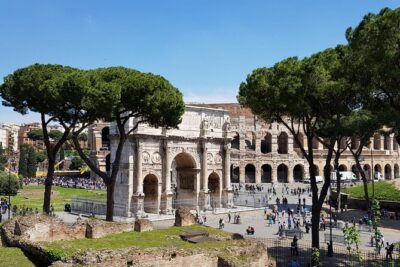
Colosseum, Palatine Hill and Roman Forum Guided Tour
Read our review →
Guided Tour of Colosseum, Roman Forum & Palatine Hill
Read our review →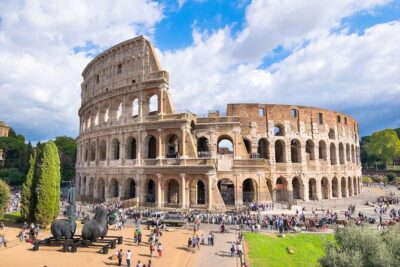
Colosseum, Roman Forum and Palatine Hill Guided Tour
Read our review →
Colosseum, Forum & Palatine Hill Tour & Optional Arena
Read our review →
Colosseum, Palatine Hill & Roman Forum Guided Tour
Read our review →
Colosseum Arena, Palatine Hill & Forum Guided Tour
Read our review →
Colosseum, Roman Forum & Palatine Hill Guided Tour
Read our review →Colosseum, Roman Forum And Palatine Hill Guided Tour
Read our review →Browse the lists this tour appears in