
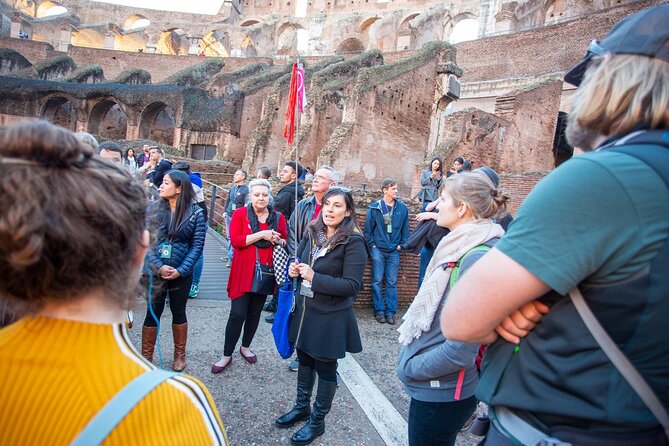
Reviewed · ROME COLOSSEUM TOURS
Ancient Rome Guided Tour: Colosseum, Forum and Palatine
The best part of this tour is the way it links Rome’s biggest ancient sights into one walk. You move from the high ground of Palatine Hill, with views over the Forum and Circus Maximus, down into the Colosseum, then through the political heart of ancient Rome.
I like the supplied headsets, which matter when a guide is explaining things in a noisy archaeological park. I also like the choice of morning or afternoon departures and the group limit of 20 people. The main catch is simple: this is a demanding three-hour walk, with hills, uneven ground, and steep Colosseum steps.
Guides including Fabio, Alexandra, Maria, Mirco, Roxy, Zarah, and Emanuele have earned especially warm praise for clear explanations, patience, and lively storytelling. Still, arrive early, bring your passport or ID, and do not expect the group to wait if you are late.
Key points to know before booking
- Palatine Hill gives you the big picture: Begin high above the Forum and see how Rome’s ancient center fits together.
- The Colosseum visit lasts about one hour: Entry is included, along with the reservation fee and required audio equipment.
- Headsets make a real difference: You can hear the guide without crowding around them.
- The group can include up to 20 people: Small enough to manage, but still large enough that you must stay close.
- You need a moderate fitness level: Hills, stairs, heat, and uneven paving are part of the experience.
- Your passport or ID is mandatory: Bring the original document, not just a booking confirmation on your phone.
Why this three-hour route works in Rome
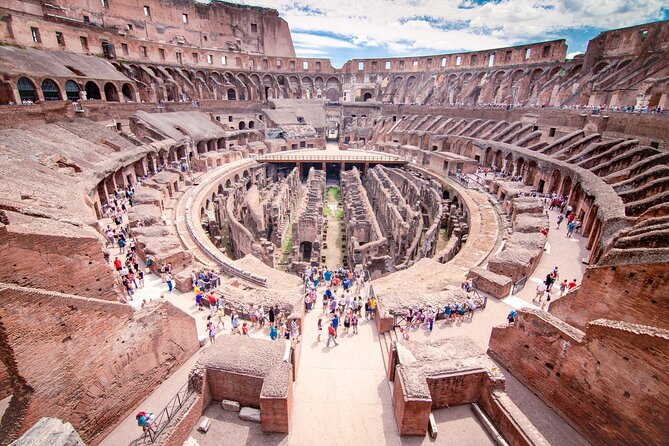
Ancient Rome is spread across a wide archaeological zone. You can easily spend half a day wandering between monuments and still miss the story that connects them. This tour gives you a useful framework in about three hours, with a guide explaining what you are looking at instead of leaving you to decode piles of stone on your own.
The price is $71.65 per person. That is not the cheapest way to enter these sites, but the admission ticket, reservation fee, professional guide, and wireless headsets are included. The Colosseum admission alone is listed at €18, with a €2 reservation fee, so the remaining cost pays for the guide, organization, and timed access.
I see the value most clearly if this is your first visit to Rome or if your schedule is tight. A good guide can explain why the Forum mattered, how the Colosseum was used, and why Palatine Hill became associated with emperors and elite Roman life. Without that context, the sites can feel like a vast field of ruins.
You can choose a morning or afternoon departure. Morning tours may suit you if you want the rest of the day free, while an afternoon time can work better if you prefer a slower start. Either way, plan for a lot of sun and little shade across parts of the route.
More ancient Rome tours:
- Colosseum: Underground and Ancient Rome Tour
★ 4.7 · 12,691 reviews - Colosseum & Ancient Rome with Arena Floor Option I Max 6 People
★ 5.0 · 3,306 reviews - Rome: Colosseum, Ancient Rome Tour or Self AudioGuided Tour
★ 4.4 · 2,866 reviews
Meeting at Colle Oppio Park
The meeting point is inside Colle Oppio Park, at Via delle Terme di Tito and the corner of Via Nicola Salvi. You should arrive 15 minutes before departure and look for staff carrying the I Love Rome logo.
This location is close to the Colosseum and reachable by public transportation. It is a practical meeting place, but parks and city streets around the monument can still feel confusing when you are in a hurry. I would check the route from your hotel the day before and allow extra time for Rome traffic, crowded sidewalks, or a wrong turn.
The operator has a strict late-arrival policy. If you miss the group, you may lose the tour and your payment, even if you can reach the site a few minutes later. That is one of the most important practical warnings here.
Your booking confirmation is issued at once, and full names are required at booking. Keep the confirmation available on your phone, but do not treat it as a substitute for your identification document.
Palatine Hill and the view over ancient Rome
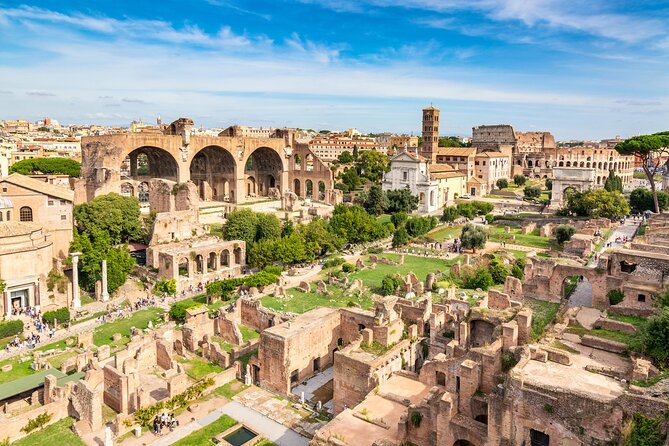
The route description places Palatine Hill first, beginning near the top of the hill. From here, you can look down toward the Roman Forum and Circus Maximus while the guide explains the legend of Rome’s seven hills.
This is a smart opening because the view gives you a map before you start walking among the ruins. You can see the Forum as a connected urban center rather than a collection of unrelated temples and arches. The hill also helps you understand why this area mattered to Rome’s rulers.
The main remains include the Hippodrome of Domitian and the House of Augustus. The word hippodrome can sound like a sports stadium, but here it refers to a long, open garden or courtyard connected with the imperial palace complex. The House of Augustus points to the private side of Roman power, where emperors lived as well as governed.
Palatine Hill is also the most physically demanding part of the tour for many people. The route includes slopes, steps, and uneven surfaces. One guide may pause for shade or water, but you should bring your own bottle and wear firm, comfortable shoes.
A useful detail is that the archaeological area remains available for further wandering after the guided portion, as long as you do not leave and expect to return. That can be appealing if you want more time with the Palatine ruins. It also means the three-hour tour does not have to be your final word on ancient Rome.
Entering the Colosseum with a guide
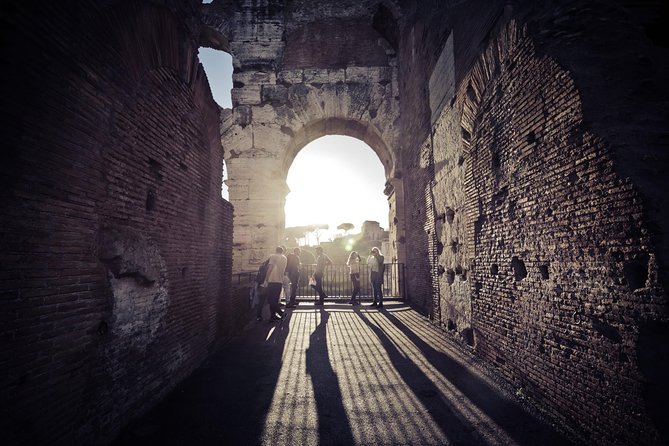
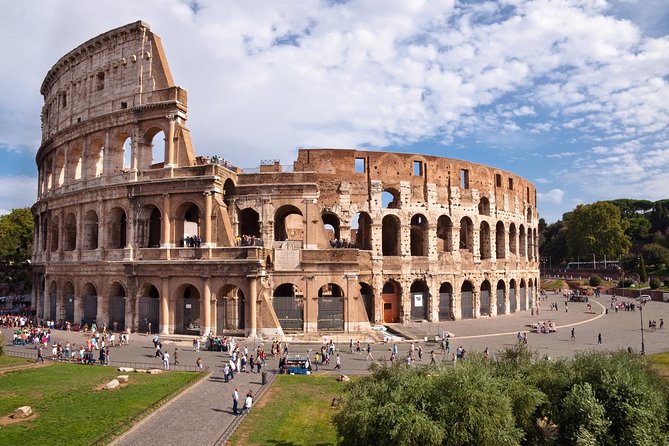
The Colosseum is the emotional center of the experience. The amphitheater, originally called the Flavian Amphitheater, was begun in AD 72 and became one of Rome’s defining monuments. Your guide explains the building and the gladiatorial contests held inside, giving the stone structure a human story.
The included visit lasts about one hour. You will see the vast interior, learn how the amphitheater functioned, and hear about the people who appeared in its arena. The exact path can depend on current access and crowd control, so it is best to think of this as a guided visit through the monument rather than a promise of every possible level or restricted area.
Security and entrance checks can take time. An early tour may encounter shorter lines, but all visitors still need to follow the monument’s rules. Your passport or government-issued ID is mandatory for admission. This requirement is easy to overlook when your ticket is stored on your phone, so put the document in your day bag before leaving your hotel.
The Colosseum has steep steps, and the tour is not recommended for people with impaired mobility. If you use a pacemaker, you must show a certificate. Without that certificate, you may not be admitted without screening. These are venue requirements, not optional suggestions.
Several guides receive particular praise for this part of the tour. Fabio is described as warm and engaging, while Maria is noted for keeping an eye on the group’s pace and allowing time for photographs. Emanuele, Rosalba, Zarah, and Mirco are also praised for turning the monument into a story rather than a simple photo stop.
More Roman Forum and Palatine Hill tours:
- Rome: Colosseum, Palatine Hill and Roman Forum Guided Tour
★ 4.8 · 32,814 reviews - Rome: Guided Tour of Colosseum, Roman Forum & Palatine Hill
★ 4.7 · 27,897 reviews - Rome: Colosseum, Roman Forum and Palatine Hill Guided Tour
★ 4.5 · 23,903 reviews - Rome: Colosseum, Forum & Palatine Hill Tour & Optional Arena
★ 4.4 · 13,839 reviews
The Arch of Constantine and the Roman Forum
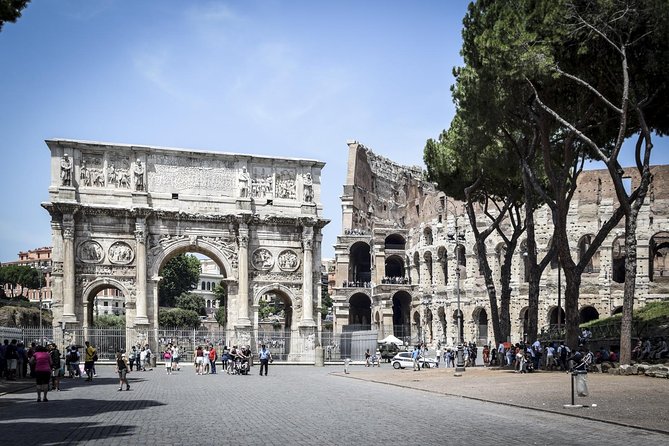
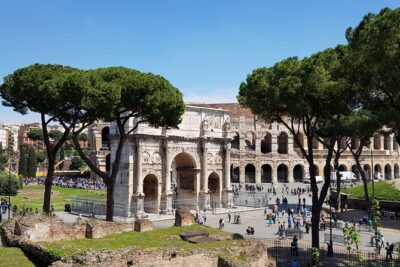
After the Colosseum, the route stops at the Arch of Constantine, built in AD 315. Take a moment here to look closely at the reliefs and the scale of the arch in relation to the Colosseum. It is a useful transition between the imperial arena and the civic center beyond it.
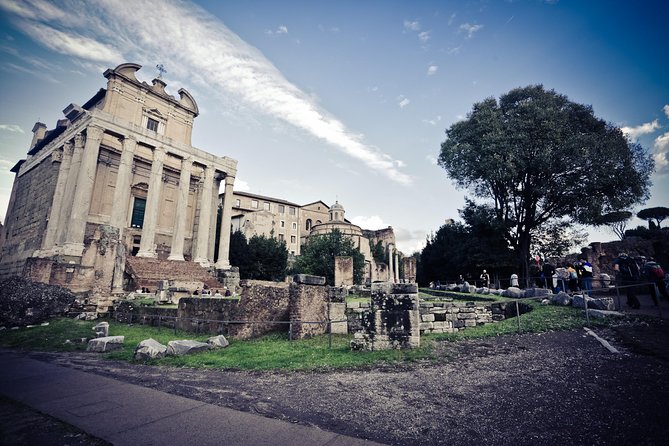
The Roman Forum was the political, legal, religious, and commercial core of ancient Rome. It is also the part of the tour that requires the most imagination. Many buildings are incomplete, and some survive only as foundations or fragments. A guide helps you place those fragments in the life of the city.
The tour includes the Via Sacra, the main processional road through the Forum, along with the Temples of Vesta, Antoninus and Faustina, and the Basilica Julia. These are not just names to tick off. The Via Sacra carried ceremonies through the Forum, the Temple of Vesta was linked with Rome’s sacred fire, and the Basilica Julia was used for public business and legal activity.
One point deserves attention: the experience may give you more of a guided overview from elevated sections than a long, independent walk through every corner of the Forum. The route still covers the archaeological area, but if you want to inspect every temple closely, you may want to keep exploring afterward.
That is where the tour’s structure works well. The guide supplies the main story, then you can decide if you have the energy to continue alone. Just remember that leaving the archaeological park means you cannot simply reenter on the same visit.
Guides, headsets, and group size
The guide is the factor most likely to shape your experience. The strongest guide reports describe clear English, good pacing, a willingness to answer questions, and a talent for connecting Roman history to the buildings in front of you.
Alexandra is praised for her background in archaeology and art history, her enthusiasm, and her care with visitors who walked more slowly. Mirco is noted for explaining Roman history while also watching practical needs such as water and restroom timing. Roxy is described as patient and open to questions, while Zarah is credited with keeping a family group organized and engaged.
That does not mean every departure will feel identical. The tour may be operated by a multilingual guide, and individual teaching styles differ. One guide may move briskly, while another may pause longer for questions. A few people have found it hard to keep up when the guide walked ahead, so stay near the front or middle of the group.
The headsets are a real help. Ancient Rome is rarely quiet, especially around the Colosseum. With wireless audio equipment, you can stand at a reasonable distance and still follow the explanation. Check that your headset is working before the group moves on.
The maximum group size is 20. That is more personal than a huge coach tour, but it is not a private tour. If you want the guide’s full attention at every stop, a smaller departure may feel better. Some departures have been as small as 10 people, though that cannot be guaranteed.
Walking, weather, toilets, and the right pace
The route takes about three hours and requires moderate physical fitness. You will walk through an archaeological zone, climb hills, manage uneven paving, and use steep stairs inside the Colosseum. The distance is not the only issue. Heat, sun, and the steady pace can make the outing tiring.
Wear shoes with secure soles and bring water. The guide may schedule a restroom opportunity, but toilets in the area can have long queues. I would use the bathroom before meeting the group rather than counting on a convenient break halfway through.
If you have mobility concerns, contact the operator before booking. Some guides make a real effort to help people who walk slowly, but the tour is officially not recommended for impaired mobility. A companion should accompany any child, and children must remain with an adult throughout the experience.
Food and drinks are not included. You may find a cafe inside the park, but the timing of the tour puts you close to lunchtime. A small snack and water in your bag can make the final stretch more comfortable.
Who should book this Ancient Rome tour
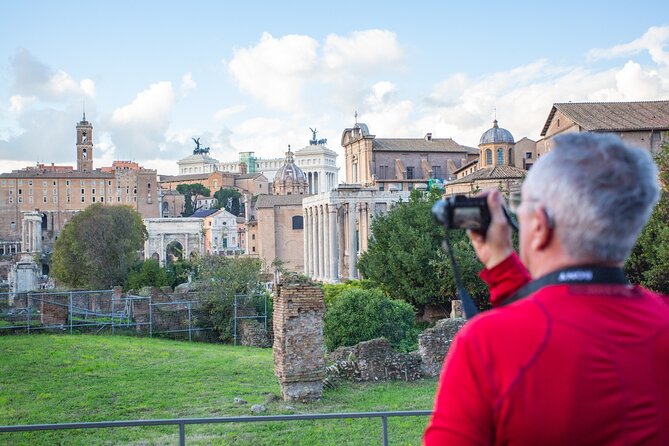
I would choose this tour if you want the three major ancient sites explained in one organized visit. It suits first-time Rome visitors, families with older children, and anyone who wants historical context without spending a full day on a private guide.
It is also a good fit if you value a fixed schedule and included admission. The meeting point, headsets, and guided route remove several small stresses from visiting the Colosseum independently.
I would think twice if you dislike groups, struggle with hills, need frequent rest breaks, or want a slow photographic visit. The Forum and Palatine can reward unhurried wandering, but this tour has a set pace and a lot to cover.
Free cancellation is available up to 24 hours before the start time. Changes or cancellations made later are not accepted for a refund. Make sure every name is correct at booking, and bring the identification document used for entry requirements.
Should you book it?
Book this Ancient Rome tour if you want an efficient, story-led introduction to the Colosseum, Forum, and Palatine Hill. The strongest reasons are the expert guides, clear audio headsets, included admission, and the way the Palatine viewpoint helps you understand the whole ancient center.
Skip it if you need an easy-access outing or want to explore without a timetable. For most reasonably fit visitors, though, $71.65 is a fair price for three major sights, a professional guide, and a route that turns scattered ruins into a readable story. Just arrive early, stay close to the group, and carry your passport.
FAQ
How long does the Ancient Rome Guided Tour last?
The tour lasts approximately three hours. The listed stops allow about one hour at the Colosseum, one hour at the Roman Forum, and 45 minutes at Palatine Hill, plus meeting and walking time.
What sites are included?
Admission includes the Colosseum, Roman Forum, and Palatine Hill. The route also includes a stop at the Arch of Constantine.
Are headsets provided?
Yes. Wireless audio headsets are provided so you can hear the guide clearly during the walking tour.
Where does the tour begin and end?
The meeting point is at Colle Oppio Park, Via delle Terme di Tito 75, near the corner of Via Nicola Salvi. The tour ends on Via dei Fori Imperiali, close to the Colosseum.
Do I need to bring identification?
Yes. You must bring your passport or ID card on the day of the tour. Visitors with a pacemaker must also show a certificate or may be subject to screening.
Can I cancel for a refund?
You can cancel up to 24 hours before the local start time for a full refund. Cancellations or changes made less than 24 hours before the tour are not accepted.
More Colosseum tours in Rome
- Rome: Colosseum & Forum with Audio Guide App -Optional Arena
★ 4.2 · 24,770 reviews - Rome: Colosseum, Palatine Hill & Roman Forum Guided Tour
★ 4.6 · 12,703 reviews - Rome: Colosseum Arena, Palatine Hill & Forum Guided Tour
★ 4.6 · 10,584 reviews - Colosseum, Roman Forum & Palatine Hill Guided Tour
★ 4.5 · 8,939 reviews
Newest Rome tours we have reviewed
- Private TikTok Video Making in Rome★ 5.0 · 7 reviews
- Assisi, Orvieto and Civita di Bagnoregio Full Day Tour from Rome★ 4.5 · 45 reviews
- Assisi & Saint Francis Path Tour from Rome★ 5.0 · 45 reviews
- Assisi and Cascia Private Day Tour from Rome with Lunch★ 5.0 · 10 reviews
- Art Class in the center of Rome!★ 4.0 · 4 reviews
- Art & Craft: Beer Tour with Street Art in Rome★ 4.5 · 6 reviews
- Arrival in Rome: Airport Transfer & Exclusive City Introduction★ 5.0 · 3 reviews
- From Rome: Private Day-Tour of Tuscany★ 5.0 · 16 reviews
Rome Colosseum Tours, compared.
Colosseum, Palatine Hill and Roman Forum Guided Tour
Read our review →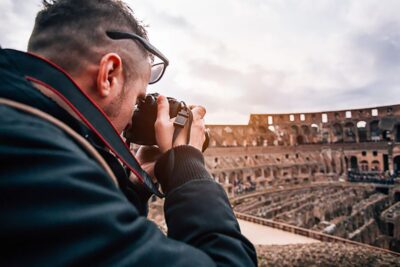
Guided Tour of Colosseum, Roman Forum & Palatine Hill
Read our review →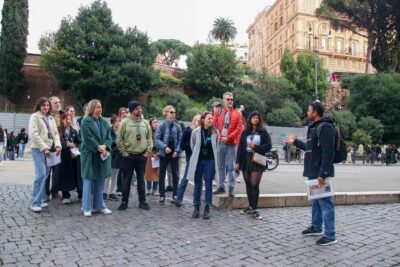
Colosseum & Forum with Audio Guide App -Optional Arena
Read our review →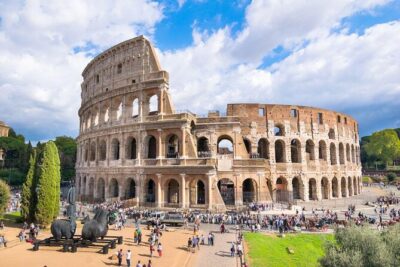
Colosseum, Roman Forum and Palatine Hill Guided Tour
Read our review →
Colosseum, Forum & Palatine Hill Tour & Optional Arena
Read our review →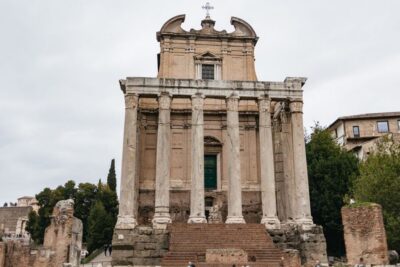
Colosseum, Palatine Hill & Roman Forum Guided Tour
Read our review →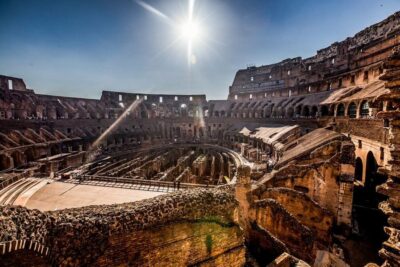
Colosseum: Underground and Ancient Rome Tour
Read our review →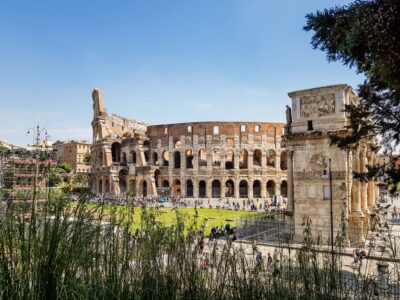
Colosseum Arena, Palatine Hill & Forum Guided Tour
Read our review →Browse the lists this tour appears in