
Reviewed · ANCIENT ROME TOURS
Exclusive tour of Ancient Rome and Domus Tiberiana
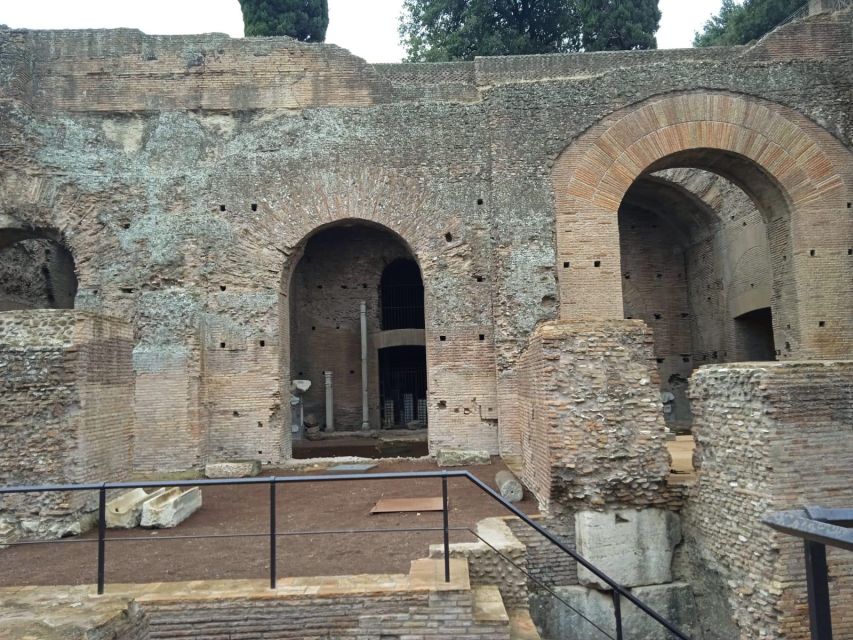
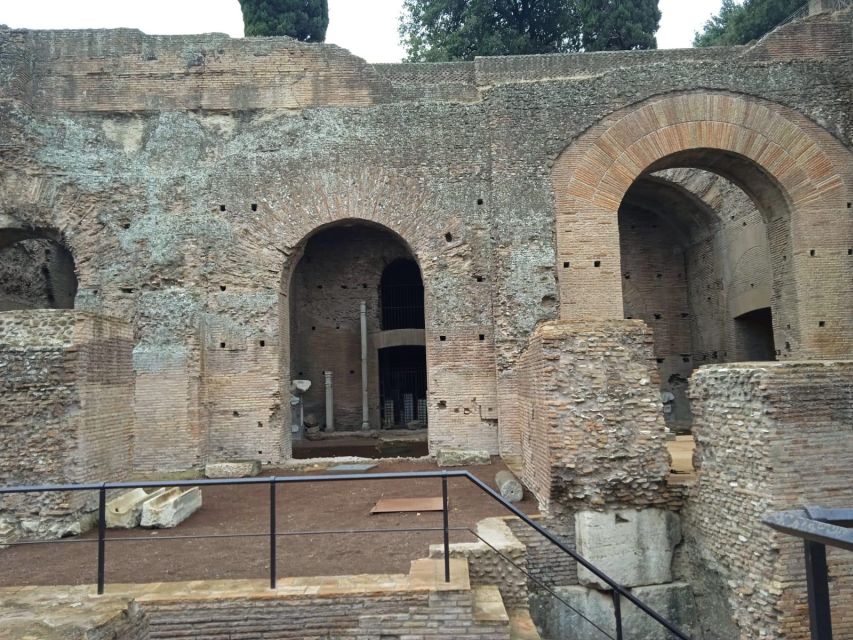
The most unusual part of this Rome tour is the visit to Domus Tiberiana, an imperial palace closed to the public for nearly 50 years because of structural problems. Its restored arches and four-hectare footprint give you a rare look at the private world of Rome’s emperors.
I like the archaeologist guide format, especially for ruins that can otherwise look like piles of old stone. I also like the priority access to views over the Roman Forum and Circus Maximus. The main drawback is the pace: two to two and a half hours is useful for an overview, but not enough to see every corner slowly.
- Domus Tiberiana reopened after nearly 50 years, with restored multi-level arches overlooking the Forum.
- Palatine Hill connects Rome’s foundation stories with the imperial palaces built later on the same hill.
- The Roman Forum reveals the political, religious, and public center of ancient Rome.
- Dino and Donnatella are named guides associated with especially thoughtful, clear explanations.
- Skip-the-ticket-line access saves time at a busy archaeological site.
- The tour costs $99.92 per person and lasts about 2 to 2.5 hours.
Why Domus Tiberiana Changes the Tour
Most Ancient Rome tours focus on the Colosseum, but this experience puts Palatine Hill, the Roman Forum, and Domus Tiberiana at the center. That gives you a different view of Rome. Instead of spending most of your time inside a single monument, you move through the old city and see how power, religion, politics, and daily public life occupied the same small area.
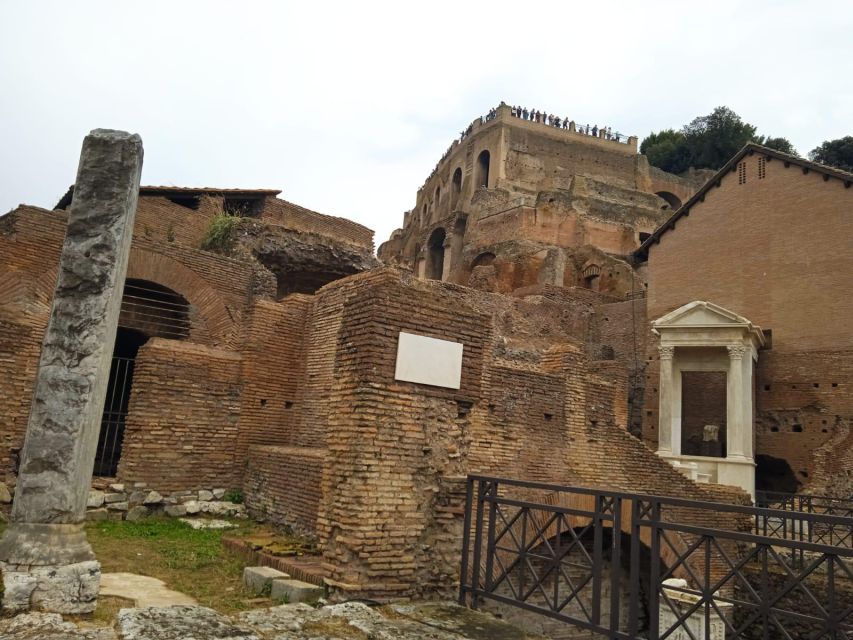
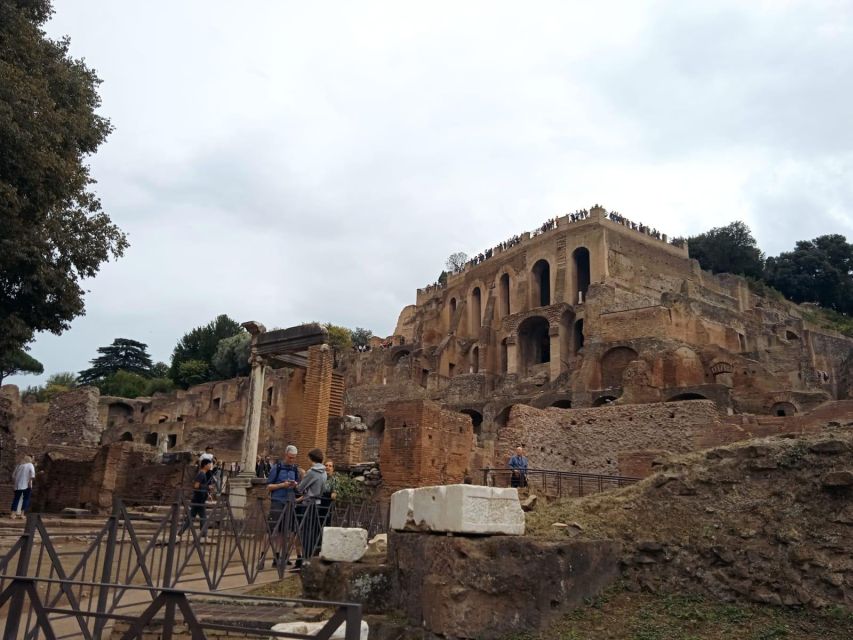
Domus Tiberiana is the special draw. This grand imperial residence covers about four hectares and sits above the Roman Forum. Its impressive arches were built across several levels, creating the sort of monumental setting that helps you understand how much construction once covered the Palatine.
The palace had been closed to the public for almost 50 years because of structural concerns. Recent restoration has reopened parts of it, so this is not simply a standard walk through the usual Forum route. You get access to a more recently restored section of the ancient city, along with the chance to see how archaeologists and conservators are making these ruins safer and easier to understand.
I would book this tour for the palace access first, and the general Forum visit second. If you have already seen the Colosseum, this gives your second Ancient Rome visit a fresh focus.
Palatine Hill, Where Rome Began
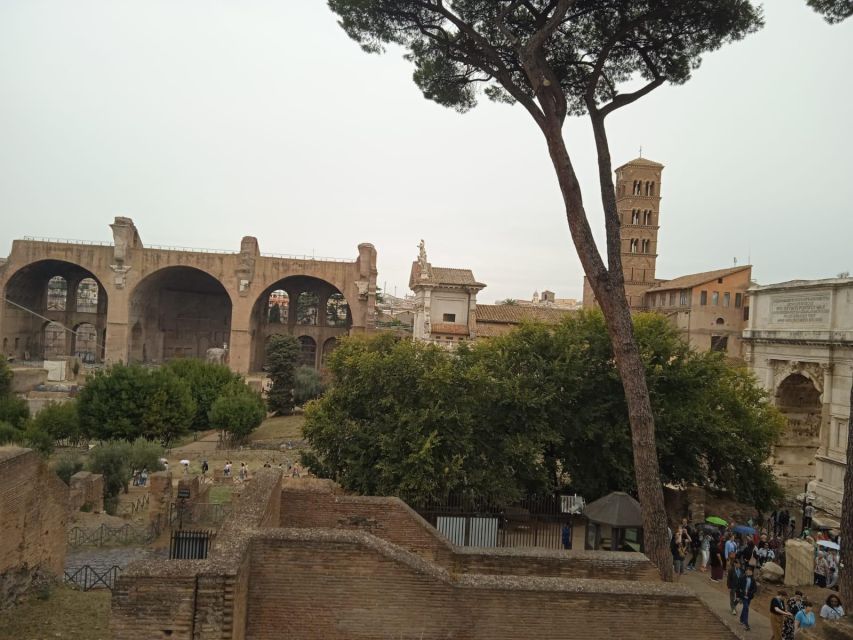
Palatine Hill is one of Rome’s seven hills and one of the key places tied to the city’s foundation stories. The hill later became the preferred address of emperors and other powerful Romans, which explains the scale of the ruins scattered across its slopes.
Your guide can help you read the site in layers. At the lowest level, you are looking at the early settlement and the birthplace of Rome in traditional accounts. Higher up, the remains point to imperial residences, terraces, courtyards, and service areas built for rulers who wanted to live above the city.
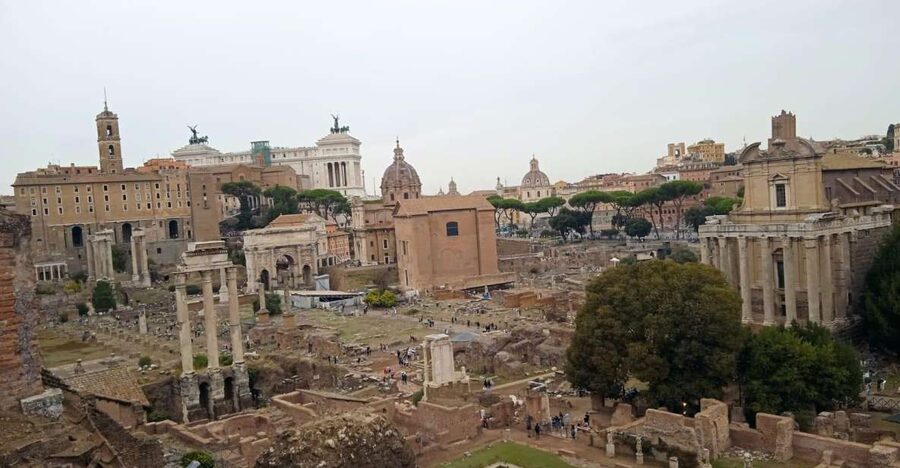
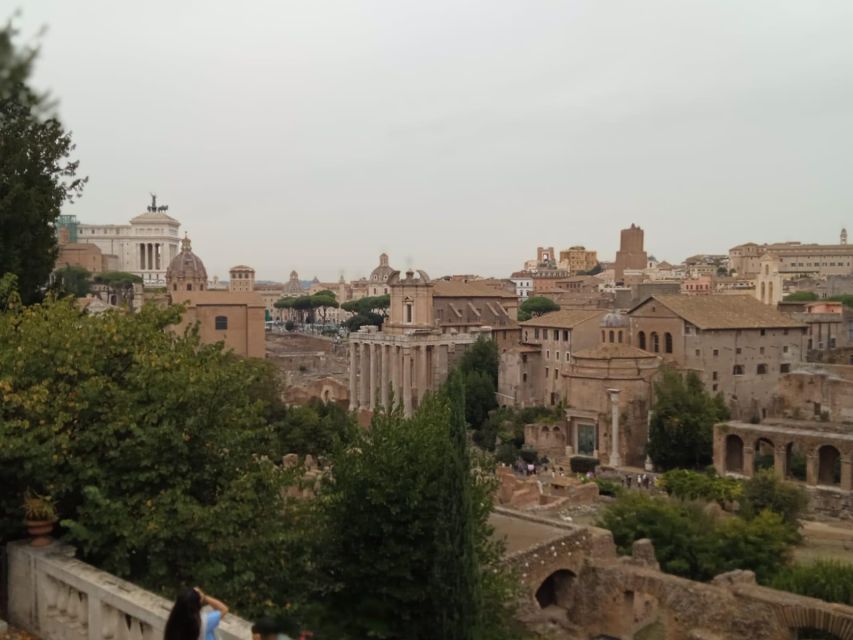
The hill also gives you a useful sense of Rome’s geography. From here, you can look toward the Roman Forum and Circus Maximus rather than viewing each ruin in isolation. That setting matters. The Forum was the political center, the Circus Maximus was used for huge public spectacles, and the Palatine offered an elevated position beside both.
There is a physical cost. The site is made up of uneven ancient ground, pathways, and archaeological remains spread across a large area. This tour is not suitable for wheelchair users or people with recent surgeries. Wear practical shoes and expect to spend much of the visit on your feet.
More ancient Rome tours:
- Colosseum: Underground and Ancient Rome Tour
★ 4.7 · 12,691 reviews - Colosseum & Ancient Rome with Arena Floor Option I Max 6 People
★ 5.0 · 3,306 reviews - Rome: Colosseum, Ancient Rome Tour or Self AudioGuided Tour
★ 4.4 · 2,866 reviews
Domus Tiberiana and Its Restored Arches
The imperial palace is where this experience earns its premium price. Domus Tiberiana is not just another view of Roman ruins. It shows how the emperors reshaped the Palatine into a private and ceremonial district.
The palace’s four-hectare size is difficult to picture from a short description. Once you see its long runs of masonry and multi-level arches, the scale becomes clearer. The complex overlooks the Forum, so the palace’s position also tells you something about imperial power. The emperor’s home was not hidden away. It occupied the hill above the public center of Rome.
A good guide makes the difference here. Dino is particularly well suited to this section because he explains which areas have only been explored or restored in recent years. He also places individual buildings in context rather than leaving you to guess what each wall once did.
Donnatella is another named guide associated with this tour. Her approach is especially useful if you have particular questions or concerns, since the experience allows room for explanation rather than treating the route as a quick march from one ruin to the next.
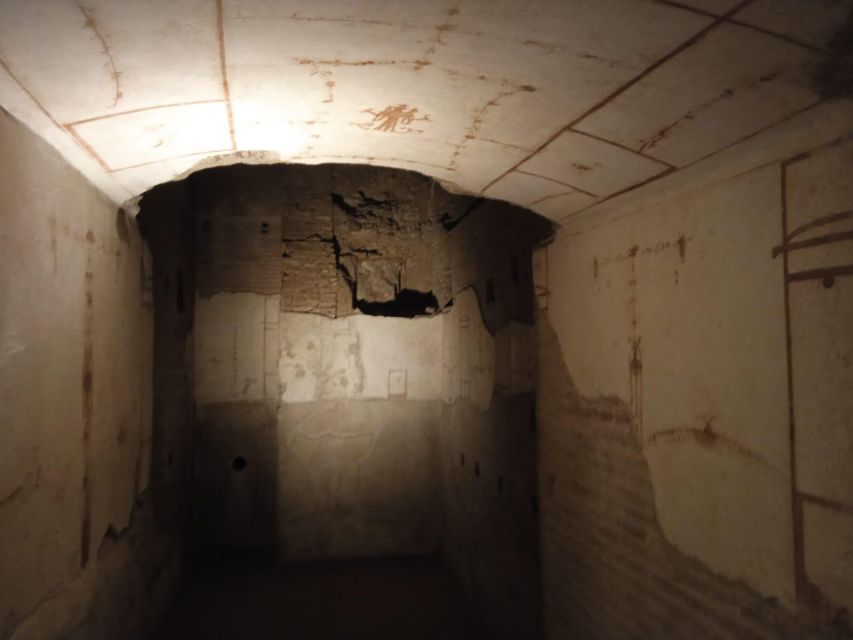
The palace is still an archaeological site, not a furnished royal residence. You should not expect intact rooms, complete decoration, or a museum-style display at every turn. The reward comes from seeing the structure, the placement, and the scale, then using the guide’s explanation to picture the vanished interior.
The Roman Forum as Ancient Public Life
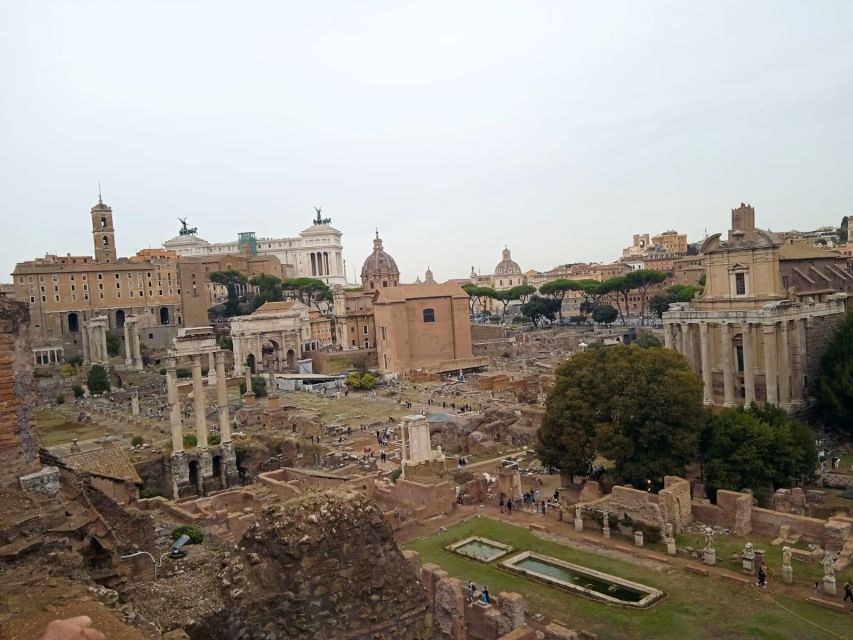
The Roman Forum can be hard to decode without help. Columns, foundations, steps, and fragments remain, but the original functions are not always obvious. This is where the guided format is worth paying for.
The Forum was the city’s public stage. Politics, religion, legal business, ceremonies, and everyday commerce all met here. As you walk among the ruins, your guide connects the remains to the public life of ancient Rome and explains why particular buildings mattered.
I like this part of the tour because it gives the ruins a human purpose. A row of stones becomes part of a political meeting place. A temple foundation becomes evidence of religious life. A road through the Forum becomes a route used by officials, worshippers, and ordinary citizens.
The Forum also rewards a slow look at relationships between buildings. You can see how close the public center was to the Palatine and how the imperial residences overlooked this busy area. The tour does not treat the Forum as a collection of unrelated monuments. It presents the area as a working part of an ancient city.
That said, the Forum is not easy ground for everyone. The site is exposed, and you must pass through security before entering. Bring your passport or identity card, since identification is required, and avoid large bags or luggage. Drones, alcohol, drugs, and explosive substances are not permitted.
Views Toward Circus Maximus
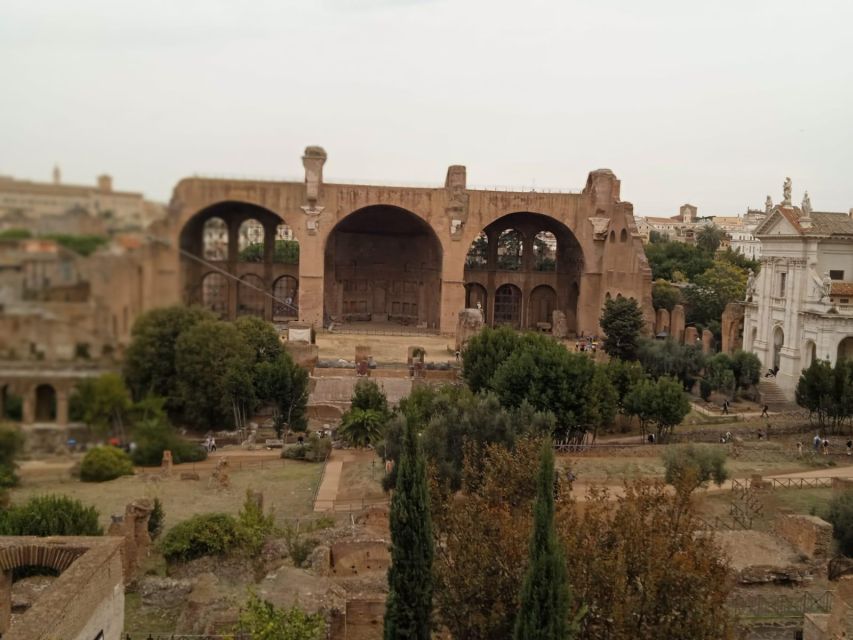
The tour includes priority access to views over the Roman Forum and Circus Maximus. These viewpoints are not just pleasant pauses. They help you understand the size and placement of the ancient city.
Circus Maximus was a huge public venue, and the view from Palatine Hill lets you grasp its broad footprint. From above, you can also see how the Palatine sat beside major public spaces. The imperial residence was close to the crowds, ceremonies, and political activity below, yet physically separated by height.
I would pay attention to these outlooks even if you are mainly interested in architecture. A ground-level visit can make Rome feel like a maze of walls and columns. From above, the plan becomes easier to read.
The views are also a practical break during a fairly concentrated history tour. Two to two and a half hours is not a long time for this archaeological zone, but the route can feel dense. A clear look across the Forum and Circus Maximus gives your mind a chance to organize what you have just seen.
Same city, a completely different half-day:
- Vatican Museums & Sistine Chapel Tour with Optional Basilica
★ 4.3 · 67,413 reviews - Vatican Museums, Sistine Chapel & St Peter’s Basilica Guided Tour
★ 4.5 · 39,149 reviews - Rome: Colosseum, Palatine Hill and Roman Forum Guided Tour
★ 4.8 · 32,814 reviews - Rome: Guided Tour of Colosseum, Roman Forum & Palatine Hill
★ 4.7 · 27,897 reviews
What the Guide Adds to the Ruins
This experience depends heavily on the guide. The company provides a professional local expert, with tours offered in English or Italian. The strongest guide-specific feedback centers on Dino and Donnatella.
Dino is described as charming and well prepared, with a talent for explaining recently explored sections and placing each building in context. That is exactly the skill you need at the Forum and Domus Tiberiana. You are not simply looking for facts. You need someone to explain why a ruin matters and how it fits into the larger site.
Donnatella is noted for her attention to individual questions and her willingness to give explanations time. That can be important at Palatine Hill, where one person may want architectural details while another is more interested in Roman politics or the foundation stories of the city.
The tour is offered in two languages, English and Italian. If you need another language, this is not the right choice based on the information available.
A guide cannot remove every challenge. Ancient Rome has uneven paths, open spaces, and exposed archaeological areas. But a good guide can keep the route focused and prevent you from spending your limited time wondering what you are looking at.
Is $99.92 a Fair Price?
At $99.92 per person, this is not a budget entry ticket. You are paying for a guided experience, priority access, admission to both the Roman Forum and Palatine Hill, and access to the restored Domus Tiberiana area.
The price makes the most sense if you value interpretation. If you already know Roman history well and prefer to walk alone with a guidebook, you may find it expensive. If you want the ruins explained clearly, especially the recently restored palace, the cost is easier to justify.
The tour lasts 2 to 2.5 hours, so you are paying for a focused visit rather than a full-day Ancient Rome program. That shorter length can be an advantage. You can fit it into a busy Rome schedule and still have time for another museum, neighborhood, or meal.
Food and drinks are not included. Bring water if you need it, but remember that large bags and luggage are not allowed. You also need to pass airport-style security, so arriving prepared will make the start less stressful.
The reserve-now, pay-later option adds flexibility, and cancellation is free up to 24 hours before the tour for a full refund. Those policies matter if your Rome plans are still moving around.
Who Should Book This Experience?
I would choose this tour for a first or second visit to Rome if you want ancient sites explained without committing to a long, exhausting day.
It is especially suitable for:
- Visitors interested in imperial palaces and archaeology.
- People who want the Roman Forum and Palatine Hill in one focused visit.
- Anyone curious about recently restored areas that have not been open for decades.
- Travelers who prefer an expert-led route to exploring scattered ruins alone.
- Visitors who want views over the Forum and Circus Maximus.
I would think twice if your main goal is an interior visit to the Colosseum. The information provided for this experience includes admission to the Roman Forum and Palatine Hill, not a separate Colosseum entry. The tour may be promoted alongside Rome’s famous amphitheater, but you should not assume that Colosseum admission is part of this booking.
I would also avoid it if you need step-free access or cannot comfortably walk across uneven archaeological ground. Wheelchair users and people with recent surgeries are specifically advised not to book.
Practical Advice Before You Go
Carry your passport or identity card. All visitors must pass through airport-style security, and identification is required.
Leave luggage and large bags behind. Drones, alcohol, drugs, and explosive substances are not permitted. A small, practical bag is the safest approach.
Wear shoes suited to ancient stone and uneven paths. You will be walking through Palatine Hill and the Forum, not moving from one polished indoor gallery to another.
Allow the full two to two and a half hours. The exact starting time depends on availability, so check the schedule before booking. Since the tour is guided in English or Italian, choose the language that lets you follow detailed explanations without effort.
I would also plan your expectations around the ruins. Domus Tiberiana has been restored, but it remains an ancient archaeological complex. You will see masonry, arches, foundations, and views rather than a complete palace with original furnishings.
Should You Book This Ancient Rome Tour?
Book it if Domus Tiberiana interests you and you want an archaeologist to make sense of the Palatine and Forum. The palace’s reopening after nearly five decades gives the route something unusual, while the views toward the Forum and Circus Maximus add a useful sense of scale.
At $99.92, it is best for visitors who value expert explanation and a focused itinerary. It is not the right pick for a low-cost self-guided walk, a wheelchair-accessible outing, or anyone specifically seeking Colosseum admission.
Dino and Donnatella bring the kind of personal explanation this site needs, and the short format works well in a busy Rome schedule. For a closer look at imperial Rome beyond the usual amphitheater visit, this is a strong choice.
FAQ
How long does the Ancient Rome and Domus Tiberiana tour last?
The tour lasts approximately 2 to 2.5 hours. Starting times vary, so you need to check availability when booking.
What sites are included?
Admission to the Roman Forum and Palatine Hill is included. The experience also includes access to Domus Tiberiana and views toward the Forum and Circus Maximus.
Is the Colosseum included?
The provided admission details include the Roman Forum and Palatine Hill. A separate Colosseum admission is not listed as included.
What languages are available?
The live tour is offered in English and Italian.
Do I need to bring identification?
Yes. You must bring a passport or identity card, and all visitors pass through airport-style security.
Can I bring luggage or a large bag?
No. Luggage and large bags are not allowed. Drones, alcohol, drugs, and explosive substances are also prohibited.
Is the tour suitable for wheelchair users?
No. The experience is not suitable for wheelchair users or people with recent surgeries.
Newest Rome tours we have reviewed
- Private TikTok Video Making in Rome★ 5.0 · 7 reviews
- Assisi, Orvieto and Civita di Bagnoregio Full Day Tour from Rome★ 4.5 · 45 reviews
- Assisi & Saint Francis Path Tour from Rome★ 5.0 · 45 reviews
- Assisi and Cascia Private Day Tour from Rome with Lunch★ 5.0 · 10 reviews
- Art Class in the center of Rome!★ 4.0 · 4 reviews
- Art & Craft: Beer Tour with Street Art in Rome★ 4.5 · 6 reviews
- Arrival in Rome: Airport Transfer & Exclusive City Introduction★ 5.0 · 3 reviews
- From Rome: Private Day-Tour of Tuscany★ 5.0 · 16 reviews
Ancient Rome Tours, compared.
Colosseum: Underground and Ancient Rome Tour
Read our review →
Colosseum & Ancient Rome with Arena Floor Option I Max 6 People
Read our review →
Colosseum, Ancient Rome Tour or Self AudioGuided Tour
Read our review →
Colosseum Underground & Ancient Rome Guided Tour
Read our review →
Ancient Rome: Colosseum Underground Group Tour
Read our review →
Colosseum Express Guided Tour and Ancient Rome Admission Included
Read our review →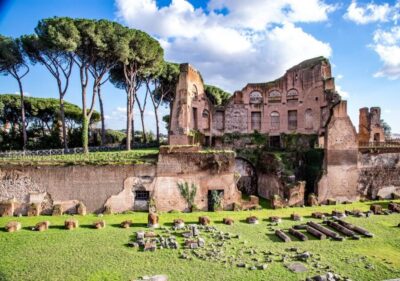
Colosseum Arena Access and Ancient Rome Guided Tour
Read our review →
Ancient Rome Discovery: Colosseum, Forum, Palatine Guided Tour
Read our review →Browse the lists this tour appears in