
Reviewed · FLORENCE DAY TRIPS FROM ROME
Florence: Uffizi Gallery Small Group Guided Tour
The Uffizi is one of those museums where a little guidance saves you from wandering past masterpieces without knowing what makes them special. This 1.5-hour small-group tour takes you straight to Botticelli, Michelangelo, Raphael, Titian, and Caravaggio, with an expert guide adding the stories and visual clues that turn famous paintings into memorable ones.
I like the skip-the-line entrance and the tightly planned route. I also like the clear pace: you get a strong introduction to the Uffizi without giving up half a day. The main consideration is time. An hour and a half is enough for the highlights, but not enough for a slow look at every room, and security lines can still take longer during high season.
Key points at a glance
- Botticelli’s Birth of Venus and Primavera anchor the visit with two of the Uffizi’s most recognizable Renaissance paintings.
- Michelangelo, Raphael, Titian, and Caravaggio give you a broad look at changing styles in one short museum visit.
- Guide Mateo is specifically named among the guides associated with this experience.
- Skip-the-line admission uses a separate entrance, although all visitors must still pass through security.
- English, Italian, and Spanish tours are available, with the language selected when you check availability.
- The tour begins and ends near the Uffizi, making it easy to continue exploring central Florence afterward.
Why a guided Uffizi visit helps
The Uffizi is not simply a room full of famous pictures. It is a long sequence of artistic changes, from medieval religious painting to the fresh perspective and human emotion of the Renaissance, followed by the drama of later masters.
You can certainly visit on your own, but the famous works do not always explain themselves. A guide can point out why Botticelli’s figures look so different from earlier religious images, how Michelangelo treated the human body, and why Caravaggio’s use of light feels so forceful.
That context matters because the Uffizi rewards comparison. You are not only looking at individual masterpieces. You are also watching artists change the way people, space, movement, and emotion appear on a painted surface.
The short format helps if you want a first introduction rather than an exhaustive museum study. I would think of it as a focused first pass. You see the major names, learn how to read several important paintings, and then decide if you want to return for a longer visit.
The feedback available for this experience points to good organization, useful information, and a comfortable pace. That is exactly what you want in a short museum tour. A rushed guide can make the Uffizi feel like a parade of famous names. A well-paced guide gives you time to look before moving on.
More Florence day trips:
- From Rome to Tuscany: Discover Florence and Pisa in One Day
★ 4.5 · 804 reviews - Florence and Pisa from Rome: Enjoy a Full Day Small Group Tour
★ 4.5 · 687 reviews - 5-Day Best of Italy: Assisi, Siena, Florence, Venice and more
★ 4.5 · 285 reviews
Meeting at the Andrea Obgagna statue
Your starting point is Piazzale degli Uffizi, outside the gallery. Meet in front of the Andrea Obgagna statue, described as the first statue on the left, near the corner of Piazzale degli Uffizi and Via della Nina.
This detail is worth taking seriously. The Uffizi area has several statues, entrances, and busy pedestrian paths, so do not wait until the last minute to locate the meeting point. Arrive 10 minutes early, as requested, and keep your phone available in case the operator sends an update.
The activity ends back at the meeting point near the Galleria degli Uffizi. Hotel pickup and drop-off are not included, so you need to make your own way to the center of Florence.
The guide languages are English, Italian, and Spanish. Guide Mateo is specifically associated with the experience, and the available comments praise his guiding. Since guide assignments can vary, check the language and current guide details when booking rather than assuming Mateo will lead every departure.
Entering the Uffizi with less waiting
The tour includes skip-the-line admission through a separate entrance. That can be valuable in Florence, particularly when regular ticket lines are long and your day is built around a fixed schedule.
Skip-the-line does not mean skip every delay. Security checks still apply, and the practical information for this tour warns that security waiting times can be longer during high season. Build a little breathing room into your plans, especially if you have a restaurant booking, train departure, or another timed activity afterward.
Once inside, your guide leads the group through the gallery for about 90 minutes. The tour is described as wheelchair accessible, which is useful for visitors who need step-free access. The activity does not include food or drinks, so plan those separately before or after the museum.
Botticelli’s Birth of Venus and Primavera
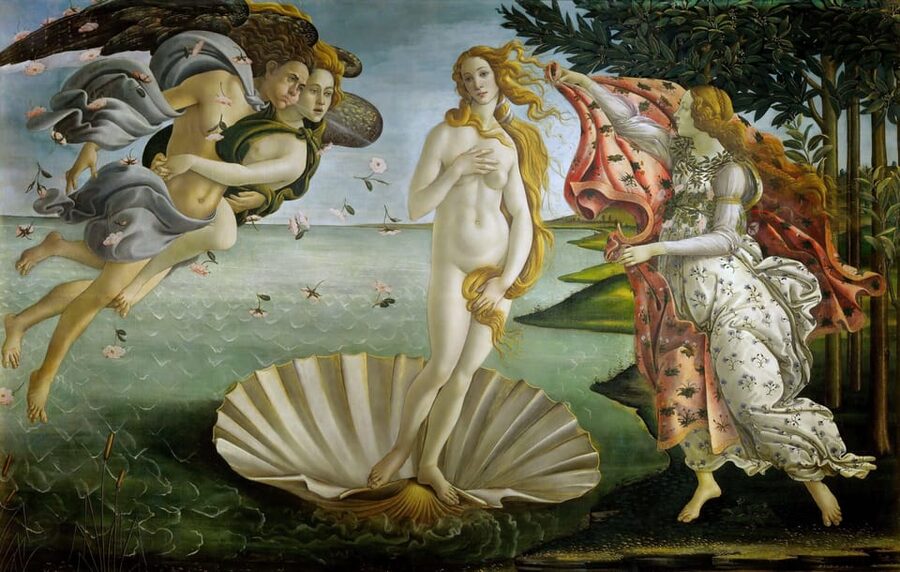
Botticelli is likely to be the emotional center of the tour for many people. The Birth of Venus is instantly familiar, yet seeing it in the Uffizi gives you a chance to look beyond the famous profile and flowing hair.
Your guide can help you notice the painting’s unusual sense of movement, the stylized figures, and the way the central figure is presented as both mythological and almost dreamlike. The scene is not trying to look like an ordinary moment from daily life. Its power comes from elegance, symbolism, and a carefully arranged sense of grace.
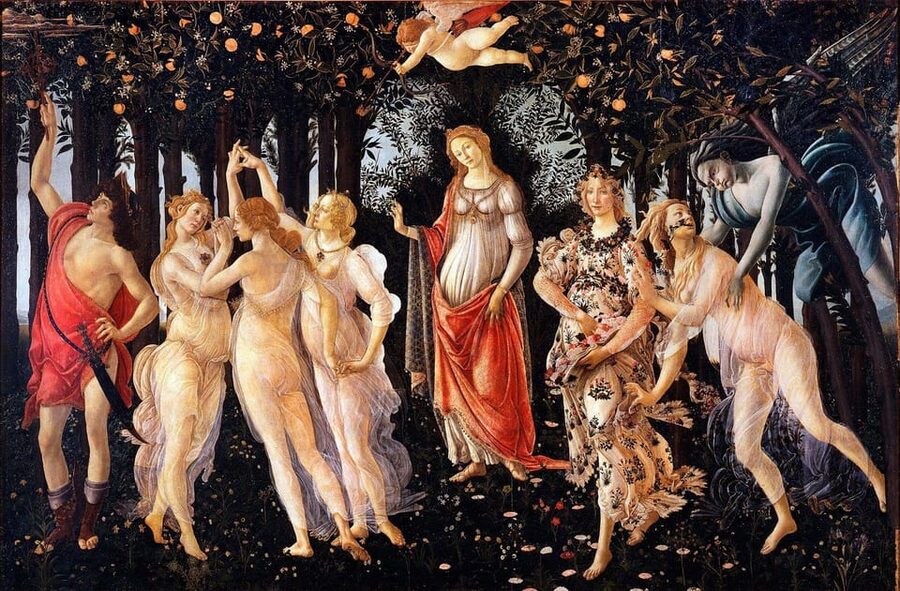
Primavera offers a different challenge. It is crowded with figures and meanings, and you may not know where to look first. A guide is particularly helpful here, since the painting can feel confusing without some direction.
You can expect the guide to place both works within the Renaissance interest in classical mythology, beauty, and the natural world. You will not have unlimited time to study every flower or figure, but the explanation should give you a way into the painting instead of leaving you with only a familiar title.
More museums and galleries in Rome:
- Vatican Museums & Sistine Chapel Tour with Optional Basilica
★ 4.3 · 67,413 reviews - Vatican Museums, Sistine Chapel & St Peter’s Basilica Guided Tour
★ 4.5 · 39,149 reviews - Rome: Vatican Museums, Sistine Chapel & Basilica Tour
★ 4.3 · 13,872 reviews - Vatican Museums & Sistine Chapel Skip-the-Line Entry Ticket
★ 4.4 · 13,838 reviews
Michelangelo’s Tondo Doni
Michelangelo is often linked with sculpture and the Sistine Chapel, but the Uffizi gives you an important chance to see his painting. The Tondo Doni is a round panel showing the Holy Family, and its unusual format makes it immediately different from the rectangular paintings around it.
Look at the powerful bodies and twisting poses. Even in a religious scene, the figures have the physical force associated with Michelangelo’s sculptural work. The painting also lets you compare his approach with the softer, more graceful style often associated with Raphael.
This is one of the places where a guide’s commentary can sharpen your eye. You may notice the colors, the arrangement of the figures, and the way the background adds another layer to the scene. The work is not simply a religious image to pass on the way to Botticelli. It is an important example of an artist testing how much movement and physical strength a painted panel can hold.
Raphael and Titian, two very different pleasures
Raphael’s Madonna of the Goldfinch brings a calmer mood. The painting shows the Virgin Mary with the young Jesus and John the Baptist, and the arrangement feels balanced and intimate.
This is a useful comparison with Michelangelo. Raphael’s figures are graceful and connected, with a sense of tenderness that does not depend on dramatic action. Your guide can help you see how gestures, glances, and the placement of the children create a quiet family scene.
Titian’s Venus of Urbino changes the tone again. The reclining figure looks directly toward you, making the work feel personal and self-aware. The painting is famous for its beauty, but it also invites questions about pose, gaze, luxury, and the role of the viewer.
You may appreciate having these works placed together in a single route. Raphael gives you balance and warmth. Titian gives you color, sensuality, and a direct relationship between painted figure and observer. The visit becomes more useful when you compare them instead of treating each picture as an isolated masterpiece.
Caravaggio’s dramatic realism
Caravaggio brings the strongest shift in mood. His paintings are known for intense light, dark backgrounds, and figures that feel physically present rather than distant or idealized.
The tour highlights his dramatic realism, which makes him a natural final contrast to the earlier Renaissance works. Look at the way light directs your attention. Instead of spreading attention evenly across the scene, Caravaggio can make one face, hand, or action feel urgent.
This section may appeal to you if Botticelli’s polished elegance feels too remote. Caravaggio’s figures often seem closer to ordinary human experience, even when the subject is religious or legendary. The emotional effect is immediate, and a good explanation helps connect that effect to the artist’s use of light and composition.
Because the tour lasts only 90 minutes, you should not expect a full survey of Caravaggio’s work. The point is to encounter his visual language and see how far painting has moved from the calm balance of earlier Renaissance examples.
What the 1.5-hour pace feels like
A 90-minute museum visit requires choices. You will not have time to linger at every painting, read every label, or explore every gallery at your own speed.
That is also the tour’s strength. If you have limited time in Florence, the guide gives your visit shape. You can concentrate on the major works without spending your first 20 minutes figuring out the floor plan or deciding which rooms matter most.
The available comments describe the pace as good and the information as useful. I would expect this to suit you if you prefer a clear route with explanations rather than a long lecture. You should still be ready to keep moving, since the group has a fixed schedule and other visitors may be sharing the rooms.
Art lovers who already know the Uffizi well may find the tour too brief. A specialist could easily spend an entire morning with Botticelli or Raphael alone. For a first visit, though, the focused route offers a practical introduction.
Is the $100.40 price good value?
At $100.40 per person, this is not the cheapest way to enter the Uffizi. You are paying for more than admission: the price includes the guided visit, a licensed guide, and access through a separate skip-the-line entrance.
The value depends on how you use your time. If you have only a short stay in Florence, avoiding a long regular ticket queue can make the cost easier to justify. The guide also reduces the risk of leaving the museum having seen famous names without understanding what you were looking at.
The price is harder to justify if you already know Renaissance painting well, have plenty of time, or prefer silent museum visits. In that case, an independent visit may give you more freedom for less money.
I see this as a time-saving introduction rather than a complete art course. You pay for direction, context, and a reliable way to see the main works. The strongest value comes when you follow the tour with a slower return to one or two paintings that caught your attention.
Who should book this Uffizi tour?
This experience suits you if:
- You are visiting the Uffizi for the first time.
- You want to see major Renaissance names without spending all day in the museum.
- You prefer explanations from a live guide.
- You are comfortable following a set route and group pace.
- You need a wheelchair-accessible activity.
- You want to reduce regular entrance-line waiting.
It may not suit you if you want to examine every gallery at length or avoid group tours altogether. It is also not available for unaccompanied minors, so children must attend with an adult.
The format works especially well early in a Florence visit. After the guide explains the main artistic changes, you can look at other churches, palaces, or museums with a better eye for style and subject.
Booking, cancellation, and practical details
You can reserve now and pay later, which gives you some flexibility while your Florence plans are still changing. Free cancellation is available up to 24 hours before the activity for a full refund.
Starting times depend on availability, so check the schedule before building the rest of your day around the tour. Enter your correct email address and phone number because important updates and meeting instructions may be sent to you there.
Wear something comfortable for standing and walking through the gallery, although the supplied information does not set a dress code. Bring only what you need, keep track of your belongings, and allow extra time for security during busy periods.
Should you book it?
Book this Uffizi tour if you want a focused, well-paced introduction to Florence’s greatest art collection and value your time. The combination of skip-the-line entry, a licensed guide, and major works by Botticelli, Michelangelo, Raphael, Titian, and Caravaggio gives you a strong first visit.
I would choose it for a short Florence stay, a first museum visit, or anyone who wants help making sense of Renaissance painting. I would skip it if you prefer to wander alone, already know the Uffizi well, or want several quiet hours with individual works.
The best way to use it is as a starting point. Let the guide give you the broad picture, then return on your own to the painting that stayed with you most.
FAQ
How long does the Uffizi guided tour last?
The guided tour lasts 1.5 hours.
Where does the tour begin?
Meet at the Andrea Obgagna statue in Piazzale degli Uffizi. It is described as the first statue on the left, near the corner between Piazzale degli Uffizi and Via della Nina.
Where does the activity end?
The activity ends back at the meeting point near the Galleria degli Uffizi.
Which languages are available?
The live guide is available in English, Italian, and Spanish.
Is entrance to the Uffizi included?
Yes. The activity includes skip-the-line entrance to the Uffizi Gallery through a separate entrance.
Can I cancel for a full refund?
Yes. You can cancel up to 24 hours before the activity for a full refund.
Can I reserve now and pay later?
Yes. The activity allows you to reserve your place and pay later.
Is the tour wheelchair accessible?
Yes. The activity is listed as wheelchair accessible.
Newest Rome tours we have reviewed
- Private TikTok Video Making in Rome★ 5.0 · 7 reviews
- Assisi, Orvieto and Civita di Bagnoregio Full Day Tour from Rome★ 4.5 · 45 reviews
- Assisi & Saint Francis Path Tour from Rome★ 5.0 · 45 reviews
- Assisi and Cascia Private Day Tour from Rome with Lunch★ 5.0 · 10 reviews
- Art Class in the center of Rome!★ 4.0 · 4 reviews
- Art & Craft: Beer Tour with Street Art in Rome★ 4.5 · 6 reviews
- Arrival in Rome: Airport Transfer & Exclusive City Introduction★ 5.0 · 3 reviews
- From Rome: Private Day-Tour of Tuscany★ 5.0 · 16 reviews
Florence Day Trips from Rome, compared.

From Rome to Tuscany: Discover Florence and Pisa in One Day
Read our review →
Florence and Pisa from Rome: Enjoy a Full Day Small Group Tour
Read our review →
5-Day Best of Italy: Assisi, Siena, Florence, Venice and more
Read our review →
Rome to Florence: High-Speed Train Day Trip with Guided City Tour
Read our review →
Florence & Tuscany Day Tour by High-Speed Train
Read our review →

Private Tour: Florence and Pisa from Rome Full-Day
Read our review →
8-Days Best of Italy Trip from Rome with Florence and Venice
Read our review →Browse the lists this tour appears in