
Reviewed · CIVITAVECCHIA SHORE EXCURSIONS
From Civitavecchia: the Dying City and Monster Park Tour
Civita di Bagnoregio feels like a village borrowed from another age, perched above the Valle dei Calanchi and linked to the mainland by a long footbridge. I like this tour for that dramatic approach, and for the chance to pair it with Bomarzo’s wonderfully odd Monster Park, where stone dragons, giants, mythological figures, and exotic animals appear among the trees.
The main drawback is that you are paying $243.56 per person for transport, a driver, and admission rather than a full guided tour at both sites. The day also runs 7.5 to 8.5 hours, so it suits you best if you want two unusual places outside Rome and do not mind a fairly full excursion from the port.
Key points to know before booking
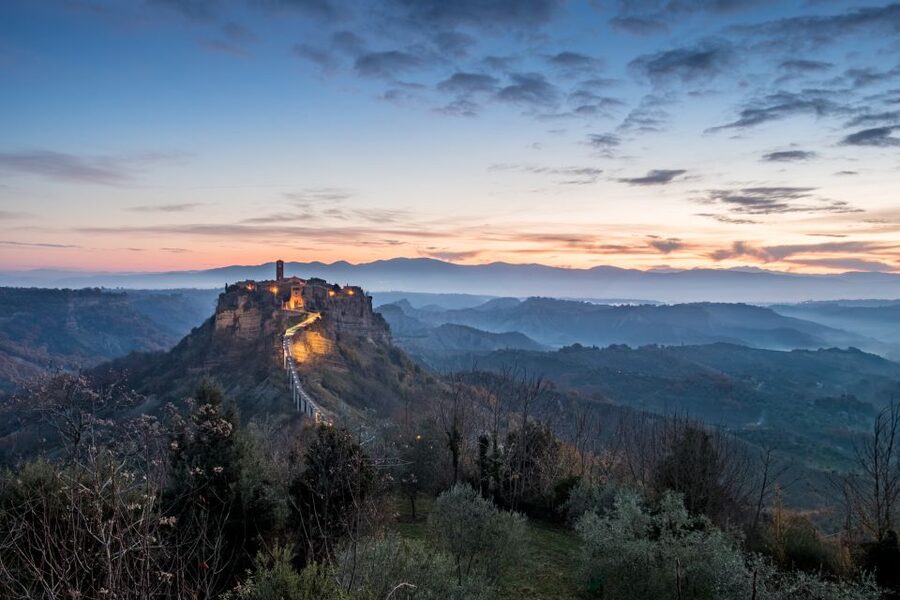
- Civita’s 300-meter bridge is the dramatic centerpiece: You walk across the bridge before entering the old village, with broad views toward the eroded valley.
- The town is called the Dying City for a real reason: The soft ground beneath Civita is slowly wearing away, and the village cannot be reached by ordinary road.
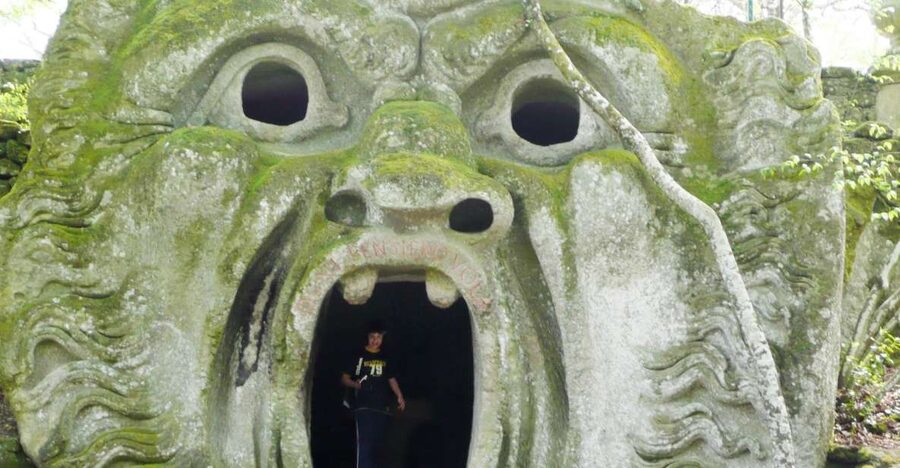
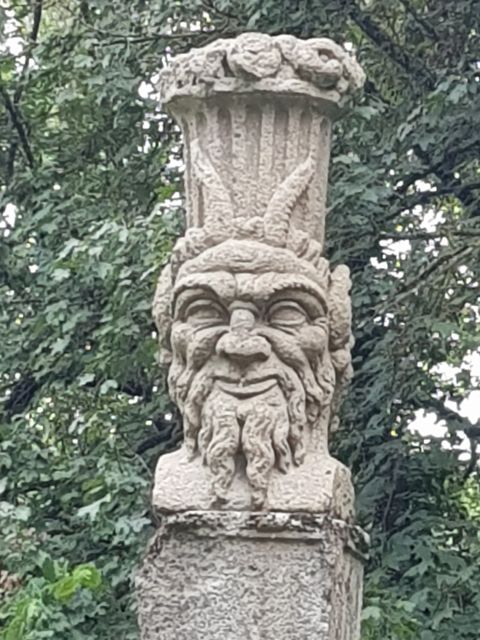
- Bomarzo is not a standard formal garden: Its peperino sculptures are strange, playful, and sometimes unsettling rather than classically beautiful.
- The driver adds local context: Andrea and Lucca are named among the drivers who have led this experience, and the drive can include conversation about farming, towns, and local history.
- Entry fees and port transport are included: You do not need to arrange separate tickets or find your own way from Civitavecchia.
- There is no included lunch or dedicated professional guide: Bring your own plan for food and expect to explore the two sites with help from the driver rather than a site-by-site lecture.
Why Civita di Bagnoregio makes such a strong first stop
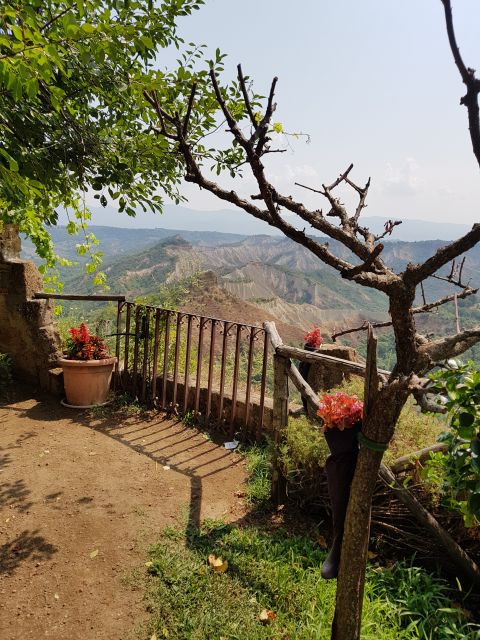
The unusual part of Civita begins before you reach the village. From the access point, you must walk across a bridge roughly 300 meters long. The bridge is not just a practical entrance. It gives you time to see the town hanging above the pale folds of the Valle dei Calanchi and to understand why the place has earned its gloomy nickname.
Civita is called the Dying City because the ground beneath it is gradually crumbling away. The rock and soil have been shaped by erosion, and the settlement is slowly losing its foothold. No visitor can fix that problem, which gives the approach a strange sense of urgency. You are seeing a living village that may not always be here in its present form.
The bridge is uphill and the walking surfaces in and around the town can be uneven. Comfortable shoes are essential, especially if you plan to wander beyond the main square. This is not a stop where you simply step off a vehicle, take one photograph, and return. The entrance walk is part of the experience.
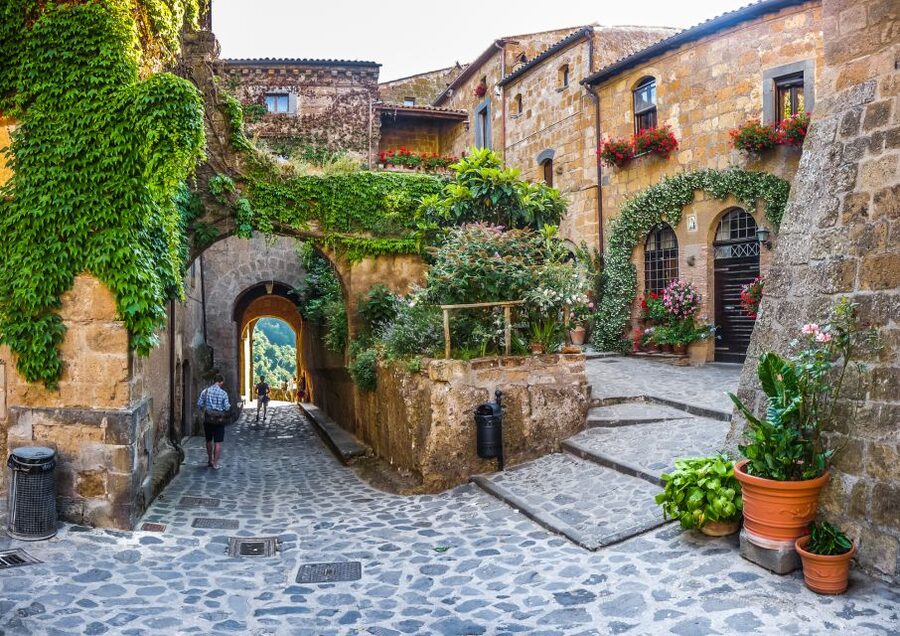
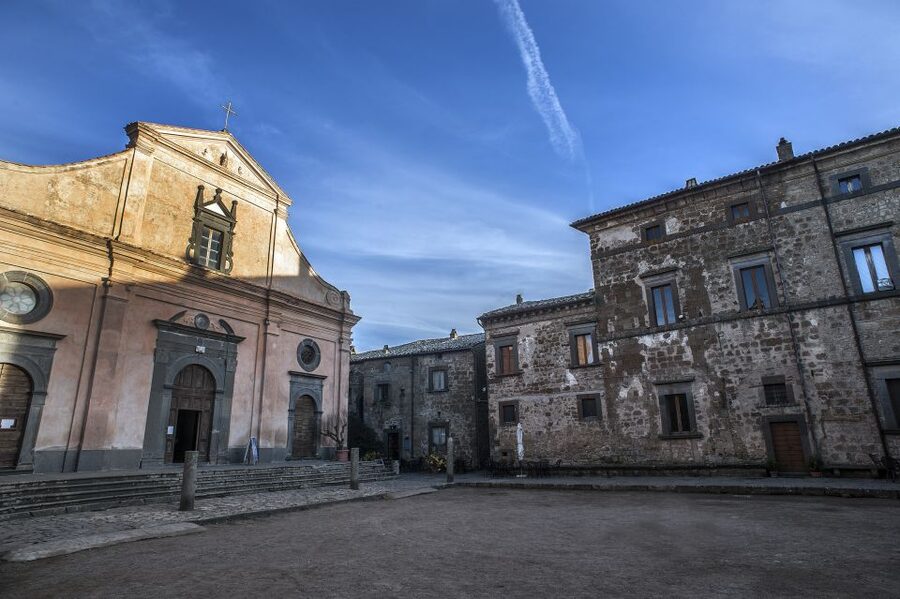
Once inside, Civita is compact and easy to explore at a relaxed pace. Expect old houses, narrow lanes, stone walls, and quiet corners that invite you to slow down. The Romanesque Arch marks the entrance, while the large Piazza provides the village’s social center.
The square also has a local tradition that adds color to the visit. Donkey races take place on the first Sunday in June and the second Sunday in September. If your trip falls at another time, you will see the same square in its everyday role, where the remaining residents gather in the evening.
A Renaissance Palace is another point of interest. The appeal here is not a long checklist of grand interiors. It is the feeling of walking through a small place that has retained its old shape while nature keeps pressing in from every side.
More Civitavecchia shore excursions:
- Civitavecchia Port: Private or Shared Guided Tour of Rome
★ 4.4 · 826 reviews - From Civitavecchia Port: Rome in a Day Guided Day Tour
★ 4.5 · 214 reviews - Civitavecchia: Transfer to Rome & Hop-on Hop-off Bus Ticket
★ 3.6 · 190 reviews
What the Dying City visit feels like in practice
Civita is best approached with patience. The bridge gives you a fine first view, but the village itself rewards a slower walk through its lanes. Take time to look back toward the bridge, notice the placement of the houses, and study how the town sits above the valley.
The setting is especially valuable if you have already seen Rome’s major monuments and want a quieter day. Civita offers no Colosseum-sized spectacle. Its appeal comes from the combination of fragile geology, medieval and Renaissance buildings, and the simple act of reaching a place that has no ordinary road connection.
The tour includes the ticket for Civita, so you do not need to arrange admission separately. The driver can provide context during the journey and help you understand the surrounding area, but a professional guide is not included. That distinction matters if you want detailed commentary inside every building or a formal walking tour.
The strongest part of the guide service is likely to be the time in the vehicle. Andrea, named as one of the guides, is described as offering information not only about historic places but also about agriculture in the surrounding countryside. Lucca is another named driver-guide associated with the experience. The exact person assigned to your day is not guaranteed, but the format allows conversation and local explanation between the stops.
The countryside drive from Civitavecchia
Pickup is offered from the Civitavecchia area. If you are staying at accommodation, include its name and address when reserving. The estimated pickup time is around 8:50 in the morning, though traffic can add five to ten minutes.
Cruise passengers have a specific port meeting point. Take the port’s free shuttle bus from your ship to its final stop at the Terminal Cruise Shuttle Bus in Largo della Pace, Via Prato del Turco 3. The shuttle ride usually takes 10 to 15 minutes, depending on where the ship is berthed. After leaving the port, look for staff carrying the MyloveItaly, My Italy logo.
This arrangement is useful, but allow enough time to leave the ship and reach the meeting point. The tour is built around a full day beyond the port, so a late start can affect both stops.
The transfer is one of the main reasons to consider this excursion. Reaching both Civita di Bagnoregio and Bomarzo independently requires more planning, and public transport does not give you the same direct connection between these smaller destinations. Here, the driver handles the route while you watch the countryside pass by.
The group may be private or small. That can make a noticeable difference. You can ask questions, keep the pace more personal, and avoid the rigid feel of a large coach excursion. On the other hand, the exact level of flexibility depends on the day’s timing and the driver.
Bomarzo’s Monster Park is strange by design
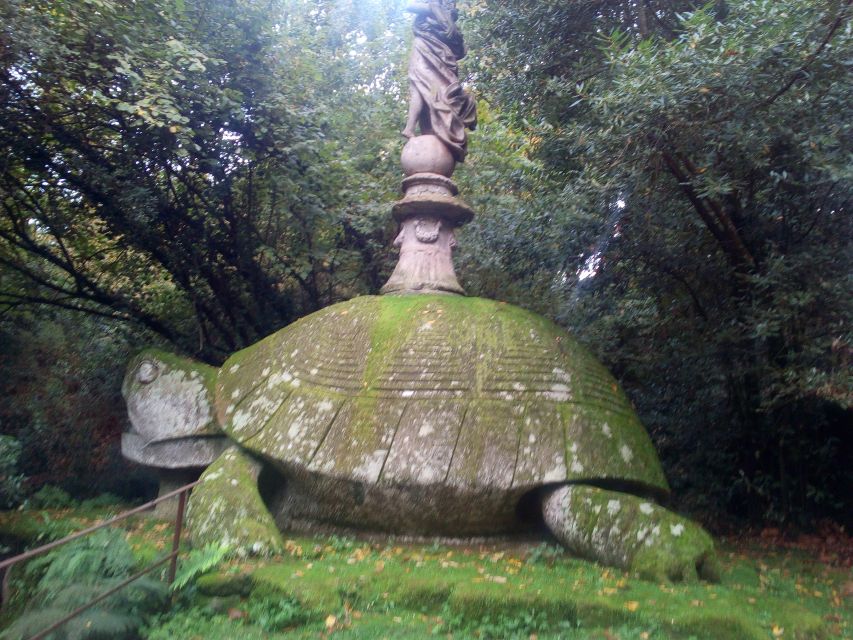
After Civita, the tour continues to Bomarzo and its famous Monster Park, also called the Sacred Wood. Prince Vicino Orsini created the park in 1552 with the architect Pirro Ligorio. It is not simply a garden filled with pretty flowers and clipped hedges.
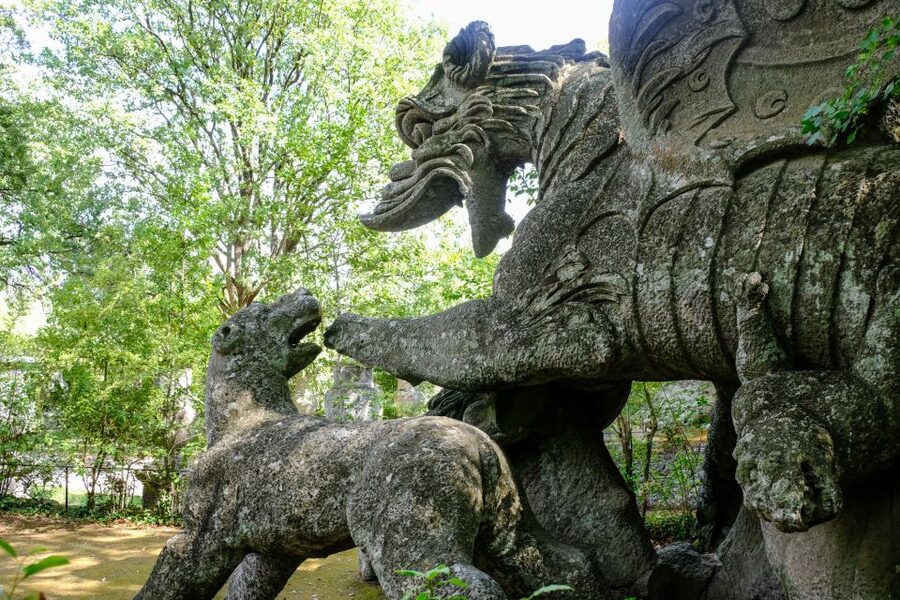
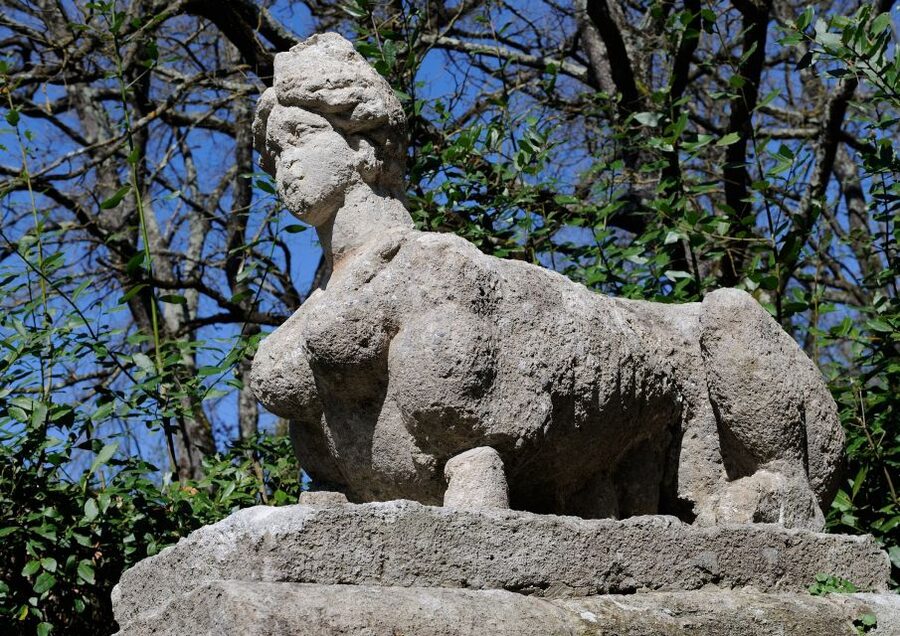
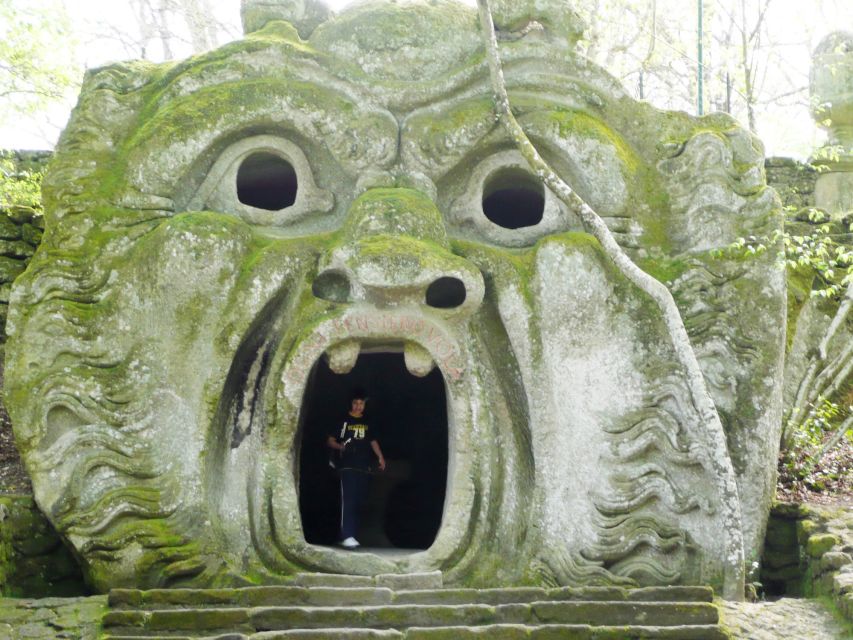
The park combines terraces, fountains, garden geometry, and mannerist sculpture. Its most memorable works are carved from peperino, a local volcanic stone. These blocks rise from the ground as monsters, dragons, mythological figures, and exotic animals.
The mood is deliberately eccentric. You may find the sculptures amusing, mysterious, or slightly unsettling. The park rewards curiosity more than speed. Instead of searching for one perfect viewpoint, you follow the paths and see what appears next.
This is a useful contrast with Civita. The first stop is shaped by erosion, age, and the slow loss of a settlement. Bomarzo is shaped by imagination. One place feels fragile and timeless; the other feels like an aristocrat’s private fantasy made solid in stone.
The park’s design also gives you more than a collection of odd statues. Its terraces, fountains, and changes in perspective reflect the formal garden style of sixteenth-century Italy, while the monsters disrupt that order. You get both refined planning and deliberate weirdness.
The admission ticket is included. As with Civita, you should expect to explore at your own pace rather than follow a detailed guided explanation at each sculpture. If you want to understand the park’s symbols and design history in depth, consider reading about it before departure or asking your driver questions along the way.
More city highlights tours in Civitavecchia:
- The Dying City “Civita Bagnoregio” w/wine tasting from Port
★ 4.5 · 8 reviews - Civitavecchia: visit the city with Incitur!
★ 5.0 · 4 reviews - Rome: City Sightseeing Hop-on Hop-off Bus with Audioguide
★ 4.0 · 16,045 reviews - City Sightseeing Rome Hop-On Hop-Off Bus Tour
★ 3.5 · 5,446 reviews
How much time do you get at each place?
The full outing lasts about 7.5 to 8.5 hours, including the transfers from Civitavecchia. The exact division of time is not specified, so you should not assume a fixed number of minutes at either site.
That flexibility can be helpful on a private or small-group tour. You may prefer to spend longer in Civita, or you may move quickly through the village and want more time at Bomarzo. Still, two destinations in one day means you should expect a schedule rather than an entirely spontaneous outing.
Lunch is not included. You will need to plan for food during the day, either by bringing something with you or asking the driver what options fit the route and timing. Because the tour visits smaller towns rather than a large city center, do not assume that a favorite restaurant or a long sit-down meal can be added without affecting the schedule.
Some outings have included extra stops, such as Celleno or Orvieto, but these are not part of the stated experience and should not be expected. If you have a special request, ask before booking. The advertised plan is Civita di Bagnoregio and Bomarzo.
Is the $243.56 price good value?
At $243.56 per person, this is not a budget excursion. The value depends on what you are buying.
You are paying for port pickup, return transportation, a driver, and entry to both attractions. For cruise passengers, the direct connection from Civitavecchia is the key benefit. You avoid arranging several separate rides and reduce the risk of being stranded at a rural site without a simple way back.
The price becomes easier to justify for a private or small group, particularly if you value comfort and personal conversation. It is also more appealing if you have already visited Rome or prefer unusual towns and gardens to another day among major city crowds.
The value is weaker if you expect a formal historian-led tour. No professional guide is included, and lunch is extra. You will receive useful information from the driver, but the depth of explanation can vary with the person assigned and with how many questions you ask.
For two people traveling together, compare the total cost with a private car service plus separate admission fees. For a larger group, the private format may make more financial sense. For a solo traveler, the per-person price is harder to overlook.
Who should take this excursion?
I would recommend it to you if you want a day away from Rome’s major sights and enjoy places with a strong sense of place. Civita is a good match for anyone interested in old villages, unusual geology, and walking through historic streets. Bomarzo suits you if traditional gardens leave you cold and you prefer art that is playful, mysterious, or bizarre.
It also works well for cruise passengers who want to see rural Lazio without renting a car. The driver handles the route, the tickets are already covered, and the small-group or private format can feel more personal than a large shore excursion.
You should think twice if you have limited mobility. The tour is not suitable for wheelchair users, and the bridge and village require walking. Wear sturdy, comfortable shoes, and bring sunglasses and a sun hat. Large bags and luggage are not allowed, and pets cannot join the excursion.
The tour may also disappoint you if your priority is a long lunch, extensive shopping, or a formal lecture at every stop. Its strength is the pairing of two unusual places and the ease of reaching them from the port.
Useful details for a smooth day
Keep your passport or ID card with you, along with the booking information. The activity advises bringing comfortable shoes, sunglasses, and a sun hat.
If you book within 24 hours of departure, contact the emergency number to confirm that the tour is operating. This is especially important when you are working around a cruise schedule.
English and German are the stated languages. Pickup is included, but port passengers must use the free port shuttle to reach the external meeting point. Plan that transfer into your morning rather than treating the meeting point as a place beside the ship.
Cancellation is free up to 24 hours before the start time, and you can reserve now and pay later. Those terms help if your port schedule is still changing, but they do not remove the need to confirm the pickup details.
Should you book the Dying City and Monster Park tour?
Book this tour if you want two distinctive Lazio sights in one day and value simple transport from Civitavecchia more than a low price. Civita di Bagnoregio supplies the grand approach and fragile hilltop setting; Bomarzo adds stone monsters, dragons, and a garden unlike any ordinary Italian park.
Skip it if you want a fully guided cultural tour, a leisurely meal, or minimal walking. The best reason to choose it is the combination of access and contrast: a village slowly giving way to nature, followed by a sixteenth-century garden built around wild imagination.
FAQ
How long does the tour last?
The activity lasts approximately 7.5 to 8.5 hours. Starting times vary, so check availability when booking.
Where is pickup at Civitavecchia Port?
The meeting point is the Terminal Cruise Shuttle Bus at Largo della Pace, Via Prato del Turco 3. Take the port’s free shuttle bus from your ship to its final stop, then leave the port and look for staff with the MyloveItaly, My Italy logo.
Is transportation included?
Yes. Pickup and drop-off from the Civitavecchia area and round-trip transportation to Bagnoregio and Bomarzo are included.
Are entrance tickets included?
Yes. Admission to Civita di Bagnoregio and Bomarzo’s Monster Park is included.
Is lunch included?
No. Lunch is not included in the activity price.
Is there a professional guide at both locations?
No professional guide is included. The activity provides a driver, with live tour languages listed as English and German. Drivers such as Andrea and Lucca are named among those associated with the experience.
Is the tour suitable for wheelchair users?
No. The tour is not suitable for wheelchair users, and comfortable walking shoes are recommended.
Newest Civitavecchia tours we have reviewed
- The Dying City “Civita Bagnoregio” w/wine tasting from Port★ 4.5 · 8 reviews
- The place of dreams: the Tarot Garden w/Wine tasting★ 5.0 · 3 reviews
- From Civitavecchia: Guided Tour of the Catacombs of St. Seba★ 4.0 · 3 reviews
- Civitavecchia: Hop-On Hop-Off Bus Ticket with Audio Guide★ 3.8 · 153 reviews
- Rome: Full-Day Shore Excursion from Civitavecchia Port★ 3.3 · 62 reviews
- From Civitavecchia: Vatican Museums and Sistine Chapel Tour★ 3.4 · 8 reviews
- From Civitavecchia: Tarquinia & Unesco Site Visit with Lunch★ 4.9 · 30 reviews
- From Civitavecchia: Private Rome Highlights Tour w/ Tickets★ 4.7 · 9 reviews
Civitavecchia Shore Excursions, compared.
Civitavecchia Port: Private or Shared Guided Tour of Rome
Read our review →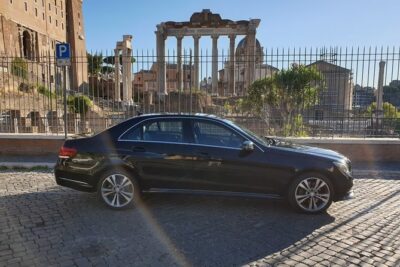
Civitavecchia Private Transfer: Rome to Civitavecchia Cruise Port
Read our review →
Shared Transfer from Civitavecchia Pier to Rome Hotel or Airport
Read our review →
Civitavecchia Private Transfer: Civitavecchia Port to Rome
Read our review →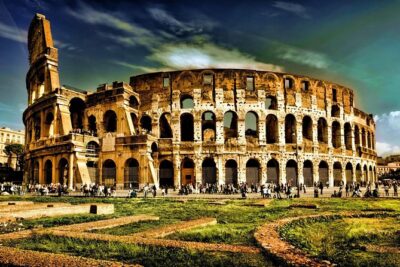
Rome Small-Group Shared Tour from Civitavecchia: 8 People Max
Read our review →
Hop-On Hop-Off Bus and Optional Cruise Port Transfer
Read our review →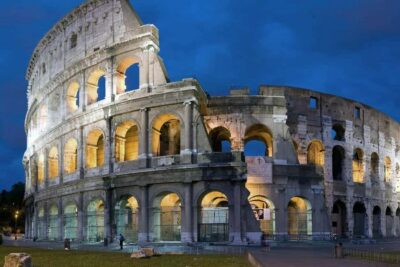
From Civitavecchia Port: Rome in a Day Guided Day Tour
Read our review →Browse the lists this tour appears in