
Reviewed · POMPEII DAY TRIPS FROM ROME
Pompeii: Entry Ticket w/ Guide and Transfers or Audio Guide
Pompeii is not a museum behind glass. You walk along the same streets where Roman shopkeepers worked, families lived, and crowds gathered before Mount Vesuvius buried the city in 79 AD. The Forum, amphitheater, frescoed homes, and plaster casts make this one of Italy’s most powerful historic sites.
I like the choice between a live guide and an English audio guide, since you can match the visit to your preferred pace. I also like the option of round-trip transport from Rome, which removes much of the day’s planning. The main drawback is the long journey from Rome and the uneven ancient streets, which make this a poor fit for wheelchair users and people with limited mobility.
Key points to know before booking
- See Pompeii’s Forum and amphitheater: These are the clearest places to picture the city’s public and social life.
- Choose your level of help: A guide can explain the ruins as you walk, while the English audio guide lets you set your own pace.
- Add transport from Rome: Bus or train travel is available with selected options, but the meeting point changes by booking.
- Look for the plaster casts: They are among the site’s most moving reminders of the eruption.
- Expect a substantial walking day: Ancient paving, open ruins, and uneven ground require good shoes and steady footing.
- Allow time for the scale of Pompeii: Options range from 2 to 12 hours, so check the exact start and end details before paying.
Why Pompeii feels different from a normal ancient ruin
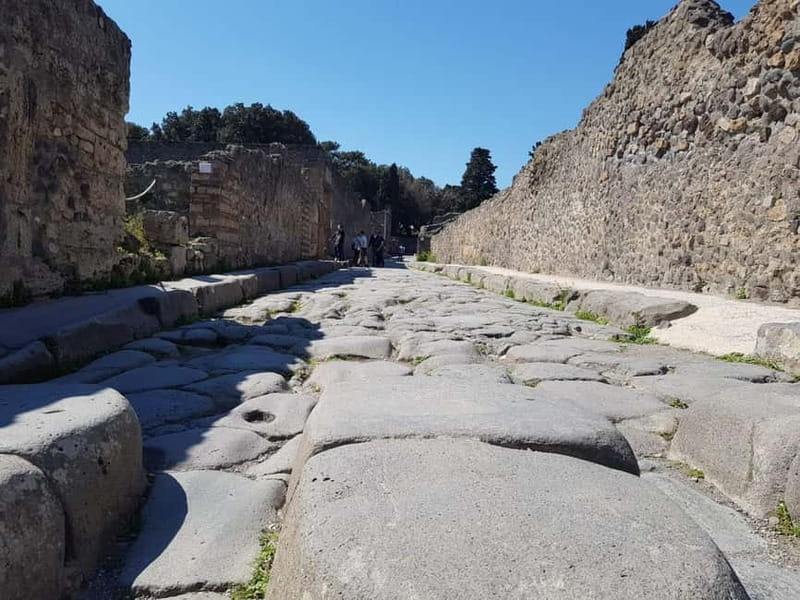
Pompeii gives you more than isolated columns and broken statues. It preserves a whole Roman town, including roads, homes, public buildings, baths, bakeries, and shops. The result is unusually readable. You can look down a street and understand how people moved through the city, then step into a villa and see how wealthy residents decorated their private rooms.
The eruption of Mount Vesuvius froze daily life in a single terrible moment. That fact gives the visit its emotional weight, but Pompeii is not only a place of tragedy. It is also a rare record of ordinary Roman life, from food production to politics, entertainment, religion, and domestic decoration.
I find the contrast especially striking. The Forum tells you how the city worked in public, while a bakery or house gives you a more personal sense of how people spent their days. A live guide can connect these pieces in a way that is hard to achieve from a map alone.
More Pompeii day trips:
- From Rome: Pompeii, Amalfi Coast, and Sorrento Day Trip
★ 4.6 · 7,031 reviews - From Rome: Pompeii, Amalfi Coast and Positano Day Trip
★ 4.6 · 6,620 reviews - Pompeii, Amalfi Coast and Positano Day Trip from Rome
★ 4.5 · 6,250 reviews
Choosing the guided tour or audio guide
The guided option is the better choice if you want a clear route and historical explanation as you go. A guide can point out details that are easy to miss, explain the role of each building, and place the eruption in context. The host or greeter support is available in English, French, Spanish, and German.
One guide praised in the feedback is Giuseppe, who was described as friendly, helpful, and good at making the visit engaging. You should not assume that Giuseppe will lead every departure, but the experience clearly benefits from a guide who can keep the ancient city understandable rather than letting it become a jumble of walls.
The English audio guide suits you better if you prefer quiet exploration, photography, or freedom to linger. You can move at your own speed rather than staying with a group. The tradeoff is that an audio guide cannot answer questions or adjust the explanation when a building catches your interest.
The guided option also seems useful for families. A good storyteller can turn the Forum, villas, and amphitheater into places with a purpose, rather than a long succession of stones. Families should still expect plenty of walking and sun exposure.
Getting from Rome to the buried city
Selected options include round-trip transport from Rome by bus or train. This is a major part of the value for anyone staying in Rome, since you do not have to work out the full route to Campania on your own. The journey also gives you a chance to see more of the Italian countryside before reaching the archaeological park.
Transport is not included with every version, so read the option title carefully. Some choices require you to make your own way directly to Pompeii. The meeting point may also change according to the option you book, and the activity ends back at that meeting point.
This is not a casual hop across town. A Rome departure can make the day much longer, with total activity times listed from 2 to 12 hours depending on the selected schedule. The longer option is best treated as a full day away from Rome, not a quick add-on between major city sights.
Be at the meeting point early. The tour does not wait for latecomers, and a missed departure could be especially costly when transport from Rome is part of your plan. Hotel pickup and drop-off are not included, so you need to reach the stated meeting point yourself.
Entering Pompeii through the Forum
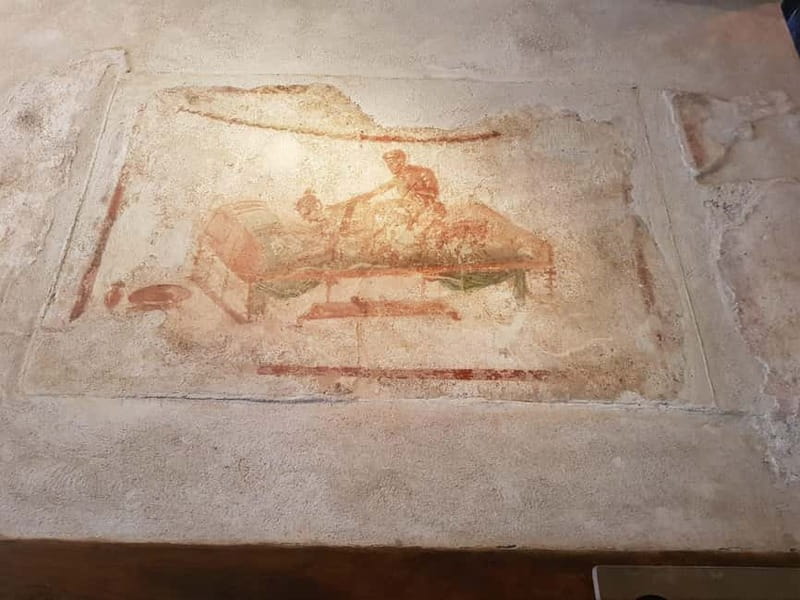
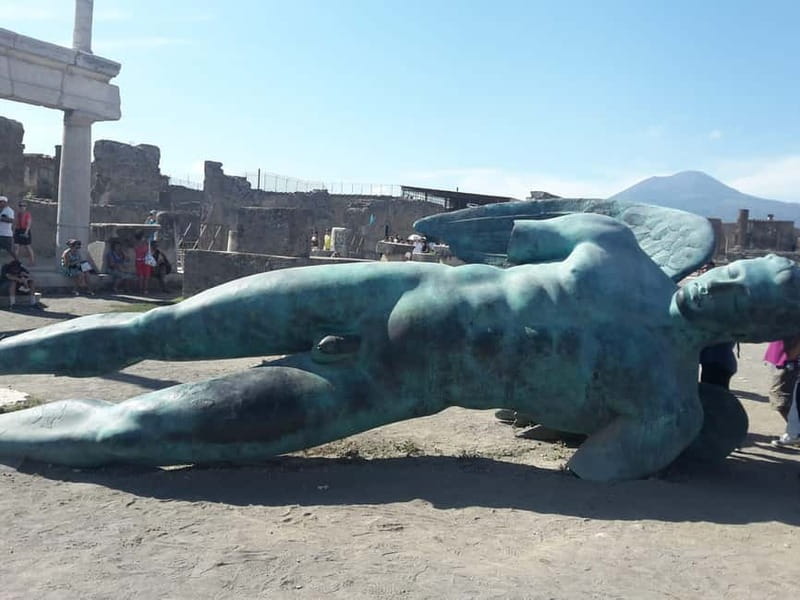
The Forum is one of the essential stops. This broad public center was the heart of political, religious, and social activity, and it gives you the clearest sense of Pompeii as a functioning city rather than a collection of houses.
A guide can help you read the remains by explaining how public spaces connected to daily life. With an audio guide, take your time and look beyond the main view. The important details are often in the arrangement of buildings around the open square and in the way the city’s public life was organized.
Pompeii rewards a slower pace here. Do not rush through simply because the Forum is an obvious landmark. It is the place where the scale of the town begins to make sense.
More self-guided and audio tours in Rome:
- Rome: Colosseum & Forum with Audio Guide App -Optional Arena
★ 4.2 · 24,770 reviews - Rome: City Sightseeing Hop-on Hop-off Bus with Audioguide
★ 4.0 · 16,045 reviews - Rome: St. Peter’s Basilica & Dome Entry Ticket & Audio Tour
★ 4.2 · 7,537 reviews - Vatican & Sistine Chapel Ticket with Optional Audio Guide
★ 4.1 · 5,405 reviews
The amphitheater and the city’s public life
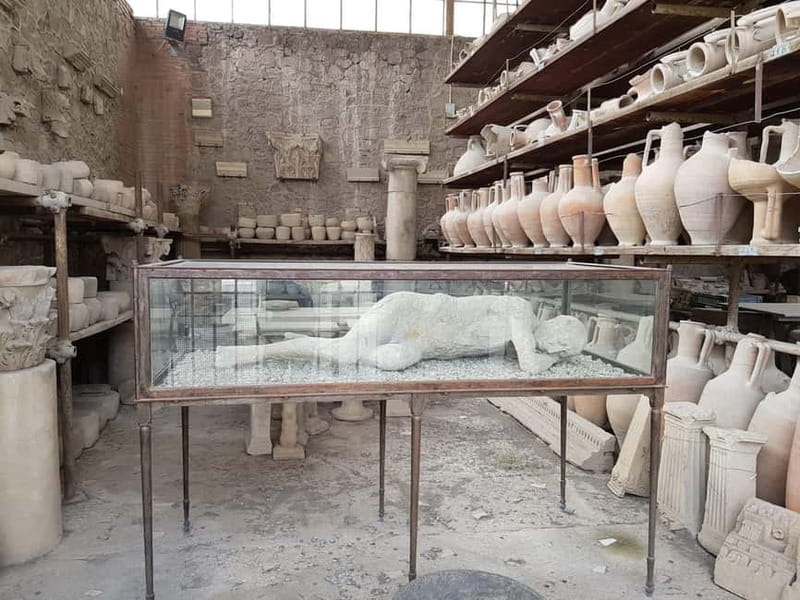
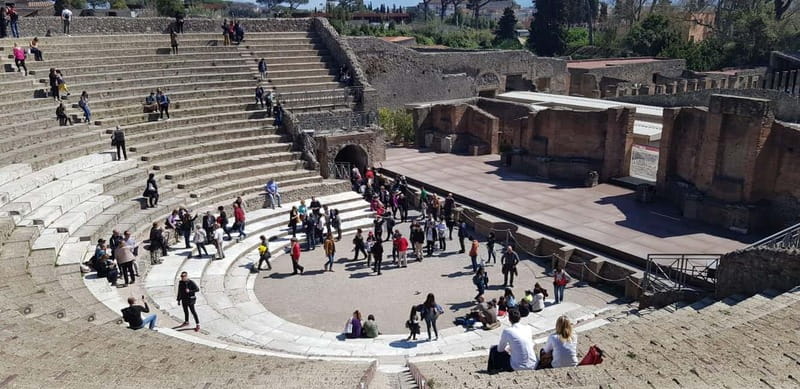
The amphitheater offers another strong visual stop. This is where gladiatorial contests took place, and its shape still makes the crowd experience easy to imagine. Even without a modern reconstruction, the structure explains how thousands of people could gather for public entertainment.
The amphitheater also adds balance to the visit. Pompeii was not only a place of private villas and household routines. It had mass entertainment, public events, and shared spaces that brought people together.
The exact route and amount of time at each site can vary, especially between the guided and audio options. If this stop matters most to you, ask at the start when it will be visited and how much free time you will have.
Villas, frescoes, and mosaics
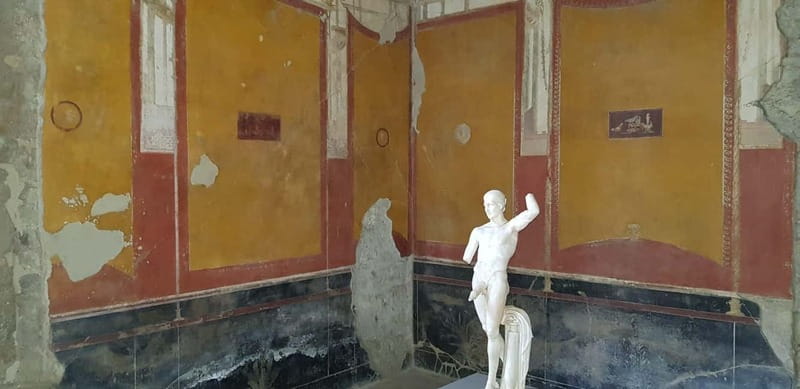
The homes of Pompeii’s wealthier citizens show a different side of the city. The House of the Vettii is noted for its intricate decoration, while the Villa of the Mysteries is one of the major named stops on the route. Frescoes and mosaics reveal how much effort wealthy families put into their rooms and courtyards.
These houses are valuable because they make Roman life feel personal. A Forum can show how the city functioned, but a home hints at taste, status, family life, and the way guests were received. You may find that small decorative details hold your attention longer than the grander ruins.
The Villa of the Mysteries is particularly useful as a counterpoint to the public buildings. It encourages you to look at Pompeii through private spaces, where wall paintings and room layouts carry much of the story.
Do not expect every room to be open during every visit. Archaeological sites change access for preservation and safety, and the route can depend on current conditions. The listed stops provide a strong framework, but not a guarantee that every area will be available on a particular day.
Baths, bakeries, and shops that explain daily life
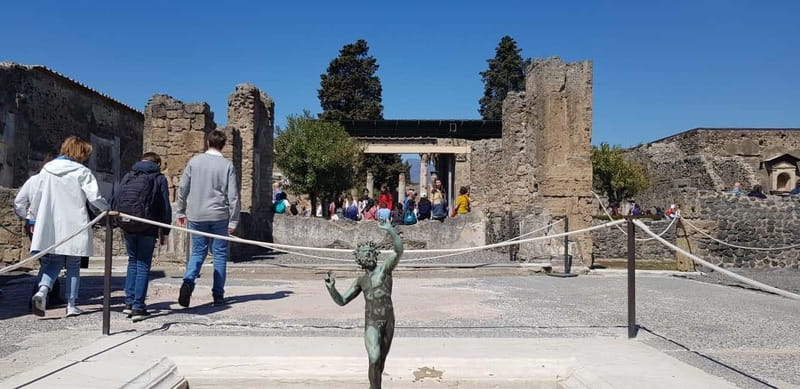
Pompeii’s baths, bakeries, and shops are among the most practical parts of the visit. They move the focus away from emperors and gladiators and toward work, hygiene, food, and commerce.
A bakery can make the ancient city feel surprisingly familiar. A shop front shows how goods were sold, while a bath complex points to the social importance of public bathing. These places help you picture the city as a working community, not just a wealthy showcase.
I would pay close attention when the guide explains these ordinary buildings. They often answer the questions you naturally have while walking through Pompeii: Where did people buy food? How did they spend leisure time? Which spaces were public, and which were private?
With the audio guide, use these stops to create your own rhythm. You can pause for photographs, replay an explanation, or move on when a room has less interest for you. That freedom is the main strength of the self-guided option.
The plaster casts and the human cost of the eruption
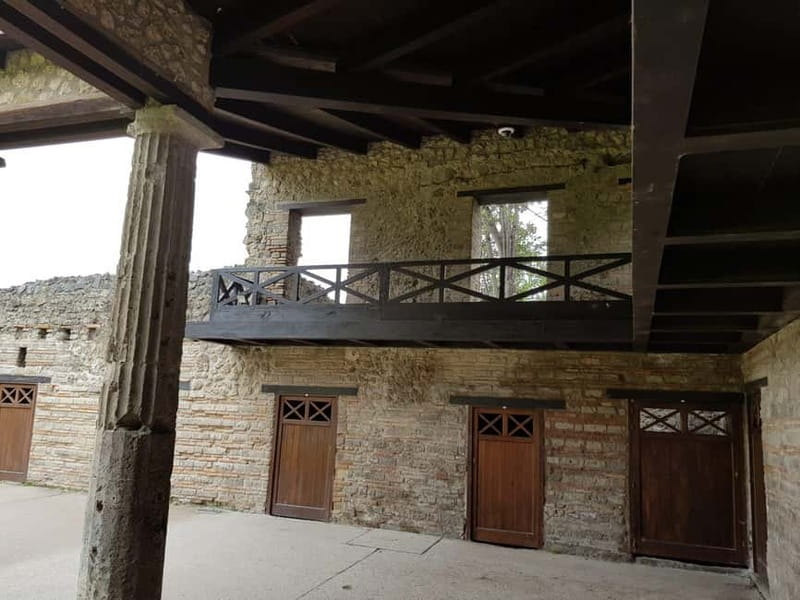
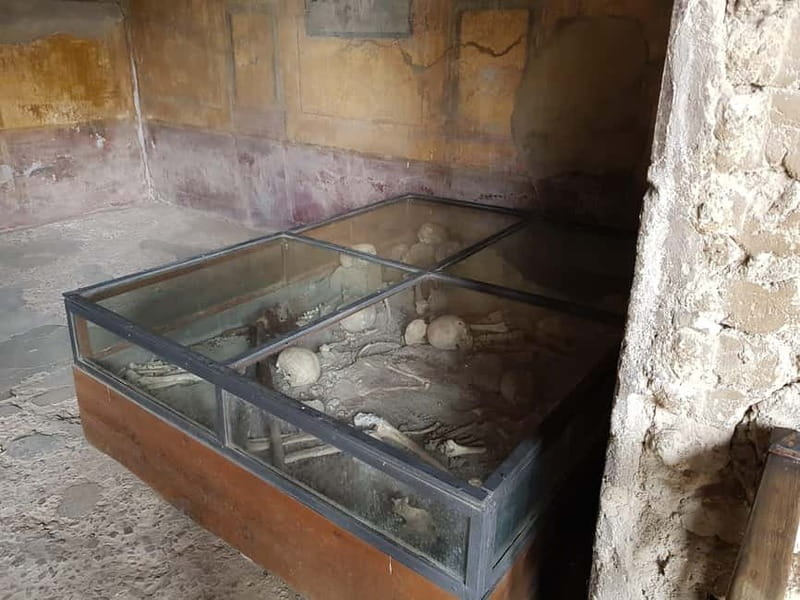
The plaster casts are the most emotionally difficult part of the visit. They show the forms of people caught by the eruption, turning an ancient disaster into something personal and immediate.
These casts can be hard to look at, but they are important. They remind you that the streets, homes, and public buildings were not abandoned ruins in the abstract. They belonged to people whose lives ended suddenly.
A guide can handle this section with care by explaining what the casts represent and how they were created. If you use the audio guide, give yourself time before moving on. This is one stop where a quiet pause may say more than a long explanation.
How the 2 to 12 hour timing affects your day
The wide duration range means you need to compare options carefully. A shorter version may suit you if you are already near Pompeii and want park entry with a focused visit. A longer option is more likely to include transport from Rome, guided sightseeing, and time to explore.
For a Rome departure, plan around the full commitment rather than the headline duration. The journey can be worthwhile because transport is arranged, but you will spend much of the day away from Rome. That is sensible for anyone who considers Pompeii a priority, less so if your Rome schedule is already packed.
The guided route can also make a long day feel more purposeful. Instead of wondering which street or building matters most, you receive a structure. The audio option gives you more control, but you need to manage your own energy and decide when to stop.
Pompeii is exposed and physically demanding. Wear supportive shoes, bring only what is allowed, and expect uneven surfaces. Oversize luggage and large bags are not allowed, and food and drinks cannot be taken in the vehicle. Tours run in rain unless officials close the monument for safety, so check the forecast and dress sensibly.
Is the $5.55 price good value?
The advertised price of $5.55 per person looks very low for a Pompeii visit, so treat it as a starting price tied to selected availability and options. Transport from Rome, a live guide, audio guidance, and the exact duration may not all be included in the same version.
The strongest value comes from matching the option to your needs. If you are already in Pompeii, park entry with an audio guide may be enough. If you are staying in Rome and want someone else to handle the route, the transport option can justify a higher total price.
The included Pompeii Archaeological Park entry is important. Buying a bare transfer and then arranging admission separately can add work and uncertainty. Here, entry is included, while hotel pickup and drop-off are not.
Free cancellation up to 24 hours before the activity adds useful flexibility. You can also reserve now and pay later, which helps if your Italian schedule is still shifting.
Who should book this Pompeii experience?
I would recommend it to first-time Pompeii visitors who want the major sights without having to plan every connection. It also suits solo visitors, couples, and families, particularly if a guide can keep the history lively for different ages.
The guided version is best for you if you want context, a set route, and someone to explain confusing ruins. The audio option is better if you value independence and prefer to stop often.
I would be cautious if you have limited mobility or use a wheelchair. The experience is specifically not suitable for wheelchair users or people with mobility impairments, and the ancient streets can be difficult even for fit visitors.
It is also not the right choice for anyone who cannot commit to the meeting time. Latecomers will not be held for, and the Rome transport option makes punctuality especially important.
Should you book it?
Book this experience if Pompeii is high on your Italy wish list and you want entry, historical help, and possible transport from Rome in one plan. The Forum, amphitheater, villas, everyday shops, and plaster casts provide a varied visit, while the choice of guide or audio guide lets you control how much support you receive.
Choose the guided option for the clearest introduction, especially on a first visit. Choose the audio option if you want more personal freedom. Just confirm the departure point, transport details, duration, and total price before booking, then arrive early with good walking shoes and no large luggage.
FAQ
Is entry to Pompeii included?
Yes. Pompeii Archaeological Park entry is included with the activity.
Is transportation from Rome included?
Round-trip transportation from Rome is included if you select an option that specifically lists it. Other options require you to make your own way to Pompeii.
Can I choose between a guide and an audio guide?
Yes. You can choose a guided tour if that option is available, or select the English audio guide option for independent exploration.
Which languages are available for the host or guide?
Host or greeter support is available in English, French, Spanish, and German. The optional audio guide is available in English.
How long does the activity last?
The listed duration ranges from 2 to 12 hours. Check the available starting times and the details of your chosen option for the exact schedule.
Does the activity include hotel pickup?
No. Hotel pickup and drop-off are not included. The activity starts and ends at the meeting point listed for your selected option.
Can I bring large luggage?
No. Oversize luggage and large bags are not allowed. Food and drinks are also not allowed in the vehicle.
Is Pompeii suitable for wheelchair users?
No. This activity is not suitable for wheelchair users or people with mobility impairments.
What happens if it rains?
Tours operate in the rain unless officials close the monument for safety. The tour does not wait for latecomers, so arrive at the meeting point on time.
Can I cancel the booking?
Yes. You can cancel up to 24 hours in advance for a full refund. Reserve now and pay later is also available.
Newest Rome tours we have reviewed
- Private TikTok Video Making in Rome★ 5.0 · 7 reviews
- Assisi, Orvieto and Civita di Bagnoregio Full Day Tour from Rome★ 4.5 · 45 reviews
- Assisi & Saint Francis Path Tour from Rome★ 5.0 · 45 reviews
- Assisi and Cascia Private Day Tour from Rome with Lunch★ 5.0 · 10 reviews
- Art Class in the center of Rome!★ 4.0 · 4 reviews
- Art & Craft: Beer Tour with Street Art in Rome★ 4.5 · 6 reviews
- Arrival in Rome: Airport Transfer & Exclusive City Introduction★ 5.0 · 3 reviews
- From Rome: Private Day-Tour of Tuscany★ 5.0 · 16 reviews
Pompeii Day Trips from Rome, compared.


Pompeii, Amalfi Coast and Positano Day Trip from Rome
Read our review →
Pompeii and Mount Vesuvius Day Trip from Rome with Pizza Lunch
Read our review →
Pompeii Day Trip with Optional Vesuvius and Lunch
Read our review →
Pompeii Tour & Amalfi Coast Day Trip from Rome
Read our review →
Private Pompeii, Positano & Amalfi coast Tour from Rome
Read our review →
Rome to Pompeii Guided Tour with Wine & Lunch by High Speed Train
Read our review →Browse the lists this tour appears in