
Reviewed · VATICAN MUSEUMS AND SISTINE CHAPEL TOURS
Small Group Vatican Museums Tour & Sistine Chapel – Max 10 people
The remarkable thing about this tour is how much Vatican ground you cover in roughly three hours: the Pinecone Courtyard, major museum galleries, Raphael Rooms, Sistine Chapel, and St. Peter’s Basilica. A guide keeps the route moving through one of Rome’s most confusing attractions.
I like the maximum group size of 10, which makes it easier to hear your guide and stay together. I also like the early start option, since the Vatican gets harder to enjoy as the day goes on. Guides such as Sara, Isabella, and Eleonora are praised for giving useful context rather than simply pointing at famous paintings.
The main drawback is the crowd level. Skip-the-line entry saves time, but it does not mean you will have the museums or Sistine Chapel to yourself. Expect lots of walking, stairs, busy galleries, and a brisk pace.
The Vatican tour at a glance
- Three major sights in one route: Vatican Museums, Sistine Chapel, and St. Peter’s Basilica.
- A group capped at 10 people: Small enough for direct contact with your English-speaking guide.
- About 15 minutes in the Sistine Chapel: Your guide explains the artwork before you enter, since silence is required inside.
- The best-known Vatican galleries: You see the Candelabra, Tapestries, and Maps galleries, along with Greek and Roman sculpture.
- Early morning and afternoon choices: The early option is the better bet if you want fewer people in the first part of your visit.
- St. Peter’s Basilica is not guaranteed every day: It is excluded on Wednesdays and can close unexpectedly for church business.
Why a small Vatican group matters
The Vatican Museums are not difficult because they lack things to see. They are difficult because they contain too much. Long corridors, grand rooms, sculpture galleries, painted ceilings, and signs compete for your attention. Without a plan, you can spend half your visit simply trying to work out where to go next.
A group of 10 is a useful middle ground. You get the structure of a guided visit without being folded into a group of 30 or 40 people. A smaller group also helps when the guide stops to explain a painting or gather everyone before moving on.
The guide is central to the experience. Sara is praised for being lively, patient, and good at keeping the group moving. Isabella, described as an art history graduate, is noted for making the route personal and easy to follow. Eleonora is especially good at explaining what deserves your time and what can be passed by.
That does not mean every guide will use the same method. One person may focus more on art, another on papal history, and another on stories about the objects. You should expect an overview of the major works, not a private seminar on every gallery.
One practical issue is the audio equipment. A few people have found the earpiece hard to follow. If you cannot hear clearly, tell the guide at once rather than quietly missing half the explanation.
More Vatican Museums and Sistine Chapel tours:
- Vatican Museums & Sistine Chapel Tour with Optional Basilica
★ 4.3 · 67,413 reviews - Vatican Museums, Sistine Chapel & St Peter’s Basilica Guided Tour
★ 4.5 · 39,149 reviews - Rome: Vatican Museums, Sistine Chapel & Basilica Tour
★ 4.3 · 13,872 reviews
Meeting at Vatican City and getting inside
The meeting point is at Viale Vaticano 100, near the Vatican Museums. Your confirmation voucher gives the precise meeting instructions, so read it before leaving your hotel. This is not a tour where arriving a few minutes late is harmless.
The museum entry is tied to a scheduled time. One late party missed the start after arriving 15 minutes behind schedule, and the tickets could not simply be used later for self-guided entry. The tour had already begun and the admission window had passed. Build in extra time for Rome traffic, public transportation, finding the correct entrance, and security.
Skip-the-line access is one of the main reasons to pay for this tour. The standard lines can be extremely long, particularly in the warmer months. The benefit is not that you walk into an empty museum. It is that you spend less of your limited Rome time waiting outside.
The early morning start deserves serious thought. It will not remove every crowd, and the exact access rules can change, but beginning early gives your group a better chance of reaching the first galleries before the day grows more crowded. Afternoon departures suit a later schedule, but you should expect a busier interior.
Carry a copy of the identification page of your passport. A photo of that page stored on your phone is accepted. This is an easy requirement to overlook, so save it before you leave home.
The Pinecone Courtyard and Sphere within a Sphere
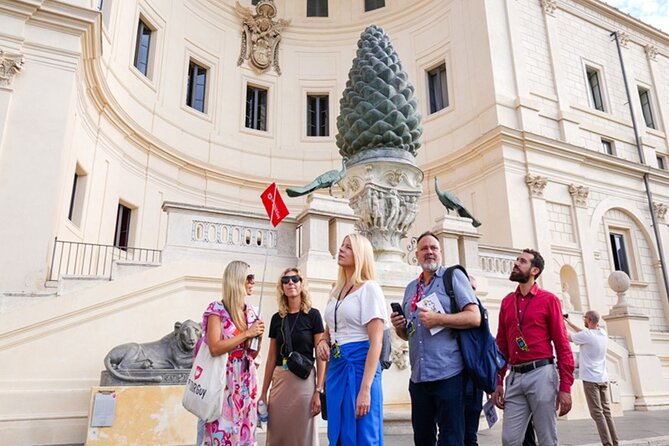
The first brief stop is the Pinecone Courtyard, where you see Arnaldo Pomodoro’s Sphere within a Sphere. The polished, cracked bronze globe looks modern against the Vatican’s older surroundings. It is a quick introduction to the way the Vatican mixes ancient sculpture, Renaissance painting, church tradition, and contemporary art.
You have about 15 minutes here. That is enough to look at the sculpture, hear why it is notable, and get oriented before entering the museum’s long sequence of galleries.
Do not expect a quiet courtyard walk. The Vatican is a working religious and cultural complex, and tour groups gather in the same spaces. The value of this stop is the contrast and the chance to begin with a clear explanation from your guide.
The Vatican Museums in 1 hour and 40 minutes
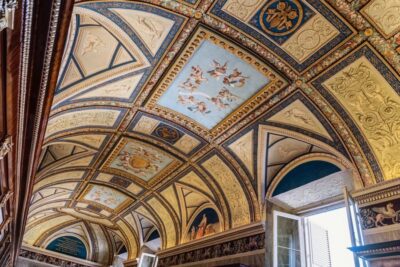
Most of the tour takes place inside the museums. The route includes the Pio-Clementino Museum, the Gallery of the Candelabra, the Gallery of Tapestries, and the Gallery of Maps. You will also see ancient Greek and Roman sculpture, Flemish tapestries, topographical maps, and rooms filled with Renaissance painting.
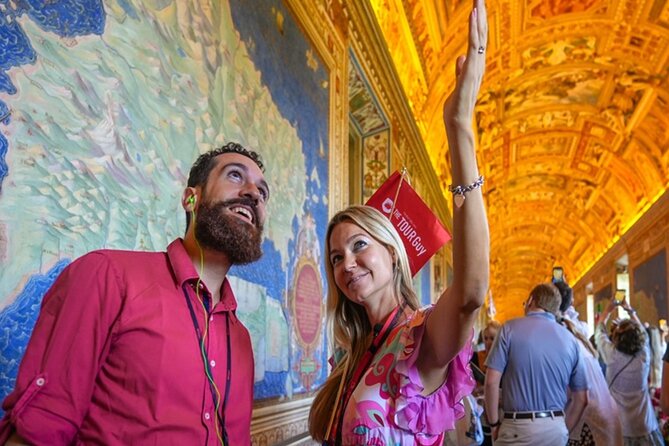
The Gallery of Maps is one of the most memorable stretches. Its huge painted maps were commissioned by Pope Gregory XIII, and the scale makes them impressive even if you are not a map enthusiast. A good guide can turn the gallery into more than a long decorated hallway by explaining what the maps reveal about how Italy was viewed in the late 16th century.
The sculpture galleries give you a chance to see the Vatican’s ancient Roman and Greek works before reaching the Renaissance rooms. This order matters. The tour shows how later artists studied classical bodies, poses, architecture, and storytelling, then reshaped those ideas for Christian art.
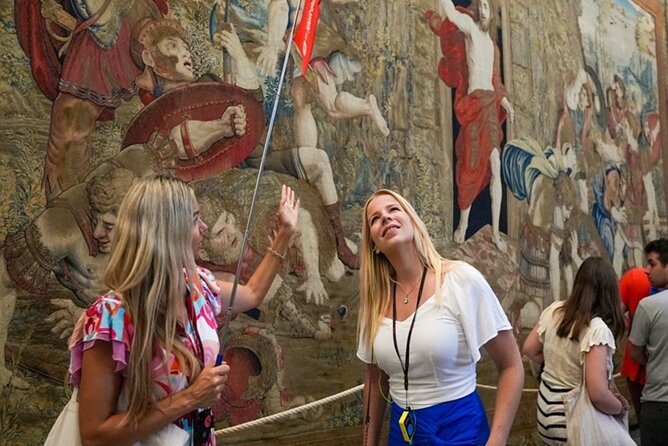
The Candelabra Gallery and Tapestries Gallery can feel like a parade of beautiful objects if you walk through them alone. Your guide should help you notice details that are easy to miss, including the scale of the decorations and the way the museum displays works from different periods side by side.
The pace is purposeful. One person found a guide spent too much time reading information boards, while others praised guides for moving quickly and highlighting the most important works. That difference is worth keeping in mind. A three-hour Vatican tour cannot give equal attention to everything, and you may occasionally wish for more time in a favorite room.
You will not see every part of the Vatican Museums. That is not a flaw so much as a fact of the place. Seeing the highlights with a clear route is more realistic than trying to cover the entire collection in one morning.
More museums and galleries in Rome:
- Vatican Museums & Sistine Chapel Skip-the-Line Entry Ticket
★ 4.4 · 13,838 reviews - Rome: Vatican Museums, Sistine Chapel & Basilica Tour
★ 4.7 · 13,217 reviews - Rome: Vatican Museums & Sistine Chapel Guided Tour
★ 4.3 · 12,117 reviews - Vatican Museums & Sistine Chapel Skip-the-Ticket-Line Tour
★ 4.3 · 10,486 reviews
Raphael’s School of Athens and the Renaissance rooms
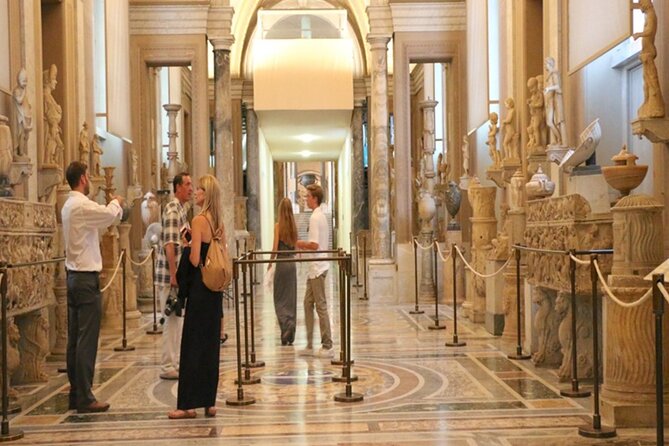
The Raphael Rooms are a major reason to choose a guided visit. These rooms contain frescoes commissioned for the papal apartments, and Raphael’s work shows the intellectual and artistic confidence of the High Renaissance.
The most famous image is The School of Athens. Raphael places philosophers and thinkers inside an ideal architectural setting, creating a scene that feels both orderly and alive. Your guide can point out the central figures, the references to classical learning, and the visual choices that make the fresco so memorable.
This is where a good explanation pays off. You can admire the colors and composition on your own, but the fresco rewards you when someone explains how the figures, architecture, and papal setting fit together. You may also need to keep moving, since the rooms fill quickly.
Photography rules and crowd control can limit how long you stand in front of a work. The guide usually gives you time to look, but this is a highlights visit, not an unhurried sketching session.
Entering the Sistine Chapel
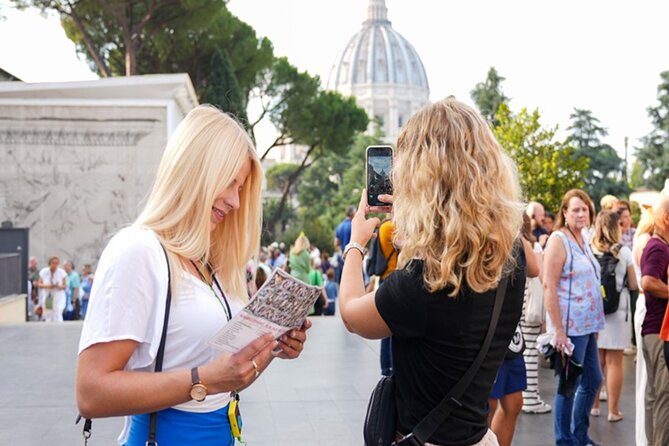
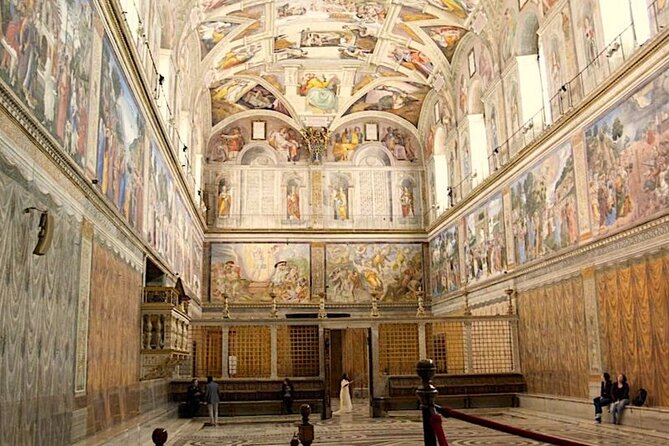
Before you enter, the guide gives a short explanation of the Sistine Chapel and its major works. That briefing matters because no talking is allowed inside. Once you are in the chapel, you cannot rely on a running commentary to identify what you are seeing.
Michelangelo’s ceiling is crowded with hundreds of figures, while The Last Judgment fills the wall behind the altar. The scale can be hard to grasp in photographs. Look up slowly, then look toward the altar wall, and give yourself a moment to adjust to the number of scenes competing for your attention.
The visit inside lasts about 15 minutes, though the exact time can vary with crowd movement and museum control. That is enough to appreciate the chapel, but not enough to study every panel. If the Sistine Chapel is your central reason for coming, keep your expectations measured.
The chapel is also a sacred space. Your knees and shoulders must be covered for entry, for both men and women. In Rome’s hot months, carry a light shawl or sweater rather than relying on a jacket all day.
The chapel is often the most crowded part of the route. An early start can help, but no tour can promise a peaceful, empty room. Silence, large groups, and limited time are part of the visit.
St. Peter’s Basilica and the Scala Regia route
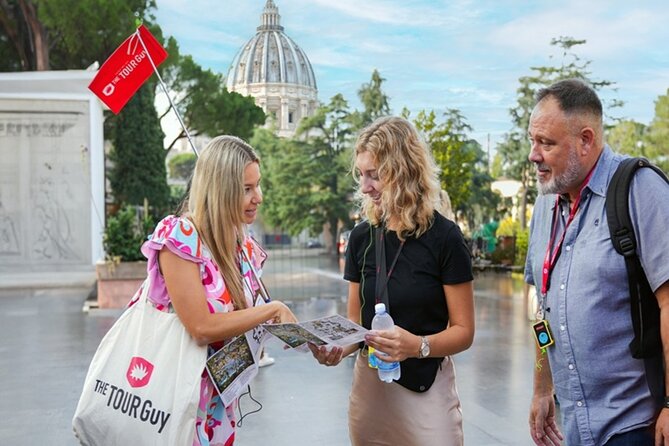
On days when access is available, the tour continues to St. Peter’s Basilica through a passage connected with the Scala Regia, or Holy Staircase. This avoids the long exterior line used by many independent visitors.
Inside, the focus is on three major sights. Michelangelo’s La Pietà is a small, deeply moving sculpture viewed behind protective glass. Bernini’s Baldacchino rises over the main altar, its enormous bronze columns helping you understand the scale of the church. The basilica is traditionally associated with the tomb of St. Peter, which gives the building its spiritual weight as well as its artistic importance.
The basilica portion lasts about 20 minutes. That is enough for an introduction and the main highlights, but you will not have time to explore every chapel, monument, and side aisle in detail. If you want a long, quiet church visit, plan to return on your own if your schedule allows.
St. Peter’s Basilica is not accessible through this tour on Wednesdays because of the Papal Audience. It can also close unexpectedly on other days. If that happens, the guide adjusts the route and provides more time elsewhere in the Vatican area. Treat the basilica as an important part of the plan, but not an absolute guarantee.
The stated endpoint is inside the Vatican Museums, where you can continue on your own or follow the guide toward the exit. Confirm the day’s route with your guide, especially if St. Peter’s is a priority.
How much value do you get for $114?
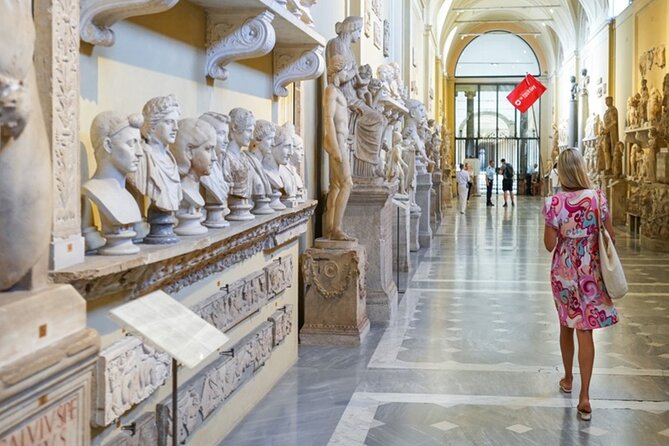
At $114 per person, this is not the cheapest way to enter the Vatican. You are paying for timed admission, a small group, an English-speaking guide, and help with the route through several major sights.
The strongest value comes from time saved. A long ticket line can eat a large part of a Rome day, and the Vatican is too large for casual wandering to work well on a first visit. The guide also helps you decide where to stop, which is useful when you have only a few hours.
The small group adds value over a standard large-group tour. You have a better chance of hearing the guide, asking a question, and staying connected as the group moves through crowded rooms. It is not a private tour, though, and you will not control every stop.
I would consider the price fair if you are visiting Rome for the first time, have limited time, or want the Vatican’s major works explained in context. It is less appealing if you prefer to move slowly, read every label, pray quietly in the basilica, or choose your own route.
Who should book this Vatican experience?
This tour suits you if you want a first visit with structure. The Vatican can feel overwhelming, and a guide gives you a sensible path through the main galleries and famous works.
It also suits people who dislike large tour groups. A maximum of 10 is still a group, but it is far easier to manage than a crowd of 30 or more. Families and couples who want some explanation without arranging a private guide may find this a good compromise.
You should be comfortable walking for several hours. There are stairs, long museum corridors, and frequent stops where you may need to stand. The physical demand is moderate, but this is not a sit-down sightseeing experience.
Art lovers may want a private or specialist tour if they need long discussions of Raphael, Michelangelo, or ancient sculpture. This itinerary covers a lot of ground, so the guide has to keep the group moving.
Dress with the religious sites in mind, arrive early, and bring your passport identification copy. Those three steps prevent many avoidable problems.
Should you book it?
I would book this tour if you want to see the Vatican’s major sights in one organized morning or afternoon, especially if this is your first visit to Rome. The best reasons are the 10-person limit, the time-saving entry, and the guides who explain the art while keeping the route moving.
Choose the earliest available start if you can. It will not erase the crowds, but it gives you a better shot at seeing the galleries before they become harder to navigate.
Skip it if you want a slow, independent museum day or if you are uncomfortable with a brisk pace and crowded rooms. For most first-time visitors, though, the combination of the Vatican Museums, Sistine Chapel, and St. Peter’s Basilica makes the $114 cost a reasonable trade for saved time and a clear plan.
FAQ
How long does the Vatican tour last?
The tour lasts about three hours. The main Vatican Museums visit takes about 1 hour and 40 minutes, with shorter stops at the Pinecone Courtyard, Sistine Chapel, and St. Peter’s Basilica.
What is the maximum group size?
The group is limited to 10 participants. It is a semi-private guided visit, not a private tour.
Is skip-the-line entry included?
Yes. Admission to the Vatican Museums is included with direct skip-the-line access. The tour also includes access to the Sistine Chapel and a skip-the-line route to St. Peter’s Basilica when that portion is available.
Can I visit St. Peter’s Basilica on a Wednesday?
No. St. Peter’s Basilica is excluded on Wednesdays because of the Papal Audience. The basilica may also close unexpectedly on other days, in which case the guide adjusts the route.
What should I wear to enter the Sistine Chapel?
Your knees and shoulders must be covered. This applies to men and women. During hot weather, bring a shawl or light sweater so you can cover up when needed.
What identification do I need to bring?
Everyone must carry a copy of the identification page of their passport. A photo of the first passport page saved on your smartphone is accepted.
Newest Rome tours we have reviewed
- Private TikTok Video Making in Rome★ 5.0 · 7 reviews
- Assisi, Orvieto and Civita di Bagnoregio Full Day Tour from Rome★ 4.5 · 45 reviews
- Assisi & Saint Francis Path Tour from Rome★ 5.0 · 45 reviews
- Assisi and Cascia Private Day Tour from Rome with Lunch★ 5.0 · 10 reviews
- Art Class in the center of Rome!★ 4.0 · 4 reviews
- Art & Craft: Beer Tour with Street Art in Rome★ 4.5 · 6 reviews
- Arrival in Rome: Airport Transfer & Exclusive City Introduction★ 5.0 · 3 reviews
- From Rome: Private Day-Tour of Tuscany★ 5.0 · 16 reviews
Vatican Museums and Sistine Chapel Tours, compared.
Vatican Museums & Sistine Chapel Tour with Optional Basilica
Read our review →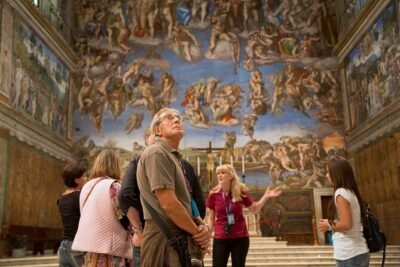
Vatican Museums, Sistine Chapel & St Peter’s Basilica Guided Tour
Read our review →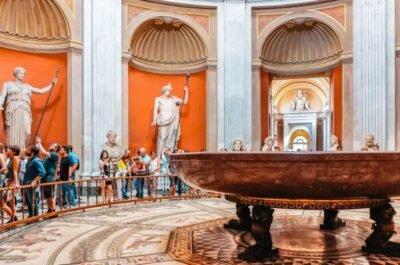
Vatican Museums, Sistine Chapel & Basilica Tour
Read our review →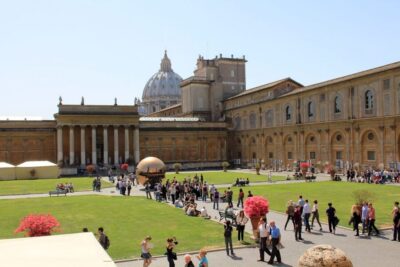
Vatican Museums & Sistine Chapel Skip-the-Line Entry Ticket
Read our review →Vatican Museums, Sistine Chapel & Basilica Tour
Read our review →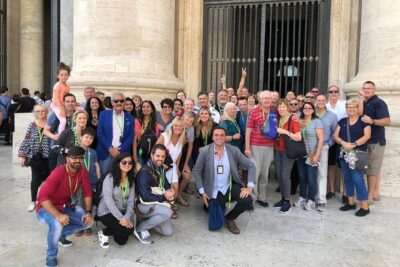
Skip-the-Line Group Tour of the Vatican, Sistine Chapel & St. Peter’s Basilica
Read our review →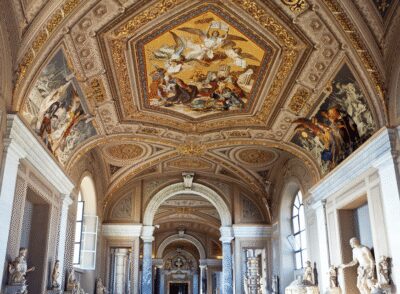
Vatican Museums & Sistine Chapel Guided Tour
Read our review →
Vatican Museums & Sistine Chapel Skip-the-Ticket-Line Tour
Read our review →Browse the lists this tour appears in