
Reviewed · ROME
Popes and Artists: sex, lies and betrayals in the 1600s
Rome’s Baroque masters did not live quiet lives. On this 2.5-hour walking tour, you follow the streets where Caravaggio, Bernini, Borromini, Popes, Cardinals, and courtesans crossed paths, then match their fierce personal stories with the art they left behind.
I like the way the walk mixes famous places with lesser-known corners, especially the Caravaggio paintings at St. Louis of the French and the story of the competition between Bernini and Borromini. I also like the small group, limited to 10 people, and the chance to hear the tour from Luisa, a university professor praised for her lively storytelling.
The main drawback is the amount of walking and standing. The route is not suitable for people with mobility impairments, and comfortable shoes are essential. Churches also require modest clothing, so leave the sleeveless shirt at the hotel.
Key points to know before booking
- Caravaggio’s dramatic Rome: See his three paintings in the Church of St. Louis of the French and learn the surprising story behind their commission.
- A walk through Baroque rivalries: Piazza Navona becomes the setting for the famous Bernini and Borromini competition.
- Luisa’s story-led guiding: Luisa brings out the artists’ fights, passions, scandals, and personal grudges, not just dates and styles.
- Seven central Rome stops: The route links Trevi Fountain, the Pantheon, Sant’Ignazio, Piazza Navona, and smaller streets in one continuous walk.
- A genuine small-group format: With no more than 10 participants, it should be easier to hear explanations and ask questions.
- A good value for art lovers: At $59 per person, the tour costs more than a basic orientation walk but includes church access and focused art explanations.
Baroque Rome with the gossip left in
Many Rome tours present Baroque art as a neat parade of fountains, domes, and grand churches. This one takes a messier route through the period. Its subject is not only what the artists made, but how they behaved while making it.
You hear about rivalry, bloodshed, revenge, love affairs, duels, courtesans, and powerful Popes who could reward an artist one day and ruin him the next. That human angle gives the monuments more force. A painting is no longer just a masterpiece on a chapel wall. It becomes part of a contest, a commission, a grudge, or a desperate attempt to win favor.
The route focuses on Rome in the 1600s, the great Baroque century, while also reaching back to earlier figures such as Raphael and Fiammetta. That blend works well because the city itself does not divide neatly by century. A church may hold a Renaissance tomb, a Baroque illusionistic ceiling, and a later painting by an artist shaped by both.
The tone is lively, but the stories are intended to remain historically grounded. Luisa has a background as a university professor, and her approach combines art history with the colorful details usually left out of a standard museum label. That is important here. The tour depends on storytelling, and the guide’s ability to connect personalities with places is central to the experience.
Other Rome tours people pair with this one:
- Vatican Museums & Sistine Chapel Tour with Optional Basilica
★ 4.3 · 67,413 reviews - Vatican Museums, Sistine Chapel & St Peter’s Basilica Guided Tour
★ 4.5 · 39,149 reviews - Rome: Colosseum, Palatine Hill and Roman Forum Guided Tour
★ 4.8 · 32,814 reviews
Starting at the Accademia di San Luca
You meet at Via della Stamperia 72, in front of the beautiful building of the Accademia di San Luca, the Academy of Painting. It is a fitting place to begin. The tour is about artists competing for status and commissions, and this opening setting points directly toward Rome’s old artistic world.
From the meeting point, the group walks toward the Trevi Fountain. The meeting point is in the historic center, and the route stays within central Rome for the rest of the walk. There is no coach or public transport between stops, so you can watch the city change block by block.
A small group of 10 or fewer matters on a tour like this. The streets and churches can be busy, and a very large group would make it harder to hear a detailed story. In a small group, you have a better chance to pause near a painting, ask about an artist, or clarify a point without losing the guide’s thread.
Trevi Fountain and the first steps into the story
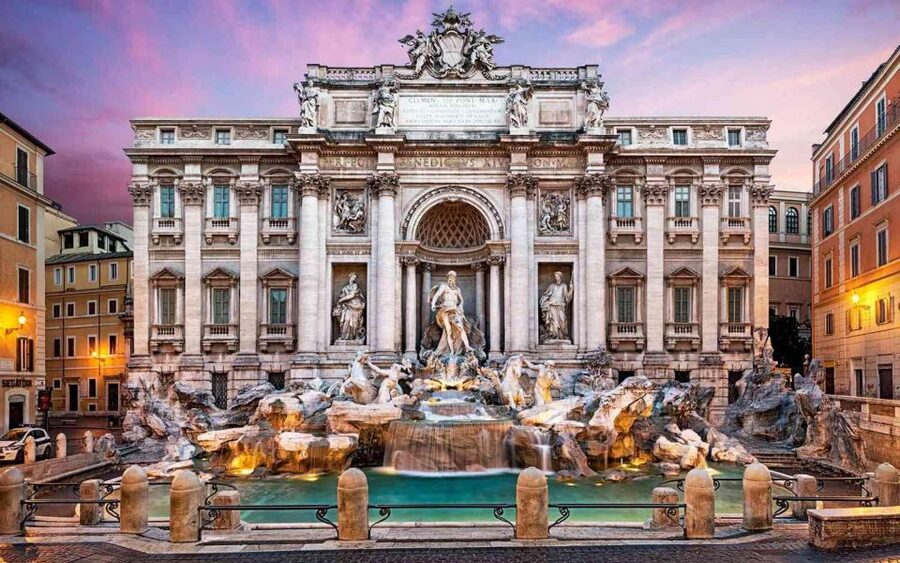
The Trevi Fountain is the first formal stop, with about 15 minutes set aside for a visit. Most people know the fountain as one of Rome’s great photo stops, but this tour uses it as an opening chapter rather than the main event.
You begin to see how Rome’s public spaces became stages for power and artistic ambition. Monumental works were not placed in the city by accident. They reflected the money, taste, and political aims of the people who commissioned them.
Do not expect a long, standalone lecture here. The fountain is one part of a moving story, and the tour soon leaves the busiest tourist route. That is part of its appeal. You get the famous sight, then continue into the streets and buildings where the personal dramas become more specific.
Piazza di Pietra and Rome’s quieter corners
The walk continues to Piazza di Pietra for roughly 15 minutes of guided exploration. This stop helps shift the mood from Rome’s best-known spectacle to its smaller urban spaces.
The square is useful for understanding how much of Rome’s story sits in plain sight. You may pass through it quickly on another day without knowing what happened around it, but a guide can give the surrounding buildings and street plan a stronger sense of place.
This is also where the pace of the tour becomes clear. You are not simply moving from one postcard view to another. The guide uses the walk itself to connect locations, careers, and rivalries. The streets between the major stops are part of the lesson.
Same city, a completely different half-day:
- Rome: Guided Tour of Colosseum, Roman Forum & Palatine Hill
★ 4.7 · 27,897 reviews - Rome: Colosseum & Forum with Audio Guide App -Optional Arena
★ 4.2 · 24,770 reviews - Rome: Colosseum, Roman Forum and Palatine Hill Guided Tour
★ 4.5 · 23,903 reviews - Rome: City Sightseeing Hop-on Hop-off Bus with Audioguide
★ 4.0 · 16,045 reviews
Sant’Ignazio and the power of Baroque illusion
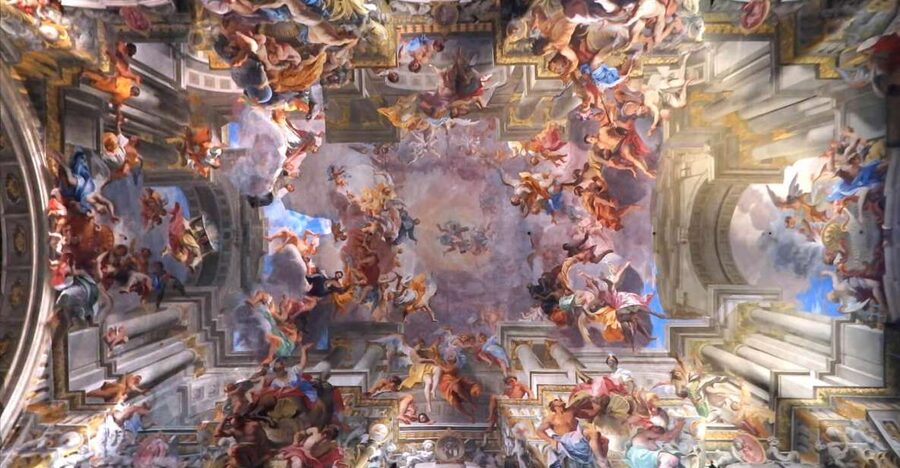
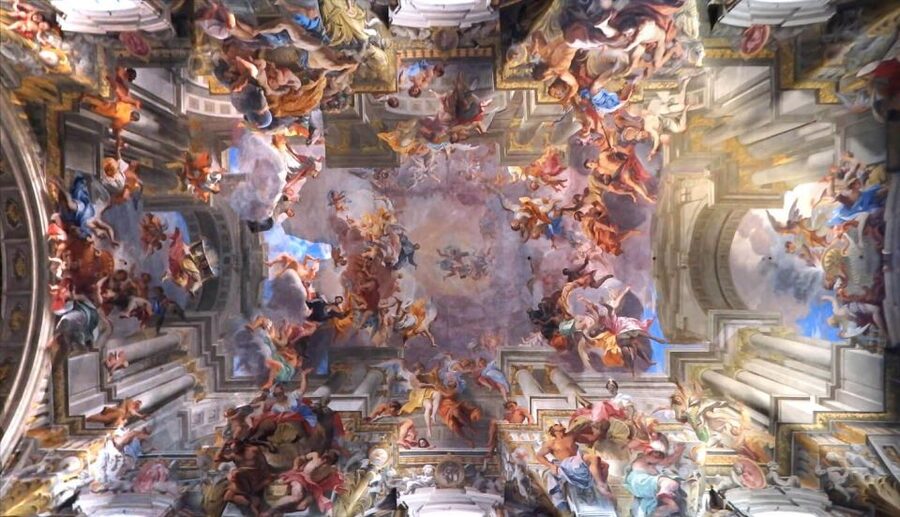
The Church of Sant’Ignazio di Loyola gets about 20 minutes, making it one of the longer stops. That extra time is worthwhile because Baroque Rome is not only about scandal and personality. It is also about visual tricks, religious persuasion, and the ability of art to make stone and paint seem larger than life.
The church gives you a strong example of the Baroque taste for theatrical effect. Look upward and pay attention to how architecture and painted space work together. The point is not simply decoration. The design aims to shape your sense of scale and movement.
This stop may appeal most to people who enjoy seeing how art works in a room, rather than viewing paintings as separate objects. Luisa’s explanations help place the visual effects within the wider world of Popes and religious commissions.
As with the other churches, modest clothing is required. Sleeveless shirts are specifically not allowed, so dress with church visits in mind. Comfortable shoes also matter, since you will be walking and standing through several stops.
The Pantheon and Raphael’s tomb
The Pantheon is next, with around 10 minutes of guided time. It is a short stop, but the building carries enormous weight in Rome’s artistic story.
Here you see the tomb of Raphael, one of Italy’s most celebrated artists. His presence gives the tour a link to the earlier Renaissance, before the focus turns fully toward the dramatic personalities of the Baroque period.
The Pantheon is one of those places where the building itself can easily take over. The limited time means the guide must keep the explanation focused. That is useful if you want a clear thread rather than a long architectural lecture, but it may feel brief if the Pantheon is a personal priority.
The stop also reinforces an important theme: artists in Rome were not isolated figures. Their reputations were built through patrons, churches, public monuments, and the memory of earlier masters. Raphael’s tomb helps set the stage for the artists who came after him.
Caravaggio at St. Louis of the French
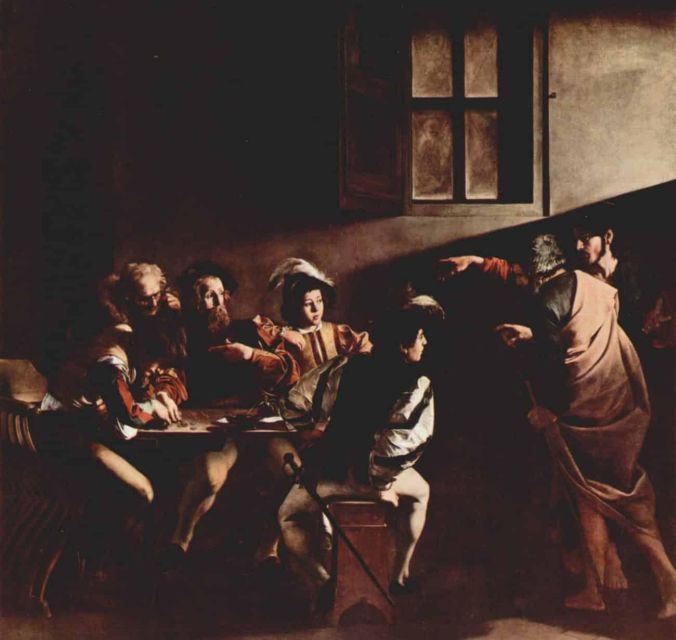
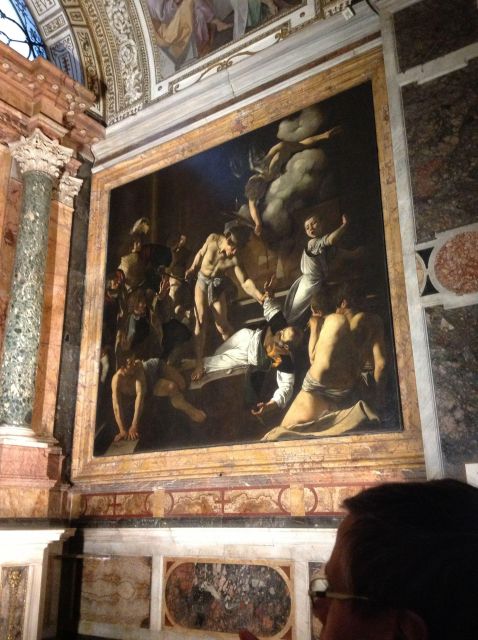
For many people, the Church of St. Louis of the French will be the high point of the walk. The visit lasts about 15 minutes and includes Caravaggio’s famous trilogy of paintings.
This is where the tour’s title really earns its keep. The paintings are not treated as silent treasures to admire for a minute before moving on. You learn about the unusual story behind them, including the pressures and ambitions surrounding their creation.
Caravaggio’s art can feel immediate even without background information. His figures seem close, physical, and emotionally charged. Once you know more about the artist’s difficult temperament, violent disputes, and precarious relationship with powerful patrons, the paintings take on another layer.
The church visit is especially valuable because it puts the work in its original setting. You are not looking at a reproduction in a museum gallery. You can consider how the paintings function within the chapel and why their drama mattered to the people who commissioned them.
The church may be busy, and you should not expect an extended private viewing. Still, having a guide explain the trilogy in place is a strong reason to choose this walk over a general city tour. If Caravaggio is one of your main interests, pay close attention here and ask questions while the paintings are in front of you.
Piazza Navona and the Bernini-Borromini rivalry
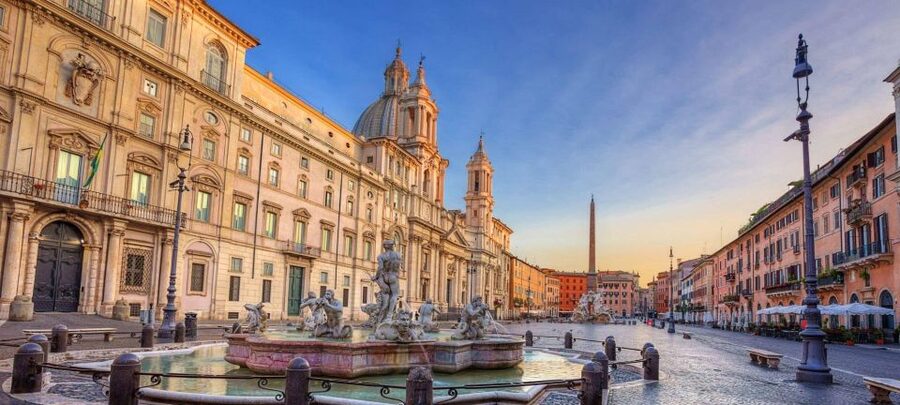
The route then reaches Piazza Navona, with about 20 minutes of guided explanation. This is the longest stop on the itinerary and one of the best places to explore the competition between two major sculptors, Bernini and Borromini.
Their rivalry is a natural fit for a tour about artistic ambition. Both men shaped Baroque Rome, but their temperaments, styles, and professional paths differed sharply. Piazza Navona gives the guide a public stage for explaining how artists competed for the approval of Popes and wealthy patrons.
The square is also a good reminder that Baroque art was public theater. Fountains and buildings were designed to impress large crowds and announce the power of the people behind them. The art was not tucked away from daily life. It occupied the center of the city.
A 20-minute stop gives enough time to connect the artistic competition to the setting without turning the visit into a full architectural seminar. You will likely come away with a clearer idea of why Bernini and Borromini are so often discussed together, and why their rivalry remains one of Rome’s best-known art stories.
Piazza Navona can be crowded, especially at popular times. Keep close enough to hear the guide, and expect to pause in an open public space rather than sit down for a long talk.
Ending at Piazza Fiammetta
The walk ends at Piazza Fiammetta, in front of the House of Fiammetta. This final stop shifts the focus from celebrated male artists to a woman whose story is tied to love, reputation, and duels.
Fiammetta lived in the 1500s, so her story reaches back before the main Baroque period. That is not a problem. It gives the tour a closing change of pace and shows that Rome’s artistic and romantic legends extend across generations.
The story of duels connected with her love adds a fitting final note to a walk filled with passion, competition, and conflict. It also helps widen the subject beyond famous artists and Popes. Rome’s history includes the people who shaped its social world, even when they are not the names most visitors recognize.
Because the tour ends at a different place from where it begins, you should plan your next activity from Piazza Fiammetta rather than assuming you will return to Trevi. The route is central, but the tour does not include transportation back to the starting point.
What the $59 price includes
At $59 per person, this is not the cheapest way to spend two and a half hours in central Rome. The value comes from the specialist subject and the guide’s interpretation, not from a long list of paid admissions.
The price includes entrance to the churches and explanations of the paintings. Several of the most important stops, including Sant’Ignazio and St. Louis of the French, are places you could technically visit on your own. The difference is having the stories organized around the artists, their patrons, and their conflicts.
I would consider the cost reasonable if you enjoy art, church interiors, or the social history behind famous names. It is less compelling if you want a broad first look at Rome, a major museum visit, or a tour built around extensive monument access.
The small group improves the value. A limit of 10 people gives the guide room to tell a more personal story and makes it easier for you to stay engaged. The tour also avoids the cost and time of entering a large museum, while still giving you direct access to important works.
Who will enjoy this walk most
I would recommend this tour to anyone who already knows a little about Rome and wants the personalities behind the monuments. It is especially suitable for:
- Art lovers who want more than names and dates
- Visitors interested in Caravaggio, Bernini, or Borromini
- People who enjoy scandals and social history when they are tied to real places
- Repeat visitors looking for a different route through central Rome
- Couples and small groups who prefer a conversational walk
- Students or curious adults who like a professor-led explanation
It may not suit you if you dislike walking, need frequent seating, or want a calm tour with little focus on conflict and scandal. The stories are colorful by design. You should expect discussions of violence, affairs, duels, and powerful figures behaving badly.
The route is also not suitable for people with mobility impairments. Bring comfortable shoes, and dress for church visits. English and Italian are available, so confirm your preferred language when booking.
How Luisa shapes the experience
Luisa is the guide associated with this walk, and her strengths are storytelling and art history. Her background as a university professor gives the tour an academic base, but the subject keeps it from feeling like a classroom lecture.
Her approach is best suited to people who want the stories behind the formal facts. You learn about the less polished side of artists who are often presented as untouchable geniuses. Their tempers, rivalries, patrons, romances, and mistakes become part of the explanation.
That style also makes the tour memorable. You are more likely to remember a painting when you know why it was commissioned, who wanted it, and what was at stake for the artist. Luisa’s enthusiasm is a key part of the experience, so this tour is a better match for curious listeners than for visitors who prefer to wander silently.
Should you book Popes and Artists?
Book it if you want Rome’s Baroque art served with personality. The route brings together Caravaggio’s paintings, Raphael’s tomb, Sant’Ignazio, Piazza Navona, and the rivalry between Bernini and Borromini, while adding stories about Popes, courtesans, and duels.
I would choose it after a basic Rome orientation, or early in a longer stay if art is one of your main reasons for visiting. The $59 price is fair for a small group, church access, and a specialist guide, though the walk is not a substitute for a major museum tour.
Skip it if you need an accessible route, dislike standing, or want only the city’s grandest sights. For everyone else, this is a lively way to see familiar Rome with the polished public image removed and the artists’ unruly lives put back into the picture.
FAQ
Where does the tour begin?
The tour begins at Via della Stamperia 72, in front of the Accademia di San Luca, the Academy of Painting.
Where does the tour end?
The tour ends at Piazza Fiammetta, in front of the House of Fiammetta.
How long does the tour last?
The tour lasts 2.5 hours.
What language is the tour offered in?
The live tour is offered in English and Italian.
How large is the group?
The group is limited to 10 participants.
Does the tour include church entry?
Yes. Entrance to the churches and explanations of the paintings are included.
Which Caravaggio works will I see?
You will see Caravaggio’s trilogy of paintings in the Church of St. Louis of the French.
Is the tour suitable for people with mobility impairments?
No. The activity is listed as not suitable for people with mobility impairments.
What should I wear or bring?
Wear comfortable shoes. Sleeveless shirts are not allowed, so dress modestly for the church visits.
How much does the tour cost?
The price is $59 per person.
Newest Rome tours we have reviewed
- Private TikTok Video Making in Rome★ 5.0 · 7 reviews
- Assisi, Orvieto and Civita di Bagnoregio Full Day Tour from Rome★ 4.5 · 45 reviews
- Assisi & Saint Francis Path Tour from Rome★ 5.0 · 45 reviews
- Assisi and Cascia Private Day Tour from Rome with Lunch★ 5.0 · 10 reviews
- Art Class in the center of Rome!★ 4.0 · 4 reviews
- Art & Craft: Beer Tour with Street Art in Rome★ 4.5 · 6 reviews
- Arrival in Rome: Airport Transfer & Exclusive City Introduction★ 5.0 · 3 reviews
- From Rome: Private Day-Tour of Tuscany★ 5.0 · 16 reviews