
Reviewed · ROME
Art Nouveau Rome: Villa Torlonia & Coppedé Private Tour
Rome’s Villa Torlonia and Coppedè district offer a sharp change from the Colosseum circuit. You’ll move from a prince’s grand residence and Mussolini’s former home to stained glass, carved wood, dragons, shells, and other Art Nouveau flourishes. It is Rome with the usual tourist route switched off.
I like the tour’s strong mix of politics, architecture, and decorative art, and I like that it connects two nearby but very different places. Guide Marco, a history and archaeology professor at Sapienza University, may add the sort of context that turns odd-looking buildings into readable stories. The main consideration is the price, $362.51 per person, plus the steady walking required over three hours.
Key Points
- Villa Torlonia links aristocratic Rome with Mussolini’s private life, including his former rooms and two underground shelters.
- The House of the Owls is the artistic star, with stained glass, inlaid wood, sculpture, and a playful mix of materials.
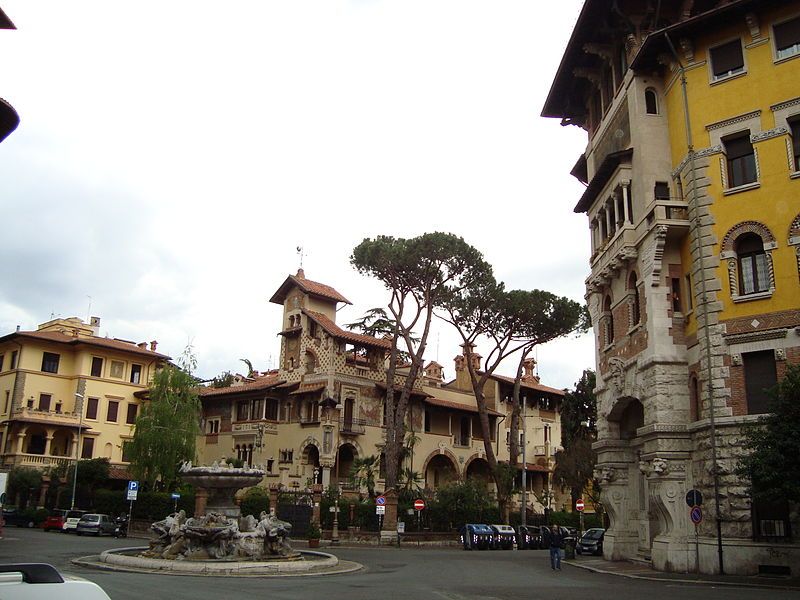
- Coppedè’s Piazza Mincio feels unlike standard Rome, with theatrical residential buildings designed by Gino Coppedè.
- A private guide lets you set the pace, see fewer sites if needed, or focus more on architecture, politics, or art.
- The tour begins at Via Nomentana 70, about 10 minutes by taxi from central Rome.
- The three-hour format is efficient but active, with 90 minutes at Villa Torlonia, 45 minutes at the House of the Owls, and 45 minutes in Coppedè.
Villa Torlonia: Rome’s Aristocratic Detour
Begin at the entrance to Villa Torlonia on Via Nomentana 70, near the ticket office. The villa is roughly a 10-minute taxi ride from central Rome, making it an easy addition to a day when you want to leave the ancient center behind without spending half the morning in transit.
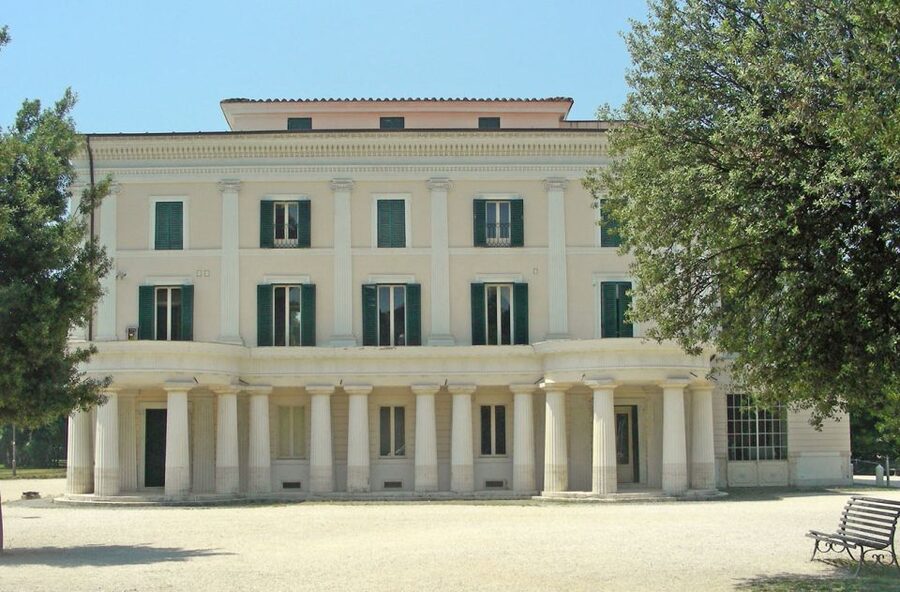
The estate was built for the Torlonia family, a wealthy banking family later ennobled by the pope. That detail gives the visit its basic tension: this was not an old royal palace inherited through centuries of monarchy, but a grand residence built by a family that rose quickly and wanted its status made visible.
Your guide leads you through the main villa area for about 90 minutes. The central focus is the Casino Nobile, built for a Torlonia prince. The word casino here means a small house or country residence, not a gambling hall. Inside, expect the kind of formal setting designed to impress: an aristocratic home shaped by money, rank, and display.
I would pay close attention to how your guide explains the building’s use rather than rushing from room to room. The value of this stop is not simply checking off another palace. It is understanding how Rome’s wealthy families created private worlds just beyond the crowded historic center.
More private tours in Rome:
- Rome by Golf Cart Private Tour: Beyond the Landmarks
★ 5.0 · 4,361 reviews - Early Morning Vatican, Sistine, St. Peter’s Semi or Private Tour
★ 5.0 · 3,779 reviews - Rome on a Golf Cart Semi-Private Tour Max 6 with Private Option
★ 5.0 · 2,502 reviews
Mussolini’s Rooms and the Two Bunkers
Villa Torlonia took on another political role in the 1930s, when it became the home of Benito Mussolini. The tour includes the story of that period and points out the separate bedrooms used by Mussolini and his wife, Rachele, on the upper floor of the Villino Nobile.
The original furniture is gone, so do not expect a preserved personal apartment with every object left in place. The interest comes from the setting and the historical contrast. A refined aristocratic villa became the domestic base of Italy’s Fascist dictator, adding a difficult but important layer to the visit.
The basement provided access to two bunkers built by Mussolini. One was intended as a bomb shelter and the other as a gas shelter. These features make the villa more than a decorative residence. They show how wartime fear entered even Rome’s most protected homes.
This portion will suit you if you like political history tied to actual places. It is also a useful reminder that grand architecture does not float above events. The same rooms connected to aristocratic display later belonged to a dictatorship preparing for attack.
The House of the Owls and Its Stained Glass
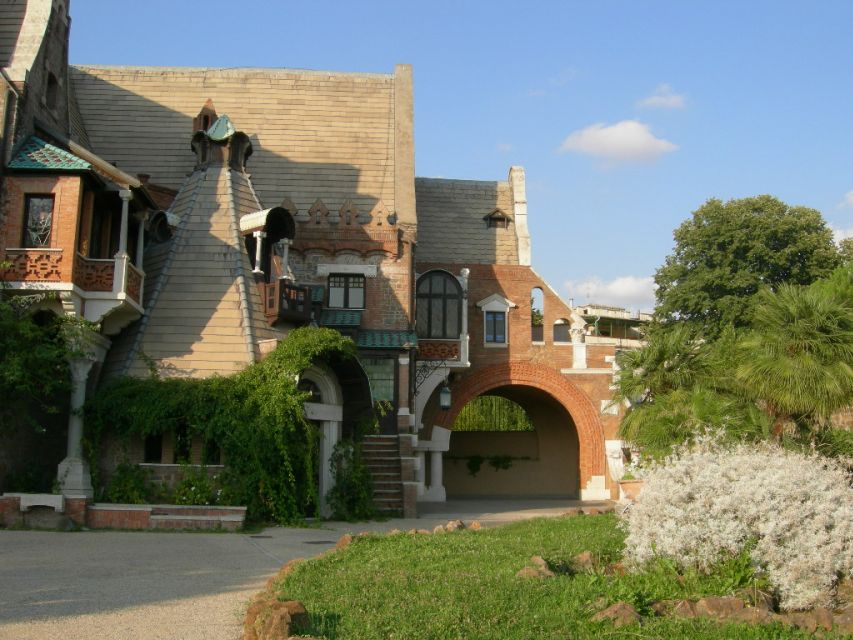
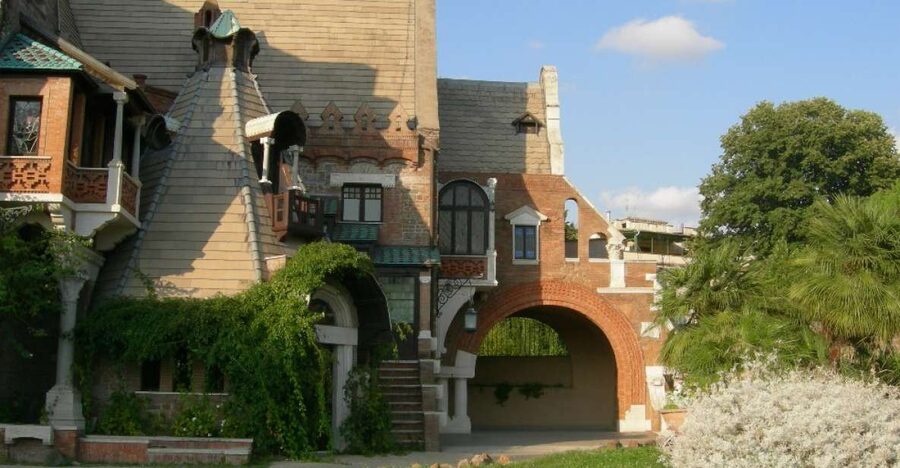
The next stop is the Casina delle Civette, usually translated as the House of the Owls. The building sits at the edge of the park in a more discreet position, away from the formality of the main residence. Prince Giovanni Torlonia the Younger lived here until his death in 1938, using it as a retreat from the official tone of the Casino Nobile.
This is the most visually unusual part of the tour. The House of the Owls was altered and expanded over time by different architects. Instead of one clean architectural style, you get a layered work filled with changing ideas and materials, including artistic glass, inlaid wood, sculpture, and decorative surfaces.
The name points to one of its best-known motifs, but the building offers more than owl designs. The interior levels contain elaborate decoration, furniture with pictorial effects, and stained-glass work made by Roman workshops. I like this stop because it asks you to look close. The small details matter as much as the overall shape of the house.
You have about 45 minutes here. That is enough for a focused visit, but not an unlimited amount of time for every decorative feature. If you are passionate about Art Nouveau interiors, tell your guide early. A private visit gives you room to linger over stained glass and woodworking instead of treating the building as a quick photo stop.
The House of the Owls also helps explain why this tour works better than a basic park walk. You are not only seeing a handsome villa. You are seeing how local artisans and architects transformed a private retreat into a highly personal work of art.
Coppedè’s Piazza Mincio: Rome Gets Playful
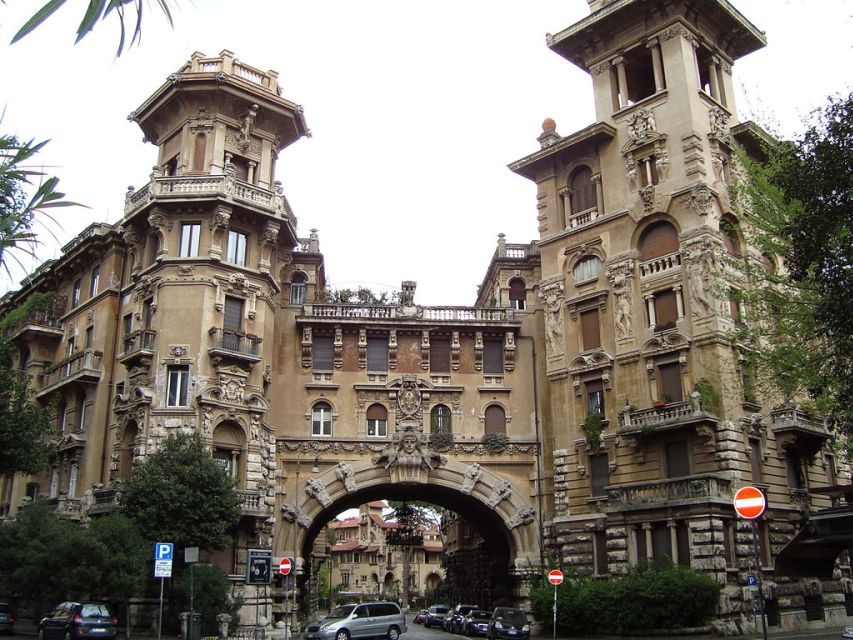
The final 45 minutes take you to the Quartiere Coppedè, one of Rome’s finest residential areas. This is not a museum complex with a single entrance. It is a neighborhood of buildings designed around the ideas of architect Gino Coppedè, and the experience comes from walking among the façades and seeing how the pieces relate.
The focus is Piazza Mincio, a small square often described as a magical kingdom because of its theatrical architecture. Expect an eclectic blend of Art Nouveau ideas and unusual decorative forms. The buildings are residential, but they do not behave like plain apartment blocks. Coppedè gave the quarter a fantasy quality that makes it feel separate from ordinary city streets.
Your guide can point out the architecture as you walk, helping you distinguish design choices from random decoration. That matters here. Without context, you may simply see a collection of strange façades. With a good explanation, the quarter becomes a deliberate experiment in shape, ornament, and mood.
Coppedè is a fine last stop because it changes the scale of the tour. Villa Torlonia gives you an estate, a main residence, and a retreat house. Coppedè gives you an entire residential setting shaped by one architect’s imagination. You finish with Rome’s Art Nouveau ideas still in view, but now spread across a neighborhood rather than contained inside a museum.
Same city, a completely different half-day:
- Vatican Museums & Sistine Chapel Tour with Optional Basilica
★ 4.3 · 67,413 reviews - Vatican Museums, Sistine Chapel & St Peter’s Basilica Guided Tour
★ 4.5 · 39,149 reviews - Rome: Colosseum, Palatine Hill and Roman Forum Guided Tour
★ 4.8 · 32,814 reviews - Rome: Guided Tour of Colosseum, Roman Forum & Palatine Hill
★ 4.7 · 27,897 reviews
What Three Hours Really Gets You
The timing is clearly divided:
- Villa Torlonia: about 1 hour and 30 minutes
- Casina delle Civette: about 45 minutes
- Quartiere Coppedè: about 45 minutes
That is a sensible half-day plan. You get enough time at each stop to understand the main story without giving up an entire day of your Rome visit. The tradeoff is pace. You will be walking between and within the sites, and the activity description warns that it involves a fair amount of walking.
A private guide can adjust the plan. If you prefer a slower visit, you can see fewer sites. That is especially useful for anyone who wants to spend more time in the House of the Owls or who finds the full route tiring. Tell the tour provider about mobility concerns before the visit, since the route may need changes even though the activity is described as wheelchair accessible.
The tour ends back at the starting point, so you do not need to arrange a second pickup at Coppedè. That makes the experience easier to fit into a day of sightseeing, though you should still allow time to reach the meeting point at Via Nomentana 70.
Why a Private Guide Matters Here
This is not the kind of outing where a guide is useful only for directions. The sites are visually strong, but their meaning is not always obvious. Why did the Torlonia family build this setting? Why did Giovanni Torlonia the Younger prefer the House of the Owls to the main residence? What changed when Mussolini moved into the villa? Why does Coppedè look so unlike nearby apartment streets?
A private guide can connect those questions as you go. The experience is offered in English, Italian, French, or Spanish, and Marco may lead the tour. He is described as a history and archaeology professor at Sapienza University, with a background that reaches from art to literature. That combination is useful here because the tour crosses several subjects rather than staying within one narrow period.
The strongest praise for Marco centers on preparation, punctuality, detailed explanations, and kindness. Those qualities matter on a private tour because you have more direct contact with the guide. You can ask about a stained-glass panel, stop to examine a façade, or request more detail about Mussolini’s period instead of following a fixed script.
Still, a private guide does not guarantee that every minute will match your interests. If you want a slower pace, say so at the start. If you are most interested in Art Nouveau, make that clear before the political history takes over. The more specific you are, the more useful the private format becomes.
Is $362.51 Per Person a Fair Price?
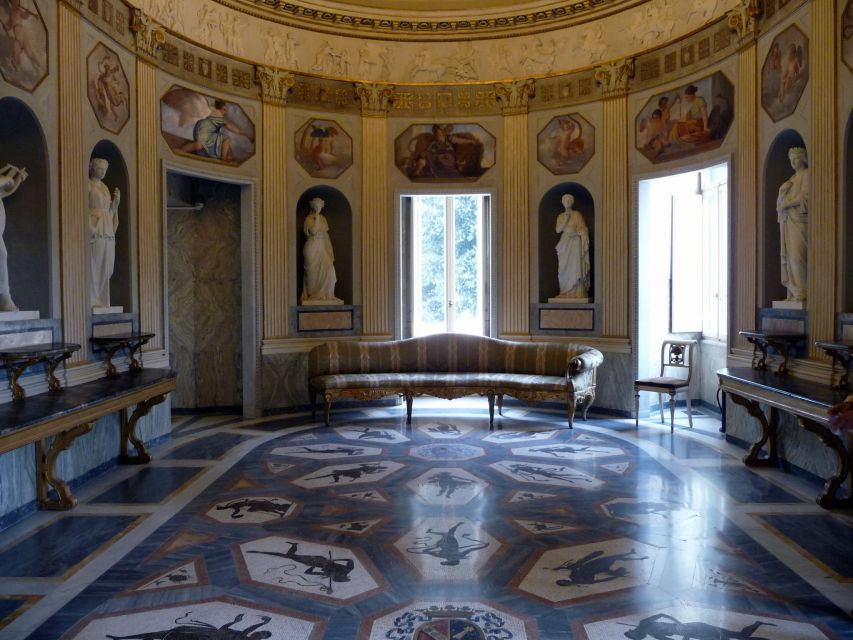
At $362.51 per person, this is a costly Rome activity. You are paying for a private group, a Blue Badge guide, museum entrance fees, and a three-hour walking program. The price makes more sense for people who value personal attention and want to avoid a large group moving at one fixed speed.
It is less compelling if you only want a quick look at Coppedè’s façades or plan to spend most of your Rome time at the ancient sites. You might prefer a lower-cost self-guided visit if your main goal is taking a few architectural photographs.
The value improves when you care about the connections between the stops. Villa Torlonia, the House of the Owls, and Coppedè are not interchangeable attractions. Together they show several sides of Rome’s modern architectural story: aristocratic display, private eccentricity, political history, decorative craftsmanship, and experimental residential design.
For a couple or small private group, the price can also buy a calmer experience than a standard group tour. You are not paying only for admission. You are paying for a guide who can adapt the route and explain details that might otherwise pass unnoticed.
Who Will Enjoy This Rome Tour Most?
I would recommend this experience to you if you have already seen Rome’s major ancient monuments or want a break from them. It is particularly well suited to:
- Art Nouveau and decorative-arts fans
- Visitors interested in Rome’s 19th and 20th-century history
- Travelers who prefer residential districts to famous squares
- Families or small groups that want a flexible pace
- Repeat visitors looking for a less familiar side of Rome
- Anyone who values a specialist guide and private discussion
It may not suit you if you dislike walking, want a loose and unstructured afternoon, or have little interest in architecture and political history. The quarter and villas reward attention. They are not simply places to drop by, take a picture, and move on.
The tour is also a better fit for adults and older children who can follow a sustained explanation. Minors must be accompanied by at least one adult, and bookings made only for unaccompanied minors are not accepted.
Practical Advice Before You Go
Wear comfortable shoes. The route includes a villa complex, interior visits, a park setting, and a residential neighborhood, so you should expect time on your feet.
Meet your guide at the entrance of Villa Torlonia, Via Nomentana 70, near the ticket office. The tour uses a separate entrance to skip the main line, but you should still arrive ready to begin at the scheduled time.
If anyone in your group has mobility issues, mention this before the tour. The activity is listed as wheelchair accessible, but the walking demands and site layout may require changes to the planned route.
You can cancel up to 24 hours in advance for a full refund, and the reserve-now, pay-later option can help if your Rome schedule is still shifting. Starting times vary, so check availability before building the rest of your day around it.
Should You Book Villa Torlonia and Coppedè?
Book this tour if you want a guided look at Rome’s less familiar modern architecture, especially if the House of the Owls and Coppedè’s fanciful buildings sound more appealing than another crowded ancient monument.
The best reason to choose it is the combination of places. Villa Torlonia gives you aristocratic and Fascist history, the House of the Owls brings in stained glass and craftsmanship, and Coppedè provides a final burst of architectural fantasy. Marco’s academic background could add real value, particularly if you enjoy asking questions and following a subject beyond the obvious details.
Skip it if the $362.51 price feels too high for three hours or if you want a relaxed, low-walking activity. For the right visitor, though, this is a thoughtful private outing that reveals a quieter, stranger, and more decorative side of Rome.
FAQ
Where does the tour begin?
The tour begins at the entrance of Villa Torlonia at Via Nomentana 70, near the ticket office.
Where does the tour end?
The activity ends back at the meeting point at Villa Torlonia.
How long does the tour last?
The tour lasts three hours. The planned schedule includes 90 minutes at Villa Torlonia, 45 minutes at the Casina delle Civette, and 45 minutes in the Quartiere Coppedè.
What languages are available?
The live guide may conduct the tour in English, Italian, French, or Spanish.
Is this a private tour?
Yes. It is a private walking tour for your group.
Is the tour wheelchair accessible?
The activity is listed as wheelchair accessible. You should advise the provider about mobility issues in advance because the route may need to be modified.
Can I cancel for a full refund?
Yes. You can cancel up to 24 hours in advance for a full refund.
Newest Rome tours we have reviewed
- Private TikTok Video Making in Rome★ 5.0 · 7 reviews
- Assisi & Saint Francis Path Tour from Rome★ 5.0 · 45 reviews
- Assisi, Orvieto and Civita di Bagnoregio Full Day Tour from Rome★ 4.5 · 45 reviews
- Assisi and Cascia Private Day Tour from Rome with Lunch★ 5.0 · 10 reviews
- Art Class in the center of Rome!★ 4.0 · 4 reviews
- Art & Craft: Beer Tour with Street Art in Rome★ 4.5 · 6 reviews
- Arrival in Rome: Airport Transfer & Exclusive City Introduction★ 5.0 · 3 reviews
- From Rome: Private Day-Tour of Tuscany★ 5.0 · 16 reviews