
Reviewed · ROME
Rome: Saint Paul Outside the Walls Tour
Saint Paul Outside the Walls gives you a quieter side of Rome: a vast papal basilica built over Saint Paul’s burial place and rebuilt after a devastating 19th-century fire. The Jubilee Holy Door adds a timely spiritual focus, while the glowing mosaics and long row of papal portraits give the church plenty to study.
I like the six-person group limit, which should make it easier to ask questions and stay close to the guide. I also like the option to add the medieval cloister and Benedictine Abbey for €4, though the extra stop means the visit may run beyond the advertised hour.
The main consideration is location and timing. This is not a quick stop beside the Trevi Fountain or Pantheon, so you need to allow time to reach the basilica and find the guide in Parco Schuster. Dress modestly, with shoulders and knees covered.
Key points to know
- Enter through a special Holy Door: The Jubilee entrance gives the visit a clear theme of renewal and grace.
- See Saint Paul’s tomb: The tomb beneath the main altar is the spiritual center of the basilica.
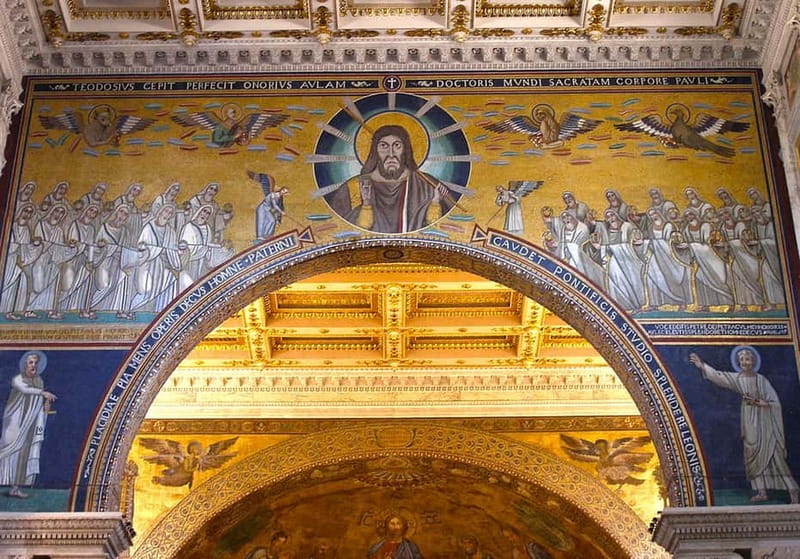
- Look up at the triumphal arch: Its mosaics help explain the church’s Christian story and visual language.
- Trace every pope from Saint Peter onward: Medallions line the upper walls in an unusual chronological display.
- Add the cloister for €4: Medieval columns and decoration make this the best extra stop for art lovers.
- Meet a well-prepared guide: Mykhailo Hevko leads in English, Italian, or Ukrainian, with a group capped at six people.
Why Saint Paul Outside the Walls deserves your time
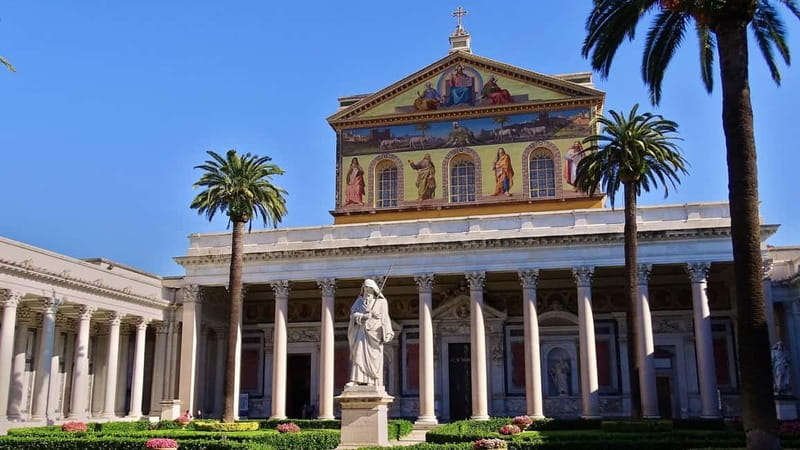
Rome has famous churches everywhere, but Saint Paul Outside the Walls feels different from the compact churches in the historic center. Its name tells you why: the basilica sits outside the ancient city walls, in the area associated with Saint Paul’s burial.
The church is one of Rome’s four major Papal Basilicas. That gives it a rank and religious importance equal to the city’s most famous churches, even though many sightseeing schedules leave it out.
I would choose this visit if you want more than a quick look at Roman architecture. The church brings together pilgrimage, early Christian tradition, medieval decoration, and 19th-century rebuilding. You can see how Rome preserved an ancient sacred site while creating a grand interior after disaster struck.
The setting also helps. You begin near Parco Schuster, rather than at a crowded monument entrance. The guide waits in the park and sends instructions 10 to 15 minutes before the tour so you can identify the meeting spot and the person leading the visit.
That arrangement is useful, but do not arrive at the last second. You need time to find the guide, especially if you are unfamiliar with the area.
Other Rome tours people pair with this one:
- Vatican Museums & Sistine Chapel Tour with Optional Basilica
★ 4.3 · 67,413 reviews - Vatican Museums, Sistine Chapel & St Peter’s Basilica Guided Tour
★ 4.5 · 39,149 reviews - Rome: Colosseum, Palatine Hill and Roman Forum Guided Tour
★ 4.8 · 32,814 reviews
The Jubilee Holy Door sets the tone
The tour centers on the Holy Door, opened specially for the Jubilee Year. Entering through it is not just a practical way into the church. It carries a religious meaning tied to forgiveness, renewal, and pilgrimage.
You do not need to be deeply religious to appreciate the symbolism. A guide can explain why a door matters so much in a papal basilica, and why the entrance changes the mood of the visit from ordinary sightseeing to a more reflective experience.
This is also one of the tour’s most time-sensitive features. The Holy Door is connected to the Jubilee period, so its availability may depend on the current religious calendar. If this is the main reason you are booking, confirm the current arrangements before you pay.
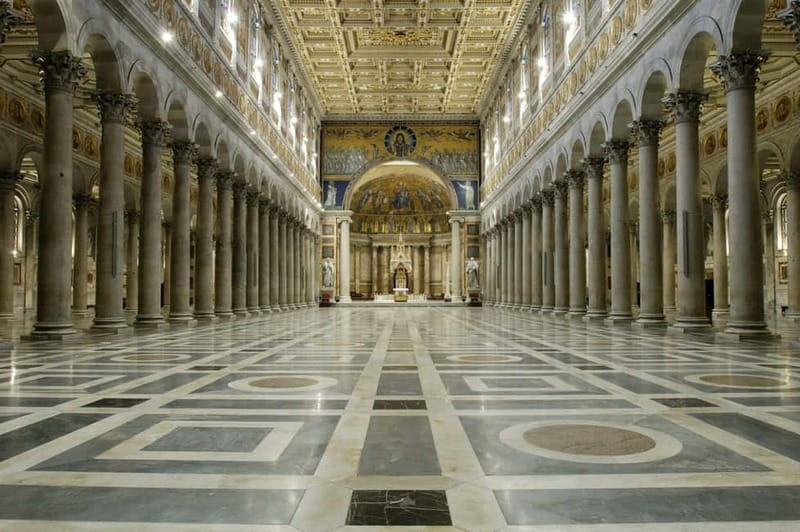
After entering, expect the scale to hit you first. Saint Paul Outside the Walls is spacious and ceremonial, with a long central interior rather than the intimate feel of a small Roman chapel. Give your eyes a moment to adjust to the height, light, and repeated decoration.
The mosaics reward a slow look
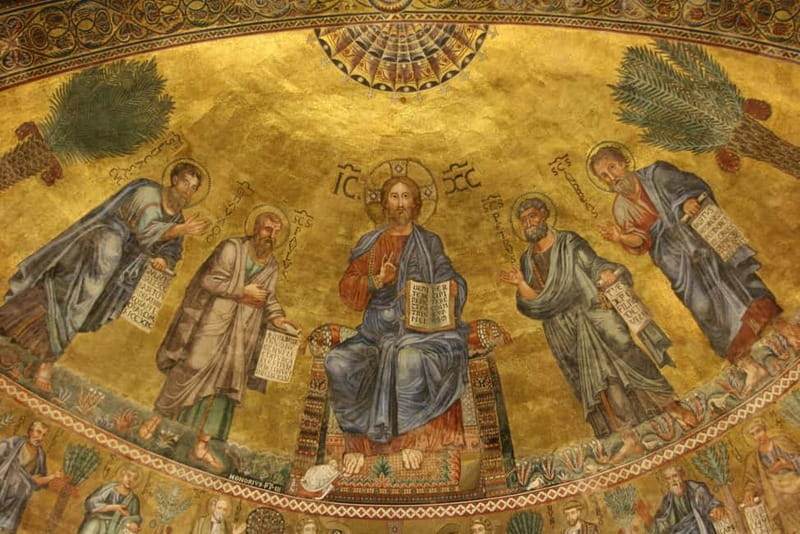
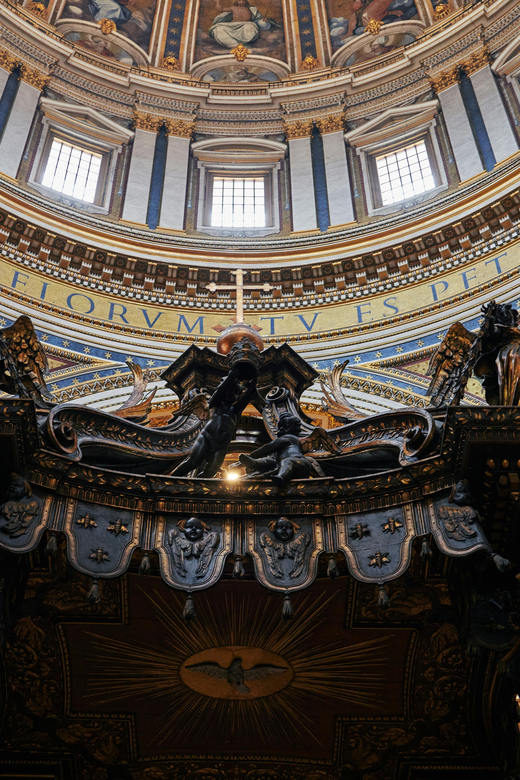
The church’s luminous golden mosaics are among the main visual reasons to come. Gold surfaces catch the light and create a calm, almost floating effect high above the floor.
Your guide can help you read the mosaics instead of treating them as background decoration. Religious art from this period often tells its story through placement, gesture, color, and symbols. Without context, you may simply see shining figures. With guidance, the arch and apse become part of a larger visual program.
The imposing triumphal arch deserves special attention. It forms a strong boundary between sections of the basilica and carries important imagery. This is a good place to pause rather than hurry toward the altar.
The church was magnificently rebuilt after a devastating fire in the 19th century. That fact changes how you look at the interior. You are not seeing an untouched building from one single age. You are seeing a sacred place restored and re-created after major loss.
I like that the fire story gives the architecture some drama without requiring exaggerated storytelling. It also helps explain why the basilica can feel both ancient and renewed.
Follow the line of popes from Saint Peter onward
One of the most distinctive features inside the basilica is the long series of medallions showing the popes, beginning with Saint Peter and continuing to the present day.
This display turns the upper walls into a visual timeline. You can follow the succession across centuries, linking the modern church to its earliest traditions. It is easy to miss details when you are looking at the grand floor plan, so ask the guide to point out how the medallions are arranged.
For me, this is where the small group matters most. In a large crowd, you might hear a quick fact and move on. With up to six participants, you have a better chance to stop, ask which pope or period you are looking at, and connect the images to the basilica’s larger story.
The medallions also make the church different from many Roman churches, where attention usually goes to one famous painting or one saint’s chapel. Here, the repeated portraits create a sense of continuity.
Same city, a completely different half-day:
- Rome: Guided Tour of Colosseum, Roman Forum & Palatine Hill
★ 4.7 · 27,897 reviews - Rome: Colosseum & Forum with Audio Guide App -Optional Arena
★ 4.2 · 24,770 reviews - Rome: Colosseum, Roman Forum and Palatine Hill Guided Tour
★ 4.5 · 23,903 reviews - Rome: City Sightseeing Hop-on Hop-off Bus with Audioguide
★ 4.0 · 16,045 reviews
Saint Paul’s tomb is the spiritual heart
Beneath the main altar lies the tomb of Saint Paul the Apostle. This is the central reason the basilica exists at this location, and it gives the visit a focus beyond art and size.
The tomb is a place where pilgrims come to pray and reflect. You can approach it as a religious site, an archaeological point of interest, or both. The guide can explain its role in the basilica’s identity and help you understand why the altar and tomb are arranged as the center of the church.
Keep your expectations realistic. This is a guided visit lasting about 30 minutes to one hour, not a long archaeological seminar. The value comes from having the main features placed in context: the burial site, the basilica’s papal status, the fire, the mosaics, and the Jubilee entrance.
If you prefer silent personal time, tell the guide. A small group makes that sort of request easier, though the exact amount of quiet time depends on the pace of the visit and the church’s conditions that day.
The cloister adds medieval detail for €4
The cloister and Benedictine Abbey are not included in the basic price. Entry costs an additional €4, and the visit may last longer if you add it.
I would consider paying the extra fee if you enjoy medieval architecture, carved columns, or quieter spaces. The cloister offers a change from the huge basilica interior. Instead of looking up at a grand ceremonial church, you can study smaller details at a slower pace.
The optional nature of this stop is sensible. Some people will want to keep the visit close to an hour, while others will happily spend more time with medieval art. If your schedule is tight, skip it without feeling that you have missed the main purpose of the tour.
If you do add it, allow extra time rather than planning your next activity immediately after the advertised end. The basic tour is listed as about 0.5 to 1 hour, while the cloister can make the visit longer.
Mykhailo Hevko keeps the group personal
The experience is led by Mykhailo Hevko, with guiding available in English, Italian, and Ukrainian. The small-group format is limited to six people, a useful size for a church where spoken explanations can otherwise get lost.
Mykhailo is praised for thorough explanations of both the artistic and religious sides of the site. That combination matters here. A guide who talks only about dates may leave you cold, while a guide who focuses only on devotion may not satisfy visitors interested in architecture. The strongest part of this format is the chance to connect both.
He also gives special attention to people with mobility concerns. The basilica is wheelchair accessible, and the small group should make it easier to move at a comfortable pace. Still, you should share any needs when booking or at the meeting point, since the optional cloister may have its own practical considerations that are not detailed here.
The language choice is another advantage. You can select English, Italian, or Ukrainian, but check availability for your preferred language and start time before booking.
What the $28.47 price buys you
At $28.47 per person, the price is reasonable if you want interpretation rather than simply entering the basilica on your own. You are paying for a live guide, a focused route through the church, and the chance to ask questions in a group capped at six.
The value depends on your interests. If you are content to walk through, take photographs where permitted, and read on your own, the guided fee may feel unnecessary. If you want to understand why the tomb, mosaics, Holy Door, triumphal arch, and papal medallions matter, the explanation gives the visit more weight.
The extra €4 for the cloister is modest, but it is not part of the advertised tour price. Budget for it only if medieval decoration interests you or you have enough time to make the addition worthwhile.
You can reserve now and pay later, which helps if your Rome schedule is still shifting. Cancellation is free up to 24 hours before the activity for a full refund. Those terms are useful because Rome plans often change around church services, weather, and timed admissions.
Clothing and arrival tips that matter
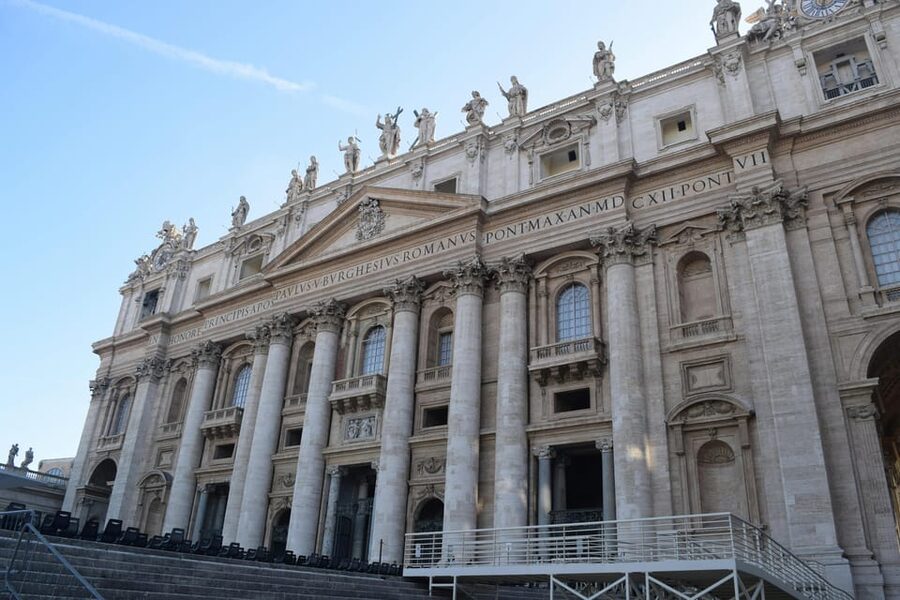
This is a sacred place, so shoulders and knees must be covered. Avoid short skirts and plan clothing before you leave your hotel. A lightweight layer can solve the problem in warm weather without taking up much space.
Weapons, sharp objects, alcohol, drugs, and glass objects are not allowed. Keep your bag simple and avoid carrying items that could slow entry.
The meeting point is in Parco Schuster near the basilica. The guide waits there and sends instructions 10 to 15 minutes before the start, including how to recognize the guide. I would arrive early enough to orient yourself, rather than trying to match the group at the last moment.
The tour ends back at the meeting point. Since the experience lasts roughly 30 minutes to one hour, you can pair it with another activity, but leave breathing room if you add the cloister.
Who should book this visit
I would recommend this tour to you if you want:
- A major church that receives less attention than Rome’s most famous sights
- A clear explanation of Christian art and religious symbolism
- A small group with room for questions
- A visit focused on Saint Paul’s tomb and the basilica’s story
- A guide in English, Italian, or Ukrainian
- An accessible activity with a flexible payment and cancellation policy
I would be more cautious if you want a long art-history lecture, a full archaeological tour, or a completely self-guided visit. The experience is compact, and the listed duration can be as short as 30 minutes before the cloister is added.
It may also be a poor fit if your Rome plan is packed with stops in the historic center. Saint Paul Outside the Walls requires a separate journey from the city’s central sights, and the meeting instructions take some attention. The basilica deserves the time, but it should be a deliberate choice rather than an accidental add-on.
Should you book Saint Paul Outside the Walls?
Book it if you want to see one of Rome’s major Papal Basilicas through its spiritual center, Saint Paul’s tomb, rather than only through its decoration. The Jubilee Holy Door, gold mosaics, triumphal arch, and papal medallions give the hour plenty to discuss.
Mykhailo Hevko’s personal guiding style and the six-person limit make the price easier to justify, especially for first-time visitors who want context. Add the €4 cloister fee if medieval art appeals to you and your schedule allows extra time.
Skip it if you have no interest in sacred spaces or cannot spare time to travel beyond central Rome. For everyone else, this is a focused, low-stress way to see a major basilica that many itineraries overlook.
FAQ
How long does the Saint Paul Outside the Walls tour last?
The guided visit lasts about 30 minutes to one hour. It may run longer if you add the optional cloister and Benedictine Abbey.
What is included in the tour price?
The price includes the guided tour of Saint Paul Outside the Walls. Entry to the cloister and Benedictine Abbey is not included.
How much does the cloister cost?
The additional entrance fee for the cloister and Benedictine Abbey is €4.
What languages are available?
The live tour guide is available in English, Italian, and Ukrainian. Check availability for your preferred language and starting time.
Where do I meet the guide?
The meeting point is in Parco Schuster near the basilica. The guide sends directions 10 to 15 minutes before the tour, including information on how to recognize the guide.
What should I wear?
Your shoulders and knees must be covered because this is a visit to a sacred place. Short skirts are not allowed.
Newest Rome tours we have reviewed
- Private TikTok Video Making in Rome★ 5.0 · 7 reviews
- Assisi & Saint Francis Path Tour from Rome★ 5.0 · 45 reviews
- Assisi, Orvieto and Civita di Bagnoregio Full Day Tour from Rome★ 4.5 · 45 reviews
- Assisi and Cascia Private Day Tour from Rome with Lunch★ 5.0 · 10 reviews
- Art Class in the center of Rome!★ 4.0 · 4 reviews
- Art & Craft: Beer Tour with Street Art in Rome★ 4.5 · 6 reviews
- Arrival in Rome: Airport Transfer & Exclusive City Introduction★ 5.0 · 3 reviews
- From Rome: Private Day-Tour of Tuscany★ 5.0 · 16 reviews