
Reviewed · ROME
The Marvels of Rome: A Journey through Time and Landmarks
Rome reveals itself beautifully on foot, and this compact route links five of the city’s best-known public spaces. You begin at Piazza del Popolo, walk to the Spanish Steps and Trevi Fountain, then finish at the Pantheon and Piazza Navona. It is a smart first look at central Rome, especially if you want the major sights explained rather than simply photographed.
I like the easy-to-follow route and the chance to see how Rome’s ancient, Baroque, and modern street life meet in one walk. I also like the guide-led storytelling: Estefani has used a book showing places in the past and present, while Celia, Sarah, and other guides have earned praise for patience and clear explanations.
The main drawback is the pace. Two hours is enough for orientation, not a full archaeological or art-history lesson, and one French-speaking participant found the historical detail too light. The route also involves considerable walking and is not recommended for people with limited mobility.
Key points to know before booking
- Five major sights in two hours: The route covers Piazza del Popolo, Piazza di Spagna, Trevi Fountain, the Pantheon, and Piazza Navona.
- A central Rome walking route: You move between the sights on foot, with no hotel transfer included.
- Guides speak three languages: Live guiding is offered in English, French, and Spanish.
- Strong guide feedback: Celia, Estefani, and Sarah are specifically praised for kindness, patience, language skills, and historical detail.
- A good value at $35: You pay for a licensed guide who helps connect famous places into one readable story.
- Not designed for limited mobility: Bring comfortable shoes and water, and leave luggage or large bags behind.
Why this Rome walk works well as an introduction
This tour focuses on squares, fountains, and streets rather than entering major museums or monuments. That makes it simple to fit into a first day in Rome, a spare morning, or a short city break.
I like this approach because Rome can feel scattered when you first arrive. The tour gives you a basic mental map of the historic center. You see where the city’s grand public spaces sit in relation to one another, then you can return later for a slower visit.
The route also shows several different versions of Rome. Piazza del Popolo introduces the city’s grand urban planning. Piazza di Spagna brings you to the famous Spanish Steps. Trevi Fountain supplies Baroque drama and ceremony. The Pantheon connects the modern street to ancient Rome, while Piazza Navona finishes with fountains, cafés, and street performers.
The experience is guided in English, French, or Spanish. That matters here because the value is not just reaching the sights. Your guide is meant to explain what you are seeing, point out details you might miss, and place each square in the story of the city.
At $35 per person, I see this as a fair price for a licensed two-hour guide in central Rome. You are not paying for admission to the Pantheon or another major site, and hotel pickup is not included. The value rests in the route, the explanations, and the time saved figuring out the city on your own.
Other Rome tours people pair with this one:
- Vatican Museums & Sistine Chapel Tour with Optional Basilica
★ 4.3 · 67,413 reviews - Vatican Museums, Sistine Chapel & St Peter’s Basilica Guided Tour
★ 4.5 · 39,149 reviews - Rome: Colosseum, Palatine Hill and Roman Forum Guided Tour
★ 4.8 · 32,814 reviews
Meeting at Santa Maria del Popolo
The tour begins at Basilica Parrocchiale Santa Maria del Popolo, in Piazza del Popolo. Your guide waits in front of the church with a sign showing the company name.
Give yourself time to find the correct side of the square. This is a large, open meeting area, and a clear landmark such as the church is more useful than relying on a street address alone. Look for the guide’s company sign rather than assuming every person with a badge is part of your group.
The church itself gives you an atmospheric starting point, even though the scheduled visit centers on the square. From here, you are already in one of Rome’s grandest open spaces, so the tour begins with scale and drama rather than a dull curbside introduction.
Wear shoes you can walk in for two hours. Bring water, especially in warm weather. Large bags and luggage are not allowed, so this is not a good activity to schedule while hauling suitcases between hotels or transport connections.
Piazza del Popolo: Rome’s grand northern gateway
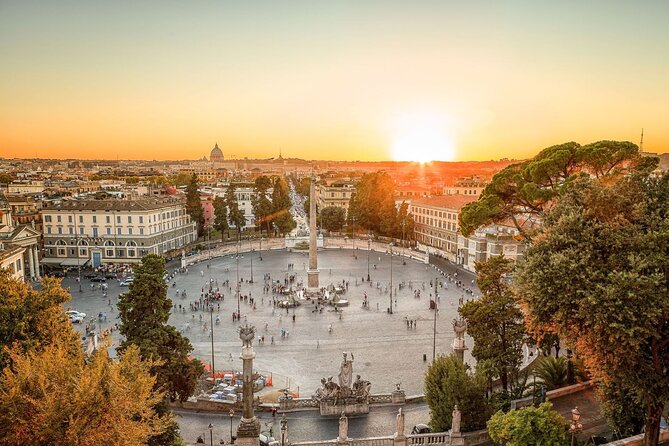
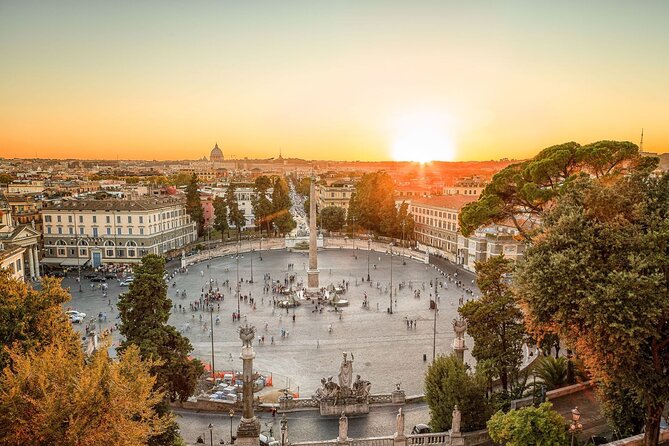
The first guided stop is Piazza del Popolo, with about 20 minutes for explanation, sightseeing, and walking. The square is broad and carefully arranged, giving your guide room to explain how Rome’s public spaces were designed to impress.
This is a strong place to begin because you can take in the whole setting at once. Rather than looking at a single fountain or building, you get a sense of how churches, entrances, open space, and movement through the city fit together.
Your guide can help you notice the square’s historic role and visual balance. This is also where the walking route starts to make sense. From the wide openness of Piazza del Popolo, you move into narrower streets and more concentrated scenes.
Do not expect a long church visit or a detailed art lecture here. The stop is brief, and the tour has four more major sights ahead. Think of it as a well-explained orientation to the square, not a specialist tour of every work of art nearby.
Piazza di Spagna and the Spanish Steps
The next stop takes about 20 minutes. Piazza di Spagna is one of Rome’s most recognizable meeting places, and the Spanish Steps give the tour a clear visual centerpiece.
The steps are more than a photo stop. They connect the lower square with the upper area and show how Rome uses height, movement, and architecture to create memorable public spaces. Your guide can point out the role of the square in the city’s social life and explain why this corner has attracted people for so long.
This is a good moment to slow down and look beyond the usual picture. Notice how the steps draw the eye upward, then how the surrounding streets pull you onward toward Trevi. You get a sense of Rome as a city meant to be walked, where one famous scene leads to another.
The practical issue is the steps themselves. The tour is not recommended for people with mobility impairments, and this section reinforces that warning. Even if you can manage the route, you should be comfortable standing, walking, and handling a busy urban setting for the full two hours.
Same city, a completely different half-day:
- Rome: Guided Tour of Colosseum, Roman Forum & Palatine Hill
★ 4.7 · 27,897 reviews - Rome: Colosseum & Forum with Audio Guide App -Optional Arena
★ 4.2 · 24,770 reviews - Rome: Colosseum, Roman Forum and Palatine Hill Guided Tour
★ 4.5 · 23,903 reviews - Rome: City Sightseeing Hop-on Hop-off Bus with Audioguide
★ 4.0 · 16,045 reviews
Trevi Fountain: the route’s most theatrical stop
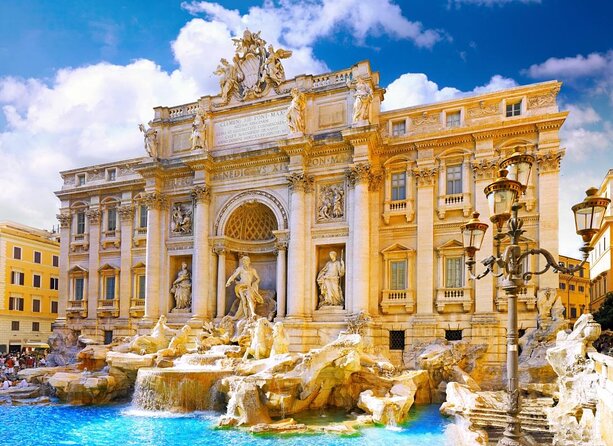
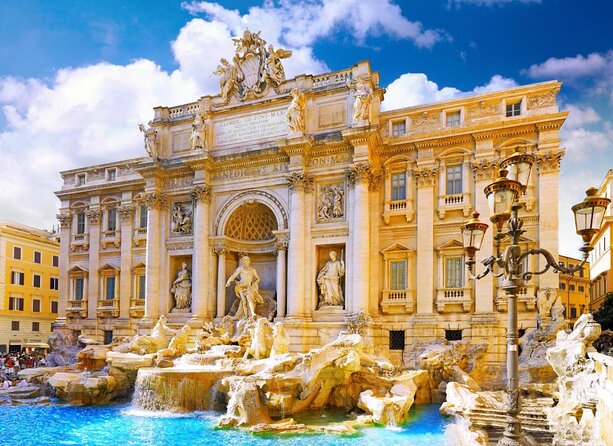
The Trevi Fountain receives roughly 30 minutes, the longest stop on the route. That extra time makes sense. The fountain is elaborate, crowded, and easy to rush through if you visit without a guide.
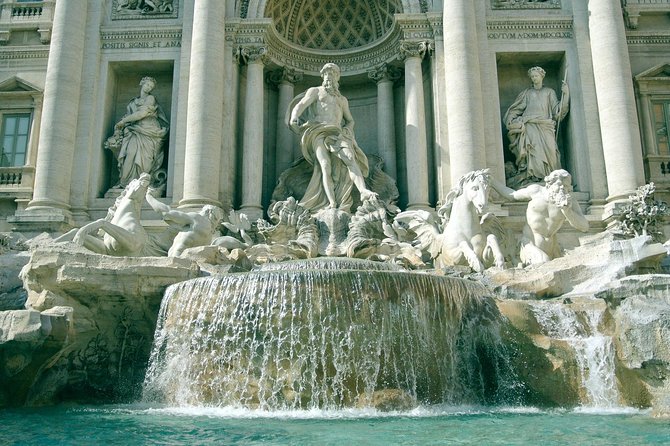
You will have time to look at the Baroque design, hear its story, and take part in the familiar tradition of tossing a coin into the water to encourage a return to Rome. The coin ritual is simple, but it gives the stop a bit of fun after the earlier architectural explanations.
I would use this part of the walk to ask questions. The fountain is famous enough that you may already know the basic facts, but a good guide can help you see the composition, movement, and details rather than treating it as a quick selfie background.
Trevi is also the point where the tour may feel most crowded. The information provided does not specify group size or quiet visiting times, so you should expect a popular public place rather than a calm, private viewing. Keep your belongings close and listen for your guide’s meeting instructions.
The extra ten minutes compared with the other stops are useful, but they do not turn this into a specialist fountain tour. You get a clear introduction and time to appreciate the scene before continuing.
The Pantheon: ancient engineering in a living neighborhood
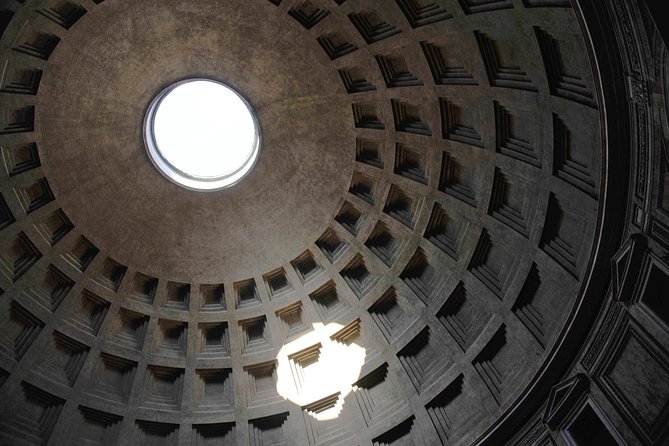
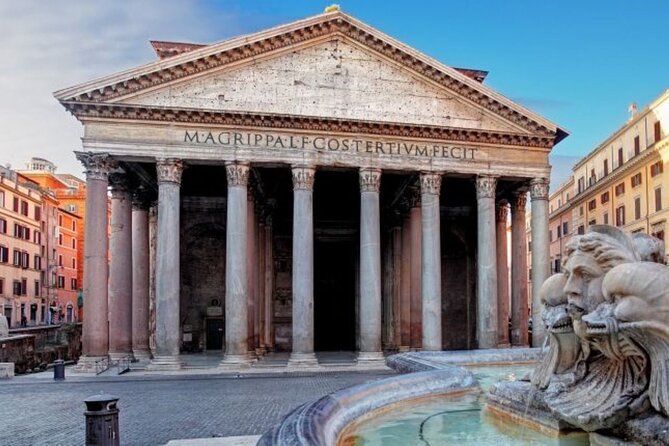
The walk then reaches the Pantheon, with about 20 minutes for sightseeing and explanation. This is the route’s strongest link to ancient Rome.
The Pantheon is especially valuable in this tour because it changes the tone. After the planned spaces and Baroque fountains, you encounter a building that shows the technical skill of Roman construction and the long life of the city’s architecture. Your guide can help you understand why this monument matters instead of leaving you with only a quick exterior photograph.
Because the stop is short, check what your booking includes before you arrive. The activity description promises a guided visit and sightseeing at the Pantheon, but it does not list entrance admission as a separate inclusion. The tour is built around the route and guiding, not a lengthy indoor visit.
That distinction matters if the Pantheon is your top priority. You will get context and a stop at the site, but you should not book this two-hour walk expecting the depth of a dedicated Pantheon tour.
Piazza Navona: finishing among fountains and cafés
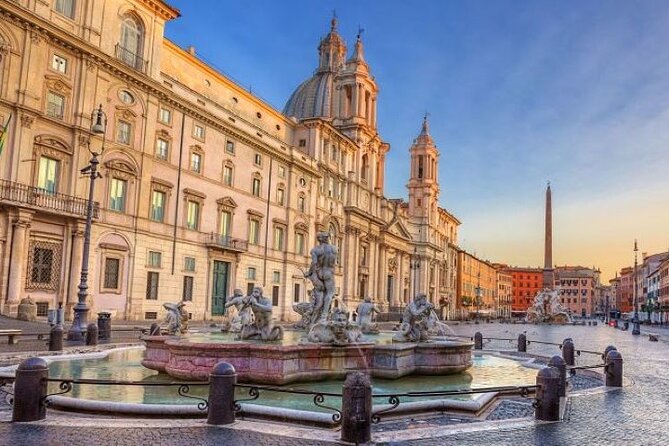
The final stop is Piazza Navona, with another 20 minutes. It is a fitting end because the square brings together art, daily life, cafés, and street performance.
Bernini’s fountains take center stage here. Your guide can explain the main features and help you compare the square with Trevi and Piazza del Popolo. Each place uses water and architecture differently, and seeing them in one sequence makes Rome’s Baroque style easier to understand.
Piazza Navona also gives the tour a more relaxed finish. You are not ending at a quiet archaeological site or a transport hub. You finish in a place where you can sit at a café, watch street performers, or continue walking through the center after the guide departs.
The 20-minute stop is enough for an introduction, though not for lingering over every fountain or café. If you want to stay longer, this is one of the easiest places to continue on your own after the tour.
What the guides add to the experience
The guide is the heart of this activity. The company assigns licensed guides, with English, French, and Spanish available. Specific guides praised for the quality of their work include Celia, Estefani, and Sarah.
Celia has been described as kind, considerate, and patient. That is useful on a walking tour, where a guide who keeps the group together without rushing makes a real difference.
Estefani has impressed with historical detail and a simple visual tool: a book showing places as they looked in the past and how they appear now. That before-and-after view can make Rome’s changes easier to grasp than a string of dates.
Sarah has received praise for her French and her command of the subject. If you prefer French, confirming your language when booking is sensible, since the activity is offered in three languages.
The feedback is not uniformly glowing on historical depth. One French-language assessment found the tour too light for someone seeking specialist-level detail. I would set expectations accordingly. This is a lively city walk for a broad audience, not a university seminar or an archaeology course.
Walking, comfort, and accessibility
The route lasts two hours and includes walking between all five main stops. You should be ready to walk on city streets, stand while listening, and keep moving between public squares.
Comfortable shoes are essential. Water is also recommended, and you should avoid bringing luggage or large bags. Sleeveless shirts are not allowed, so dress with the church setting and Rome’s public etiquette in mind.
The activity is not recommended for people with limited mobility. The Spanish Steps are an obvious challenge, and the overall route has several stops where you may need to stand in crowded public areas. One guide was praised for being patient with a participant who had a disability, but that personal care does not change the official suitability warning.
If mobility is a concern, ask the provider for current details before booking. The supplied information does not promise an adapted route, wheelchair access, or vehicle support.
Who should book this tour?
I would choose this walk if you want a clear first look at central Rome without committing to a full-day program. It suits first-time visitors, couples, families with older children who can walk comfortably, and returning visitors who want a guide to add context to places they have already seen.
It is also useful for anyone who likes famous sights but does not want to spend the day inside museums. You see major Roman places from the street, hear their stories, and still have time afterward to explore on your own.
You may want something else if your main goal is ancient Roman archaeology, detailed art history, or extended time inside the Pantheon. The two-hour format keeps the experience moving, but it limits how far a guide can go at each stop.
The route also works best when you treat it as an introduction. Let the guide give you the broad picture, note the places you want to revisit, and return later for a slower look.
Should you book The Marvels of Rome?
Book it if you want five major sights, one licensed guide, and a tidy two-hour walking route for $35. The strongest parts are the clear sequence, the range of Rome’s architecture, and the guide quality associated with people such as Celia, Estefani, and Sarah.
Skip it if you need an accessible route, a small specialist group, or long, detailed talks at each monument. For most able walkers who want to get their bearings fast, this is a sensible and fairly priced introduction to Rome’s historic center.
Free cancellation up to 24 hours before the start and reserve-now, pay-later booking make it easier to fit into a changing schedule. Just confirm the meeting point, choose your language, leave large bags behind, and arrive ready to walk.
FAQ
Where does the tour begin?
It begins in Piazza del Popolo, in front of Basilica Parrocchiale Santa Maria del Popolo. The guide will hold a sign with the company name.
How long does the experience last?
The tour lasts two hours. Starting times vary, so you need to check availability for the date you want.
Which sights are included?
The route includes Piazza del Popolo, Piazza di Spagna and the Spanish Steps, Trevi Fountain, the Pantheon, and Piazza Navona.
Which languages are available?
Live guides are available in English, French, and Spanish.
Is hotel pickup included?
No. Hotel pickup and drop-off are not included. You meet the guide at Piazza del Popolo.
What should I bring?
Bring comfortable shoes and water. Luggage and large bags are not allowed, and sleeveless shirts are not permitted.
Is the tour suitable for people with limited mobility?
The activity is not recommended for people with mobility impairments. The route includes considerable walking and the Spanish Steps, so ask the provider about your needs before booking.
Newest Rome tours we have reviewed
- Private TikTok Video Making in Rome★ 5.0 · 7 reviews
- Assisi, Orvieto and Civita di Bagnoregio Full Day Tour from Rome★ 4.5 · 45 reviews
- Assisi & Saint Francis Path Tour from Rome★ 5.0 · 45 reviews
- Assisi and Cascia Private Day Tour from Rome with Lunch★ 5.0 · 10 reviews
- Art Class in the center of Rome!★ 4.0 · 4 reviews
- Art & Craft: Beer Tour with Street Art in Rome★ 4.5 · 6 reviews
- Arrival in Rome: Airport Transfer & Exclusive City Introduction★ 5.0 · 3 reviews
- From Rome: Private Day-Tour of Tuscany★ 5.0 · 16 reviews