
Reviewed · ROME
Rome: A Journey Back in Time to the Roman Era, Half Day Tour
Rome’s ancient art is not all out in the open beside the Colosseum. Much of the finest work is indoors at Palazzo Massimo and the Baths of Diocletian, where you can see imperial statues, painted frescoes, mosaics, and tombs without spending a full day fighting the crowds.
I like the tour’s tight focus on first-class Roman art and the way it links archaeology with science inside Santa Maria degli Angeli. I also like the guides’ teaching style. Fabio brings Roman and Hellenic history to life, while Mohammed is praised for taking his time through the museum, church, and baths.
The main drawback is its short length. Three hours gives you a strong introduction, not a full study of the National Roman Museum. You will also walk through historic spaces, so the tour is not suitable for wheelchair users or people with mobility impairments.
Key points at a glance
- See the Discus Thrower and Old Boxer: Two famous ancient statues provide a clear look at the skill and realism of Roman and Greek sculpture.
- Enter Diocletian’s huge bath complex: The former imperial baths reveal the scale of Roman public life and later Christian reuse.
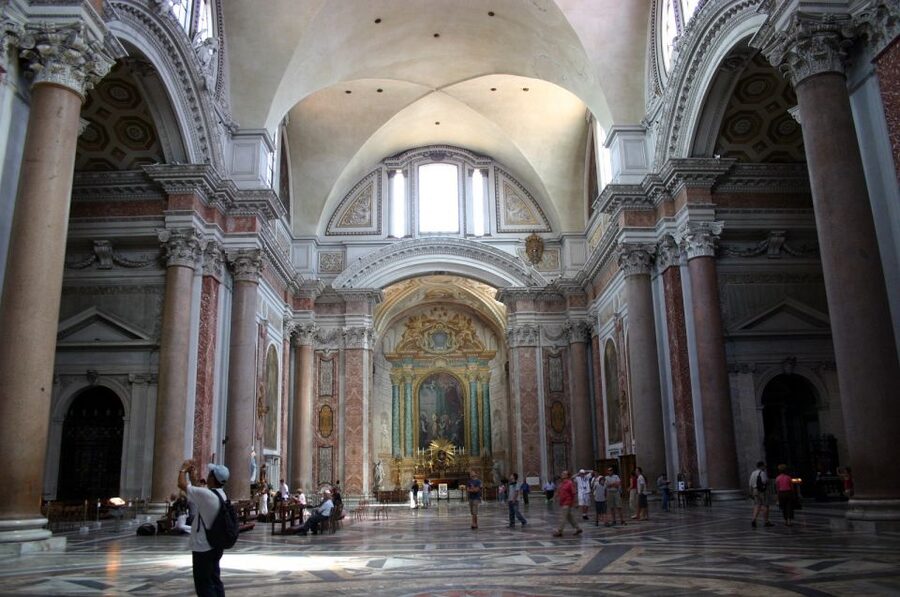
- Walk through Michelangelo’s church: Santa Maria degli Angeli occupies part of the Baths of Diocletian and includes work associated with Michelangelo.
- Study Livia’s painted garden frescoes: These delicate wall paintings offer a quieter, more intimate view of Roman domestic life.
- Find the 17th-century planetary sundial: The basilica’s astronomical instrument connects Rome’s ancient past with later papal science.
- Plan for a morning without hotel pickup: You meet at the Basilica of Saint Mary of the Angels and Martyrs and return there after the tour.
Why this half-day tour adds something beyond the Colosseum
The Colosseum gives you Rome’s most famous view of antiquity: arches, stone, crowds, and grand scale. This tour answers a different question. What did Roman people actually make, paint, worship around, and study?
The answer is held in the National Roman Museum, spread across several sites. This experience concentrates on Palazzo Massimo and the Baths of Diocletian, then finishes in Santa Maria degli Angeli. You move from museum galleries to open archaeological spaces and finally into a working basilica with an unusual scientific instrument.
I find that sequence useful because it keeps the morning varied. You are not looking at sculpture for three straight hours. You see statues, frescoes, mosaics, tombs, architecture, and astronomy. The guide’s job matters here. Without explanation, a Roman museum can feel like a series of beautiful objects with long labels. With a good guide, each piece begins to explain the society that produced it.
This is also a practical choice if you have already seen the Colosseum or want to avoid another major crowd scene. The tour is not built around Rome’s headline monument. Instead, it gives you a quieter look at material that is easy to miss on a first visit.
Other Rome tours people pair with this one:
- Vatican Museums & Sistine Chapel Tour with Optional Basilica
★ 4.3 · 67,413 reviews - Vatican Museums, Sistine Chapel & St Peter’s Basilica Guided Tour
★ 4.5 · 39,149 reviews - Rome: Colosseum, Palatine Hill and Roman Forum Guided Tour
★ 4.8 · 32,814 reviews
Starting at Santa Maria degli Angeli
The meeting point is the Basilica of Saint Mary of the Angels and Martyrs, also called Santa Maria degli Angeli. You return to the same area at the end, so the tour has a simple out-and-back shape rather than requiring a hotel transfer or a complicated final pickup.
The basilica is not just a meeting point. It is part of the story. The building occupies the remains of Diocletian’s Baths, and Michelangelo became its architect. That fact sets up the rest of the morning: Rome repeatedly built new religious and civic life inside older Roman structures.
You should arrive ready to walk. Comfortable shoes are a sensible choice, and sunglasses and a camera are useful for the outdoor portions. Since the tour runs in all weather, bring suitable clothing for the forecast. Hotel pickup and drop-off are not included, so you are responsible for reaching the starting location.
Palazzo Massimo and Rome’s finest portable treasures
The National Roman Museum’s Palazzo Massimo is the tour’s main art stop, with about 75 minutes for a guided visit. That is enough time to focus on major works, but not enough to inspect every gallery. I see that as a benefit if you prefer a clear route through a large collection.
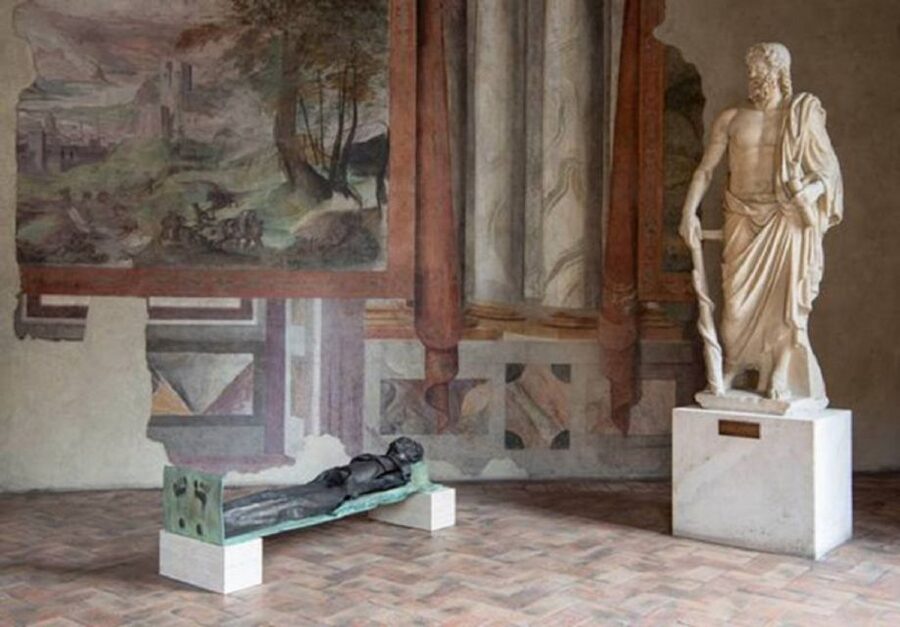
One highlight is Myron’s Discobolus, or Discus Thrower. The statue captures an athlete at the instant before releasing the discus, turning movement into marble. It is a useful work to see with a guide because the pose, balance, and idealized body reflect artistic traditions that reached Rome from the Greek world.
The Old Boxer offers a sharp contrast. Instead of an ideal young athlete, you see an older fighter marked by fatigue and injury. The difference between these two figures helps you notice that ancient sculpture was not limited to perfect bodies and heroic poses. Roman artists and patrons valued both ideal beauty and hard-earned realism.
The museum also holds richly painted frescoes from the garden villa of Empress Livia. These paintings give you a more private view of Roman life. Rather than a public monument or imperial statue, you see an imagined garden brought indoors, with nature serving as decoration and escape.
The tour also includes colorful mosaics and tombs of many types. These works can be easy to rush past on your own, especially when you are focused on the most famous statues. A guide can place them in their social and cultural setting, explaining why images, burial spaces, and household decoration mattered.
Fabio is particularly suited to this part of the morning if your group is led by him. His explanations bring together Roman and Hellenic history, rather than treating each object as an isolated masterpiece. The strongest praise for this experience centers on that kind of context, with the guide explaining not only what you are seeing but why it mattered.
Still, keep your expectations realistic. The museum portion lasts roughly 75 minutes. You will see selected highlights, not every important room. If you are an art specialist or want extended time with the frescoes, you may want to return independently.
The Baths of Diocletian and the scale of imperial Rome
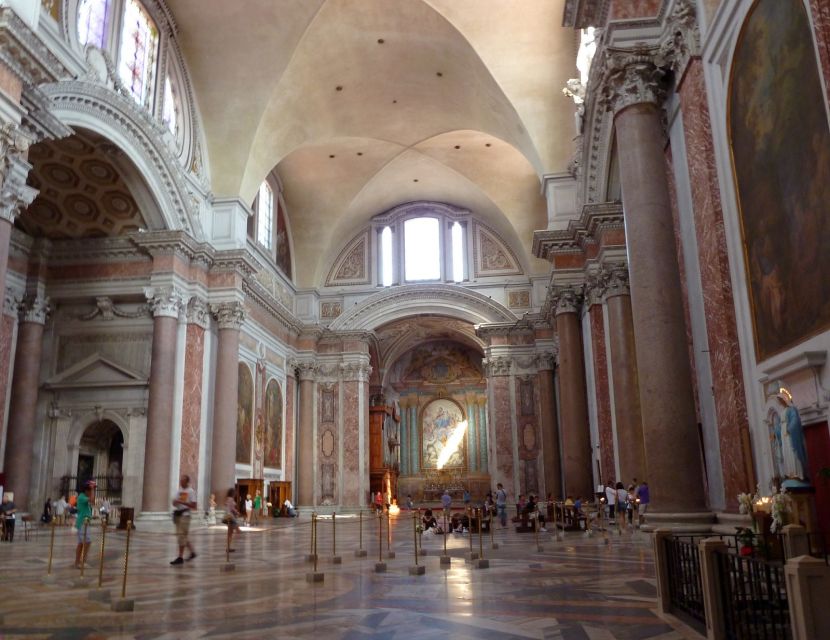
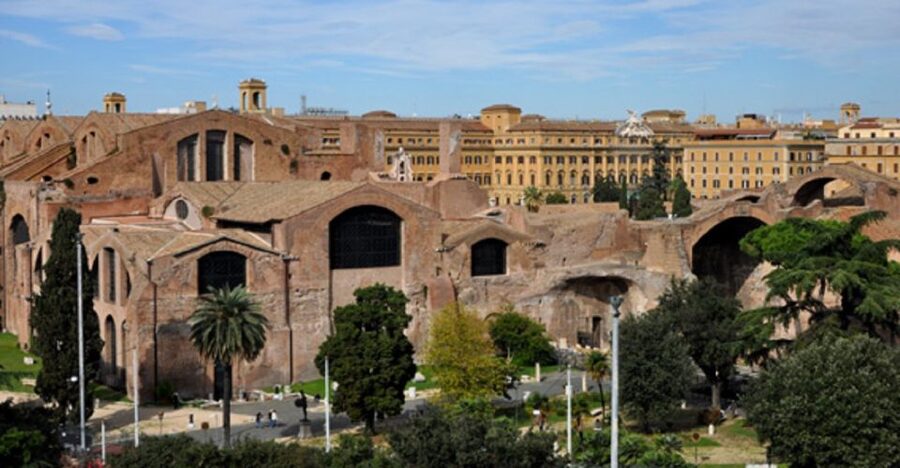
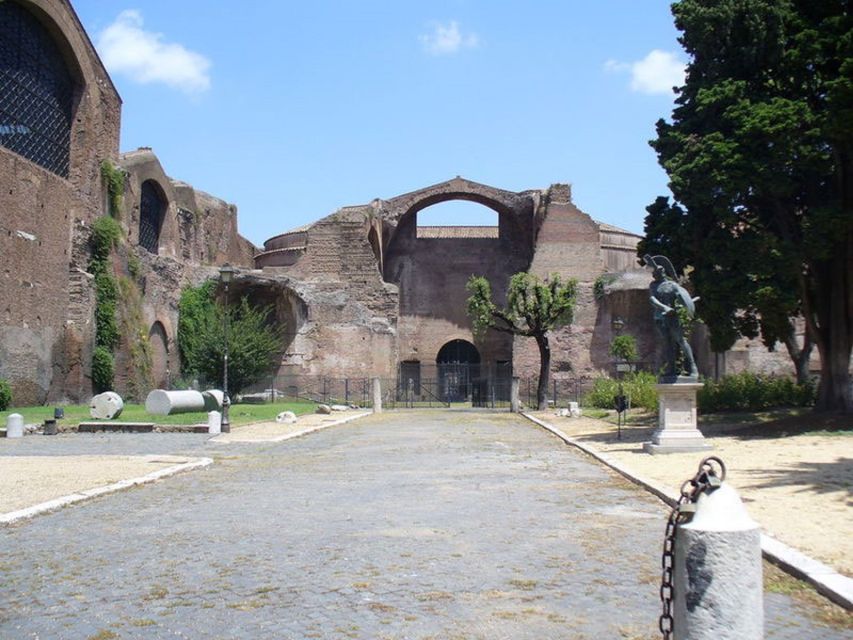
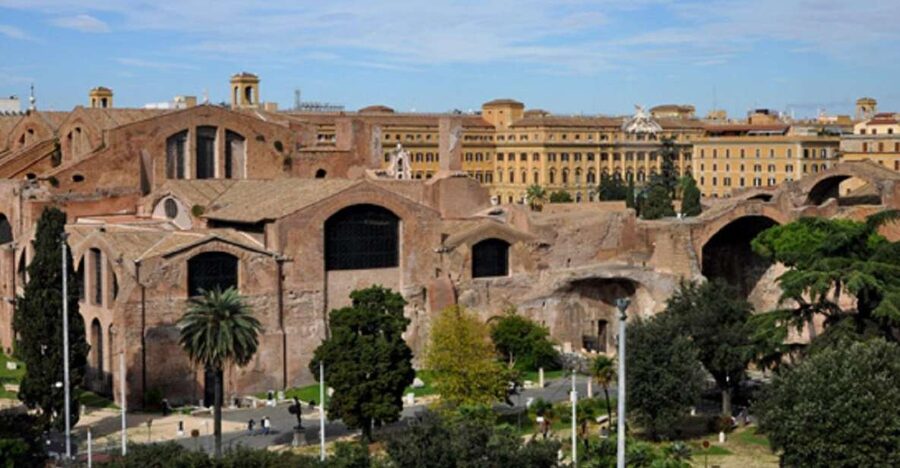
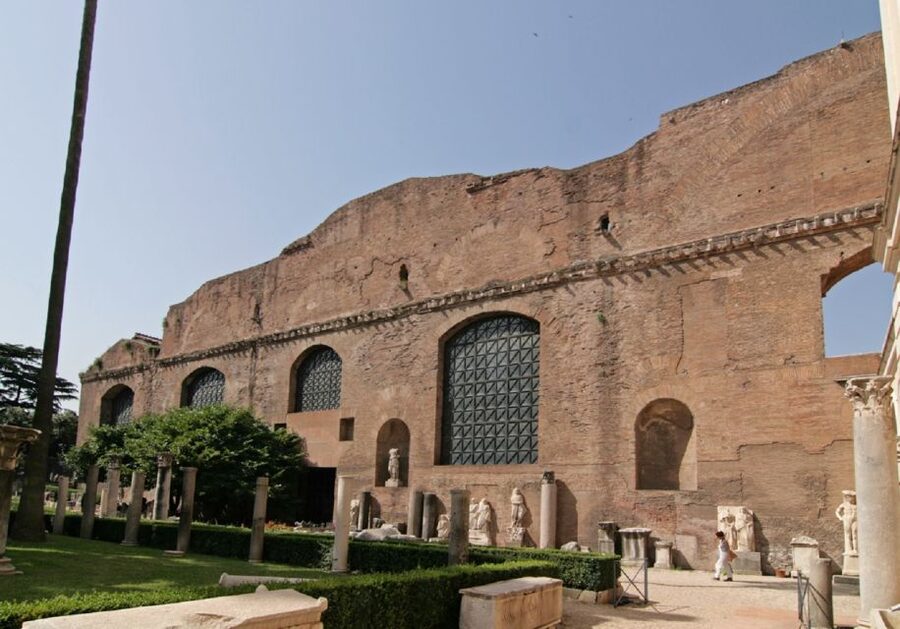
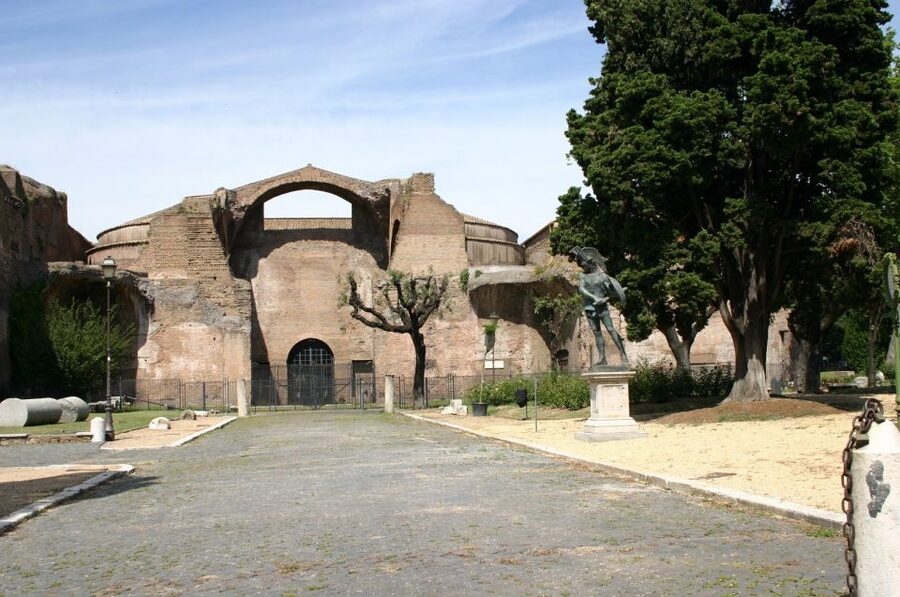
The next stop is the Terme di Diocleziano, or Baths of Diocletian. Allow about an hour for the visit and walk. These baths were built on an immense scale, and their surviving spaces help you picture how much engineering and organization went into Roman public bathing.
The baths were more than places to wash. They were large social complexes, built for exercise, relaxation, conversation, and public life. Even without filling in every architectural detail, the size of the surviving structures tells you that Roman urban life depended on public buildings that could serve thousands of people.
One of the most appealing parts of this stop is the opportunity to walk through underground areas and places of worship. These spaces show Rome layered over itself. Imperial buildings changed purpose, and later religious use grew within or beside the ancient complex. You are not just looking at ruins. You are seeing how later generations adapted the Roman past.
The former bath complex also includes an evergreen wooded area. The setting offers a welcome change after the museum galleries, and it gives you a sense of how the site has been reshaped over time. The large courtyard was restored by Michelangelo, adding another period to the story.
That mixture is what makes the Baths of Diocletian worthwhile. You get Roman engineering, later Christian use, Renaissance design, and a quiet outdoor walk in one stop. The site is less immediately familiar than the Colosseum, so the guide’s explanation is especially useful.
There is a physical consideration here. The tour includes walking through underground areas and historic buildings, and the experience is specifically not suitable for people with mobility impairments or wheelchair users. If uneven or extended walking is difficult for you, this is not the right choice.
Same city, a completely different half-day:
- Rome: Guided Tour of Colosseum, Roman Forum & Palatine Hill
★ 4.7 · 27,897 reviews - Rome: Colosseum & Forum with Audio Guide App -Optional Arena
★ 4.2 · 24,770 reviews - Rome: Colosseum, Roman Forum and Palatine Hill Guided Tour
★ 4.5 · 23,903 reviews - Rome: City Sightseeing Hop-on Hop-off Bus with Audioguide
★ 4.0 · 16,045 reviews
Santa Maria degli Angeli and the church built inside ancient Rome
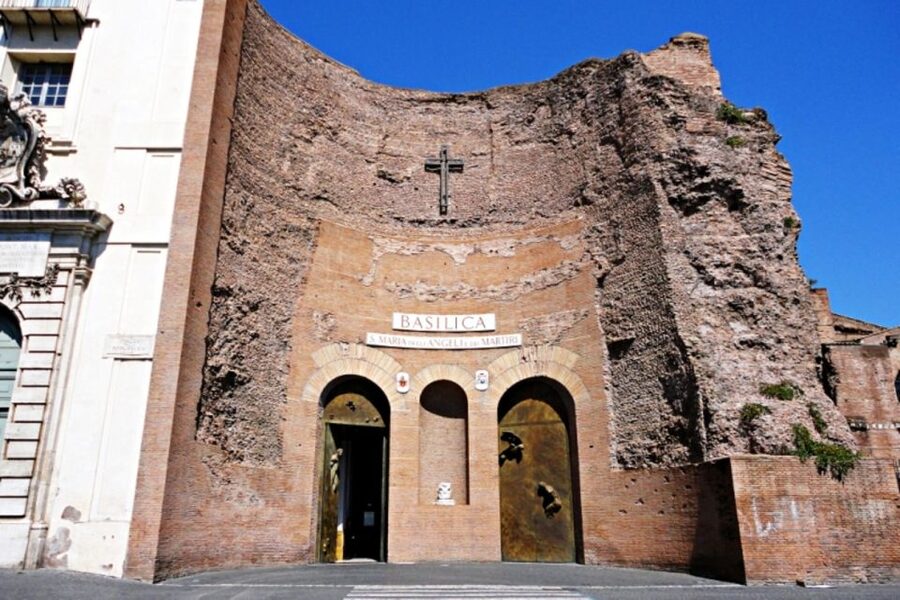
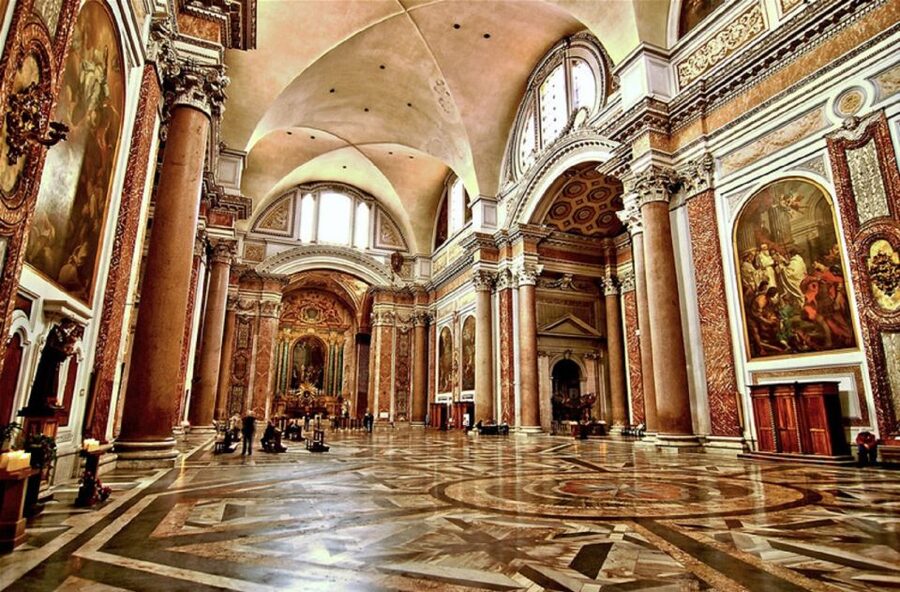
The final guided visit lasts about 45 minutes and takes place at Santa Maria degli Angeli. This is where the ancient and modern parts of the tour meet most clearly. You enter a basilica that uses the structure of the Baths of Diocletian, with Michelangelo connected to its architectural transformation.
The church rewards attention to its setting. Instead of seeing a Roman bath complex and a later church as separate places, you can understand how Rome reused monumental spaces. The basilica is a reminder that ancient buildings often survived because later communities found new purposes for them.
The most unusual feature is the planetary sundial built by 17th-century astronomers for the Pope. It was designed to help calculate the proper sequence of day and night through the seasons. This is a fine ending because it takes the tour beyond sculpture and ruins into measurement, astronomy, and the practical use of science.
The sundial also changes your idea of what a Roman sightseeing tour can be. You begin with statues made for imperial settings, move through baths and burial spaces, and finish with a scientific device inside a church. Each stop belongs to a different period, but all are tied to Rome’s habit of building over earlier Rome.
Dress properly for the basilica. Shorts, miniskirts, and uncovered shoulders are not allowed. This is easy to manage if you wear clothing that covers your shoulders and knees, but it is worth planning before you leave your hotel.
How much value do you get for $167.66?
At $167.66 per person, this is not a budget museum visit. The price needs to be judged against the included museum entrance and three hours with a professional guide, as well as the time saved by having someone select and explain the key works.
The value is strongest for you if you want interpretation rather than simple entry. Palazzo Massimo and the Baths of Diocletian are large, layered places. A well-prepared guide can keep the visit moving and connect the art to Roman, Hellenic, Christian, Renaissance, and scientific traditions.
The tour is less valuable if you prefer to browse slowly on your own. The 75-minute museum visit and one-hour Baths visit follow a guided rhythm, and you will not have unlimited time for every display. You are paying for a focused route and expert explanation, not an open-ended museum day.
The small set of published ratings is very positive, with an overall score of 4.7 from 17 reviews. The repeated strength is the guide’s teaching. Fabio is described as exceptional, passionate, and strong at explaining Roman and Hellenic history. Mohammed is praised for being informative and taking his time in the museum, church, and baths. Those details matter because the quality of this tour depends heavily on who leads it.
English and Italian tours are available. You should confirm the language and starting time when booking, since the three-hour activity has set departure options based on availability.
Who will enjoy this experience most
I would choose this tour if you have already seen Rome’s headline sights and want a more focused look at art and architecture. It also suits a first-time visitor who wants an introduction to ancient Rome that is quieter and more museum-based than the Colosseum route.
It is a good fit for:
- People who want to see the Discus Thrower, Old Boxer, Livia’s frescoes, mosaics, and tombs with explanation
- Visitors interested in how ancient buildings were reused by later religious and civic communities
- Anyone who enjoys connections between art, history, architecture, and astronomy
- Travelers with a free morning who can meet at the basilica without hotel transportation
- Visitors comfortable with walking through historic and underground areas
I would think twice if you want only outdoor ruins, dislike museums, or need a fully accessible route. The experience also may feel brief if you want to study every artwork at length.
The tour operates in all weather, so rain does not automatically cancel the plan. Wear comfortable shoes, bring sunglasses and a camera, and make sure your clothing meets the basilica’s dress requirements.
Should you book this Roman art tour?
Book it if you want to see a side of Rome that the Colosseum cannot provide. The combination of Palazzo Massimo, Diocletian’s Baths, Michelangelo’s basilica, and the 17th-century planetary sundial gives you an unusually broad three-hour lesson in Roman art and later Roman life.
The best reason to book is the guide. Fabio and Mohammed have each received praise for clear explanations, patience, and genuine passion. That is important in a museum where the objects are impressive but the historical links are not always obvious.
Skip it if your priority is the Colosseum, Roman Forum, or a leisurely self-guided museum visit. At $167.66, the tour makes the most sense for you when interpretation, a planned route, and access to major art are worth more than saving money or setting your own pace.
FAQ
How long does the tour last?
The tour lasts three hours.
Where does the tour start?
It starts at the Basilica of Saint Mary of the Angels and Martyrs, also known as Santa Maria degli Angeli.
Where does the tour end?
It returns to the Basilica of Saint Mary of the Angels and Martyrs.
Is hotel pickup included?
No. Hotel pickup and drop-off are not included.
Which languages are available?
The live guide is available in English or Italian.
What does the tour include?
It includes entrance tickets to the museum and three hours with a professional guide.
What should I bring?
Bring comfortable shoes, sunglasses, and a camera.
Is the tour suitable for wheelchair users?
No. The experience is not suitable for wheelchair users or people with mobility impairments.
What clothing is required for the basilica?
Shorts, miniskirts, and uncovered shoulders are not allowed inside the basilica.
Newest Rome tours we have reviewed
- Private TikTok Video Making in Rome★ 5.0 · 7 reviews
- Assisi, Orvieto and Civita di Bagnoregio Full Day Tour from Rome★ 4.5 · 45 reviews
- Assisi & Saint Francis Path Tour from Rome★ 5.0 · 45 reviews
- Assisi and Cascia Private Day Tour from Rome with Lunch★ 5.0 · 10 reviews
- Art Class in the center of Rome!★ 4.0 · 4 reviews
- Art & Craft: Beer Tour with Street Art in Rome★ 4.5 · 6 reviews
- Arrival in Rome: Airport Transfer & Exclusive City Introduction★ 5.0 · 3 reviews
- From Rome: Private Day-Tour of Tuscany★ 5.0 · 16 reviews