
Reviewed · ROME
Alfredo alla Scrofa Restaurant in Rome: Eat Like a Star
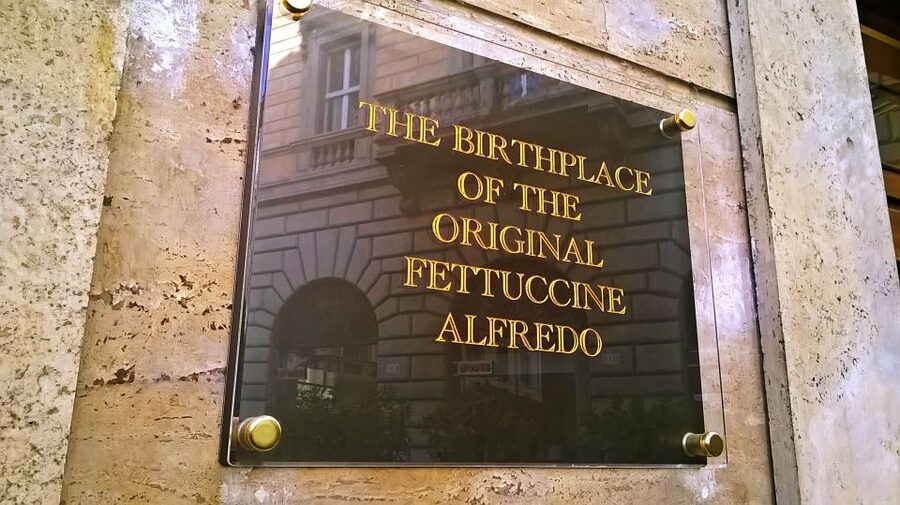
The main reason to book this experience is simple: you eat Fettuccine Alfredo where it was first created. Alfredo alla Scrofa has welcomed diners since 1914, and its old-city address puts you close to Piazza Navona, the Pantheon, and Rome’s main shopping streets.
I like the choice of formats. You can sit down for a full seasonal meal, add five wine pairings, or spend an hour learning to make pasta before eating. I also like the generous portions, polished service, and small historic touches, including the gold cutlery and tables linked with famous names.
The main caution is the fixed menu. You do not always get to choose each meat or dessert course, and some diners found the room noisy or the service less coordinated after the food arrived. At about $135.94 per person, this is a special-occasion meal, not a casual plate of pasta.
Key points to know before booking
- Original Fettuccine Alfredo: The signature pasta is made with Parmigiano Reggiano aged 24 months and artisanal double-cream butter from the Alps.
- Three ways to dine: Pick the seasonal tasting menu, the menu with five wine pairings, or a pasta class followed by a four-course meal.
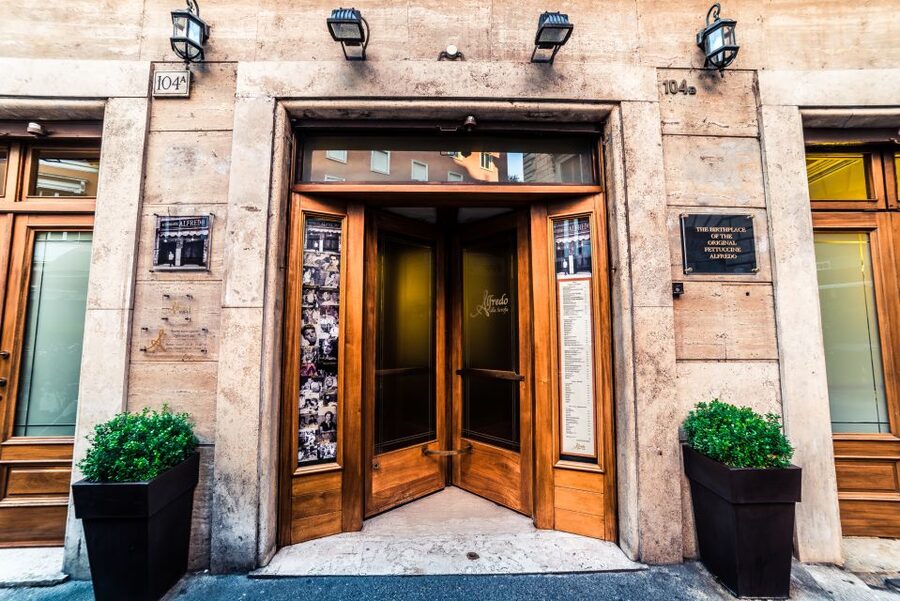
- Historic central location: Alfredo alla Scrofa is about a five-minute walk from Piazza Navona at Via della Scrofa 104/a.
- Pasta class extras: You receive an apron, recipes, a participation certificate, a work kit, and one package of Fettuccine Alfredo to take home.
- Large portions: Arrive hungry. The meal can include several courses, pasta, meat, dessert, wine, bread, and water.
- Plan ahead: Book the menu at least two days ahead and the cooking class at least four days ahead. A minimum of two people is required.
Why Alfredo alla Scrofa is more than a pasta stop
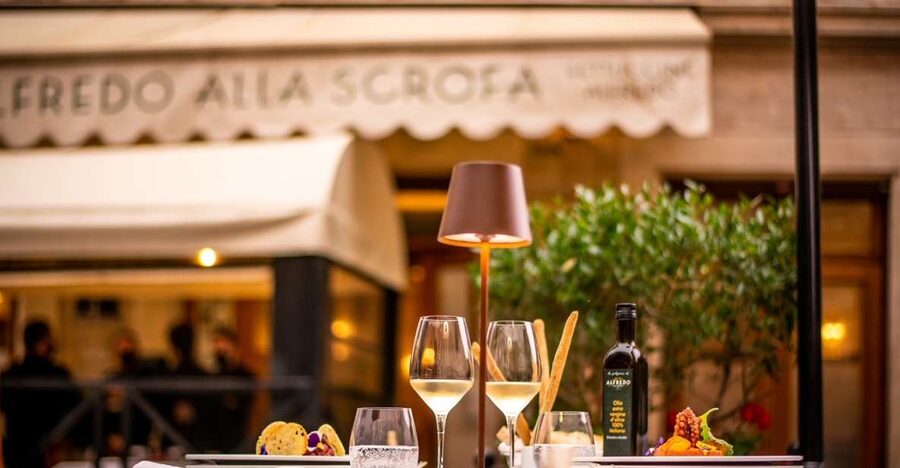
Fettuccine Alfredo is often treated as an Italian-American classic, but the original Roman version began here. The dish is deliberately spare: fresh pasta, butter, and Parmigiano Reggiano. There is no tomato sauce, cream-heavy preparation, or long list of toppings to distract from the ingredients.
That simplicity is part of the appeal. You are not just ordering a familiar dish in a famous restaurant. You are tasting the preparation that gives the restaurant its identity. The kitchen also serves traditional Roman food with seasonal touches, so the meal is broader than the signature pasta.
The restaurant’s walls and dining rooms carry a bit of show-business history. Greta Garbo, Dean Martin, Marilyn Monroe, Andrea Bocelli, and Jimi Hendrix are among the stars associated with the tables here. You cannot expect a celebrity sighting, of course, but the setting gives dinner a sense of occasion without requiring a separate museum or sightseeing stop.
I would place Alfredo alla Scrofa in your Rome plan when you want one polished meal with a story attached. If you only want a quick, inexpensive bowl of pasta, the price and fixed format will feel excessive.
More dinners out in Rome:
- Pasta Making & Wine Tasting with Dinner in Frascati from Rome
★ 5.0 · 1,326 reviews - Rome Food Tour: Hidden Gems of Trastevere with Dinner & Wine
★ 5.0 · 1,166 reviews - Rome: Pasta Making with Wine Tasting and Dinner in Frascati
★ 4.9 · 979 reviews
Getting there from Piazza Navona
The restaurant sits at Via della Scrofa 104/a in Rome’s historic center, roughly five minutes from Piazza Navona. That makes it easy to combine with a walk through central Rome, though you are responsible for reaching the restaurant yourself.
The location is useful because it does not require a special excursion outside the center. You can visit the nearby squares and churches before lunch, or make dinner part of an evening walk. One practical point is worth noting: some directions can be less direct than expected, so check the address rather than relying only on general tour instructions.
On arrival, show your booking and the staff will seat you. Without a reservation, you are not guaranteed a place in the dining room and can only order from the regular menu if seating is available. For this experience, booking ahead matters.
The dress code is smart casual. Smoking is not allowed, and large bags or luggage are not permitted. The activity ends at the restaurant, so you can continue into central Rome on foot afterward.
Choosing between lunch, dinner, and the pasta class
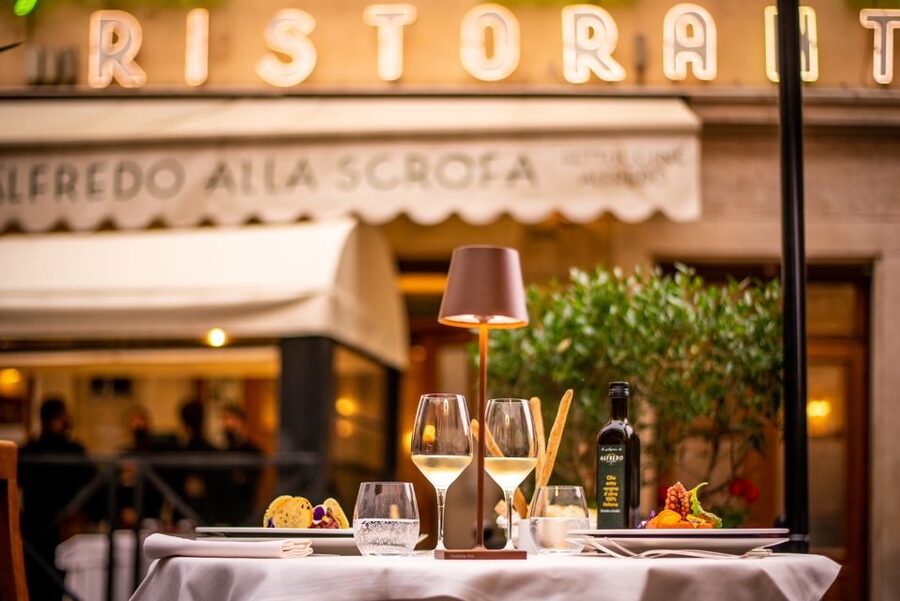
The seasonal tasting menu is offered at lunch at 12:30 PM or 2:00 PM, and at dinner at 7:00 PM or 9:15 PM. These times shape the feel of your day.
The earlier lunch works well if you want a substantial meal before more sightseeing. The 2:00 PM lunch gives you a slower start, but it can take a large part of the afternoon. Dinner at 7:00 PM leaves room for an evening stroll, while the 9:15 PM sitting suits Rome’s later dining rhythm.
The pasta class begins at 11:30 AM for lunch or 5:30 PM for dinner. The class lasts one hour, followed by the meal. I would choose this option if you want to learn a practical skill rather than simply eat in a historic room.
The cooking lesson focuses on making handmade noodles and preparing Fettuccine Alfredo. Chef instruction is intended to be hands-on, and one staff member named Carlo has been singled out for clear, patient explanations. You receive a work kit and recipes, so the class has value beyond the meal itself.
The class menu is shorter than the main tasting menu. It includes buffalo mozzarella with oven-roasted tomatoes, Fettuccine Alfredo, traditional beef meatballs with tomato sauce, and tiramisu. Four wine pairings are included, along with water, bread, and service.
There is also a practical souvenir: one package of Fettuccine Alfredo to take home. The apron and certificate add a pleasant finish, though the real benefit is that you leave with enough instruction to try fresh pasta in your own kitchen.
What arrives with the seasonal tasting menu
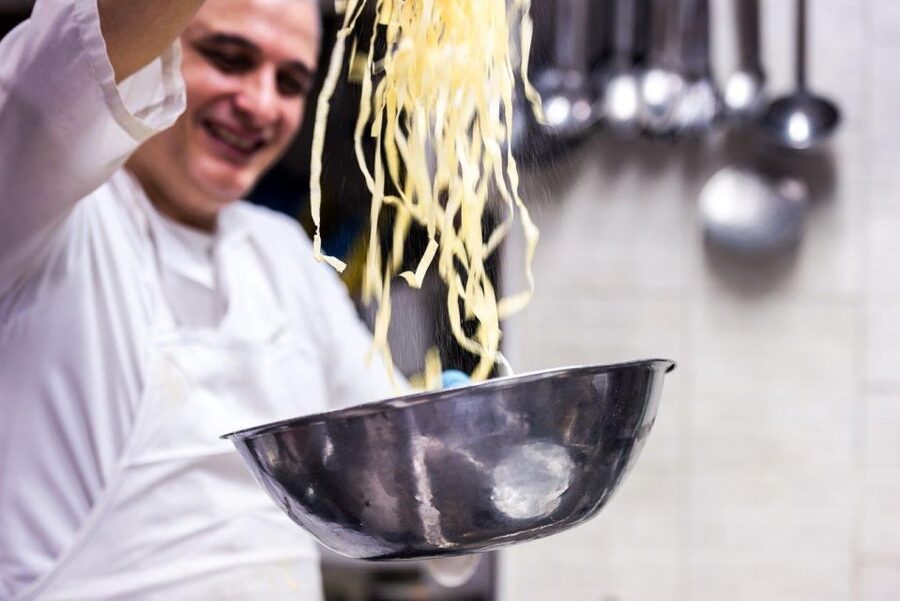
The standard seasonal tasting menu is a five-course progression, though the exact dishes can change with the time of year. The sample menu gives you a clear idea of the range.
You may begin with deep-fried beef meatballs served with green sauce. This is a hearty opening, not a tiny amuse-bouche. The next course may be a double-fried Roman artichoke, known as the king of Roman cooking. It brings a crisp texture and a strong local connection.
Then comes the central event: the original Fettuccine Alfredo, finished with aged Parmigiano Reggiano and double-cream butter. This course is the reason most people book the experience, and it arrives among other substantial dishes, so avoid filling up on bread.
The menu may continue with Amatriciana, using mezzamanica pasta, tomato, crisp bacon, and Pecorino cheese. That gives you a second Roman pasta style beside the Alfredo. A later course may include fried lamb with sautéed chicory, adding meat and bitter greens to balance the richer pasta dishes.
Dessert can be a Maritozzo Alfredo, a Roman brioche filled with whipped cream. The menu examples are not guaranteed, because the restaurant changes the tasting dishes according to seasonal ingredients.
The standard menu includes a welcome flute of Italian sparkling wine, mineral water, bread, and service. Additional alcoholic drinks and soft drinks cost extra. If you want the wine-pairing version, you receive five glasses, including a dessert wine chosen by the sommelier, plus water, bread, and service. The wine-pairing menu does not include the separate welcome drink.
More food tours in Rome:
- Winner 2025 Rome Twilight Trastevere Food Tour by Eating Europe
★ 5.0 · 5,157 reviews - Rome: Trastevere or Jewish Quarter Street Food Tour
★ 4.8 · 3,839 reviews - Rome Food Tour: Unlimited Tastings with Fine Wine & Barolo
★ 5.0 · 3,365 reviews - Rome: Trastevere Food tour with Free-Flowing Fine Wine
★ 5.0 · 2,853 reviews
How the Fettuccine Alfredo measures up
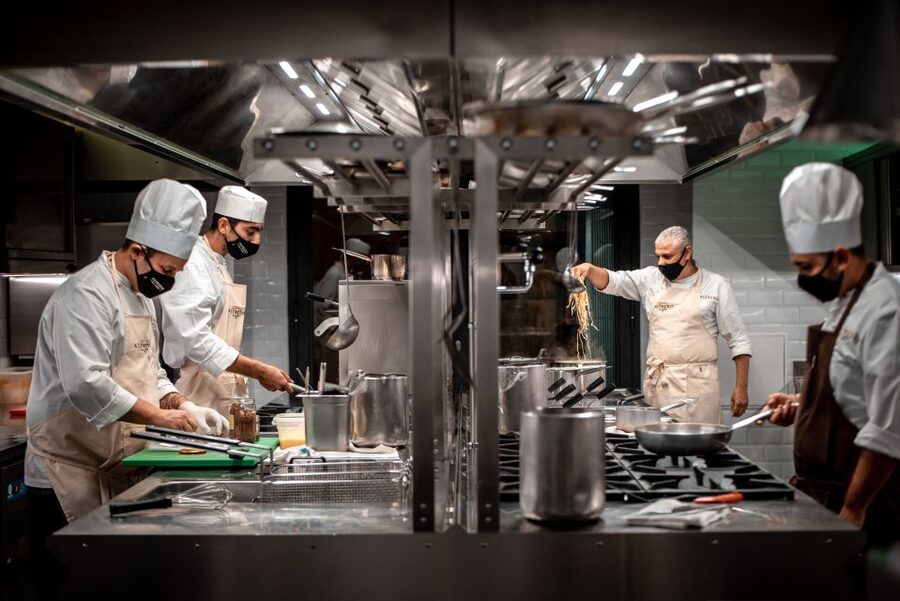
The Alfredo pasta is rich, but its ingredient list is short. The butter supplies silkiness, while the aged cheese gives the dish salt, depth, and a firm finish. This is not a bowl designed for elaborate toppings. It is a focused dish that depends on careful mixing and good ingredients.
The pasta is the heart of the meal, and the portion is not stingy. Several diners found the overall meal larger than expected, so you should arrive hungry and pace yourself. If you are accustomed to a small first course followed by a light main, this menu may feel like several full meals.
I like that the signature dish is placed beside other Roman specialties. You can compare Alfredo with Amatriciana, taste Roman artichoke, and finish with a local-style sweet. That makes the meal more useful for someone trying to understand Roman food rather than simply checking off one famous pasta.
Still, the dish may not suit every palate. Butter and cheese are the point, so lactose intolerance or dairy restrictions need advance attention. Tell the restaurant staff about celiac disease, lactose intolerance, or other dietary needs when you arrive. The provided information does not promise that every request can be accommodated, so contact the restaurant or communicate clearly before eating.
Service, atmosphere, and the pace of the meal
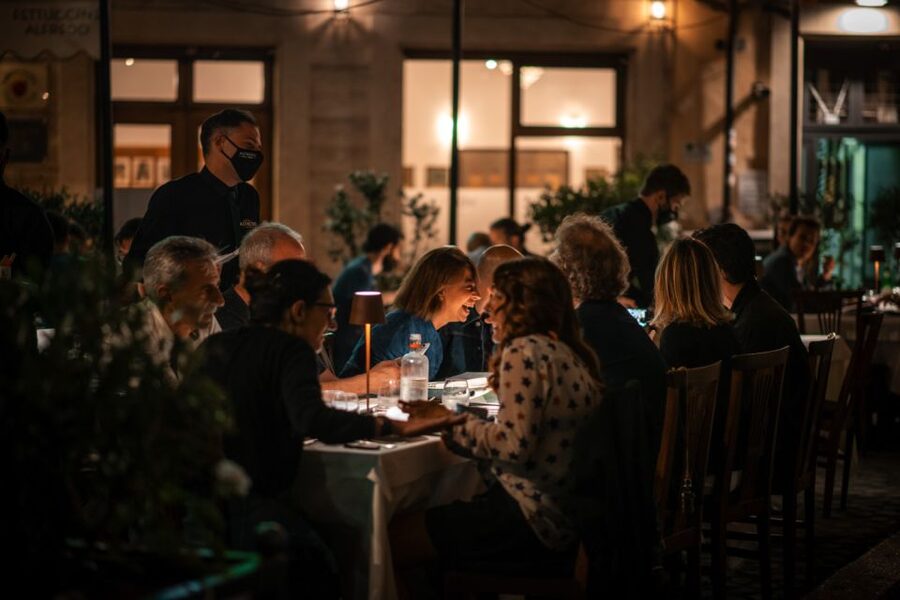
The strongest part of the experience, apart from the pasta, is the service. Staff are described as friendly, attentive, and professional, even when the dining room is busy. The setting feels formal enough for a birthday or anniversary, but not so stiff that you cannot enjoy yourself.
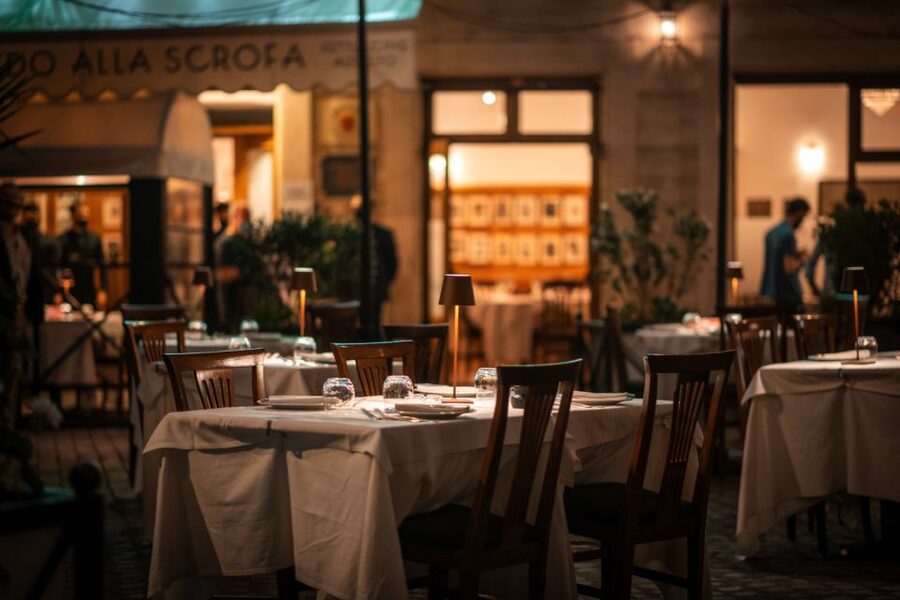
The dining room has an old-school Italian character. Gold cutlery and the celebrity connections give the place a theatrical touch, while the food keeps the focus on Roman tradition. You are paying for atmosphere as well as lunch or dinner.
Service can vary during a long fixed meal. A few practical problems have appeared: a waiter did not know exactly what was included in the prepaid menu, one table felt neglected after the food arrived, and the shop was closed at dinner despite the advertised discount. These are not reasons to reject the experience, but they are reasons to confirm what your package includes when you sit down.
The room can also be noisy. If you want a quiet conversation, a later seating may or may not help, since the restaurant’s sound level can change with the crowd. You should view this as a lively central restaurant, not a silent tasting room.
The food portions are generous enough that ordering extra dishes can be a mistake. Make sure the staff know you have a prepaid menu, especially if the package includes dessert and wine. One diner ended up too full for tiramisu after additional food was ordered.
Is the $135.94 price fair?
At $135.94 per person, the experience is expensive by Rome standards. You can find a simple pasta meal for far less. The price makes better sense when you use the full package: several courses, a welcome drink or wine pairing, mineral water, bread, service, the restaurant setting, and the 10 percent shop discount.
The pasta class offers the clearest added value. Along with lunch or dinner, you get an hour of instruction, recipes, an apron, a certificate, a work kit, and pasta to take home. If you actually want to make fresh noodles later, those extras make the price easier to defend.
The wine-pairing menu is a good fit for diners who enjoy tasting wines with food, but it is less attractive if you rarely drink. The standard tasting menu may be the smarter choice if you want the restaurant’s food without five glasses.
The 10 percent discount applies to the restaurant’s Alfredo product line. That can help if you want to take home pasta or related products, though check that the shop is open when you finish. The discount itself should not be the reason to book.
I see the price as reasonable for a celebratory meal, a food-focused Rome itinerary, or a visitor who values the cooking lesson. It is poor value for anyone seeking a quick meal, a flexible menu, or a low-cost way to eat Alfredo.
Who should book this experience?
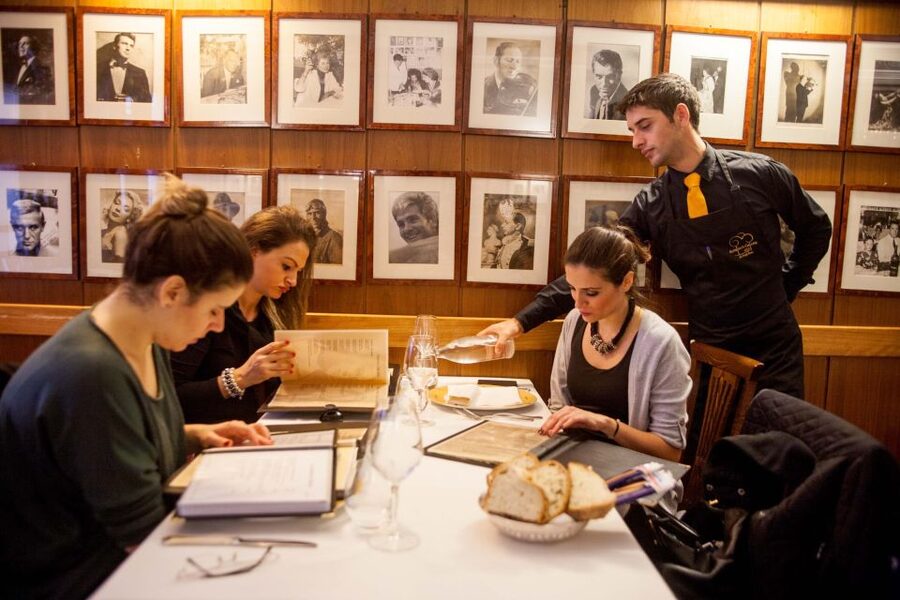
I would recommend the pasta class to couples, families with older children, and friends who enjoy cooking together. The one-hour lesson gives the meal a purpose and leaves you with something you can repeat at home.
The tasting menu suits a first-time Rome visitor who wants one memorable dinner in the historic center. It also works for a birthday or anniversary, especially if you enjoy classic restaurants with a connection to film and music history.
People with strict dietary needs should ask questions before booking. The restaurant asks you to communicate special requests, including celiac disease and lactose intolerance, but the menu centers on pasta, cheese, butter, bread, and other rich ingredients.
You should also skip this experience if you have mobility limitations that make the restaurant unsuitable. Large luggage is not allowed, and the activity does not include transportation.
Cancellation is free up to 24 hours before the experience, and you can reserve now and pay later. Menu bookings need at least two days’ notice. The cooking class needs at least four days, so do not leave that choice until the final days of your trip.
My verdict: book the class or book the meal?
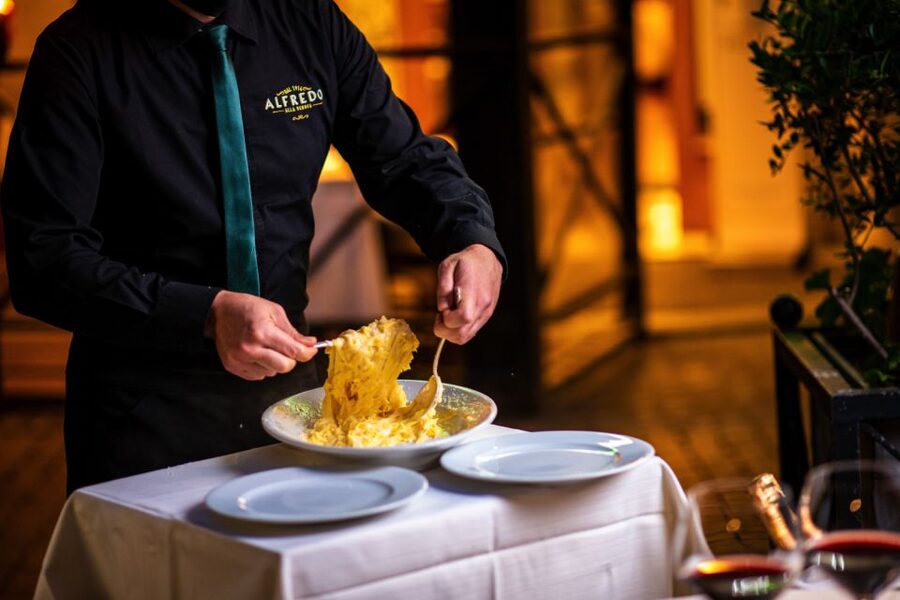
Book it if you want the story behind Fettuccine Alfredo, a full Roman meal, and a polished setting near Piazza Navona. I especially favor the cooking class because it turns a famous dish into a useful skill and includes the best take-home extras.
Choose the standard tasting menu if you care most about the restaurant and its food. Pick wine pairing only if five glasses suit your evening. Keep your expectations realistic: the menu is fixed, portions are large, the room may be noisy, and service can occasionally lose track of what is included.
For a casual plate of pasta, spend less elsewhere. For a special Rome meal with history, generous food, and a chance to make fresh Fettuccine Alfredo yourself, this is a strong choice.
FAQ
Where is Alfredo alla Scrofa located?
The restaurant is at Via della Scrofa 104/a, 00186 Rome, in the historic center. It is about a five-minute walk from Piazza Navona.
How long does the experience last?
The meal or class-and-meal experience takes about two to three hours. The pasta class itself lasts one hour.
What time does lunch begin?
Lunch is offered at 12:30 PM or 2:00 PM for the seasonal tasting menu. The class-and-lunch option begins at 11:30 AM.
What time does dinner begin?
Dinner is offered at 7:00 PM or 9:15 PM for the seasonal tasting menu. The class-and-dinner option begins at 5:30 PM.
What are the available experience options?
You can choose the seasonal tasting menu, the seasonal tasting menu with five wine pairings, or a pasta-making class followed by a four-course meal with four wine pairings.
Is Fettuccine Alfredo included?
Yes. The original Fettuccine Alfredo is included in all the listed food experiences.
Is wine included?
Wine is included with the wine-pairing menus. The standard tasting menu includes a welcome flute of Italian sparkling wine, while extra alcoholic and soft drinks are not included.
Is a cooking class included with every booking?
No. The cooking class is a separate option and lasts one hour before lunch or dinner. It includes pasta instruction, recipes, an apron, a work kit, a certificate, and one package of pasta to take home.
Can I receive a discount at the restaurant shop?
Yes. The experience includes a 10 percent discount on the restaurant’s Alfredo product line.
How far in advance should I book?
Book a tasting menu at least two days before your preferred date. Book the cooking class at least four days ahead. A minimum of two people is required per booking.
Newest Rome tours we have reviewed
- Private TikTok Video Making in Rome★ 5.0 · 7 reviews
- Assisi, Orvieto and Civita di Bagnoregio Full Day Tour from Rome★ 4.5 · 45 reviews
- Assisi & Saint Francis Path Tour from Rome★ 5.0 · 45 reviews
- Assisi and Cascia Private Day Tour from Rome with Lunch★ 5.0 · 10 reviews
- Art Class in the center of Rome!★ 4.0 · 4 reviews
- Art & Craft: Beer Tour with Street Art in Rome★ 4.5 · 6 reviews
- Arrival in Rome: Airport Transfer & Exclusive City Introduction★ 5.0 · 3 reviews
- From Rome: Private Day-Tour of Tuscany★ 5.0 · 16 reviews