
Reviewed · ROME
Ara Pacis Museum Entrance Ticket
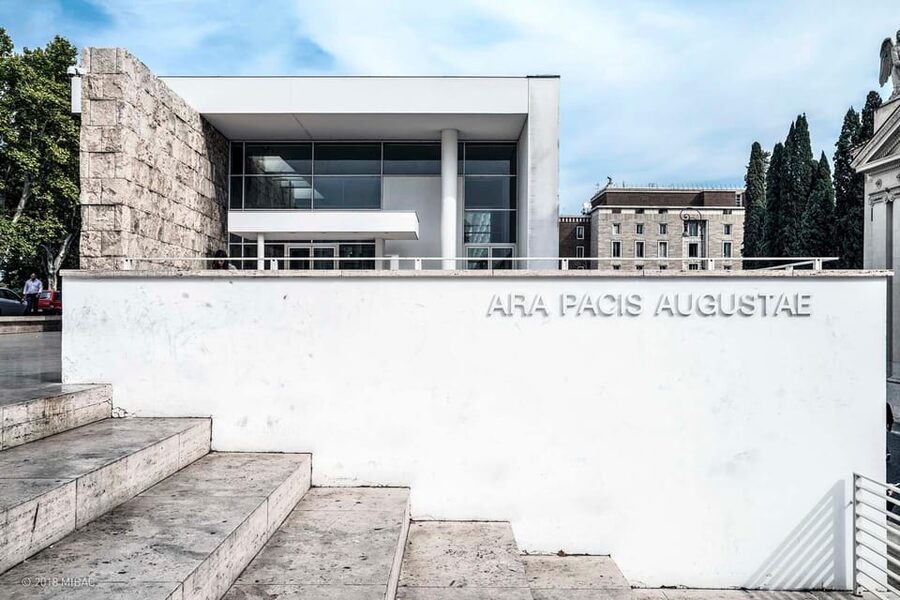
The Ara Pacis is one of Rome’s most unusual pairings: an ancient altar built under Emperor Augustus, enclosed in a bright modern museum by architect Richard Meier. The contrast is the main event. You see imperial Roman sculpture in a clean, quiet setting rather than among the noise of a large archaeological complex.
I like the flexible entry hours, since you are not tied to one narrow appointment. I also like the compact focus: the museum gives you one important monument to study without asking you to cross half of Rome. The drawback is value. At $29 per person, this is a short visit, and one low-rated experience reported paying for vouchers but being unable to enter, so you should check your voucher carefully before arrival.
Key points at a glance
- Augustus’s Altar of Peace: See the Ara Pacis, commissioned in 13 BCE to celebrate peace and prosperity during Augustus’s rule.
- Richard Meier’s modern setting: Ancient marble reliefs sit inside a striking glass structure along the River Tiber.
- Flexible one-day admission: Visit during the museum’s stated 9:30 AM to 7:30 PM opening hours.
- Skip the ticket-office line: Your pre-booked admission is intended to reduce time spent buying a ticket on site.
- A focused Rome sight: Plan for a concentrated visit centered on one altar, its friezes, and related artifacts.
- Bring your own context: A guided tour and audio guide are not included, so the visit is self-directed.
What the Ara Pacis tells you about Augustus
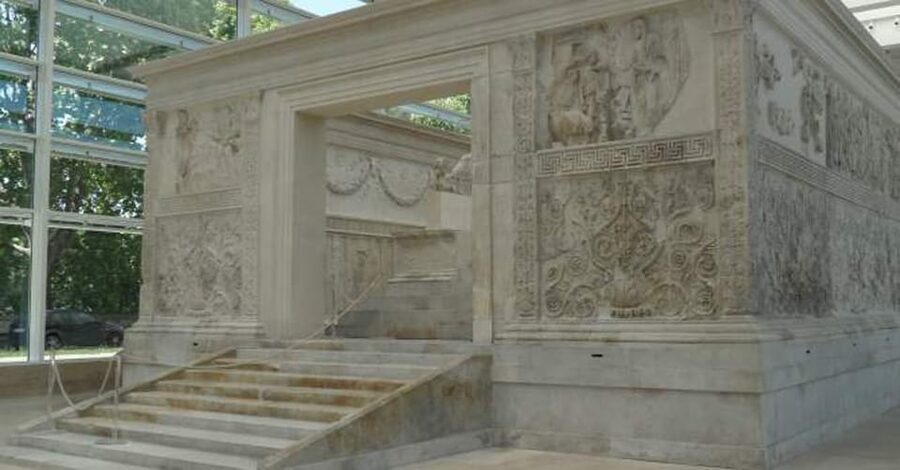
The Ara Pacis was commissioned in 13 BCE, during the rule of Augustus. Its name means Altar of Peace, and its purpose was political as well as religious. Augustus wanted the monument to celebrate a period of stability and prosperity after years of conflict.
That background helps you read the carvings. This is not simply a pile of old marble. The altar presents an official picture of Rome, its imperial family, and the orderly world Augustus wanted people to see. The monument uses art to make a message about power, peace, family, and the future of the Roman state.
You can study the detailed friezes and restored artifacts at close range. The reliefs are the reason to come. Look for the layers of figures, clothing, plants, and ceremonial imagery. Even if you are not an ancient-art specialist, you can see how carefully the sculptors arranged the scenes and how much information Roman public art was meant to convey.
The museum does not offer a broad tour through Rome’s ancient past. Instead, it gives you a concentrated look at one important monument. I find that useful after a busy day of larger sights. You are not trying to absorb another huge collection. You are slowing down long enough to look closely.
More museums and galleries in Rome:
- Vatican Museums & Sistine Chapel Tour with Optional Basilica
★ 4.3 · 67,413 reviews - Vatican Museums, Sistine Chapel & St Peter’s Basilica Guided Tour
★ 4.5 · 39,149 reviews - Rome: Vatican Museums, Sistine Chapel & Basilica Tour
★ 4.3 · 13,872 reviews
Entering the museum beside the Tiber
The Ara Pacis Museum is conveniently located along the River Tiber in Rome’s Lazio region. Its position makes it easy to pair with other central sightseeing, although the ticket itself does not include transportation or a guided walk between landmarks.
Your pre-booked admission is designed to let you skip the ticket-office line. That can save time, especially if you are moving through central Rome on a tight schedule. The ticket is open for one day, and the stated opening hours are 9:30 AM to 7:30 PM.
The flexible format is useful in practical terms. You can choose a quieter moment in your day instead of building your entire schedule around a fixed entry slot. You might stop in the morning, visit after lunch, or make it an early evening cultural break, provided you enter during the available hours.
There is one important caution. One booking reportedly involved vouchers that could not be used for entry. That does not explain the cause, but it is enough reason to check the voucher details before you arrive. Make sure you know what must be shown at the entrance and keep the booking confirmation easy to access.
Richard Meier’s glass-and-white contrast
The museum’s modern design, by Richard Meier, is a major part of the experience. Glass and pale architectural surfaces frame the ancient altar, creating a sharp contrast between old Rome and modern design.
Some visitors come mainly for the monument. Others are just as interested in how the building presents it. The museum gives you a chance to compare two ideas of public architecture: Augustus’s carved message of Roman order and Meier’s modern structure, which uses light, clean lines, and open views.
This contrast can make the altar easier to study. The museum does not try to recreate an ancient temple around it. Instead, the modern setting places the surviving Roman work in clear view. You can focus on the reliefs and the structure without the visual clutter found at many outdoor archaeological sites.
The building also gives the Ara Pacis a strong sense of place beside the river. You should not expect a sprawling complex or a long sequence of rooms. The appeal is the relationship between one ancient monument and the modern container built around it.
How much time should you allow?
The ticket is valid for one day, but that does not mean the museum requires a full day. The supplied information does not give a fixed visit length, so I would treat this as a short, focused stop rather than a morning-long attraction.
Your pace will depend on how closely you study the carvings and how much background you bring with you. A person interested in Roman art may spend time examining the friezes and restored details. Someone making a quick sightseeing stop may see the main altar and leave sooner.
That short format is both a benefit and a limitation. It fits neatly into a day based around central Rome. You can add it to a walking route without surrendering hours to a large museum. At the same time, the $29 price can feel high if you expect a full program, several major galleries, or a guided explanation.
One rating summary places the experience at 3.4 out of 5 from nine ratings. That mixed result fits the nature of the attraction. The monument is important, but the physical visit is limited. Your satisfaction will depend heavily on how much you value ancient relief sculpture and architectural design.
More tickets and entry passes in Rome:
- Rome:Hop-On Hop-Off Panoramic Open Bus Ticket 3 Circuits x 1
★ 4.0 · 15,405 reviews - Vatican Museums & Sistine Chapel Skip-the-Line Entry Ticket
★ 4.4 · 13,838 reviews - Vatican Museums & Sistine Chapel Skip-the-Ticket-Line Tour
★ 4.3 · 10,486 reviews - Rome: St. Peter’s Basilica & Dome Entry Ticket & Audio Tour
★ 4.2 · 7,537 reviews
What you will see inside
The visit centers on the Ara Pacis itself. You will see the altar, its carved friezes, and meticulously restored elements that help show the monument’s original artistic effect.
The friezes are the place to spend your attention. They depict imperial Rome and present a carefully ordered image of society. You may notice how the work combines people, ceremonial scenes, and decorative plant forms. These details are not random decoration. They help communicate the monument’s message of peace, continuity, and Roman prosperity.
The restored artifacts also matter. Ancient monuments often reach the present in damaged or incomplete form, so restoration gives you a better sense of the original design. Still, you should remember that restoration is an interpretation of what survives. The museum lets you see the monument in a coherent form, but it cannot return every missing piece.
Because the ticket does not include a guide or audio guide rental, you will explore independently. That suits you if you like setting your own pace and reading displays as you go. If you want a spoken explanation of every figure and symbol, you will need to arrange that separately.
Is $29 a fair price?
At $29, this is not a bargain admission for a very small amount of content. The price makes the most sense if you care about the Ara Pacis specifically, value the modern museum setting, and want the convenience of a pre-booked ticket.
The skip-the-line feature adds practical value. You are paying partly for time and ease, not only for access to the altar. In Rome, avoiding a ticket-office queue can be useful when the rest of your day is planned around several sights.
The flexible hours also help. A fixed appointment can be awkward when meals, weather, or other museum visits shift your plans. Here, you have a wider window from 9:30 AM to 7:30 PM, as long as the ticket is accepted during that period.
Still, I would not buy this ticket expecting an all-day attraction. A French-language rating described the experience as good but felt there was little to see for the price. That is a fair warning. The Ara Pacis is culturally important, but its presentation is compact.
For a first-time Rome visitor choosing between many famous sights, compare this cost with your broader plan. For an art lover, Roman-history reader, or repeat visitor seeking a quieter cultural stop, the price may feel more reasonable.
Who will enjoy this visit most?
I would recommend the museum to you if you like:
- Ancient Roman sculpture and public monuments
- Augustus and the political story of imperial Rome
- Modern architecture placed beside ancient art
- Short museum visits that fit around a busy day
- Self-guided sightseeing with flexible timing
- Accessible cultural attractions
It may be less satisfying if you want a long guided experience, a large collection, or a major archaeological site with many structures to explore. The ticket includes entry only. Food, drinks, a guided tour, and an audio guide rental are not included.
The museum is wheelchair accessible, which makes it a practical option for visitors who need an accessible cultural stop. The supplied information does not give further details about routes or facilities, so you may want to confirm any specific access needs before you go.
Tips for making the visit count
Read a little about Augustus before you arrive. Even a small amount of context will help you understand why the altar was built and why its images matter.
Give yourself time with the friezes instead of treating the museum as a quick photo stop. Notice the difference between the ancient carving and the modern surfaces around it. That comparison is one of the most memorable features of the visit.
Use the flexible hours to avoid crowding your schedule. The attraction works well as a planned pause along the Tiber rather than as the sole purpose of your day in Rome.
Finally, check your voucher before setting out. Since one booking resulted in an entry problem, it is wise to confirm the redemption instructions and keep the ticket available when you reach the museum.
Should you book the Ara Pacis ticket?
Book it if you have a clear interest in Augustus, Roman relief sculpture, or Richard Meier’s modern museum design. The flexible one-day entry and skip-the-ticket-line access make the visit easy to fit into a central Rome itinerary.
Think twice if $29 feels steep for a compact sight or if you expect a guide to explain the monument. You will receive admission, not a full lesson. For the right visitor, the Ara Pacis offers a thoughtful look at Roman power and art in a memorable modern setting. For everyone else, it may feel too brief for the price.
FAQ
Where is the Ara Pacis Museum located?
The museum is in Rome, in Italy’s Lazio region, along the River Tiber.
What are the museum’s opening hours?
The stated opening hours are daily from 9:30 AM to 7:30 PM.
How long is the ticket valid?
The ticket is valid for one day.
Does the ticket include skip-the-line access?
Yes. The ticket includes skip-the-ticket-line access at the Ara Pacis Museum.
Is entry available at a flexible time?
Yes. It is described as an open ticket with flexible entry hours during the valid day.
Is a guided tour included?
No. A guided tour is not included.
Is an audio guide included?
No. Audio guide rental is not included.
Is the Ara Pacis Museum wheelchair accessible?
Yes. The activity information states that the museum is wheelchair accessible.
Can I cancel the booking?
You can cancel up to 24 hours in advance for a full refund. A reserve-now, pay-later option is also available.
Newest Rome tours we have reviewed
- Private TikTok Video Making in Rome★ 5.0 · 7 reviews
- Assisi, Orvieto and Civita di Bagnoregio Full Day Tour from Rome★ 4.5 · 45 reviews
- Assisi & Saint Francis Path Tour from Rome★ 5.0 · 45 reviews
- Assisi and Cascia Private Day Tour from Rome with Lunch★ 5.0 · 10 reviews
- Art Class in the center of Rome!★ 4.0 · 4 reviews
- Art & Craft: Beer Tour with Street Art in Rome★ 4.5 · 6 reviews
- Arrival in Rome: Airport Transfer & Exclusive City Introduction★ 5.0 · 3 reviews
- From Rome: Private Day-Tour of Tuscany★ 5.0 · 16 reviews