
Reviewed · ROME
Bone Crypts & S. Clemente ENGLISH tour – tickets included
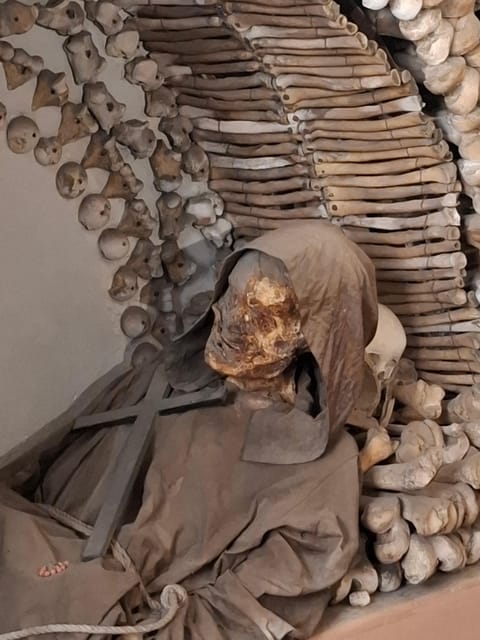
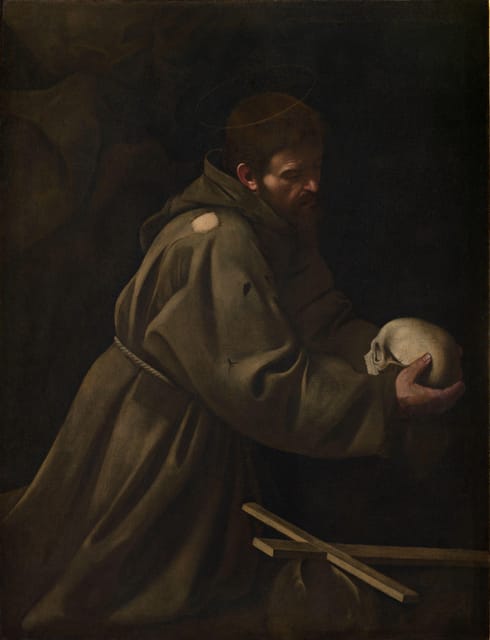
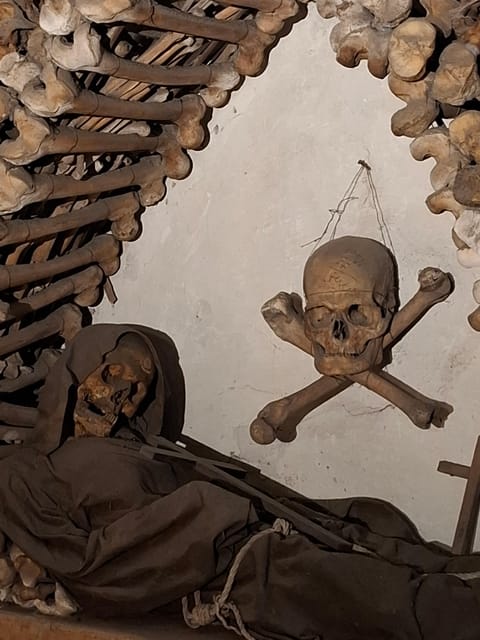
The most unforgettable part of this Rome tour is the Capuchin Crypt, where the bones of nearly 4,000 monks form chapels, arches, and symbols of mortality. I like the unusual mix of dark spirituality and Baroque art, especially the Caravaggio masterpiece in the Capuchin Museum. I also like the underground journey at San Clemente, where you pass through several layers of Rome, from a medieval church to a Mithraic temple.
The small group, limited to eight, should make it easier to follow the guide and ask questions. Guides such as Peter, Heather, Divan, Mike, and John have been praised for humor, warmth, and strong storytelling. The drawback is the amount of walking and the short taxi ride, which costs about €10 and is not included. You also see the Colosseum from outside only.
Key points at a glance
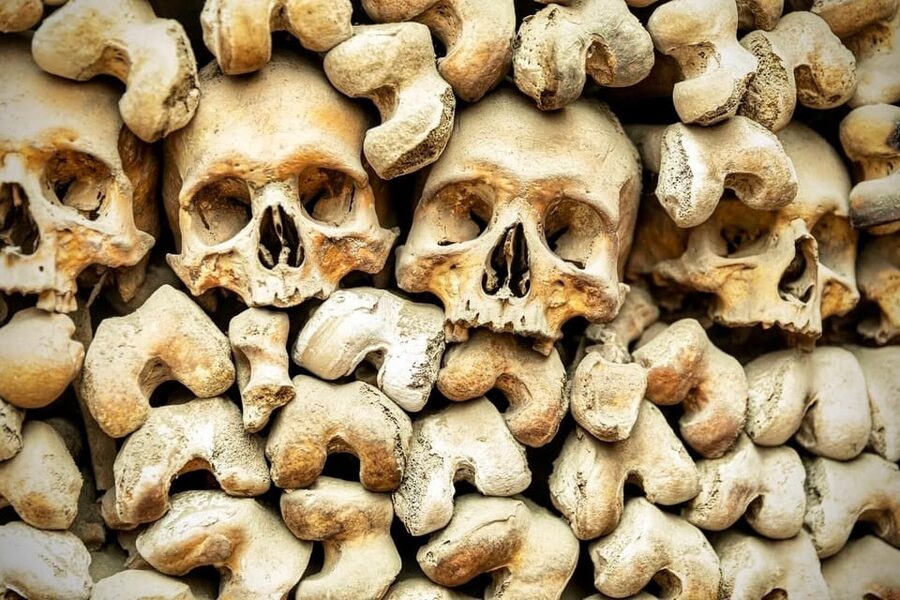
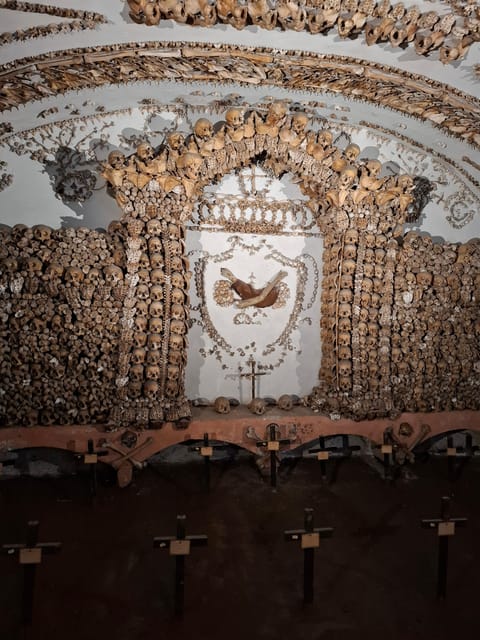
- Nearly 4,000 monks in six crypt chapels: Expect bones arranged into crosses, arches, and symbolic designs, not a conventional church interior.
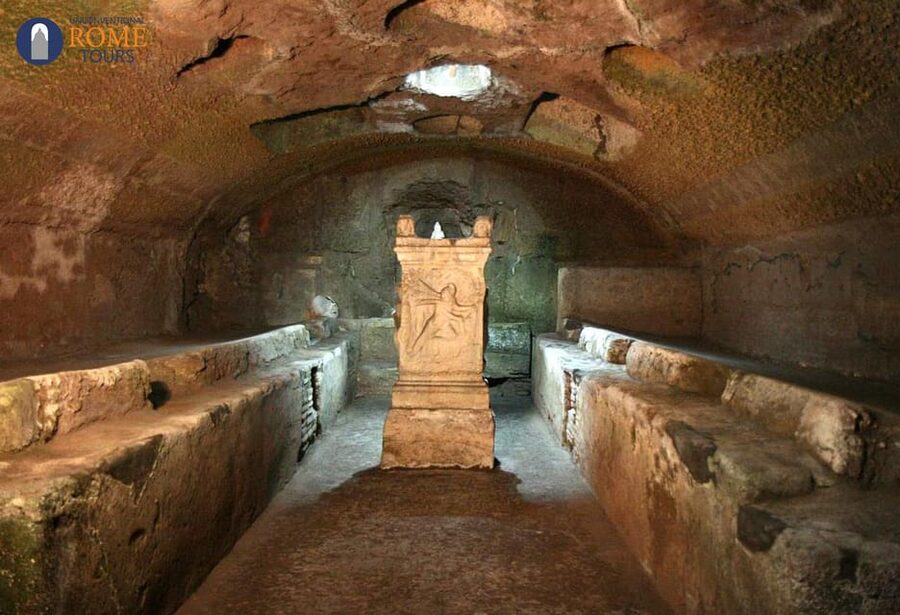
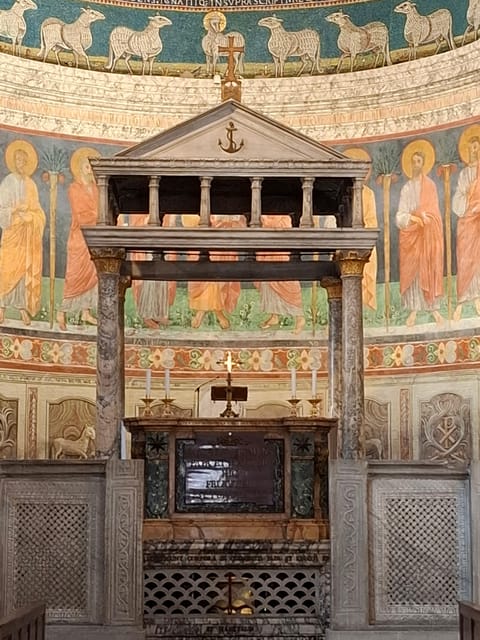
- A four-level journey beneath San Clemente: See a 12th-century basilica, a 4th-century church, and a 2nd-century Mithraic temple.
- A small group of up to eight: The format suits visitors who want an English guide they can hear and question.
- Caravaggio and the Capuchin story: The museum connects the crypts with the Franciscan and Capuchin orders, burial customs, and Roman art.
- The Colosseum without the indoor entry: You pass the amphitheater, gladiator training grounds, and Nero’s Golden House from the outside.
- A compact 2.5-hour schedule: This packs several unusual sights into one morning or afternoon, but the pace is purposeful rather than leisurely.
Why the Capuchin Crypt is the tour’s main event
Rome has no shortage of grand churches and ancient ruins. The Capuchin Crypt is different. It is intimate, unsettling, and carefully arranged. Human bones are not displayed as a random pile. They form patterns and architectural details throughout six chapels beneath the Capuchin church.
You begin at Piazza Barberini, meeting beside the Triton Fountain on the face side of the fountain. Arrive at least 10 minutes early. If you get there before the guide, Bar Gusto across the street has bathrooms, drinks, and snacks.
The first part of the visit takes place in the Capuchin Museum. This gives the crypt a useful religious and historical setting. You learn about the Franciscan and Capuchin orders, their beliefs, and the reason the monks’ remains were moved from an older friary near the Trevi Fountain.
That background matters. Without it, the bone chapels could seem like a macabre curiosity. With it, you can better understand the crypt as a sacred burial place shaped by the order’s rules and ideas about death. The tour also connects the site with ancient burial customs and the artistic world of Caravaggio.
The museum includes a Caravaggio masterpiece, giving you a worthwhile art stop before the crypts. This is a good pairing: Caravaggio’s dramatic Baroque style and the crypt’s stark meditation on mortality both reflect Rome’s talent for making faith feel intensely physical.
Inside the crypt, the route includes the Crypt of the Three Skeletons, the Crypt of Leg Bones and Thigh Bones, the Crypt of Pelvises, and the Crypt of Skulls. An hourglass appears in the skull chapel, while crosses in the floor mark the resting places of seven monks.
Some sections use an audio guide because this is a functioning sacred burial ground. That can make the visit feel more respectful, though one useful point is that the headset is not used for the entire tour. You may hear the guide directly in other parts of the experience.
Photography is restricted in certain areas, and flash photography is not allowed. Follow the guide’s instructions. This is not a place for casual snapping, and the rules help preserve the solemn character of the site.
More tickets and entry passes in Rome:
- Rome:Hop-On Hop-Off Panoramic Open Bus Ticket 3 Circuits x 1
★ 4.0 · 15,405 reviews - Vatican Museums & Sistine Chapel Skip-the-Line Entry Ticket
★ 4.4 · 13,838 reviews - Vatican Museums & Sistine Chapel Skip-the-Ticket-Line Tour
★ 4.3 · 10,486 reviews
Walking from Barberini to ancient Rome
After the crypts, the tour continues toward the Colosseum area. A short black-cab ride takes about 10 minutes and costs roughly €10 on average. It is not included in the ticket price, so bring some room in your budget.
This transfer keeps the tour practical. Walking the full distance would take time away from the main sites, and the schedule is already tightly arranged. The cab is part of the tour’s rhythm, not a sightseeing segment.
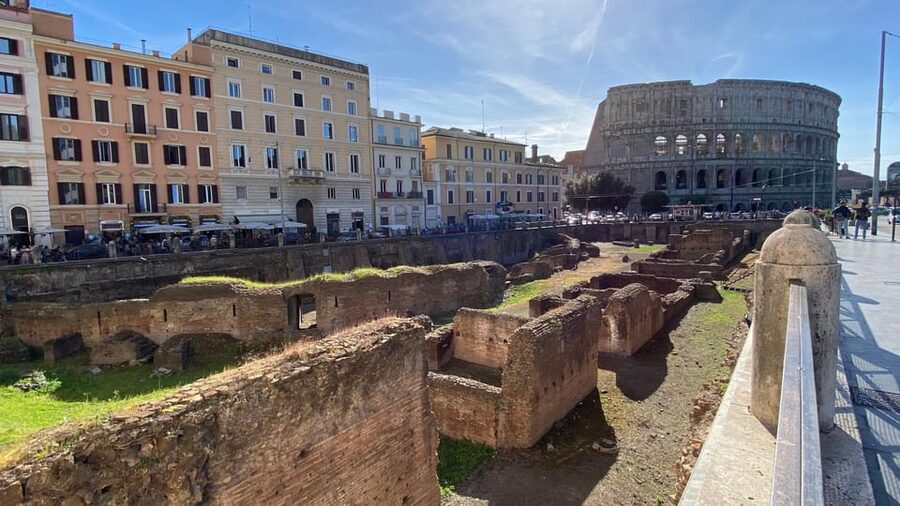
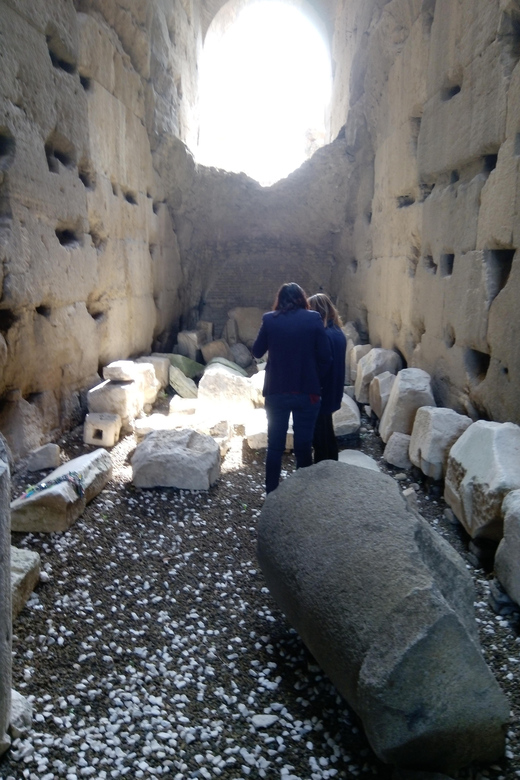
The route then shifts from the quiet, enclosed crypts to Rome’s open-air ancient center. You pass the Colosseum from the outside, along with the Ludus Magnus, the training ground associated with gladiators. You also see the outside ruins of Nero’s Domus Aurea, or Golden House.
These stops are brief, but the guide helps connect them. The Colosseum was not an isolated arena. Gladiators trained nearby, and imperial building projects changed the center of Rome on a massive scale. Nero’s palace gives you a glimpse of the ambition and excess that helped shape later Roman politics.
Be clear about the format: this tour does not include entry into the Colosseum. You get an exterior explanation and views of the surrounding ruins. If walking inside the amphitheater is a top priority, you will need a separate ticket or another tour.
Still, the outside stop can be valuable when you have already seen the Colosseum interior or want a shorter introduction without spending several hours on one monument. It also provides a useful transition before the more unusual underground visit at San Clemente.
San Clemente, where Rome goes four levels down
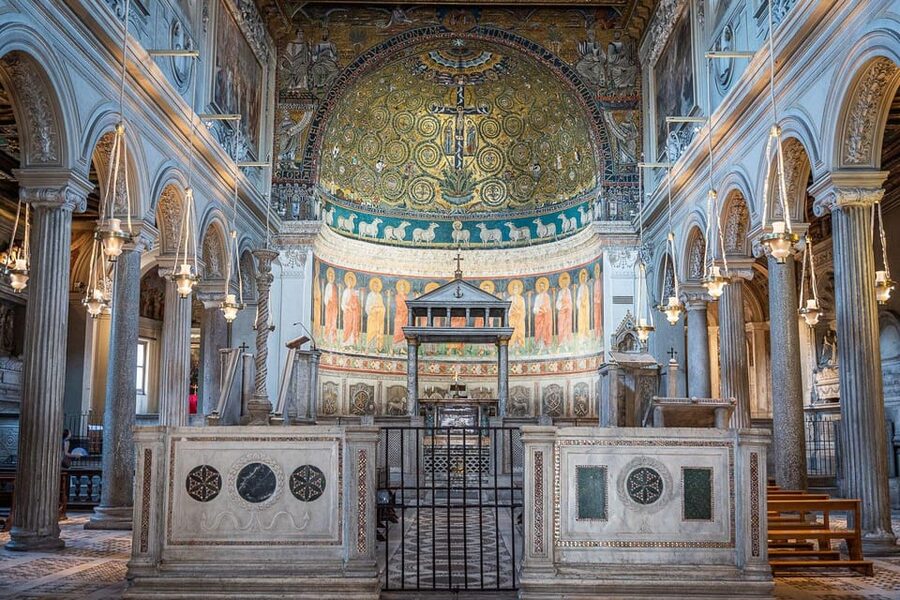
The final major stop is Basilica di San Clemente al Laterano. This church is one of Rome’s best places to understand how the city was built in layers. Instead of only looking at ruins through a fence, you walk downward through successive periods.
The upper basilica dates to the 12th century. Beneath it is a 4th-century church, followed by a 2nd-century Mithraic temple. The route reaches four underground levels and includes mosaics, early Christian frescoes, and an ancient fountain that still flows after roughly 2,000 years.
This is where the tour earns its price. You are not simply viewing one church. You are seeing how later Roman buildings covered, reused, and preserved earlier spaces. The physical act of descending makes the chronology easy to grasp. Each level changes the atmosphere, materials, and religious setting.
The Byzantine mosaics in the upper basilica offer a bright contrast to the Capuchin Crypt. Below, the early Christian frescoes and the Mithraic temple show that Roman religious life was never one simple story. Different beliefs occupied the same ground at different times.
The fountain is a small but memorable detail. It gives the underground visit a living sound and helps the site feel less like a sealed archaeological display. You can sense that these spaces were once part of daily life, not just distant remains.
The San Clemente portion lasts about 50 minutes. That is long enough for a guided explanation, but not enough for a slow, independent study of every fresco and architectural detail. If you love archaeology and want extensive time with each layer, you may want to return on your own.
What the small group changes
The tour is limited to eight people. That matters most in the crypts and underground church, where spaces can feel enclosed and a large crowd would make the guide’s explanations harder to follow.
A small group also gives the guide more room to adjust the discussion. Past departures have featured Peter, Heather, Divan, Mike, and John. Their styles vary, but the strongest pattern is clear: the tour depends heavily on an energetic guide who can make difficult subjects accessible.
You may get humor, personal stories, and answers to questions about art, burial practices, Roman religion, or the monuments along the route. Divan was especially good with families and children on one departure, while Mike was praised for keeping an 11-year-old interested. That makes this more flexible than a fixed lecture, though the exact guide is not guaranteed.
The English is live and the advertised guide language is English. Some visitors specifically appreciated guides who could explain complex subjects at an engaging level. If you prefer silent sightseeing or a self-guided audio tour, this format may feel too talkative. If you want context, it is a strong fit.
One limitation is that headsets are provided for the bone church portion rather than the full route. In a group of eight, this should usually be manageable, but you may need to stay close to the guide in busy streets or open areas.
Same city, a completely different half-day:
- Vatican Museums & Sistine Chapel Tour with Optional Basilica
★ 4.3 · 67,413 reviews - Vatican Museums, Sistine Chapel & St Peter’s Basilica Guided Tour
★ 4.5 · 39,149 reviews - Rome: Colosseum, Palatine Hill and Roman Forum Guided Tour
★ 4.8 · 32,814 reviews - Rome: Guided Tour of Colosseum, Roman Forum & Palatine Hill
★ 4.7 · 27,897 reviews
Is $61 a fair price?
At $61 per person, this is not a bargain-basement Rome walk, but the price is reasonable if you want several admissions and a live guide in one compact outing. The Capuchin Crypt entry and the underground San Clemente admission are included, as is the guided tour.
You also get the Capuchin Museum and Caravaggio, plus guided context at the Colosseum, Ludus Magnus, and Nero’s Golden House. The Colosseum portion is exterior only, so do not compare the price with a full Colosseum access ticket. Compare it instead with the cost of arranging separate visits to the crypts and San Clemente, then adding a guide.
The extra cost is the taxi, averaging about €10 for the short ride. Hotel pickup and drop-off are not included. Add that expense when planning your day.
The strongest value comes from the variety. In 2.5 hours, you move from religious art to bone chapels, imperial ruins, gladiator history, and underground archaeology. You do not get long free periods at any one stop, but you do get a focused introduction to several places that are easy to miss on a standard Rome route.
Who should book this Rome tour?
I would choose this for a first or second visit to Rome when you want something beyond the Vatican, Trevi Fountain, and Colosseum interior. It is especially suitable if you enjoy unusual religious sites, ancient archaeology, and guides who tell stories rather than simply identify buildings.
Families can also consider it, particularly if the children respond well to lively guides. The subject matter at the Capuchin Crypt is serious and may not suit every child, but the compact schedule and range of sites can hold the attention of older children and teenagers.
You should be comfortable walking and handling stairs or underground access. The tour is not suitable for wheelchair users or people with mobility impairments. Wear comfortable shoes, and be ready for security checks at some locations.
I would not make this your main Colosseum tour if entering the amphitheater is essential. I also would not choose it if you want a slow, contemplative visit with lots of time for independent photography. The schedule is guided, compact, and built around moving from one special place to the next.
Practical ways to enjoy the visit
Arrive early at the Triton Fountain. Piazza Barberini can be busy, and finding the correct side of the fountain is easier before the group gathers.
Wear shoes suited to a moderate amount of walking. The route includes streets, steps, and underground areas. Bring a camera, but keep it away in places where photography is restricted and never use flash.
Keep a few euros available for the cab. The ride is short, but it is an out-of-pocket cost. You may also want water or a snack before starting, with Bar Gusto across from the meeting point as a convenient option.
Try to stay near the guide during the outdoor portions. The small group makes this easier, and it helps you hear the explanations without relying on a headset.
The crypts and San Clemente are the emotional heart of the tour. Give them your full attention rather than treating them as quick photo stops. The bone chapels ask you to think about mortality, while the underground basilica shows how Rome’s religious and civic life changed over centuries.
Should you book it?
Book this tour if you want Rome’s less obvious side, a strong English-speaking guide, and several distinctive sites in a short period. The Capuchin Crypts and San Clemente offer experiences you will not get from a standard Colosseum visit, and the group size should keep the explanations personal.
Skip it if you need full Colosseum entry, have limited mobility, or prefer to explore at your own pace. For everyone else, $61 is a fair price for the included admissions, live guidance, and unusual combination of art, bones, ruins, and underground history. It is a compact tour with a memorable point of view.
FAQ
Where does the tour meet?
Meet the guide on the face side of the Triton Fountain in Piazza Barberini.
How early should I arrive?
Arrive at least 10 minutes before the scheduled start time so you can check in with the guide.
How long does the tour last?
The tour lasts 2.5 hours.
Is the tour conducted in English?
Yes. The tour includes a live English-speaking guide.
How many people are in the group?
The group is limited to eight participants.
Does the tour enter the Colosseum?
No. The Colosseum portion is an exterior visit. You also see the Ludus Magnus and the outside ruins of Nero’s Domus Aurea.
Is the taxi ride included?
No. The short black-cab ride takes about 10 minutes and costs approximately €10 on average.
Is the tour suitable for wheelchair users?
No. The tour is not suitable for wheelchair users or people with mobility impairments.
Newest Rome tours we have reviewed
- Private TikTok Video Making in Rome★ 5.0 · 7 reviews
- Assisi, Orvieto and Civita di Bagnoregio Full Day Tour from Rome★ 4.5 · 45 reviews
- Assisi & Saint Francis Path Tour from Rome★ 5.0 · 45 reviews
- Art & Craft: Beer Tour with Street Art in Rome★ 4.5 · 6 reviews
- Assisi and Cascia Private Day Tour from Rome with Lunch★ 5.0 · 10 reviews
- Art Class in the center of Rome!★ 4.0 · 4 reviews
- Arrival in Rome: Airport Transfer & Exclusive City Introduction★ 5.0 · 3 reviews
- From Rome: Private Day-Tour of Tuscany★ 5.0 · 16 reviews