
Reviewed · ROME COOKING CLASSES
Cook with us in Rome: a Hands-On Cooking Experience 15:30PM class
Fresh pasta is the heart of this Rome experience. You’ll begin with produce shopping, stroll through the historic center, then settle in for a four-hour kitchen session covering fettuccine, cavatelli, ravioli, two sauces, an antipasto, and tiramisu.
I like the small group of no more than 10, since cooking is far more useful when you can get close to the work and ask questions. I also like that Prosecco and wine are included, turning the meal into a relaxed social occasion rather than a rushed lesson.
The main catch is timing. The 3:30 pm class is not an early market visit, and on Sundays and in afternoon classes the market portion is skipped because it is closed. If the market matters most to you, check the schedule before booking.
Key points at a glance
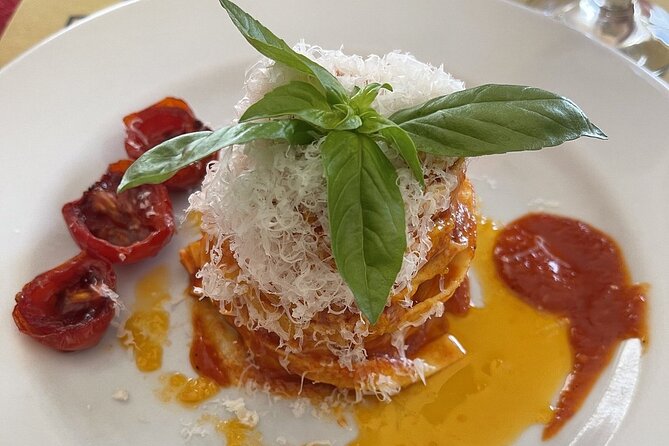
- Fresh pasta in several shapes: You’ll work with fettuccine, cavatelli, and ravioli rather than learning just one basic recipe.
- A full meal, not a short demonstration: The class includes an antipasto, two pasta sauces, pasta, and tiramisu.
- Small-group instruction: The maximum group size is 10, allowing for hands-on help and a more social kitchen setting.
- Market and city walk: When the market is open, you shop for produce before walking through Rome’s historic center to the studio.
- Wine is part of the price: Prosecco and wine are included as you cook and eat.
- Family-friendly format: The lesson is designed to work for food lovers and families visiting Rome.
Starting at 3:30 pm near Sant’Onofrio
Your meeting point is Vicolo di Sant’Onofrio, 22, in Rome. The class begins at 3:30 pm and ends back at the same meeting point, which makes the return simple after an evening meal and several hours in the kitchen.
The location is near public transportation, a useful detail in Rome, where a short route on the map can take longer than expected on foot. Give yourself extra time to reach the meeting point, especially if you are coming from a busy sightseeing area.
The afternoon start also shapes the whole experience. You can spend the first part of the day at a museum, church, or ancient site, then finish the day with food. That makes this a good fit if you dislike stacking several guided activities together in the morning.
The tradeoff is that four hours is a serious block of time. You should not book a late dinner, theater ticket, or evening tour too close to the expected finish. Cooking, eating, and conversation can move at a relaxed pace.
More cooking classes in Rome:
- 3 in 1 Cooking Class near Navona: Fettuccine, Ravioli & Tiramisu
★ 5.0 · 7,376 reviews - Rome: 3-in-1 Fettuccine, Ravioli, and Tiramisu Cooking Class
★ 4.9 · 2,704 reviews - Rome: Fettuccine Pasta Cooking Class in Rome’s City Center
★ 4.8 · 2,414 reviews
Shopping for produce before the lesson
When the market is open, the experience starts with a local food shop. You’ll help select fresh produce before heading to the studio. This gives the cooking a useful connection to Rome instead of treating the kitchen as an isolated classroom.
I like this beginning because it gives you a reason to notice ingredients before they appear on the plate. You are not simply told that Italian cooking values fresh food. You see the raw materials first, then use them later.
The market stop is not available on Sundays or during afternoon classes because it is closed. Since this is a 3:30 pm class, you should assume the market portion will be skipped unless the operator gives you different information. The cooking lesson still goes ahead, but the opening food-shopping experience is not part of every departure.
That detail matters if you are comparing several cooking classes in Rome. If your priority is shopping with a cook and learning about produce, confirm the schedule before paying. If your priority is making pasta and eating a complete meal, the class still has plenty of substance without the market.
A short walk through Rome’s historic center
After shopping, you’ll take a small walking tour through the historic center on the way to the studio. The walk adds a bit of Rome to the experience without turning the class into a long city tour.
I see this as a pleasant bridge between sightseeing and cooking. You get a little time outdoors, some orientation, and a chance to settle into the evening before the flour comes out. It also keeps the experience from feeling like you have been dropped straight into a kitchen with no sense of place.
The description does not promise a long route or identify the exact sights along the way, so you should think of this as a short city walk, not a substitute for a dedicated Rome walking tour. That is a fair arrangement. The food lesson is the main event.
Wear shoes you can comfortably walk in, and keep your expectations focused. You are heading to the studio to cook, not spending the afternoon touring every major monument.
Making fettuccine, cavatelli, and ravioli
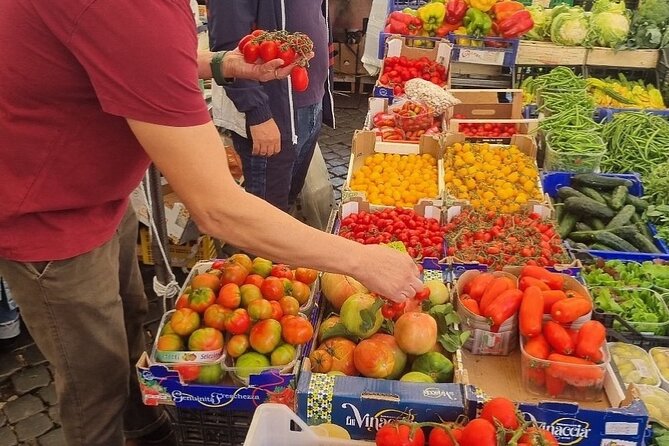
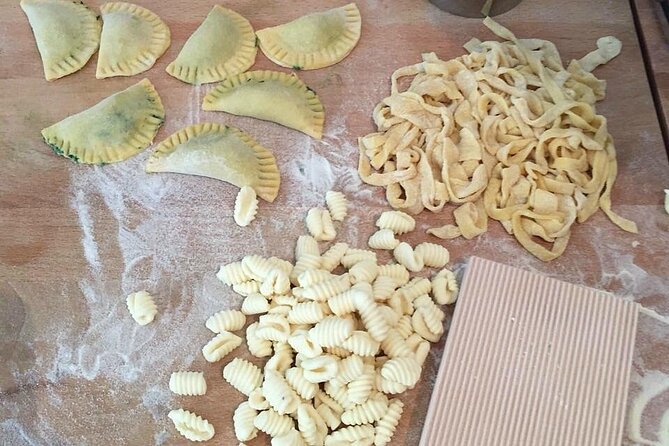
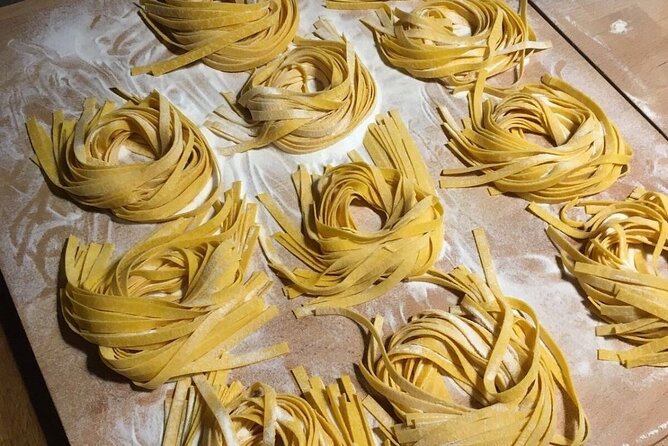
The pasta lesson covers three different forms: fettuccine, cavatelli, and ravioli. That variety is one of the strongest reasons to choose this class. You get to see how one basic Italian tradition can produce different shapes, textures, and ways of holding sauce.
Fettuccine gives you the familiar long noodle. Cavatelli adds a different style of shaping, while ravioli introduces filled pasta and the care needed to seal it. You will not leave having made only one simple dish.
The class is described as hands-on, with instruction in a small group. That means you should expect to handle the dough and pasta rather than sit through a full demonstration. At the same time, one of the useful details from the experience is the balance between cooking and watching. Some steps need an explanation or demonstration before you try them yourself.
That balance is important for beginners. A class where you are left alone with unfamiliar dough can become frustrating. A class where you only watch can feel like a show. Here, the stated format aims for both instruction and participation.
You should also expect different people in the group to work at different speeds. The small size helps, but the goal is a shared meal, not a private lesson tailored only to you. If you already make pasta at home, you may find the basic steps familiar, but the range of pasta shapes still gives the lesson value.
Same city, a completely different half-day:
- Vatican Museums & Sistine Chapel Tour with Optional Basilica
★ 4.3 · 67,413 reviews - Vatican Museums, Sistine Chapel & St Peter’s Basilica Guided Tour
★ 4.5 · 39,149 reviews - Rome: Colosseum, Palatine Hill and Roman Forum Guided Tour
★ 4.8 · 32,814 reviews - Rome: Guided Tour of Colosseum, Roman Forum & Palatine Hill
★ 4.7 · 27,897 reviews
Two sauces and a proper antipasto
The menu reaches beyond pasta dough. You’ll make an antipasto and two different pasta sauces, giving you more useful material to take home than a single recipe.
Antipasto starts the meal and lets you work with ingredients before the pasta is served. The two sauces also show why shape matters. A long noodle, a small hand-shaped pasta, and a filled pasta can all call for different treatment at the table.
The exact recipes are not specified, so do not book this expecting a fixed list of ingredients or a particular regional sauce. What is clear is the structure: one starter, two sauces, several pasta shapes, and dessert. That is a generous amount of cooking for a four-hour class.
I especially like the practical value here. You can repeat one part of the meal at home if you do not have the time or equipment to recreate everything at once. A pasta class with several components gives you more ways to keep using the lesson after Rome.
Finishing with tiramisu
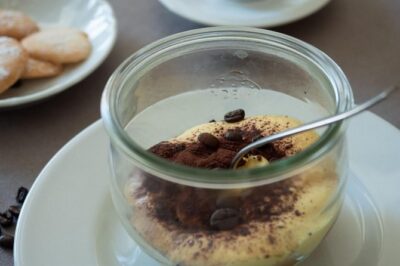
Tiramisu closes the cooking session. It is a smart choice for a class menu because it adds a familiar Italian dessert and gives the group something sweet to enjoy after the pasta.
Including dessert also helps the experience feel like a complete meal rather than a pasta workshop followed by an unrelated restaurant stop. You cook, sit down, and taste the results as one evening activity.
The information provided does not specify whether every component is made entirely from scratch or how much preparation is done in advance. You should expect to learn how tiramisu fits into the meal, but do not assume that every dessert step will receive the same attention as the pasta.
Still, the full menu is a clear benefit. For $144.18 per person, you are paying for several hours of instruction, multiple dishes, food, and drinks, not just a short lesson and a sample plate.
Prosecco, wine, and the social side
Prosecco and wine are included in the cost. That changes the mood of the class, making it part cooking lesson and part shared dinner.
The social element seems central to the experience. You will cook alongside a small group, eat together, and have time for conversation. The intimate setting is useful for couples, friends, and families who want an activity that gives everyone something to do.
The alcohol inclusion is worth noting for practical reasons. If you do not drink, the cooking remains the main attraction, but the class is clearly built around pairing drinks with the meal. Families should also consider the ages and preferences of everyone in their group, even though the lesson is described as family-friendly.
I like that the drinks are included rather than added as a surprise expense. It makes the price easier to judge before booking. You still need to decide if a social cooking dinner fits your plans and budget.
Is $144.18 a fair price?
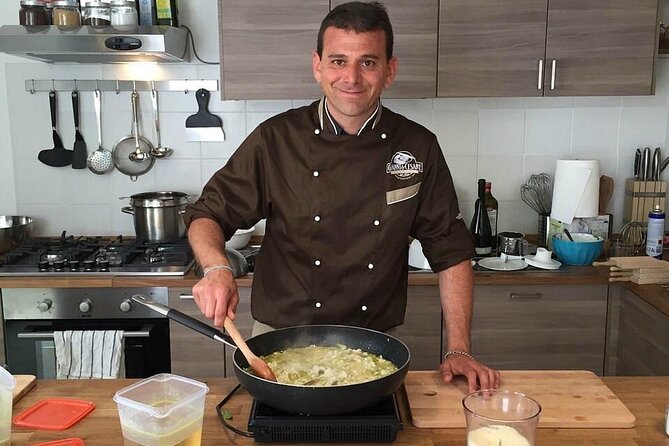
At $144.18 per person, this is not a cheap meal. You are paying more than you would for a casual plate of pasta in Rome, and that comparison is important.
The value comes from the full package: about four hours, a small class capped at 10 people, hands-on instruction, market shopping when available, a historic-center walk, several pasta techniques, an antipasto, two sauces, tiramisu, Prosecco, and wine.
I would consider the price reasonable if you want an activity rather than just dinner. You are buying time, participation, and recipes along with the food. The small group also matters. With 10 people or fewer, you have a better chance of receiving direct help than in a large demonstration class.
The value is weaker if you only want to eat Italian food. Rome has many less expensive meals, and the market portion is skipped for Sunday and afternoon classes. You should book this because you want to cook and learn, not because it is the most economical way to get dinner.
It is also worth considering what you can take home from the experience. Fresh pasta techniques, sauce ideas, antipasto preparation, and tiramisu give you several recipes or methods to repeat. That lasting use makes the cost easier to justify for someone who cooks regularly.
Who will enjoy this class most?
This class suits you best if you like active food experiences. You should expect to mix learning with eating, and you should be willing to take part instead of simply watching a chef work.
It is a strong choice for:
- Families looking for a shared activity in Rome
- Couples who want a relaxed evening built around food
- Friends who enjoy cooking and conversation
- First-time pasta makers who want guidance
- Home cooks who want to practice several pasta shapes
- Anyone who prefers a small class over a large group demonstration
The format may be less suitable if you need a quiet, formal meal or if you want an advanced culinary course. The class is family-friendly and accessible to food lovers, but the available details do not promise specialist training or an advanced syllabus.
The four-hour duration also favors people who enjoy a slow evening. If you have only one day in Rome and a long list of sights, the time commitment may be hard to fit in. If you have several days, it gives you a pleasant change from monuments and museums.
Booking, timing, and cancellation details
The experience is offered in English, so you should be comfortable following cooking instructions in that language. Your booking confirmation is sent within 48 hours, subject to availability.
The class is booked, on average, 64 days ahead. That does not guarantee that every date sells out, but it is a useful warning not to leave this until the last minute if the 3:30 pm schedule is important to you.
You can cancel for a full refund up to 24 hours before the start time. Cancellations or changes made less than 24 hours before the experience are not refunded or accepted. The cut-off uses Rome local time.
A minimum number of participants is required. If the class is canceled because that minimum is not reached, you will be offered another date or experience, or receive a full refund.
My verdict: should you book it?
I would book this class if you want to spend an evening making food, not just eating it. The combination of three pasta shapes, two sauces, an antipasto, tiramisu, and included wine gives the four hours real substance.
The best reasons to choose it are the 10-person maximum, the broad menu, and the chance to connect the meal with Rome through a market visit and short city walk when available. The strongest caution is the market schedule. Because this is a 3:30 pm class, you should not count on shopping for produce unless that detail is confirmed.
At $144.18, it makes sense for food lovers, families, and anyone who values a shared activity with something to repeat at home. Skip it if you want a low-cost dinner, a short demonstration, or a guaranteed market tour. For everyone else, this is a well-rounded way to turn an evening in Rome into a meal you helped make.
FAQ
Where does the cooking class begin?
The class begins at Vicolo di Sant’Onofrio, 22, 00165 Roma RM, Italy.
What time does the class start?
The class starts at 3:30 pm.
How long does the experience last?
The experience lasts approximately four hours.
Where does the activity end?
The activity ends back at the meeting point.
What language is the class offered in?
The class is offered in English.
How many people can join the class?
The class has a maximum of 10 participants.
Is the market visit included in every class?
No. The market is closed on Sundays and for afternoon classes, so the market portion is skipped at those times.
What food will I learn to make?
You will learn to make fettuccine, cavatelli, ravioli, two pasta sauces, an antipasto, and tiramisu.
Are drinks included?
Yes. Prosecco and wine are included in the price.
What is the cancellation policy?
You can cancel up to 24 hours before the start time for a full refund. Changes or cancellations made less than 24 hours before the start time are not accepted or refunded.
Newest Rome tours we have reviewed
- Private TikTok Video Making in Rome★ 5.0 · 7 reviews
- Assisi, Orvieto and Civita di Bagnoregio Full Day Tour from Rome★ 4.5 · 45 reviews
- Assisi & Saint Francis Path Tour from Rome★ 5.0 · 45 reviews
- Assisi and Cascia Private Day Tour from Rome with Lunch★ 5.0 · 10 reviews
- Art Class in the center of Rome!★ 4.0 · 4 reviews
- Art & Craft: Beer Tour with Street Art in Rome★ 4.5 · 6 reviews
- Arrival in Rome: Airport Transfer & Exclusive City Introduction★ 5.0 · 3 reviews
- From Rome: Private Day-Tour of Tuscany★ 5.0 · 16 reviews
Rome Cooking Classes, compared.
3 in 1 Cooking Class near Navona: Fettuccine, Ravioli & Tiramisu
Read our review →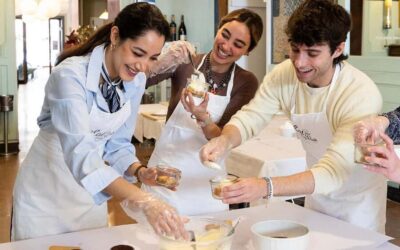
3-in-1 Fettuccine, Ravioli, and Tiramisu Cooking Class
Read our review →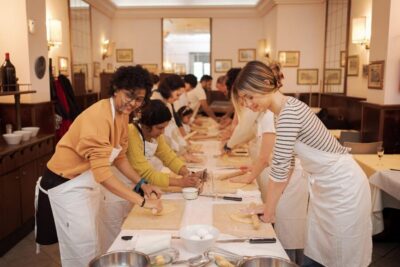
Fettuccine Pasta Cooking Class in Rome’s City Center
Read our review →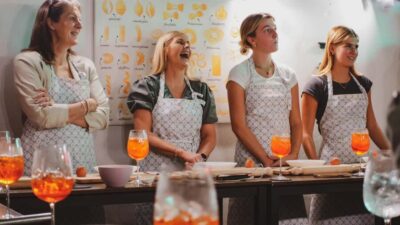
Traditional Pasta with Cocktails Cooking Class
Read our review →
Fettuccine and Tiramisu Cooking Class with Wine
Read our review →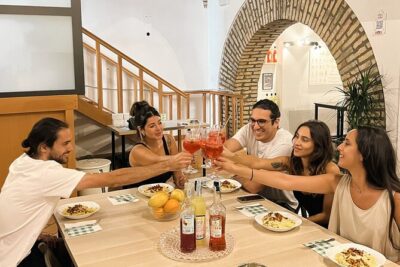
Pasta Cooking Class Near the Colosseum with 3 Spritz Cocktails
Read our review →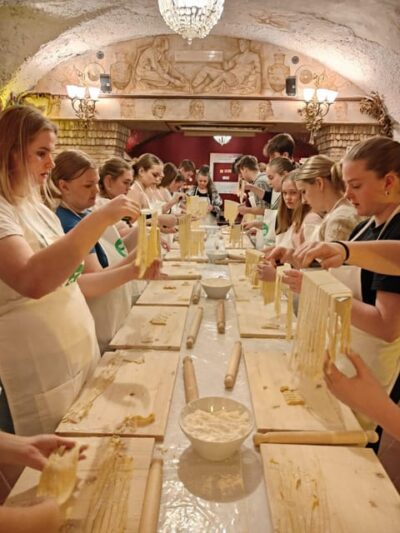
Pasta & Tiramisu Cooking Class near the Spanish Steps
Read our review →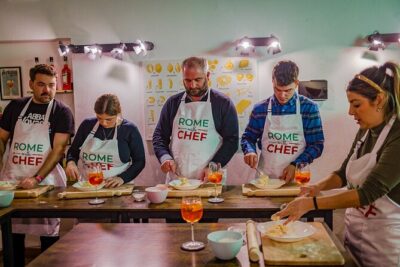
Rome Tipsy Cooking Class: Make Pasta and Mix 3 Spritz Cocktails
Read our review →Browse the lists this tour appears in