
Reviewed · PANTHEON TOURS
Exploring Rome’s Rich Heritage: Pantheon and Jewish Ghetto
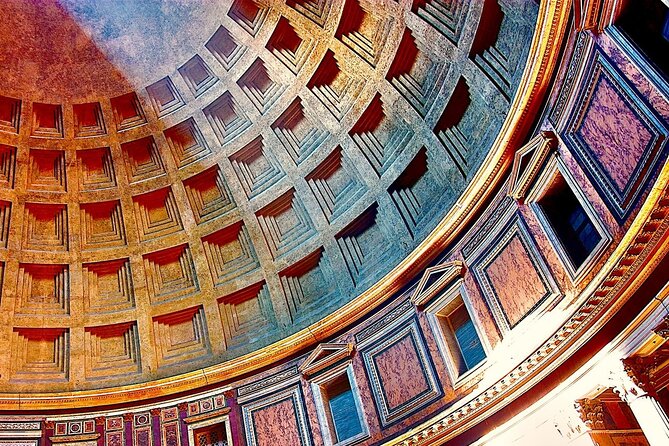
Rome’s Pantheon is the star here: a vast ancient temple with a concrete dome, a round opening to the sky, and centuries of religious and political change packed into one room. The two-hour walk then connects it to Largo di Torre Argentina, where Julius Caesar was assassinated, and the narrow streets of the historic Jewish Ghetto.
I like the tour’s clear shape and its mix of famous sights with quieter street history. I also like that you receive skip-the-line entry and a headset, useful in busy Rome when a guide’s voice can vanish into the crowd. The main drawback is pace. Two hours is enough for an introduction, not a long study of each site, and the clothing rules may catch you out if you arrive in shorts or a sleeveless top.
Key points to know before booking
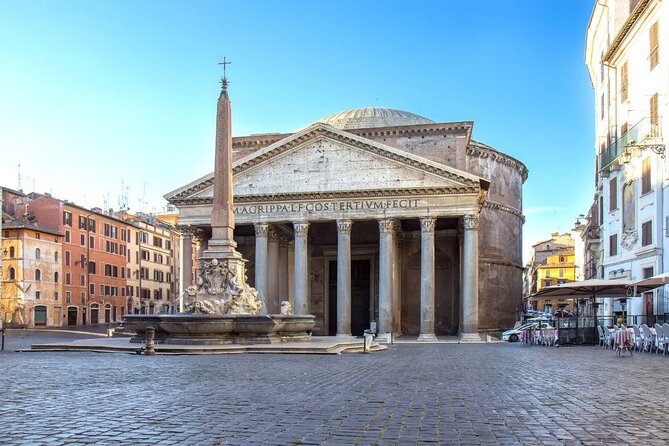
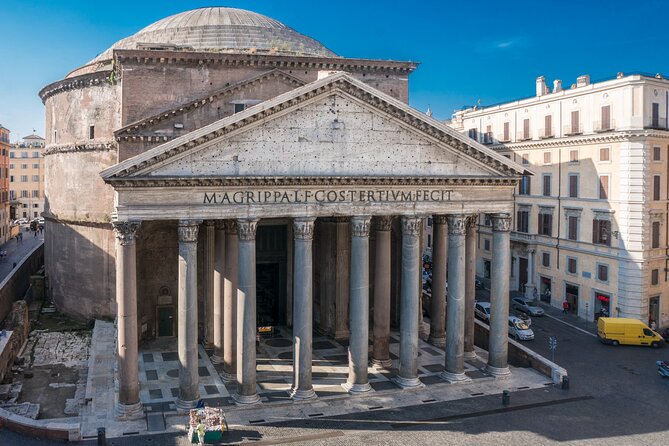
- The Pantheon gets 45 minutes of guided attention, with entry through a separate skip-the-line entrance.
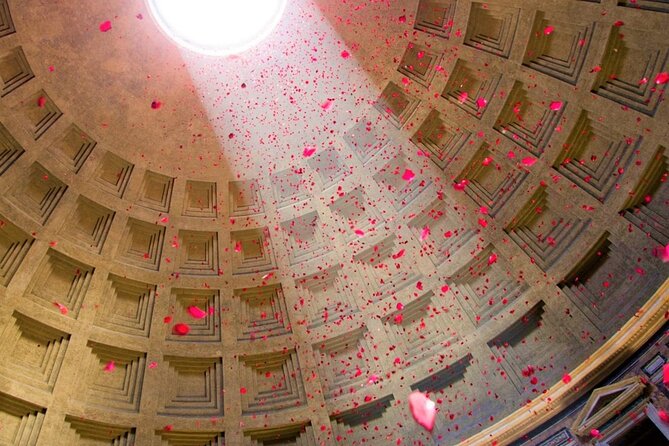
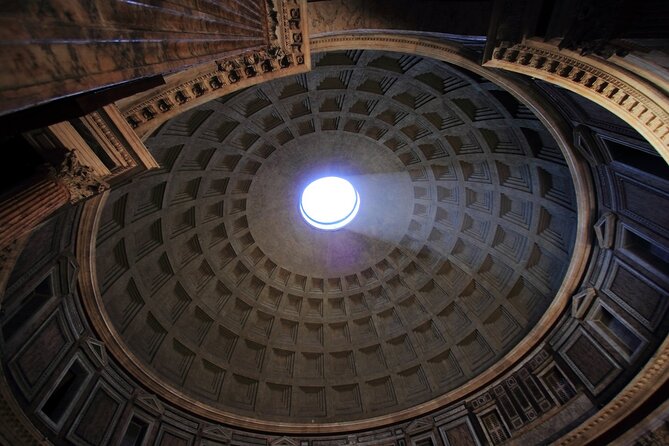
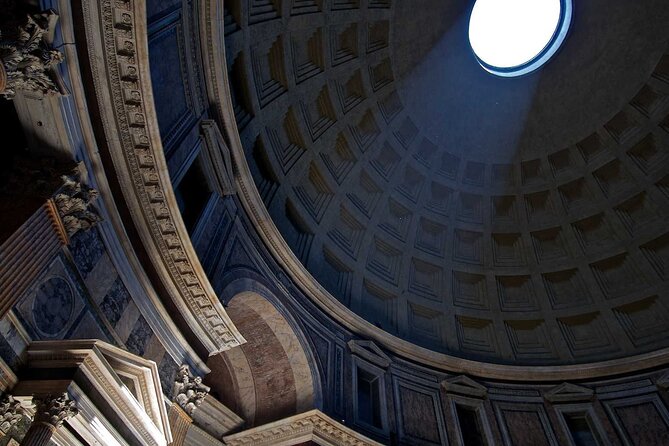
- The oculus is the building’s great feature, sending natural light into the center of the former temple.
- Largo di Torre Argentina links the walk to Julius Caesar’s assassination, adding a strong political thread.
- Piazza Mattei and Via del Portico d’Ottavia lead you into the historic Jewish Ghetto, where the tour ends at the Portico of Octavia.
- Maria has guided this experience, and her simple, thorough explanations in Spanish and Italian have been singled out as a strength.
- Dress rules are strict: knees and shoulders must be covered, and the site can change its hours for Masses, concerts, or other events.
Why this two-hour Rome walk works
This is a compact history tour rather than a full-day sightseeing program. You begin at Piazza della Rotonda, visit the Pantheon, and then walk through several central squares before finishing at the Portico of Octavia.
I like this arrangement because the sights are tied together by ideas rather than treated as isolated photo stops. The Pantheon introduces Roman engineering and later Christian use. Piazza della Minerva brings in Baroque art. Largo di Torre Argentina turns the conversation toward power and assassination. The final section in the Jewish Ghetto shifts attention to community, faith, and cultural memory.
That variety gives you a better sense of Rome than visiting the Pantheon alone. You move from an ancient monument to Renaissance and Baroque Rome, then into a district shaped by the long presence of the Jewish community.
The tour is conducted in English or Spanish, and headsets are included. That matters in a crowded square or inside a large stone building. You do not need to stand shoulder to shoulder with the guide to catch every word.
The meeting point is Piazza della Rotonda, 2, near the Pantheon. The guide’s name and contact details are sent one day before the tour, so keep an eye on your messages. The activity returns to the meeting point, according to the provided details, although the stated route finishes at the Portico of Octavia. Because those details do not perfectly match, I would confirm the exact ending point with the operator before setting off.
More Jewish Ghetto tours:
- Rome: Trastevere or Jewish Quarter Street Food Tour
★ 4.8 · 3,839 reviews - Jewish Ghetto and Trastevere Tour Rome
★ 4.5 · 1,729 reviews - Jewish Ghetto and Synagogues with Jewish Roman Guide 3 Hours
★ 5.0 · 907 reviews
Inside the Pantheon, Rome’s ancient engineering lesson
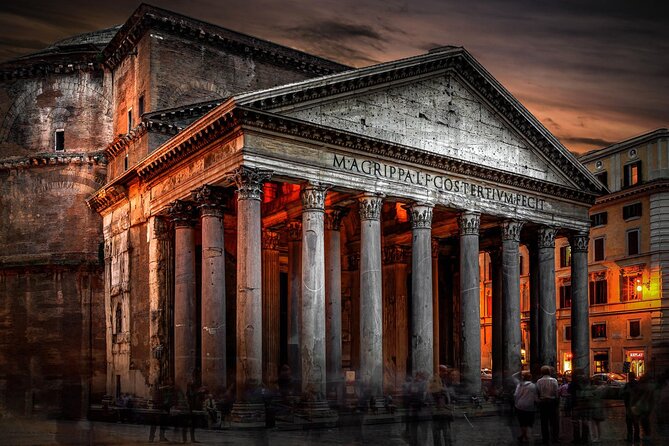
The Pantheon is the main reason to book this experience. It is one of the best-preserved monuments from ancient Rome, and its interior gives you an immediate sense of the scale and skill behind Roman construction.
The most memorable feature is the huge domed ceiling. At its center, the oculus opens directly to the sky. Natural light enters through that round opening and shifts across the interior as the day goes on. Rain can also enter, so the floor is designed to deal with water, though the supplied tour details do not promise a demonstration or extended explanation of that feature.
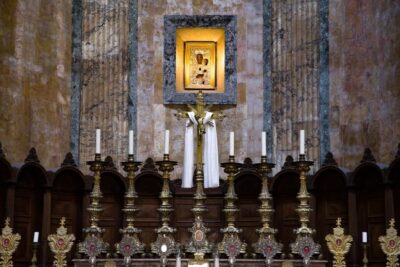
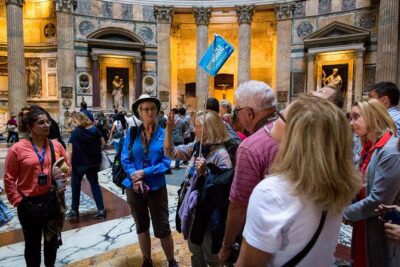
Your guided visit inside the Pantheon lasts about 45 minutes. That is a useful amount of time for a first visit. You can look up at the dome, take in the interior, and hear how the building changed from a temple dedicated to all gods into a Christian church and burial place.
The Pantheon also contains the tomb of Raphael, the Renaissance artist, along with the tombs of Italy’s kings. That combination is one of the building’s great surprises. You are not looking at a ruin frozen in ancient Rome. You are seeing a monument reused by later religious and political cultures.
I would choose a guided visit here over simply walking in alone if you want the basic story explained in the moment. The structure can look simple at first glance, but its dome, purpose, and later use reward a guide’s interpretation.
The practical benefit is the separate skip-the-line entrance. Rome’s major monuments can have slow entry periods, and saving time is valuable on a short city break. Skip-the-line access does not mean you can ignore security or unexpected closures, so allow some flexibility.
Piazza della Minerva and Bernini’s elephant
After the Pantheon, the walk continues to Piazza della Minerva. This small square is home to Bernini’s Elephant and Obelisk, one of Rome’s most recognizable Baroque sculptures.
The work shows a small elephant carrying an ancient Egyptian obelisk on its back. It is playful, unusual, and easy to miss if you hurry from the Pantheon toward the next major sight. A guide helps you pause long enough to understand why this odd pairing matters in Rome, a city where ancient pieces were repeatedly placed into later artistic and religious settings.
The square also changes the mood of the tour. Inside the Pantheon, the scale is monumental. Here, you get a more intimate public space, with sculpture and architecture competing for your attention.
Do not expect a long art lecture. The tour is only two hours in total, and several stops remain. But the stop gives you a useful example of Rome’s habit of placing ancient objects into new settings. It also gives you a chance to look closely at a work that photographs do not always explain well.
If you like Bernini, this is a valuable inclusion. If your main goal is ancient Rome alone, you may find the stop more decorative than essential. That is part of the tour’s balance: it is about Rome across several eras, not only the imperial period.
Largo di Torre Argentina and the politics of ancient Rome

The next major stop is Largo di Torre Argentina, an archaeological site closely linked with Julius Caesar’s assassination.
The ruins can be hard to read without context. You see remains below modern street level, but the significance comes from understanding the political drama associated with the place. A guide can turn broken columns and foundations into a story about Roman power, ambition, and the end of Caesar’s life.
This is one of the strongest stops for anyone who wants more than a checklist of monuments. The site connects physical remains to a famous political event, giving the walk a clear narrative thread.
The stop is guided, but the supplied information does not give a separate duration. I would expect a focused explanation rather than a long archaeological visit. You will not be exploring an enormous site for hours. Instead, you are using the remains as a window into the city’s ancient past.
There is also a useful contrast with the Pantheon. The Pantheon is a complete, standing building. Largo di Torre Argentina is an archaeological setting that asks you to imagine what once occupied the space. Having both in the same tour helps you see two very different forms of Roman history.
More Pantheon tours and tickets:
- Rome: Pantheon Timeless Marvel Guided Tour with Entry Ticket
★ 4.9 · 4,002 reviews - Rome: Pantheon Priority Entry Ticket & Audio Guide App
★ 4.1 · 3,234 reviews - Pantheon Elite Guided Tour – Rome’s Iconic Ancient Temple
★ 5.0 · 1,447 reviews - Rome’s Iconic Temple: Pantheon Audio Guided Tour with Fast Access
★ 4.0 · 1,188 reviews
Piazza Mattei and the turn toward the Jewish Ghetto
From Largo di Torre Argentina, the route continues to Piazza Mattei. This square provides a transition from the ancient and Baroque sections of the tour into the historic Jewish Ghetto.
Piazza Mattei is known for its fountain, and it offers a calmer setting for a short stop between larger landmarks. The square’s role in this tour is less about one grand monument and more about guiding you into the neighborhood that follows.
This is where the experience becomes more about streets and community than about one famous building. I like that change. Rome can become tiring when every stop is another giant monument, and a walk through a historic district gives you a different way to read the city.
The tour’s emphasis is on the Jewish Ghetto’s history and cultural heritage. You should expect your guide to explain the area as you walk, rather than enter a dedicated museum or synagogue. No food tasting, drinks, or separate cultural performance is included.
That distinction matters when you compare this tour with specialized Jewish Rome experiences. This walk gives you a short introduction as part of a broader route. It is a good fit if you want to place the neighborhood within the wider story of central Rome, but it may feel too brief if the Ghetto is your main reason for booking.
Walking Via del Portico d’Ottavia
Via del Portico d’Ottavia takes you deeper into the historic Jewish Ghetto. The route is on foot, and comfortable shoes will make the two-hour outing easier, especially if you plan to continue sightseeing afterward.
The streets here are important because they show Rome at a human scale. Instead of looking up at a single dome or monument, you move through a neighborhood whose identity has developed over time. Your guide provides the historical frame, helping you connect the streets to the community that has shaped this part of Rome.
A guide is especially useful here because the significance of a district is not always obvious from its buildings alone. The tour presents the Ghetto as part of Rome’s cultural and religious story, not simply as a picturesque lane for photographs.
The experience ends at the Portico of Octavia, an imposing ancient structure and a fitting final stop. It brings the route back to monumental Rome while keeping the focus on the area’s Jewish heritage.
The provided information does not say that the tour enters the Portico itself. Plan on an exterior explanation unless your guide says otherwise. That is not a major flaw, but it helps set realistic expectations.
The guide, language, and group experience
The tour includes a live guide in English or Spanish. One guide associated with the experience is Maria, whose style is described as simple, thorough, and easy to follow. She also speaks Italian, which may be useful for Italian-speaking participants, though Italian is not listed as a standard booking language.
A good guide matters most at the Pantheon and Largo di Torre Argentina. Both places need explanation to become more than impressive backdrops. Maria’s approach, based on the information provided, suits people who want historical detail without an overly academic presentation.
The headsets are another practical plus. Rome’s squares can be noisy, and the Pantheon can hold a crowd. You can focus on the guide’s explanation instead of trying to read lips or stand directly beside the group.
No group size is provided, so I would not book this expecting a private walk or a very small party. If you prefer a personal, slow-paced experience, ask CheckandGo Tours about the group size before paying.
The total duration is two hours. That makes the tour easy to fit into a morning or afternoon, but it also limits depth. I would see it as an orientation to several connected areas, followed by a later return to whichever site interests you most.
Is $42.59 a fair price?
At $42.59 per person, the price is reasonable if you value a guide and want to save time at the Pantheon. The cost includes Pantheon admission, skip-the-line access through a separate entrance, headsets, and guided visits to both the Pantheon and Jewish Ghetto.
The value depends on how you normally travel. If you are comfortable reading a guidebook and arriving early, you might prefer to visit the Pantheon independently. In that case, the added cost pays mainly for interpretation and the route between sites.
I think the price works best for a first visit to Rome, a short stay, or anyone who wants the major context delivered in one sitting. You get ancient architecture, Baroque art, a site tied to Caesar, and a historic neighborhood without arranging separate visits.
Food and drinks are not included, and there is no hotel pickup or drop-off. That is normal for a central walking tour, but remember to eat beforehand or plan a meal after the walk.
Free cancellation is available up to 24 hours before the tour for a full refund. You can also reserve now and pay later, which is useful if your Rome schedule is still shifting.
Clothing, timing, and access details
The Pantheon requires suitable clothing. Your clothing must cover the knees, and sleeveless tops, vests, shorts, and short skirts are not allowed. Bring a passport or ID card, including identification for children.
The site can close, delay opening, host Mass, or hold concerts and other events. Those changes may affect the tour time. I would avoid scheduling a tight museum reservation immediately afterward.
The supplied information gives conflicting accessibility details. One section describes the activity as wheelchair accessible, while another says it is not suitable for wheelchair users or people with mobility impairments. Since the route includes several outdoor walking stops and the Pantheon has its own access conditions, contact the operator before booking if you use a wheelchair or have limited mobility.
Pets, weapons, and sharp objects are not allowed. The guide’s contact information arrives one day before the tour, so make sure your booking email and phone details are current.
Who should book this Pantheon and Ghetto tour?
I would recommend it to first-time Rome visitors who want a guided introduction without spending half a day on one attraction. It also suits you if you enjoy connections between art, religion, politics, and neighborhood history.
The tour is especially useful if the Pantheon is high on your list but you also want to see something beyond the standard ancient Roman circuit. Bernini’s elephant, Caesar’s assassination site, and the Jewish Ghetto give the experience a wider frame.
I would hesitate if you want a slow photographic walk, a detailed Jewish history tour, or a full archaeological visit at every stop. The two-hour format keeps things moving, and the Ghetto section is part of a larger route rather than the sole focus.
Book it if you value a clear story, a live guide, and saved entry time. Skip it if you prefer to explore at your own pace and already know the history behind the Pantheon and Largo di Torre Argentina.
FAQ
How long does the Pantheon and Jewish Ghetto tour last?
The tour lasts two hours.
What languages are available?
The live tour guide is available in English or Spanish.
Where does the tour start?
It starts at Piazza della Rotonda, 2, near the Pantheon.
What does the price include?
The price includes skip-the-line Pantheon tickets, a guided Pantheon visit, a guided Jewish Ghetto walk, and headsets for hearing the guide.
Is hotel pickup included?
No. Hotel pickup and drop-off are not included.
Does the tour include food or drinks?
No. Food and drinks are not included.
What should I wear to enter the Pantheon?
You must wear clothing that covers your knees and shoulders. Shorts, short skirts, vests, and sleeveless shirts are not permitted.
What identification should I bring?
Bring a passport or ID card. Children also need a passport or ID card.
Can the tour time change?
Yes. The Pantheon can have closures, postponed openings, Masses, concerts, or other events that affect the service time.
More history tours in Rome
- Rome in a Day Tour with Vatican, Colosseum and Historic Center
★ 4.5 · 1,042 reviews - Rome Food Tour in the Historic Centre with 8+ Food Tastings
★ 5.0 · 1,000 reviews - Rome: Forbidden History Walking Tour & Pub Crawl with Drinks
★ 4.9 · 688 reviews - Rome: Colosseum, Vatican Museums & Historic Center in a Day
★ 4.7 · 228 reviews
Newest Rome tours we have reviewed
- Private TikTok Video Making in Rome★ 5.0 · 7 reviews
- Assisi, Orvieto and Civita di Bagnoregio Full Day Tour from Rome★ 4.5 · 45 reviews
- Assisi & Saint Francis Path Tour from Rome★ 5.0 · 45 reviews
- Assisi and Cascia Private Day Tour from Rome with Lunch★ 5.0 · 10 reviews
- Art Class in the center of Rome!★ 4.0 · 4 reviews
- Art & Craft: Beer Tour with Street Art in Rome★ 4.5 · 6 reviews
- Arrival in Rome: Airport Transfer & Exclusive City Introduction★ 5.0 · 3 reviews
- From Rome: Private Day-Tour of Tuscany★ 5.0 · 16 reviews
Pantheon Tours, compared.
Pantheon Timeless Marvel Guided Tour with Entry Ticket
Read our review →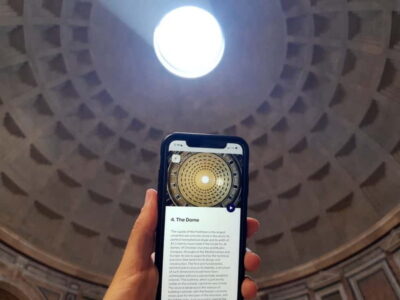
Pantheon Priority Entry Ticket & Audio Guide App
Read our review →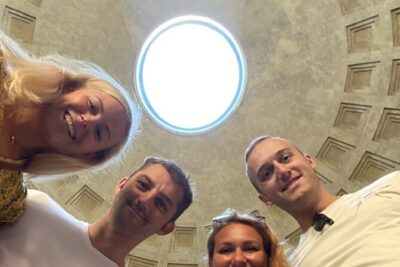
Pantheon Elite Guided Tour – Rome’s Iconic Ancient Temple
Read our review →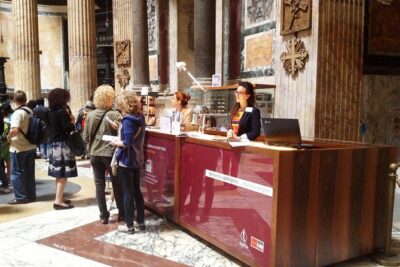
Rome’s Iconic Temple: Pantheon Audio Guided Tour with Fast Access
Read our review →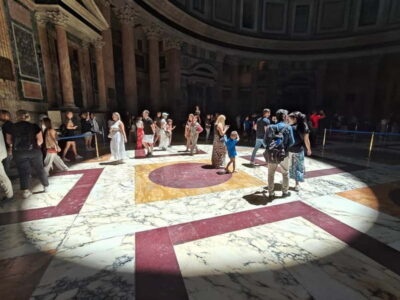
Pantheon Small-Group Guided Tour with Entry Ticket
Read our review →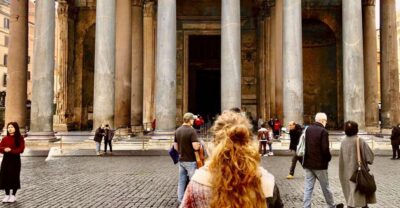
Pantheon Small Group Tour and Skip-the-Line Ticket
Read our review →
Rome Walking Tour with Piazza Navona, Trevi Fountain and Pantheon
Read our review →Browse the lists this tour appears in