
Reviewed · POMPEII DAY TRIPS FROM ROME
From Rome: Pompeii and Herculaneum by High-Speed Train
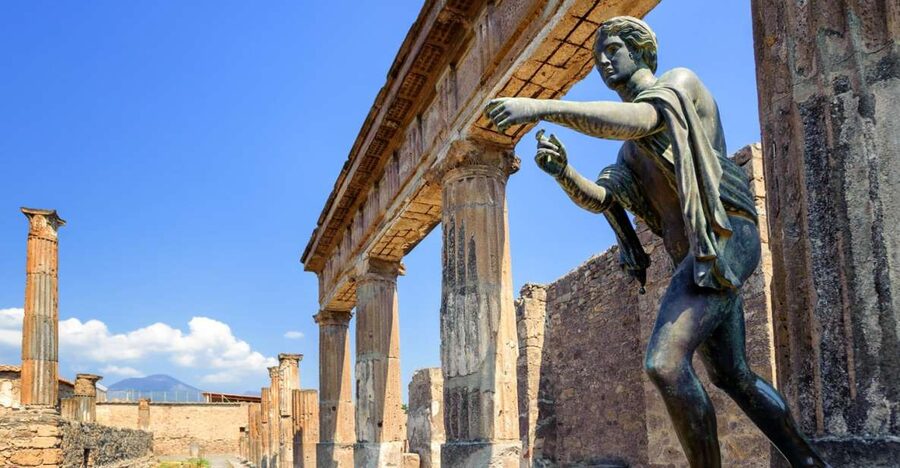
Pompeii and Herculaneum in one day is a big archaeological hit, made manageable by the 70-minute fast train from Rome. You get guided visits at both sites, with an archaeologist explaining not just what survived, but how Roman homes, streets, shops, and public spaces worked before Vesuvius buried them.
I like the contrast between the two sites and the quality of the guides, with names such as Michele, Raphael, Diego, Julia, and Gennaro praised for clear, lively explanations. The drawback is pace: Pompeii gets about two hours with another 30 minutes for free time, so lunch and photographs can feel rushed.
Key points at a glance
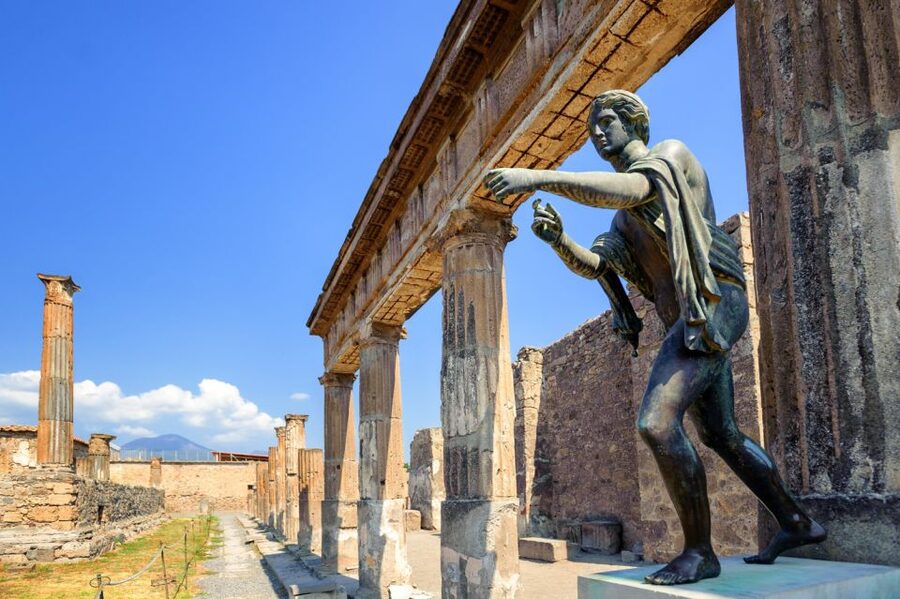
- Two very different Roman cities: Pompeii gives you a broad urban view, while Herculaneum offers better-preserved homes and intimate details.
- An archaeologist leads both visits: Guides such as Michele, Michael, Julia, Paolo, and Raphael add context that an audio guide cannot easily provide.
- Fast rail makes the day possible: Rome to Naples takes about 70 minutes each way, followed by shared minibus transfers.
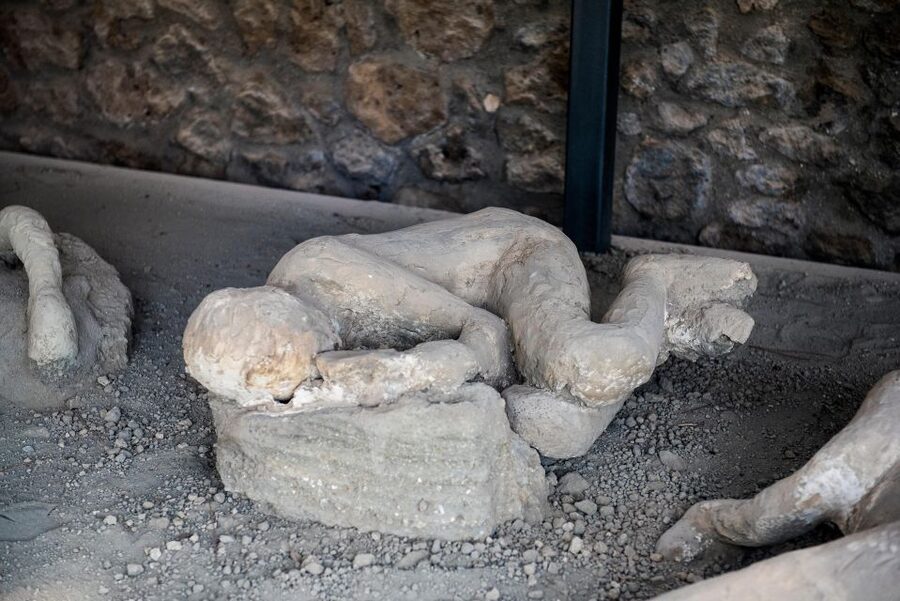
- Plaster casts bring the eruption close: Pompeii’s casts of people and animals make the disaster personal, not just historical.
- Herculaneum includes its ancient beach: The preserved skeletons here are among the most powerful sights of the day.
- Plan for uneven walking: Expect about one mile on stone streets at Pompeii and half a mile at Herculaneum.
Why the fast train changes this Rome day trip
The distance between Rome and Campania can make Pompeii feel like a difficult side trip. The high-speed train solves much of that problem. You travel independently from Roma Termini to Naples Central Station, with the journey taking about 70 minutes in each direction.
That is far more practical than spending much of the day on a bus. The train is comfortable, and the tickets are arranged for you. You still need to reach the correct platform and board on time, so arrive early at Roma Termini. The station can be confusing, especially if you are unfamiliar with Italian rail travel.
At Naples, meet the guide in front of the Starhotels Terminus entrance, opposite the station. Look for the Askos Tours sign. A few people have found the meeting sign hard to spot, so do not wander far from the stated entrance.
From there, the shared minibus takes you to Pompeii in about 30 minutes. The van then carries you to Herculaneum and back to Naples at the end of the day. You avoid working out local trains, taxis, and site transfers, which is a real benefit when two archaeological parks are packed into one day.
More Pompeii day trips:
- From Rome: Pompeii, Amalfi Coast, and Sorrento Day Trip
★ 4.6 · 7,031 reviews - From Rome: Pompeii, Amalfi Coast and Positano Day Trip
★ 4.6 · 6,620 reviews - Pompeii, Amalfi Coast and Positano Day Trip from Rome
★ 4.5 · 6,250 reviews
Pompeii: a large city with little room for wasted time
Pompeii is the larger and more famous site, and the first guided visit lasts about two hours. You will cover roughly one mile on ancient stone streets, stopping at major buildings and selected houses rather than trying to see every corner.
The exact route can vary, but the tour includes key parts of the city, newly opened houses, the brothel, and the plaster casts of people and animals killed in the eruption. These casts are made from cavities left in the hardened ash. They show bodies caught in sudden death, and they can be difficult to look at. Your guide helps place them in the wider story rather than treating them as simple curiosities.
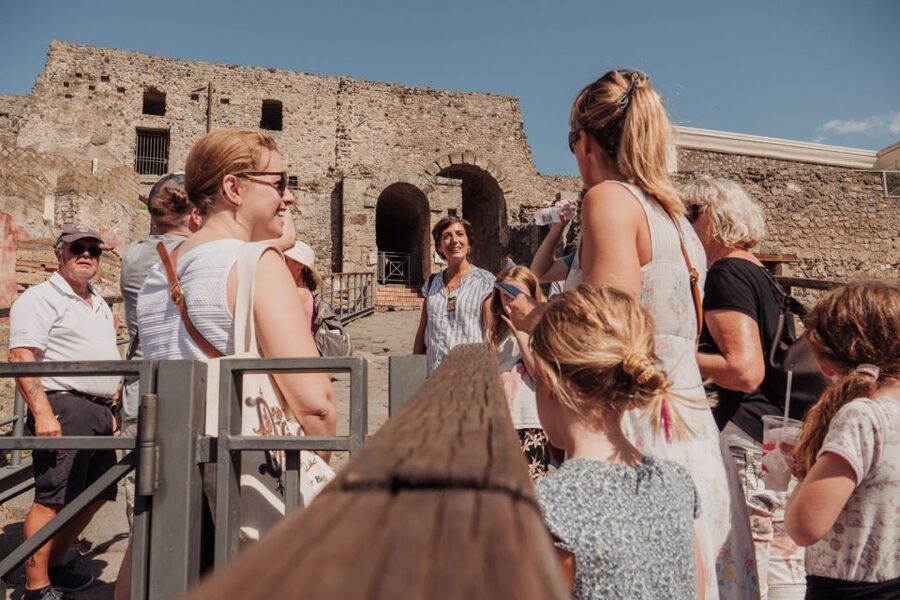
An archaeologist guide is especially useful here. Pompeii can feel like a huge collection of walls when you first enter. A good guide points out how rooms were used, how streets were laid out, and what small remains reveal about ordinary Roman life. Michele, Julia, Paolo, Raphael, and Michael are among the guides praised for explaining both the archaeology and the human story.
I particularly like the chance to hear about theories surrounding the earthquakes and eruption of Mount Vesuvius. The guide can explain what is established, what is debated, and how archaeologists interpret the evidence. That distinction matters at Pompeii, where not every visible feature has a simple answer.
The site is also exposed. On a warm day, the combination of sun, pale stone, and limited shade can wear you down. Wear practical shoes, carry water, and expect uneven paving. Sandals, flip-flops, high heels, large bags, and luggage are not allowed.
The Pompeii lunch break requires sensible planning
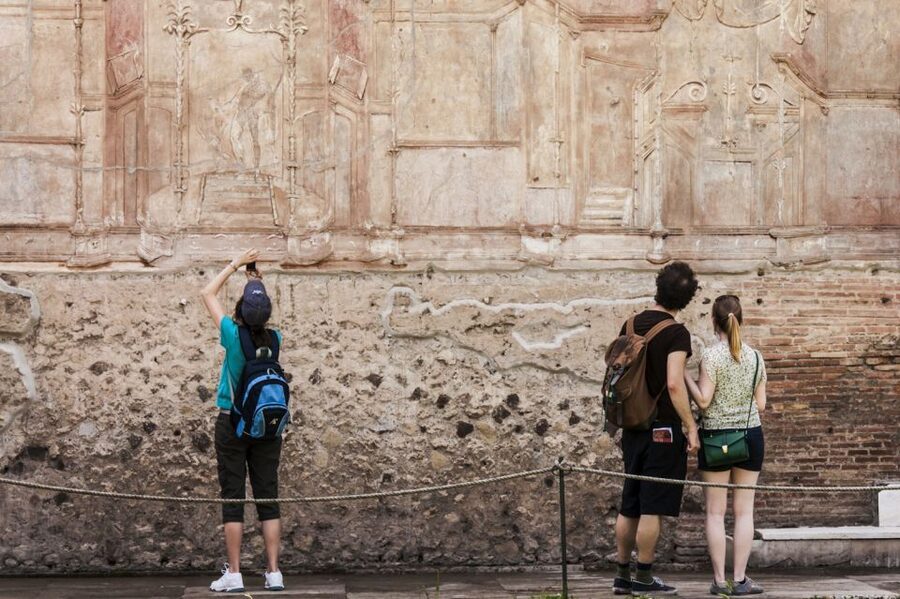
After the guided visit, you get about 30 minutes of free time. The details provided for the tour also describe time for shopping or lunch, but the practical point is that you should not count on a leisurely meal.
Food options near the entrance can become crowded, and finding a table and finishing lunch within the available time may be difficult. One useful approach is to eat quickly or bring a small snack if permitted, then save a full meal for later. The tour does not include food.
This break is one of the few parts that can feel inefficient. Some people would prefer a longer Pompeii visit, especially after moving quickly through the Forum or museum areas. Others appreciate having a pause before the second archaeological site. If Pompeii is your main reason for booking, know that this is a two-site survey, not a full-day Pompeii visit.
Herculaneum shows a smaller, more personal side of Roman life
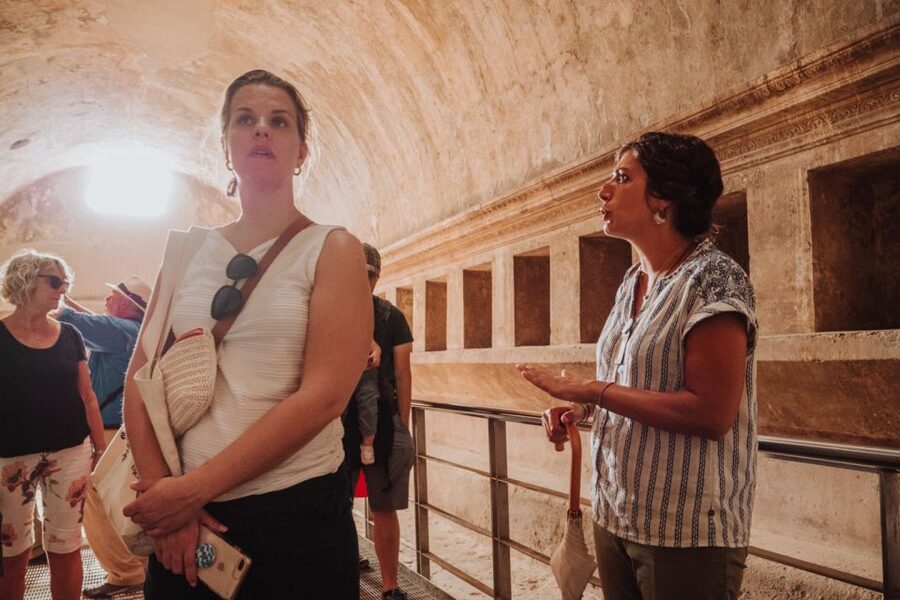
The minibus ride from Pompeii to Herculaneum takes about 30 minutes. You then spend around two hours inside the site, again with the archaeologist guide.
Herculaneum is smaller than Pompeii, and that changes the mood. Pompeii gives you scale: broad streets, public buildings, and the sense of a complete Roman town. Herculaneum gives you closer views of houses and interior details. The better preservation can make the ancient city feel more immediate.
The House of Neptune and Amphitrite is one of the named highlights. Its decoration and surviving domestic spaces help you picture how a wealthy Roman home might have looked. The guide can connect the rooms to daily life, social status, and household design.
The ancient beach is another key stop. Hundreds of skeletons are preserved there, showing people who tried to escape toward the waterfront. It is a stark scene, and it gives the eruption a human scale that broad views of Pompeii cannot match.
I like seeing both sites because they correct each other. Pompeii explains the city as a functioning place. Herculaneum shows what the volcanic material preserved in greater detail. Together, they offer a fuller picture than either site alone.
The Herculaneum walk covers about half a mile, but the ground remains uneven and paved with ancient stone. The total distance is shorter than at Pompeii, yet the day as a whole still involves plenty of walking and standing.
Same city, a completely different half-day:
- Vatican Museums & Sistine Chapel Tour with Optional Basilica
★ 4.3 · 67,413 reviews - Vatican Museums, Sistine Chapel & St Peter’s Basilica Guided Tour
★ 4.5 · 39,149 reviews - Rome: Colosseum, Palatine Hill and Roman Forum Guided Tour
★ 4.8 · 32,814 reviews - Rome: Guided Tour of Colosseum, Roman Forum & Palatine Hill
★ 4.7 · 27,897 reviews
What an archaeologist guide adds
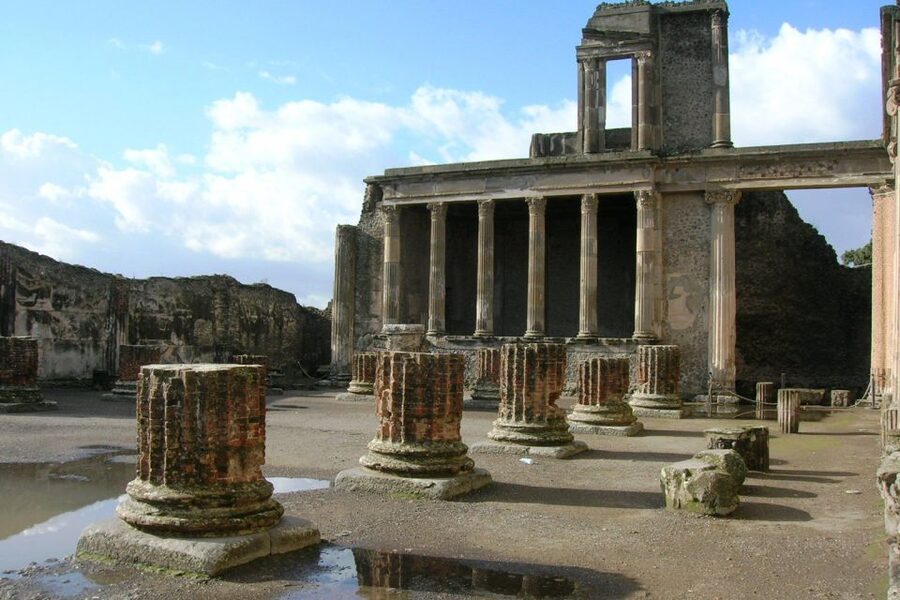
The guide is the strongest part of this experience. You are not simply being moved from one famous ruin to another. The best guides build a story through the remains.
Michele, also called Michael in some feedback, is praised for combining archaeology with a warm, human approach. Other guides named include Raphael, Jasmine, Mikel, Diego, Gennaro, Giulia, Sergio, and Paolo. The repeated pattern is clear: the tour depends heavily on the individual guide, but the advertised format gives you an archaeologist in both locations.
A strong guide can explain why one wall matters, what a room may have been used for, and which details reveal Roman routines. They can also keep the group moving without turning the visit into a race. Diego, for example, is praised for finding a good rhythm between seeing the main areas, allowing photographs, and keeping the commentary interesting.
Headsets are provided for all participants. This matters in open ruins, where a guide’s voice can otherwise disappear into the wind and surrounding noise. It also lets you stand back from the group while still following the explanation.
The tour is in English. If you want extended time for silent observation or photography, a private visit may suit you better. Here, the value comes from structured interpretation and efficient coverage.
Timing, transfers, and the shape of the day
The full experience lasts about 8.5 hours, though the exact starting time depends on availability. The broad sequence is:
- High-speed train from Roma Termini to Naples, about 70 minutes
- Minibus from Naples to Pompeii, about 30 minutes
- Guided Pompeii visit, about two hours
- Free time, about 30 minutes
- Minibus to Herculaneum, about 30 minutes
- Guided Herculaneum visit, about two hours
- Minibus back to Naples
- Fast train to Roma Termini, about 70 minutes
This is a tightly planned day, but the train makes the schedule realistic. You are not spending four hours each way stuck in road traffic. The minibus is comfortable, and drivers such as Pasquale have been praised for handling Naples traffic professionally.
The main risk is not the transport. It is fatigue. You leave Rome, walk through two archaeological sites, eat within a limited break, and return by train the same day. That is a lot of ancient stone and a lot of information. I would avoid placing a late-night activity in Rome after this tour.
Allow extra time before the morning train. Train information may arrive close to the activity date, which can make planning connections difficult. Keep your passport or ID card with you, as requested.
Is $222.77 a fair price?
At $222.77 per person, this is not the cheapest way to see Pompeii. The price includes round-trip high-speed rail from Rome to Naples, minibus transportation in Campania, Pompeii Express entry, Herculaneum entry, two guided site visits, and headsets.
The value depends on what you would otherwise arrange yourself. You are paying for speed, coordination, site admission, and an archaeologist who handles the interpretation. If you tried to reproduce the day with trains, local transfers, entrance tickets, and two separate guides, the price difference might feel smaller than it first appears.
The tour is also good value for a short stay in Rome. You can see two major sites without changing hotels or managing the full journey alone. On the other hand, if you have several days in the Naples area, an overnight stay would give you more freedom and less pressure.
I would book this for convenience and depth, not for free time. The included tickets remove queues, but the schedule is still fixed. The most important trade-off is breadth versus leisure: you see both sites, but neither visit is unhurried.
Who should book this experience?
This tour suits you if you want a clear introduction to both Pompeii and Herculaneum and prefer having the transport arranged. It is also a good choice if you value archaeology and want more than a few photographs beside old walls.
It works well for first-time visitors who may not know how to read a Roman street plan or identify the importance of a household shrine, shop, public building, or burial area. It also suits couples and small groups who want a full day away from Rome without renting a car.
It is less suitable if you have limited mobility, use a wheelchair, or find uneven stone streets difficult. The tour is not recommended for people with mobility impairments. Rain does not cancel the activity, so bring a raincoat when the forecast looks unsettled.
I would also think twice if your priority is a slow lunch, long photo stops, or detailed exploration of every Pompeii neighborhood. The schedule favors coverage and expert explanation.
Should you book Pompeii and Herculaneum by high-speed train?
Book it if you want the most efficient Rome-based visit to both sites. The fast train saves hours, the minibus removes much of the local transport hassle, and the archaeologist guide gives the ruins meaning.
The strongest reason to choose this tour is the pairing of the two sites. Pompeii gives you the scale of a Roman city, while Herculaneum brings you close to preserved homes and the tragic beach scene. The main caution is pace, especially around lunch and the Pompeii photo stops.
For a first visit, I think the balance is very good. Arrive early at Roma Termini, wear sturdy shoes, carry only a small bag, and treat the day as a serious walking and history outing. If that sounds appealing, the $222.77 price buys a practical route and a much better understanding of Vesuvius than you would get by wandering alone.
FAQ
Where does the tour begin?
It begins at Roma Termini station. You travel independently to Naples using the provided high-speed train tickets.
Where do I meet the guide in Naples?
Meet the guide in front of the Starhotels Terminus entrance, opposite Naples Central Station. Look for the guide holding an Askos Tours sign.
How long is the train ride from Rome to Naples?
The high-speed train takes about 70 minutes each way.
How long do I spend at Pompeii?
The guided visit lasts about two hours, followed by about 30 minutes of free time.
How long do I spend at Herculaneum?
The guided visit at Herculaneum lasts about two hours.
Are meals included?
No. Meals are not included, and you have free time for lunch or shopping after the Pompeii visit.
What should I wear?
Wear sturdy, comfortable shoes. Sandals, flip-flops, high heels, luggage, and large bags are not allowed.
Is the tour suitable for wheelchair users?
No. The tour is not suitable for wheelchair users or people with limited mobility because of the walking and uneven ancient paving.
Newest Rome tours we have reviewed
- Private TikTok Video Making in Rome★ 5.0 · 7 reviews
- Assisi, Orvieto and Civita di Bagnoregio Full Day Tour from Rome★ 4.5 · 45 reviews
- Assisi & Saint Francis Path Tour from Rome★ 5.0 · 45 reviews
- Assisi and Cascia Private Day Tour from Rome with Lunch★ 5.0 · 10 reviews
- Art Class in the center of Rome!★ 4.0 · 4 reviews
- Art & Craft: Beer Tour with Street Art in Rome★ 4.5 · 6 reviews
- Arrival in Rome: Airport Transfer & Exclusive City Introduction★ 5.0 · 3 reviews
- From Rome: Private Day-Tour of Tuscany★ 5.0 · 16 reviews
Pompeii Day Trips from Rome, compared.

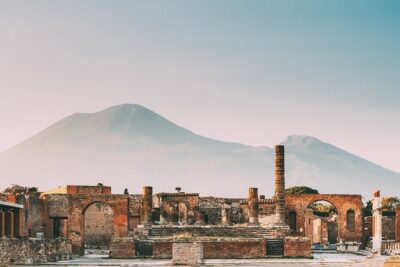
Pompeii, Amalfi Coast and Positano Day Trip from Rome
Read our review →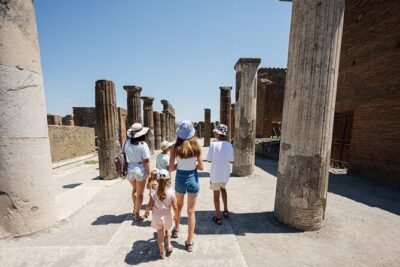
Pompeii and Mount Vesuvius Day Trip from Rome with Pizza Lunch
Read our review →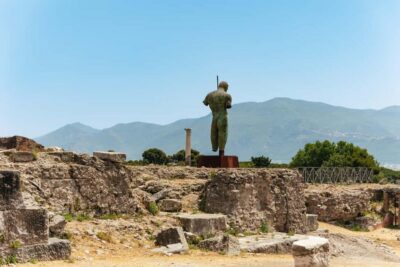
Pompeii Day Trip with Optional Vesuvius and Lunch
Read our review →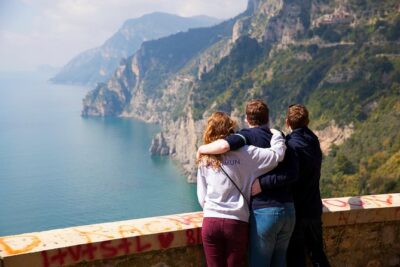
Pompeii Tour & Amalfi Coast Day Trip from Rome
Read our review →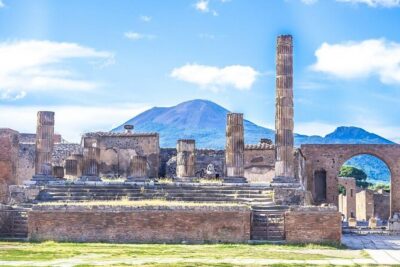
Private Pompeii, Positano & Amalfi coast Tour from Rome
Read our review →
Rome to Pompeii Guided Tour with Wine & Lunch by High Speed Train
Read our review →Browse the lists this tour appears in