
Reviewed · PANTHEON TOURS
Pantheon and Jewish Ghetto Tour
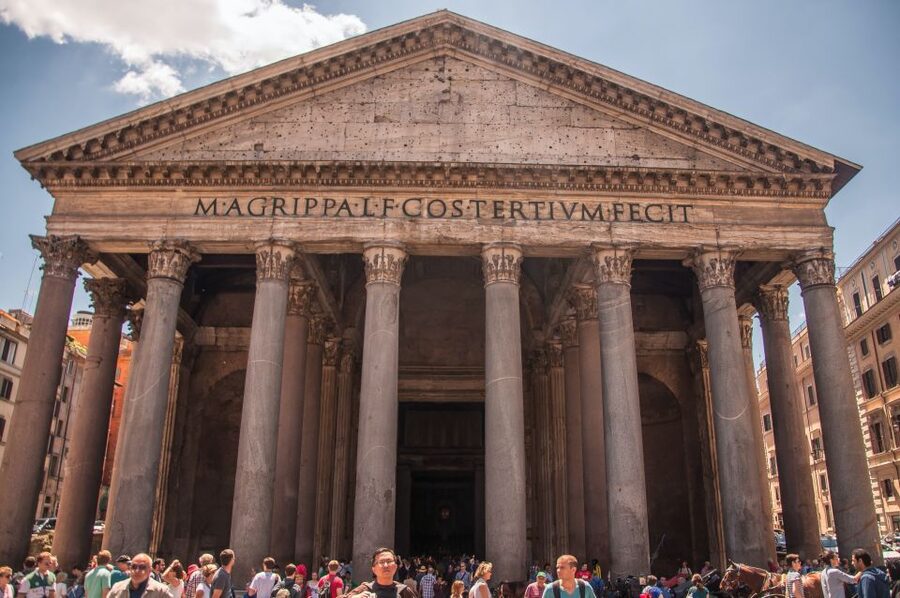
Rome’s Pantheon and Jewish Ghetto tour brings together two very different sides of the city. You begin beneath the Pantheon’s vast concrete dome, then walk through lanes shaped by ancient ruins, Renaissance power, and the long story of Rome’s Jewish community. Raphael’s tomb gives the Pantheon a personal artistic connection, while the oculus overhead turns a building lesson into a memorable piece of theater.
I like the compact route and the mix of famous sights with less obvious stops such as Piazza Mattei and Largo di Torre Argentina. I also like having a live guide and headsets, especially when a small group gathers in a noisy Roman square. The main concern is reliability: past bookings included late guide changes and one missed departure, so I would avoid scheduling this on the same day as a flight, train, or major timed entrance.
Key points to know
- The Pantheon is the tour’s main prize: See the ancient dome, central oculus, Raphael’s tomb, and the resting places of former Italian monarchs.
- The walk links major eras: The route moves from imperial Rome to Renaissance art, modern Italy, and the historic Jewish Ghetto.
- It is sold as a two-hour experience: The itinerary description also refers to a three-hour guided walk, so check the exact start and end time when booking.
- Headsets are included: You should be able to follow the guide even when the group is standing in a busy piazza.
- Dress rules are strict: Knees and shoulders must be covered. Shorts, short skirts, vests, and sleeveless tops are not allowed.
- The route is not designed for everyone: People with mobility impairments and wheelchair users may find it unsuitable.
Why the Pantheon and Jewish Ghetto make a smart pairing
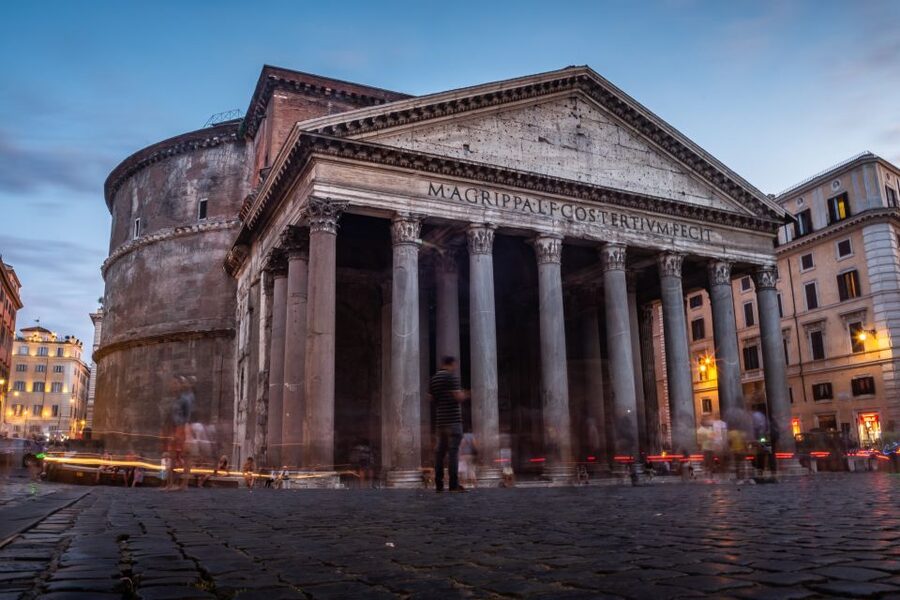
Rome offers no shortage of ancient monuments, but many guided walks focus on one period at a time. This tour takes a different approach. It begins with the engineering and religious history of the Pantheon, then follows a short urban route through places where Rome’s political, artistic, and religious stories overlap.
That makes the experience useful if you have limited time in the historic center. You are not spending two hours on only one building, yet the route still has a clear theme: how Rome keeps old structures in daily city life.
The setting changes often. Inside the Pantheon, the focus is architecture and memory. At Piazza della Minerva, the city’s religious and artistic side comes forward. Largo di Torre Argentina brings ancient ruins into view. By the time you reach Via del Portico d’Ottavia, the subject has shifted toward the Jewish community and the changing city around it.
The tour costs $65 per person. That is not the cheapest way to see the Pantheon, particularly if you only want to step inside and look around. The value rests in the guide’s explanation, the route between the sites, skip-the-line Pantheon admission, and the chance to connect places that you might otherwise visit as unrelated stops.
More Jewish Ghetto tours:
- Rome: Trastevere or Jewish Quarter Street Food Tour
★ 4.8 · 3,839 reviews - Jewish Ghetto and Trastevere Tour Rome
★ 4.5 · 1,729 reviews - Jewish Ghetto and Synagogues with Jewish Roman Guide 3 Hours
★ 5.0 · 907 reviews
Inside the Pantheon beneath the open oculus
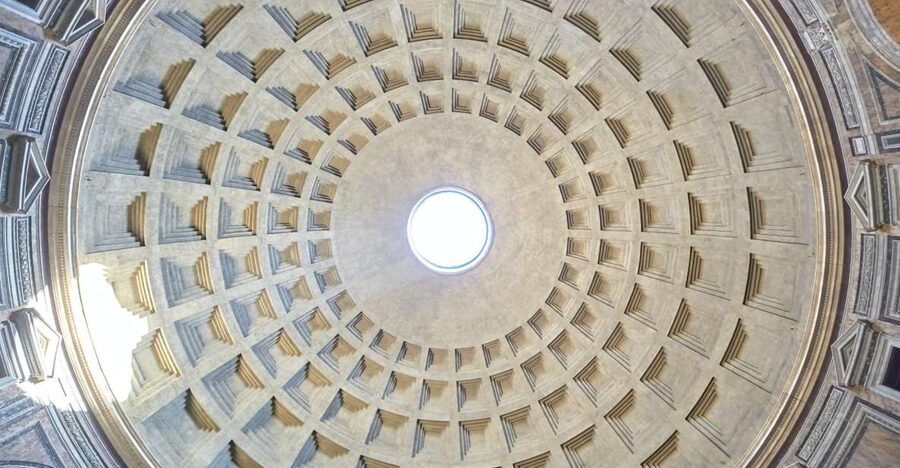
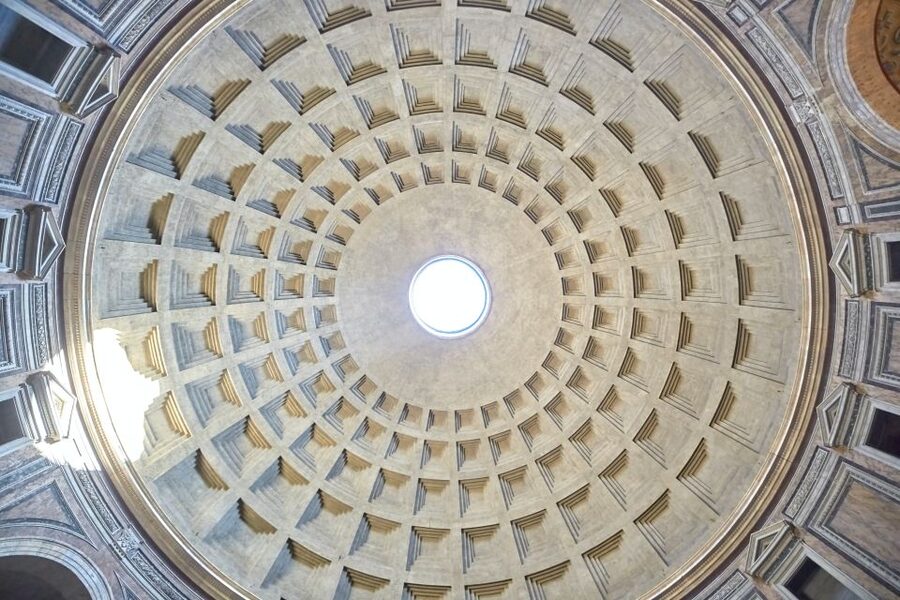
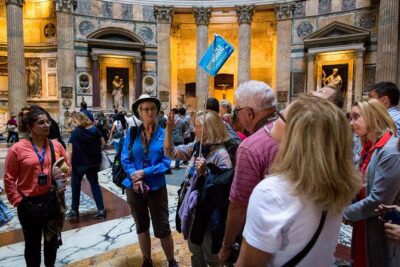
The Pantheon is the strongest part of the experience. Its dome remains one of the great achievements of ancient Roman construction, and the central oculus creates the building’s most striking feature. Light enters through the round opening in the roof, changing the interior as the day moves along.
Your guide explains that the building began as a temple honoring all gods. Its later use as a church helped preserve it, and today it also serves as a burial place for important Italian figures.
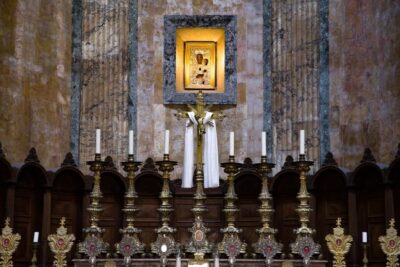
The tomb of Raphael gives the visit a human focus. Raphael was one of the major painters of the Renaissance, and his burial place helps connect the building to the artistic world of Rome. You also see the resting places of former Italian kings, linking the Pantheon to the country’s modern monarchy and political past.
This is not simply a stop for taking a quick ceiling photograph. The building rewards a few minutes of attention. Look at the scale of the dome, the way the light falls through the oculus, and the contrast between the ancient structure and the later memorials inside.
The skip-the-line ticket is useful here. The Pantheon can draw a steady stream of visitors, and a reserved entrance may save time compared with joining the general queue. It does not mean you walk straight through every security check or avoid all waiting, but it gives the tour a practical advantage over arriving without a plan.
The Pantheon is an active religious site, not only a monument. Masses, concerts, postponed openings, or other events can change the operating schedule. That is important if you are building a tight day around this walk. Treat the start time as something to confirm, not an unchangeable promise.
Piazza della Minerva and the city between monuments
After the Pantheon, the tour continues toward Piazza della Minerva. This part of the walk shows how closely Rome places its different eras together. A grand ancient building can be only a short walk from a church, a palace, or a narrow street shaped by later centuries.
The piazza is a useful transition point. The guide can place the Pantheon in the wider setting of central Rome rather than leaving you with a single isolated monument. You get a sense of how religious institutions, artists, and political figures shaped the streets around the ancient core.
This is also where the walking format matters. You are not being moved between distant attractions by vehicle. The route unfolds on foot, so the streets themselves become part of the lesson. You should expect frequent stops for explanation rather than a long, uninterrupted march.
Comfortable shoes are essential. The activity is short by Rome standards, but the route includes outdoor walking and standing. The supplied information also says the tour is not suitable for wheelchair users or people with mobility impairments, so consider that limitation before paying.
Largo di Torre Argentina and Rome’s layered past
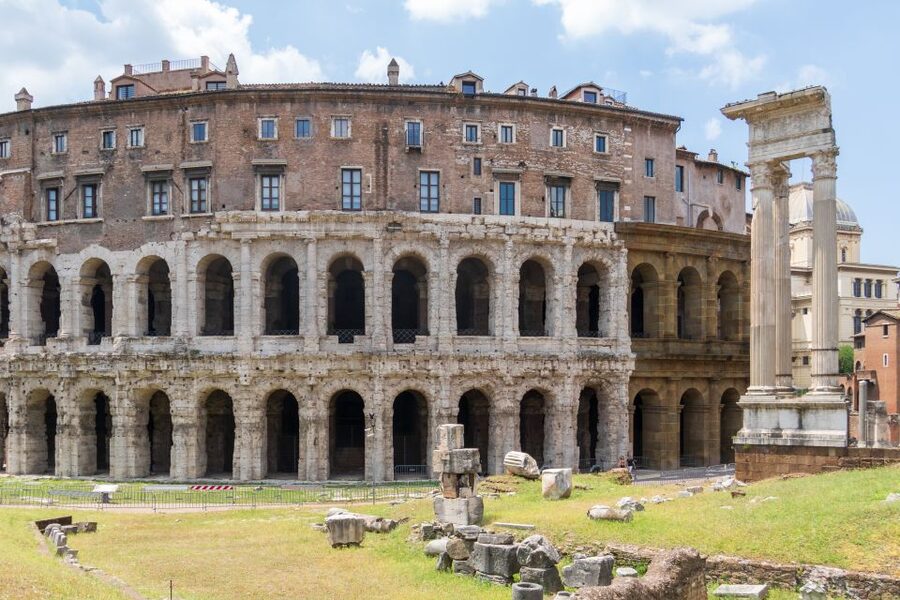
The next notable stop is Largo di Torre Argentina, where ancient remains sit below the level of the surrounding streets. The site is especially helpful for understanding Rome as a city built in layers. Modern traffic and city buildings exist beside ruins from the Roman period, often with very little separation between ordinary urban life and archaeology.
Your guide uses the stop to connect the Pantheon’s engineering with the political world of ancient Rome. The tour is not only about beautiful buildings. It also shows how power, religion, and public life left physical marks across the center.
The attraction here is the view and the explanation rather than an extended visit inside a monument. You should not expect the same type of close interior experience as at the Pantheon. Instead, this stop gives the walking route variety and helps you see why Rome can feel like several historical periods occupying one block.
Because the tour is guide-led, the quality of the explanation matters. The strongest confirmed praise for this experience centers on guides who kept the information lively and made even the security line feel manageable. One participant described a late change of guide, but also said the replacement guide offered so much information that the delay was largely recovered. That suggests the right guide can make a real difference here.
More Pantheon tours and tickets:
- Rome: Pantheon Timeless Marvel Guided Tour with Entry Ticket
★ 4.9 · 4,002 reviews - Rome: Pantheon Priority Entry Ticket & Audio Guide App
★ 4.1 · 3,234 reviews - Pantheon Elite Guided Tour – Rome’s Iconic Ancient Temple
★ 5.0 · 1,447 reviews - Rome’s Iconic Temple: Pantheon Audio Guided Tour with Fast Access
★ 4.0 · 1,188 reviews
Piazza Mattei and the approach to the Jewish Ghetto
Piazza Mattei marks another change in tone. From here, the walk heads toward Via del Portico d’Ottavia and the historic Jewish Ghetto. The streets become the main attraction, with the guide explaining how this part of Rome developed and why it remains important to the city’s cultural story.
A guided walk is particularly useful in the Ghetto because the meaning of the area is not always obvious from its buildings alone. You see attractive streets and old masonry, but the historical weight comes from understanding who lived here, how the neighborhood functioned, and how the community’s presence endured through major changes in Rome.
The route does not promise a food tasting or restaurant visit. Food and drinks are not included, so plan to eat before or after the tour. That is not a serious weakness, but it matters if you expected the Jewish Ghetto portion to include a culinary stop.
This is also a good area for you to keep your attention on the guide rather than rushing ahead for photographs. The point is not simply to reach the next monument. It is to notice how the street plan, surviving buildings, and public spaces reflect a long community history.
Portico of Octavia and the final stop
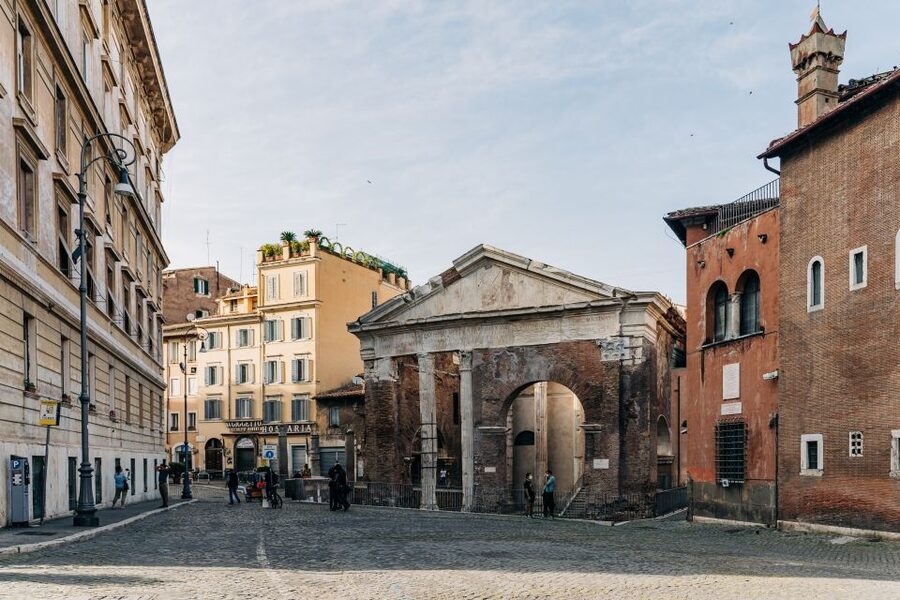
The walk ends in front of the Portico of Octavia. This ancient monument gives the tour a strong closing image. It reflects Rome’s Roman past while also placing you in the center of the historic Jewish Ghetto, where later community life shaped the meaning of the surrounding streets.
The portico is a good final stop because it ties together the tour’s main subjects. Ancient construction, religion, politics, art, and community identity all meet here. You finish with a better sense of Rome as a city where monuments are rarely limited to one period or one purpose.
Do not expect the tour to end with hotel transport. There is no pickup or drop-off, and the walk returns to the Pantheon area according to the stated route. That makes it easy to continue sightseeing in central Rome, but you will need to arrange your own way back to your hotel or next appointment.
Timing, languages, and the guide experience
The activity is advertised as lasting two hours, while the itinerary description also refers to a three-hour guided walk. That difference deserves attention. Check the exact duration and meeting instructions for the option you choose, especially if you have a museum reservation afterward.
The tour is available in English and Spanish. Headsets are supplied, which is a small but important advantage in central Rome. Without them, it can be difficult to hear a guide while standing near traffic, crowds, or other tour groups.
The meeting point may change depending on the option booked. Piazza della Rotonda, 4 is given as a starting or return point for one version, while another starting option is listed as Giardini Di Albaro. Read the confirmation carefully rather than assuming every departure begins in the same place.
Guide reliability is the biggest practical concern. One scheduled departure reportedly had no guide arrive, followed by a cancellation after a long wait. Another morning tour was affected by a religious holiday, with the afternoon departure running successfully instead. These problems may be unusual, but they matter when your time in Rome is limited.
I would arrive early, keep the provider’s contact details available, and avoid placing a major timed activity directly after this tour. The free cancellation policy allows cancellation up to 24 hours before the start for a full refund, and the reserve-now-pay-later option can help you hold a place while your schedule is still changing.
Dress rules and what to bring
The Pantheon requires suitable clothing. Your knees and shoulders must be covered, and the rules apply to both men and women. Shorts, short skirts, sleeveless shirts, and vests are not permitted.
Bring a passport or identity card. Children also need identification. Comfortable shoes are more important than stylish footwear because the experience combines indoor standing with outdoor walking on Rome’s historic streets.
Sharp objects and weapons are not allowed. Security procedures can also affect the pace of entry, so carry only what you need for the walk.
Who will get the most from this tour?
This tour suits you if you want an introduction to central Rome that mixes major architecture with neighborhood history. It is especially useful for a first visit, a short stay, or a day when you want a guide to provide the context you would miss by moving between sites alone.
It also works well for people who enjoy art and architecture but do not want a full-day museum tour. Raphael’s tomb and the Pantheon’s dome provide clear focal points, while the Jewish Ghetto adds a social and cultural dimension.
You may want a different plan if you prefer to explore at your own pace, stop often for food, or avoid fixed schedules. The tour is also a poor fit for anyone who cannot comfortably walk and stand or who needs wheelchair access.
At $65, I would book it for the structure and explanation, not simply for entry to the Pantheon. If you already know the Pantheon well and only want a quick look inside, the price may feel high. If you want one guided route that connects ancient Rome with the Jewish Ghetto, the cost is easier to justify.
Should you book the Pantheon and Jewish Ghetto Tour?
Book this tour if you want a focused introduction to two important parts of Rome and value having a guide explain the connections between them. The Pantheon is the clear highlight, while the walk through Piazza della Minerva, Largo di Torre Argentina, Piazza Mattei, and the Jewish Ghetto gives the experience a broader purpose.
I would book with two precautions. Confirm the meeting point and exact duration, then leave a buffer around the start time in case of schedule changes. If the provider can deliver a reliable guide, this is a compact and worthwhile way to see the Pantheon and finish with a better understanding of Rome’s Jewish quarter.
FAQ
How long does the Pantheon and Jewish Ghetto tour last?
The activity information gives a duration of two hours. The itinerary description also refers to a three-hour guided walk, so confirm the exact timing for the option you book.
What languages are available?
The live guide is available in English and Spanish.
Is the Pantheon admission included?
Yes. Skip-the-line tickets to the Pantheon are included, along with a guided Pantheon visit.
Are headsets provided?
Yes. Headsets are included so you can hear the guide more clearly.
Where does the tour begin?
The meeting point may vary by booking option. Piazza della Rotonda, 4 is listed for one option, and Giardini Di Albaro is also shown as a possible starting location.
Does the tour include hotel pickup?
No. Hotel pickup and drop-off are not included.
Are food and drinks included?
No. You need to arrange your own food and drinks before or after the walk.
What clothing is required?
You must cover your knees and shoulders. Shorts, short skirts, vests, and sleeveless shirts are not allowed.
What should I bring?
Bring comfortable shoes and a passport or identity card. Children also need a passport or identity card.
Is the tour suitable for wheelchair users?
No. The activity is listed as unsuitable for wheelchair users and people with mobility impairments.
Newest Rome tours we have reviewed
- Private TikTok Video Making in Rome★ 5.0 · 7 reviews
- Assisi, Orvieto and Civita di Bagnoregio Full Day Tour from Rome★ 4.5 · 45 reviews
- Assisi & Saint Francis Path Tour from Rome★ 5.0 · 45 reviews
- Assisi and Cascia Private Day Tour from Rome with Lunch★ 5.0 · 10 reviews
- Art Class in the center of Rome!★ 4.0 · 4 reviews
- Art & Craft: Beer Tour with Street Art in Rome★ 4.5 · 6 reviews
- Arrival in Rome: Airport Transfer & Exclusive City Introduction★ 5.0 · 3 reviews
- From Rome: Private Day-Tour of Tuscany★ 5.0 · 16 reviews
Pantheon Tours, compared.
Pantheon Timeless Marvel Guided Tour with Entry Ticket
Read our review →
Pantheon Priority Entry Ticket & Audio Guide App
Read our review →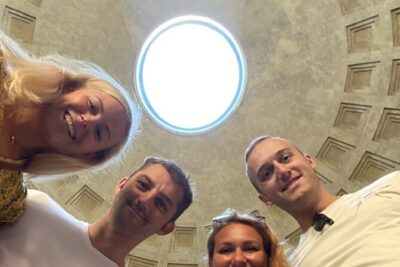
Pantheon Elite Guided Tour – Rome’s Iconic Ancient Temple
Read our review →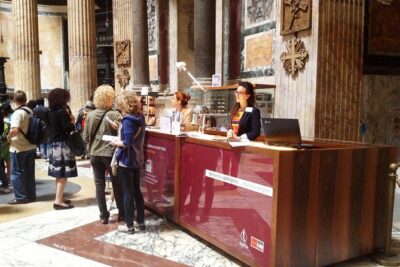
Rome’s Iconic Temple: Pantheon Audio Guided Tour with Fast Access
Read our review →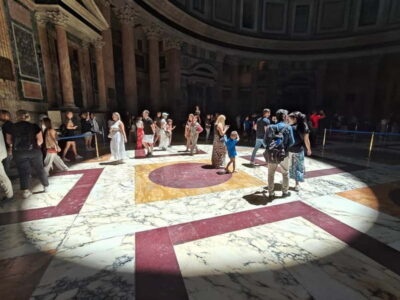
Pantheon Small-Group Guided Tour with Entry Ticket
Read our review →
Pantheon Small Group Tour and Skip-the-Line Ticket
Read our review →
Rome Walking Tour with Piazza Navona, Trevi Fountain and Pantheon
Read our review →Browse the lists this tour appears in