
Reviewed · CAPUCHIN CRYPT TOURS
Rome: Capuchin Crypts Skip-the-Line Ticket and Tour
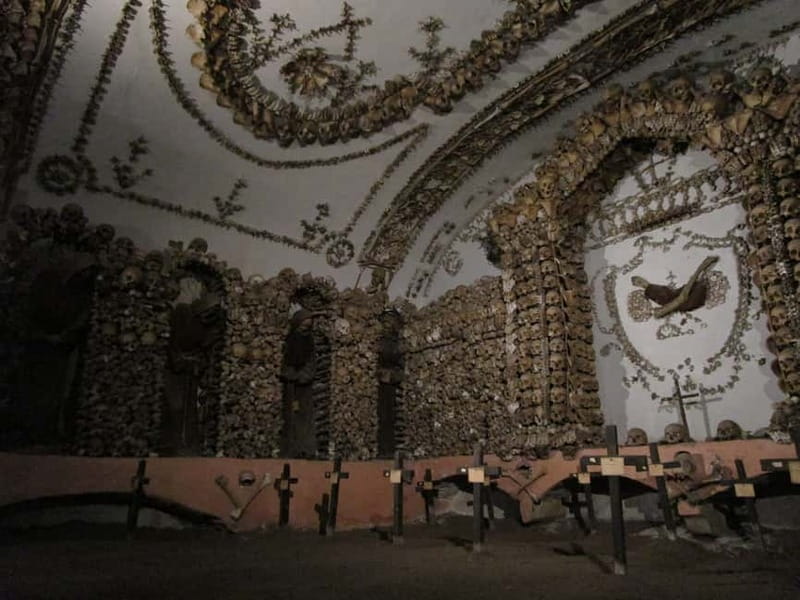
Rome’s Capuchin Crypt is not a typical church visit. Beneath Via Veneto, the bones of about 3,700 people form chapels, patterns, symbols, and wall decorations. It is eerie at first, but the site is meant to make you think about death, faith, and the temporary nature of life.
I like the small groups of up to 10, which make it easier to hear the guide in the low-ceilinged rooms. I also like the way the tour adds meaning to what you see, explaining why the bones were moved here and what the crosses, skeletons, and hourglass represent. The main drawback is simple: this is not for everyone. The subject is direct, the displays are made from real human remains, and the tour moves quickly.
Key points to know
- About 3,700 remains: Human bones collected over centuries form the crypt’s unusual decorations.
- A compact guided visit: Expect 50 minutes to one hour, including the museum and underground chambers.
- Five striking areas: See the Crypt of the Three Skeletons, Leg Bones and Thigh Bones, Pelvises, Skulls, and Resurrection.
- A small English-speaking group: The maximum group size is 10 people, with private options also available.
- A meaningful backstory: Capuchin friars moved bones from their old friary near the Trevi Fountain to this underground cemetery.
- Dress matters: Your shoulders and knees must be covered to enter.
Why Rome’s Capuchin Crypt is so different
The Capuchin Crypt presents death in a way you will not find at Rome’s grand basilicas or ancient ruins. Human bones are arranged as decoration, but the purpose is not simple horror. The crypt reflects a Capuchin message about humility, mortality, and the short span of human life.
You enter through the Capuchin Museum before reaching the underground chambers. That order matters. The museum gives you a spiritual and cultural frame for the crypt, so the bone displays feel less like a shock attraction and more like part of a religious tradition.
Still, this is a serious place. The bones are real. If you are uncomfortable with skulls, skeletons, or direct reminders of death, think carefully before booking. If you enjoy unusual religious art and the less polished side of Rome, this may become one of the most memorable stops in the city.
The experience is also refreshingly compact. The guided portion lasts about 50 minutes to one hour, so it can fit between larger visits, a meal, or a walk along Via Veneto. You get a focused story rather than a long tour that tries to cover every corner of Rome.
More Capuchin Crypt visits:
- Rome: Catacombs and Capuchin Crypt Guided Tour with Transfer
★ 4.6 · 1,606 reviews - Catacombs Tour with Transfer – Optional Capuchin Crypt or Trevi
★ 4.5 · 694 reviews - Rome Catacombs & Capuchin Crypts VIP Group Tour with Transfers
★ 4.5 · 652 reviews
Meeting at Via Vittorio Veneto 27
The tour starts at street level in front of Via Vittorio Veneto 27, next to the bronze gate. This is the point to use when planning your arrival. The activity ends back at the Capuchin Crypt and meeting area, so you do not need to arrange transport between the start and finish.
Allow enough time to find the exact gate. The meeting instructions are specific, but the tour does not begin from inside a large train station or an obvious city square. Look for the bronze gate at street level and arrive ready to identify your guide.
The skip-the-line ticket is useful here. You avoid the ticket queue and go directly into the visit with the guide. It does not turn the crypt into a long attraction, but it reduces wasted time, especially if you are fitting the tour into a packed day in Rome.
The tour is offered in English. Groups can be private or small, with the small-group option limited to 10 participants. That size is a good compromise: you get a live guide without the crowd and distance of a large coach tour.
The Capuchin Museum gives the crypt a frame
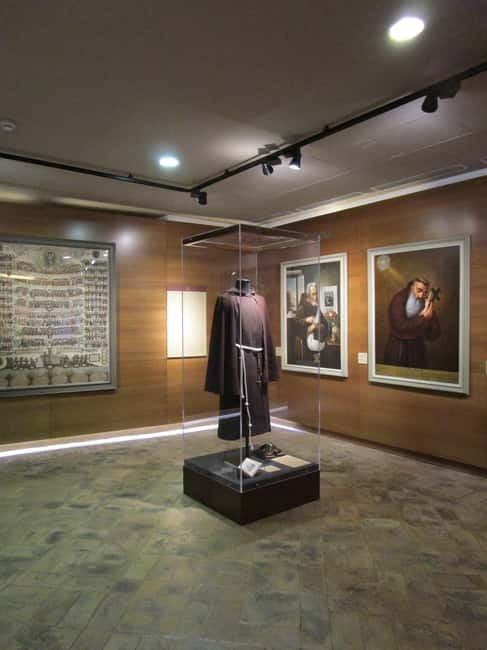
The first stop is the Capuchin Museum. This section helps explain the order’s religious life and the meaning of the underground cemetery.
You will learn that the bones came from Capuchin friars and others connected with the order over the centuries. The friars once had an older friary near the Trevi Fountain. When the order moved, the bones were relocated to the present site.
There was also a religious reason for creating this kind of burial place. The Capuchins followed a rule against burials inside churches, so an underground cemetery was established instead. The remains from the earlier friary were placed here, and the crypt continued to serve as a final resting place for the Capuchins.
That context makes the displays easier to read. Without a guide, you might see only a series of skulls, bones, and decorative shapes. With an explanation, the rooms become a statement about the body, the soul, and the limits of earthly life.
The museum is also helpful if you are visiting with older children or teenagers. One family found the tour a highlight for two teenage boys because the subject was unusual, the visit was short, and the guide made the information easy to follow. The topic is not softened, but a lively guide can keep it from becoming grim or difficult to understand.
The Crypt of the Three Skeletons
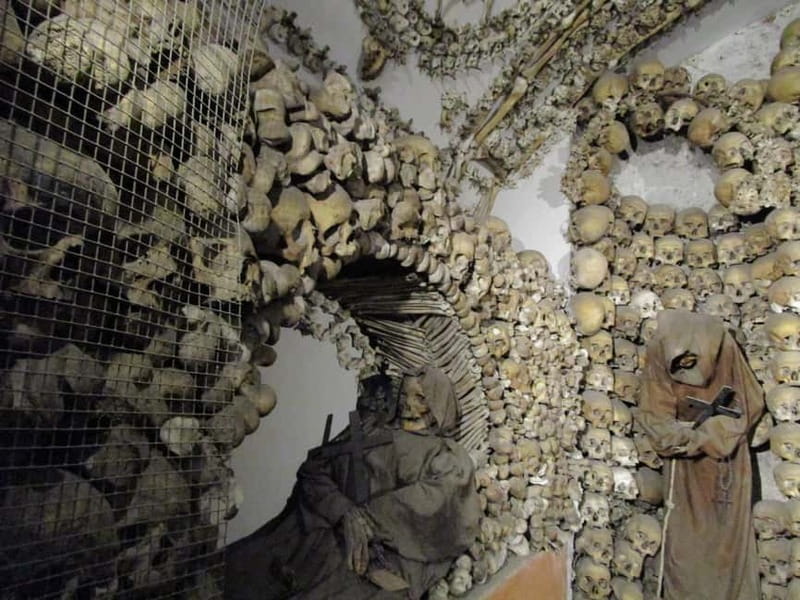
The first underground chamber is the Crypt of the Three Skeletons. It is the only area where a complete human skeleton is displayed in its natural state.
That detail gives this room a different effect from the others. The later chambers use bones as patterns and decoration, while this one presents the human body as a whole. The contrast helps you understand how much work went into the crypt’s arrangements.
Your guide can also help you notice the difference between what is literal and what is symbolic. The crypt is not simply a room full of remains. Each display was arranged to carry a religious message, and the tour explains those ideas as you move through the chambers.
The room can feel intense because the skeletons are presented directly. There is no distance created by a glass case or a museum label. If you need a moment to take in the setting, the small group format gives you a better chance of doing so without being swept along by a large crowd.
More skip-the-line tickets in Rome:
- Vatican Museums & Sistine Chapel Skip-the-Line Entry Ticket
★ 4.4 · 13,838 reviews - Skip-the-Line Group Tour of the Vatican, Sistine Chapel & St. Peter’s Basilica
★ 4.5 · 12,779 reviews - Vatican, Sistine Chapel & St. Peter’s Skip-the-Line Tour
★ 4.5 · 7,770 reviews - Skip-the-Line Vatican, Sistine Chapel & St. Peter’s | Small Group
★ 5.0 · 7,060 reviews
Leg Bones, Thigh Bones, and Pelvises
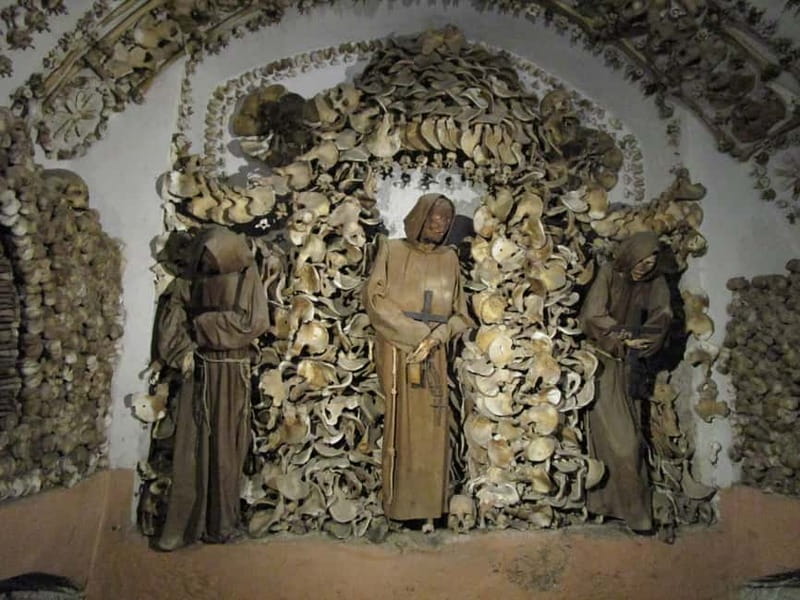
Next, the tour moves through the Crypt of the Leg Bones and Thigh Bones. Here, individual bones are used as building material for the crypt’s walls and designs.
This section shows the technical side of the site. The Capuchins did not simply pile remains into an underground room. They arranged them into patterns that give each chamber its own appearance.
The Crypt of Pelvises is especially distinctive. Two Capuchin friars are positioned peacefully within an arched formation. The display is unusual, but its tone is calmer than you might expect. The friars are not shown in a scene of violence or suffering. They are presented as part of the crypt’s meditation on death and religious devotion.
Look down as you walk. Crosses on the floor mark the resting places of seven Capuchins. It is an easy detail to miss when your attention is pulled toward the walls, so listen for the guide’s explanation and take a moment to notice the ground as well as the ceiling and arches.
This is one place where a guide adds real value. The visual details are unusual, but the message behind them is not obvious without help. A good explanation connects the bones to the Capuchin way of life instead of treating the rooms as a collection of macabre curiosities.
The Crypt of the Skulls and the hourglass
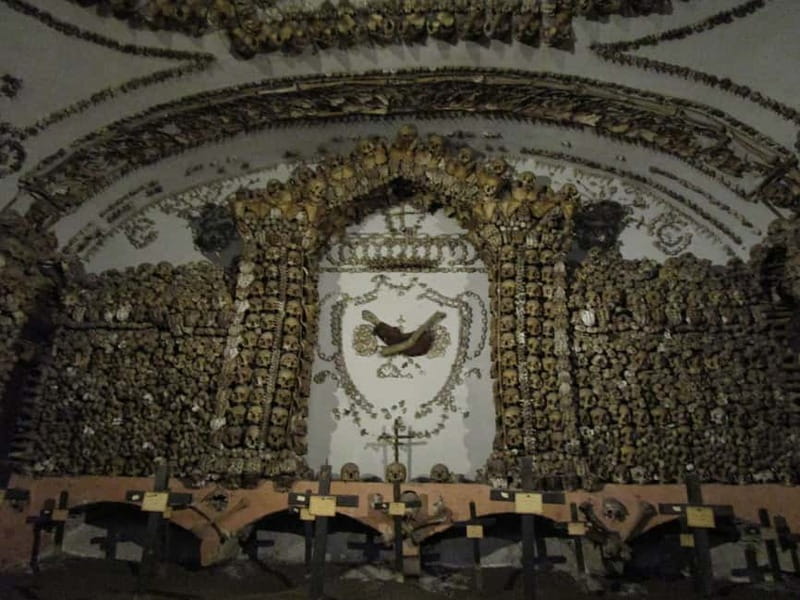
The Crypt of the Skulls is likely to be the room many people remember most clearly. Skulls are arranged into patterns, and the famous hourglass adds another reminder that time is passing.
The hourglass is a simple object, but it works well in this setting. Surrounded by human bones, it points to the same idea from a different direction: life is limited, and time keeps moving.
You may find the crypt unsettling at first. That reaction is normal, and the tour does not pretend otherwise. The guides who have led this experience, including Luigi and Slobodan, have been praised for using humor carefully while still treating the subject with respect. That balance matters. Too much joking would feel wrong, but a completely solemn delivery could make the short tour heavy.
A guide may also point out symbols you would not notice on your own. The displays use bones in deliberate arrangements, and the meaning is not always apparent from the doorway. The tour’s strongest feature is not just access to the crypt. It is the explanation of how to look at it.
The Crypt of the Resurrection and Mass Chapel
The route also includes the Crypt of the Resurrection and the Mass Chapel. These rooms broaden the visit beyond skulls and skeletons.
The Crypt of the Resurrection connects the remains to Christian ideas about death and life after death. The Mass Chapel provides a more traditionally religious setting within the visit, helping you see the crypt as a place of worship and burial rather than a display built only for shock.
The Mass Chapel is worth noticing because it changes the mood. After the bone-filled chambers, the chapel brings the religious purpose of the site back into focus. The tour is not simply a walk through underground decoration. It is a visit to a sacred place shaped by Capuchin beliefs.
The rooms are close together, and the entire guided route is fairly brief. You will not spend hours in each chamber. The benefit is a clear, concentrated experience. The drawback is that anyone who wants a slow, private look at every arrangement may find the pace quick.
After the formal tour ends, you can go back into the museum again. That is a useful feature if you want to revisit an explanation or take a second look at something you missed while following the group.
What the guide adds to the experience
The guide is the difference between seeing bones and understanding the crypt. Information boards can identify rooms, but they cannot respond to your questions or point out the symbols your eye skips.
The strongest guide style for this visit is energetic but respectful. Many of the best comments about the experience focus on clear explanations, a good sense of humor, and the ability to make a difficult subject easier to follow. Guides have also been praised for involving the group and answering questions.
Names including Luigi and Slobodan have received particularly warm attention for their mix of facts, personality, and enthusiasm. Your guide may be different, so do not book on the assumption that a particular person will lead your departure. Still, the experience clearly depends on live presentation, and the small group gives the guide room to speak with you rather than simply recite a script.
The English is designed for an international audience. The short format helps, too. You receive the important background without being asked to absorb a long academic lecture underground.
Is the $44.41 price good value?
At $44.41 per person, this is not a bargain-basement Rome activity. The value comes from three things: skip-the-line entry, a live English-speaking guide, and a small group capped at 10 people.
If you only want to enter the crypt, the guided format may feel like more than you need. The site itself is compact, and you might prefer to read the information at your own pace. But the meaning of the rooms is not immediately clear, so the guide adds more here than at a simple photo stop.
The price also buys a focused experience. You are paying for roughly an hour, not a half-day tour. That makes the cost easier to justify if you have limited time and want something genuinely different from Rome’s major archaeological sites.
Private groups are available if you want a more personal visit, though the supplied price is listed per person and does not specify the private-group cost. For most people, the small-group option should provide the best balance of attention and expense.
The high overall rating of 4.7 from 1,162 ratings supports the idea that the format works well, especially for people who value an engaging guide. I would book it for the interpretation and atmosphere, not simply for skip-the-line access.
Who should book this crypt tour?
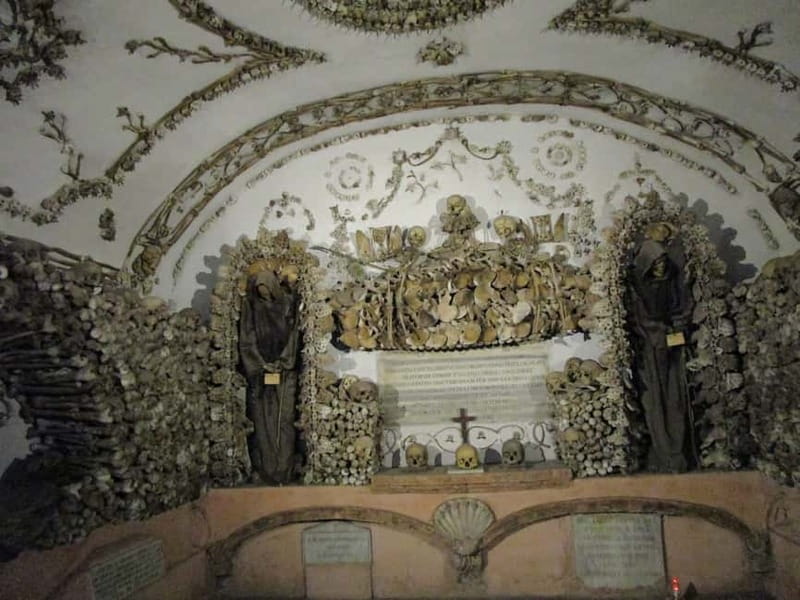
I would recommend this experience to adults interested in religious art, unusual burial traditions, and the more surprising corners of Rome. It also suits teenagers who enjoy strange historical subjects, provided they are comfortable seeing real human remains.
It can work well for families, but parents should prepare children honestly. This is not a fictional haunted attraction. The bones are genuine, and the subject is death. Covering the shoulders and knees is required, so plan clothing accordingly.
The tour is also a good fit for anyone who likes a strong story in a short time. You get the museum, several crypts, the Mass Chapel, and the history of the relocated bones in under an hour.
I would skip it if you want a bright, relaxed sightseeing stop or if displays of human remains are likely to make you uncomfortable. Rome has no shortage of churches, fountains, and open-air ruins. This visit is for a more direct encounter with mortality and faith.
Practical details before you reserve
Book only if your clothing meets the entry rule: shoulders and knees must be covered. One guide provided a cover-up when a young visitor arrived with uncovered legs, but it is wiser to arrive properly dressed rather than rely on that possibility.
The activity is available at different starting times, so check the schedule before building the rest of your day. The duration is listed as 50 minutes to one hour, and the tour begins and ends at the Capuchin Crypt meeting area.
English is the stated tour language. You can choose a private or small-group format, and the small group has a maximum of 10 participants.
The booking terms are flexible. You can reserve now and pay later, and cancellation is allowed up to 24 hours before the activity for a full refund. Those terms help if your Rome plans are still shifting.
Should you book the Capuchin Crypts tour?
Book it if you want a short, unusual, well-explained experience that gets beyond Rome’s familiar postcard sights. The crypt’s bone arrangements are memorable, but the real value is the story behind them: the Capuchin rule, the move from the old friary near the Trevi Fountain, and the religious meaning of the rooms.
I especially like the small group, the clear route through the museum and crypts, and the chance to return to the museum after the guided portion. At $44.41, it is best for someone who wants interpretation rather than a quick look.
Skip it if you dislike macabre subjects or prefer to explore at your own pace. For the right audience, though, this is a thoughtful and unusual Rome stop, one that may stay with you longer than another grand facade.
FAQ
Where does the Capuchin Crypt tour start?
Meet at street level in front of Via Vittorio Veneto 27, next to the bronze gate.
Where does the activity end?
The activity ends back at the Capuchin Crypt meeting point.
How long does the tour last?
The tour lasts between 50 minutes and one hour. Check availability for the specific starting times.
Is the tour offered in English?
Yes. The activity includes an English-speaking live guide.
How many people are in the small group?
The small-group option has a maximum of 10 participants. Private groups are also available.
What parts of the Capuchin Crypt will I see?
The visit includes the Capuchin Museum, the Crypt of the Three Skeletons, the Crypt of the Leg Bones and Thigh Bones, the Crypt of Pelvises, the Crypt of the Skulls, the Crypt of the Resurrection, and the Mass Chapel.
What should I wear to enter?
Your shoulders and knees must be covered to enter the crypts.
Newest Rome tours we have reviewed
- Private TikTok Video Making in Rome★ 5.0 · 7 reviews
- Assisi, Orvieto and Civita di Bagnoregio Full Day Tour from Rome★ 4.5 · 45 reviews
- Assisi & Saint Francis Path Tour from Rome★ 5.0 · 45 reviews
- Assisi and Cascia Private Day Tour from Rome with Lunch★ 5.0 · 10 reviews
- Art Class in the center of Rome!★ 4.0 · 4 reviews
- Art & Craft: Beer Tour with Street Art in Rome★ 4.5 · 6 reviews
- Arrival in Rome: Airport Transfer & Exclusive City Introduction★ 5.0 · 3 reviews
- From Rome: Private Day-Tour of Tuscany★ 5.0 · 16 reviews
Capuchin Crypt Tours, compared.
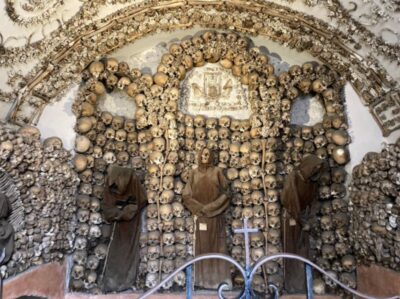
Catacombs and Capuchin Crypt Guided Tour with Transfer
Read our review →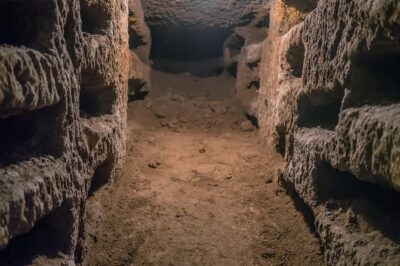
Catacombs Tour with Transfer – Optional Capuchin Crypt or Trevi
Read our review →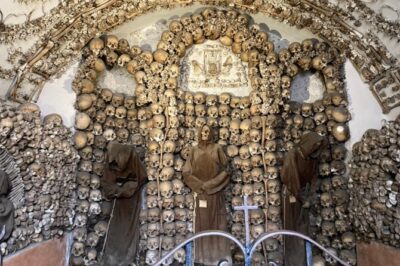
Rome Catacombs & Capuchin Crypts VIP Group Tour with Transfers
Read our review →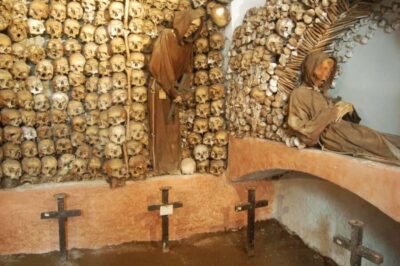
Guided Catacombs Tour & Capuchin Crypt (Audio Guide)
Read our review →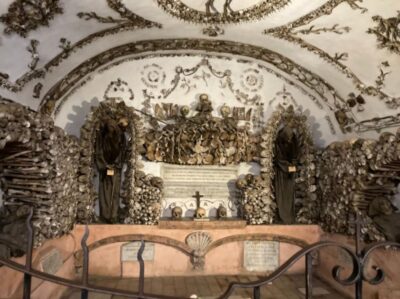
Crypts & Catacombs After Hours Tour with Bone Chapel
Read our review →
Dark Past Walking Tour with Capuchin Crypt Ticket
Read our review →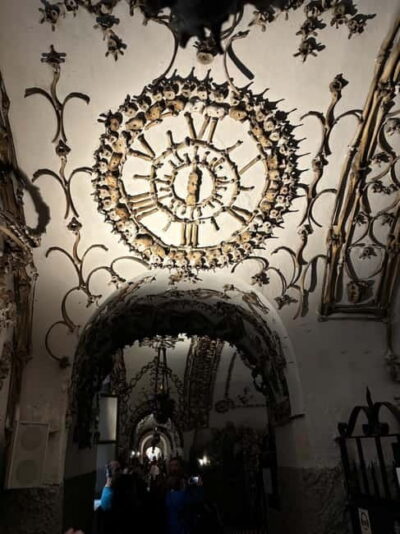
Capuchin Crypt & Rome’s Dark Secrets Small Group Tour
Read our review →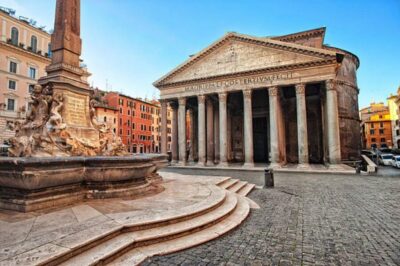
From Bones to Gods: Capuchin Crypt to Pantheon walking tour
Read our review →Browse the lists this tour appears in