
Reviewed · ROME CATACOMBS TOURS
Rome: Catacombs Express ENGLISH Guided Tour – SKIP THE LINE
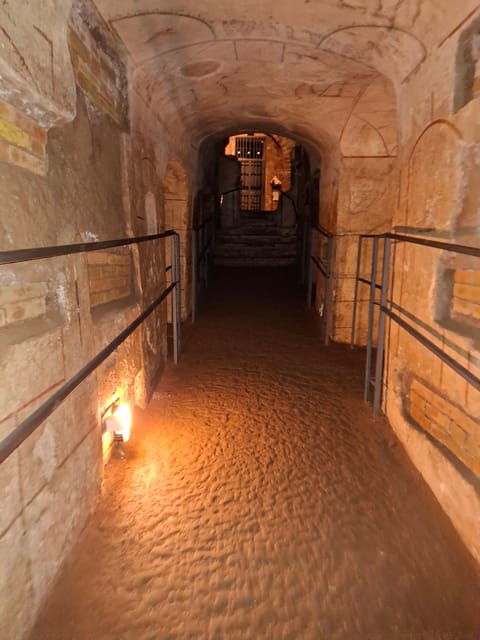
Rome’s Catacombs of San Domitilla offer a rare look at the city before Christianity became Rome’s official faith. Underground, you pass burial corridors, painted tombs, and the remains of a community that practiced its religion quietly. The tour also includes the Basilica of Nereus and Achilleus, built above the tombs of two early martyrs.
I like the way the tour joins archaeology with readable human stories, rather than simply leading you through dark corridors. I also like the English guides’ mix of solid explanation and humor. Mike is often praised for keeping the lesson lively, while Pete, Heather, and John have also led engaging visits. The main drawback is that the underground portion may be shorter than you expect, and the published timing is not fully consistent: the activity is described as one hour in one place and two hours in the detailed itinerary.
Key points to know before booking
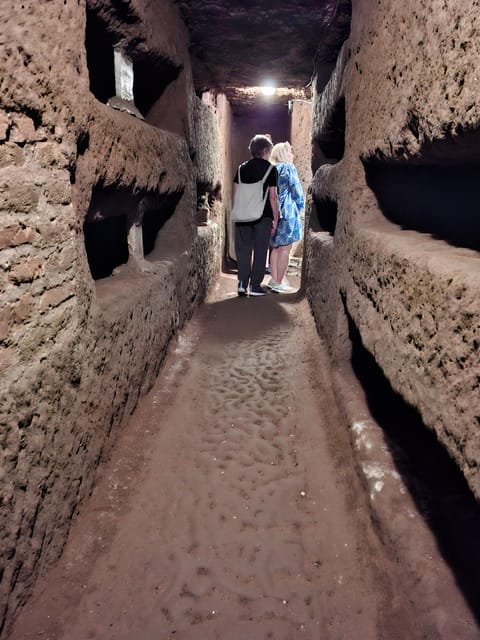
- See San Domitilla’s four underground levels: The catacombs extend across about 17 kilometers, though the tour covers only a selected section.
- Visit an early Christian basilica: The Basilica of Nereus and Achilleus sits above the tombs of two martyrs.
- Look for very old Christian art: Frescoes connected with Saint Peter, Saint Paul, and the Last Supper are among the main sights.
- Expect history as well as walking: One account describes roughly 30 minutes seated in the garden before about 30 minutes underground.
- Bring a light jacket: The catacombs are cooler than the surface, and the passages have uneven ground.
- Pay for guidance, not just access: At $37, the value rests largely on how well your guide explains the rituals, symbols, and religious change.
Why San Domitilla matters in Rome’s story
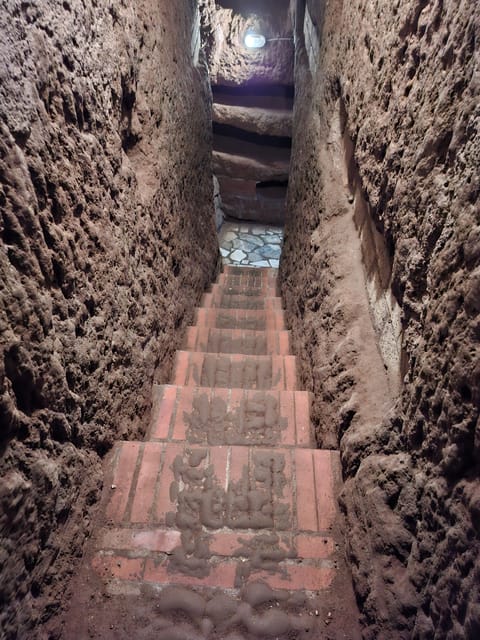
Rome is often presented through emperors, forums, and grand churches. San Domitilla shows a quieter side of the city: how early Christian communities buried their dead, honored martyrs, and developed a visual language of their own.
The catacombs date from the period when Christianity was still taking shape in Imperial Rome. Your guide explains the shift from ancient pagan customs to the Christian traditions that later became central to Catholic Rome. That change is easier to grasp underground, where tombs and religious images are part of the same setting.
The name San Domitilla comes from Flavia Domitilla, a member of an important Roman family associated with the site. The supplied tour information does not promise a full biography of Domitilla, so do not book this expecting a dedicated tour of her life. The focus is the burial complex, the early Christian community, and the basilica built over the martyrs’ tombs.
I find this setting more useful than a history lecture in a museum because the physical site keeps the subject concrete. You see where people were buried, how corridors were arranged, and how art was placed near the tombs. The catacombs are not just a backdrop for the story. They are the evidence.
More catacombs tours in Rome:
- Rome: Crypts and Catacombs Underground Tour with Transfers
★ 4.6 · 5,341 reviews - The Original Roman Crypts and Catacombs Tour with Transfers
★ 4.5 · 4,896 reviews - Rome: Catacombs of St. Callixtus Entry Ticket & Guided Tour
★ 4.6 · 3,037 reviews
Meeting your guide at Via delle Sette Chiese
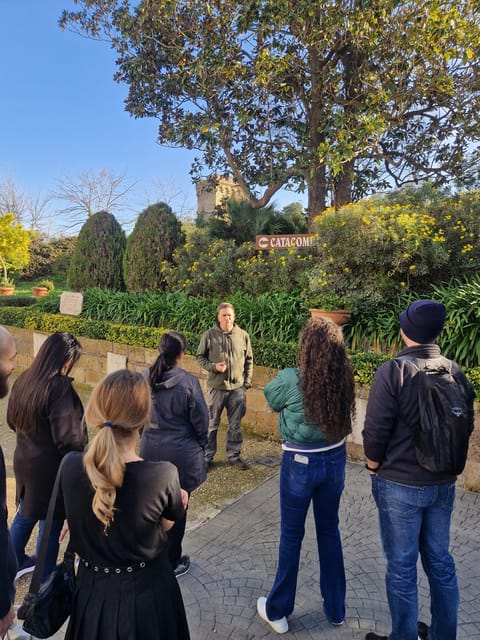
The meeting point is at Via delle Sette Chiese, 282. When you reach the parking area, walk through the gate into the garden. Your English-speaking guide meets you at the picnic tables beneath the gazebo.
This detail matters. The meeting point is not simply a street corner, and you should allow a little time to find the entrance and walk through the gate. Look for the garden and picnic-table area rather than waiting beside the road.
The tour is offered in English with a live, native English-speaking guide. A strong level of English is recommended because the visit depends on spoken explanation. Guides including Mike, Pete, Heather, John, and Petar have been named in booking feedback, and the strongest praise centers on their ability to explain difficult material in a relaxed way.
If you are lucky enough to be in a very small group, the guide may have more time for questions. One booking became a private visit when only two people had reserved, and another small booking was kept even though it had been made at the last minute. Group size can vary, so do not assume every departure will feel private.
The garden lesson before going underground
The visit may begin with a seated introduction in the garden. One detailed account describes about 30 minutes at the picnic tables, followed by about 30 minutes in the tunnels. This opening lesson covers the creation of the catacombs, Roman burial customs, and the change from pagan Rome to Christian Rome.
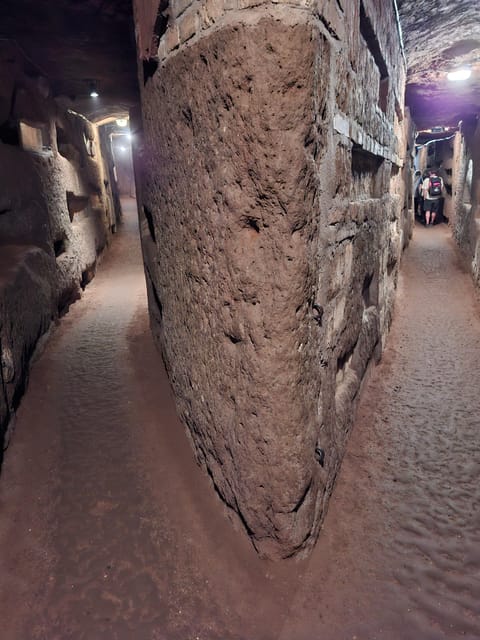
That format is useful if you want context. Without it, underground tombs can look like a series of similar wall niches. With it, the corridors become part of a larger story about family burial, religious identity, and the way early Christians marked their beliefs.
It is also the main point to consider if you want a fast visual visit. You will not spend the entire tour walking through the tunnels. The historical introduction takes a substantial share of the time, and that is where your guide explains the meaning behind what you see.
I would choose this format if you are curious about Roman religion and early Christianity. If you mainly want atmospheric underground views, ask carefully about the departure length before booking, since the activity is advertised with mixed timing. The short description lists one hour, while the detailed itinerary says two hours, and one account describes a one-hour visit split between the garden and catacombs.
The Basilica of Nereus and Achilleus
One of the tour’s specific stops is the Basilica of Nereus and Achilleus. It was built at the end of the fourth century above the tombs of the martyrs Nereus and Achilleus.
This is more than an extra church stop. The basilica shows how Christian worship became tied to the burial places of important religious figures. Your guide connects the structure above ground with the tombs below, helping you understand how martyr cults shaped early Catholic Rome.
The basilica also gives the tour a change of pace. After the garden introduction, you are not sent straight into a long sequence of narrow passages. You see a formal religious building before going farther underground to the burial complex.
Modest clothing is recommended because this is a sacred site. You should treat the basilica and catacombs as places of worship and burial, not as a theatrical attraction. That respectful tone is part of what makes the visit worthwhile.
More skip-the-line tickets in Rome:
- Vatican Museums & Sistine Chapel Skip-the-Line Entry Ticket
★ 4.4 · 13,838 reviews - Skip-the-Line Group Tour of the Vatican, Sistine Chapel & St. Peter’s Basilica
★ 4.5 · 12,779 reviews - Vatican, Sistine Chapel & St. Peter’s Skip-the-Line Tour
★ 4.5 · 7,770 reviews - Skip-the-Line Vatican, Sistine Chapel & St. Peter’s | Small Group
★ 5.0 · 7,060 reviews
Walking the four levels of San Domitilla
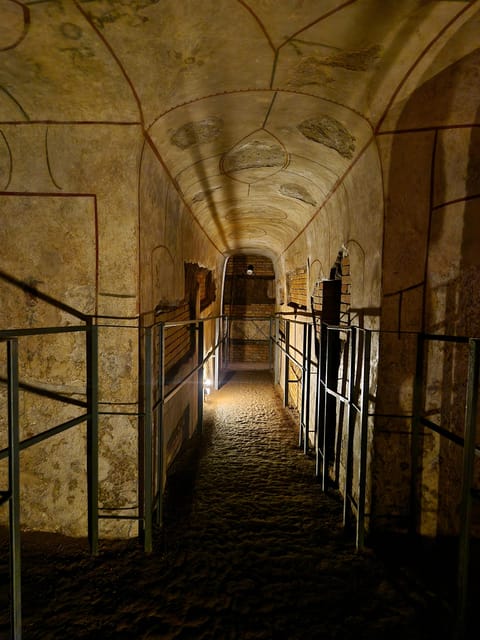
The San Domitilla catacombs spread across about 17 kilometers of underground caves arranged on four levels. The tour does not cover that entire network. It takes you through a selected section described as the best-preserved catacombs in Rome.
Expect corridors, tomb openings, and uneven surfaces rather than a polished museum route. Wear comfortable shoes, and watch your footing. The walk may not suit wheelchair users or people with mobility impairments, and anyone with claustrophobia should think carefully before booking.
The catacombs are cooler than the surface, so bring a light jacket or warm layer even on a hot Roman day. The passages may feel quite different from the heat outside, especially after time in the garden.
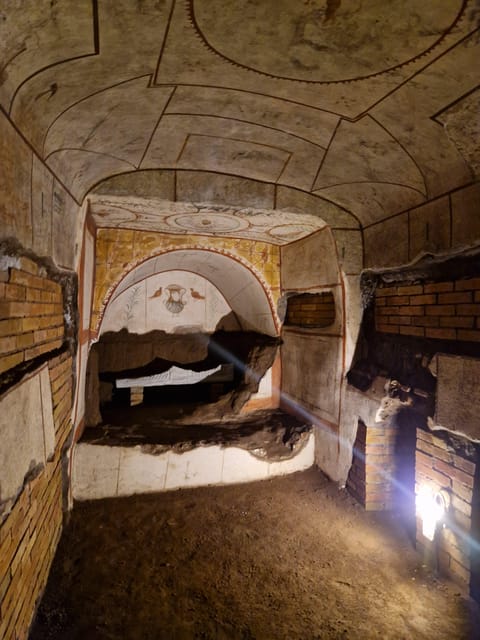
A key practical point: this is not a skeleton-and-skull display. The main sights are the tombs, passageways, inscriptions, and painted decoration. One detailed account specifically notes that no skeletons, bones, or skulls are shown. If you want a solemn archaeological site with Christian art and burial architecture, that is a strength. If you expect visible human remains, you may be disappointed.
Frescoes of Peter, Paul, and the Last Supper
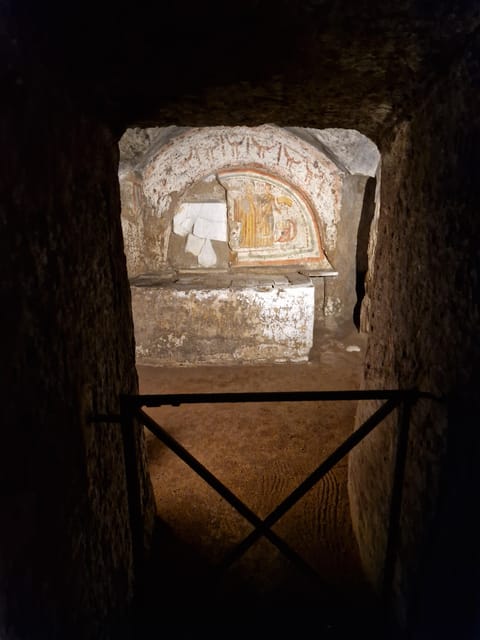
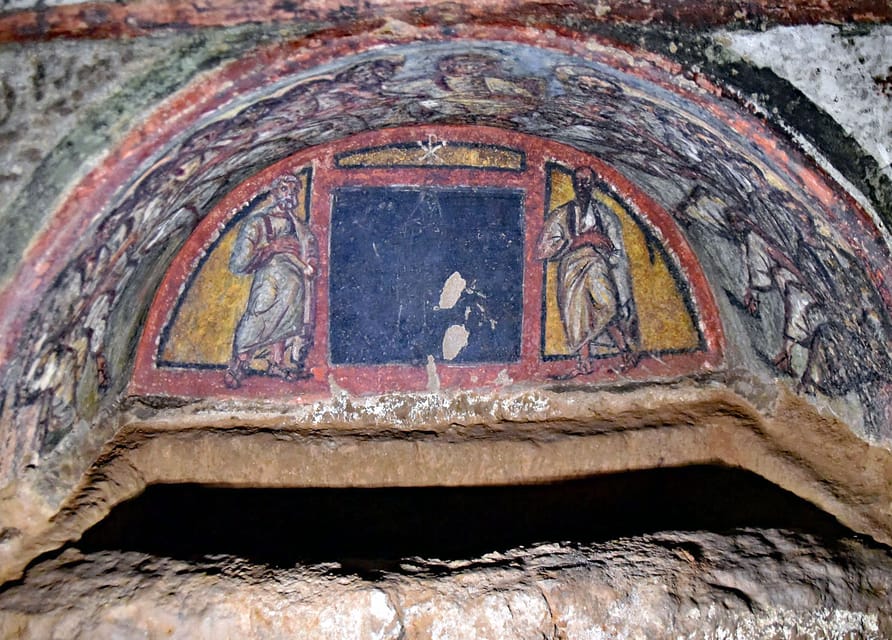
The art is one of the strongest reasons to choose San Domitilla. The tour highlights some of the oldest Christian frescoes associated with Saint Peter and Saint Paul, along with a depiction of the Last Supper.
These paintings matter because they show early Christian imagery before the grand church decoration most visitors associate with Rome. The art is not presented in a vast, brightly lit gallery. It appears within a burial setting, where symbols and scenes helped express faith and identity.
Your guide’s explanation is especially important here. In the dim corridors, details can be easy to miss. A good guide points out the images and explains how they relate to early Christian belief and burial practice. Mike is praised for using humor, detailed explanations, and even informal quizzes to help people remember what they have learned. John is also noted for adding a comic touch while explaining the site.
Photography is not allowed inside the catacombs, and flash photography is specifically prohibited. Plan to experience the art with your eyes and memory rather than through your phone. This rule can feel limiting, but it also keeps the visit quieter and more respectful.
What the guides add to the visit
The guide is central to the value of this tour. Without an explanation, the catacombs can be hard to read. With one, the burial spaces become a lesson in Roman society, religious change, art, and ritual.
The guide team’s style appears informal rather than stiff. Mike is repeatedly singled out for clear detail, jokes, and a way of linking ideas so they stick. Pete is praised for showing small details in the tombs, while Heather is described as particularly effective with children. John combines information with humor, and Petar has also been praised for making the subject interesting.
That does not mean every departure will feel identical. The experience depends on who leads your group and how many people attend. Still, the tour’s English-only format lets the guide spend time explaining terms and stories without switching between languages.
For families, the minimum age is six. Older children who can handle a quiet, serious site may enjoy the unusual setting, and one guide has been praised for keeping children interested. Very young children, restless children, and anyone uncomfortable underground would be better served by another Roman activity.
Is $37 a fair price?
At $37 per person, this is not Rome’s cheapest historical stop. The ticket price includes skip-the-line entry, a small-group tour, the English guide, the basilica, and access to the catacombs.
The value depends on your priorities. If you only want to enter the site and walk through a short section, $37 may feel high for a visit that could include substantial time seated in the garden. If you want the tombs explained, the frescoes identified, and the burial customs placed in context, the guide is the part you are paying for.
The skip-the-line benefit is useful, though the tour takes place away from Rome’s most crowded central sights. Its value is less about avoiding a famous queue and more about having an arranged entry and a guide waiting at the site.
You can also reserve now and pay later, and free cancellation is available up to 24 hours before the visit. Keep in mind that the practical length needs clarification. The activity information gives a one-hour duration, while the detailed itinerary lists two hours. Check the departure details before you commit, especially if you are fitting San Domitilla between the Colosseum, the Appian Way, or another appointment.
Who should book this catacomb tour?
I would recommend it to you if you enjoy ancient sites that require explanation. It is a good match for visitors interested in early Christianity, Roman burial customs, religious art, and the shift from pagan traditions to Catholic Rome.
It also suits people who prefer a smaller guided visit to a large group attraction. The guide’s humor and direct explanations help keep the subject from becoming too solemn or technical. A small group can make the visit feel more personal, though no fixed group size is provided.
I would hesitate if you dislike enclosed spaces, have mobility limits, or want to see human bones. The walk is underground and uneven, photography is not allowed, and the tour centers on tombs and history rather than dramatic displays.
Plan modest clothing, comfortable shoes, and a warm layer. Meet at the picnic tables in the garden, not simply at the parking lot. Since the tour ends where it begins, you can continue your own plans near the Appian Antica area afterward, though no hotel pickup, drop-off, food, or drinks are included.
Should you book San Domitilla?
Book this tour if you want Rome’s early Christian story explained at the place where it happened. The Basilica of Nereus and Achilleus, the old frescoes, and the burial corridors make a strong combination, while guides such as Mike, Pete, Heather, and John add energy to a subject that could otherwise feel remote.
Skip it if you want a quick, purely visual stop or a display of bones and skulls. Also confirm the exact duration before paying, since the supplied timing differs between one hour and two hours. For the right visitor, $37 is a fair price for access plus a guide who can turn dark corridors into a clear story about how Rome changed.
FAQ
Where does the San Domitilla Catacombs tour meet?
The meeting point is at Via delle Sette Chiese, 282. Walk through the gate from the parking lot into the garden, where the English-speaking guide meets you at the picnic tables under the gazebo.
How long does the tour last?
The activity information lists a one-hour duration, while the detailed itinerary lists two hours. One detailed account describes about 30 minutes in the garden and 30 minutes underground. Check the exact timing when selecting your departure.
Is the tour conducted in English?
Yes. The tour has a live, native English-speaking guide, and a strong level of English is recommended.
What does the ticket include?
The ticket includes skip-the-line access, a small-group tour, the English-speaking guide, entry to the Basilica of Nereus and Achilleus, and entry to the catacombs described as the best preserved in Rome.
Can I take photographs inside the catacombs?
No. Photography is not allowed inside the catacombs, and flash photography is prohibited.
Are bones and skeletons visible?
The tour focuses on tombs, corridors, frescoes, and burial spaces. No skeletons, bones, or skulls are shown on this tour.
What should I wear and bring?
Wear comfortable shoes for uneven surfaces and bring a light jacket because the catacombs are cooler than the surface. Modest clothing is recommended because of the sacred nature of the site.
Is the tour suitable for everyone?
The tour is not suitable for children under six, wheelchair users, people with mobility impairments, or people with claustrophobia. The underground route includes uneven surfaces.
Newest Rome tours we have reviewed
- Private TikTok Video Making in Rome★ 5.0 · 7 reviews
- Assisi, Orvieto and Civita di Bagnoregio Full Day Tour from Rome★ 4.5 · 45 reviews
- Assisi & Saint Francis Path Tour from Rome★ 5.0 · 45 reviews
- Assisi and Cascia Private Day Tour from Rome with Lunch★ 5.0 · 10 reviews
- Art Class in the center of Rome!★ 4.0 · 4 reviews
- Art & Craft: Beer Tour with Street Art in Rome★ 4.5 · 6 reviews
- Arrival in Rome: Airport Transfer & Exclusive City Introduction★ 5.0 · 3 reviews
- From Rome: Private Day-Tour of Tuscany★ 5.0 · 16 reviews
Rome Catacombs Tours, compared.
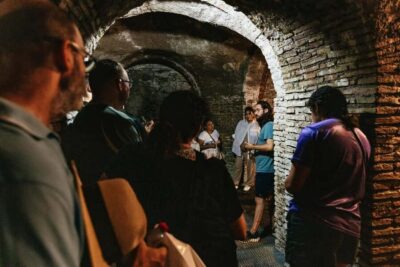
Crypts and Catacombs Underground Tour with Transfers
Read our review →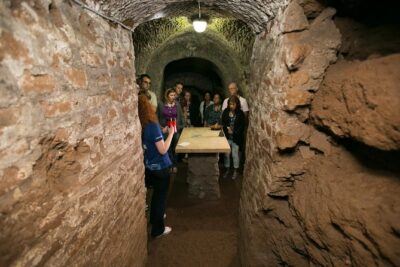
The Original Roman Crypts and Catacombs Tour with Transfers
Read our review →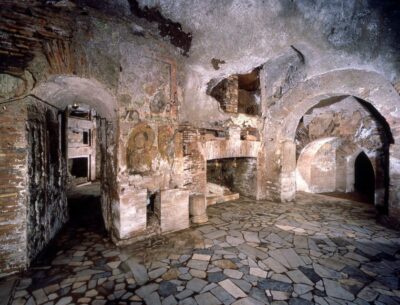
Catacombs of St. Callixtus Entry Ticket & Guided Tour
Read our review →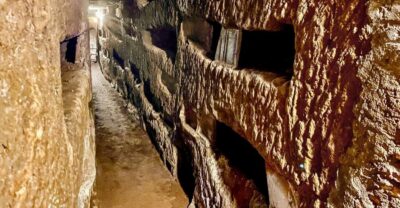
Rome EBike Tour: Appian Way, Catacombs & Roman Aqueducts
Read our review →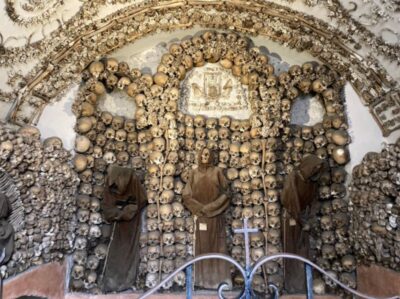
Catacombs and Capuchin Crypt Guided Tour with Transfer
Read our review →
Appian Way, Catacombs, & Roman Aqueducts E-bike Tour
Read our review →Browse the lists this tour appears in