
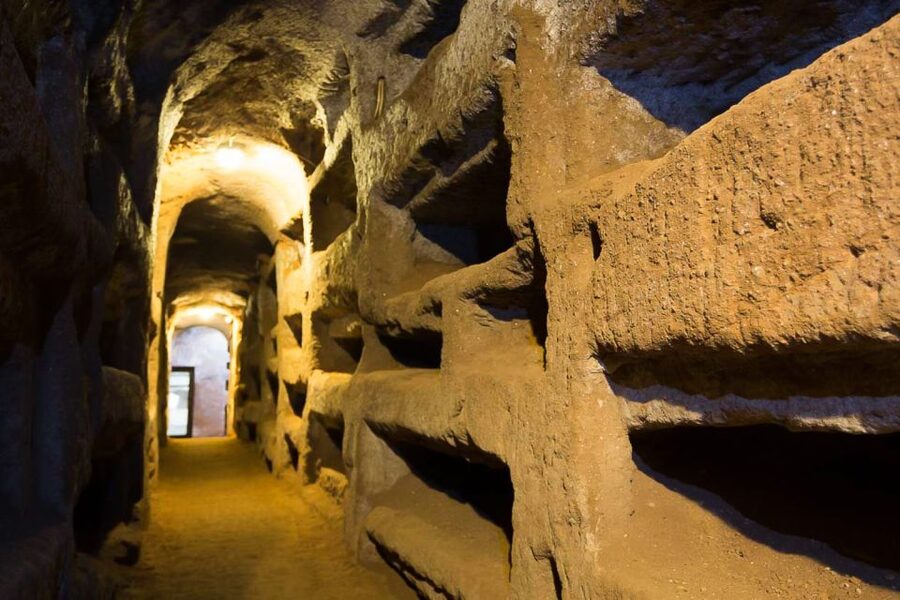
Reviewed · ROME CATACOMBS TOURS
Rome: Catacombs of Saints Marcellino and Pietro Guided Tour
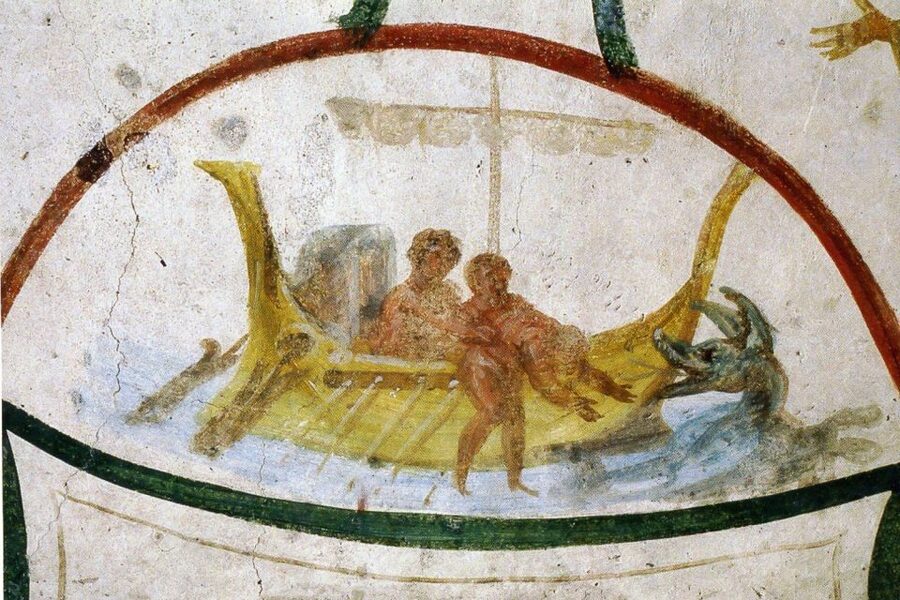
The Catacombs of Saints Marcellino and Pietro preserve some of Rome’s most striking early Christian paintings, including scenes of Noah, Jonah, and Lazarus. The frescoes are the main event, and recent laser restoration has helped bring their colors and details back into view.
I like the small group, limited to 10 people, and the low $16 price. I also like that a specialist guide leads you through the underground cemetery rather than leaving you to guess what the paintings mean. The catch is the short 30-minute visit, and Constantine’s Mausoleum is not included.
Key points to know before you go
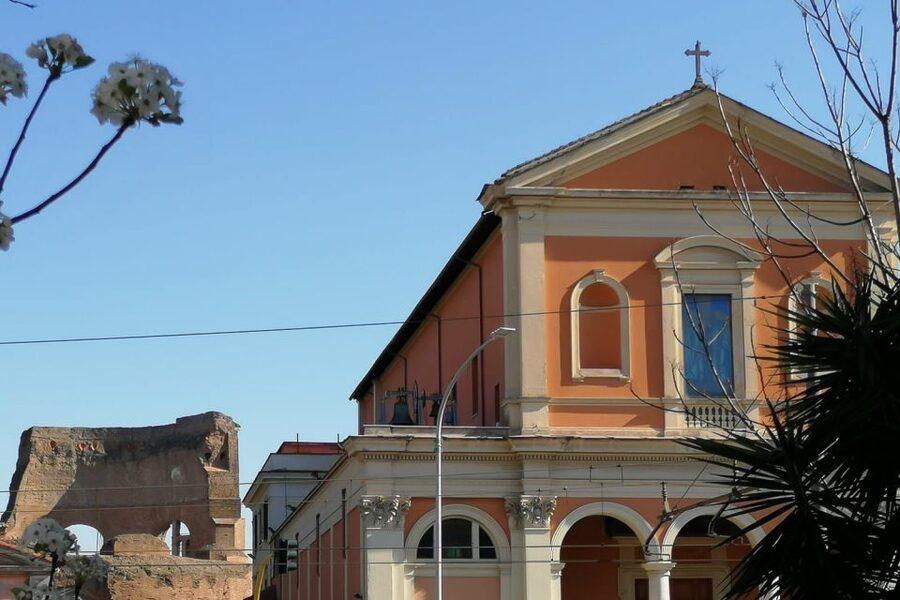
- Third-century Christian cemetery: The catacomb began in the second half of the third century and later received martyrs from Diocletian’s persecution.
- Freshly restored frescoes: Look for scenes of Noah in the ark, the prophet Jonah, and Lazarus.
- Small groups: The tour is limited to 10 people, giving you a better chance to hear the guide clearly.
- Two guide languages: Tours are offered in Italian and English.
- Short, focused visit: The guided portion lasts 30 minutes, making it easy to fit into a busy Rome day.
- Simple but important restrictions: Go to the catacomb ticket office at least 10 minutes early, and leave your camera in your bag.
Why these catacombs matter in Rome
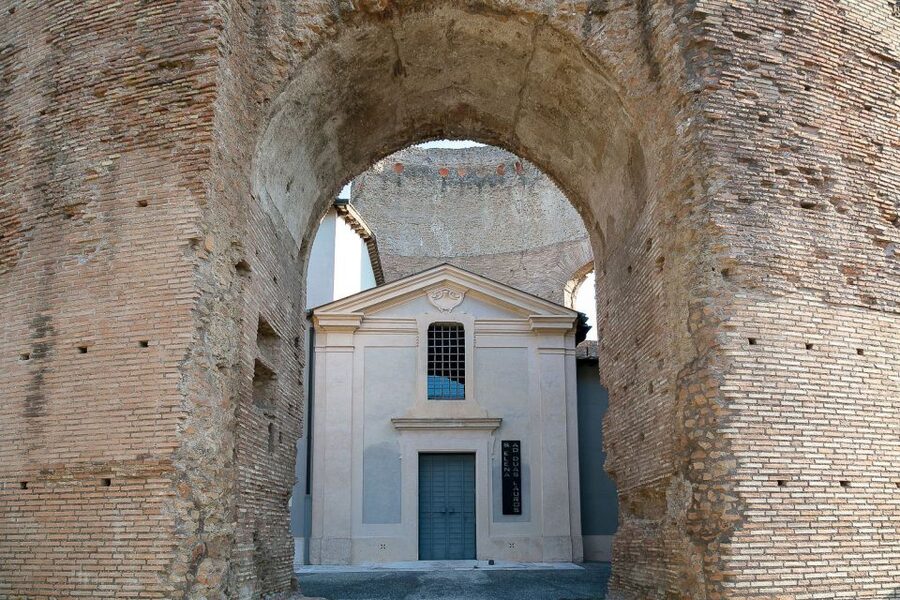
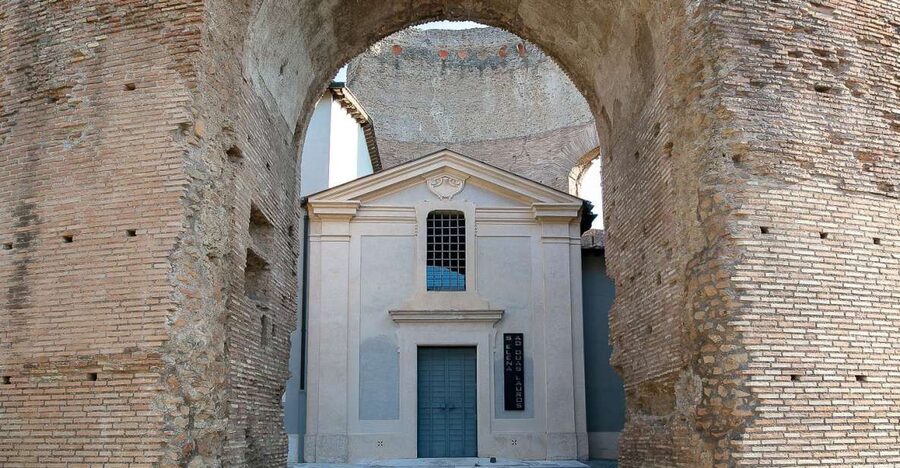
The Catacombs of Saints Marcellino and Pietro lie along the ancient Via Labicana, near what is now Via Casilina. In Roman times, this area was known as ad duas lauros, meaning at the two laurels. The name referred to a large imperial property marked by the laurel shrubs traditionally placed at the entrances to imperial land.
The site already had an important past before the Christian cemetery appeared. From the second century, it was connected with the necropolis of the Equites Singulares Augusti, the emperor’s mounted guard. In the second half of the third century, Christians began using the area for burials.
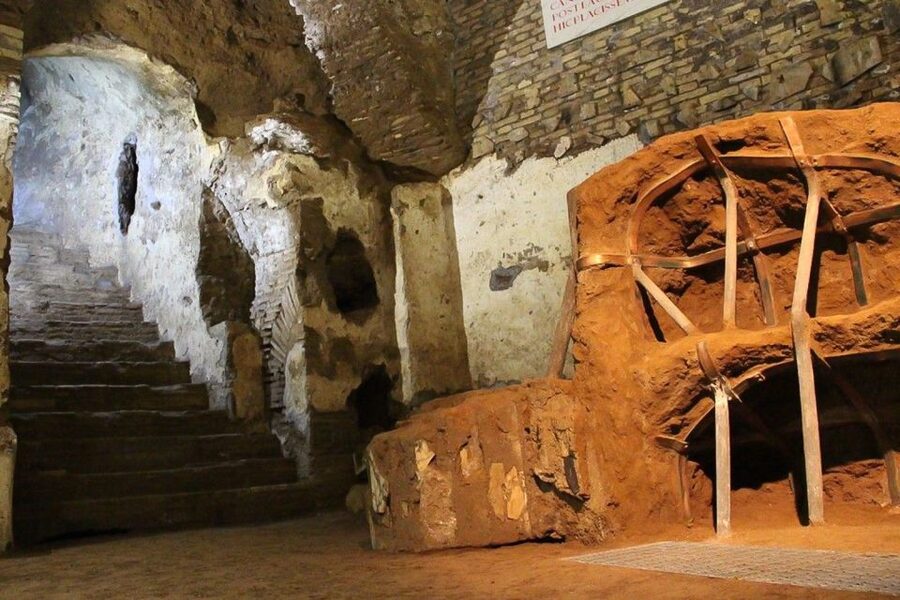
That setting helps you understand what you are seeing underground. This is not simply a maze of old passageways. It was a working cemetery tied to a Christian community living under the Roman Empire. The bodies of many martyrs from the persecution under Emperor Diocletian were placed here, including Saints Marcellino and Pietro, whose names the catacomb carries today.
Your guide gives the paintings and burial spaces their meaning. Without that context, the images can look like isolated fragments on dark walls. With it, the catacomb becomes a record of early Christian beliefs, symbols, and burial customs.
More catacombs tours in Rome:
- Rome: Crypts and Catacombs Underground Tour with Transfers
★ 4.6 · 5,341 reviews - The Original Roman Crypts and Catacombs Tour with Transfers
★ 4.5 · 4,896 reviews - Rome: Catacombs of St. Callixtus Entry Ticket & Guided Tour
★ 4.6 · 3,037 reviews
What the 30-minute tour is like
You begin at the catacomb ticket office, where you show your voucher. Arrive at least 10 minutes before your scheduled start time. The activity ends back at the same meeting point, so you do not need to arrange a second pickup location.
The tour itself lasts 30 minutes. That is enough time for a focused introduction and a look at the main painted areas, but it is not a long underground exploration. I would treat this as a compact historical visit, not as a half-day archaeological outing.
A live guide leads the group in Italian or English. Since the group is capped at 10 people, you should have a better chance of hearing explanations in the enclosed spaces. A small group also makes it easier to pause briefly when a painting or burial area needs more explanation.
The tour does not include an audio guide. That is not a problem for most people here, since the paintings and history benefit from direct explanation. Still, if you prefer to move at your own pace and read silently, this format may feel more structured than an independent visit.
The frescoes are the real reward
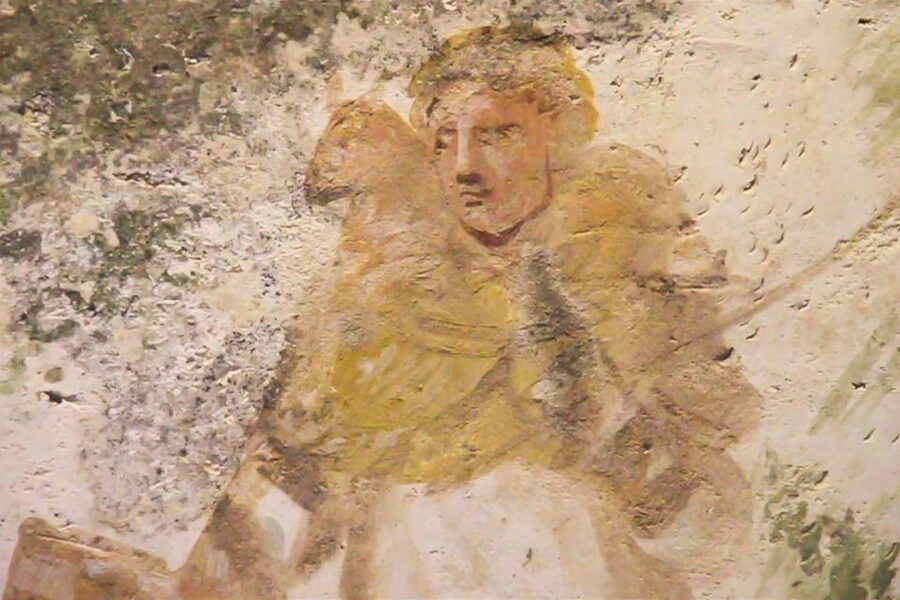
The catacomb preserves paintings dating from the third and fourth centuries. Some have been restored with laser technology, which has helped recover detail and color. You might notice scenes of Noah in the ark, the prophet Jonah, and Lazarus among the Christian images.
These subjects were not chosen at random. They often carried messages of survival, rescue, faith, and hope beyond death. Your guide can connect the scenes to the people buried nearby and to the beliefs of the early Christian community.
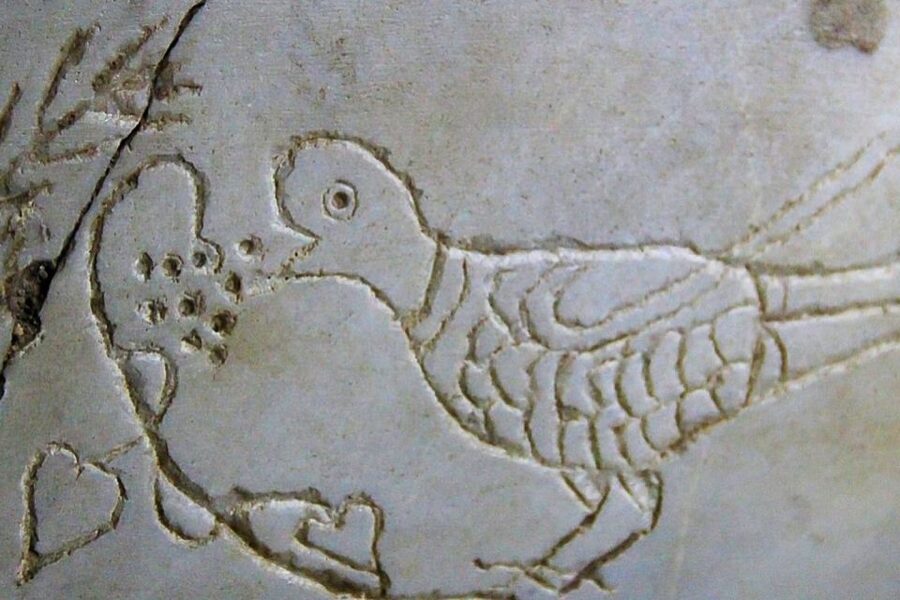
The paintings are especially valuable because they give the underground cemetery a human quality. You are not only looking at stone corridors and burial spaces. You are seeing how people represented their faith in a period when Christianity was still developing its visual language.
The frescoes also make this catacomb a strong choice for anyone who has already seen more bare or heavily visited underground sites. One detailed account describes the paintings here as unusually bright and well preserved, and compares the experience favorably with the Catacombs of Saint Sebastian, where there are fewer frescoes. That is useful advice if painted decoration is your main reason for visiting.
Photography is not allowed inside. This can disappoint visitors who like to document every stop, but it does keep the visit quieter and more respectful. Plan to look carefully while you are there rather than relying on photographs later.
Saints Marcellino and Pietro
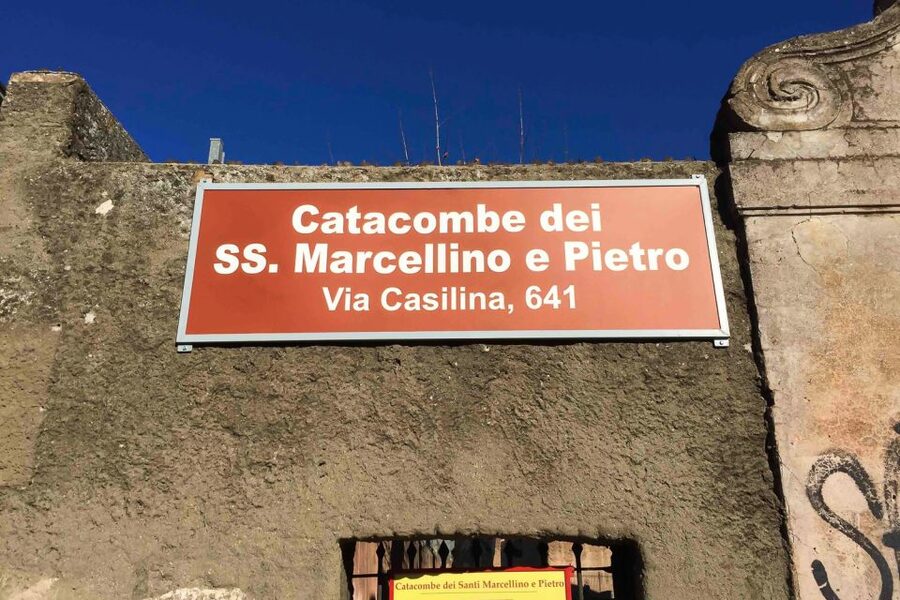
The cemetery takes its name from Saints Marcellino and Pietro, two Christian martyrs associated with the persecution of Diocletian. Their burial here helped make the catacomb an important Christian site.
The catacomb also received the bodies of other martyrs. Your guide explains this history during the visit, giving the painted rooms a clearer connection to the people who once came here to mourn and remember the dead.
That connection is one reason I prefer a guided visit in a place like this. The physical setting is memorable, but the meaning is easy to miss without a clear explanation. A specialist guide can point out what belongs to the third century, what belongs to the fourth, and how the catacomb changed over time.
The guide’s role matters even more because the visit is short. You do not have time to study every wall at leisure. Listen for the explanation of the key frescoes, the martyrs, and the transition from underground cemetery to monumental complex.
More guided tours in Rome:
- Vatican Museums, Sistine Chapel & St Peter’s Basilica Guided Tour
★ 4.5 · 39,149 reviews - Rome: Colosseum, Palatine Hill and Roman Forum Guided Tour
★ 4.8 · 32,814 reviews - Rome: Guided Tour of Colosseum, Roman Forum & Palatine Hill
★ 4.7 · 27,897 reviews - Rome: Colosseum & Forum with Audio Guide App -Optional Arena
★ 4.2 · 24,770 reviews
Constantine’s connection above ground
During the Constantinian era, a large complex was built above the catacomb. It included a basilica shaped like a Roman circus, known as a circiform basilica, and a mausoleum.
The mausoleum was probably built by Constantine for himself, though it later became the burial place of his mother, Augusta Helena. Her remains were kept in a large red porphyry sarcophagus. That sarcophagus is now displayed in the Vatican Museums.
This is an important part of the site’s story, but it is not part of this ticket. Entry to Constantine’s Mausoleum is excluded, so do not assume the 30-minute catacomb visit covers every monument in the complex.
Knowing this before you arrive helps set the right expectation. You are booking the underground catacomb and its guided interpretation, not a full tour of every Constantinian structure connected with the area.
Getting there from central Rome
Transportation to and from the catacombs is not included, so you need to make your own way there. The site is along the Via Casilina area, away from the most concentrated visitor zone around the Colosseum, Trevi Fountain, and Pantheon.
The supplied directions note that you can reach the catacombs from Termini by bus 105 or by tram. Allow extra time for the journey and for finding the ticket office. The instruction to arrive 10 minutes early is important because a delayed arrival could cut into an already short visit.
Rome’s public transport can be part of the experience, but it is not always quick or predictable. Check the route on the day you go and leave a cushion before the scheduled start. Since the activity ends back at the starting point, you can continue from there once the visit is over.
The catacombs are not suitable for people with mobility impairments. Underground passages may be difficult for anyone who needs smooth, level access, so consider this restriction seriously before booking.
Is $16 a fair price?
At $16 per person, this is one of the more affordable ways to visit a Roman archaeological site with a live guide. The cost includes admission and the guided tour, but not transportation, an audio guide, or the mausoleum.
The value comes from the paintings and the specialist explanation. If you simply want a quick underground stop with distinctive Christian art, the price is easy to justify. The small group also improves the experience compared with being part of a large crowd.
The duration is the main limit. At 30 minutes, you are paying for a concentrated introduction rather than extensive time on site. If you want a long guided tour or a broad survey of Roman burial grounds, this will feel brief.
I would compare it with what you want from your day. The ticket makes good sense as a focused addition between other Rome sights. It is less suitable if you are traveling far across the city and expect a major, several-hour attraction in return.
Who should book this experience?
I would recommend it to people interested in early Christianity, Roman burial customs, archaeological sites, or ancient painting. It also suits repeat visitors who have already covered the standard central Rome sights and want a less familiar stop.
Art lovers should pay close attention to the frescoes. The scenes of Noah, Jonah, and Lazarus provide more visual interest than a catacomb with mostly plain corridors.
The tour can also work well for anyone who prefers small groups. With no more than 10 participants, you are less likely to lose the guide’s voice or feel swept through in a crowd.
I would think twice if you dislike enclosed underground spaces, need step-free access, or expect to take photographs. The no-camera rule is firm, and the short visit leaves little time for an unhurried personal inspection.
Practical advice for a smooth visit
Book a start time that leaves room for transport delays. The catacomb is not in the heart of central Rome, and the tour cannot be lengthened if you arrive late.
Go directly to the ticket office and have your voucher ready. Arriving at least 10 minutes early gives you time to check in without rushing.
Wear shoes suitable for underground walking, though the provided information does not specify the exact surface or number of steps. If you have mobility concerns, choose another attraction because this activity is not suitable for people with mobility impairments.
Keep your phone and camera put away inside. Photography is forbidden, so plan to remember the paintings through the guide’s explanations rather than through images.
The tour is available in Italian and English. Check the selected time and language when booking, since the activity does not include an audio guide.
Should you book the Catacombs of Saints Marcellino and Pietro?
Book it if you want a low-cost, small-group look at early Christian Rome, especially if frescoes matter more to you than grand architecture. The paintings, the stories of Saints Marcellino and Pietro, and the connection with Diocletian’s persecution give this short visit real substance.
Skip it if you need easy accessibility, want to photograph the site, or expect entry to Constantine’s Mausoleum. For the right visitor, $16 buys a compact and unusually art-focused glimpse beneath Rome. Just allow time to reach the site and remember that 30 minutes goes quickly.
FAQ
Where are the Catacombs of Saints Marcellino and Pietro?
They are located near the third mile of the ancient Via Labicana, now Via Casilina, in Lazio, Italy.
How long does the guided tour last?
The guided visit lasts 30 minutes.
What is included in the ticket?
The ticket includes entrance to the catacomb and a live guide.
Is an audio guide included?
No. An audio guide is not included.
What languages are available?
The live tour is available in Italian and English.
How large is the tour group?
The group is limited to 10 participants.
Is transportation included?
No. Transportation to and from the catacombs is not included.
Is Constantine’s Mausoleum included?
No. Entry to Constantine’s Mausoleum is not included with this activity.
Can I take photographs inside?
No. Photography is not allowed inside the catacomb.
Is the site suitable for people with mobility impairments?
No. The activity is not suitable for people with mobility impairments.
Where do I meet the guide?
Go directly to the catacomb ticket office and show your voucher at least 10 minutes before the scheduled tour.
Can I cancel the booking?
Yes. You can cancel up to 24 hours in advance for a full refund. Reserve now and pay later is also available.
Newest Rome tours we have reviewed
- Private TikTok Video Making in Rome★ 5.0 · 7 reviews
- Assisi, Orvieto and Civita di Bagnoregio Full Day Tour from Rome★ 4.5 · 45 reviews
- Assisi & Saint Francis Path Tour from Rome★ 5.0 · 45 reviews
- Assisi and Cascia Private Day Tour from Rome with Lunch★ 5.0 · 10 reviews
- Art Class in the center of Rome!★ 4.0 · 4 reviews
- Art & Craft: Beer Tour with Street Art in Rome★ 4.5 · 6 reviews
- From Rome: Private Day-Tour of Tuscany★ 5.0 · 16 reviews
- Arrival in Rome: Airport Transfer & Exclusive City Introduction★ 5.0 · 3 reviews
Rome Catacombs Tours, compared.
Crypts and Catacombs Underground Tour with Transfers
Read our review →
The Original Roman Crypts and Catacombs Tour with Transfers
Read our review →
Catacombs of St. Callixtus Entry Ticket & Guided Tour
Read our review →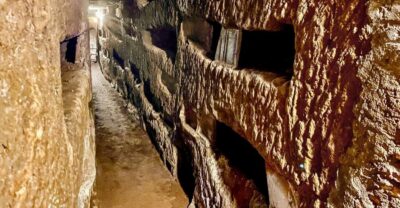
Rome EBike Tour: Appian Way, Catacombs & Roman Aqueducts
Read our review →
Catacombs and Capuchin Crypt Guided Tour with Transfer
Read our review →
Appian Way, Catacombs, & Roman Aqueducts E-bike Tour
Read our review →Browse the lists this tour appears in