
Reviewed · ROME
Rome: City Walking Tour in English or Spanish
Rome reveals itself best on foot, and this tour links grand piazzas with less obvious corners in a compact 2 to 2.5-hour route. You move from Piazza Venezia and Trajan’s Column to the Trevi Fountain, Galleria Sciarra, Sant’Ignazio, and the Pantheon before finishing near Piazza Navona or the Colosseum, depending on your booking.
I like the mix of major sights and tucked-away stops, especially Galleria Sciarra and the Church of Sant’Ignazio, which are easy to miss when you are rushing between headline monuments. I also like the practical finish, since your guide can suggest places to eat and things to see around Piazza Navona.
The main consideration is pace. This is an orientation walk, not an in-depth visit inside every monument, and the route covers several busy parts of central Rome. You will need comfortable shoes, and evening groups should look carefully for the guide at the meeting point.
Key points to know before booking
- A compact introduction to central Rome: Cover several famous sights in one walk without spending a full day on one monument.
- Trevi Fountain gets the longest stop: Expect about 30 minutes for stories, questions, and a closer look.
- The route includes easy-to-miss interiors and details: Galleria Sciarra and Sant’Ignazio add variety beyond the usual postcard stops.
- Guides make the difference: Dan, Domenica, Dinara, Paulina, Anna, Vlad, and others have been praised for clear explanations, humor, and strong storytelling.
- English and Spanish are available: A private group option is also offered.
- Good value at $28: You get a local guide, city orientation, historical context, and food advice without paying for entry to attractions.
Why this Rome walking tour works as a first-day plan
Rome can feel like a pile of separate attractions until someone connects the dots. This walk gives you that connection. Instead of treating Piazza Venezia, the Trevi Fountain, the Pantheon, and Piazza Navona as isolated photo stops, the guide explains how the city changed from imperial Rome to the modern capital.
I like this kind of tour early in a trip because it helps you decide where to spend more time later. You can note the monuments that deserve a return visit, ask about restaurants near your hotel, and learn how the central streets fit together.
At $28 per person, the value comes from the guide rather than admission tickets. This is not a ticketed-entry tour, so you are paying for context, navigation, stories, and local suggestions. For a first look at Rome, that can be money well spent. If you already know the city well and want long visits inside monuments, you may find the walk too basic.
The tour is offered in English or Spanish, lasts roughly two to two and a half hours, and may be available as a private group. Starting points can vary between Piazza d’Aracoeli and Piazza di Pasquino, so check the exact option you book instead of assuming you will begin at one particular square.
More walking tours in Rome:
- Rome: Trastevere & Campo de Fiori Street Food Walking Tour
★ 4.9 · 2,768 reviews - Rome: Paranormal Night Walking Tour & Secret Backstreets
★ 4.9 · 1,921 reviews - Rome by Night Walking Tour – Legends & Criminal Stories
★ 4.5 · 1,003 reviews
Piazza Venezia and Trajan’s Column: Rome in broad strokes
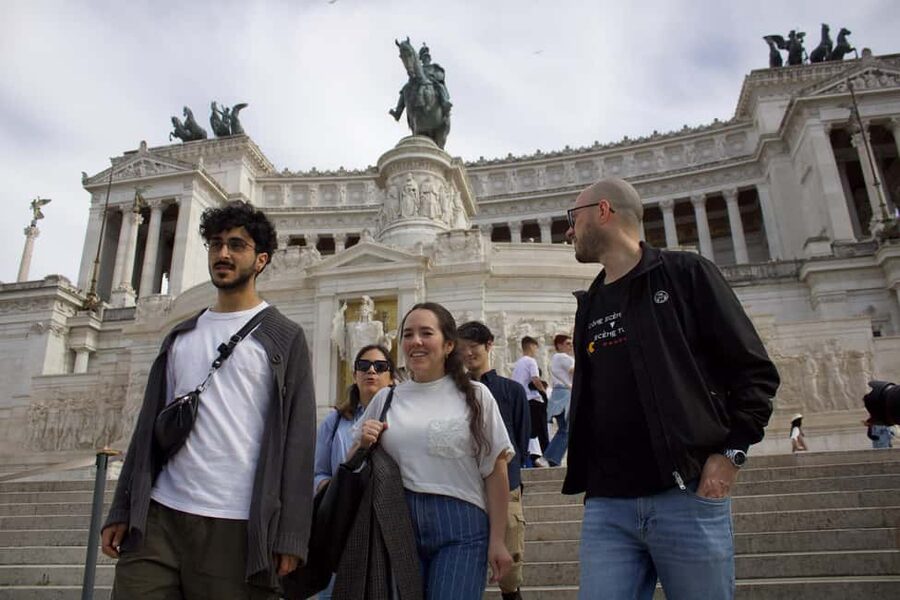
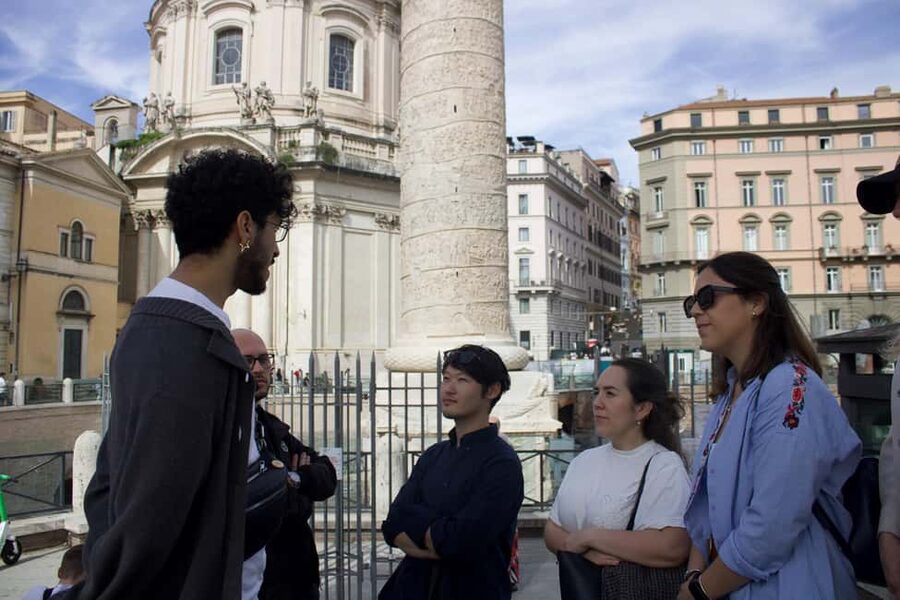
The route begins with two places that help explain Rome’s scale and political history. Piazza Venezia is one of the city’s main reference points, with major roads and monuments converging around it. Your guide uses the square to set the scene, moving from the glory days of the Roman Empire through later chapters of Rome’s history.
The guided portion here lasts about 20 minutes. That is enough time for a clear introduction, but not enough for a detailed study of every building around the square. I would listen for the main story and take a few orientation photos rather than trying to absorb every detail.
Trajan’s Column receives another approximately 20-minute explanation. The column is more than an impressive stone landmark. Its carved scenes offer a visual record of military campaigns and imperial power, and the guide can help you understand what you are looking at from ground level.
This is a strong opening because it gives the rest of the walk a historical frame. You are not simply moving from one attractive square to another. You are watching Rome’s layers build on one another.
Trevi Fountain: the route’s main photo stop
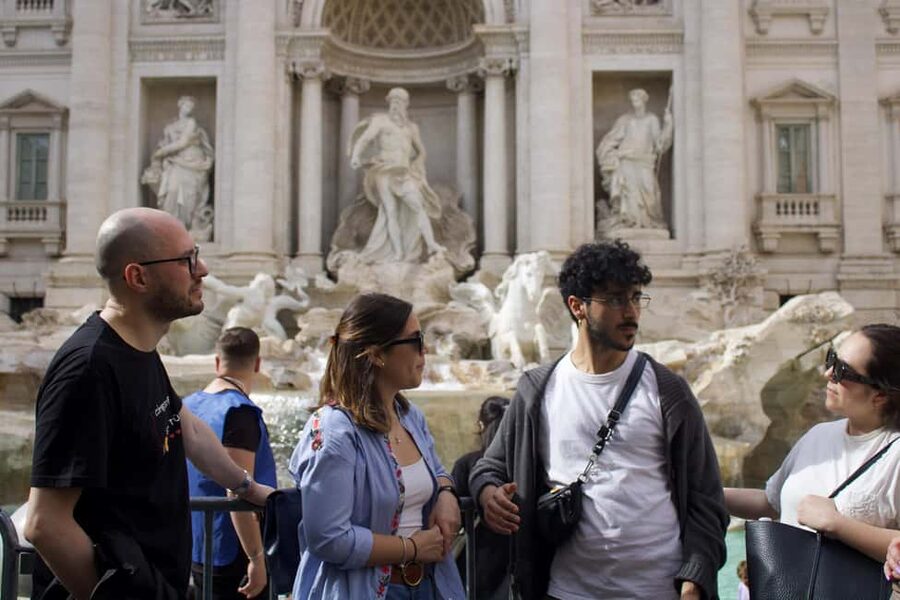
The Trevi Fountain gets the longest scheduled visit, around 30 minutes. That makes sense. It is one of Rome’s most famous sights, and the details are easy to miss when you only stop for a quick photograph.
Your guide shares the story behind the fountain and points out details you may not notice on your own. This is also a useful place to ask questions, since the stop is longer than the others and the group has time to gather.
You should expect a busy setting. The tour description specifically presents this as a city-center walking experience, and the Trevi Fountain is one of Rome’s busiest public sights. Your guide may choose a position where the group can hear clearly, but you should still stay close and keep track of the meeting point.
This is not a private photo session, and you should not expect the fountain area to be quiet. The benefit is that the guide gives you a way to see the site with some context instead of simply arriving, taking a picture, and moving on.
Galleria Sciarra: a welcome change from the crowds
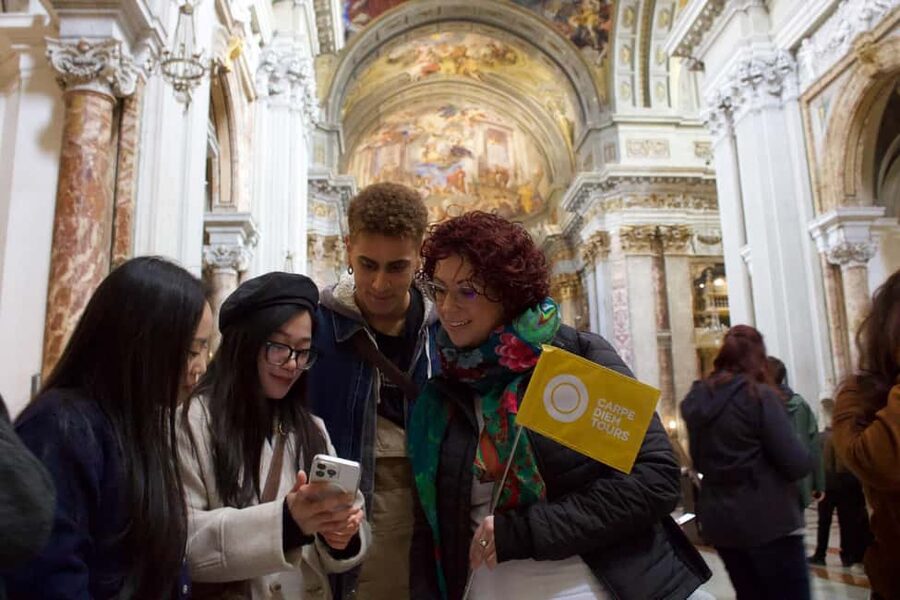
Galleria Sciarra adds one of the route’s more unusual stops. It is not as instantly recognizable as the Trevi Fountain or Pantheon, which is exactly why it makes the walk more interesting.
The scheduled explanation lasts about 20 minutes. Your guide can draw your attention to the architecture and decoration, giving you a break from the large open squares and heavily photographed monuments.
I value stops like this because they show how Rome rewards attention. You can walk through the center focused only on the famous sights and miss smaller architectural details along the way. Galleria Sciarra gives the guide room to point out something you might not have selected from a standard first-time checklist.
The stop also helps pace the tour. After the noise and crowds around Trevi, a less expected site can make the walk feel more varied.
More city highlights tours in Rome:
- Rome: City Sightseeing Hop-on Hop-off Bus with Audioguide
★ 4.0 · 16,045 reviews - City Sightseeing Rome Hop-On Hop-Off Bus Tour
★ 3.5 · 5,446 reviews - Rome: Fettuccine Pasta Cooking Class in Rome’s City Center
★ 4.8 · 2,414 reviews - Vatican City: Vatican Museums & Sistine Chapel Entry Ticket
★ 4.3 · 2,185 reviews
Sant’Ignazio di Loyola and the Pantheon area
The Church of Sant’Ignazio di Loyola is another approximately 20-minute guided stop. Churches are part of Rome’s everyday city fabric, and this visit broadens the tour beyond ancient ruins and grand fountains.
Your guide explains the church’s place in Rome’s cultural and religious story, while also giving you time to look around. The stop is especially useful if you like architecture, art, and the way historic buildings remain part of a living city.
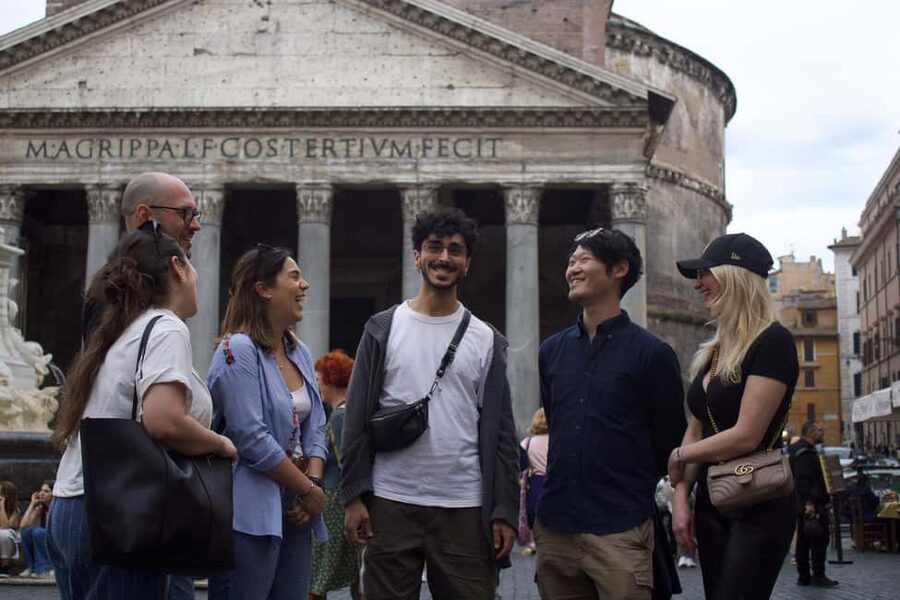
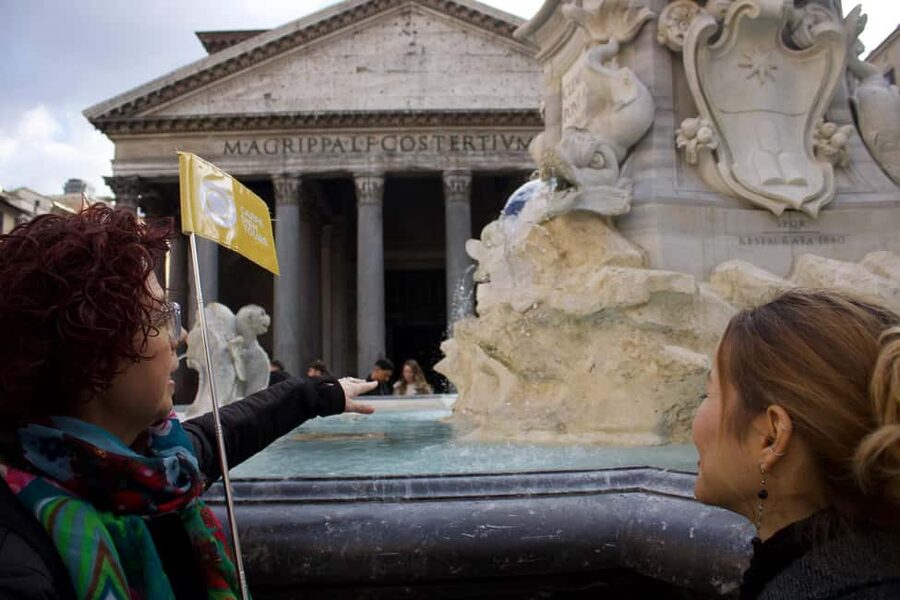
The Pantheon comes next as a pass-by stop, with about 20 minutes listed for the visit. That wording matters. You should expect an exterior introduction and a chance to see the monument as part of the route, not a long inside tour with dedicated entry time.
The Pantheon is one of the places many people want to explore in greater depth. I would treat this walk as your introduction, then decide if you want to return later for a longer visit. The same advice applies to the other major monuments on the route. This tour gives you the story and location, but it is not designed to replace a specialist museum or monument visit.
Piazza Navona: useful advice at the end
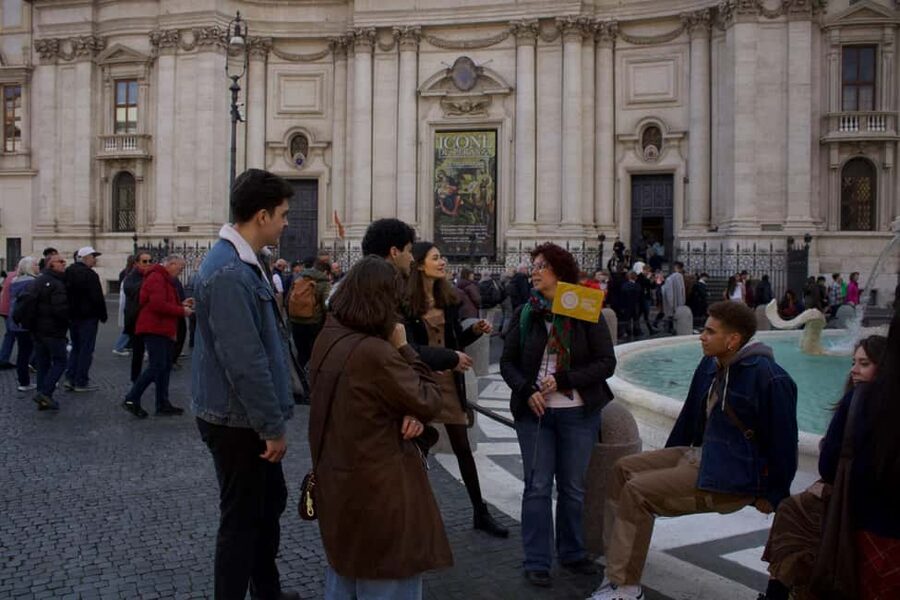
The tour generally finishes around Piazza Navona, though one of the listed end options is the Colosseum. Confirm the ending connected to your selected booking. The meeting point can also vary, with Piazza d’Aracoeli and Piazza di Pasquino listed as possible starting locations.
Ending near Piazza Navona is practical. The square puts you close to restaurants, bars, and rooftop terraces, so you can continue exploring after the guide leaves. This is also the right moment to ask for specific food suggestions, especially if you are unsure how to choose among the many places in central Rome.
I would use the final minutes well. Ask where to eat near your next stop, which monuments deserve a return visit, and how to fit your remaining sightseeing into the trip. Several guides have been praised for offering restaurant suggestions and answering questions throughout the walk, not just during formal stops.
Since hotel pickup and drop-off are not included, you make your own way to the start and continue on your own afterward. That keeps the cost down, but you should leave extra time to reach the correct meeting point.
The guides are the heart of the experience
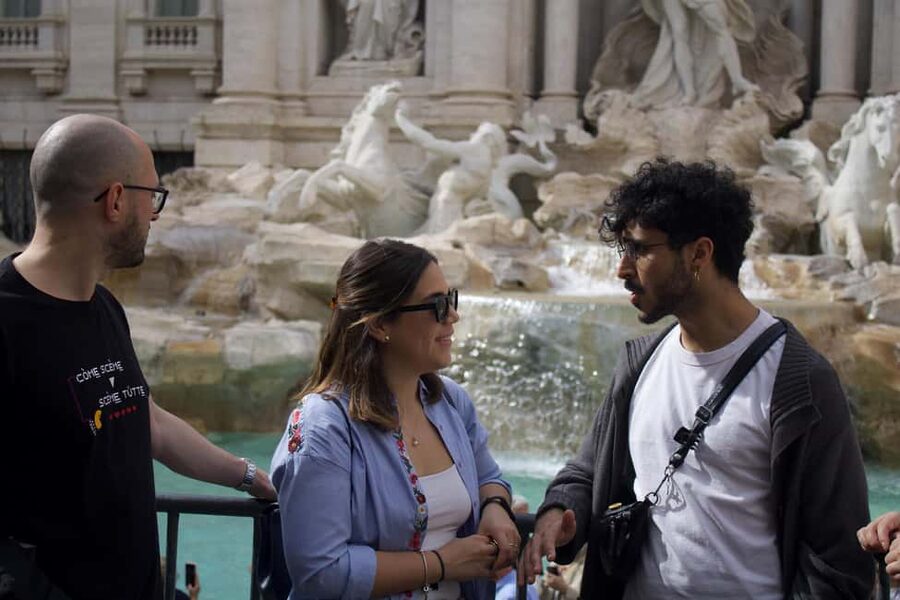
The strongest part of this tour is the guide-led storytelling. Specific guides praised for their work include Dan, Domenica, Romani, Alina, Dinara, Paulina, Polina, Vlad, Sela, Anna, Clara, and Sharon. You cannot assume you will receive one particular person unless your booking allows you to select a guide, but the range of positive comments points to a team that puts real effort into presentation.
Dan is described as especially strong at combining serious historical knowledge with a friendly, approachable manner. Dinara is noted for clear English and an easy, pleasant style. Paulina is praised for her facts, warmth, and comfortable walking speed. Vlad is described as organized, humorous, professional, and a gifted storyteller.
Those details matter more than a long list of monuments. A guide who speaks clearly, keeps a steady pace, and welcomes questions can make Rome feel much easier to understand. Some groups also appreciated headphones, which can help when the streets are noisy or the group spreads out.
There are small practical points to keep in mind. One comment suggested that guides wear something easy to spot, especially on tours held later in the day. At a crowded meeting point, identification matters. Check the operator’s instructions carefully and do not arrive expecting a large sign in an obvious place.
Pace, comfort, and what to bring
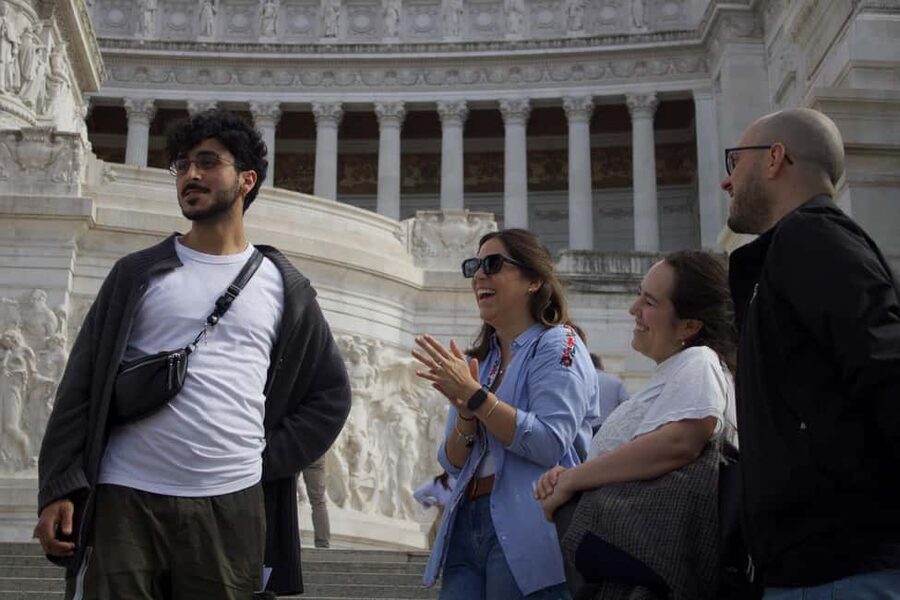
Two to two and a half hours is a useful length for this route. It is long enough to see a good portion of central Rome, but short enough to fit around another major activity.
You will be walking between stops, often through busy streets and public squares. Wear comfortable shoes and clothes, exactly as advised for the activity. Rome’s historic center is not a place for stiff footwear or an overloaded day bag.
The route appears designed to keep moving while pausing for explanations. Some people will love that rhythm. Others may want more time at each monument, especially at the Trevi Fountain or Pantheon. If you prefer to stand quietly and study one site for an hour, book a focused visit separately.
The guides generally keep the group at a manageable pace and make themselves available for questions while walking. That is useful because many of your best questions may occur between formal stops, when you connect one explanation to something you have just seen.
English, Spanish, and private groups
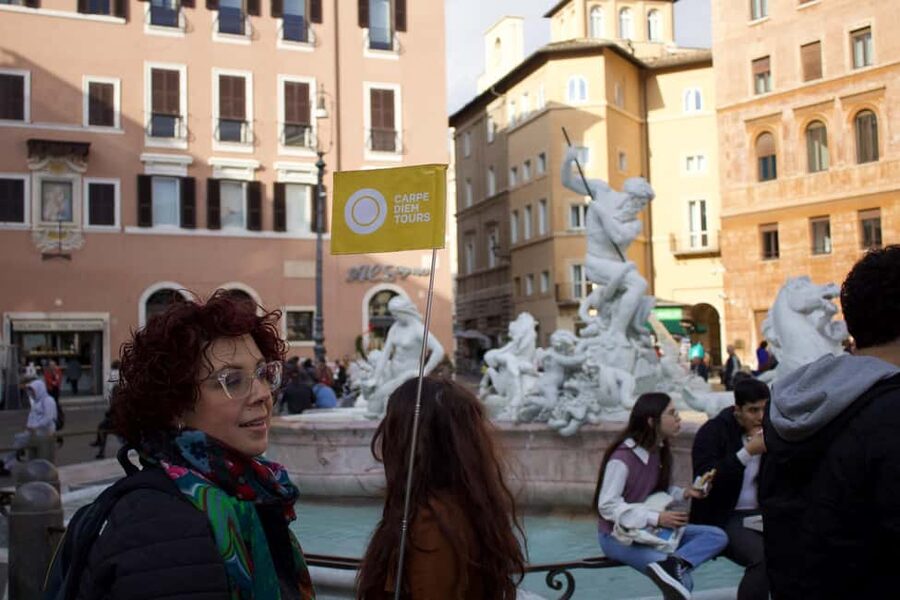
You can book the tour in English or Spanish. Choose the language in which you are most comfortable asking questions, not simply the one you can follow in a quiet room. Street noise and group movement can make a familiar language especially valuable.
A private group option is available. That may suit families, friends, or anyone who wants more control over the pace and conversation. A private booking can also be useful if your group has a particular interest in Roman history, churches, architecture, or food advice, though the exact customization offered should be confirmed before booking.
The standard tour is a good match for solo visitors and couples who want an efficient introduction. It also works well for a first day in Rome, when you need orientation before tackling longer museum or ancient-site visits.
Who should book this $28 walking tour?
I would recommend it to first-time visitors who want a clear overview of central Rome without committing a full day. It suits people who enjoy stories, questions, and seeing several areas in one outing.
It is also useful for returning visitors who want to find less obvious architecture and refresh their understanding of the city. The stops at Galleria Sciarra and Sant’Ignazio give the route some character beyond the usual monument checklist.
Families and mixed-interest groups may appreciate the short format. You see fountains, columns, churches, piazzas, and the Pantheon area, so no single subject dominates for too long.
I would think twice if your main goal is interior access. The Pantheon is passed by, food and drinks are not included, and the route does not promise entry to every monument. You should also be comfortable walking through busy parts of Rome for several hours.
Booking flexibility and practical details
The activity offers free cancellation up to 24 hours before the start for a full refund. You can also reserve now and pay later, which is helpful if your Rome schedule is still taking shape.
Starting times vary, so check availability for the date you want. Meeting points may differ by option, and the tour can end at Piazza Navona or the Colosseum. These details are easy to overlook, but they affect how you plan dinner, museum visits, and transportation afterward.
Food and drinks are not included. That is not a flaw for a walking orientation, since you remain free to choose your own meal and ask the guide for suggestions that fit your plans.
Should you book it?
Book this tour if you want Rome explained as a connected city rather than a series of photo stops. At $28, it offers a sensible introduction to major squares, famous monuments, smaller architectural surprises, and practical local advice.
I would place it near the start of a Rome visit, ideally before you plan return visits to the Pantheon, Trevi Fountain, or other sites that deserve more time. Choose the correct language, wear good shoes, confirm the meeting and ending points, and arrive ready to listen while walking.
Skip it only if you want a slow, detailed tour inside one monument. For a lively first look at the historic center, this is a well-priced way to get your bearings and make better choices with the rest of your time.
FAQ
How long does the Rome walking tour last?
The tour lasts approximately 2 to 2.5 hours. Starting times vary, so check availability for your chosen date.
What languages are offered?
The tour is available with a live guide in English or Spanish.
What sights are included?
The route includes Piazza Venezia, Trajan’s Column, Trevi Fountain, Galleria Sciarra, and the Church of Sant’Ignazio di Loyola. You also pass by the Pantheon and visit central piazzas.
Where does the tour start?
The starting point may vary by booking option. Listed possibilities include Piazza d’Aracoeli and Piazza di Pasquino.
Where does the tour end?
The listed ending options include Piazza Navona and the Colosseum. Check the exact option you book.
Is hotel pickup included?
No. Hotel pickup and drop-off are not included.
Are food and drinks included?
No. Food and drinks are not included.
Can I book a private group?
Yes. A private group option is available.
What should I bring?
Bring comfortable shoes and comfortable clothes for the walking route. Cancellation is free up to 24 hours before the activity for a full refund, and you can reserve now and pay later.
Newest Rome tours we have reviewed
- Private TikTok Video Making in Rome★ 5.0 · 7 reviews
- Assisi & Saint Francis Path Tour from Rome★ 5.0 · 45 reviews
- Assisi, Orvieto and Civita di Bagnoregio Full Day Tour from Rome★ 4.5 · 45 reviews
- Assisi and Cascia Private Day Tour from Rome with Lunch★ 5.0 · 10 reviews
- Art Class in the center of Rome!★ 4.0 · 4 reviews
- Art & Craft: Beer Tour with Street Art in Rome★ 4.5 · 6 reviews
- Arrival in Rome: Airport Transfer & Exclusive City Introduction★ 5.0 · 3 reviews
- From Rome: Private Day-Tour of Tuscany★ 5.0 · 16 reviews