
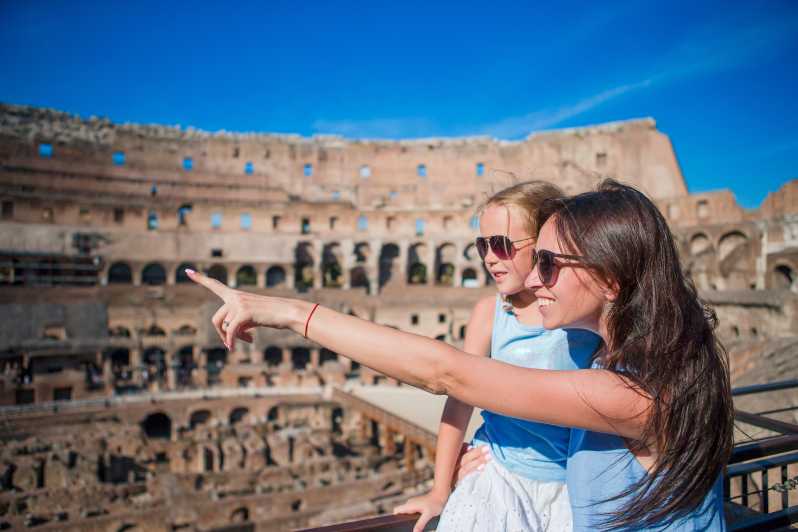
Reviewed · ROME COLOSSEUM TOURS
Rome: Colosseum, Palatine Hill, and Forum Guided Experience
The best part of this tour is its clear route through three essential ancient sites: the Colosseum, Roman Forum, and Palatine Hill. You get the basic story from a live guide, then free time inside the Colosseum to look around without being hurried along.
I like the skip-the-ticket-line entry and the way the guide turns bare stone into a story about emperors, gladiators, engineering, and public spectacle. The main caution is timing: the advertised entry time may not mean you walk straight inside, and past departures have faced waits outside. The tour is also shortened to two hours in July and August.
Key points at a glance
- Three major ancient sites: Colosseum, Roman Forum, and Palatine Hill are covered with one admission.
- One hour inside the Colosseum: Your guide explains the Flavian amphitheater, its construction, and the people who used it.
- Free time after the guided visit: You can continue exploring the permitted Colosseum areas at your own pace.
- Late-day atmosphere: Some departures let you see the ruins toward twilight, when the old stones can feel especially dramatic.
- Useful language choice: Live guides are available in English, French, German, and Spanish.
- Important limits: Underground and Arena level access are not included, and the route is not suitable for wheelchair users or people with mobility impairments.
A practical way to see ancient Rome in three hours

Rome’s archaeological center can be hard to read on your own. The Colosseum is easy to recognize, but the Forum is a wide field of broken columns, walls, and foundations. Without some context, you may see plenty of stones and miss the Roman city that once filled the space.
This tour gives you a guided framework without taking your entire day. The scheduled portion lasts three hours in most months, and the Colosseum portion takes about one hour. That leaves enough time for the Forum and Palatine Hill, plus personal time inside the permitted Colosseum areas after the guide finishes.
The route is best for a first visit or for anyone with limited time in Rome. It is not a specialist archaeological tour. One past departure was praised as a useful rushed version of the Colosseum, with the advice that people wanting more detail should book a longer experience. That is a fair way to think about it.
You get the main ideas, the most important viewpoints, and help making sense of the site. You do not get a slow, highly detailed study of every remaining wall.
More Roman Forum and Palatine Hill tours:
- Rome: Colosseum, Palatine Hill and Roman Forum Guided Tour
★ 4.8 · 32,814 reviews - Rome: Guided Tour of Colosseum, Roman Forum & Palatine Hill
★ 4.7 · 27,897 reviews - Rome: Colosseum, Roman Forum and Palatine Hill Guided Tour
★ 4.5 · 23,903 reviews
Meeting the guide and getting through the entrance
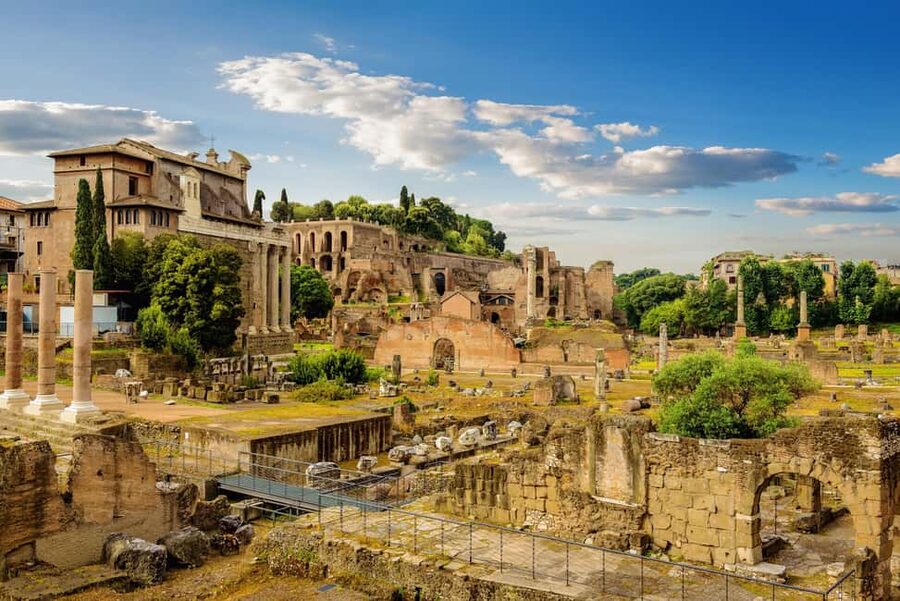
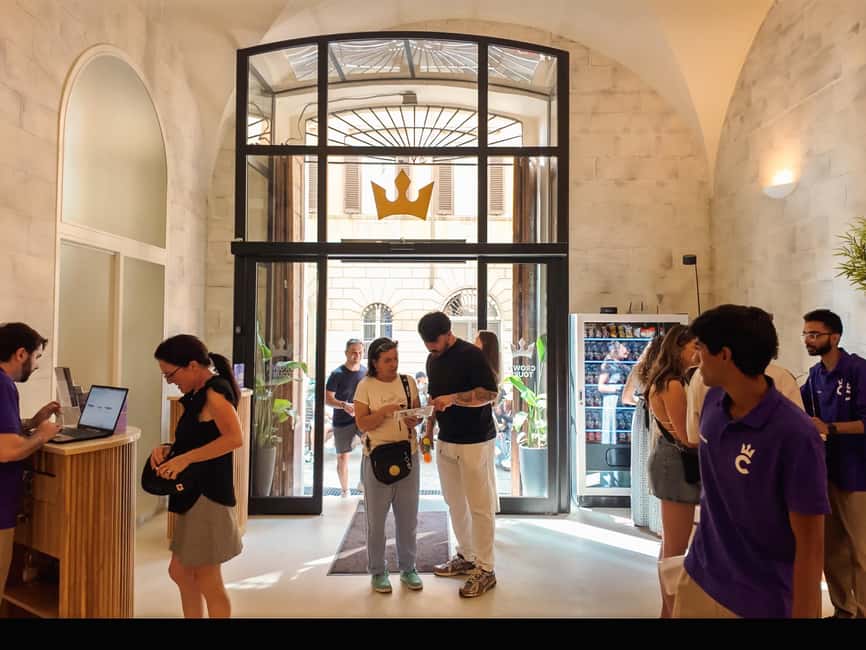
The meeting point changes according to the option you book, so read your confirmation carefully. Around the Colosseum, several tour companies may gather in the same general area. That can make the first few minutes confusing, especially if signs are small or several guides are holding similar-looking boards.
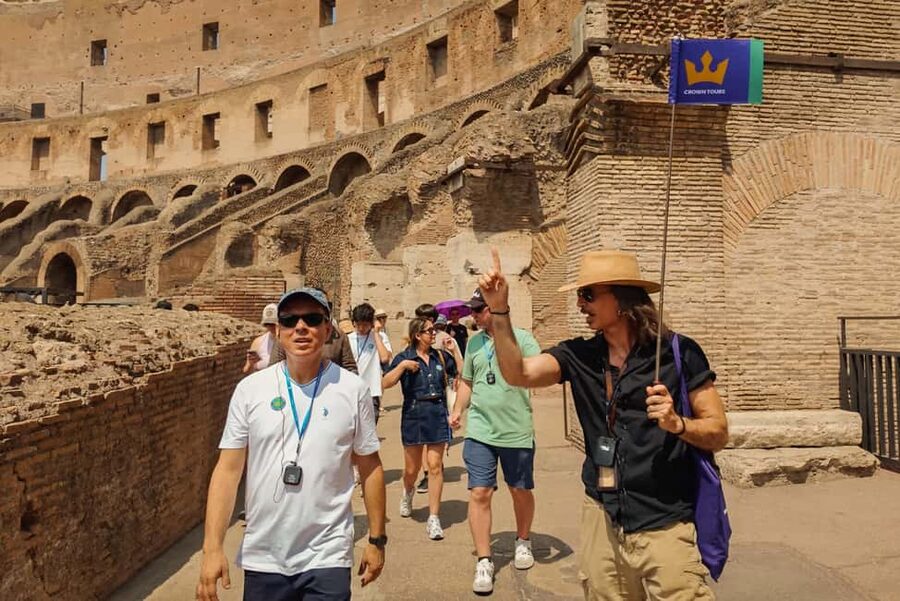
The tour includes headsets, which matter inside a crowded monument. With a group of around 20 on one recorded departure, the equipment made it easier to hear the guide and stay with the group. Still, arrive early and identify your guide before the scheduled time.
The phrase skip the ticket line needs a little common sense. This generally means you avoid the ordinary ticket-buying queue, not that you bypass every security or entry check. At busy times, you may still wait outside before the group is admitted. One departure scheduled for 10:00 did not enter until about 10:45, and another visitor spent a long period in the sun despite having a timed entry.
That does not erase the value of reserved entry. The regular line can be much worse. But if you have a Vatican booking, train, airport transfer, or other fixed appointment soon afterward, leave a generous buffer. The entrance process is not fully under the tour guide’s control.
Inside the Colosseum: one hour with the main story
The guide begins outside with a short introduction to Roman civilization and the amphitheater. This is useful because the Colosseum can seem almost too familiar. You have seen its image on countless postcards, but the outside view does not explain how the building worked or why it mattered.
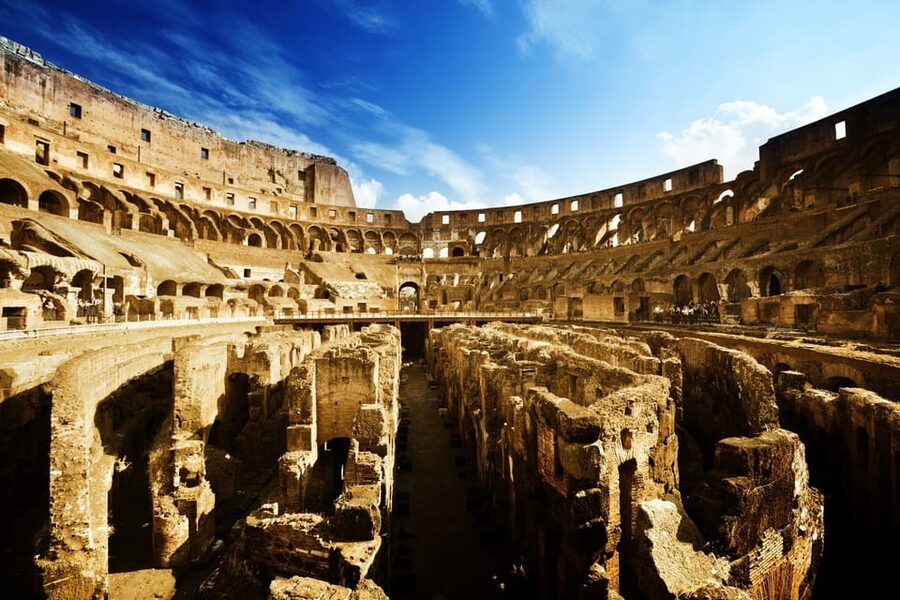
The tour then moves inside the permitted areas. Your guide discusses the Flavian dynasty, which built the amphitheater, and the Roman ability to organize huge public construction projects. The building was not just a place for fights. It was a carefully managed public venue, built to hold large crowds and stage popular entertainment.
You will hear about the engineering behind the structure, the movement of people through its entrances, and the events held for public audiences. The guide also covers gladiators, including the difference between popular stories and what can be supported by historical evidence.
That fact-checking is one of the tour’s useful features. The Colosseum has collected centuries of legends, and it is easy to repeat the most dramatic version of every story. A good guide helps you separate the Roman spectacle from later myths.
The guide walks through the monument while explaining the people connected to it. Guides on different departures have included Jessica, Lars, Andre, Lumi, Niels Arne, Fuma, Simon, and Mercedes. The strongest descriptions of the experience consistently point to clear explanations, humor, enthusiasm, and a presentation that keeps children involved.
The quality can vary with the individual guide and the language departure. Some guides have been praised for bringing the Colosseum to life, while one past departure was affected by weak English and a guide taking a phone call during the visit. That appears to be an exception, but it is worth keeping expectations realistic with any group tour.
Free time inside the Colosseum after the guide
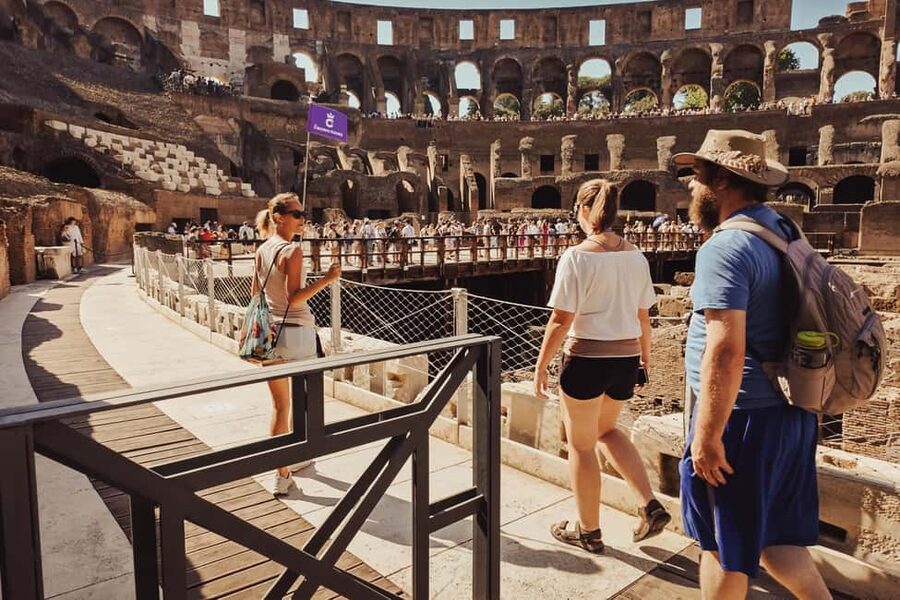
Once the guided part ends, you can spend as much additional time as permitted inside the included areas. This is a welcome touch. A strictly guided visit can feel too fast, especially when you want to stop for photographs or take another look at the arena’s structure.
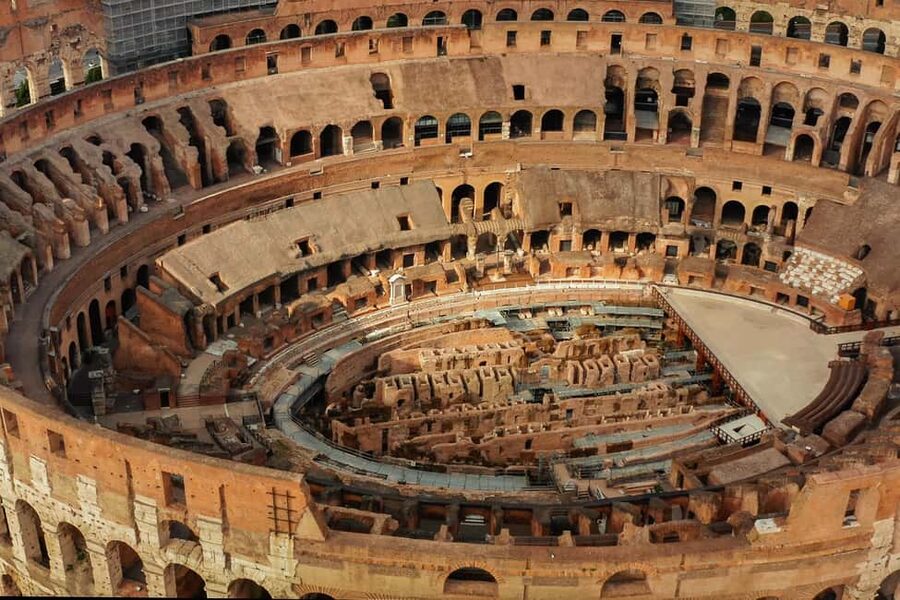
Use this time to revisit details that passed quickly during the talk. Look down into the lower sections, study the surviving seating and walls, and consider how the building managed crowds on a scale far beyond an ordinary theater.
The included access does not cover the Underground or Arena level. If standing on the arena floor or seeing the underground service areas is your main goal, choose a tour that specifically names those sections. Do not assume that a standard Colosseum ticket includes them.
The amount of personal time also depends on the practical flow of the day and the permitted sections open at that time. The tour promises freedom after the guided visit, but this is not the same as an unlimited visit to every part of the monument.
More Colosseum tours in Rome:
- Rome: Colosseum & Forum with Audio Guide App -Optional Arena
★ 4.2 · 24,770 reviews - Rome: Colosseum, Forum & Palatine Hill Tour & Optional Arena
★ 4.4 · 13,839 reviews - Rome: Colosseum, Palatine Hill & Roman Forum Guided Tour
★ 4.6 · 12,703 reviews - Colosseum: Underground and Ancient Rome Tour
★ 4.7 · 12,691 reviews
The Roman Forum: where the city operated
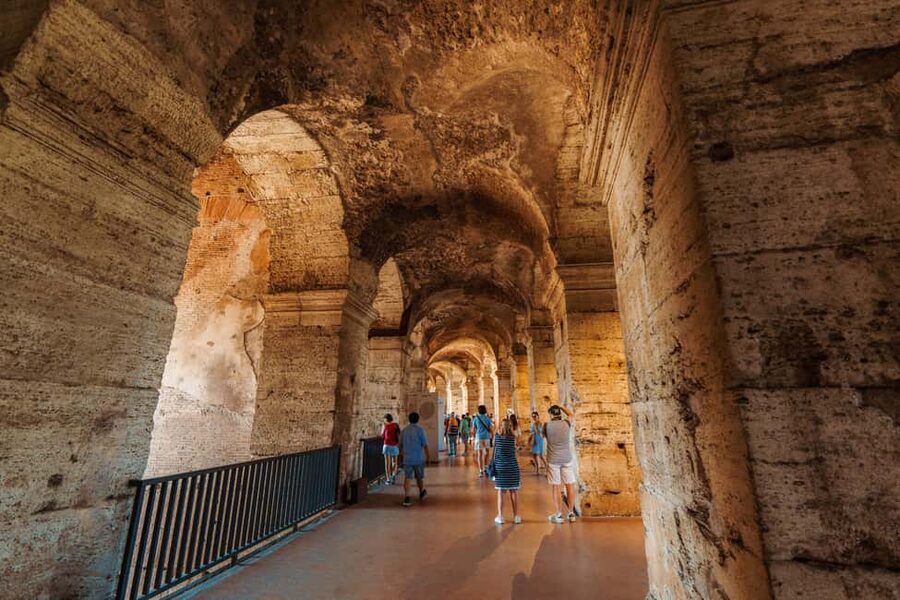
The Roman Forum is where the tour moves from one famous building to the remains of an entire civic center. This is the part of the visit where a guide earns the admission price. The ruins can be difficult to interpret because the modern city has disappeared, leaving only fragments of temples, public buildings, roads, and monuments.
Your guide gives those fragments a purpose. You learn how the Forum functioned as a place for politics, religion, law, public speech, and daily business. The value is not in seeing one intact building. It is in understanding how the scattered remains fit together.
Wear comfortable shoes. The archaeological paths can involve uneven surfaces, steps, and plenty of walking. The route is not suitable for people with mobility impairments or wheelchair users, and electric wheelchairs are specifically excluded.
The Forum is also exposed. In warm weather, you will have limited shade, so bring water for before or after the visit, since food and drinks are not allowed inside the archaeological sites. In July and August, the advertised visit is shortened to two hours, likely making the pace feel brisker in the heat.
Palatine Hill and the view over ancient Rome
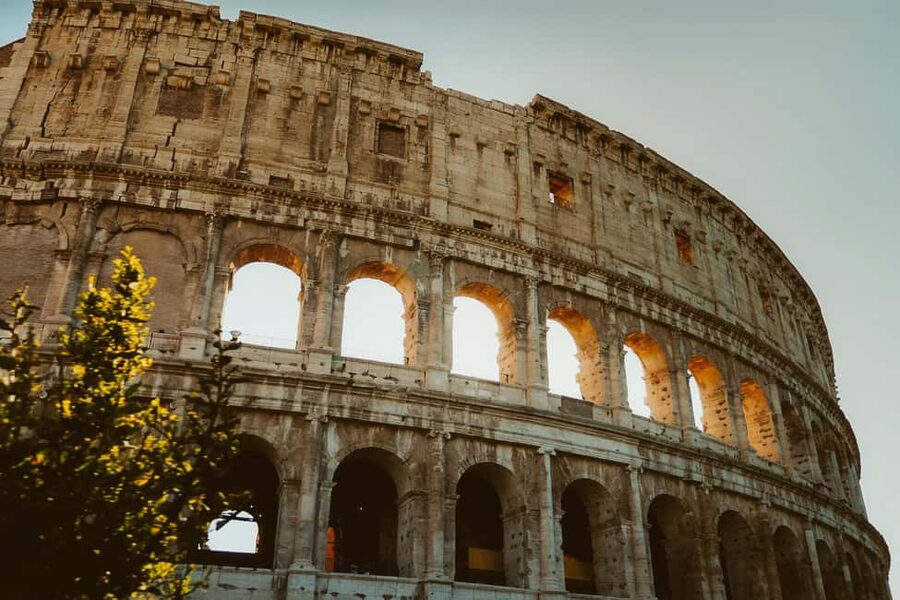
Palatine Hill adds height and a different kind of experience. From here, the ruins are spread below you, and you can better understand the scale of ancient Rome. The hill is tied to Rome’s early stories and later imperial residences, while the remains of palaces show how closely power and urban spectacle were linked.
The climb also changes the physical rhythm of the tour. After the Colosseum and Forum, you are not simply looking at another monument. You are walking uphill through a large archaeological area, with steps and uneven ground along the way.
That makes this section rewarding for visitors who want a broad view, but tiring for anyone unprepared for walking. One past participant specifically noted that reaching the upper level required fairly good fitness because some steps were large. Plan on practical footwear rather than stylish but flimsy sandals.
A late-day departure can be especially appealing here. The ruins and palace remains take on a softer look near twilight, and the combination of height, open space, and ancient stone gives the final part of the route a more atmospheric feel. The exact light depends on your starting time and season, so treat this as a possibility rather than a guarantee.
Ending near Trajan’s Column
The tour ends at Trajan’s Column, a famous monument celebrating Roman military victory and imperial power. Its spiral relief tells a long story in carved stone, though you will need to look closely because the figures are small from ground level.
Ending here gives the day a useful final note. The Colosseum is the familiar symbol of Roman entertainment, while Trajan’s Column points to another side of the empire: conquest, administration, and the public display of power.
The end point also means you should not expect to return to your hotel or receive transportation afterward. Pickup and drop-off are not included. Plan your next stop from the central Rome location and keep your phone, map, or directions handy.
Is $58 a fair price?
At $58 per person, this is not the cheapest way to enter the archaeological area. The adult entry fee is listed as €16, with a €2 reservation fee. The rest pays for the licensed guide, headsets, booking arrangements, and the convenience of a planned route through three large sites.
The value depends on how much help you want. If you are comfortable reading signs, using a guidebook, and finding your way through the Forum, you may prefer a basic entry ticket. If you want the ancient city explained in plain language and do not want to work out the route yourself, the extra cost is reasonable.
The guide is especially useful at the Forum and Palatine Hill, where the ruins do not always explain themselves. It can also save time at the Colosseum entrance, even though reserved access does not remove every possible wait.
I would not book this for the Underground or Arena level. Those areas are not included. I would also think twice if your schedule is tight enough that a 30 to 45 minute entrance delay would cause trouble.
What to bring and what to leave behind
Bring a passport or ID card. Your identification is mandatory, and you may not be admitted without it. The full names of everyone in the booking must also be provided, since incomplete booking information can create an entrance problem.
Comfortable shoes are essential. You will walk through a large archaeological zone, and the route includes steps and uneven ground.
The sites do not permit pets, weapons, sharp objects, large luggage, smoking, alcohol, drugs, aerosols, or glass objects. Food and drinks are also not allowed inside. Unaccompanied minors cannot take part, and electric wheelchairs are not accepted.
The activity is non-refundable, so check the date, meeting point, names, and language before booking. Live guiding is offered in English, French, German, and Spanish.
Who will enjoy this tour most?
I would choose this tour for a first-time Rome visitor who wants the main ancient sights in one organized outing. It also fits families who need a clear structure, since the one-hour Colosseum section keeps the central monument from becoming an endless lecture.
It works well for people who enjoy history but do not want a full-day archaeological course. Several guides have been praised for humor and lively explanations, which can make a difference when children or short attention spans are part of the group.
It is less suitable for visitors with limited mobility, anyone looking for a relaxed pace, or repeat Rome visitors who already understand the Forum and Palatine Hill. It is also a poor match for a traveler who wants access below the Colosseum or onto the Arena floor.
Should you book the Colosseum, Forum, and Palatine Hill tour?
Book it if you want a well-organized introduction to ancient Rome, value a live guide, and can accept some uncertainty around the entry wait. The combination of reserved access, headsets, three major sites, and free time inside the Colosseum gives you a useful half-day without filling your entire schedule.
Skip it if your priority is specialist detail, full access to restricted Colosseum areas, or a completely flexible visit. For most first-time visitors, though, $58 is a sensible price for help making sense of Rome’s biggest archaeological sights, especially if you arrive prepared with ID, sturdy shoes, and extra time around the entrance.
FAQ
How long does the tour last?
The tour lasts three hours in most months. In July and August, the listed duration is two hours.
Which sites are included?
Admission includes the Colosseum, Roman Forum, and Palatine Hill.
Is the Underground or Arena level included?
No. Underground and Arena level access are not included.
What languages are available?
Live guides are available in English, French, German, and Spanish.
Do I need to bring identification?
Yes. A passport or ID card is mandatory, and entry cannot be guaranteed without it.
Is skip-the-line entry guaranteed to mean immediate entrance?
No. The tour includes skip-the-ticket-line access, but security and site entry may still involve waiting outside.
Is the tour suitable for wheelchair users?
No. The activity is not suitable for wheelchair users or people with mobility impairments.
Newest Rome tours we have reviewed
- Private TikTok Video Making in Rome★ 5.0 · 7 reviews
- Assisi, Orvieto and Civita di Bagnoregio Full Day Tour from Rome★ 4.5 · 45 reviews
- Assisi & Saint Francis Path Tour from Rome★ 5.0 · 45 reviews
- Assisi and Cascia Private Day Tour from Rome with Lunch★ 5.0 · 10 reviews
- Art Class in the center of Rome!★ 4.0 · 4 reviews
- Art & Craft: Beer Tour with Street Art in Rome★ 4.5 · 6 reviews
- Arrival in Rome: Airport Transfer & Exclusive City Introduction★ 5.0 · 3 reviews
- From Rome: Private Day-Tour of Tuscany★ 5.0 · 16 reviews
Rome Colosseum Tours, compared.
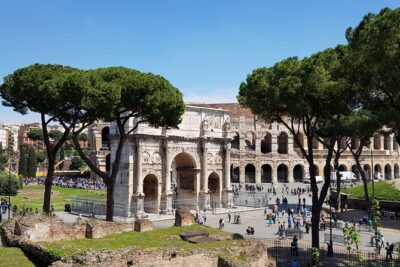
Colosseum, Palatine Hill and Roman Forum Guided Tour
Read our review →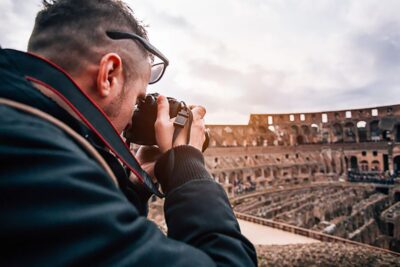
Guided Tour of Colosseum, Roman Forum & Palatine Hill
Read our review →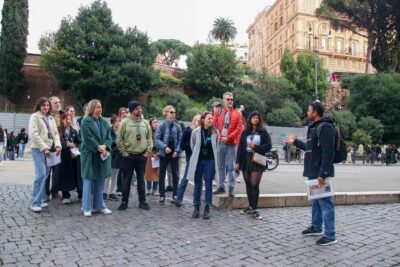
Colosseum & Forum with Audio Guide App -Optional Arena
Read our review →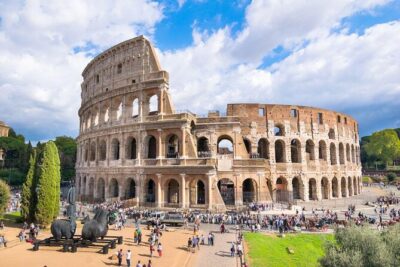
Colosseum, Roman Forum and Palatine Hill Guided Tour
Read our review →
Colosseum, Forum & Palatine Hill Tour & Optional Arena
Read our review →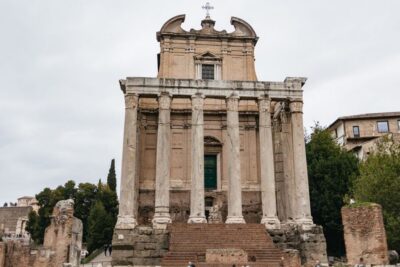
Colosseum, Palatine Hill & Roman Forum Guided Tour
Read our review →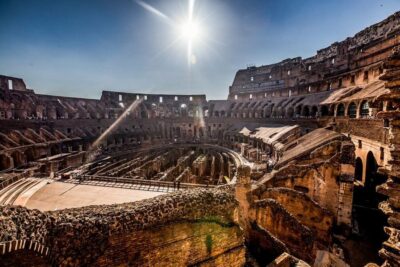
Colosseum: Underground and Ancient Rome Tour
Read our review →
Colosseum Arena, Palatine Hill & Forum Guided Tour
Read our review →Browse the lists this tour appears in