
Reviewed · ROME COLOSSEUM TOURS
Rome: Colosseum, Roman Forum, and Palatine Hill Tour
The Colosseum is the star here, but the real payoff comes from seeing it with the Roman Forum and Palatine Hill on the same ticket. I like the choice between a brisk guided tour and a self-guided audio visit, and I like that your admission remains valid for 24 hours. The main drawback is that the audio option leaves you on your own, and the app can be hard to follow.
This is a walking-heavy visit with security lines, hills, stairs, and no wheelchair access. Bring a charged phone, headphones, and comfortable shoes. If you want clear storytelling, choose the live guide. If you want freedom, choose the audio option and expect to do more work yourself.
Key points at a glance
- Three major ancient sites in one visit: See the Colosseum, Roman Forum, and Palatine Hill with one admission.
- Two very different tour styles: Pick an English-led group or private visit, or explore independently with 44 audio points.
- The ticket lasts 24 hours: You do not have to rush through every site in one continuous session.
- Expect about three hours on foot: The route includes stairs, hills, paved paths, and plenty of standing.
- Security can add 20 to 30 minutes: Airport-style screening is required, especially in high season.
- The audio guide needs preparation: Bring your own charged smartphone and headphones, and do not expect a guide to accompany you.
A smart way to see ancient Rome in one morning
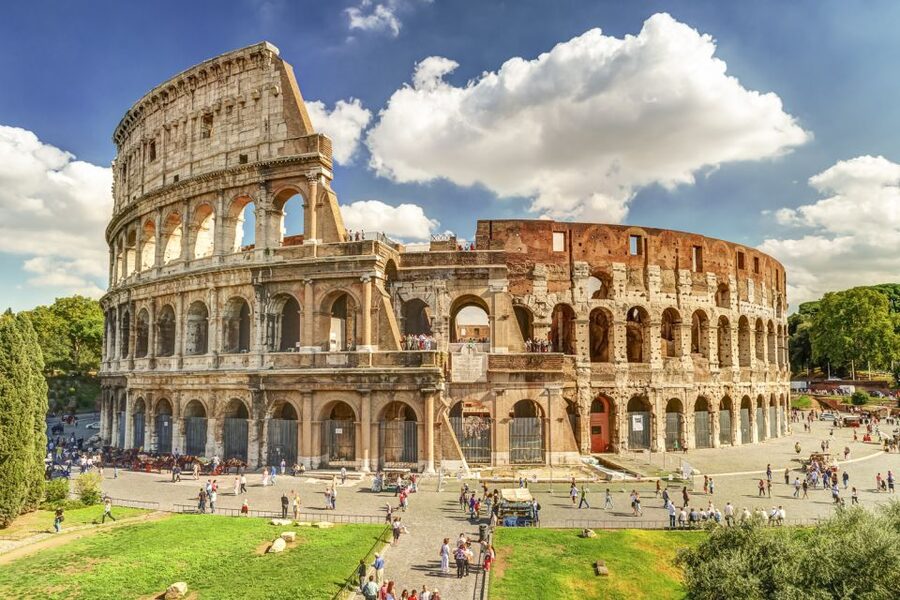
This tour brings together the three places that best explain ancient Rome’s power: the Colosseum, the Roman Forum, and Palatine Hill. You see the arena where public spectacles took place, the political center of the city, and the hill where emperors built their grand homes.
At $54 per person, the price makes the most sense if you value reserved attraction admission, a live guide, and a structured route. The guided option is especially useful in Rome, where broken columns and half-standing walls can blur together without a story to connect them. The self-audio option offers less personal help, but it gives you control over your pace.
The advertised visit takes about 2.5 to 3 hours. The Colosseum portion lasts roughly 75 minutes, followed by about 45 minutes in the Roman Forum and another 45 minutes on Palatine Hill. Since the ticket remains valid for 24 hours, you can use the same admission to return to the archaeological area within that period, according to the access terms provided.
You can choose from two meeting points, Via Labicana 96 or Piazza di San Clemente, depending on the option you book. Check your voucher closely before setting out. The meeting point is not identical for every version of the tour.
More Roman Forum and Palatine Hill tours:
- Rome: Colosseum, Palatine Hill and Roman Forum Guided Tour
★ 4.8 · 32,814 reviews - Rome: Guided Tour of Colosseum, Roman Forum & Palatine Hill
★ 4.7 · 27,897 reviews - Rome: Colosseum, Roman Forum and Palatine Hill Guided Tour
★ 4.5 · 23,903 reviews
Entering the Colosseum after security
The visit begins with airport-style security. You cannot skip this step, and during busy periods the wait can reach 20 to 30 minutes. Arrive with patience and avoid bringing anything forbidden, including large bags, sharp objects, drones, selfie sticks, or weapons.
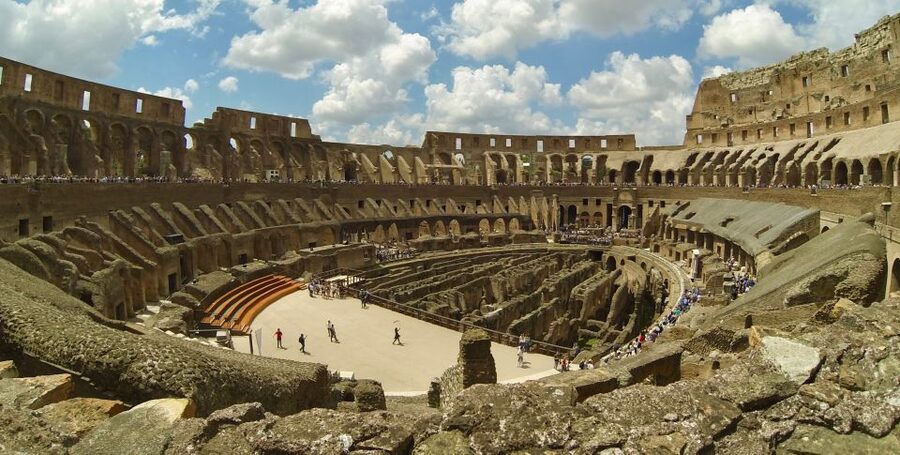
Once inside, the Colosseum gives you the scale that photographs cannot provide. The building was designed for huge crowds, yet its planning was remarkably practical. Entrances, stairways, seating levels, and exits helped move people through the amphitheater with surprising order.
The live guide uses the arena to explain gladiator fights, animal hunts, and staged naval battles. These stories help you understand that the Colosseum was not simply a place for combat. It was a carefully managed public show, tied to politics, status, and the emperor’s relationship with the people.
The tour also points to the daring construction methods behind the Flavian Amphitheater. Roman builders had to support a massive stone and concrete structure, create curved passageways, and handle the movement of tens of thousands of spectators. You may appreciate the engineering more once you see how much of the building’s form still survives.
The guided route is the better choice if you have limited time or want the main facts delivered in a clear order. A headset system helps you hear the guide, which matters when the group is moving through a large, noisy site.
The self-guided option works differently. You download the audio material to your smartphone and listen in one of six languages: English, Chinese, German, French, Italian, or Spanish. There are 44 points of interest, so you have plenty of material to work through, but you must manage the route and playback yourself.
Bring headphones. A charged phone is essential, and the activity does not provide a mobile device or headphones. The audio guide has received mixed practical feedback, including difficulty following the narration and concerns that the app offers less value than the guided option. I would choose it only if you are comfortable using your phone while walking and prefer independence over conversation.
Walking through the Roman Forum
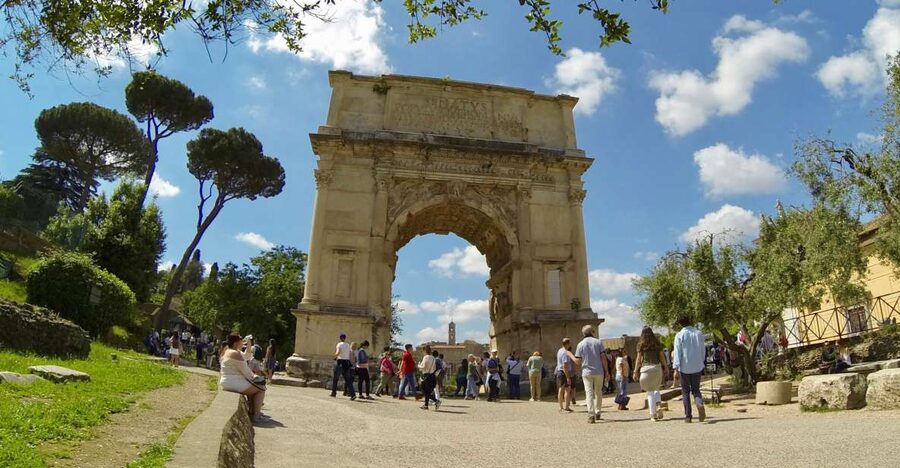
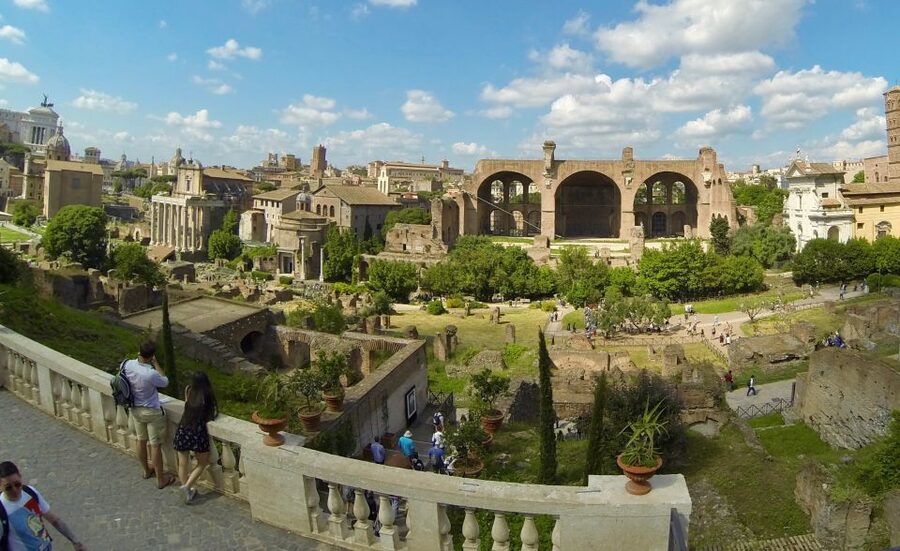
After the Colosseum, the route continues into the Roman Forum. This was the working center of ancient Rome, filled with political buildings, temples, ceremonial arches, and public spaces.
The Forum is not a single grand monument. It is a spread of ruins, and the guide’s explanations make the difference. You will see the area associated with the Senate, temples dedicated to Roman gods, the House of the Vestals, and triumphal arches built to celebrate military victories.
One of the most moving stops is the altar linked to Julius Caesar’s cremation. It can be easy to walk past a low, worn structure without context. With an explanation, the site becomes a reminder of how Roman politics, religion, and public memory were tied together.
The Forum route includes photo stops and walking. Surfaces can be uneven, and you will spend much of this part of the visit outdoors. The site is exposed, so practical clothing matters more than looking polished. Comfortable shoes are not optional for this tour.
The 45-minute timing gives you a useful introduction rather than a long archaeological study. That is a fair trade if you want to see the main area in a compact visit. If you have a strong interest in Roman history, the audio option’s 44 points may tempt you to linger longer, but the guided group will keep moving.
The order of the three sites can change. Do not worry if your route begins differently from the sequence described here. The important point is that your ticket covers all three areas.
Climbing Palatine Hill for the view
Palatine Hill is the highest and most scenic part of the route. You climb above the Forum and look toward the valley of the Circus Maximus. The uphill walk adds effort, but it also gives you a better sense of how Rome was arranged.
According to Roman tradition, Palatine Hill was connected with Rome’s earliest foundations. Later, emperors built sumptuous residences there. What remains today includes fragments of palace complexes, courtyards, walls, and terraces that hint at the scale of imperial life.
This is where the tour’s title about emperors living on the hill becomes tangible. The ruins are less instantly recognizable than the Colosseum, but the open views and palace remains help you picture the hill as a private zone of power above the public city.
Allow energy for this final section. The itinerary calls for about 45 minutes on Palatine Hill, with walking, scenic views, and additional slopes. If you have mobility limits, this is not a suitable activity. The tour is not wheelchair accessible, and the combination of hills, stairs, and uneven ancient paths can be demanding.
More Colosseum tours in Rome:
- Rome: Colosseum & Forum with Audio Guide App -Optional Arena
★ 4.2 · 24,770 reviews - Rome: Colosseum, Forum & Palatine Hill Tour & Optional Arena
★ 4.4 · 13,839 reviews - Rome: Colosseum, Palatine Hill & Roman Forum Guided Tour
★ 4.6 · 12,703 reviews - Colosseum: Underground and Ancient Rome Tour
★ 4.7 · 12,691 reviews
Guided tour or audio guide?
The choice between the two options shapes the whole visit.
Choose the live guided tour if:
- You want the ancient sites explained in a clear order.
- You have only one short window in Rome.
- You enjoy asking questions or hearing stories from a person.
- You want headsets supplied for the group.
- You prefer the guide to point out the important details rather than searching through an app.
The live option is offered in Chinese, English, French, German, Italian, and Spanish. A private group option is also available. The guided visit focuses on the Colosseum, Forum, and hill, with stories about combat, animals, naval spectacles, Roman politics, and construction.
Choose the self-audio option if:
- You want to stop and start at your own pace.
- You need one of the six listed audio languages.
- You do not want to follow a group.
- You are willing to use your own phone and headphones.
- You want to spend longer at selected points.
The audio material includes 44 points of interest and unlimited use of the self-guided features for the duration stated with the booking. The tradeoff is clear: you get freedom but not a guide. The guide is not included with this option, and the app has been described as difficult to follow.
For most first-time visitors paying $54, I would favor the live tour unless independence is your top priority. The guided option gives the price more purpose. The audio choice can still work well, but only if you prepare your phone and accept a less polished presentation.
What the $54 price really covers
The fee includes admission to the Colosseum, Roman Forum, and Palatine Hill. It also includes a professional licensed guide for the guided versions, a headset system, and the option of a private group.
That price does not cover transportation, hotel pickup, food, drinks, a phone, or headphones. You need to make your own way to the meeting point and arrive ready to pass security.
The strongest value comes from combining admission and interpretation. Buying access alone may cost less in some circumstances, but a guide can save you from spending the visit trying to work out what each ruin was used for. The 24-hour ticket validity also helps. You can plan the main tour around your schedule and use the remaining admission time within the stated period.
The value is weaker if you book the audio option expecting the same level of service as a live tour. The audio format may be enough for a confident independent visitor, but the mixed comments about following the narration suggest you should not choose it simply because it appears more flexible.
This activity is non-refundable, so check the date, meeting point, language, and tour type before paying. Availability is limited, and booking early is advised, particularly for popular dates.
Timing, clothing, and what to carry
Plan for a solid half-day around the visit, even though the walking program itself lasts 2.5 to 3 hours. Security may add time, and the sites are spread across a large archaeological area.
Wear shoes with good support. The route includes hills, stairs, and uneven ground, and rain does not cancel the activity. Bring a light rain layer if the forecast is uncertain.
For the audio visit, carry:
- A fully charged smartphone
- Your own headphones
- The downloaded audio material
- Your booking details
- Identification for children if required
Children may need a passport or ID card. Large luggage is not allowed, and assistance dogs are permitted even though ordinary pets are not.
There is no hotel pickup or drop-off. You also need to arrange your own transport to and from the archaeological area. That is simple enough if you are already in central Rome, but it means the activity is not a door-to-door package.
Who will get the most from this visit?
I recommend the guided version for first-time Rome visitors, families who want the children focused, and anyone with only a few hours for ancient Rome. The guide keeps the visit moving and gives you the context needed to make sense of the Forum and Palatine Hill.
History-minded visitors may prefer the audio option because 44 points of interest allow a more detailed, self-directed look. Still, you should be comfortable with smartphone audio and prepared for the narration to feel less easy to follow than a person speaking beside you.
This is not a good choice for anyone who needs step-free access or finds long walks difficult. It also may frustrate visitors who dislike fixed group pacing. The private group option solves some of that concern, but the physical demands remain.
The most highly praised part of the experience is simple: you get access to the right places, and the sites themselves are remarkable. The most useful practical lesson is equally simple: choose the live guide for clarity, and choose audio only for freedom.
Should you book this Colosseum tour?
Book it if you want the Colosseum, Roman Forum, and Palatine Hill handled in one organized visit, especially if you value a live explanation and a headset. The stories about gladiators, public spectacles, Roman power, and engineering give structure to a very large archaeological area.
Choose the guided option for the best value at $54. Choose the audio option only if you want to set your own pace and are happy to supply your own phone and headphones. Arrive prepared for security, hills, stairs, and a fair amount of walking.
If you want a compact introduction to ancient Rome and can manage the physical demands, this is a sensible booking. If you need accessibility, extensive free time, or a fully self-directed app that is effortless to use, you should consider another format.
FAQ
How long does the tour take?
The guided visit takes about 2.5 to 3 hours. The Colosseum portion is about 75 minutes, the Roman Forum about 45 minutes, and Palatine Hill about 45 minutes. The self-audio option may vary in length.
Does the ticket include all three archaeological sites?
Yes. The admission covers the Colosseum, Roman Forum, and Palatine Hill. Tickets are valid for 24 hours according to the activity information.
Is a tour guide included with the audio option?
No. The self-audio option does not include a live guide. You use multilingual narration on your own smartphone.
Which languages are available?
Live tours are available in Chinese, English, French, German, Italian, and Spanish. The self-audio guide is available in the same six languages.
What should I bring?
Bring comfortable shoes, a charged smartphone, headphones, and identification for children. Headphones and a mobile device are not supplied.
Is the tour suitable for wheelchair users?
No. The activity is not wheelchair accessible and is not suitable for people with mobility impairments because it includes hills, stairs, and substantial walking.
Newest Rome tours we have reviewed
- Private TikTok Video Making in Rome★ 5.0 · 7 reviews
- Assisi, Orvieto and Civita di Bagnoregio Full Day Tour from Rome★ 4.5 · 45 reviews
- Assisi & Saint Francis Path Tour from Rome★ 5.0 · 45 reviews
- Assisi and Cascia Private Day Tour from Rome with Lunch★ 5.0 · 10 reviews
- Art Class in the center of Rome!★ 4.0 · 4 reviews
- Art & Craft: Beer Tour with Street Art in Rome★ 4.5 · 6 reviews
- Arrival in Rome: Airport Transfer & Exclusive City Introduction★ 5.0 · 3 reviews
- From Rome: Private Day-Tour of Tuscany★ 5.0 · 16 reviews
Rome Colosseum Tours, compared.
Colosseum, Palatine Hill and Roman Forum Guided Tour
Read our review →
Guided Tour of Colosseum, Roman Forum & Palatine Hill
Read our review →
Colosseum & Forum with Audio Guide App -Optional Arena
Read our review →
Colosseum, Roman Forum and Palatine Hill Guided Tour
Read our review →
Colosseum, Forum & Palatine Hill Tour & Optional Arena
Read our review →
Colosseum, Palatine Hill & Roman Forum Guided Tour
Read our review →
Colosseum: Underground and Ancient Rome Tour
Read our review →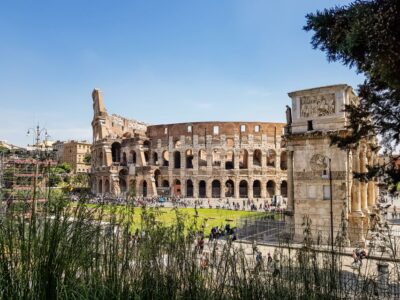
Colosseum Arena, Palatine Hill & Forum Guided Tour
Read our review →Browse the lists this tour appears in