
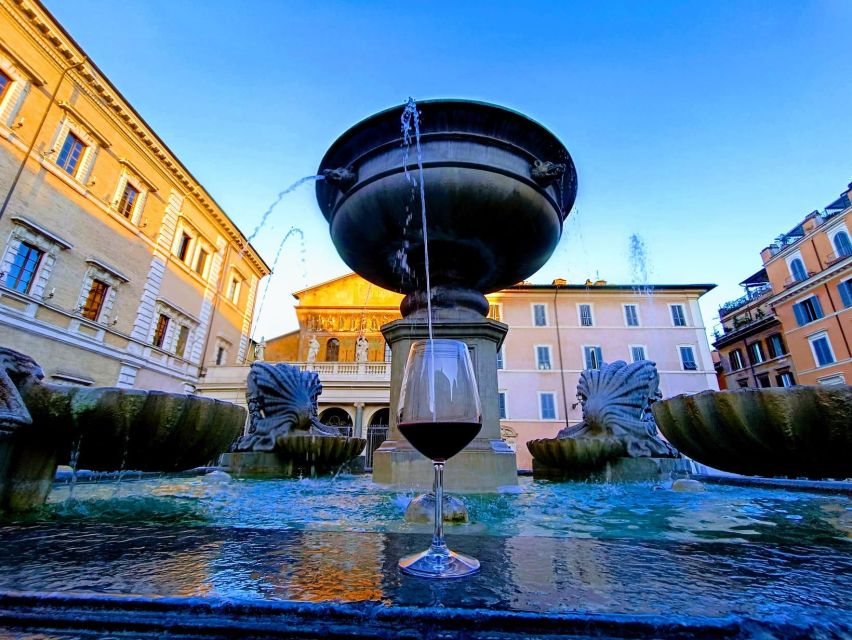
Reviewed · ROME FOOD TOURS
Rome: Dinner Food Tasting & Wine Pairing VIP Experience
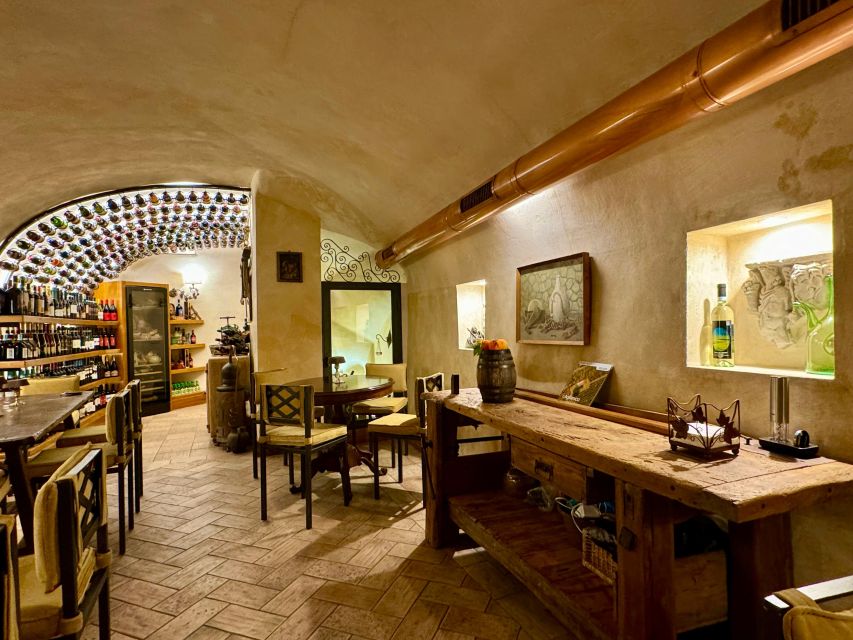
Trastevere’s Catina Fabullus gives this tasting its best talking point: you eat and drink inside a restored Roman cistern more than 2,000 years old. The setting is atmospheric without requiring a long tour, and the food arrives as a guided sampler of Italian specialties from north to south.
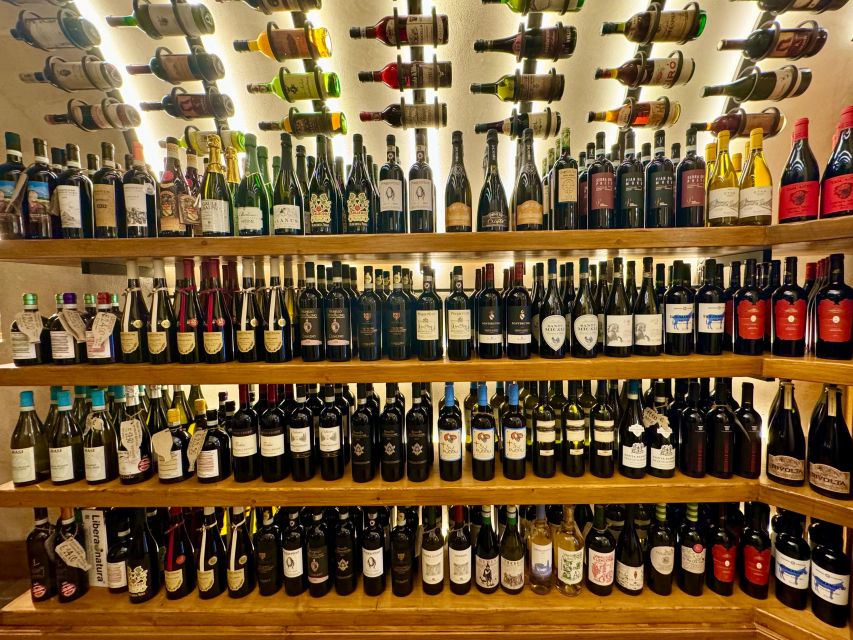
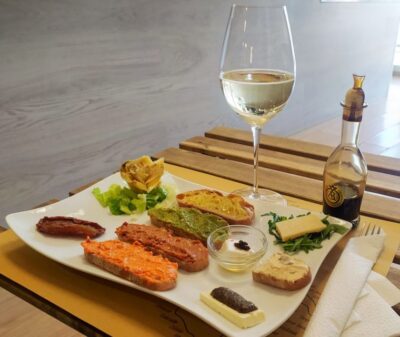
I like the broad spread of cheeses, cured meats, olives, breads, Roman pizza, preserves, and dessert. I also like the five-wine lineup, which includes Prosecco, two whites, and two reds, so you can compare pairings rather than sip one wine all evening. The main drawback is the short one-hour format. This is a generous tasting, but not a leisurely Roman dinner.
Key points at a glance
- A Roman cistern beneath Trastevere: The tasting takes place in the basement of an 18th-century building, inside a carefully restored 1st-century AD water cistern.
- Five Italian wines: You receive one Prosecco, two white wines, and two red wines selected to match the food.
- A full countrywide food sampler: Expect DOP and IGP specialties, cured meats, cheeses, olives, breads, Roman pizza, and seasonal items.
- Personal explanations: Staff explain the origins of the foods and show you how to taste wine and make pairings.
- Small, reservation-only format: Numbers are limited to 18 people, making the presentation more manageable than a large group tasting.
- A useful dinner substitute: The food can fill you up, but the hour-long schedule feels more like an extended tasting than a complete restaurant meal.
Entering Catina Fabullus beneath Trastevere
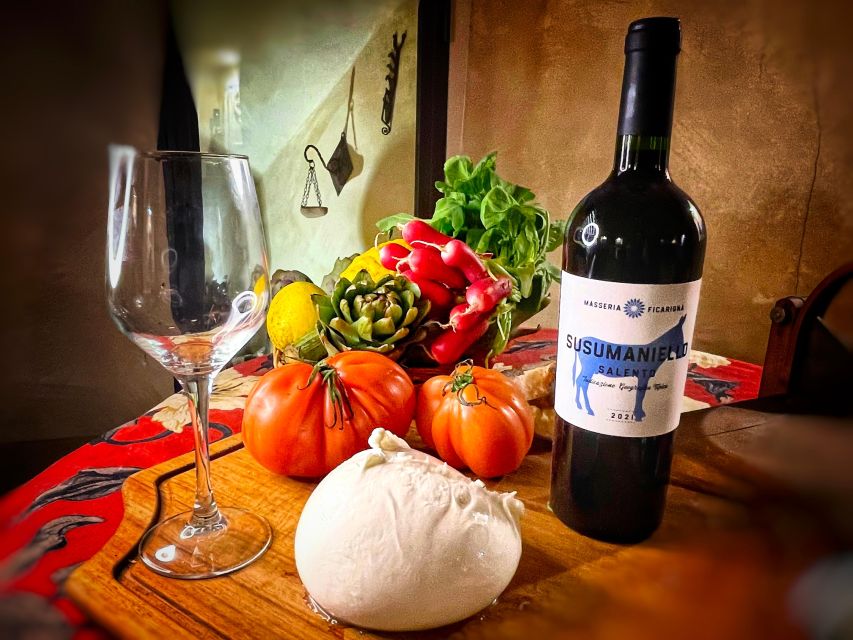
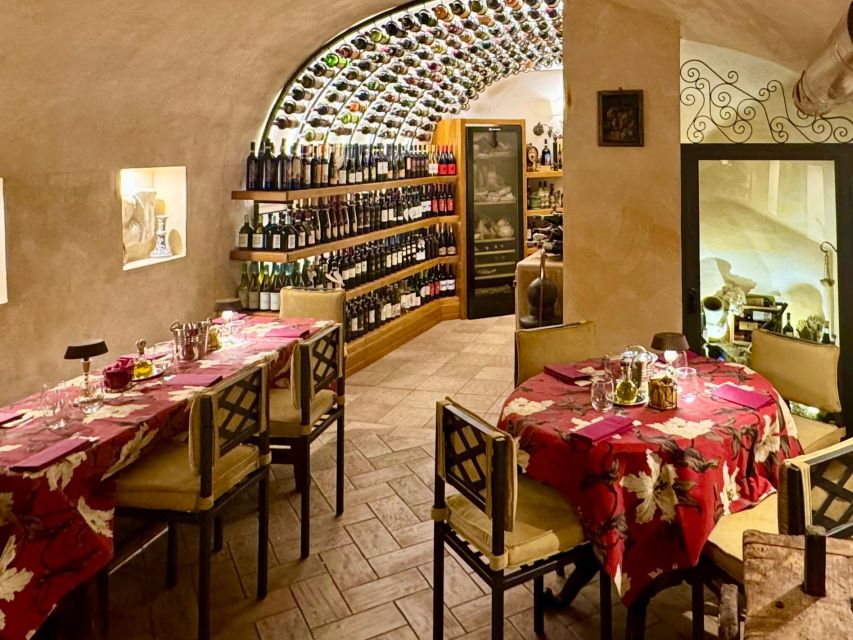
Your meeting point is the entrance of Hotel Residenza San Calisto at Via dell’Arco di San Calisto 19/20. Look for the red canopy and ring the bell. The actual tasting takes place downstairs, in Catina Fabullus, a cellar formed from the careful recovery of a Roman cistern dating to the 1st century AD.
That setting gives the evening a clear sense of place. You are not simply sitting in a modern wine bar with Italian labels on the wall. You are eating below one of Rome’s oldest neighborhoods, surrounded by antique furniture and old masonry. The room itself is a major part of the appeal, especially if you want a food activity with some archaeology built in.
The building above dates to the 18th century, while the structure below reaches much farther back. That layering is very Roman: one period sits on another, and a meal becomes a small lesson in how the city keeps reusing its past.
The cellar is not the right setting for every visitor. Wheelchair users cannot take this activity, and anyone carrying bulky luggage should leave it elsewhere. Pets are not allowed, and smoking is prohibited indoors.
More food tours in Rome:
- Winner 2025 Rome Twilight Trastevere Food Tour by Eating Europe
★ 5.0 · 5,157 reviews - Rome: Trastevere or Jewish Quarter Street Food Tour
★ 4.8 · 3,839 reviews - Rome Food Tour: Unlimited Tastings with Fine Wine & Barolo
★ 5.0 · 3,365 reviews
A one-hour route through Italian flavors
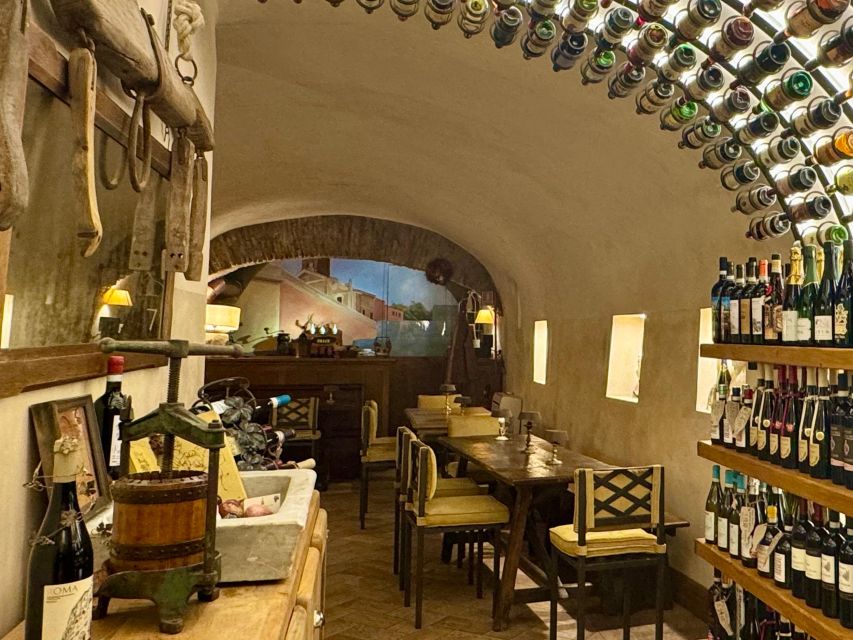
The tasting lasts about 60 minutes. Staff welcome you, explain the format, and guide you through food and wine in a planned order. You are not left to guess which cheese belongs with which wine, which makes the tasting useful even if you know little about Italian wine.
The menu changes with the season and with product availability. That means you should not expect an identical plate every time, but the core idea remains consistent: a wide sample of Italian products paired with selected wines.
The food can include:
- Fresh and aged cheeses
- Parma ham DOP and other cured meats
- Mortadella Bolognese with pistachio
- Salame Marchigiano
- Buffalo mozzarella and buffalo ricotta
- Lardo di Colonnata DOP
- Guanciale from Amatrice
- Olives, including Taggiasca olives
- Three types of bread
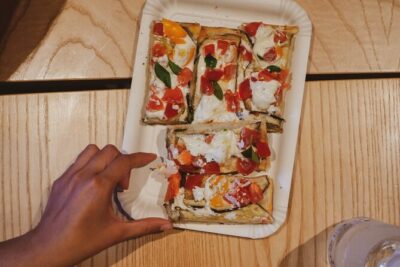
- Roman pizza and Roman focaccia
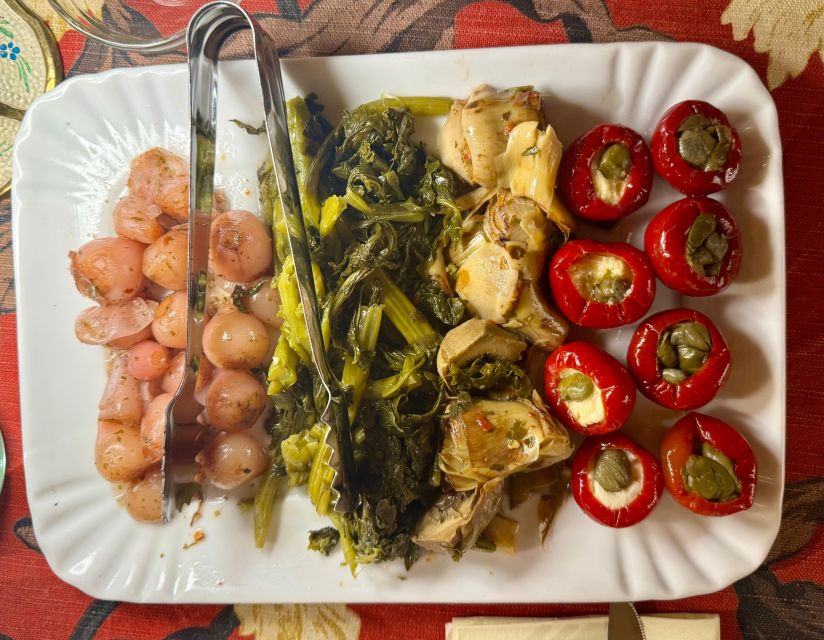
- Vegetables in oil or vinegar
- Extra virgin olive oil
- Honey and jams for cheese pairings
- Ice cream or a traditional Italian dessert
- Coffee
That list is more substantial than the phrase wine tasting might suggest. You are sampling ingredients from many parts of Italy rather than focusing only on Roman dishes. Gorgonzola points north, Parma ham represents Emilia-Romagna, buffalo products bring Campania into the room, and guanciale from Amatrice connects the table to Lazio.
This broad approach is useful if your Roman trip does not include time for a food tour elsewhere in Italy. You can sample named specialties from several regions in one sitting. The tradeoff is that no single item receives the attention it might in a specialist tasting devoted only to cheese, wine, or Roman cuisine.
Five wines and the logic of the pairings
The wine service begins with one Prosecco, followed by two Italian white wines and two Italian red wines. The staff select the bottles and match them with the food, so you are tasting the pairings as part of the presentation rather than ordering independently.
That progression gives the hour a simple rhythm. Sparkling wine can start the meal, white wines work with lighter cheeses, vegetables, and buffalo dairy, and the reds can accompany cured meats, aged cheese, and stronger flavors. The exact labels are not specified, and seasonal availability may affect the selection.
I like this format because it lets you compare how the same ingredient changes with different wines. A salty cured meat may seem sharper with one pour and rounder with another. A mature cheese can show more sweetness when paired with a suitable wine or with honey and jam. You do not need to memorize technical wine terms. The staff explain how to taste and how to think about the match.
The experience is presented in English, Italian, or Spanish. The staff are also described as friendly and attentive. Carlota is specifically praised for her warm service, and one late-arriving couple was allowed to complete the full tasting after transport problems delayed them. That is a useful sign for anyone worried about the strictness of a short appointment, though you should still aim to arrive on time.
Why the food selection offers good value
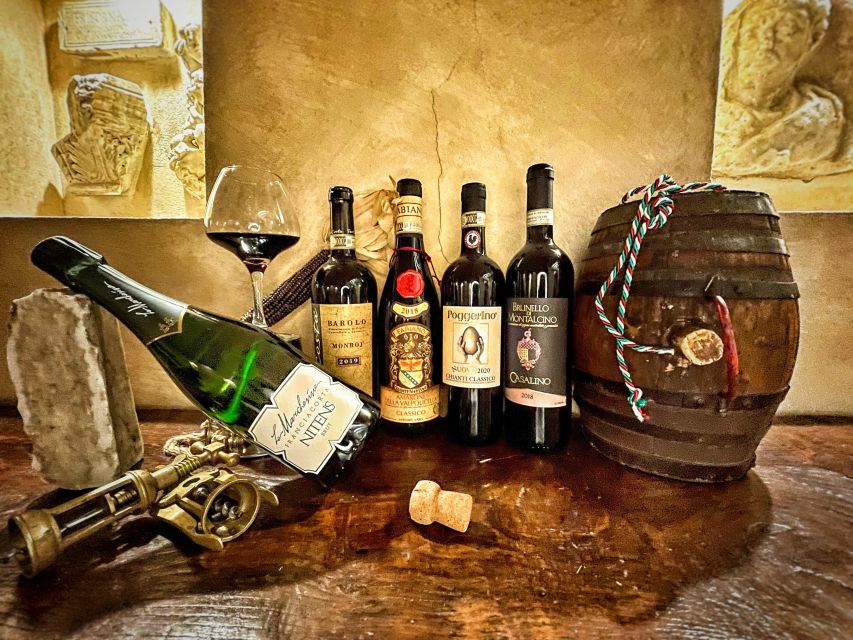
At $59 per person, this is not the cheapest way to have a quick plate and a glass of wine in Rome. It is also not priced like a full evening meal with several restaurant courses. The value comes from the combination of the setting, guided instruction, five wines, and the number of products included.
You receive a Prosecco, four additional wines, unlimited water, a broad food selection, dessert, and coffee. The tasting can be filling enough to replace dinner for some people. One particularly useful detail is that the final course may include dessert with spirits, followed by coffee, adding a proper ending instead of stopping after the savory plates.
The product labels matter, too. The selection includes DOP and IGP foods, which are protected Italian designations tied to particular places and production rules. The business also highlights products linked to Slow Food protection, supporting small artisans, traditional methods, biodiversity, and local foodways.
That does not mean every item comes directly from a tiny farm or that the tasting can explain the full story of every product in one hour. It does mean the meal is built around recognizable regional specialties rather than generic cheese cubes and supermarket salami.
If you are mainly hungry, you may find the format more satisfying than a standard wine flight. If you want a slow, multi-course dinner with time between plates, $59 may feel less attractive because the hour moves quickly.
More wine tastings in Rome:
- Rome: Tuscany & Montepulciano Day Trip with Lunch & Wine Tasting
★ 4.5 · 5,232 reviews - Pasta Making & Wine Tasting with Dinner in Frascati from Rome
★ 5.0 · 1,326 reviews - Rome by Night – Ebike Small Group Tour – Food and Wine (Option)
★ 5.0 · 1,275 reviews - Rome: E-Bike Night Tour with Food and Wine Tasting
★ 4.9 · 1,131 reviews
What the explanations add to the meal
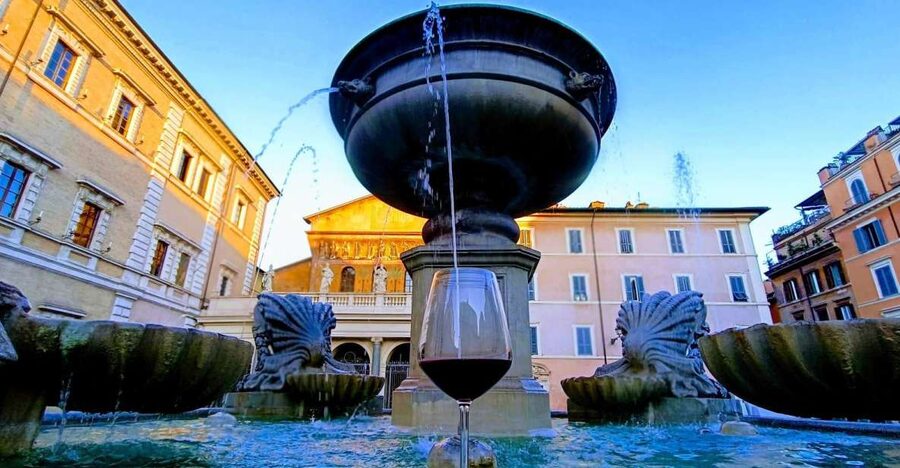
The staff do more than bring plates to the table. They discuss the origins and stories of Italian culinary products, explain the pairing choices, and offer guidance on tasting wine correctly.
That teaching is especially helpful with unfamiliar foods. Lardo di Colonnata, Pecorino di Moliterno, Provolone del Monaco, Bresaola di Vacca Podolica, and Pepe Crusco are not names most visitors will recognize at a glance. Hearing where they come from and how they fit into Italian food culture turns the tasting into something more memorable than a buffet.
The range also gives you a quick lesson in Italy’s regional differences. Bread from Tuscany, where unsalted sciocco bread is traditional, tastes different from Roman pizza or focaccia. Buffalo mozzarella and ricotta have a different texture from aged cheeses. Olives and vegetables preserved in oil or vinegar show how shelf-stable foods remain central to the Italian table.
The staff speak English, Italian, and Spanish, but the specific language available at a given time should be confirmed when you book. The group size can reach 18 people. That is still small enough for a structured presentation, though a full group may feel less intimate than a private tasting.
Seasonal changes and dietary limits
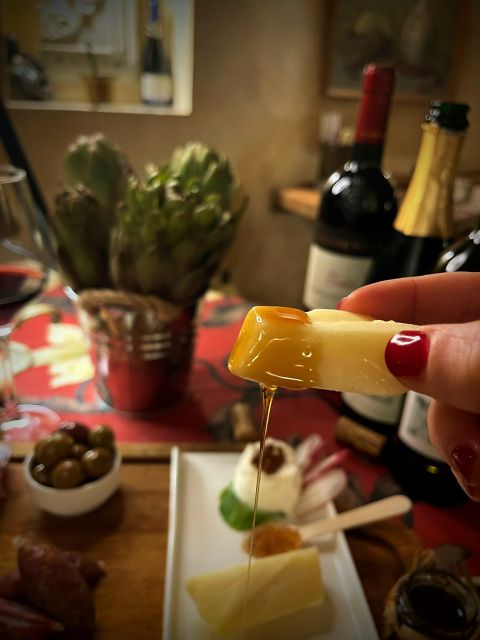
The menu changes according to season and availability. This is good news for freshness and variety, but it also means you should avoid booking with the expectation of receiving every single item named in the description. Think of the list as a guide to the style and range of the tasting.
Alternatives can be arranged for tastes or food intolerances if you request them in advance. You must communicate allergies or intolerances when booking. The operator states that failing to disclose them means the service cannot be guaranteed, and it accepts no responsibility for reactions that were not reported beforehand.
There is an important mismatch to note: alternatives are available, but the activity is listed as unsuitable for people with food allergies, vegans, and people with diabetes. It is also unsuitable for children under seven. If your diet is restrictive, contact the operator before paying and get clear confirmation that the menu can work for you.
This is not a vegan tasting. The menu is built around cheese, cured meats, dairy, bread, and wine. People with diabetes should also choose another activity rather than assume dessert or food substitutions will make the tasting suitable.
Who will enjoy this Roman cellar tasting
I would recommend it most to adults who want a compact food introduction before or after exploring Trastevere. It works well for couples, friends, and solo diners who enjoy learning a little while eating. The small group cap and staff presentation give it more structure than wandering into a wine bar and ordering at random.
It is also a good choice if you want a dependable meal in a memorable room but do not want to spend three hours at a restaurant. The food range is broad, the wine service is generous, and the final dessert and coffee help make the hour feel complete.
You may want to skip it if your priority is a long Roman dinner, a highly focused regional menu, or a quiet private table. The tasting brings together products from all over Italy, so it is less about one local Trastevere cuisine and more about a national food tour in miniature.
The activity is also a poor fit for families with young children, wheelchair users, vegans, people with diabetes, and people with food allergies. The cellar setting and stairs may be part of the charm, but they also limit access.
Practical details that can save you trouble
The meeting point can be easy to miss if you only search for the winery name. Go to Hotel Residenza San Calisto, find the red canopy at Via dell’Arco di San Calisto 19/20, and ring the entrance bell.
Allow time to find the address. Transportation is not included, and neither is hotel pickup or drop-off. You will need to make your own way to and from the meeting point.
The activity allows free cancellation up to 24 hours in advance, and you can reserve now and pay later. The operator may refuse service to anyone who appears intoxicated, with no refund if the tasting is canceled for that reason. That rule is sensible in a wine setting, but it also means you should not arrive after a heavy drinking session elsewhere.
Bring an appetite, but do not expect to carry large luggage downstairs. Weapons, sharp objects, oversized luggage, outside food, and outside drinks are not permitted.
Should you book the Catina Fabullus tasting?
Book it if you want a compact, guided introduction to Italian food and wine in an unusual Roman setting. The strongest reasons are the ancient underground cistern, the five-wine pairing, the large mix of regional foods, and the staff explanations. At $59, the package offers fair value when you count the wine, food, dessert, coffee, and setting together.
Skip it if you need a fully accessible activity, a vegan or allergy-friendly meal, or a slow restaurant evening. For everyone else, this is a practical way to turn one hour in Trastevere into a small tour of Italy’s table, with enough food to serve as dinner and enough history beneath your feet to keep the room interesting.
FAQ
Where does the food and wine tasting meet?
Meet at the entrance of Hotel Residenza San Calisto at Via dell’Arco di San Calisto 19/20. Look for the red canopy and ring the bell at the entrance.
How long does the tasting last?
The tasting lasts approximately one hour, or about 60 minutes.
How many wines are included?
The tasting includes one Prosecco, two Italian white wines, and two Italian red wines.
What food is included?
The menu includes a selection of fresh and mature cheeses, cured meats, ham, mortadella with pistachio, buffalo mozzarella, buffalo ricotta, olives, breads, vegetables, extra virgin olive oil, Roman pizza, honey, jams, dessert or ice cream, and coffee. Items may change with the season and availability.
Can food intolerances be accommodated?
Alternatives may be available, but you must communicate allergies or intolerances when booking. The service cannot be guaranteed if you do not provide that information in advance.
Is the activity suitable for children or wheelchair users?
The activity is not suitable for children under seven or wheelchair users. It is also listed as unsuitable for vegans, people with diabetes, and people with food allergies.
More dinners out in Rome
- Rome Food Tour: Hidden Gems of Trastevere with Dinner & Wine
★ 5.0 · 1,166 reviews - Rome: Pasta Making with Wine Tasting and Dinner in Frascati
★ 4.9 · 979 reviews - Night Tour of Rome with Local Pizza Dinner and Gelato Experience
★ 4.5 · 780 reviews - Rome: Small Group Trastevere Food Tour with Dinner
★ 4.8 · 719 reviews
Newest Rome tours we have reviewed
- Private TikTok Video Making in Rome★ 5.0 · 7 reviews
- Assisi, Orvieto and Civita di Bagnoregio Full Day Tour from Rome★ 4.5 · 45 reviews
- Assisi & Saint Francis Path Tour from Rome★ 5.0 · 45 reviews
- Assisi and Cascia Private Day Tour from Rome with Lunch★ 5.0 · 10 reviews
- Art Class in the center of Rome!★ 4.0 · 4 reviews
- Art & Craft: Beer Tour with Street Art in Rome★ 4.5 · 6 reviews
- Arrival in Rome: Airport Transfer & Exclusive City Introduction★ 5.0 · 3 reviews
- From Rome: Private Day-Tour of Tuscany★ 5.0 · 16 reviews
Rome Food Tours, compared.
Winner 2025 Rome Twilight Trastevere Food Tour by Eating Europe
Read our review →
Trastevere or Jewish Quarter Street Food Tour
Read our review →
Rome Food Tour: Unlimited Tastings with Fine Wine & Barolo
Read our review →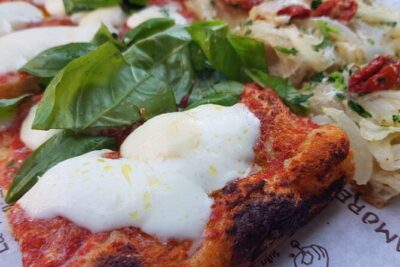
Trastevere Food tour with Free-Flowing Fine Wine
Read our review →
Award Winning Trastevere Group Food Tour with Wine
Read our review →
Food Tour with Unlimited Food and Barolo Wine
Read our review →Browse the lists this tour appears in