
Reviewed · ROME
Rome: Discover the Eternal City Center Walking Tour
Rome reveals itself best on foot, one grand square and narrow street at a time. This 2.5-hour walk links the city center’s biggest sights, from the vast Vittoriano to the Trevi Fountain and Spanish Steps, while filling in the stories between them.
I like the compact route, which gives you a useful first look at central Rome without spending half the day on transport. I also like the mix of famous monuments and street-level history, including the spot where Julius Caesar was assassinated and the former stadium beneath Piazza Navona.
The main drawback is the pace. You cover a lot of ground on cobblestones, and the tour runs in all weather. It is not suitable for wheelchair users, and anyone arriving late risks missing the walk without a refund.
Key points to know before you book
- See Rome’s essential center in 2.5 hours: The route connects Piazza Venezia, the Vittoriano, Largo di Torre Argentina, Piazza Navona, the Pantheon, Trevi Fountain, and the Spanish Steps.
- Hear the story behind Caesar’s assassination: Largo di Torre Argentina adds a striking ancient-Roman chapter to a route otherwise focused on fountains, churches, and grand squares.
- Get context at famous places: Your English-speaking guide explains how a Roman stadium became Piazza Navona and how Piazza di Spagna changed from a writers’ quarter to a luxury shopping area.
- Finish with Rome’s classic fountain and steps: Trevi Fountain and Piazza di Spagna provide the most familiar photo stops on the walk.
- A local guide makes the difference: James received specific praise for an interesting, informed tour, while the route also leaves room for questions and practical tips.
- Gelato or coffee is included: This small extra gives you a pleasant Italian pause without adding another purchase to the $53 price.
Why this route works for a first look at Rome
This is a city-center orientation walk, not a tour of Rome’s full ancient or religious collection. You will not cover the Colosseum, Roman Forum, Vatican Museums, or other major sights outside this route. Instead, you get a connected introduction to the streets and piazzas that many first-time visitors want to see right away.
The route is useful because Rome’s center can feel confusing at first. A fountain may sit in a small piazza, a temple may be tucked behind an ordinary-looking street, and a modern shopping district may hide a long story. A guide gives those places a clear order and explains why they matter.
At $53 per person, the value depends on how much help you want during your first hours in Rome. You are paying for a live English-speaking guide, a 2.5-hour walk, local explanations, and gelato or coffee. If you prefer to wander alone with a guidebook, you can see most of these outdoor sights without booking a tour. If you want answers, historical connections, and a route that removes the guesswork, the price is easier to justify.
The walk begins at Foro Traiano 84. Look for the orange Roman Vacations sign with a lion. Your greeter waits beside the fence on the north side of the column, in front of the cafe. Arrive at least 10 minutes early. The group cannot wait for late arrivals, and missed tours are not refunded.
More walking tours in Rome:
- Rome: Trastevere & Campo de Fiori Street Food Walking Tour
★ 4.9 · 2,768 reviews - Rome: Paranormal Night Walking Tour & Secret Backstreets
★ 4.9 · 1,921 reviews - Rome by Night Walking Tour – Legends & Criminal Stories
★ 4.5 · 1,003 reviews
Starting at Piazza Venezia and the Vittoriano
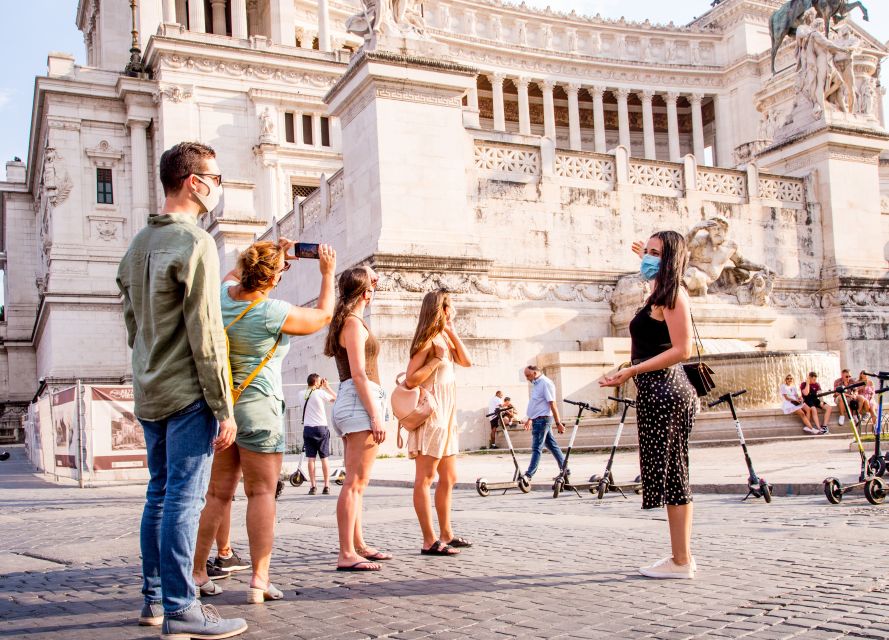
Piazza Venezia is a strong starting point because it puts you beside one of central Rome’s most imposing modern monuments. The Vittoriano, also called the Monument to Victor Emmanuel II, commemorates the unification of Italy. Its bright stone, grand stairways, columns, and heavy decoration create a sharp contrast with Rome’s older brick and marble remains.
Your guide spends about 20 minutes explaining the monument and its place in Italian history. That context matters. Without it, the Vittoriano can look like an oversized pile of white marble dropped into the middle of the city. With a guide, you can better understand why this monument was built and why it occupies such a commanding spot.
This is also a good reminder that Rome is not only an ancient city. Ancient ruins, papal buildings, Baroque fountains, and modern Italian national symbols all sit close together. The tour begins with that full range in view.
Largo di Torre Argentina and the death of Julius Caesar
From Piazza Venezia, the walk continues to Largo di Torre Argentina. The site is famous as the place associated with Julius Caesar’s assassination. It is one of the more unusual stops because the ancient remains are viewed from the surrounding streets rather than experienced as a polished monument with a grand entrance.
Your guide gives this stop about 20 minutes. That is enough time to set the scene and explain why the ruins matter, especially if you know only the basic story of the Ides of March. The site adds a strong human event to the tour. Instead of hearing only about emperors, temples, and monumental building projects, you connect the ruins with a dramatic political murder.
For many people, this is one of the most memorable parts of the route. It is less polished than Trevi Fountain or Piazza Navona, but that is part of its appeal. Rome often places its oldest remains in the middle of daily city life, with traffic, cafes, and ordinary streets close by.
Piazza Navona and Bernini’s Fountain of the Four Rivers
Piazza Navona is the route’s grand Baroque set piece. The square occupies the site of an ancient stadium, and your guide explains how its earlier use shaped the space you see today. That connection between the Roman past and the later papal city is one of the tour’s most useful themes.
The piazza is now home to a Papal Palace, a striking church, and Bernini’s Fountain of the Four Rivers. The fountain gives you plenty to study: figures, movement, water, and symbolic geography. You do not need to be an art expert to appreciate it, but the guide’s explanation helps you notice more than the central obelisk and photo-friendly details.
Plan for roughly 20 minutes here, with additional attention to the Fountain of the Four Rivers. The square can feel lively, with street artists and locals passing through. That activity is part of the experience, though it can make quiet listening harder at busy times.
Piazza Navona is also a good place to gauge your walking stamina. The tour is not a long hike, but the route moves through busy public spaces and over uneven cobblestones. Comfortable shoes are essential.
More city highlights tours in Rome:
- Rome: City Sightseeing Hop-on Hop-off Bus with Audioguide
★ 4.0 · 16,045 reviews - City Sightseeing Rome Hop-On Hop-Off Bus Tour
★ 3.5 · 5,446 reviews - Rome: Fettuccine Pasta Cooking Class in Rome’s City Center
★ 4.8 · 2,414 reviews - Vatican City: Vatican Museums & Sistine Chapel Entry Ticket
★ 4.3 · 2,185 reviews
The Pantheon and Rome’s ancient religious world
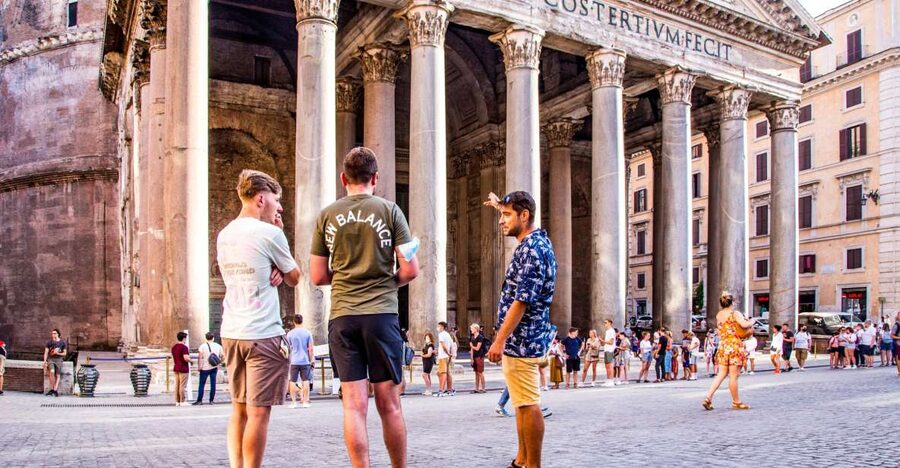
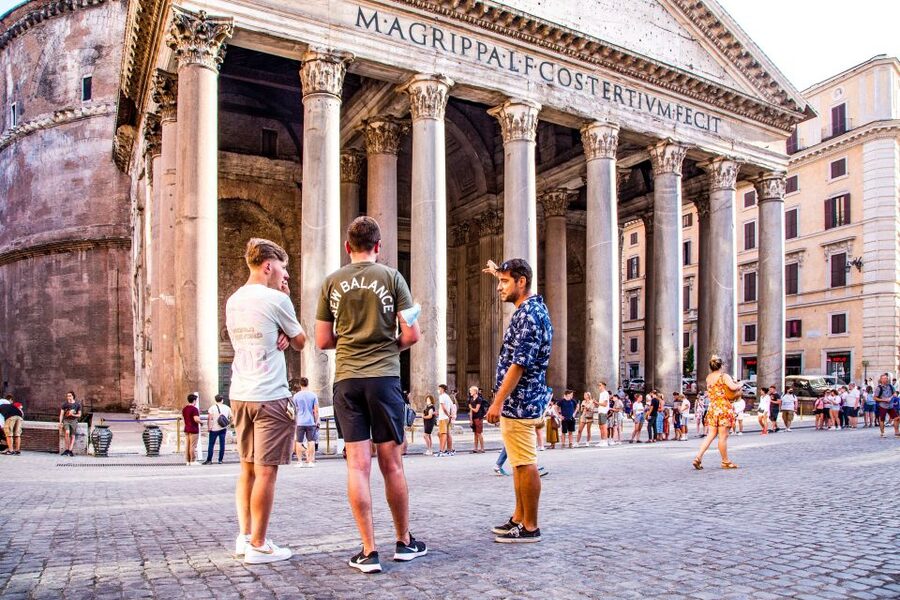
The Pantheon gives the tour another change of mood. The building began as a temple connected with Rome’s many gods and later became one of the city’s most important historic churches. Your guide allows about 20 minutes to explain its role and architecture.
This stop is valuable because it connects the polished city center with ancient Roman religion. You are not simply looking at an old building. You are seeing a place that passed through different phases of Rome’s story and remained part of the city’s daily life.
The wording of the tour indicates a visit to the Pantheon with guided explanation, but it does not specify admission arrangements or an interior visit guarantee. Check the conditions when booking if entering the building is essential to you. In any case, allow time to appreciate the exterior and the surrounding piazza.
You may also need to cover bare shoulders inside churches during warm weather. Bring a light scarf or other cover if you plan to enter religious buildings.
Narrow streets leading to Trevi Fountain
After the Pantheon, the route leaves the broad piazzas and heads through narrow cobblestone streets toward Trevi Fountain. This change is important. Rome’s center is not just a string of monuments. The spaces between them are part of the experience, with old facades, small lanes, and sudden openings into busy squares.
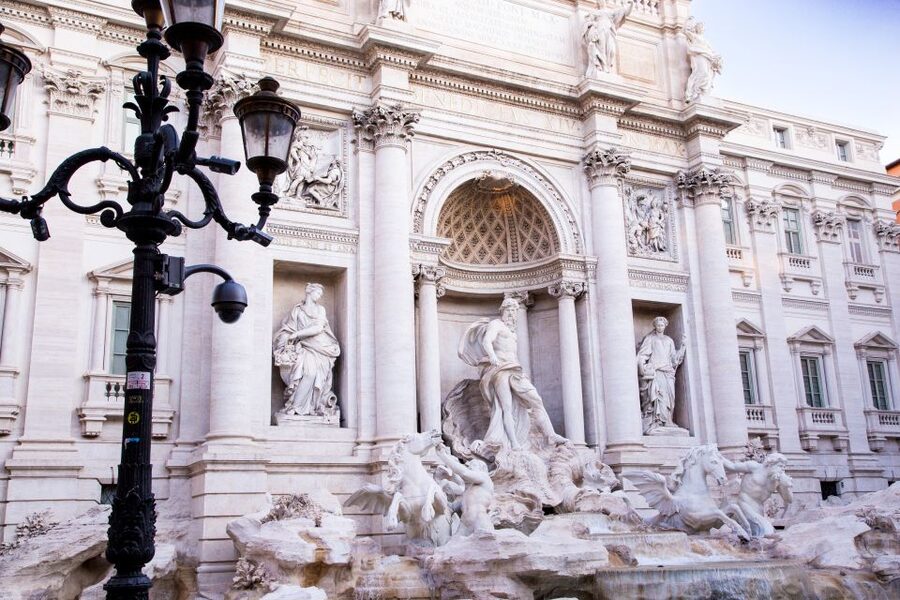
Trevi Fountain is the tour’s most familiar stop for many people. Your guide gives you about 15 minutes there, explaining the fountain and the well-known coin toss. You can toss a coin into the water if you want to follow the tradition, but bring no expectation of having the place to yourself.
The time is enough for an introduction and a quick look, but it may feel short if you want detailed photographs or a long pause. The fountain is one of Rome’s most popular sights, so the area can be crowded. Stay close to your guide and keep your belongings secure in crowded spaces.
I like that Trevi comes after the Pantheon rather than at the beginning. By this point, you have already heard stories about ancient Rome, papal Rome, and Baroque Rome. The fountain becomes part of a larger picture instead of being just a famous backdrop.
Piazza di Spagna and the Spanish Steps
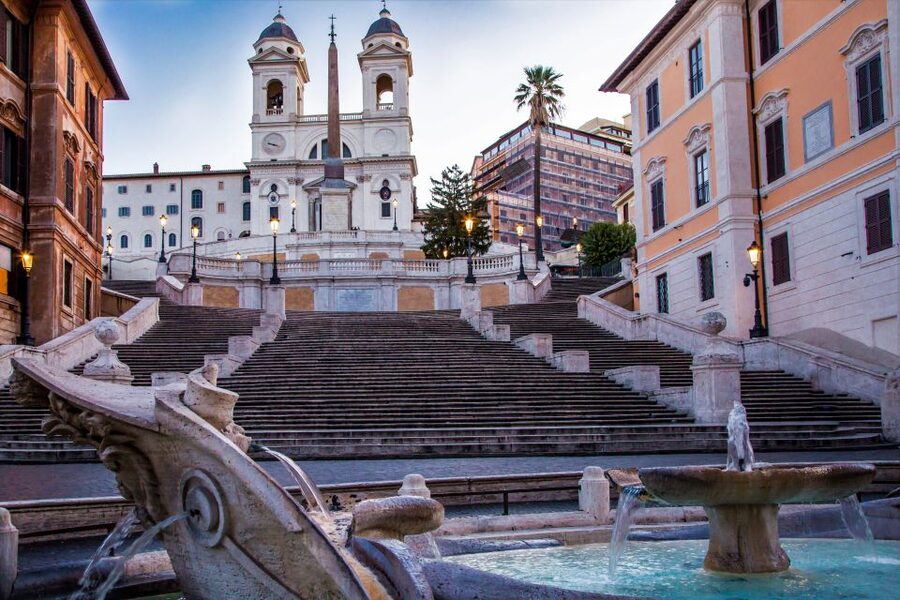
The walk finishes at Piazza di Spagna, home of the Spanish Steps. Your guide spends about 20 minutes here, explaining how the neighborhood changed over time.
The area was once linked with famous British writers such as Keats and Shelley. Today, it is known for high-end fashion shopping. That shift gives you a quick lesson in how Rome’s neighborhoods change while keeping their old buildings and public spaces.
The Spanish Steps are a natural endpoint because they are easy to recognize and close to major shopping streets. You can admire the stairs and the surrounding piazza, then continue exploring independently after the tour. The route does not provide transportation back to your hotel or another part of Rome, so plan your next stop from here.
This final section also helps you see the difference between ancient landmarks and modern Rome. The city is not preserved in one single era. Ancient remains, literary connections, luxury shops, and public meeting places all overlap.
What the guide adds to the walk
The guide is the main reason to choose this experience instead of following a map on your own. The stops are easy to name, but the connections between them are less obvious. A guide can explain why Piazza Navona occupies an ancient stadium, what happened at Largo di Torre Argentina, and how Piazza di Spagna became a shopping district.
English is the tour language. One specific guide, James, was praised for an interesting tour, and another detailed account highlighted an informative and helpful guide who answered questions throughout the walk. Those comments point to the service you should look for here: clear explanations, room for questions, and practical advice that helps you keep exploring after the tour ends.
Do not expect a museum-style lecture at every stop. The schedule gives you short visits, with about 15 to 20 minutes at the main locations. This format suits you if you want a readable introduction rather than a long technical talk about architecture or archaeology.
The included Italian gelato or coffee is a welcome touch. The information does not specify exactly when or where it is served, so treat it as a planned extra rather than a guaranteed long cafe break. Additional food and drinks are your responsibility.
Walking conditions, weather, and practical comfort
Wear comfortable walking shoes. Cobblestones can be tiring, and the tour includes several busy squares, narrow streets, and extended periods on foot.
Tours operate in all weather. Bring water, sunscreen, a hat, and an umbrella. In colder temperatures, dress warmly. In hot weather, shade may be limited in some open piazzas, so sun protection matters.
The route is not suitable for wheelchair users. The tour description does not provide detailed information about accommodations for other mobility needs, so contact the provider before booking if you have specific access concerns.
The walk does not include transportation to or from the meeting point. You need to arrange your own way to Foro Traiano 84 and your own onward transport after the Spanish Steps.
You can cancel up to 24 hours before the tour for a full refund, and the reserve-now, pay-later option lets you hold a place without paying immediately. Those terms are useful if your Rome schedule is still changing, but they do not protect you from missing the start time.
Who should book this Rome walking tour?
I would choose this for a first or early visit to Rome when you want to get your bearings quickly. It suits couples, families with older children, and independent visitors who like to explore alone but want a strong introduction first.
It is also a good fit if you care about context. The tour does more than point out fountains. It connects Italian unification, Julius Caesar’s assassination, ancient Roman religion, papal power, Baroque art, literary history, and modern shopping streets.
You may want something else if your main goal is entering major museums, spending a long time at each monument, or visiting the Colosseum and Roman Forum. Those sights are not part of this route. You should also think twice if you dislike walking on uneven surfaces or if you need a tour that can wait for late arrivals.
Should you book it?
Book this tour if you want a focused introduction to Rome’s historic center, a live English-speaking guide, and a route that covers the city’s essential fountains, piazzas, and landmarks in one morning or afternoon. The $53 cost is reasonable when you value explanations, questions, local tips, and the included gelato or coffee.
Skip it if you already know central Rome well or prefer to set your own pace at every stop. For a first look, though, the route gives you a useful framework. Afterward, you can return to the Pantheon, Trevi Fountain, or Piazza Navona with a better sense of what you are seeing.
FAQ
How long does the Rome walking tour last?
The tour lasts 2.5 hours.
What language is the tour conducted in?
The tour is conducted in English by a live guide.
Where does the tour begin?
It begins at Foro Traiano, 84, in central Rome.
How do I find the meeting point?
Look for the orange Roman Vacations sign with a lion. The greeter waits beside the fence on the north side of the column, in front of the cafe.
How early should I arrive?
You should check in 10 minutes before your scheduled start time.
What happens if I arrive late?
The tour cannot be delayed for late arrivals, and no refund is provided for missed tours or late arrival.
Is food included?
An authentic Italian gelato or coffee is included. Additional food and drinks are not included.
Does the tour include transportation?
No. Transportation to and from the meeting point is not included.
Can I join the tour in any weather?
Yes. Tours operate in all weather conditions. Bring water, sunscreen, a hat, and an umbrella as needed.
Is the tour suitable for wheelchair users?
No. The tour is not suitable for wheelchair users.
Can I cancel for a refund?
You can cancel up to 24 hours in advance for a full refund. You can also reserve now and pay later.
Newest Rome tours we have reviewed
- Private TikTok Video Making in Rome★ 5.0 · 7 reviews
- Assisi, Orvieto and Civita di Bagnoregio Full Day Tour from Rome★ 4.5 · 45 reviews
- Assisi & Saint Francis Path Tour from Rome★ 5.0 · 45 reviews
- Assisi and Cascia Private Day Tour from Rome with Lunch★ 5.0 · 10 reviews
- Art Class in the center of Rome!★ 4.0 · 4 reviews
- Art & Craft: Beer Tour with Street Art in Rome★ 4.5 · 6 reviews
- Arrival in Rome: Airport Transfer & Exclusive City Introduction★ 5.0 · 3 reviews
- From Rome: Private Day-Tour of Tuscany★ 5.0 · 16 reviews