
Reviewed · DOMUS AUREA TOURS
Rome: Domus Aurea Tour with Virtual Reality Experience
The best part of this Rome tour comes when bare brick walls and shadowy rooms suddenly become a glittering imperial palace through 3D virtual reality. You walk through the Domus Aurea first, then see its halls, gardens, fountains, and porticoes restored before your eyes. It is a smart way to make sense of a site that can otherwise feel like a maze of dark archaeological rooms.
I like the chance to enter both the east and newly reopened west wings, and I like the strong historical setup about Nero, the Great Fire, and the palace’s later burial beneath Trajan’s baths. The main drawback is the meeting point and tour organization. Some people have found the entrance hard to locate, and an outside introduction can feel too long if your guide inside is already excellent.
Key points to know before booking
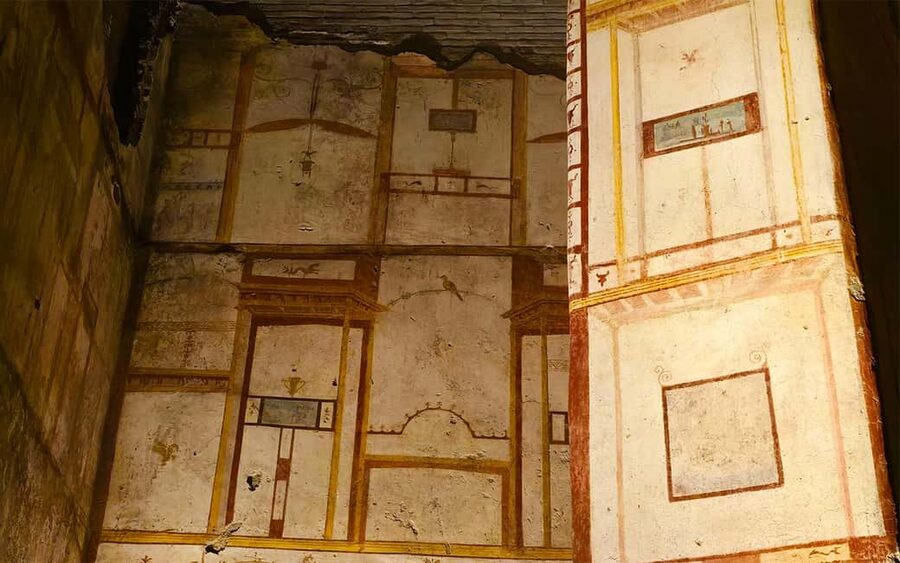
- A 105-minute guided visit covers vaulted halls, frescoes, high passageways, and the impressive Octagonal Room.
- The west wing is newly reopened, giving returning visitors something substantially different to see.
- The VR presentation is seated and helps you picture the palace before it was buried and stripped.
- The site is cool and usually less crowded than Rome’s headline ancient monuments, making it a welcome break in summer.
- English is the only listed tour language, and the route is not suitable for wheelchair users or people with mobility impairments.
- Allow extra time to find the guide, who waits outside with an Open Mind Tours sign. Your voucher is not the entry ticket.
Why the Domus Aurea feels different from other Roman ruins
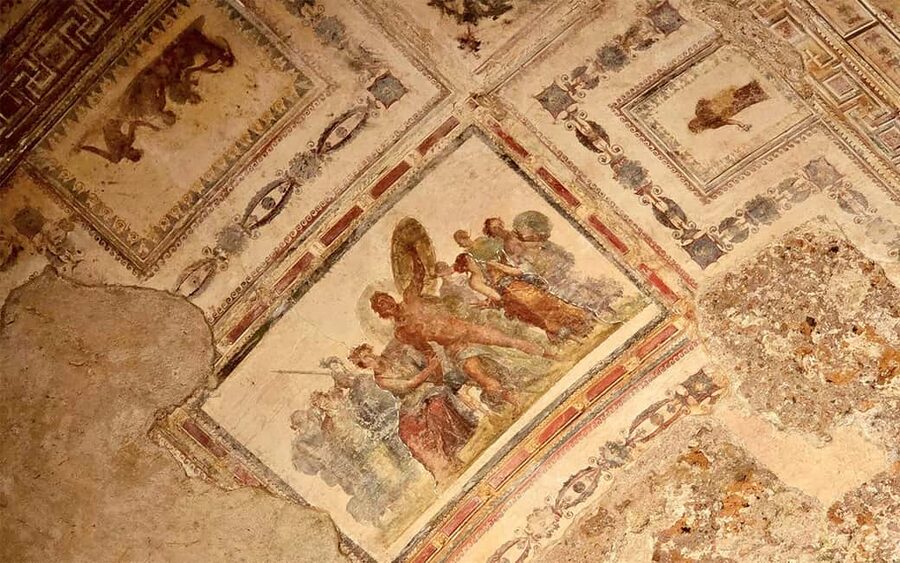
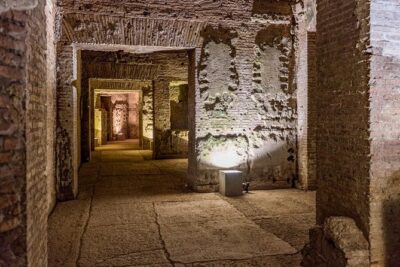
Rome gives you plenty of ancient stone, but the Domus Aurea offers something more unusual: a palace designed around light, color, water, and spectacle. You do not walk through a complete building with a grand facade. Instead, you enter the remains of a huge complex buried underground, where fragments of frescoes and brick vaults hint at an extravagant imperial world.
That contrast is part of the appeal. The rooms can look plain at first, especially beside the Colosseum or the Pantheon. Then your guide points out a painted detail, a carefully planned corridor, or the way light once entered through an opening. The palace starts to make sense as a carefully designed setting for art, ceremony, and private pleasure.
The Domus Aurea was built after the fire of AD 64, which destroyed large parts of Rome. Nero used the cleared land to enlarge his palace complex, including a private lake near the site where the Colosseum would later rise. The palace was not finished when Nero died in AD 68, but it was already vast enough to alarm the Roman public.
I appreciate that this tour does not treat Nero as a simple cartoon villain. The presentation explores his interest in art, his taste for unusual decoration, and his political choices after the fire. It also addresses the famous accusation that Nero started the blaze, presenting the case that he was at his seaside villa outside Rome when the fire began.
That version of events needs a little care. Nero’s reputation was shaped by hostile ancient writers and later stories, so certainty is difficult. Still, the discussion gives you useful context and shows why the palace became such a powerful political symbol.
More Domus Aurea tours:
- Rome: Domus Aurea Guided Group Tour
★ 4.6 · 697 reviews - Rome: Domus Aurea, Nero’s Golden House guide tour
★ 4.6 · 449 reviews - Domus Aurea Guided Tour: The Golden House of Nero
★ 4.5 · 199 reviews
Meeting the guide outside the Domus Aurea
The meeting point is outside the Domus Aurea at approximately 41.891132, 12.495589. Look for a guide holding an Open Mind Tours sign. This matters because the GetYourGuide voucher is not your admission ticket. The guide has the actual entry arrangements.
Give yourself time to find the spot. Several people have had trouble locating the entrance, and one person had to telephone the company after discovering that the supplied address was not easy to use. The Domus is near the Colosseum, but its entrance is not simply the most obvious point beside that monument.
The guide’s first presentation takes place outside and provides a Roman history lesson before you enter. Guides such as Alexei and Rosario have been praised for making this introduction lively and useful, while Yev has been singled out for an especially detailed and warm presentation. Names and personnel can change, of course, but the tour has generally placed real weight on this opening talk.
The outside briefing can help you understand Nero’s place in Roman history before the archaeology becomes visually complex. It covers the fire, the palace’s construction, Nero’s fall, the arrival of Vespasian, and the later burial of the Domus beneath Trajan’s baths.
Still, this opening is not essential for everyone. If you already know Roman imperial history, you may find it longer than needed. One useful approach is to treat it as orientation rather than the main event. Keep your attention for the rooms ahead.
Walking through 30 frescoed halls
The main guided visit lasts about 105 minutes, within a total activity time of roughly two hours. Inside, you move through a sequence of vaulted rooms and corridors, including around 30 frescoed halls across the east and west wings.
The setting is dark, cool, and archaeological. You will not see a polished palace with furniture and intact ceilings. Instead, you see exposed brick, surviving plaster, painted fragments, and the scale of rooms that once formed part of a much larger imperial property.
This is where the guide earns the tour fee. A good explanation connects the bare remains to the original design. The palace used porticoes, fountains, gardens, and openings to control light and create surprise. The decoration included strange and playful figures, delicate painted details, and a mixture of artistic influences from across the Roman world.
The frescoes are especially important. Renaissance artists discovered the rooms in the 1500s, when they climbed down into what they believed were grottoes, or grotte. Their copies and adaptations helped shape European art. The Domus Aurea therefore links ancient Roman painting with the Renaissance rediscovery of classical culture.
You will also hear about Roman building skill. The high vaults and broad halls show what engineers could achieve with concrete, brick, and careful load distribution. One person with a background in heavy construction found the building methods and preserved materials particularly rewarding. You do not need technical training to appreciate this, but the site offers more than imperial gossip.
The newly reopened west wing
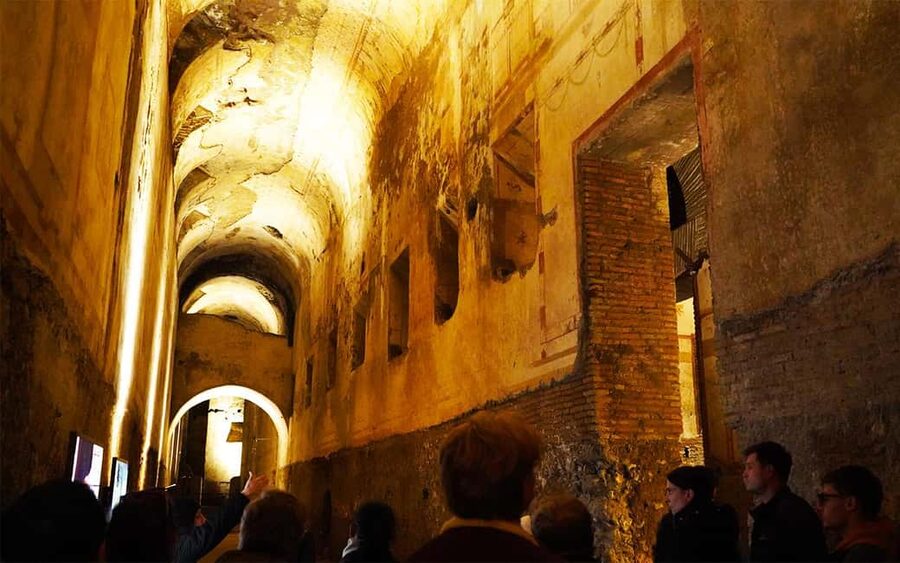
The newly reopened west wing is one of the strongest reasons to choose this particular version of the tour, especially if you visited the Domus Aurea in the past. It adds more corridors and rooms to an already large complex and gives you a better sense of the palace’s extent.
The west wing is not a separate showpiece with a neat beginning and end. It forms part of the same underground archaeological experience, so you should expect more walls, vaults, plaster, and painted decoration rather than a reconstructed interior. Its value comes from seeing additional sections of Nero’s plan and understanding that the surviving rooms represent only part of the original complex.
The scale can surprise you. One person who had previously visited the Domus still found the palace far larger than expected. That is a useful warning: the site is not a quick room-and-photo stop. Wear comfortable shoes, and expect to spend much of the visit on your feet.
Because the environment is delicate, access can be controlled. The preservation of the frescoes and plaster is more important than allowing unlimited crowds. That may mean the visit feels carefully managed, but it also protects the fragile remains you came to see.
Same city, a completely different half-day:
- Vatican Museums & Sistine Chapel Tour with Optional Basilica
★ 4.3 · 67,413 reviews - Vatican Museums, Sistine Chapel & St Peter’s Basilica Guided Tour
★ 4.5 · 39,149 reviews - Rome: Colosseum, Palatine Hill and Roman Forum Guided Tour
★ 4.8 · 32,814 reviews - Rome: Guided Tour of Colosseum, Roman Forum & Palatine Hill
★ 4.7 · 27,897 reviews
The Octagonal Room and Nero’s grand design
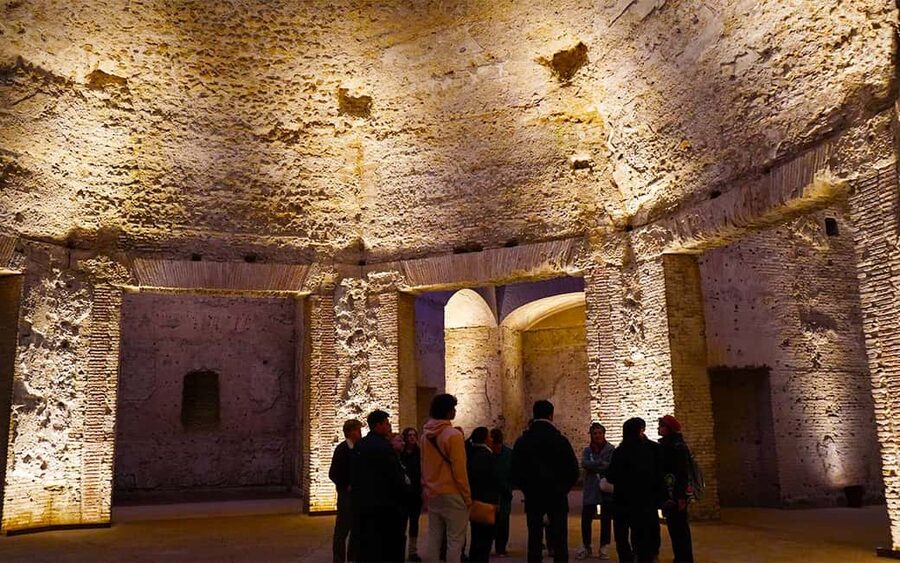
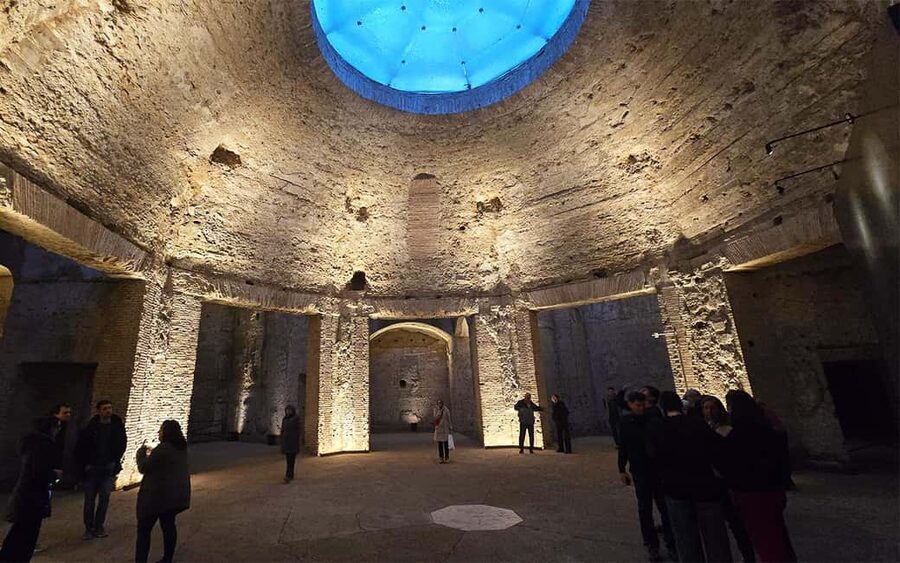
The Octagonal Room is the architectural climax of the walk through the palace. Its unusual shape and surrounding rooms show the ambition of Nero’s designers. The tour presents the possibility that the ceiling may have rotated, although this remains an intriguing interpretation rather than a simple fact you can observe today.
Here, I find it helpful to focus less on the theatrical story and more on the engineering. A rotating ceiling above a banquet or ceremonial room would have been an astonishing display of mechanics, even if the evidence and exact operation remain debated.
The room also brings together the palace’s main themes: geometry, spectacle, light, and movement. Roman imperial architecture was not just about making large spaces. It was about controlling what people saw and when they saw it. The Domus Aurea used architecture as performance.
Your guide may also connect the room to the wider empire. Rome’s luxury depended on materials, craftsmen, goods, and artistic ideas moving across enormous distances. The palace was a display of imperial reach as much as Nero’s personal taste.
The virtual palace after the real ruins
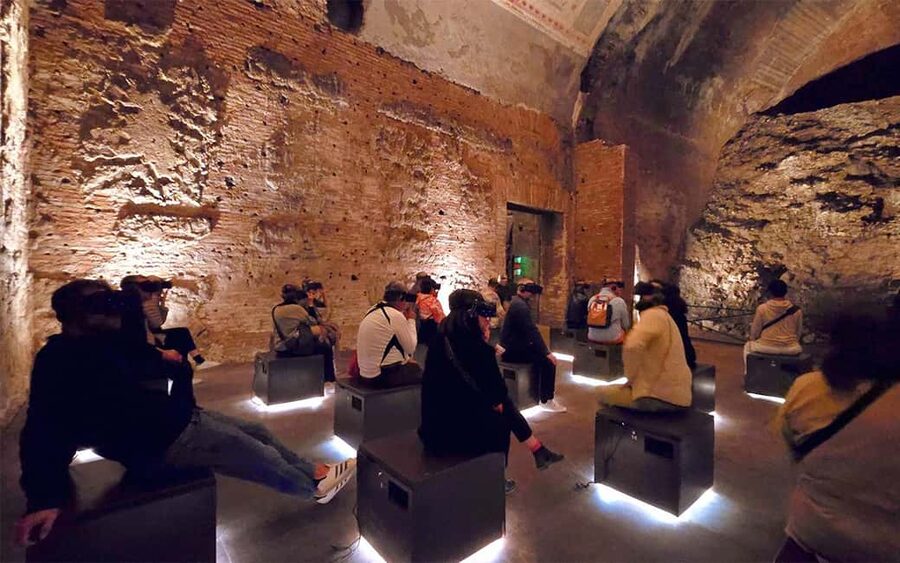
The seated VR presentation is the tour’s most effective teaching tool. After walking through the surviving rooms, you put on the equipment and see a reconstruction of the palace at its peak. The presentation includes interior halls and an outside portico, along with the gardens and lake that once formed part of the complex.
You should look around in every direction. The reconstruction is designed to surround you, and one person specifically noted that the full effect is easy to miss if you only look straight ahead. This is not a fast video shown on a wall. It gives you a spatial sense of how the palace may have worked.
The VR cannot prove every detail. Reconstruction always involves interpretation, especially for a palace that was unfinished, altered, buried, and robbed of its decoration. But it does something the surviving archaeology cannot: it gives you a practical mental picture of height, color, open space, and the relationship between rooms.
I particularly like the order of the experience. Seeing the real walls first keeps the reconstruction grounded. If you viewed the virtual palace without entering the archaeology, it could feel like a fantasy. After the walk, you can connect the digital images to actual vaults, corridors, and surviving frescoes.
The presentation is seated, which gives your legs a short break. It also makes this part easier to follow than a guide speaking while a group spreads through narrow rooms. The VR section is not an extra decoration tacked onto the visit. It is the clearest explanation of what you are looking at.
Nero, the fire, and the end of the palace
The historical story gives the visit its emotional weight. After the fire, Nero opened his gardens to people without homes, distributed essential goods, lowered grain prices, and introduced building rules intended to reduce the risk of another urban disaster. The tour also explains the criticism he faced, including claims that rescue efforts and rebuilding funds were inadequate.
At the same time, Nero used the destruction to expand his private palace. That combination explains why the Domus Aurea became so unpopular. Public relief could not erase the sight of an emperor claiming large areas of ruined Rome for personal luxury.
When Vespasian became emperor, he built the Colosseum over the lake associated with Nero’s palace. The amphitheater served practical and political purposes. It offered the public a major venue for popular games while marking a change from Nero’s private extravagance to a new imperial message of public use.
About fifty years later, Trajan’s enormous bath complex covered much of the Domus Aurea. The palace disappeared from view for roughly 1,500 years until Renaissance artists found its buried rooms. You can still see this layered history in the site itself: Nero’s palace below, later construction above, and modern conservation work keeping the remains accessible.
How much value does the guided format add?
No price is supplied here, so I cannot judge the exact cost against other tickets. The value depends on what you want from the visit.
If you only want to enter the ruins and look around, booking directly with the Domus Aurea may be worth comparing. One person felt the additional outdoor introduction was unnecessary because the guide inside handled the site so well. Direct booking could also make sense if you are comfortable finding the entrance and arranging admission yourself.
The guided option earns its keep through context, organization, and the VR experience. It handles the entry process, gives you a historical framework, and helps you understand rooms that can otherwise seem stripped and confusing. It is especially useful if you are visiting Rome for the first time, if ancient architecture interests you, or if you want the palace to connect clearly with the Colosseum and Roman Forum.
The tour has a 4.5 rating from 222 published ratings, with especially strong praise for the guides and virtual reality section. The weaker points are practical: finding the meeting place, keeping a large group together, and occasionally dealing with a guide who speaks too quickly or is hard to hear.
The tour is in English only. It is not suitable for wheelchair users or people with mobility impairments, and large bags, luggage, selfie sticks, tripods, professional cameras, glass objects, aerosols, drones, weapons, and sharp objects are not allowed. Bring a jacket because the underground rooms can feel cool, even in summer.
Free cancellation is available up to three days before the scheduled visit for a full refund. The tour returns to the Domus Aurea entrance, so plan your next Rome stop from there rather than expecting transport to another monument.
Who will enjoy this two-hour visit?
I would choose this tour for anyone who wants more than a quick photograph near the Colosseum. It suits people interested in Roman engineering, ancient painting, imperial politics, archaeology, or the way later generations rediscovered classical art.
It is also a good choice after visiting Pompeii or the Colosseum. The Domus gives you another view of Roman life, this time through an emperor’s private architecture and the machinery of power behind it. The VR section can help children and adults who struggle to picture ruined buildings, although the historical explanation may be more rewarding for older children and adults.
You should think twice if you dislike dark enclosed archaeological spaces, long explanations, or controlled walking routes. The tour does not offer a fully reconstructed palace, and much of the physical evidence is fragmentary. Its rewards come through close attention and good storytelling.
Should you book the Domus Aurea VR tour?
Yes, if you want a focused ancient Rome experience that combines real archaeology with a strong visual reconstruction. The newly opened west wing, the frescoed halls, the Octagonal Room, and the seated VR presentation make this more than a standard ruin visit.
Book it with realistic expectations. The entrance can be awkward to find, the outside briefing may feel long, and a large group can make it harder to hear every word. Arrive early, wear comfortable shoes, bring a jacket, and stay close to the guide once inside.
If your main goal is the lowest possible admission cost, compare a direct Domus Aurea ticket first. If you want the history explained, the rooms placed in context, and Nero’s palace brought back to life through digital reconstruction, this guided version offers very good value.
FAQ
How long does the Domus Aurea tour last?
The complete activity lasts about two hours. The guided visit inside the Domus Aurea lasts approximately 105 minutes.
What language is the tour in?
The tour is conducted in English, and English is the only listed language.
Where does the tour meet?
The meeting point is outside the Domus Aurea. Wait for the guide holding an Open Mind Tours sign. The supplied voucher is not the entry ticket because the guide has the admission arrangements.
Does the tour include the west wing?
Yes. The route includes the east wing and the recently reopened west wing.
Is the virtual reality experience seated?
Yes. The VR section takes place while seated. Look around in every direction during the reconstruction to see the full presentation.
What should I bring?
Bring comfortable shoes and a jacket. The underground site can feel cool.
Is the Domus Aurea accessible to wheelchair users?
No. The activity is not suitable for wheelchair users or people with mobility impairments.
Can I cancel the booking?
You can cancel up to three days in advance for a full refund.
Newest Rome tours we have reviewed
- Private TikTok Video Making in Rome★ 5.0 · 7 reviews
- Assisi, Orvieto and Civita di Bagnoregio Full Day Tour from Rome★ 4.5 · 45 reviews
- Assisi & Saint Francis Path Tour from Rome★ 5.0 · 45 reviews
- Assisi and Cascia Private Day Tour from Rome with Lunch★ 5.0 · 10 reviews
- Art Class in the center of Rome!★ 4.0 · 4 reviews
- Art & Craft: Beer Tour with Street Art in Rome★ 4.5 · 6 reviews
- Arrival in Rome: Airport Transfer & Exclusive City Introduction★ 5.0 · 3 reviews
- From Rome: Private Day-Tour of Tuscany★ 5.0 · 16 reviews
Domus Aurea Tours, compared.
Domus Aurea Guided Tour: The Golden House of Nero
Read our review →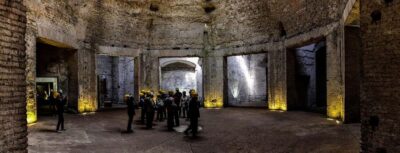
Domus Aurea Guided Tour and Virtual Reality Experience
Read our review →Browse the lists this tour appears in