Reviewed · SHOW
Rome: Gladiator Show and Museum Tickets
The most interesting thing here is the setting: this is not a polished theater show in central Rome, but an evening at the headquarters of a historical reenactment group, about 3.5 km from the Colosseum. In a purpose-built arena, gladiators fight with real weapons and armor while music, lights, and visual effects create a lively ancient Roman scene.
I like the mix of museum, performance, and audience participation. I also like the warm, hands-on welcome, with costumes and armor to examine, Roman-style snacks, and a drink in the armory. The event feels more personal than a standard stage production.
The main drawback is its location. It is reachable by bus, but public transport may have stopped when the show ends around 10 p.m. Plan a taxi back, especially if you are staying in central Rome or traveling with children.
Key points at a glance
- Real weapons and armor: Historical reenactors use working-looking equipment in staged combat.
- A 90-minute Roman evening: Allow time for the museum, refreshments, dances, rituals, comedy, and fights.
- Small educational museum: You can see gladiator weapons and armor up close, but this is not a major archaeological museum.
- Interactive atmosphere: The presenter brings the audience into the action, with chances to participate.
- Family-friendly entertainment: Children and adults can follow the simple story and enjoy the physical comedy.
- Transport needs planning: Buses 118 and 218 serve the area, but a taxi is the safer return option after the show.
A Roman night outside the city center
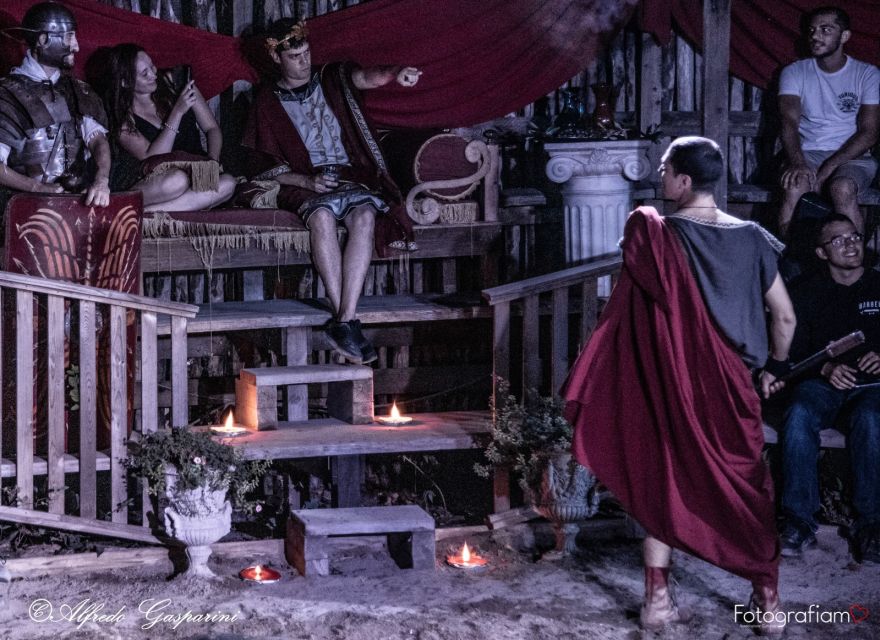
This experience gives you a different kind of Rome evening. You will not be walking through the Colosseum itself or hearing a formal lecture from an archaeologist. Instead, you will visit the base of Gruppo Storico Romano, look at period objects, and watch performers recreate pieces of Roman life in an arena.
That difference matters. If you want a serious archaeological presentation, this may feel light. If you want a memorable night that helps children connect with Roman history, it makes good sense. The event uses theater, costume, music, gestures, humor, and staged violence to turn a familiar ancient subject into something active.
The show is scheduled from May through September, with the 2026 dates offered during that season. Entrance is at 8:45 p.m., and the evening finishes at about 10 p.m. That late timing gives the event a special feel, with Roman music, incense, lighting, and an arena atmosphere replacing the usual daytime sightseeing routine.
More museums and galleries in Rome:
- Vatican Museums & Sistine Chapel Tour with Optional Basilica
★ 4.3 · 67,413 reviews - Vatican Museums, Sistine Chapel & St Peter’s Basilica Guided Tour
★ 4.5 · 39,149 reviews - Rome: Vatican Museums, Sistine Chapel & Basilica Tour
★ 4.3 · 13,872 reviews
What happens before the fight
The evening starts with a visit to the Museo storico-didattico del legionario romano, described more accurately as a small teaching museum than a full-scale museum. You will see weapons, armor, and objects connected with the life and training of Roman soldiers and gladiators.
One of the nicest features is the chance to look closely at the equipment. Some visitors have been able to try on pieces of armor and handle or examine ancient-style weapons. That hands-on element helps you understand how heavy and awkward this equipment could be, even if the displays are modest.
The museum is not large, so do not arrive expecting a collection on the scale of the Colosseum, the Capitoline Museums, or the National Roman Museum. If your group is large, the space can feel crowded, and you may not have much time with each display. Still, it does its job well as an introduction to the evening.
A presenter explains what is about to happen, including gladiator life, training, and the rituals surrounding the show. One particularly praised guide was Dafydd, who helped make the evening feel welcoming and personal. The presentation is designed for a mixed international audience, and gestures, facial expressions, and demonstrations help when English is not your first language.
Snacks, wine, and the armory
Refreshments are included, but think of them as Roman-themed nibbles rather than dinner. You may receive simple appetizers along with wine or a period-style drink such as wine with honey. The armory provides the setting, so even this brief pause feels connected to the theme.
This is useful to know before you go. The food adds charm and gives you something to enjoy before the performance, but you should eat a proper meal beforehand or plan one afterward. There are not many services close to the venue, and you should not count on finding a restaurant within an easy walk after the show.
The refreshments also help break the ice. The performers and organizers spend time with the audience, answer questions, and allow photographs. That friendly contact is a major part of the experience. It is less formal than sitting in a theater and more like joining an organized historical club for an evening.
The arena show from 9 to 10 p.m.
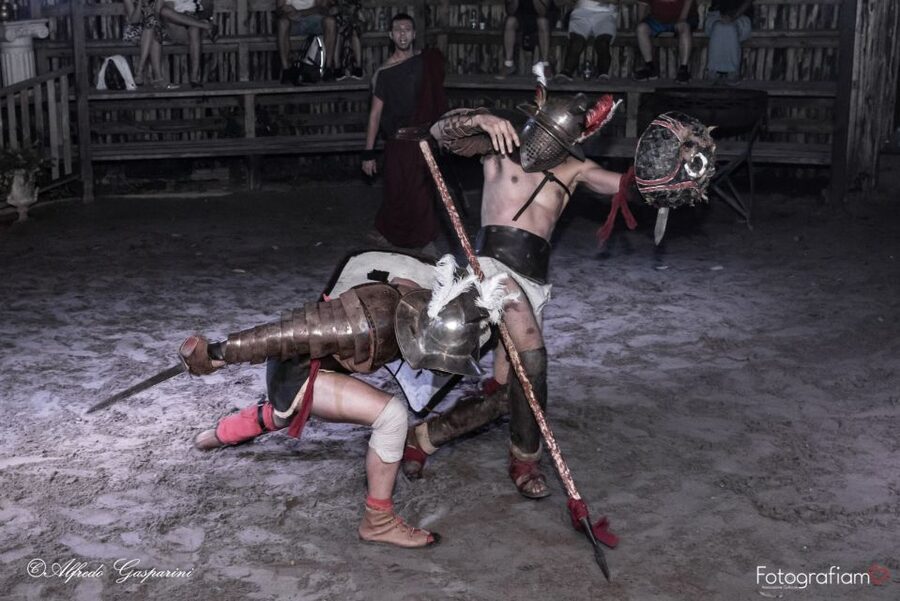
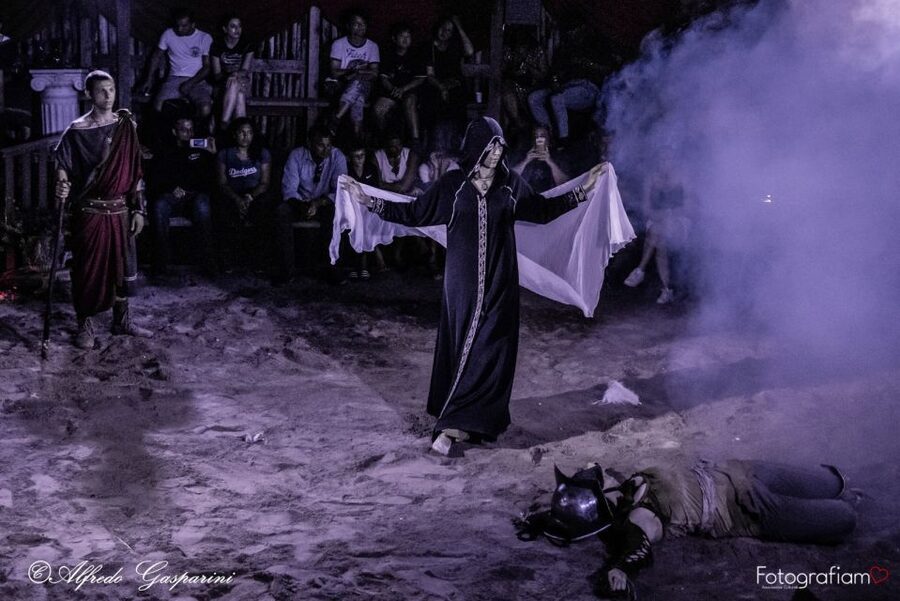
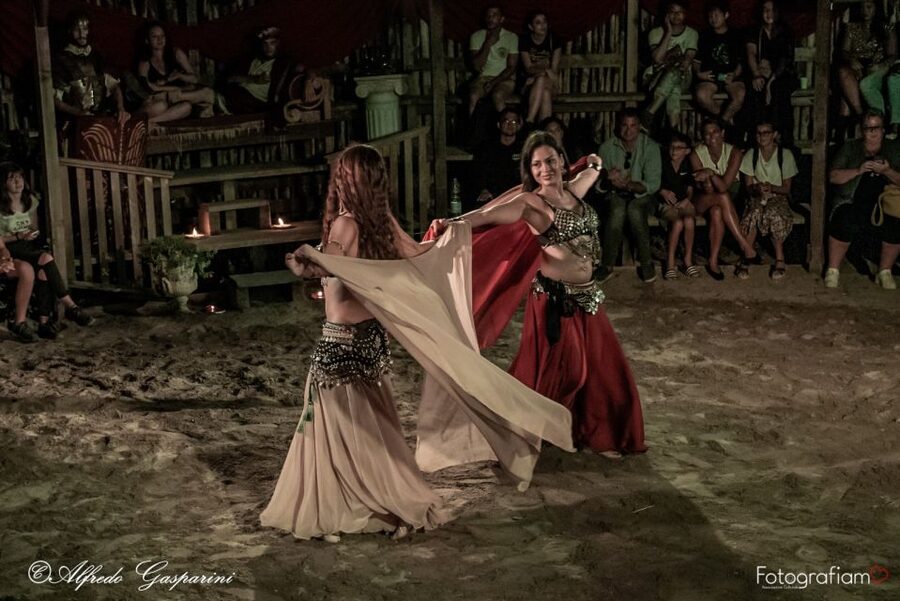
The main performance lasts about an hour. It combines several short sections rather than presenting one long, serious battle. You may see a comic warm-up, gladiator training, ancient dances, Vestal rites, pantomime, and staged fights.
The variety keeps the pace moving. A child who might lose interest during a long history talk gets several different kinds of action. Adults get a broad picture of Roman ceremony and entertainment, even though the show is made for fun rather than strict academic detail.
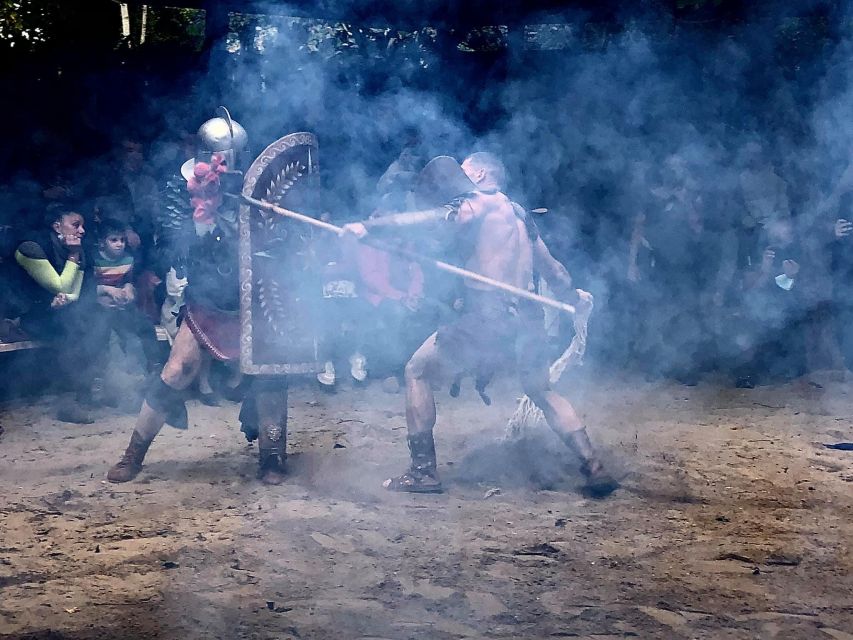
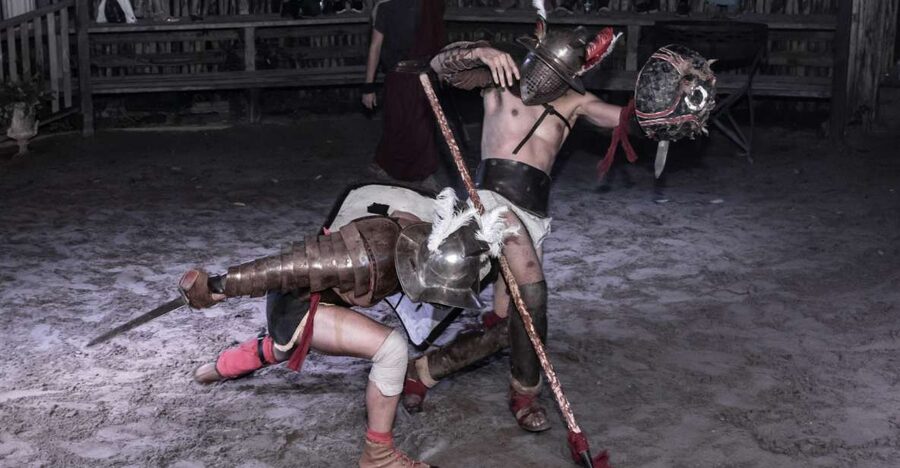
The gladiator fights use real weapons and armor, so the action has some weight and noise. Swordplay is choreographed, but performers fall hard and the atmosphere can feel surprisingly intense. Younger children may enjoy it, but sensitive children could find the apparent violence too strong. You know your family best, so keep that in mind.
The performers encourage the audience to take part. The presenter calls people into the action and keeps the crowd involved throughout the evening. You may find yourself clapping, reacting loudly, or joining a simple activity. That participation is what separates this from watching a battle scene on a screen.
The show also includes dancing and comic moments. This is not a solemn reconstruction of the Colosseum, and some of the humor is deliberately theatrical. One fair description is that it can be a little cheesy, but that is part of its appeal. The cast plays along with the larger-than-life style, and their enthusiasm carries the evening.
More shows in Rome:
- Rome: Cabaret and Burlesque Show Entry Ticket
★ 4.6 · 103 reviews - Rome: Rooftop Bar Opera Show
★ 4.6 · 94 reviews - Rome: Cabaret Burlesque Show Experience with Dinner
★ 3.7 · 32 reviews - Rome: Night Life Walking Tour and Burlesque Show Entry
★ 5.0 · 3 reviews
How authentic is the experience?
The costumes, armor, weapons, music, rituals, and Roman-style drinks are designed to suggest ancient life. The performers take their roles seriously, and the result can feel convincing at close range, especially once the lights go down and the arena action begins.
But you should set the right expectation. This is historical entertainment, not a documentary or a carefully footnoted academic demonstration. The fights are staged, and the pantomime and comedy are built for audience enjoyment. You are seeing a lively interpretation of Roman spectacle, not a literal recreation of a night at the Colosseum.
That does not make it less useful. Rome is full of ruins, labels, and museum cases. A performance gives you another way to think about the people behind those remains: soldiers, gladiators, dancers, religious figures, entertainers, and spectators. The show is at its best when you treat it as a gateway to the subject rather than the final word on it.
Photography is welcome, and you can take pictures of the cast and costumes. The performers also spend time chatting with the audience before or after the show. That makes the experience especially appealing if you enjoy meeting reenactors rather than simply watching from a distance.
Getting there and getting back
The venue is only about 3.5 km from the Colosseum, but that does not mean it is a quick walk from central Rome. Buses 118 and 218 can get you to the area, followed by roughly a five-minute walk to the site.
The return trip deserves more attention. The show ends around 10 p.m., and public transport may no longer be running conveniently. One visitor arrived by bus and needed a taxi back because the last useful bus had gone. Another noted that the area has few services nearby and can feel isolated at night.
I would arrange your return before the performance begins. The organizers have helped arrange taxis for departing visitors, and some people found this especially helpful. You can also ask the staff about a taxi once the show ends. Do not assume you will find a restaurant, taxi rank, or late bus by simply walking out to the road.
If you plan to use a bus, check the evening schedule on the day of your visit. The route may work well going out but not coming back. A taxi costs extra, but it removes the main logistical worry and lets you enjoy the show without watching the clock.
The venue is listed as wheelchair accessible. If accessibility is important for your group, confirm the practical details when booking, since the event includes movement between the museum, armory, and arena.
Is $29 a fair price?
At $29 per person, the value depends on what you want from your Rome evening. You are paying for a 90-minute event that combines museum access, a staged performance, refreshments, costumes, live music, and audience interaction. For a family, that is a reasonable amount for an evening activity that occupies a clear block of time.
The price is less attractive if you are seeking a major museum collection or a polished theatrical production. This is a small venue, and the performance has a homespun feel. The setting and cast enthusiasm matter as much as the production equipment.
I think the value is strongest for families, first-time visitors to Rome, and anyone who has already spent several days among ruins and wants something more playful. It is also a good choice for solo visitors who like interactive events. The friendly cast makes it easier to join in, even if you arrive alone.
The event has earned a 4.5 rating from 237 bookings, with especially strong praise for the staff, variety, family appeal, and audience involvement. The most consistent positive feature is not one particular sword fight. It is the sense that the organizers care about making the whole evening work, including helping people arrange a taxi afterward.
Who should book this Roman show?
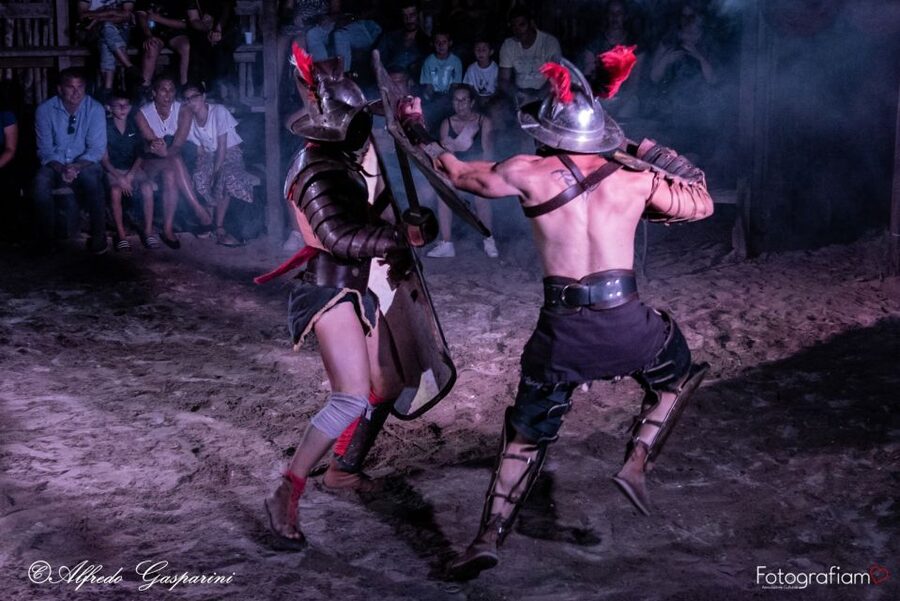
Book it if you want a fun, active evening rather than a formal history lesson. You will get the most from it if you enjoy costume, theater, staged combat, crowd participation, and a little campy humor.
Families are a natural fit. Children can see armor, watch physical action, and take part in the show instead of standing quietly in front of display cases. Adults who enjoy ancient history will appreciate the Roman setting, though they should not expect every detail to meet museum-level standards.
It also suits visitors who have already seen the Colosseum and want a different angle on Roman entertainment. The event does not replace a visit to the real amphitheater, but it can make the subject feel more human and immediate.
Skip it if you dislike staged violence, audience participation, or theatrical comedy. Also think twice if you need a central location with easy late-night transport. The distance is manageable, but the ride home requires planning.
Should you book it?
I would book this experience for the right reasons: not for archaeological depth, but for a lively Roman evening with welcoming performers, hands-on displays, and a varied show. The strongest parts are the cast interaction, the real-looking weapons and armor, the dances and rituals, and the way the presenter keeps the crowd involved.
Make dinner plans before arriving, check your route, and arrange a taxi back if you are staying in central Rome. With those details handled, the $29 price is fair, especially for families and anyone looking for a memorable break from Rome’s usual ruins and churches.
FAQ
Where does the gladiator show take place?
It takes place at the headquarters of Rome Gladiator School, Gruppo Storico Romano, in an equipped arena about 3.5 km from the Colosseum.
How long does the experience last?
The full event lasts about one and a half hours. Entrance is at 8:45 p.m., and the evening ends around 10 p.m.
What is included in the ticket?
The ticket includes the Museo storico-didattico del legionario romano visit and the gladiator show. Refreshments such as simple Roman-style snacks and a drink are also described as part of the evening.
Is the show suitable for children?
Yes. The show is designed for both children and adults, with dances, comedy, audience participation, and fights. The staged combat can look intense, so consider your child’s comfort with theatrical violence.
Does the show use real weapons?
The historical reenactors use real weapons and armor for the performance. The combat is presented as a staged show.
How can I reach the venue?
Buses 118 and 218 serve the area, with about a five-minute walk from the bus stop to the venue. You can also reach it by taxi.
Will public transport be available after the show?
It may not be. The event ends around 10 p.m., and some visitors needed taxis because buses were no longer running conveniently. Arrange a return taxi in advance or ask the organizers for help after the performance.
Newest Rome tours we have reviewed
- Private TikTok Video Making in Rome★ 5.0 · 7 reviews
- Assisi, Orvieto and Civita di Bagnoregio Full Day Tour from Rome★ 4.5 · 45 reviews
- Assisi & Saint Francis Path Tour from Rome★ 5.0 · 45 reviews
- Assisi and Cascia Private Day Tour from Rome with Lunch★ 5.0 · 10 reviews
- Art Class in the center of Rome!★ 4.0 · 4 reviews
- Art & Craft: Beer Tour with Street Art in Rome★ 4.5 · 6 reviews
- Arrival in Rome: Airport Transfer & Exclusive City Introduction★ 5.0 · 3 reviews
- From Rome: Private Day-Tour of Tuscany★ 5.0 · 16 reviews