
Reviewed · ROME
Rome: Houses of Augustus and Livia Private Tour
Augustus’ home is the star here. Behind the grand ruins of imperial Rome, you’ll enter a surprisingly restrained house with painted rooms, delicate garden scenes, and fantastical creatures. His study gives you a rare look at the private side of the man who reshaped Rome.
I like the private format, which lets your guide match the pace and background of your group. I also like the clear route from the Roman Forum up the Palatine, with time for the imperial palaces and sweeping views. The main drawback is important: the House of Livia is temporarily closed, and ancient-site access can change during restoration work.
Key points to know before you book
- Augustus’ study has exceptional frescoes: Look for plants and imaginary creatures painted on the walls.
- The House of Livia may be closed: Confirm its status before paying, since it is currently under construction.
- The route links the Roman Forum and Palatine Hill: You’ll see both major public ruins and private imperial residences.
- Guides add real academic context: Brian Green and Patrick have received especially strong praise for explaining Rome clearly.
- This is a true private tour: Your group has its own English or Italian-speaking guide rather than joining a large crowd.
- Expect uneven ancient ground: Comfortable shoes are essential, and the tour is not suitable for wheelchair users.
Why Augustus’ modest home is the main event
The House of Augustus offers something many grand Roman ruins cannot: a close look at domestic rooms used by the first emperor. Augustus did not live in a palace that matched his power. His home was comparatively restrained, at least in appearance, and that contrast helps explain the political image he wanted to project.
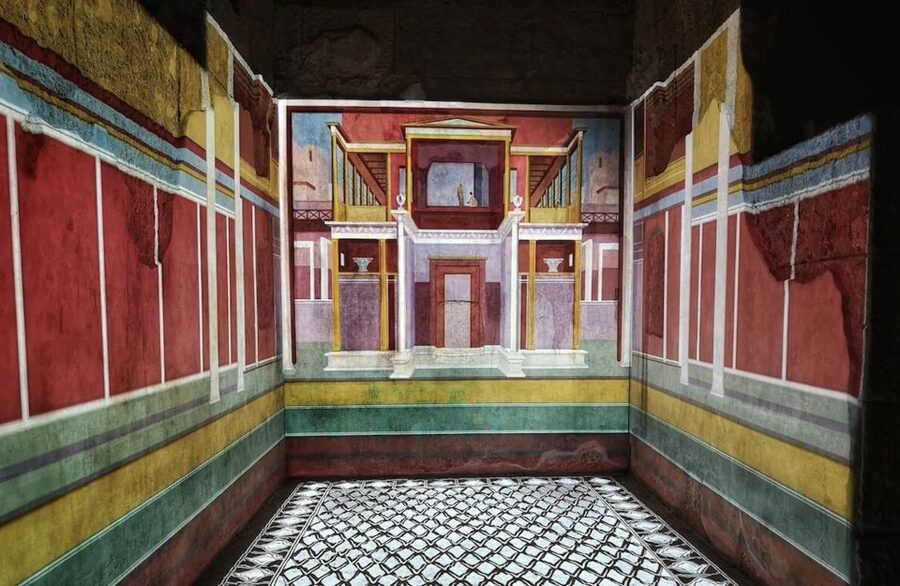
You’ll move through a succession of painted rooms, where the decoration matters as much as the surviving walls. The frescoes include plants, unusual creatures, and carefully arranged architectural scenes. These are not simply faded patches of color. They give you a sense of how Roman elites used painting to make small rooms feel refined and imaginative.
The study is especially memorable. Its decoration of plants and fantastical animals creates a more personal mood than the formal monuments below. You can picture Augustus working in a room that was quiet, controlled, and filled with images from the natural and mythological worlds.
I find this part valuable because it puts a human scale on a figure usually presented through statues, laws, and military victories. You are not just looking at another imperial ruin. You are seeing the rooms where the man who built an empire may have read, planned, and received trusted visitors.
Your guide’s role matters here. Brian Green has been singled out for his academic training and ability to explain the site with care. Patrick has also received praise for giving strong historical context. The guide assigned to you may be different, but the private setup gives you a chance to ask about the paintings, Augustus’ public image, and the difference between imperial power and private life.
More private tours in Rome:
- Rome by Golf Cart Private Tour: Beyond the Landmarks
★ 5.0 · 4,361 reviews - Early Morning Vatican, Sistine, St. Peter’s Semi or Private Tour
★ 5.0 · 3,779 reviews - Rome on a Golf Cart Semi-Private Tour Max 6 with Private Option
★ 5.0 · 2,502 reviews
Starting at Largo Corrado Ricci
The meeting point is in front of Cafe and Restaurant Angelino ai Fori at Largo Corrado Ricci, 43a. Look for a Through Eternity sign or flag. This is a practical starting place because the route begins near the Roman Forum, but you should allow time to find the cafe and guide before the scheduled start.
The tour is planned for three hours. It includes several walking sections of about ten minutes each, followed by guided visits of the Roman Forum, Palatine Hill, the House of Livia, and the House of Augustus. That makes the pace fairly focused rather than leisurely.
You’ll want comfortable shoes. The route passes through a large archaeological area with ancient paving, slopes, and uneven surfaces. The activity is not suitable for wheelchair users, so anyone with mobility concerns should ask the operator about current conditions before booking.
Skip-the-line access is included through a separate entrance. That can save useful time, especially when Rome’s central archaeological sites are busy. It does not mean every part of the visit will feel quick. You still need time to walk between the monuments and listen to your guide.
The Roman Forum in 35 minutes
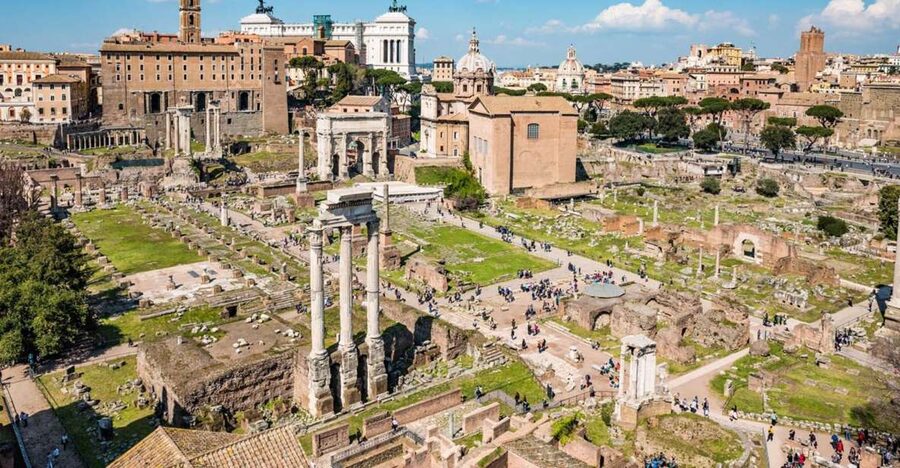
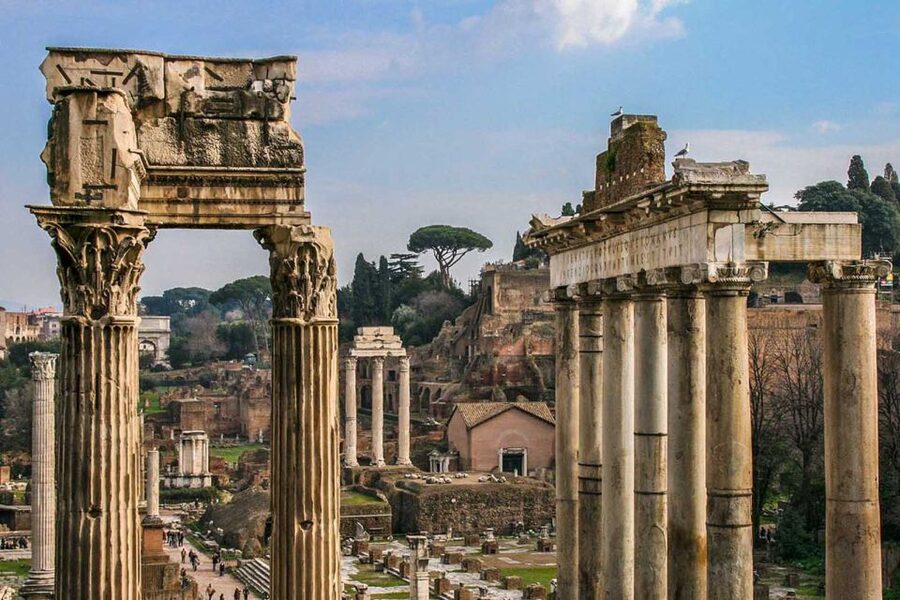
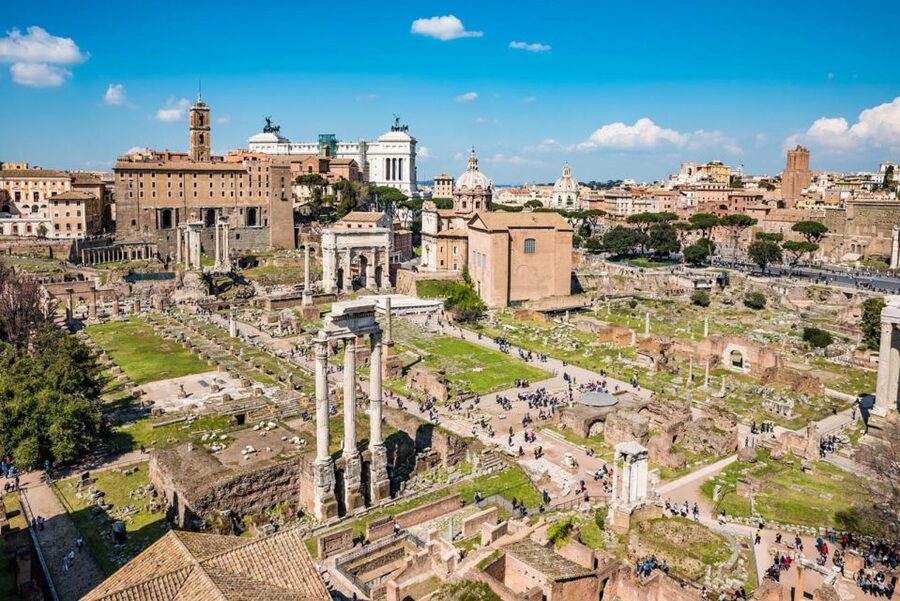
The first main stop is the Roman Forum, where the guide sets the political and social stage for everything that follows. You’ll hear about daily life in the ancient city and follow the paths associated with figures such as Julius Caesar and Cicero.
Thirty-five minutes is enough for a focused orientation, but not enough to examine every temple and basilica in detail. That is not necessarily a weakness. The Forum can overwhelm you with broken columns, scattered foundations, and layers of history. A guide helps turn the remains into a readable story.
Pay attention to how public life worked here. The Forum was not simply a collection of ruins. It was a place for politics, legal business, religion, ceremonies, and public memory. Once you understand that, the later visit to the emperor’s private quarters has more force.
The walk from the Forum toward the Palatine takes about ten minutes. Bring water, especially if you book a warm-weather time slot, since the archaeological area offers limited shade in some sections. Food and drinks are not included.
Climbing the Palatine Hill
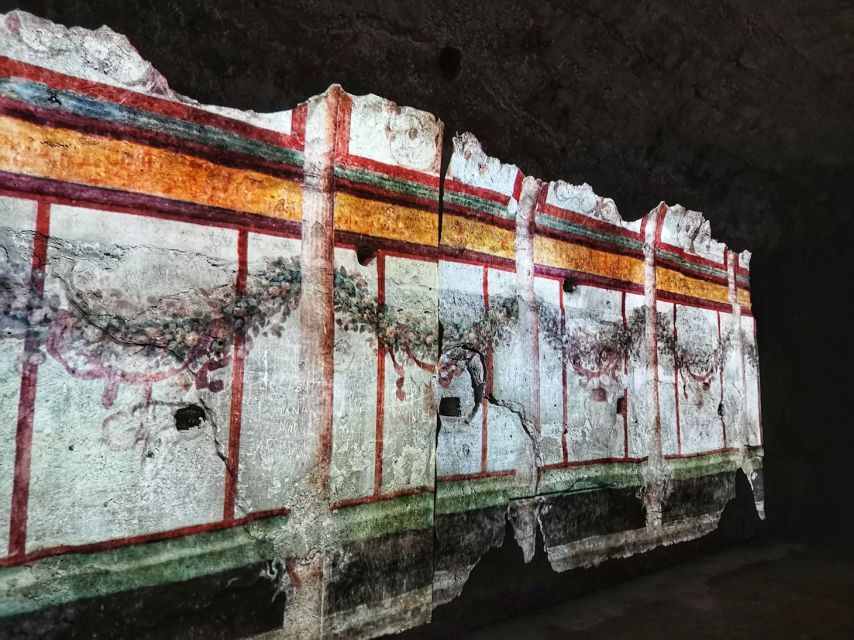
The Palatine Hill is tied to Rome’s founding legend of Romulus and Remus. Whether you treat that story as myth or civic storytelling, the location explains why later rulers wanted to live here. The hill connected Rome’s legendary beginnings with its imperial future.
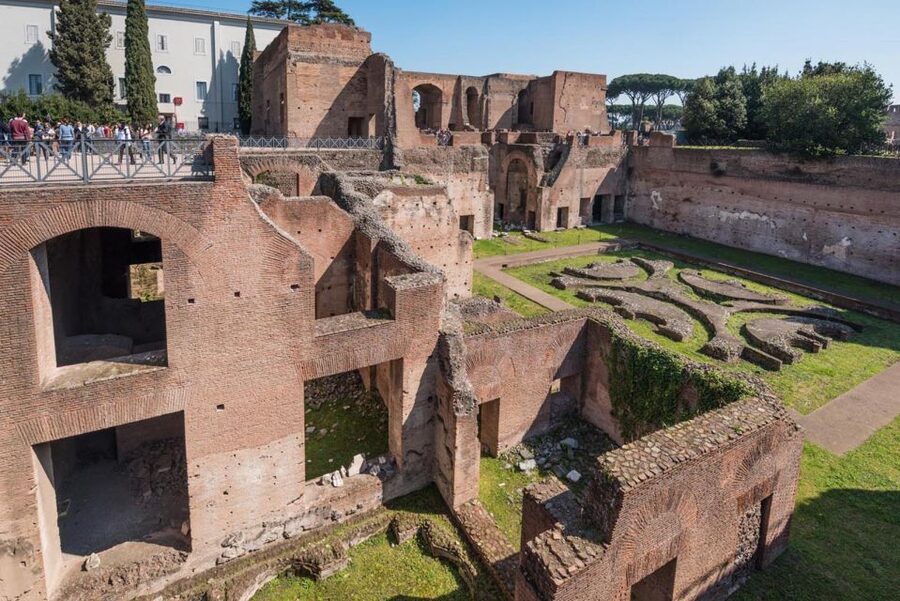
The guided visit lasts about 35 minutes. You’ll see the remains of the emperors’ palaces and enjoy views over the surrounding ruins. The setting gives you a useful sense of how the imperial center was arranged, with the Forum below and the Palatine residences above it.
The hill also helps explain the word palace. The Roman emperors built on a scale far beyond ordinary homes, and their residences occupied much of the hill. The remains of Domitian’s luxurious palace show how imperial living expanded after Augustus.
The guide also points out the site connected with the assassination of Caligula. That detail adds a sharp reminder that these buildings were not just elegant homes. They were places of succession struggles, fear, ceremony, and political danger.
The views are a major reward, but do not expect a separate sightseeing stop with unlimited time. This is a guided visit with a set schedule. If you want long pauses for photographs, tell your guide early so you can see how the timing might work.
Same city, a completely different half-day:
- Vatican Museums & Sistine Chapel Tour with Optional Basilica
★ 4.3 · 67,413 reviews - Vatican Museums, Sistine Chapel & St Peter’s Basilica Guided Tour
★ 4.5 · 39,149 reviews - Rome: Colosseum, Palatine Hill and Roman Forum Guided Tour
★ 4.8 · 32,814 reviews - Rome: Guided Tour of Colosseum, Roman Forum & Palatine Hill
★ 4.7 · 27,897 reviews
The House of Livia, if access has reopened
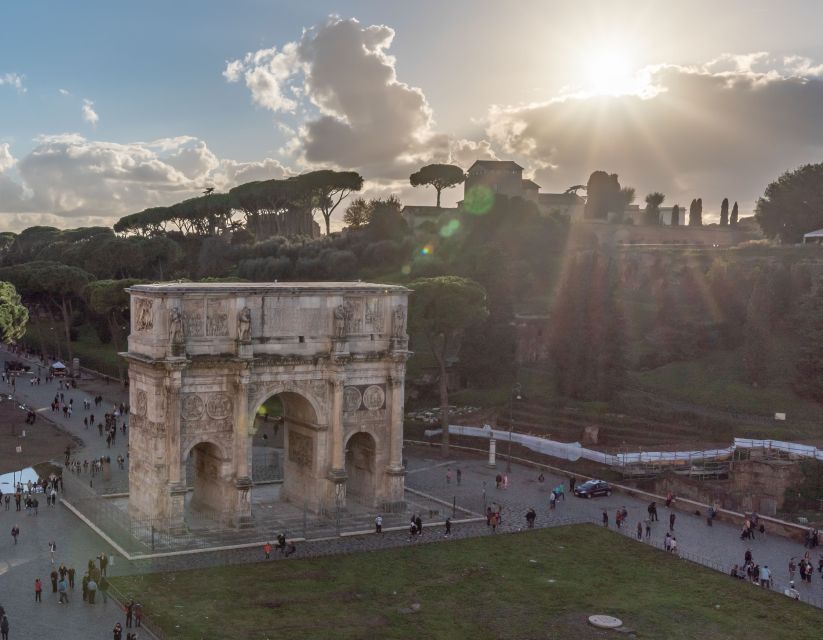
The House of Livia is described as the home of Augustus’ wife because a lead-pipe inscription found in the nineteenth century helped identify it. The site is known for its mythological frescoes and original marble floors.
When open, this is one of the most visually appealing stops. The rooms were protected underground for centuries, which helped preserve the wall paintings. Mythological scenes and polished marble create a very different mood from the open-air ruins outside.
The planned visit lasts about 35 minutes. That gives you time to look closely at the paintings and hear how the house was identified. The smaller scale also makes a useful contrast with Domitian’s enormous palace complex.
At present, the House of Livia is temporarily closed because of construction. The closure may change, so contact the operator before booking if this room is your main reason for choosing the tour. If it remains closed, ask what replacement access or explanation will be provided.
This is the one part of the tour you should not treat as guaranteed. The description includes the House of Livia, but the current notice clearly warns that it may not be available. Restoration work can also affect other monuments during the Jubilee period.
Augustus’ frescoed rooms for 45 minutes
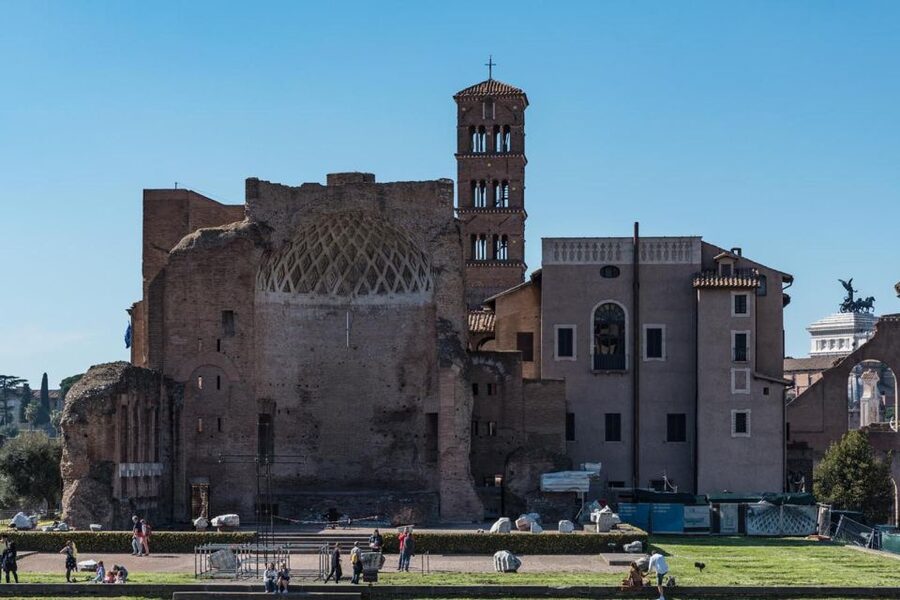
The longest scheduled stop is the House of Augustus, with about 45 minutes for the guided visit. That is sensible. The painted rooms deserve more than a quick glance, and your guide can help you notice details that are easy to miss in dim interiors.
The decoration is notable for its fine condition and delicate subjects. Plants, fantastic creatures, and carefully planned scenes cover rooms that once belonged to one of antiquity’s most powerful men. The paintings show that Roman art was not limited to large public sculpture or heroic portraits.
I like that this part of the visit focuses on Augustus’ private surroundings rather than only his public achievements. It gives you a better sense of how power was presented through taste, restraint, and controlled access.
The interiors may feel close and quiet compared with the wide-open Forum. That is part of their appeal, but it also means you should listen closely to your guide and avoid rushing from room to room. Headsets are supplied for groups of six or more, which helps when the site is crowded or the rooms are difficult to hear in.
Domitian’s palace and Santa Maria in Antiqua
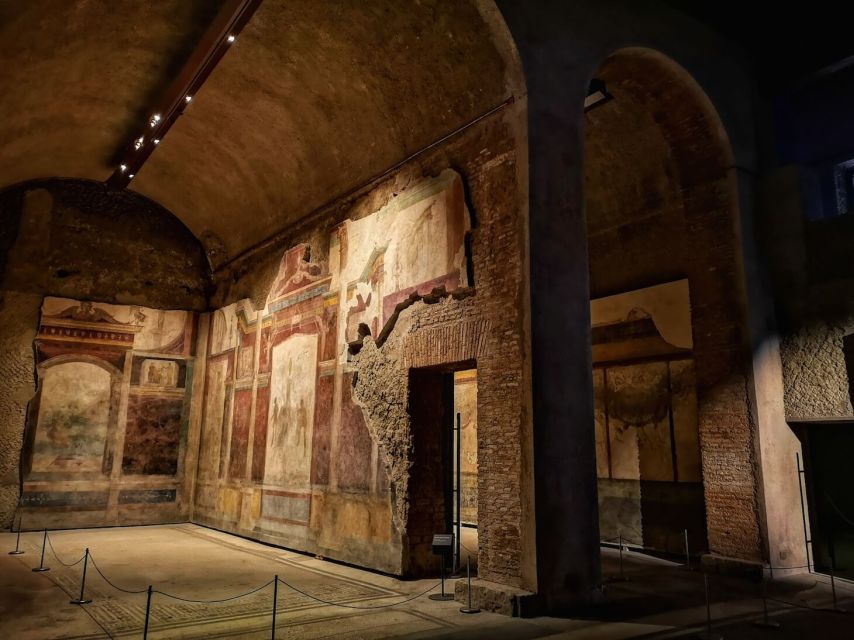
The tour continues beyond the two houses. You’ll see sections of Domitian’s palace and learn how later emperors enlarged the Palatine into a vast residence complex.
Another notable feature is the monumental ramp linking the Palatine to the Forum below. Walking this route helps you understand how emperors could move between their residence and the public center of Roman government. It was both a practical passage and a powerful statement about who controlled the city.
The tour also includes Santa Maria in Antiqua, an ancient church formed from the remains of the imperial palaces. It is a good example of how Rome reused older buildings rather than clearing the ground and starting fresh.
These extra stops give the visit more range. You are not paying for only one painted house. You’ll see public spaces, imperial residences, transport routes, political sites, and a later Christian building fitted into the remains of imperial Rome.
Is $149.54 a fair price?
At $149.54 per person, this is not a budget visit. The value depends heavily on your group size and your interest in ancient Rome.
For a private group, the price buys a personal guide, skip-the-line access, all entrance fees and taxes, and a carefully focused three-hour route. You can ask questions and adjust the level of explanation more easily than on a large group tour. That matters if your party includes both serious Roman-history fans and people who need a clear introduction.
The value is less convincing if you mainly want a quick look at the Forum and Palatine. The public archaeological area can be visited in other ways, and the House of Livia closure reduces the number of guaranteed interior visits.
I would consider the price reasonable for a small group that wants strong explanation and access to Augustus’ house. It becomes more attractive when divided among several people, since the guide is private rather than shared with a large crowd.
The tour also allows you to reserve now and pay later, with free cancellation up to 24 hours before the start. Keep an eye on messages about restoration work, since Jubilee-related changes may affect the route.
Who should choose this private Rome tour?
I would choose this tour if you care about how Roman power worked behind the public monuments. It is especially well suited to people who want frescoes, imperial residences, and political context rather than a quick checklist of famous ruins.
It also suits groups with mixed levels of interest. A strong guide can explain the basics without flattening the subject for people who already know Roman history. The praise directed at Brian Green and Patrick suggests that guide quality is one of the experience’s strongest features.
You should think twice if you need a fully accessible route, dislike walking over uneven ancient ground, or are booking mainly for the House of Livia. Its temporary closure is the key uncertainty.
English and Italian are available. The group is private, and headsets are provided for groups of six or more. Transportation to the meeting point, transportation afterward, food, and drinks are not included.
Should you book it?
Book this tour if Augustus’ painted rooms, imperial politics, and a private guide sound more appealing than a broad but shallow tour of Rome. The House of Augustus, the Forum, Domitian’s palace, and the Palatine views make a strong three-hour package.
Before booking, confirm whether the House of Livia has reopened and ask how the route will change if restoration continues. If that room is available, the tour gives you an unusually close look at both Augustus and Livia’s private world. If it is not, the visit still has real value, but the decision rests more on the House of Augustus and the quality of your guide.
FAQ
How long does the tour last?
The tour lasts three hours. Starting times depend on availability.
Where does the tour begin?
You meet the guide in front of Cafe and Restaurant Angelino ai Fori at Largo Corrado Ricci, 43a. Look for a Through Eternity sign or flag.
Where does the tour finish?
The meeting-point information says the activity ends back at the meeting point. The route information also lists Palatine Hill as the final stop, so confirm the exact end point with the operator before the tour.
Is the House of Livia open?
The House of Livia is temporarily closed, although this may change. Contact the operator for its current status before booking.
What languages are available?
The live guide is available in English or Italian.
Is the tour accessible for wheelchair users?
No. The activity is not suitable for wheelchair users.
What is included in the price?
The price includes entrance fees and taxes, skip-the-line access, a private English or Italian-speaking guide, and headsets for groups of six or more. Food, drinks, and transportation to or from the meeting and end points are not included.
Newest Rome tours we have reviewed
- Private TikTok Video Making in Rome★ 5.0 · 7 reviews
- Assisi, Orvieto and Civita di Bagnoregio Full Day Tour from Rome★ 4.5 · 45 reviews
- Assisi & Saint Francis Path Tour from Rome★ 5.0 · 45 reviews
- Assisi and Cascia Private Day Tour from Rome with Lunch★ 5.0 · 10 reviews
- Art Class in the center of Rome!★ 4.0 · 4 reviews
- Art & Craft: Beer Tour with Street Art in Rome★ 4.5 · 6 reviews
- Arrival in Rome: Airport Transfer & Exclusive City Introduction★ 5.0 · 3 reviews
- From Rome: Private Day-Tour of Tuscany★ 5.0 · 16 reviews